
Abstracts of the 2025 Annual Meeting of the ALEH
More infoHepatocellular carcinoma (HCC) is a leading cause of cancer-related mortality worldwide. However, clinical data from Central America and the Caribbean are scarce, limiting the development of region-specific public health strategies and clinical guidelines.
Describe the clinical and demographic characteristics of patients diagnosed with HCC, providing the first prospective dataset from this underrepresented region.
Materials and MethodsThis observational cohort study included all patients diagnosed with or referred for HCC between September 2018 and June 2024. Clinical data were extracted from medical records, anonymized, and recorded electronically. Patients with incomplete or unverifiable data were excluded.
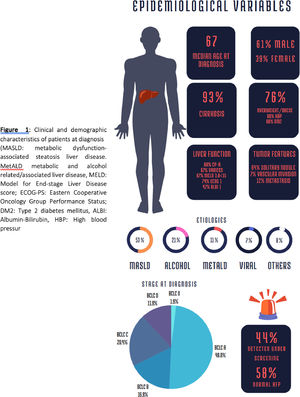
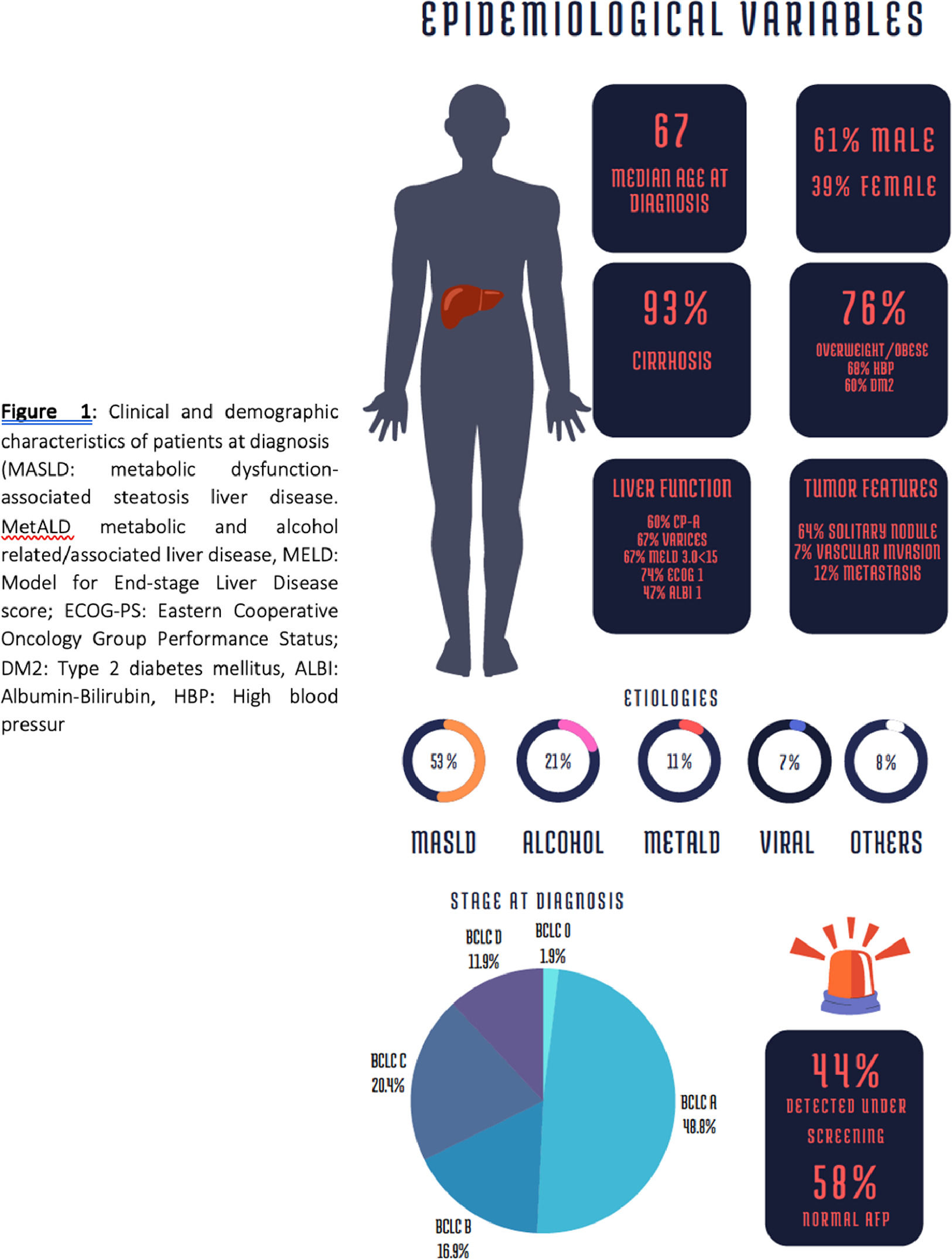
ResultsA total of 260 patients were included (mean age 67 years; 38.5% women). Cirrhosis was present in 92.7%, and 95% met at least one metabolic syndrome (MS) criterion; 54.6% met full MS criteria. MASLD or alcohol-related liver disease accounted for 85% of underlying etiologies. Nineteen patients (7.3%) had non-cirrhotic HCC, predominantly MASLD-related. HCC diagnoses increased by 90.5% between 2017–2018 and 2023–2024. Screening detected 43.5% of cases. Ultrasound was the first imaging modality in 90.4%, with an average delay of 70 days to confirmatory imaging. AFP levels ≥20 IU/mL and ≥400 IU/mL were seen in 42.1% and 21.2%, respectively. At diagnosis, 60.6% were Child-Pugh A and 66.9% had MELD <15. BCLC staging: 0 (1.9%), A (48.8%), B (16.9%), C (20.4%), D (11.9%).
ConclusionsThis first prospective characterization of HCC in Central America shows high rates of metabolic dysfunction and cirrhosis. Increasing incidence and diagnostic delays highlight the urgent need for structured screening and better resource allocation.