Abstracts of the 2025 Annual Meeting of the ALEH
More infoMetabolic Dysfunction-Associated Steatotic Liver Disease (MASLD) is a leading cause of chronic liver disease with rising global prevalence. Bile acids (BAs), beyond their role in lipid digestion, act as key metabolic regulators. Alterations in BA composition have been implicated in MASLD pathogenesis and may serve as biomarkers for disease progression. Previous studies have reported stage-specific changes in BA profiles; however, their association with histological severity remains to be fully elucidated.
ObjectivesTo assess serum BA concentrations in a liver biopsy-characterized MASLD cohort and to investigate their relationship with histological severity, distinguishing between isolated steatosis and Metabolic Dysfunction-Associated Steatohepatitis (MASH)
Materials and MethodsA total of 127 patients with MASLD were included, comprising 38 with isolated steatosis and 89 with MASH. Plasma BA levels were quantified using High-Performance Liquid Chromatography (HPLC).
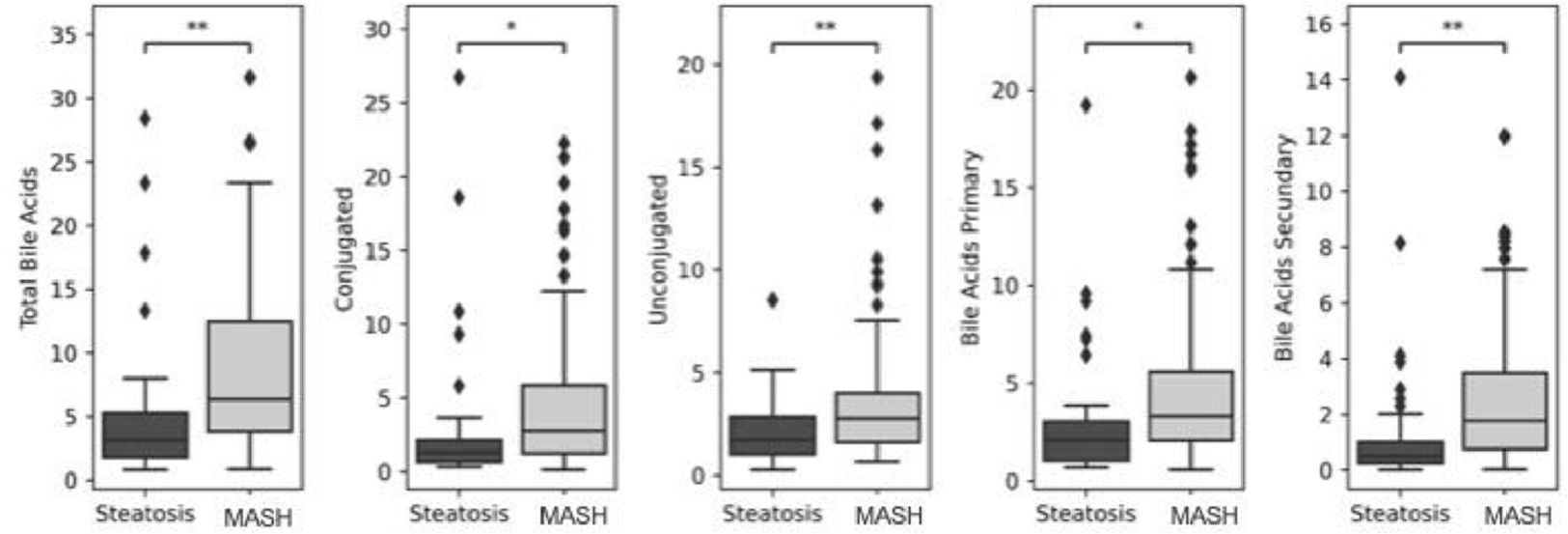
ResultsPatients with MASH showed significantly higher total serum BA levels compared to those with steatosis. Eight individual BAs were markedly elevated in the MASH group, including deoxycholic acid, chenodeoxycholic acid, their glycine conjugates, glycocholic acid and its glycine conjugate, as well as ursodeoxycholic acid and its taurine conjugate.
ConclusionsElevated plasma BA levels in MASH suggest a potential role for BAs as non-invasive markers of disease severity in MASLD. These findings support further investigation into BA profiling as a diagnostic and prognostic tool in the clinical management of MASLD.