





Edited by: Yesica Quiroz Madarriaga
Fundació Puigvert, Barcelona, Spain
Lisette Aimee t'Hoen
Department of Pediatric Urology, Erasmus MC University Medical Center, Rotterdam-Sophia Children's Hospital, Rotterdam, the Netherland
Last update: September 2025
More infoUrological complications are common after kidney transplantation (KTx), mostly in the form of ureterovesical obstruction or leakage. Routine ureteral stenting was previously shown to reduce these complications on the expense of other complications such as urinary tract infections (UTI). There is no consensus on optimal duration of stents, and relevant literature on this topic is lacking. The aim of this systematic review is to summarize and compare the incidences of stent-related complications using short (<2 weeks; SD) and long (≥2 weeks; LD) stent duration after pediatric KTx.
Material and methodsA systematic search in Embase, MEDLINE, Cochrane, and clinicaltrial.gov was performed. Studies reporting on children (0–18 years) undergoing KTx with intraoperative ureteral stenting with at least one month follow up were included. Data on surgical and outcome characteristics were extracted.
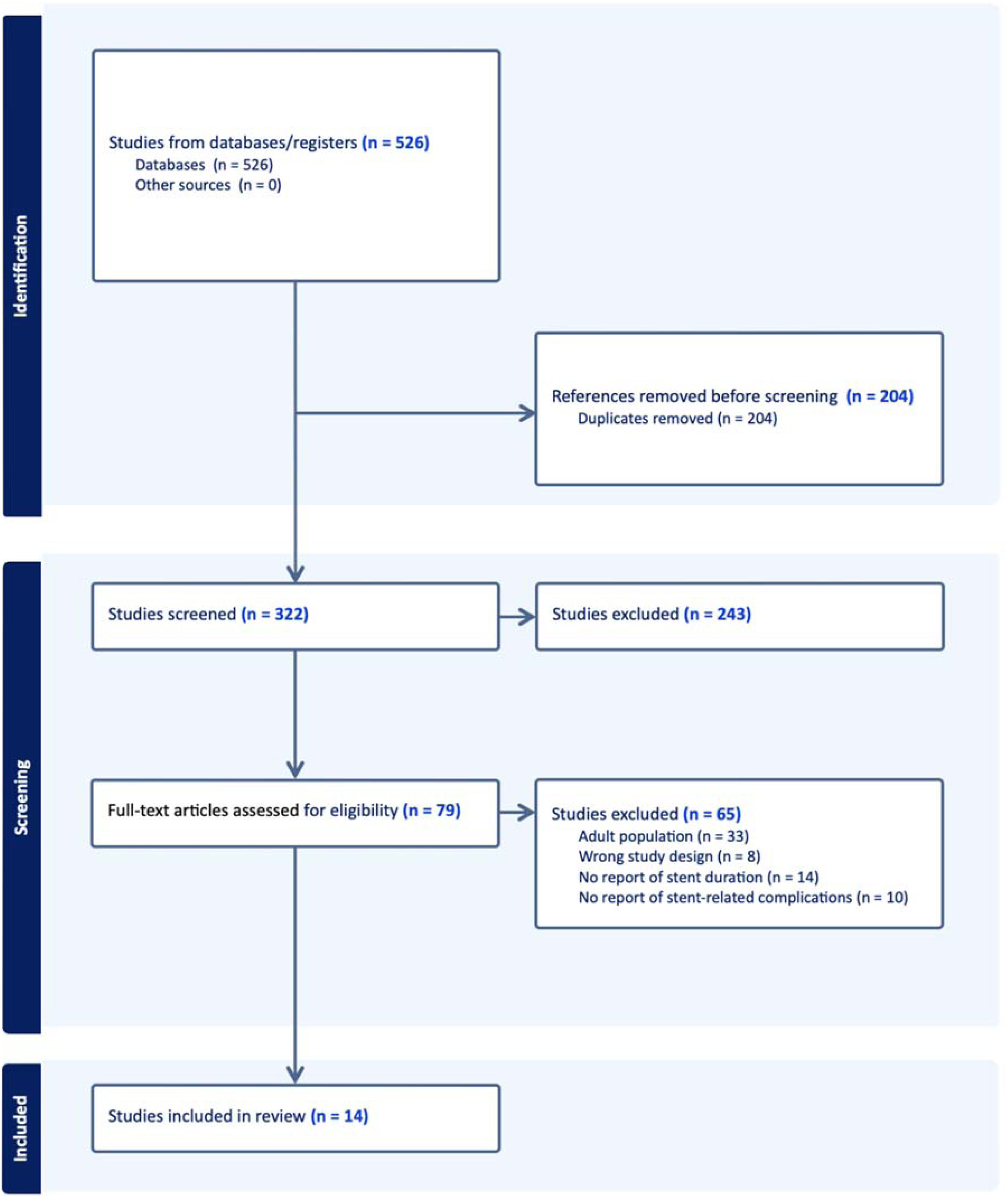
ResultsFrom a total of 322 articles, 14 studies were included, reporting on 971 pediatric KTx of whom 411 were female (42%). Sample sizes ranged from 32 to 146 patients. Mean or median age at time of transplantation ranged from 3.36 to 14.7 years. A systematic synthesis approach was used to summarize results. Of the four comparative studies, only one showed significantly more post-transplant UTIs in the LD group, without a significant difference in other urological complications.
ConclusionsDue to lack of good quality studies, it remains uncertain whether a short stent duration is safer and more feasible for reducing the incidence of stent-related complications in pediatric KTx, while also preventing stenosis or leakage at the ureterovesical anastomosis.
Las complicaciones urológicas tras el trasplante renal (TxR) son frecuentes, siendo las más comunes la fuga urinaria y la obstrucción ureterovesical. El uso sistemático del catéter ureteral ha demostrado previamente reducir estas complicaciones, aunque puede conllevar otras complicaciones como las infecciones del tracto urinario (ITU). Actualmente, no existe un consenso claro sobre la duración óptima del catéter ureteral, y la evidencia disponible al respecto es limitada. El objetivo de esta revisión sistemática es sintetizar y comparar la incidencia de complicaciones urológicas según la duración del catéter ureteral tras el TxR pediátrico, diferenciando entre corta (<2 semanas) y larga duración (≥2 semanas).
Material y métodosSe realizó una búsqueda sistemática en Embase, MEDLINE, Cochrane y ClinicalTrials.gov. Se incluyeron los estudios que informaban sobre niños (0–18 años) sometidos a TxR con colocación intraoperatoria de catéter ureteral con al menos un mes de seguimiento. Se extrajeron datos sobre las características quirúrgicas y de los resultados.
ResultadosDe un total de 322 artículos, se incluyeron 14 estudios que informaban sobre 971 TxR pediátricos, de los cuales 411 fueron realizados en mujeres (42%). El tamaño de la muestra osciló entre 32 y 146 pacientes. La edad media o mediana en el momento del trasplante osciló entre 3,36 y 14,7 años. Se utilizó un enfoque de síntesis sistemática para resumir los resultados. De los cuatro estudios comparativos, sólo uno mostró un número significativamente mayor de ITU postrasplante en el grupo LD, sin una diferencia significativa en otras complicaciones urológicas.
ConclusionesDebido a la escasez de estudios de alta calidad, aún no es posible determinar con certeza si el uso de catéteres ureterales de corta duración es más seguro y eficaz para reducir la incidencia de complicaciones asociadas al catéter en el trasplante renal pediátrico, sin aumentar el riesgo de estenosis o fuga a nivel de la anastomosis ureterovesical.

