



Laryngopharyngeal reflux (LPR) represents a diagnostic and therapeutic challenge due to the nonspecific nature of its clinical manifestations and the absence of objective biomarkers. The aim of this work is to establish a national consensus on its definition, diagnosis, and treatment through a modified Delphi methodology that integrates the perspectives of otolaryngologists (ENT) and gastroenterologists (GI).
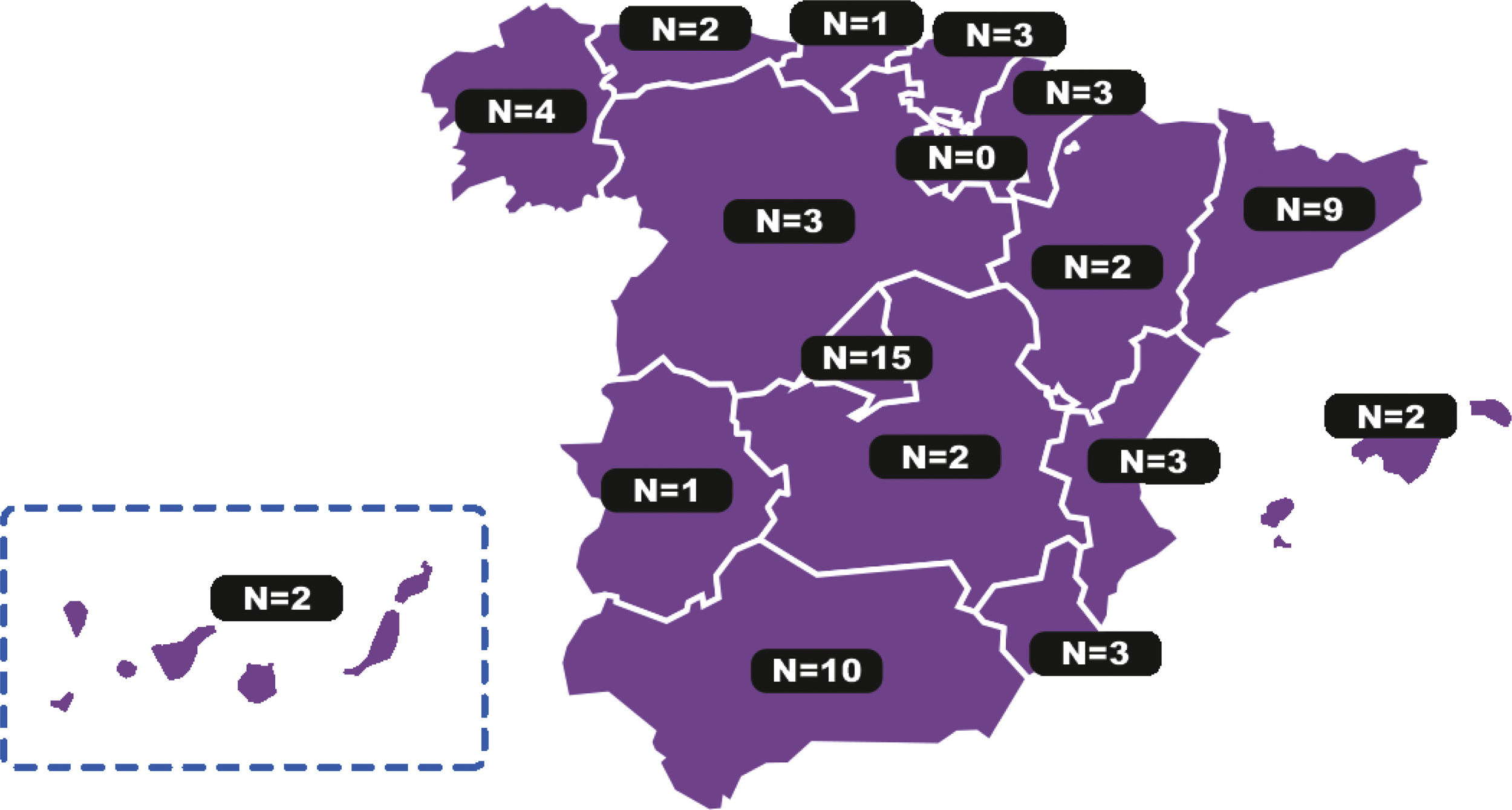
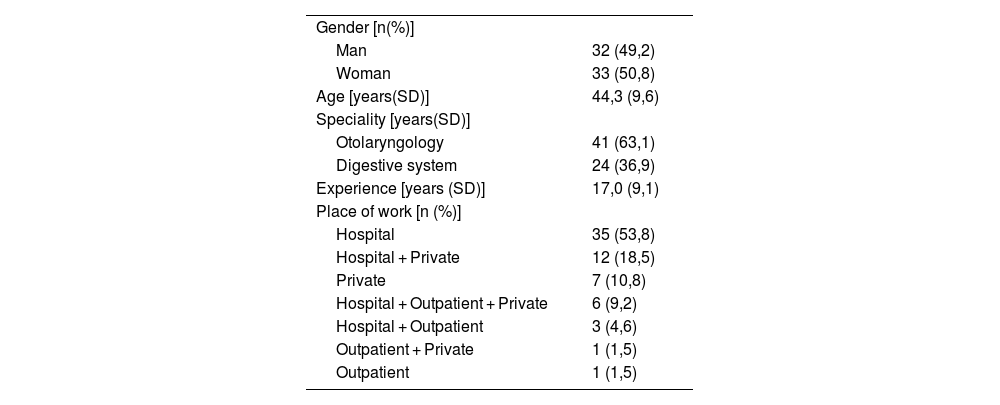
Materials and methodsA scientific committee composed of three ENTs and two GIs developed 117 items distributed across seven thematic sections. The Delphi process involved 73 panellists in the first round, of whom 65 (89%) completed both rounds of voting. Participants were representative of the Spanish autonomous communities, with an average of 17 years of clinical experience and a multidisciplinary profile (63.1% ENT; 36.9% GI).
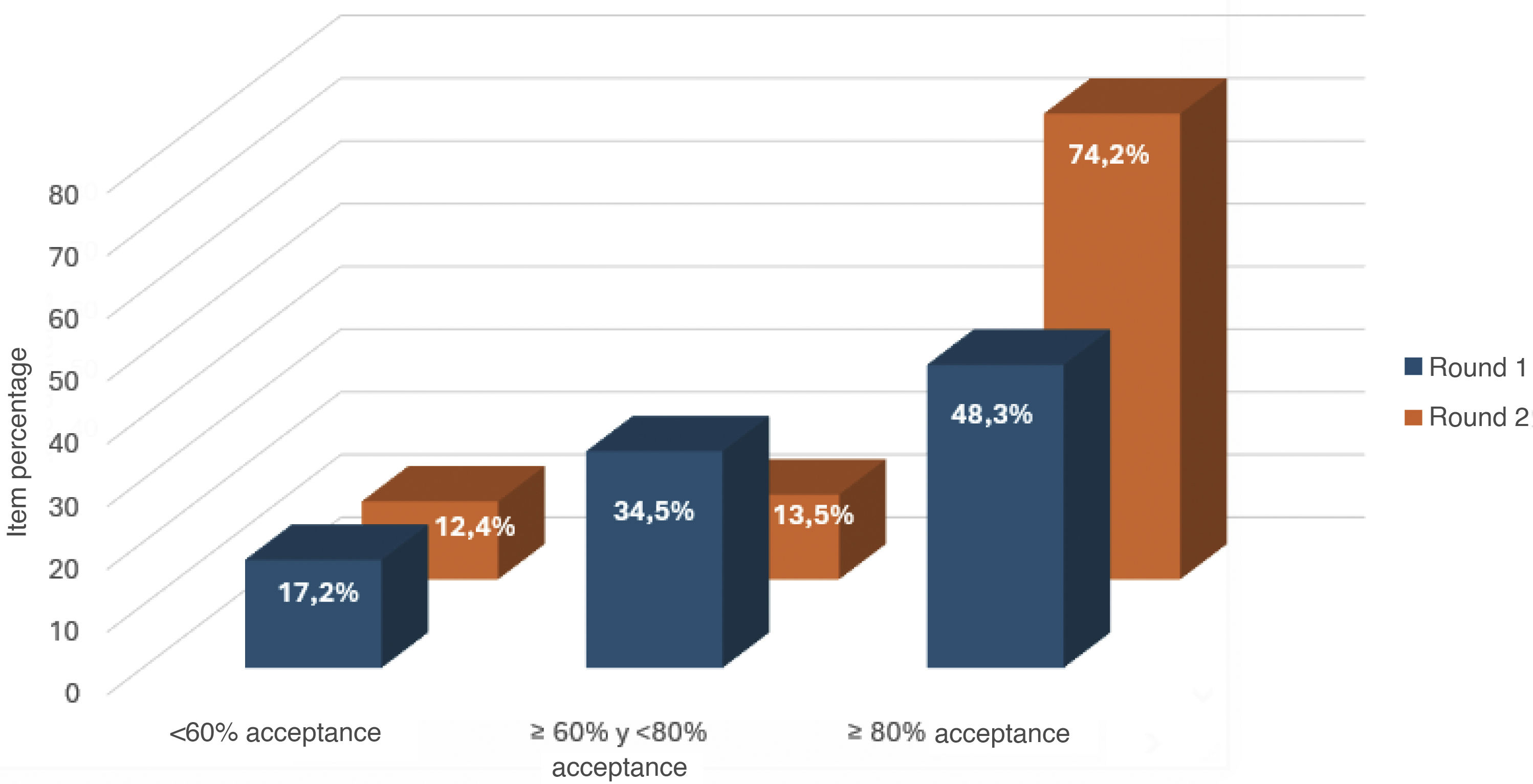
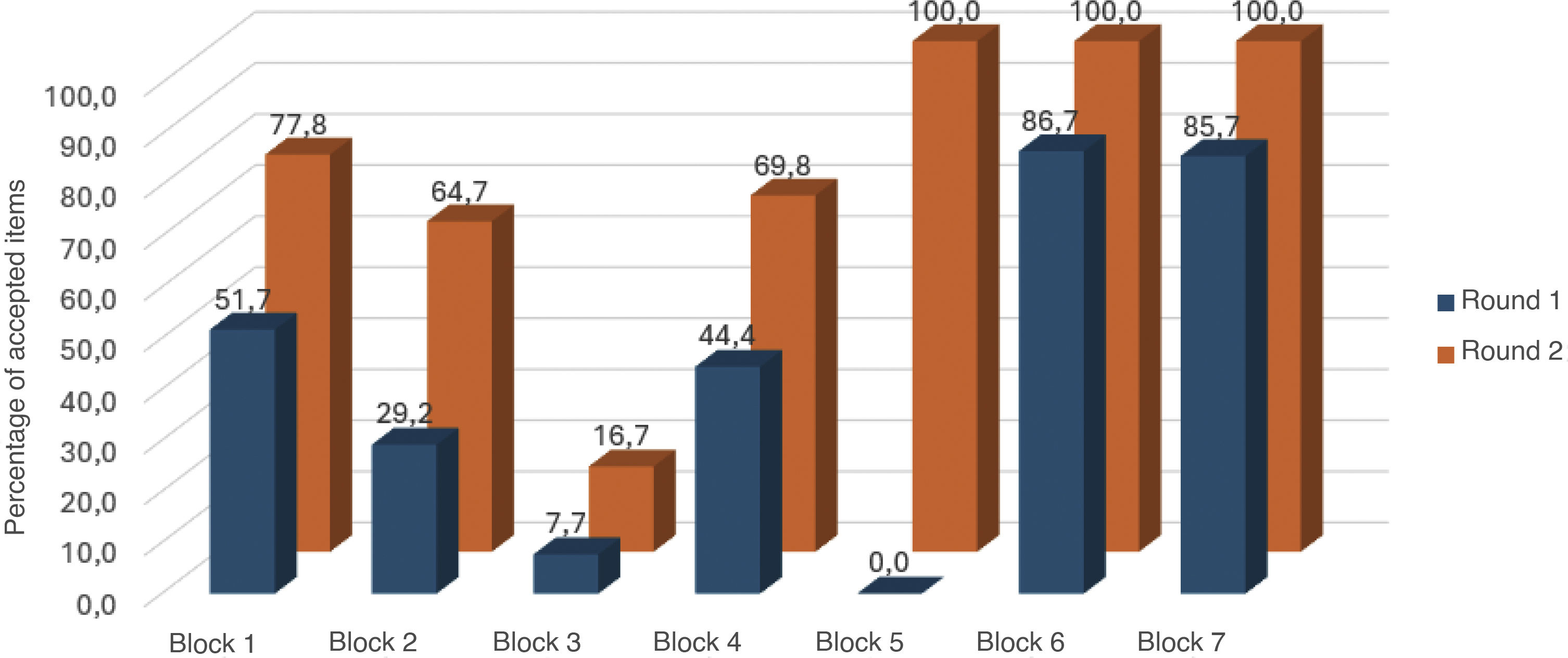
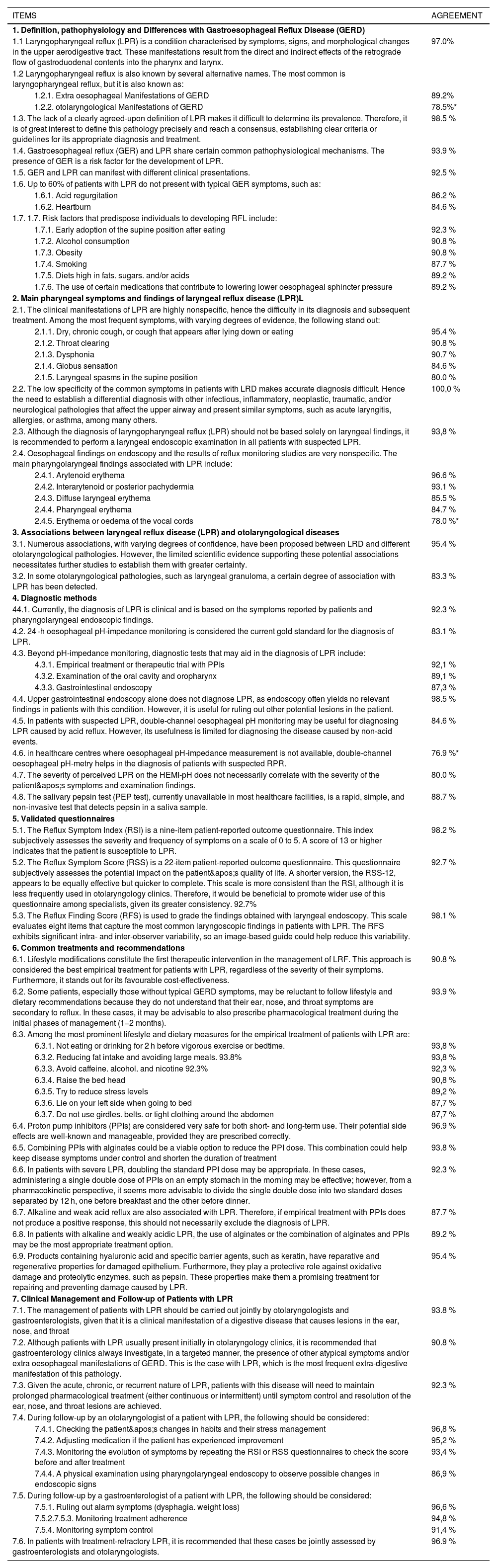
ResultsAfter two rounds of voting, positive consensus was reached on 76 items (64.9%), distributed as follows: 14 on definition and pathophysiology; 12 on symptoms and pharyngeal findings; 2 on associations with other ENT diseases; 10 on diagnostic methods; 3 on validated questionnaires; 15 on treatment and recommendations; and 11 on clinical follow-up.
ConclusionThe results of the consensus reflect the suitability and effectiveness of the Delphi methodology used to create a consensus document on the definition, presentation, diagnosis, and management of a condition that until now has been poorly defined, such as LPR. The aim is to support specialists in their daily clinical practice, and unlike previous efforts, it has succeeded in unifying within a single document the criteria of the two specialties most involved in managing these patients.
El reflujo faringolaríngeo (RFL) representa un desafío diagnóstico y terapéutico debido a la inespecificidad de sus manifestaciones clínicas y la ausencia de biomarcadores objetivos. Este trabajo tiene como objetivo establecer un consenso nacional sobre su definición, diagnóstico y tratamiento, mediante una metodología Delphi modificada que integre la visión de otorrinolaringólogos (ORL) y especialistas en aparato digestivo (AD).
Materiales y métodosSe conformó un comité científico compuesto por tres ORL y dos AD que elaboró 117 ítems distribuidos en siete bloques temáticos. El proceso Delphi contó con la participación de 73 panelistas en la primera ronda, de los cuales 65 (89%) completaron ambas rondas de votación. Los participantes eran representativosde las comunidades autónomas españolas, con una media de 17 años de experiencia clínica, y un perfil multidisciplinar (63,1% ORL; 36,9% AD).
ResultadosTras dos rondas de votación, se alcanzó consenso positivo en 76 ítems (64,9%), distribuidos de la siguiente manera: 14 sobre definición y fisiopatología; 12 sobre síntomas y hallazgos faríngeos; 2 sobre asociaciones con otras enfermedades ORL; 10 sobre métodos diagnósticos; 3 sobre cuestionarios validados; 15 sobre tratamiento y recomendaciones; y 11 sobre seguimiento clínico.
ConclusiónLos resultados del consenso reflejan la idoneidad y la eficacia de la metodología Delphi empleada para crear un documento de consenso sobre la definición, presentación, diagnóstico y manejo de una patología poco definida hasta ahora como el RFL, cuyo objetivo es ayudar a los especialistas en su práctica clínica diaria y que, a diferencia de otros, ha conseguido unificar en un mismo documento los criterios de las dos especialidades más implicadas en el manejo de estos pacientes.
