



Breast cancer remains one of the most prevalent malignancies worldwide, with survival rates varying considerably across different regions and populations. This systematic review aims to provide a comprehensive descriptive synthesis of breast cancer survival rates globally, focusing on 1-, 3-, 5-, and 10-year survival outcomes.
MethodsA systematic search was performed across international databases, including Scopus, Web of Science, PubMed, ScienceDirect, and Google Scholar, covering studies published from 2005 to January 2023. Observational cohort studies reporting survival rates in women with primary invasive breast cancer were included. Two independent reviewers screened articles, extracted data, and assessed methodological quality using the STROBE checklist. Descriptive summaries (means, medians, ranges) were calculated for survival rates across studies.
ResultsA total of 74 studies comprising 159,965 breast cancer patients were included. The mean 5-year survival rate across 36 studies was 67.4% (range: 34.0–91.0%). The lowest reported 5-year survival was 34.0% (Tunisia), and the highest was 91.0% (Egypt). Higher survival rates were consistently observed in developed countries (mean: 72.5%) compared to developing countries (mean: 58.3%). By age, 5-year survival was 74.0% for women <39 years, 76.0% for ages 40–64 years, and 58.0% for ages ≥65 years. By disease stage, survival ranged from 90.0% (stage I) to 37.0% (stage IV). Temporal analysis showed improvement in 5-year survival from 63.0% (studies published 2005–2010) to 72.0% (studies published after 2010). Factors associated with better survival included early stage, ER-positive status, younger age (40–64 years), and surgical treatment.
ConclusionBreast cancer survival rates vary substantially by geographic region, disease stage, age, and tumor characteristics. While survival has improved over time, particularly in high-income regions, persistent disparities remain. These findings emphasize the need for targeted interventions, including early detection programs, improved access to adjuvant therapies, and standardized data collection for cancer registries, especially in low- and middle-income countries.
Breast cancer remains one of the most prevalent and life-threatening malignancies worldwide, accounting for a significant proportion of cancer-related morbidity and mortality among women. According to the Global Cancer Observatory (GLOBOCAN), breast cancer is the most commonly diagnosed cancer, with over 2.3 million new cases reported in 2020 alone. Despite advancements in early detection, treatment modalities, and healthcare infrastructure, survival rates for breast cancer patients vary considerably across different regions and populations, reflecting disparities in access to care, socioeconomic factors, and healthcare system efficiency [1]. Understanding the factors that influence survival rates is crucial for healthcare professionals, policymakers, and patients alike. Breast cancer survival rates have improved significantly over the years due to advancements in early detection, diagnostic techniques, and treatment options [2]. Conducted research in Iran demonstrates that breast cancer accounts for 12.6% of all cancer cases. Notably, the onset of this disease occurred approximately ten years earlier in Iran when compared to developed countries. Additionally, it is noteworthy that more than 30% of breast cancer patients in Iran are under the age of 30. Around the world, thirty-eight in every one thousand and 25.0 in every one thousand in Iran suffer from cancer [3].
According to a study conducted in China [4], it was found that breast cancer survival rates among women in East Asia are lower compared to those in the United States. On the other hand, a study in British Columbia revealed that Chinese women had the highest survival rates for breast cancer [5]. The 5-year survival rates reported were 46.0% in India [6], 64.0% in Oman [7], 78.0% in Belgium [6], and 85.6% in Spain [8].
However, disparities in survival outcomes still exist among different populations, highlighting the need for a thorough examination of the available evidence. By conducting a meta-analysis study, we can consolidate and analyze the findings from various studies, enabling us to draw more robust conclusions about the overall survival rates and potential influencing factors. The systematic review process ensures that all relevant studies are identified, evaluated, and included in the analysis, thereby minimizing bias and increasing the reliability of the results [9,10]. By employing a meta-analysis, we can quantitatively synthesize the data from multiple studies, providing a more accurate estimate of survival rates and identifying potential sources of heterogeneity. By identifying factors associated with improved survival rates, we can develop targeted interventions and strategies to optimize patient outcomes and reduce the burden of breast cancer on affected individuals and society as a whole.
Previous studies have explored breast cancer survival rates in specific populations or regions [11,12]; however, a comprehensive synthesis of global data is lacking. This systematic review and meta-analysis aim to fill this gap by providing a detailed evaluation of 1-, 3-, 5-, and 10-year survival rates among breast cancer patients worldwide. By pooling data from diverse studies, this work seeks to identify patterns, trends, and determinants of survival, offering valuable insights for policymakers, clinicians, and researchers. Generally, this study aims to contribute to the existing body of knowledge by providing an updated and comprehensive overview of the survival rate of women with breast cancer.
Material and methodSearch strategyThis study was conducted in accordance with the Preferred Reporting Items for Systematic Reviews and Meta-Analyses (PRISMA) guidelines. The research aimed to systematically review and meta-analyze survival rates among women diagnosed with breast cancer between 2005 and 2022. The search was restricted to studies published in English, involving human subjects, and focusing on female patients.
Two independent reviewers (FO and EH) performed a comprehensive search across multiple electronic databases, including Medline/PubMed, Web of Science, Scopus, and Google Scholar. The search strategy employed Medical Subject Headings (MeSH) terms and free-text keywords such as “breast neoplasms,” “breast cancer,” “breast carcinoma,” “breast tumor,” “breast malignant,” “survival,” “survival analysis,” “survival rate,” “life table,” “Kaplan–Meier,” “proportional hazard model,” “hazard ratio,” “Cox model,” “Cox regression,” and terms related to cohort studies (e.g., “cohort,” “prospective,” “retrospective,” “follow-up,” “longitudinal”). Additionally, the reference lists of included studies were manually screened to identify any potentially relevant articles that may have been missed during the database search. The EndNote X7 citation management software was used to organize and screen the retrieved studies for eligibility.
Study selectionInclusion and exclusion criteria were predefined to ensure the selection of relevant studies. Observational cohort studies reporting survival rates in women with primary invasive breast cancer were included, irrespective of language, age, ethnicity, or religion. Studies were eligible if they provided survival rates for at least one, three, five, or ten years in English. Excluded studies included those reporting survival rates after relapse, letters to the editor, review articles, and conference abstracts. In cases of multiple publications from the same study population, the most recent publication was prioritized for inclusion.
Two reviewers (FO and HZ) independently screened the titles, abstracts, and full texts of the retrieved studies. Discrepancies between reviewers were resolved through discussion, and a third investigator was consulted when consensus could not be reached.
Quality assessmentThe methodological quality and risk of bias of the included studies were assessed using the Strengthening the Reporting of Observational Studies in Epidemiology (STROBE) checklist [13]. Key items evaluated included the specification of participant selection sources, eligibility criteria, follow-up procedures, handling of missing data, outcome measurement definitions, and sample size justification. Based on their STROBE scores, studies were categorized into three quality tiers: high quality (>80% of total score), intermediate quality (60–79%), and low quality (30–59%). Two reviewers independently conducted the quality assessments, and inter-rater agreement was evaluated using weighted Kappa statistics, which yielded an agreement rate of 86%.
Data extractionRelevant data from each eligible study were extracted and recorded in a standardized Microsoft Excel 2013 spreadsheet. The extracted variables included the first author's name, year of publication, country of origin, data source, median follow-up duration, sample size, mean age of participants, and 1-, 3-, 5-, and 10-year survival rates with their corresponding 95% confidence intervals (CIs). Data extraction was performed independently by two reviewers to ensure accuracy and consistency.
Meta-analytic techniquesRandom-effects or fixed-effects models were used to pool survival estimates from the included studies. The choice between these models depends on the degree of heterogeneity expected in the studies.
Heterogeneity was assessed using the I2 statistic and Q-test. An I2 value of 0% indicates no observed heterogeneity, while higher values suggest considerable heterogeneity among study results.
Sensitivity analyses were conducted to determine the robustness of the results by excluding studies with a high risk of bias or varying the inclusion criteria.
Publication bias assessmentFunnel Plots: funnel plots were portrayed to visually inspect for publication bias. An asymmetrical funnel suggests potential bias in the publication of studies.
Egger's Test: Egger's regression test was used to quantify bias statistically.
Statistical analysisThe analysis was performed using Stata 11 software, employing the random effects model. To assess heterogeneity within and between studies, the l2 and Tau2 statistics were utilized at the 5% significance level (P < 0.05). EndNote X7 was employed for record management and review of the systematic search results, while Microsoft Excel 2013 was utilized to create the data extraction sheet.
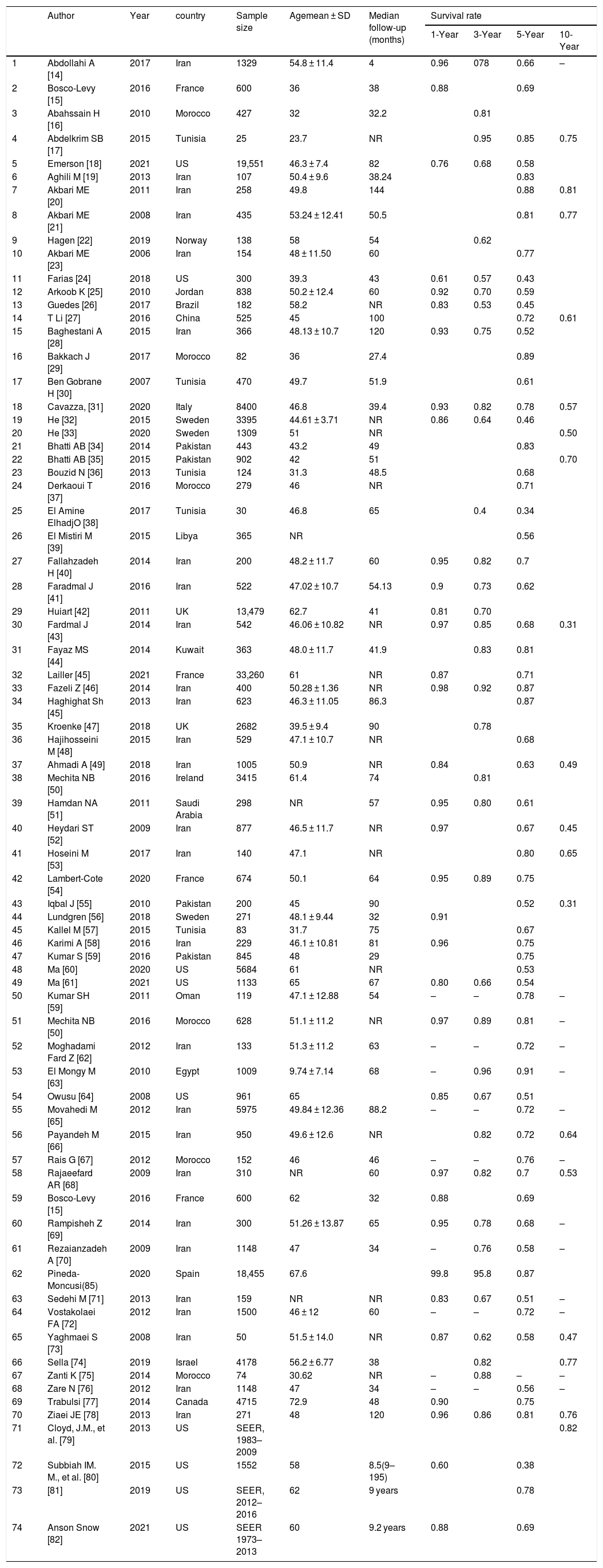
ResultsStudy characteristicsThe initial search yielded 3110 articles. After duplicate removal and screening, 74 studies met the inclusion criteria for this systematic review (Fig. 1 presents the PRISMA flow diagram). Studies originated from multiple countries, with the largest number from Iran (n = 40). Six studies focused exclusively on women younger than 39 years. The total sample size across all studies was 159,965 participants. Table 1 presents the detailed characteristics of each included study.

Characteristics of studies on the survival of breast cancer included in the meta-analysis.
| Author | Year | country | Sample size | Agemean ± SD | Median follow-up (months) | Survival rate | ||||
|---|---|---|---|---|---|---|---|---|---|---|
| 1-Year | 3-Year | 5-Year | 10-Year | |||||||
| 1 | Abdollahi A [14] | 2017 | Iran | 1329 | 54.8 ± 11.4 | 4 | 0.96 | 078 | 0.66 | – |
| 2 | Bosco-Levy [15] | 2016 | France | 600 | 36 | 38 | 0.88 | 0.69 | ||
| 3 | Abahssain H [16] | 2010 | Morocco | 427 | 32 | 32.2 | 0.81 | |||
| 4 | Abdelkrim SB [17] | 2015 | Tunisia | 25 | 23.7 | NR | 0.95 | 0.85 | 0.75 | |
| 5 | Emerson [18] | 2021 | US | 19,551 | 46.3 ± 7.4 | 82 | 0.76 | 0.68 | 0.58 | |
| 6 | Aghili M [19] | 2013 | Iran | 107 | 50.4 ± 9.6 | 38.24 | 0.83 | |||
| 7 | Akbari ME [20] | 2011 | Iran | 258 | 49.8 | 144 | 0.88 | 0.81 | ||
| 8 | Akbari ME [21] | 2008 | Iran | 435 | 53.24 ± 12.41 | 50.5 | 0.81 | 0.77 | ||
| 9 | Hagen [22] | 2019 | Norway | 138 | 58 | 54 | 0.62 | |||
| 10 | Akbari ME [23] | 2006 | Iran | 154 | 48 ± 11.50 | 60 | 0.77 | |||
| 11 | Farias [24] | 2018 | US | 300 | 39.3 | 43 | 0.61 | 0.57 | 0.43 | |
| 12 | Arkoob K [25] | 2010 | Jordan | 838 | 50.2 ± 12.4 | 60 | 0.92 | 0.70 | 0.59 | |
| 13 | Guedes [26] | 2017 | Brazil | 182 | 58.2 | NR | 0.83 | 0.53 | 0.45 | |
| 14 | T Li [27] | 2016 | China | 525 | 45 | 100 | 0.72 | 0.61 | ||
| 15 | Baghestani A [28] | 2015 | Iran | 366 | 48.13 ± 10.7 | 120 | 0.93 | 0.75 | 0.52 | |
| 16 | Bakkach J [29] | 2017 | Morocco | 82 | 36 | 27.4 | 0.89 | |||
| 17 | Ben Gobrane H [30] | 2007 | Tunisia | 470 | 49.7 | 51.9 | 0.61 | |||
| 18 | Cavazza, [31] | 2020 | Italy | 8400 | 46.8 | 39.4 | 0.93 | 0.82 | 0.78 | 0.57 |
| 19 | He [32] | 2015 | Sweden | 3395 | 44.61 ± 3.71 | NR | 0.86 | 0.64 | 0.46 | |
| 20 | He [33] | 2020 | Sweden | 1309 | 51 | NR | 0.50 | |||
| 21 | Bhatti AB [34] | 2014 | Pakistan | 443 | 43.2 | 49 | 0.83 | |||
| 22 | Bhatti AB [35] | 2015 | Pakistan | 902 | 42 | 51 | 0.70 | |||
| 23 | Bouzid N [36] | 2013 | Tunisia | 124 | 31.3 | 48.5 | 0.68 | |||
| 24 | Derkaoui T [37] | 2016 | Morocco | 279 | 46 | NR | 0.71 | |||
| 25 | El Amine ElhadjO [38] | 2017 | Tunisia | 30 | 46.8 | 65 | 0.4 | 0.34 | ||
| 26 | El Mistiri M [39] | 2015 | Libya | 365 | NR | 0.56 | ||||
| 27 | Fallahzadeh H [40] | 2014 | Iran | 200 | 48.2 ± 11.7 | 60 | 0.95 | 0.82 | 0.7 | |
| 28 | Faradmal J [41] | 2016 | Iran | 522 | 47.02 ± 10.7 | 54.13 | 0.9 | 0.73 | 0.62 | |
| 29 | Huiart [42] | 2011 | UK | 13,479 | 62.7 | 41 | 0.81 | 0.70 | ||
| 30 | Fardmal J [43] | 2014 | Iran | 542 | 46.06 ± 10.82 | NR | 0.97 | 0.85 | 0.68 | 0.31 |
| 31 | Fayaz MS [44] | 2014 | Kuwait | 363 | 48.0 ± 11.7 | 41.9 | 0.83 | 0.81 | ||
| 32 | Lailler [45] | 2021 | France | 33,260 | 61 | NR | 0.87 | 0.71 | ||
| 33 | Fazeli Z [46] | 2014 | Iran | 400 | 50.28 ± 1.36 | NR | 0.98 | 0.92 | 0.87 | |
| 34 | Haghighat Sh [45] | 2013 | Iran | 623 | 46.3 ± 11.05 | 86.3 | 0.87 | |||
| 35 | Kroenke [47] | 2018 | UK | 2682 | 39.5 ± 9.4 | 90 | 0.78 | |||
| 36 | Hajihosseini M [48] | 2015 | Iran | 529 | 47.1 ± 10.7 | NR | 0.68 | |||
| 37 | Ahmadi A [49] | 2018 | Iran | 1005 | 50.9 | NR | 0.84 | 0.63 | 0.49 | |
| 38 | Mechita NB [50] | 2016 | Ireland | 3415 | 61.4 | 74 | 0.81 | |||
| 39 | Hamdan NA [51] | 2011 | Saudi Arabia | 298 | NR | 57 | 0.95 | 0.80 | 0.61 | |
| 40 | Heydari ST [52] | 2009 | Iran | 877 | 46.5 ± 11.7 | NR | 0.97 | 0.67 | 0.45 | |
| 41 | Hoseini M [53] | 2017 | Iran | 140 | 47.1 | NR | 0.80 | 0.65 | ||
| 42 | Lambert-Cote [54] | 2020 | France | 674 | 50.1 | 64 | 0.95 | 0.89 | 0.75 | |
| 43 | Iqbal J [55] | 2010 | Pakistan | 200 | 45 | 90 | 0.52 | 0.31 | ||
| 44 | Lundgren [56] | 2018 | Sweden | 271 | 48.1 ± 9.44 | 32 | 0.91 | |||
| 45 | Kallel M [57] | 2015 | Tunisia | 83 | 31.7 | 75 | 0.67 | |||
| 46 | Karimi A [58] | 2016 | Iran | 229 | 46.1 ± 10.81 | 81 | 0.96 | 0.75 | ||
| 47 | Kumar S [59] | 2016 | Pakistan | 845 | 48 | 29 | 0.75 | |||
| 48 | Ma [60] | 2020 | US | 5684 | 61 | NR | 0.53 | |||
| 49 | Ma [61] | 2021 | US | 1133 | 65 | 67 | 0.80 | 0.66 | 0.54 | |
| 50 | Kumar SH [59] | 2011 | Oman | 119 | 47.1 ± 12.88 | 54 | – | – | 0.78 | – |
| 51 | Mechita NB [50] | 2016 | Morocco | 628 | 51.1 ± 11.2 | NR | 0.97 | 0.89 | 0.81 | – |
| 52 | Moghadami Fard Z [62] | 2012 | Iran | 133 | 51.3 ± 11.2 | 63 | – | – | 0.72 | – |
| 53 | El Mongy M [63] | 2010 | Egypt | 1009 | 9.74 ± 7.14 | 68 | – | 0.96 | 0.91 | – |
| 54 | Owusu [64] | 2008 | US | 961 | 65 | 0.85 | 0.67 | 0.51 | ||
| 55 | Movahedi M [65] | 2012 | Iran | 5975 | 49.84 ± 12.36 | 88.2 | – | – | 0.72 | – |
| 56 | Payandeh M [66] | 2015 | Iran | 950 | 49.6 ± 12.6 | NR | 0.82 | 0.72 | 0.64 | |
| 57 | Rais G [67] | 2012 | Morocco | 152 | 46 | 46 | – | – | 0.76 | – |
| 58 | Rajaeefard AR [68] | 2009 | Iran | 310 | NR | 60 | 0.97 | 0.82 | 0.7 | 0.53 |
| 59 | Bosco-Levy [15] | 2016 | France | 600 | 62 | 32 | 0.88 | 0.69 | ||
| 60 | Rampisheh Z [69] | 2014 | Iran | 300 | 51.26 ± 13.87 | 65 | 0.95 | 0.78 | 0.68 | – |
| 61 | Rezaianzadeh A [70] | 2009 | Iran | 1148 | 47 | 34 | – | 0.76 | 0.58 | – |
| 62 | Pineda-Moncusi(85) | 2020 | Spain | 18,455 | 67.6 | 99.8 | 95.8 | 0.87 | ||
| 63 | Sedehi M [71] | 2013 | Iran | 159 | NR | NR | 0.83 | 0.67 | 0.51 | – |
| 64 | Vostakolaei FA [72] | 2012 | Iran | 1500 | 46 ± 12 | 60 | – | – | 0.72 | – |
| 65 | Yaghmaei S [73] | 2008 | Iran | 50 | 51.5 ± 14.0 | NR | 0.87 | 0.62 | 0.58 | 0.47 |
| 66 | Sella [74] | 2019 | Israel | 4178 | 56.2 ± 6.77 | 38 | 0.82 | 0.77 | ||
| 67 | Zanti K [75] | 2014 | Morocco | 74 | 30.62 | NR | – | 0.88 | – | – |
| 68 | Zare N [76] | 2012 | Iran | 1148 | 47 | 34 | – | – | 0.56 | – |
| 69 | Trabulsi [77] | 2014 | Canada | 4715 | 72.9 | 48 | 0.90 | 0.75 | ||
| 70 | Ziaei JE [78] | 2013 | Iran | 271 | 48 | 120 | 0.96 | 0.86 | 0.81 | 0.76 |
| 71 | Cloyd, J.M., et al. [79] | 2013 | US | SEER, 1983–2009 | 0.82 | |||||
| 72 | Subbiah IM. M., et al. [80] | 2015 | US | 1552 | 58 | 8.5(9–195) | 0.60 | 0.38 | ||
| 73 | [81] | 2019 | US | SEER, 2012–2016 | 62 | 9 years | 0.78 | |||
| 74 | Anson Snow [82] | 2021 | US | SEER 1973–2013 | 60 | 9.2 years | 0.88 | 0.69 | ||
Fig. 2 shows the histogram of 5-year survival rates across the 36 studies that reported this outcome. The distribution was approximately normal, with a mean survival rate of 67.4% (SD = 12.3%) and a median of 69.0% (IQR: 58.0–77.0%). The lowest reported 5-year survival rate was 34% in a Tunisian study [38], and the highest was 91% in an Egyptian study [63]. The full range of survival rates across all studies is presented in Supplementary Fig. 1.
Geographic variation in survival
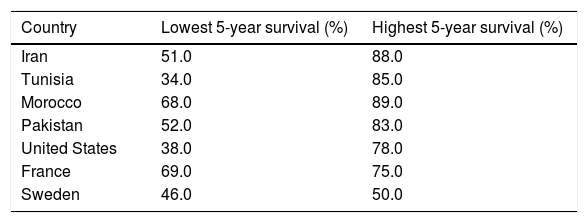
Table 2 summarizes the range of 5-year survival rates by selected countries and regions. In Iran, survival ranged from 51% to 88%. Tunisia showed a range of 34–85%, Morocco from 68% to 89%, and Pakistan from 52% to 83%. In the United States, 5-year survival varied between 38% and 78%, while in France, it ranged from 69% to 75%, and in Sweden from 46% to 50%. A visual comparison between developed and developing countries is provided in Fig. 3, which demonstrates substantially higher survival rates in developed nations (mean: 72.5%) compared to developing nations (mean: 58.3%; p < 0.01).

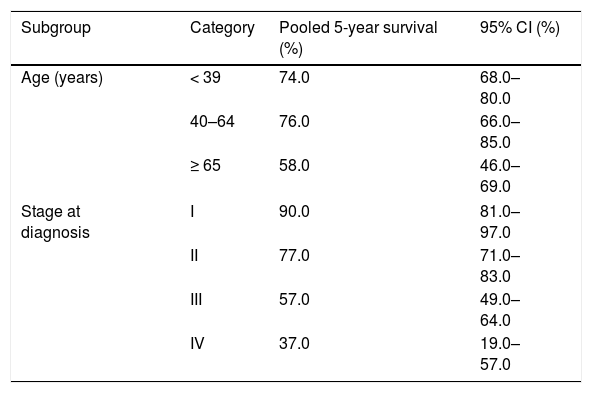
Table 3 presents the subgroup analysis for 5-year survival by age and disease stage. Regarding age, women younger than 39 years had a 5-year survival of 74% (95% range: 68–80%), those aged 40–64 years had 76% (95% range: 66–85%), and women aged 65 years or older had 58% (95% range: 46–69%).
With respect to disease stage, the 5-year survival was 90% for stage I (range: 81–97%), 77% for stage II (range: 71–83%), 57% for stage III (range: 49–64%), and 37% for stage IV (range: 19–57%). Supplementary Fig. 2 provides a visual summary of survival by disease stage.
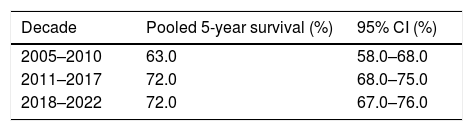
Temporal trendsAs shown in Table 4, 5-year survival improved over time. For studies published between 2005 and 2010, the median survival rate was 63% (range: 58–68%). This increased to 72% (range: 68–75%) for studies published between 2011 and 2017, and remained at 72% (range: 67–76%) for studies published between 2018 and 2022. Fig. 4 illustrates this temporal trend as a line chart.

Several clinical and pathological factors were consistently associated with breast cancer survival across the included studies. Supplementary Fig. 3 summarizes the key factors.
- •
Tumor size (9 studies): Patients with a tumor diameter of 5.0 cm or larger had approximately a twofold increased risk of death compared to those with tumors of 2.0 cm or smaller.
- •
Lymph node involvement (11 studies): Patients with more than 10 positive lymph nodes had significantly lower survival rates than those with 1–3 positive nodes [63].
- •
Estrogen receptor (ER) status (3 studies): ER-positive tumors were associated with longer survival compared to ER-negative tumors [33,58,78].
- •
Age (12 studies): Older age (≥65 years) was consistently linked to poorer outcomes [16,26,28,36,40,41,46,48,83–87].
- •
Disease stage (7 studies): Earlier stage at diagnosis strongly predicted higher survival [17,19,20,39,44,78,84].
- •
Metastasis (3 studies): Presence of metastasis at diagnosis significantly reduced survival [35,37,88].
- •
Surgery (3 studies): Patients who underwent surgical resection as their initial treatment had higher survival rates than those who received upfront chemotherapy; the type of surgery alone did not demonstrate a significant difference [54,61,88].
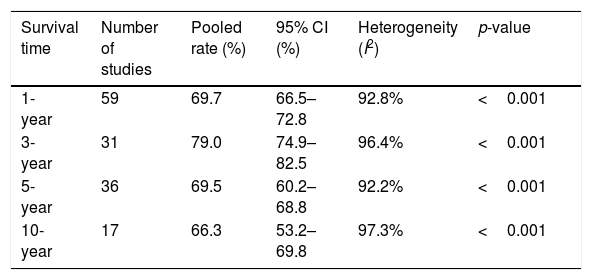
Supplementary Fig. 4 presents funnel plots for the 1-, 3-, 5-, and 10-year survival rates. Visual inspection suggested some asymmetry. Egger's regression test indicated possible publication bias (p < 0.05 for 5-year survival) (Table 5).
DiscussionThis systematic review synthesizes survival data from 74 studies encompassing 159,965 breast cancer patients worldwide. The findings reveal substantial variability in survival rates across different regions, time periods, and patient subgroups. The observed 5-year survival rates ranged from 34% to 91%, with a mean of 67.4% across studies. These results highlight persistent global disparities in breast cancer outcomes and underscore the influence of clinical, demographic, and healthcare-system factors.
Comparison with previous literatureOur findings are broadly consistent with previous systematic reviews. A review by Abedi et al. (2016) [3] reported a 5-year survival rate of approximately 74% in Iran, which aligns with the Iranian range observed in the present review (51–88%). Studies from high-income countries, such as the United States [80,81] and France [15,45], generally reported higher survival rates (up to 78–91%), whereas studies from low- and middle-income countries, including Pakistan [55] and Tunisia [38], reported substantially lower rates (34–52%). These disparities are consistent with previously documented inequities in cancer care globally [1,9,89–91].
The higher survival rates observed in developed nations likely reflect earlier detection through screening programs, greater access to multimodal treatments (surgery, radiotherapy, chemotherapy, hormonal therapy), and more robust healthcare infrastructure [92–95]. Conversely, lower survival in developing countries may be attributed to delayed diagnosis, limited access to adjuvant therapies, and higher rates of advanced-stage presentation at diagnosis [96].
Influence of age and stageAge at diagnosis emerged as an important prognostic factor. In the present review, women younger than 39 years had a 5-year survival of 74%, similar to the 40–64 age group (76%). However, women aged 65 years or older had significantly lower survival (58%). This age-related pattern has been reported previously [83,93–95]. The lower survival in older patients may reflect differences in tumor biology (e.g., higher prevalence of hormone-receptor-positive but also more aggressive subtypes), presence of comorbidities, lower tolerance to aggressive treatments, or underutilization of standard therapies [84,97].
The strong association between disease stage and survival – from 90% for stage I to 37% for stage IV – reinforces the critical importance of early detection programs. This finding is consistent with numerous previous studies [17,19,20,39,44,78,84,85] and emphasizes that efforts to improve survival should prioritize screening, public awareness, and timely diagnosis.
Clinical and pathological factorsSeveral tumor-related factors were consistently associated with survival outcomes. Larger tumor size (≥5 cm) and extensive lymph node involvement (>10 positive nodes) were linked to significantly worse prognosis [14,19,20,28,39,41,58,63,70]. These findings align with established oncological principles, as both factors indicate more advanced disease and higher metastatic potential.
Estrogen receptor (ER) positivity was associated with better survival compared to ER-negative status [33,58,78], consistent with the availability and efficacy of adjuvant hormonal therapies (tamoxifen, aromatase inhibitors) for ER-positive tumors [92,98].
Regarding treatment, patients who underwent surgery as their initial treatment had higher survival rates than those who received upfront chemotherapy [54,61,88]. However, the type of surgery alone (mastectomy vs. breast-conserving surgery) did not demonstrate a significant difference in survival, which supports current guidelines emphasizing oncological safety of breast-conserving approaches when appropriate [20,21].
Geographic and temporal disparitiesSurvival rates varied considerably by region and country. Higher rates were consistently observed in North America and Europe, while lower rates were reported in parts of Africa, the Middle East, and South Asia. These disparities likely reflect differences in healthcare infrastructure, access to screening and treatment, socioeconomic factors, and cultural attitudes toward cancer care [1,9,92].
Encouragingly, 5-year survival improved over time, from a median of 63% in studies published between 2005 and 2010 to 72% in studies published after 2010. This temporal improvement suggests global progress in breast cancer management, including advances in early detection, surgical techniques, radiation therapy, and systemic therapies (chemotherapy, hormonal therapy, targeted agents) [2,10].
Comparison with SEER and EBCTCG dataThe SEER (Surveillance, Epidemiology, and End Results) program provides population-based data from the United States, reporting 5-year survival rates of approximately 78–90% depending on stage and race [81,93,94,99]. In contrast, the EBCTCG (Early Breast Cancer Trialists' Collaborative Group) focuses on clinical trial data, demonstrating that adjuvant therapies (polychemotherapy, hormonal therapy, radiotherapy) significantly reduce recurrence and mortality [100,101]. Our review bridges these perspectives by including both population-based and hospital-based studies from diverse settings, revealing that while clinical trial outcomes are excellent, real-world survival in many regions remains suboptimal.
Strengths and limitationsStrengths of this review include the comprehensive search strategy across multiple databases, inclusion of 74 studies with a large total sample size (159,965 participants), and detailed subgroup analyses by age, stage, and decade of publication.
Limitations should be acknowledged. First, substantial heterogeneity was observed across studies (I2 > 90% for all time points), reflecting variability in study populations, healthcare settings, and methodologies. This limits the generalizability of descriptive summaries. Second, the review included only English-language articles, potentially omitting relevant non-English research. Third, most studies focused exclusively on women, preventing meaningful subgroup analysis by gender. Fourth, survival estimation methods varied across studies (Kaplan–Meier, life tables, Cox regression), introducing methodological heterogeneity. Fifth, data sources differed (primary data vs. hospital records), which may introduce bias. Sixth, possible publication bias was suggested by funnel plot asymmetry. Seventh, the lack of individual patient data prevented adjustment for important confounders such as comorbidities, socioeconomic status, and detailed treatment regimens.
Future research directionsFuture systematic reviews should include non-English databases and both genders. Individual patient data syntheses would allow better adjustment for confounding factors. Standardized survival reporting guidelines across cancer registries would improve comparability. Additionally, research is needed to understand why older age groups (≥65 years) show lower survival and to identify successful interventions that have improved survival in certain regions. Implementation research focusing on translating evidence-based guidelines into practice in low- and middle-income countries is urgently needed.
Clinical and policy implicationsThe wide variation in survival rates – even among studies from the same region – underscores the need for standardized data collection and reporting. For clinicians, these findings emphasize the importance of stage-appropriate, individualized treatment, with special attention to older patients who may be at risk for undertreatment. For policymakers, the results highlight persistent inequities that require targeted interventions, including:
- •
Expanding national screening programs
- •
Improving access to adjuvant hormonal therapy and chemotherapy
- •
Training healthcare professionals in early detection
- •
Addressing social determinants of health (e.g., education, income, transportation)
- •
Establishing and strengthening cancer registries for ongoing surveillance
This systematic review provides a comprehensive synthesis of breast cancer survival rates worldwide based on 74 studies and 159,965 patients. Survival rates vary substantially by geographic region, disease stage, age, and tumor characteristics. While survival has improved over time, particularly in high-income regions, substantial disparities persist. Early detection, younger age at diagnosis (40–64 years), ER-positive status, and surgical treatment are associated with better outcomes. The high heterogeneity observed underscores the need for caution when interpreting descriptive summaries. These findings offer valuable insights for clinicians, researchers, and policymakers working to improve breast cancer outcomes globally. Future efforts should focus on reducing geographical inequities, standardizing data reporting, and ensuring that evidence-based therapies reach all patients regardless of where they live.
Consent for publicationNot applicable.
Ethics approval and consent to participateThis study is a systematic review and meta-analysis of published literature and does not involve primary data collection from human participants. Therefore, formal ethical approval was not required. However, the study protocol was reviewed and approved by the Ethics Committee of Torbat Heydariyeh University of Medical Sciences (Ethics Code: IR.THUMS.REC.1404.033) as a precautionary measure in accordance with institutional guidelines.
FundingThis research received no specific grant from any funding agency in the public, commercial, or not-for-profit sectors.
Author contributionsHamidreza Zivarifar: Conceptualization, literature search, data extraction, drafting the manuscript. Forough Ahrari: Methodology, quality assessment, statistical interpretation. Marzieh Mirzaei: Data validation, critical revision of the manuscript. Freshteh Osmani: Study design, supervision, meta-analysis, writing – original draft, writing – review & editing, and final approval of the version to be published. All authors read and approved the final manuscript.
The authors declare that they have no competing interests.
The authors would like to thank the Research Deputy of Torbat Heydariyeh University of Medical Sciences for their support and facilitation of this study.

Supplementary material.



