


Concurrent training has demonstrated beneficial effects on functional, cardiometabolic, and quality-of-life outcomes in individuals with overweight and obesity. However, evidence regarding the relationships between exercise-induced changes across these domains remains limited, particularly among university students.
ObjectiveTo analyze the associations between changes in functional, cardiometabolic, and quality-of-life variables following a 12-week concurrent training program in university students with overweight or obesity.
MethodsFunctional, cardiometabolic, and quality-of-life variables were assessed before and after a 12-week concurrent training intervention. Pre-to-post changes were calculated, and associations between changes were analyzed using Spearman's rank correlation coefficient. The Benjamini–Hochberg procedure was applied to control for multiple comparisons.
ResultsA heterogeneous response was observed across the domains assessed. None of the functional correlations remained statistically significant after adjustment for multiple comparisons. The strongest functional association was observed between the standing long jump and the 30-second sit-to-stand test (STS-30s). In secondary analyses, associations between quality of life and physical function were observed, particularly between the physical component and total score of the SF-12 and the prone plank test, and between the mental component of the SF-12 and the six-minute walk test (6MWT). Cardiometabolic associations were less consistent and did not remain significant after adjustment.
ConclusionChanges following concurrent training showed a heterogeneous pattern across the domains assessed. As none of the associations remained statistically significant after adjustment for multiple comparisons, these findings should be interpreted as exploratory.
El entrenamiento concurrente ha demostrado efectos beneficiosos sobre variables funcionales, cardiometabólicas y de calidad de vida en personas con sobrepeso y obesidad. Sin embargo, existe evidencia limitada sobre la relación entre los cambios inducidos por el ejercicio en estos dominios, particularmente en estudiantes universitarios.
ObjetivoAnalizar las asociaciones entre los cambios en variables funcionales, cardiometabólicas y de calidad de vida después de un programa de entrenamiento concurrente de 12 semanas en estudiantes universitarios con sobrepeso u obesidad.
MétodosSe evaluaron variables funcionales, cardiometabólicas y de calidad de vida antes y después de una intervención de entrenamiento concurrente de 12 semanas. Se calcularon los cambios pre-postintervención y se analizaron sus asociaciones mediante el coeficiente de correlación de Spearman. Para controlar el efecto de las comparaciones múltiples se aplicó el procedimiento de Benjamini-Hochberg.
ResultadosSe observó una respuesta heterogénea entre los dominios evaluados. Ninguna correlación funcional permaneció estadísticamente significativa después del ajuste por comparaciones múltiples. La mayor magnitud de asociación funcional se observó entre el salto horizontal y la prueba de levantarse y sentarse durante 30 segundos (STS-30s). En los análisis secundarios, se observaron asociaciones entre calidad de vida y función física, destacando las relaciones del componente físico y del puntaje total del SF-12 con la prueba de plancha prona, y del componente mental del SF-12 con la prueba de marcha de seis minutos (6MWT). Las asociaciones cardiometabólicas fueron menos consistentes y tampoco permanecieron significativas después del ajuste.
ConclusiónLos cambios posteriores al entrenamiento concurrente mostraron un patrón heterogéneo entre los dominios evaluados. Dado que ninguna asociación permaneció significativa tras el ajuste por comparaciones múltiples, los hallazgos deben considerarse exploratorios.
Overweight and obesity are among the leading global public health problems, due to their high prevalence and their association with metabolic, cardiovascular, and functional disorders that progressively affect the health and quality of life of those affected1,2. In Chile, this also represents a significant public health challenge, with a sustained increase in obesity among the general population and a complex interplay between lifestyle, dietary habits, and physical inactivity3. In this context, obesity can no longer be understood solely as an anthropometric condition, but rather as a clinical and functional state that compromises multiple dimensions of health. Globally, 43% of adults were overweight and 16% were living with obesity in 2022. In Chile, the 2016-2017 National Health Survey reported 39.8% overweight, 31.2% obesity, and 3.2% morbid obesity2,4.
Among the university student population, the problem has specific characteristics: the transition to higher education is associated with a more sedentary lifestyle, dietary changes, reduced physical activity, and increased stress, all of which contribute to weight gain and a decline in perceived health5–8. Furthermore, overweight or obese students exhibit lower levels of physical fitness, functional capacity, and psychological well-being, which affects their quality of life9–11. This reality requires comprehensive interventions.
Among non-pharmacological interventions, physical exercise has established itself as a key therapeutic tool in the management of overweight and obesity. In particular, concurrent training-defined as the combination of aerobic and strength exercise in a single session or program-has demonstrated favorable effects on body composition, cardiorespiratory fitness, muscle strength, and various metabolic markers, even in the absence of significant changes in total body weight12–15. In Chile, intervention experiences with concurrent exercise have been reported in overweight and obese populations in hospital settings, suggesting that such programs can be implemented effectively16,17. Among young adults and university student populations, these characteristics make it a relevant alternative for comprehensive intervention across functional and health domains.
The evidence also suggests that exercise-and, in particular, structured programs-can have a positive impact on quality of life and various psychological indicators in overweight and obese individuals18–21. However, a significant part of the literature has focused on determining whether an intervention produces statistically significant changes in isolated variables, rather than on understanding how those changes are related to one another. This distinction is relevant, as it would allow for a more comprehensive interpretation of the response to exercise and an understanding of whether certain functional changes are accompanied by an improved perceived health or a more favorable metabolic response.
In this regard, examining the associations between changes can provide an additional layer of insight into the overall effect of training. Beyond simply establishing that an intervention improves certain variables, analyzing the correlation between the magnitude of these changes allows us to identify response patterns, potential links between physiological and perceptual domains, and adaptive trajectories that might not be apparent in a conventional pre-post analysis. This approach is particularly useful in exploratory studies and in young samples with overweight or obesity, where adaptation to exercise can be multidimensional and not necessarily linear.
For the present analysis, functional change referred to changes in muscular endurance (prone plank and elbow flexion-extension), lower-limb power and functional strength (horizontal jump and STS-30s), and submaximal functional capacity (6MWT). Quality-of-life change corresponded to the physical, mental, and total SF-12 scores, whereas cardiometabolic change included HbA1c, fasting insulin, and HOMA-IR. It was hypothesized that improvements in aerobic capacity and muscular function could be positively associated with perceived physical and mental health, and that favorable metabolic changes could accompany functional gains.
Although concurrent training has demonstrated effects on functional, cardiometabolic, and quality-of-life variables, a gap remains regarding the relationship between these changes in overweight and obese university students. Recent reviews show benefits, but with high methodological heterogeneity22. This study analyzed these associations after a 12-week intervention.
ObjectiveTo analyze the association between pre- and post-intervention changes in functional, quality-of-life, and cardiometabolic variables following a 12-week concurrent training program in overweight and obese university students.
MethodStudy DesignA quasi-experimental, analytical, and longitudinal study with pre- and post-intervention measurements of concurrent training in overweight and obese university students, aimed at analyzing the association between changes in anthropometric, functional, and physical fitness variables. Because this was a single-group study without a control group, the analyses were intended to describe associations between change scores and not causal effects of the intervention.
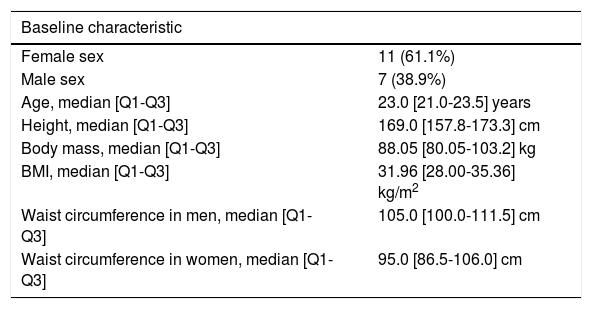
ParticipantsThe sample consisted of students from a Chilean university, aged 18 to 35 years, currently enrolled, and with a body mass index greater than 25kg/m2. Eligible participants were those who agreed to participate, had medical clearance for physical activity, and did not have any clinical or musculoskeletal conditions contraindicating participation in the training. The baseline characteristics available from the source study are summarized in Table 1.
Baseline demographic, anthropometric, and eligibility characteristics.
| Baseline characteristic | |
|---|---|
| Female sex | 11 (61.1%) |
| Male sex | 7 (38.9%) |
| Age, median [Q1-Q3] | 23.0 [21.0-23.5] years |
| Height, median [Q1-Q3] | 169.0 [157.8-173.3] cm |
| Body mass, median [Q1-Q3] | 88.05 [80.05-103.2] kg |
| BMI, median [Q1-Q3] | 31.96 [28.00-35.36] kg/m2 |
| Waist circumference in men, median [Q1-Q3] | 105.0 [100.0-111.5] cm |
| Waist circumference in women, median [Q1-Q3] | 95.0 [86.5-106.0] cm |
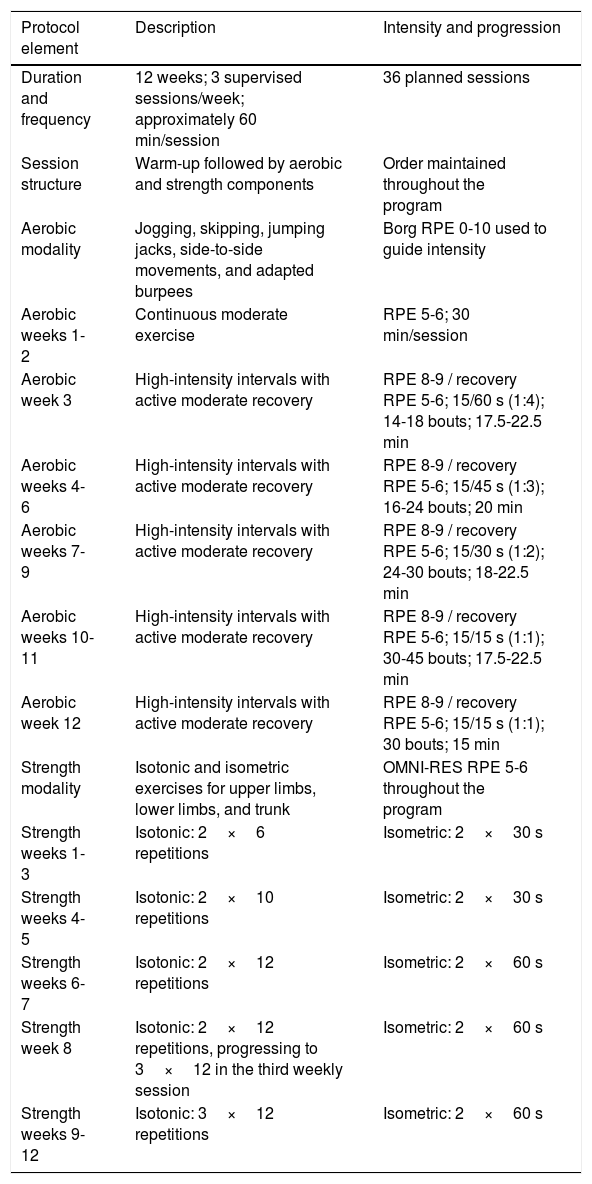
Participants completed a supervised concurrent training program over 12 weeks, with three sessions per week. Each session lasted approximately 60minutes and included a warm-up followed by aerobic and strength components. The aerobic block used functional and adaptable movements, including jogging, skipping, jumping jacks, side-to-side movements, and adapted burpees. During weeks 1-2, participants completed 30minutes of continuous moderate exercise at Borg RPE 5-6. From week 3 onward, interval exercise was performed at RPE 8-9 with active recovery at RPE 5-6: 15/60seconds (high-intensity/moderate-intensity ratio 1:4) in week 3, 15/45seconds (1:3) in weeks 4-6, 15/30seconds (1:2) in weeks 7-9, and 15/15seconds (1:1) in weeks 10-12. Depending on the session, the planned aerobic work time during the interval phases ranged from 15 to 22.5minutes and included 14-45 high-intensity bouts. The strength block included isotonic and isometric exercises targeting the upper limbs, lower limbs, and trunk, prescribed at OMNI-RES RPE 5-6. Isotonic volume progressed from 2 sets of 6 repetitions in weeks 1-3, to 2 sets of 10 repetitions in weeks 4-5, 2 sets of 12 repetitions in weeks 6-8, and 3 sets of 12 repetitions from the final session of week 8 through week 12. Isometric volume progressed from 2 sets of 30seconds in weeks 1-5 to 2 sets of 60seconds from week 6 onward. The complete phase-based prescription is summarized in Table 2 and follows the week-by-week protocol23. Assessments were conducted at two time points, before and after the program, using the same procedures on both occasions.
Concurrent training protocol.
| Protocol element | Description | Intensity and progression |
|---|---|---|
| Duration and frequency | 12 weeks; 3 supervised sessions/week; approximately 60 min/session | 36 planned sessions |
| Session structure | Warm-up followed by aerobic and strength components | Order maintained throughout the program |
| Aerobic modality | Jogging, skipping, jumping jacks, side-to-side movements, and adapted burpees | Borg RPE 0-10 used to guide intensity |
| Aerobic weeks 1-2 | Continuous moderate exercise | RPE 5-6; 30 min/session |
| Aerobic week 3 | High-intensity intervals with active moderate recovery | RPE 8-9 / recovery RPE 5-6; 15/60 s (1:4); 14-18 bouts; 17.5-22.5 min |
| Aerobic weeks 4-6 | High-intensity intervals with active moderate recovery | RPE 8-9 / recovery RPE 5-6; 15/45 s (1:3); 16-24 bouts; 20 min |
| Aerobic weeks 7-9 | High-intensity intervals with active moderate recovery | RPE 8-9 / recovery RPE 5-6; 15/30 s (1:2); 24-30 bouts; 18-22.5 min |
| Aerobic weeks 10-11 | High-intensity intervals with active moderate recovery | RPE 8-9 / recovery RPE 5-6; 15/15 s (1:1); 30-45 bouts; 17.5-22.5 min |
| Aerobic week 12 | High-intensity intervals with active moderate recovery | RPE 8-9 / recovery RPE 5-6; 15/15 s (1:1); 30 bouts; 15 min |
| Strength modality | Isotonic and isometric exercises for upper limbs, lower limbs, and trunk | OMNI-RES RPE 5-6 throughout the program |
| Strength weeks 1-3 | Isotonic: 2×6 repetitions | Isometric: 2×30 s |
| Strength weeks 4-5 | Isotonic: 2×10 repetitions | Isometric: 2×30 s |
| Strength weeks 6-7 | Isotonic: 2×12 repetitions | Isometric: 2×60 s |
| Strength week 8 | Isotonic: 2×12 repetitions, progressing to 3×12 in the third weekly session | Isometric: 2×60 s |
| Strength weeks 9-12 | Isotonic: 3×12 repetitions | Isometric: 2×60 s |
RPE: rating of perceived exertion; s: seconds; min: minutes.
Functional, quality-of-life, and cardiometabolic variables included in the correlation analysis were assessed. The functional variables consisted of the prone plank, elbow flexion-extension, horizontal jump, 6-minute walk test, and 30-second sit-to-stand test. Quality of life was assessed using the SF-12 questionnaire, considering total score, physical component, and mental component. Cardiometabolic variables included glycated hemoglobin, basal insulin, and HOMA-IR, with baseline values also considered to explore their association with the functional response to the intervention.
Construction of change variablesChange variables were constructed as post-minus-pre differences. When an increase indicated improvement, post minus pre was calculated; when a decrease was favorable, the direction was reversed, so that positive values consistently reflected a better response to training.
Statistical AnalysisQuantitative variables were described using the median and interquartile range; normality was assessed using the Shapiro-Wilk test. Pre-post comparisons were performed using the Wilcoxon signed-rank test. To analyze the response to the intervention, pre-post changes and Spearman correlations were calculated using complete paired observations, supplemented by a sensitivity analysis with complete cases. Given the exploratory nature of the study, Benjamini-Hochberg correction was applied, reporting p and q values, with q<0.05 considered significant. Baseline characteristics and selected associations are summarized in Tables 1 and 3, while the complete correlation matrices are provided in Supplementary Tables 1-2. Approximate 95% confidence intervals for Spearman rho were calculated using Fisher z transformation.
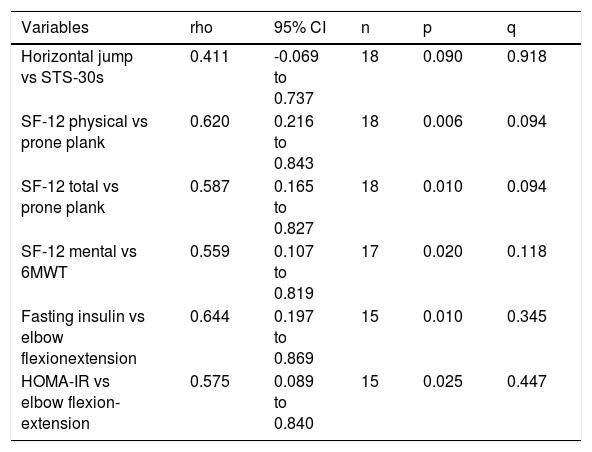
Selected exploratory associations between change variables.
| Variables | rho | 95% CI | n | p | q |
|---|---|---|---|---|---|
| Horizontal jump vs STS-30s | 0.411 | -0.069 to 0.737 | 18 | 0.090 | 0.918 |
| SF-12 physical vs prone plank | 0.620 | 0.216 to 0.843 | 18 | 0.006 | 0.094 |
| SF-12 total vs prone plank | 0.587 | 0.165 to 0.827 | 18 | 0.010 | 0.094 |
| SF-12 mental vs 6MWT | 0.559 | 0.107 to 0.819 | 17 | 0.020 | 0.118 |
| Fasting insulin vs elbow flexionextension | 0.644 | 0.197 to 0.869 | 15 | 0.010 | 0.345 |
| HOMA-IR vs elbow flexion-extension | 0.575 | 0.089 to 0.840 | 15 | 0.025 | 0.447 |
The sample analyzed consisted of 18 participants with pre- and post-intervention data available for at least some of the variables included in the correlational analysis. Due to missing data in some measurements, the number of cases varied depending on each pair of variables; therefore, the corresponding n was reported for each correlation in all analyses. Overall, the correlational analysis revealed a heterogeneous pattern of association among the different domains assessed following the intervention. Correlations in the functional domain did not show uniform behavior or robust associations after adjustment for multiple comparisons. In contrast, the strongest associations were concentrated at the intersection of quality of life and physical performance, while correlations with cardiometabolic variables were less consistent and more exploratory in nature. Taken together, these findings suggest that the response to the intervention was not uniformly expressed across domains but varied depending on the dimension assessed. Baseline characteristics are presented in Table 1, and the intervention reporting framework is shown in Table 2.
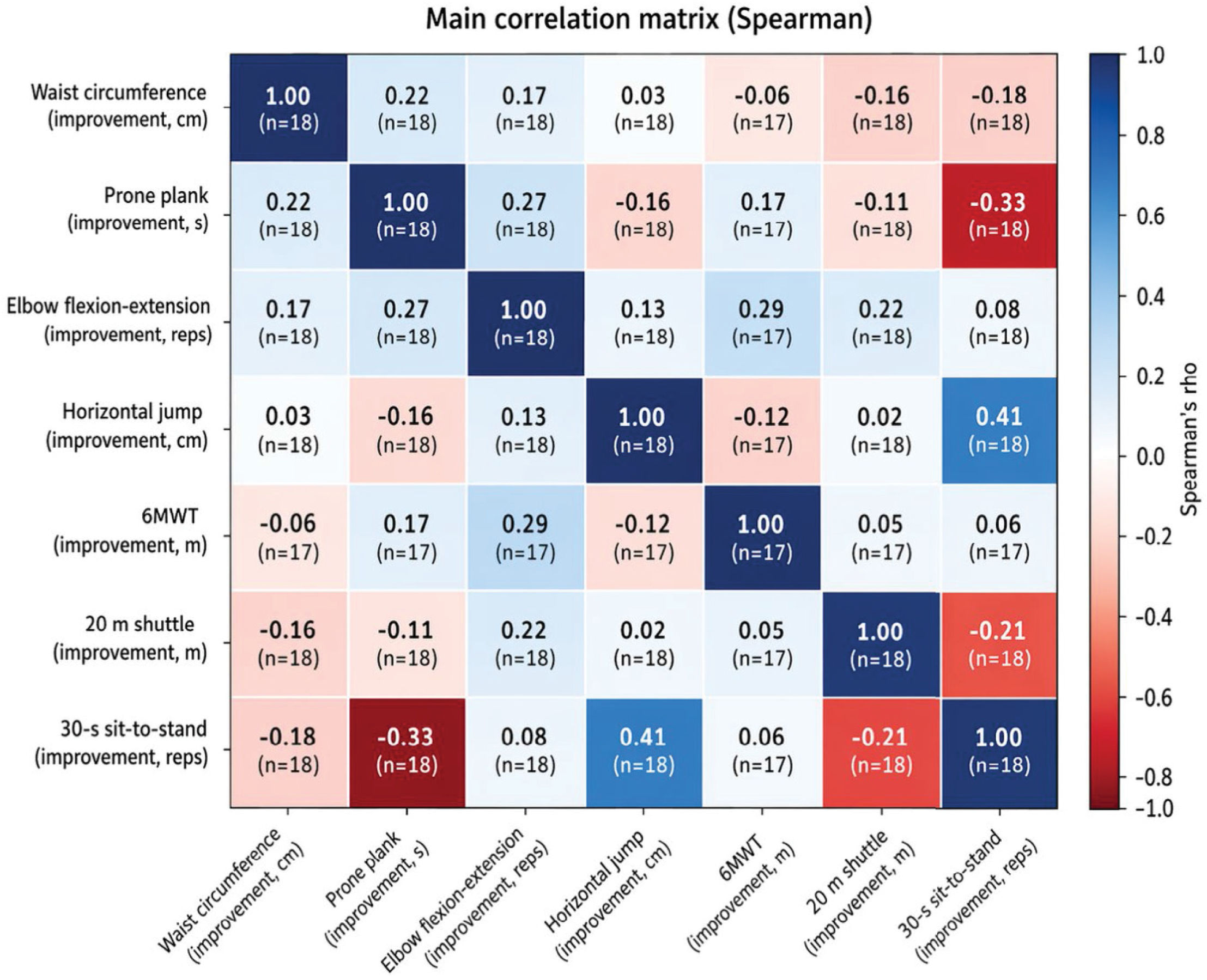
Association between functional changesThe functional correlation matrix showed that the associations between the changes observed across the various tests did not follow a uniform pattern (figure 1). No significant correlations were identified after adjustment for multiple comparisons. The strongest association within this block was the relationship between the change in the horizontal jump and the change in the STS-30s, with a moderate positive correlation (rho=0.411; 95% CI, -0.069 to 0.737; n=18; p=0.090; q=0.918), although it did not reach adjusted significance.
The other associations within the functional block were, in general, of weak to moderate magnitude and not significant. Among them, the inverse correlation between the change in prone plank and the change in STS-30s stood out (rho=-0.334; n=18; p=0.176; q=0.918), as well as the positive correlation between the change in elbow flexion-extension and the change in 6MWT (rho=0.291; n=17; p=0.257; q=0.918). Overall, the distribution of the coefficients around zero suggests that the functional response to training was heterogeneous and that there was no consistent coupling between the different tests evaluated.
In the sensitivity analysis using complete cases, the correlation between horizontal jump and STS-30s increased slightly in magnitude, remaining the strongest association within the functional block (rho=0.481; n=17; p=0.051; q=0.881), although it again failed to reach adjusted significance. Taken together, these results indicate that the variations observed in the functional tests did not tend to be systematically related to one another following the intervention. The numerical details for this block are presented in Supplementary Table 1.
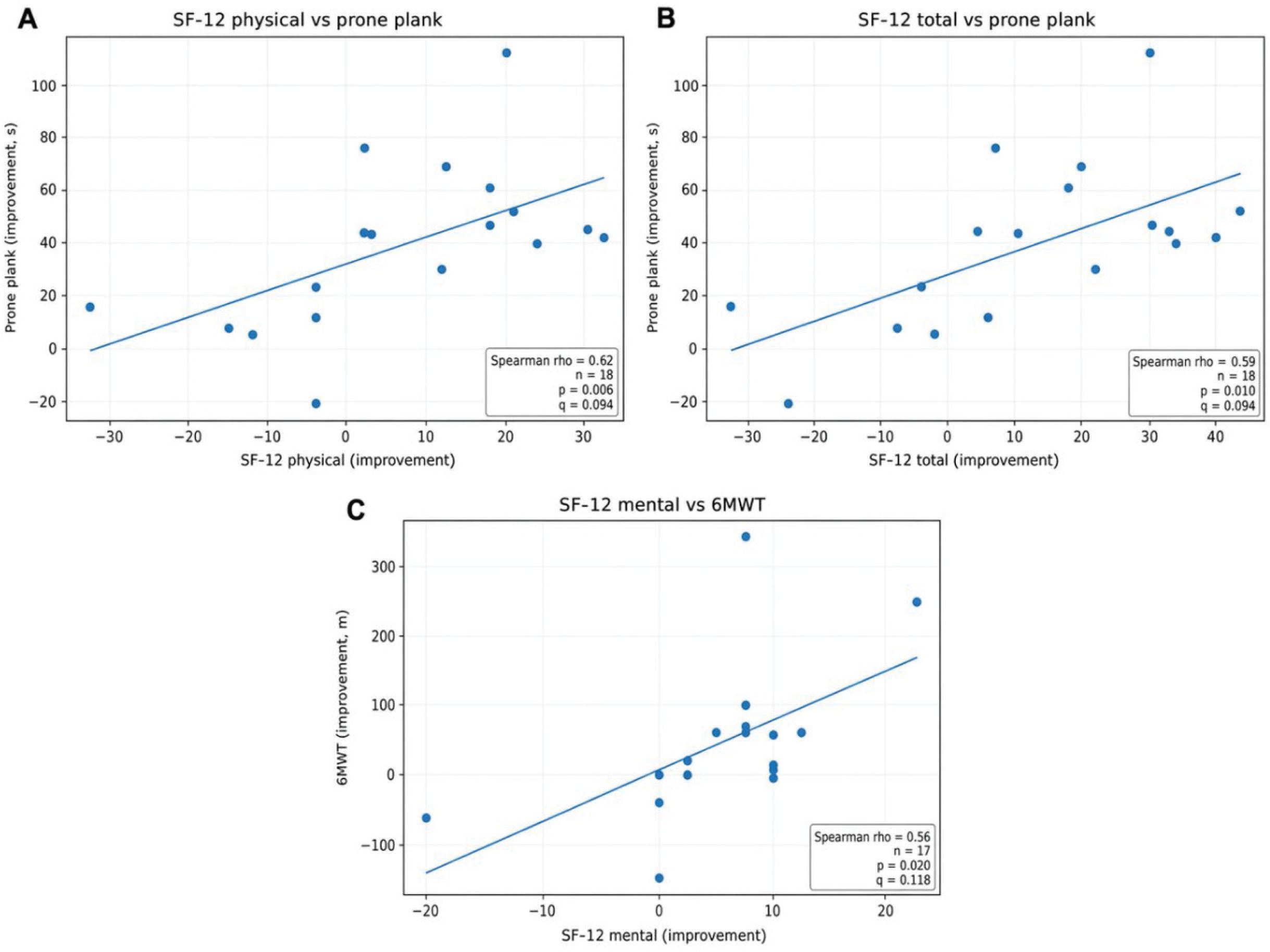
Association between functional changes and quality of lifeThe most consistent associations in the study were observed between quality of life and physical performance (Figure 2). Improvement in the physical component of the SF-12 showed a moderate-to-high positive correlation with improvement in the prone plank (rho=0.620; n=18; p=0.006; q=0.094) (Figure 2A). Similarly, improvement in the SF-12 total score was also positively associated with improvement in the prone plank (rho=0.587; n=18; p=0.010; q=0.094) (Figure 2B).
Associations between changes in quality of life and physical performance
Relationship between improvement in the physical component of the SF-12 and the prone plank test. B: Relationship between improvement in the total SF-12 score and the prone plank test. C: Relationship between improvement in the mental component of the SF-12 and distance covered in the 6-minute walk test (6MWT). All panels show the linear trend line and the statistical summary of Spearman's rho coefficient.
Furthermore, improvement in the mental health component of the SF-12 was positively associated with improvement in distance covered on the 6-minute walk test (rho=0.559; n=17; p=0.020; q=0.118) (Figure 2C). Although none of these associations reached an adjusted q-value<0.05, they were the strongest and had the lowest adjusted values within the set of secondary analyses, making them the most relevant exploratory signals of the study. The numerical details of these associations are presented in Supplementary Table 2. Selected associations are summarized in Table 3.
In contrast, other associations between quality of life and functional variables were weak and not statistically significant. For example, the relationship between improvement in the physical component of the SF-12 and the STS-30s was weak and inverse (rho=-0.295; n=18; p=0.235; q=0.808), whereas the association between improvement in the SF-12 total score and the 6MWT distance was positive but of lesser magnitude (rho=0.354; n=17; p=0.163; q=0.735).
Association between cardiometabolic changes and functional responseExploratory analysis of the relationship between changes in cardiometabolic variables and functional improvement revealed associations of moderate strength, although none remained significant after adjustment for multiple comparisons. The strongest association was observed between improvement in fasting insulin and improvement in elbow flexion-extension (rho=0.644; n=15; p=0.010; q=0.345). Similarly, improvement in HOMA-IR was also positively associated with improvement in elbow flexion-extension (rho=0.575; n=15; p=0.025; q=0.447).
Other associations of interest, although of lesser magnitude, included the inverse relationship between improvement in HbA1c and improvement in horizontal jump (rho=-0.497; n=15; p=0.059; q=0.711) and the positive relationship between improvement in HbA1c and improvement in 6MWT distance (rho=0.452; n=14; p=0.104; q=0.917). However, most of the coefficients in the cardiometabolic block were low and did not show a consistent direction, reinforcing the idea of a less consistent relationship between metabolic adaptation and functional response in this sample.
Association between baseline cardiometabolic profile and functional improvementAnalysis of the baseline cardiometabolic profile revealed inverse trends between certain markers of insulin resistance and the magnitude of functional response following training. In particular, pre-intervention baseline insulin tended to correlate negatively with improvement in the 6MWT (rho=-0.476; n=17; p=0.054; q=0.533) and with improvement in the STS-30s (rho=-0.440; n=17; p=0.077; q=0.533).
Similarly, baseline HOMA-IR showed negative correlations with improvement in the STS-30s (rho=-0.434; n=17; p=0.082; q=0.533) and with improvement in 6MWT distance (rho=-0.425; n=17; p=0.089; q=0.533). Although these associations did not reach adjusted statistical significance, their direction suggests that a less favorable baseline metabolic profile may be associated with a smaller functional gain following the intervention.
DiscussionThe main finding was that, after 12 weeks of concurrent training, there was no consistent pattern of association among the domains assessed, indicating heterogeneous responses and uncoupled adaptations. Although no correlations were found after statistical adjustment, exploratory associations emerged between quality of life and physical performance: improvements in the physical and total components of the SF-12 with the prone plank, and in the mental component with the 6-minute walk test. In this sample, health perception was more strongly linked to functional changes than to cardiometabolic changes.
The absence of consistent associations within the functional block suggests that adaptation to concurrent training is neither linear nor uniform. Although it combines aerobic and strength stimuli, the magnitude of the change depends on factors such as baseline fitness, specificity, adherence, biological variability, and test sensitivity14,24. Thus, improvement in one capacity does not necessarily imply improvement in another. This is consistent with evidence showing differential benefits depending on the component assessed and the exercise combination12,25. At the same time, studies conducted in an overweight and obese Chilean pediatric population have shown relatively consistent average improvements in tests of muscle function and aerobic capacity after 12 weeks of concurrent training16,17. The difference from our results likely lies in the fact that those studies focused on the pre-post effect of the intervention, whereas our study analyzed the association between the magnitude of changes across domains.
Within this heterogeneous pattern, the positive association between improvements in the horizontal jump and the STS-30s was the most evident association within the functional domain of functional capacity, although it did not reach adjusted significance. From a physiological perspective, this trend is plausible, as both tests share, to varying degrees, components related to lower limb function. The horizontal jump more clearly reflects power production and the ability to apply force rapidly, while the STS-30s integrates functional strength-endurance and motor control in a repetitive and ecologically valid task. Therefore, a moderate association between the two variables could indicate that certain neuromuscular adaptations of the lower limbs tended to manifest in both tests, even though the program did not induce functional convergence consistent enough to generate a robust correlation across the entire sample.
The most interesting associations were found between quality of life and physical function, particularly between the prone plank test and the physical and total scores on the SF-12. This finding suggests that improvements in trunk muscle endurance may be accompanied by a more favorable perception of overall physical functioning and general health status. One possible explanation is that the trunk musculature plays a key role in postural stability, exercise tolerance, and the performance of multiple motor tasks; therefore, changes in this capacity may be more noticeable to participants than other less obvious adaptations in daily life. Furthermore, in overweight and obese individuals, body image, ease of movement, and physical self-confidence can significantly influence subjective health assessment, which could explain why certain functional improvements are reflected in perceived quality of life11,18,20.
Similarly, the positive association between improvement in the mental health component of the SF-12 and improvement in the 6-minute walk test (6MWT) suggests that increased submaximal functional capacity may be accompanied by improved psychological well-being or a more favorable perception of mental state. Although this relationship should be interpreted with caution due to the sample size and the exploratory nature of the analysis, it is clinically plausible. The 6MWT is a test that closely mirrors everyday functional experience, and improvement in it may be associated with a greater sense of physical competence, autonomy, and confidence in performing prolonged exertion-aspects that can positively impact perceptions of well-being and mental health. Previous studies have shown that regular physical exercise can contribute to improved psychological and quality-of-life outcomes in overweight or obese individuals, although the magnitude of this effect varies across studies18,21,26. Our findings suggest that this relationship may be expressed not only in terms of the average effect of the intervention but also through an association between the magnitude of functional change and the magnitude of perceived change in mental health.
In contrast, the associations between cardiometabolic changes and functional improvement were less consistent. Although moderate correlations were observed between improvements in fasting insulin or HOMA-IR and improvements in elbow flexion-extension, these correlations did not hold after adjustment for multiple comparisons. This pattern could be explained by several reasons. First, metabolic adaptations typically depend not only on exercise but also on dietary factors, sleep, stress, and baseline metabolic status-elements that were neither intervened upon nor intensively controlled in this study. Second, in young populations with overweight and obesity, baseline values of some biomarkers may not be as altered as in populations with established metabolic disease, which reduces the margin for change and makes it difficult to identify clear associations with functional improvement. Third, the sample size of the subgroup with complete cardiometabolic data was smaller, which reduces the precision of the estimates and increases the probability of type II error. This interpretation is consistent with studies showing favorable effects of combined exercise on insulin resistance and cardiometabolic biomarkers, but also significant variability in response depending on the population and the protocol used12,25,27.
Another interesting finding is the inverse relationship between basal insulin/HOMA-IR and improvements in the 6-minute walk test (6MWT) and 30-second sit-to-stand test (STS-30s), suggesting that a poorer metabolic profile may limit the functional response, consistent with the heterogeneity of exercise response28. However, this is an exploratory finding. Interpretation should be cautious due to limitations: small sample size, uncontrolled pre-post design, absence of causality in correlations, adjustment for multiple comparisons, and lack of control for variables such as diet, physical activity, sleep, and academic workload. The limited sample size was particularly important because numerous correlations were explored and only 14-18 complete pairs were available for some analyses, resulting in imprecise estimates and a substantial risk of type II error. Missing data, the absence of a control group, and the lack of standardized information on baseline physical activity further restrict causal interpretation and generalizability.
Clinical implications and future directionsThe present associations should be used to generate hypotheses rather than to guide prediction or causal inference. Future studies should use larger samples, prespecified primary associations, a control group, complete intervention reporting, and prospective control of diet, sleep, stress, and external physical activity.
ConclusionThe findings of the present study suggest that the response to concurrent training in overweight and obese college students was multidimensional and heterogeneous. The changes observed following the intervention did not show a uniform pattern of association across all domains assessed, indicating that functional, quality-of-life, and cardiometabolic adaptations did not necessarily occur in tandem. However, exploratory associations were identified between certain functional improvements and quality of life, particularly between trunk muscular endurance and the physical and overall components of the SF-12, as well as between submaximal functional capacity and the mental component of that questionnaire. In contrast, the relationships between functional changes and cardiometabolic variables were less consistent and should be interpreted with caution. Taken together, these results support the need to understand exercise adaptation from an integrative perspective and suggest that, in this population, functional improvement may be more closely related to perceived health than to metabolic response. Future studies with larger sample sizes and confirmatory designs should evaluate these patterns of association more precisely. Nevertheless, none of the correlations remained significant after adjustment for multiple comparisons. Considering the small sample and the number of explored associations, the results are hypothesis-generating and require confirmation in larger controlled studies.
FundingDICYT Project 022406CJ_MED, Universidad de Santiago de Chile (USACH).
Ethics CommitteeApproved by the Comité de Ética Institucional of the Universidad de Santiago de Chile (USACH) on April 14, 2025. Approval number: 249/2025
Declaration of Conflict of InterestNo conflicts of interest are reported.
The authors thank Victoria Cifuentes Silva for her review of the final manuscript.

