


The release of a pneumatic tourniquet during total knee arthroplasty (TKA) causes an abrupt increase in blood flow to the lower limb, which may result in transient haemodynamic instability. The aim of this study was to quantify the magnitude and duration of these changes in a real-world clinical setting.
MethodsA multicenter retrospective observational study was conducted including 149 patients undergoing primary TKA under pneumatic tourniquet ischaemia. Systolic (SBP), diastolic (DBP), and mean arterial pressure (MAP), heart rate (HR), respiratory rate (RR), and oxygen saturation (SpO2) were recorded at three time points: baseline (pre-release), 3min (T3), and 6min (T6) after tourniquet release. Statistical analysis was performed using repeated-measures ANOVA or the Friedman test, according to data distribution, with p<0.05 considered statistically significant.
ResultsFollowing tourniquet release, a significant immediate decrease in SBP and DBP was observed (p<0.001), with mean reductions of 19.8% and 21.2%, respectively, at T3. HR showed a mild but significant increase (p=0.012). SpO2 decreased slightly (p=0.034) without clinical relevance. Transient arrhythmias were recorded in 8.7% of patients. At 6min post-release, all parameters returned to baseline values.
ConclusionTourniquet release during TKA is associated with transient haemodynamic changes and early recovery. These findings support the need for reinforced monitoring in patients classified as ASA III and/or with ischaemia times longer than 85min, and provide a rationale for future prospective studies incorporating advanced haemodynamic monitoring.
Level of evidenceLevel III, retrospective study.
La liberación del manguito neumático durante la artroplastia total de rodilla (ATR) provoca un flujo sanguíneo abrupto hacia el miembro inferior, lo que puede generar inestabilidad hemodinámica transitoria. El objetivo de este estudio fue cuantificar la magnitud y duración de estos cambios en un contexto clínico real.
MétodosSe realizó un estudio observacional retrospectivo multicéntrico en 149 pacientes sometidos a ATR primaria bajo isquemia con manguito neumático. Se registraron presión arterial sistólica (PAS), diastólica (PAD) y media (PAM), frecuencia cardíaca (FC), frecuencia respiratoria (FR) y saturación de oxígeno (SpO2) en 3 momentos: basal (preliberación), a los 3min (T3) y a los 6min posliberación (T6). El análisis estadístico se realizó mediante ANOVA de medidas repetidas o prueba de Friedman, según la distribución de los datos, considerando significativo p<0,05.
ResultadosTras la liberación del manguito se observó una disminución inmediata y significativa de la PAS y PAD (p<0,001), con reducciones medias del 19,8% y 21,2% respectivamente en T3. La FC presentó un aumento leve pero significativo (p=0,012). La SpO2 mostró un descenso mínimo (p=0,034), sin relevancia clínica. Se registraron arritmias transitorias en el 8,7% de los pacientes. A los 6min, todos los parámetros retornaron a valores basales.
ConclusiónLa liberación del manguito neumático se asocia a cambios hemodinámicos transitorios, con recuperación temprana. Estos hallazgos sugieren reforzar la monitorización en pacientes con ASA III y/o isquemia >85min, y motivan estudios prospectivos con mediciones hemodinámicas avanzadas.
Nivel de evidenciaNivel III, estudio observacional retrospectivo.
Total knee arthroplasty (TKA) is one of the most frequently performed orthopaedic surgeries for the treatment of advanced osteoarthritis. To optimise the surgical field and reduce intraoperative blood loss, the use of a pneumatic tourniquet on the thigh remains standard practice. However, tourniquet release generates a sudden reperfusion of the lower limb, capable of inducing transient haemodynamic alterations and, in selected cases, clinically relevant cardiovascular events.1–3
While the tourniquet offers technical advantages—such as improved surgical visibility and reduced bleeding—its systemic effects are not without risk. Previous studies have described post-release hypotension, acid–base disturbances, transient metabolic changes, and arrhythmias, especially in patients with cardiovascular comorbidities or limited physiological reserve.4–7 The magnitude of these changes appears to depend on multiple factors, including the duration of ischaemia, the cuff inflation pressure, the volume of muscle involved, and the patient's baseline clinical status.8
From a pathophysiological viewpoint, tissue reperfusion is associated with the release of metabolites accumulated during ischaemia—such as lactate, carbon dioxide, and vasoactive mediators—which promote transient systemic vasodilation and a reduction in peripheral vascular resistance, resulting in a drop in mean arterial pressure.9,10 In this context, various strategies have been proposed to mitigate these effects, including gradual or intermittent cuff release, with variable results regarding haemodynamic stability.11,12
Despite the extensive literature on the use of the rotator cuff in orthopaedic surgery, controversies persist regarding the true clinical relevance of the haemodynamic changes observed after rotator cuff release. Most available studies are single-centre, with limited sample sizes, and there is little evidence systematically quantifying the magnitude, duration, and clinical impact of these changes in routine clinical practice, as well as identifying predictive risk factors.
The objectives of this retrospective multicentre study were: (1) to quantify the magnitude and duration of haemodynamic changes after rotator cuff release in total knee arthroplasty (TKA); (2) to identify independent predictors of clinically significant hypotension; and (3) to explore, in a secondary and descriptive manner, the immediate clinical consequences associated with these changes in selected subgroups of patients.
Materials and methodsStudy designA retrospective, multicentre, observational study was conducted at three institutions in Argentina between January and December 2023. The protocol was designed following the principles of the Declaration of Helsinki (2013 version). All patients signed an institutional informed consent form for the use of their data for research purposes.
The study was previously registered in the institutional clinical research database.
Inclusion and exclusion criteriaInclusion criteria:
- •
Patients over 50 years of age undergoing unilateral primary total knee replacement (TKR).
- •
Surgery performed under ischaemia with a pneumatic tourniquet on the thigh.
Exclusion criteria:
- •
Simultaneous bilateral TKR or prosthetic revision.
- •
Patients with a history of chronic arrhythmias, heart failure, or prior hypovolaemic shock.
- •
Sustained intraoperative hypotension unrelated to cuff release.
- •
Cases with incomplete clinical records or missing data at any of the measurement points.
- •
Surgeries performed in emergency settings or due to infectious causes.
- •
Patients with a history of skin grafts.
- •
Access for dialysis or previous vascular reconstructions.
- •
Patients with peripheral arterial disease.
- •
Significant scar tissue at the cuff site.
- •
Thigh circumference>100cm.
All procedures were performed by orthopaedic surgeons specialising in joint replacement. The pneumatic cuff was placed on the proximal third of the thigh and inflated after ex-sanguination of the limb by elevation and Esmarch bandaging. The cuff inflation pressure was adjusted according to the patient's systolic blood pressure (SBP), using a standardised safety margin, with values between 250 and 300mmHg, in accordance with the institutional protocols of the participating centres. Spinal anaesthesia was always administered. In all cases, standard antibiotic prophylaxis was used with cefazolin (2g preoperatively and 2 additional postoperative doses) and 1g of intravenous tranexamic acid prior to ischaemia.
Data collection and variablesThe following data were extracted from the medical records:
- •
Demographic variables: age, sex, body mass index (BMI), comorbidities, ASA classification.13
- •
Intraoperative variables: type of anaesthesia, ischaemia pressure and duration (minutes), fluid therapy volume, and use of vasopressors.
- •
Haemodynamic variables: systolic blood pressure (SBP), diastolic blood pressure (DBP), mean arterial pressure (MAP; calculated as [SBP+2DBP]/3 when not recorded on the monitor), heart rate (HR), respiratory rate (RR), and oxygen saturation (SpO2).
The parameters were recorded at three defined time points:
- •
T0: immediately before cuff release.
- •
T3: 3min post-release.
- •
T6: 6min post-release.
The selection of measurement time points (3 and 6min post-release) was based on routine clinical practice and previous studies, which have demonstrated that the most pronounced haemodynamic changes occur in the first few minutes after cuff release, followed by a rapid recovery within approximately 5–10min.
Clinical definitions: Clinically relevant hypotension was defined as any of the following criteria during the first 10min post-release: (a) systolic blood pressure (SBP) <90mmHg, (b) mean arterial pressure (MAP) <65mmHg, or (c) a ≥30% decrease in SBP from baseline (T0), especially if intervention was required (vasopressor bolus and/or fluid resuscitation).
The need for haemodynamic interventions (vasopressors, fluids) after cuff release and the presence of complications during recovery (nausea, vomiting, renal impairment) were also recorded.
In addition, the presence of arrhythmias or transient electrocardiographic abnormalities during the first 10min after reperfusion was recorded.
All patients underwent standard intraoperative anaesthetic monitoring, with serial recordings of systolic blood pressure (SBP), diastolic blood pressure (DBP), mean arterial pressure (MAP), and heart rate, before and after cuff release. Only cases with complete medical records and available data at all established measurement points were included in the analysis.
Bias controlTo minimise measurement and selection bias:
- •
Participating centres used the same anaesthetic and haemodynamic monitoring protocols.
- •
Patients with incomplete or inconsistent records were excluded.
- •
Data analysis was performed by two independent researchers, blinded to the originating centre.
- •
Sensitivity analysis was performed excluding extreme cases (greater than 2 standard deviations [SD] from the mean baseline blood pressure).
Statistical analysis was performed using SPSS v.26 (IBM Corp., Armonk, NY, USA). Normality of variables was verified using the Shapiro–Wilk test.
- •
Normally distributed continuous variables are expressed as mean±SD.
- •
Non-normally distributed variables are expressed as median [interquartile range].
- •
Categorical variables are presented as frequency (percentage).
The following methods were used:
- •
Repeated measures ANOVA with Bonferroni correction to compare haemodynamic values (T0-T3-T6) when the data met normality requirements.
- •
Friedman test for nonparametric variables.
- •
Paired Student's t-test or Wilcoxon signed-rank test for point comparisons.
- •
Ninety-five per cent confidence intervals (95% CI) and relative percentage changes from baseline values were calculated. A p-value<.05 was considered statistically significant. Mean arterial pressure (MAP) and its relative variation were also reported due to its relevance as an estimator of organ perfusion.
Additional analyses were performed by subgroups according to the ASA classification (I–II vs. III) to identify clinically relevant variations. In exploratory analysis, the use of vasopressors after release (yes/no) was considered a potential covariate, and a sensitivity analysis was planned excluding cases with immediate haemodynamic interventions when the data allowed.
The cut-off point of 85min for ischaemia time was selected for its clinical relevance and because it had been previously associated with a higher risk of complications in the literature, and not solely derived from a post hoc analysis of the present study. Furthermore, before the final inclusion of variables in the regression model, collinearity between covariates was assessed, and no significant collinearity was identified.
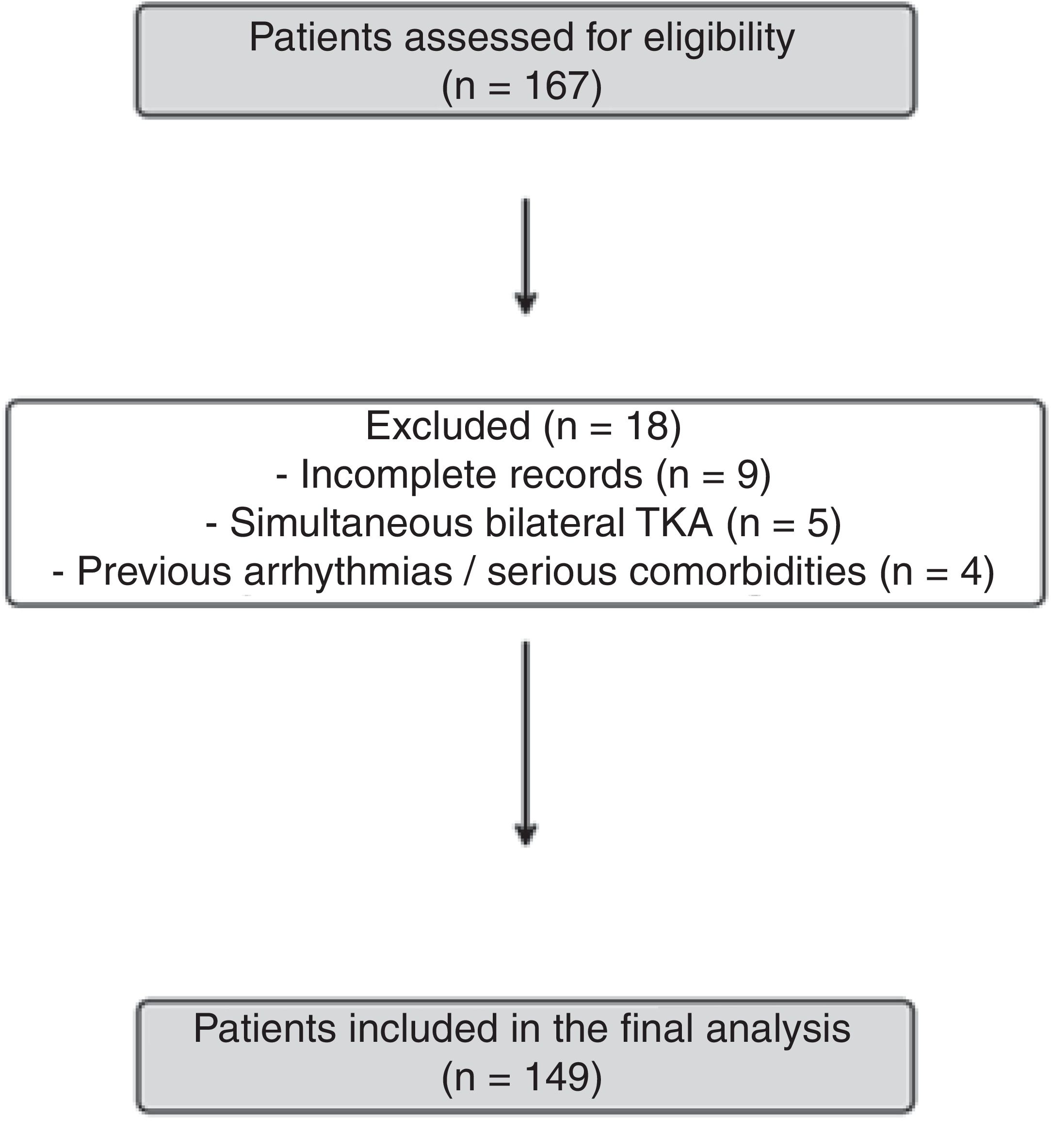
ResultsPopulation characteristicsOf the 167 patients initially evaluated, 149 met the inclusion criteria and were ultimately analysed (Fig. 1).

The mean age was 68.5±9.2 years, with a predominance of females (62%). The distribution according to ASA classification was: ASA I (12%), ASA II (58%), and ASA III (30%). Sixty percent of the patients had at least one comorbidity. The most frequent comorbidities were hypertension (45%) and diabetes mellitus (18%). The average duration of ischaemia was 68.7±11.9min, with a mean cuff pressure of 275±15mmHg.
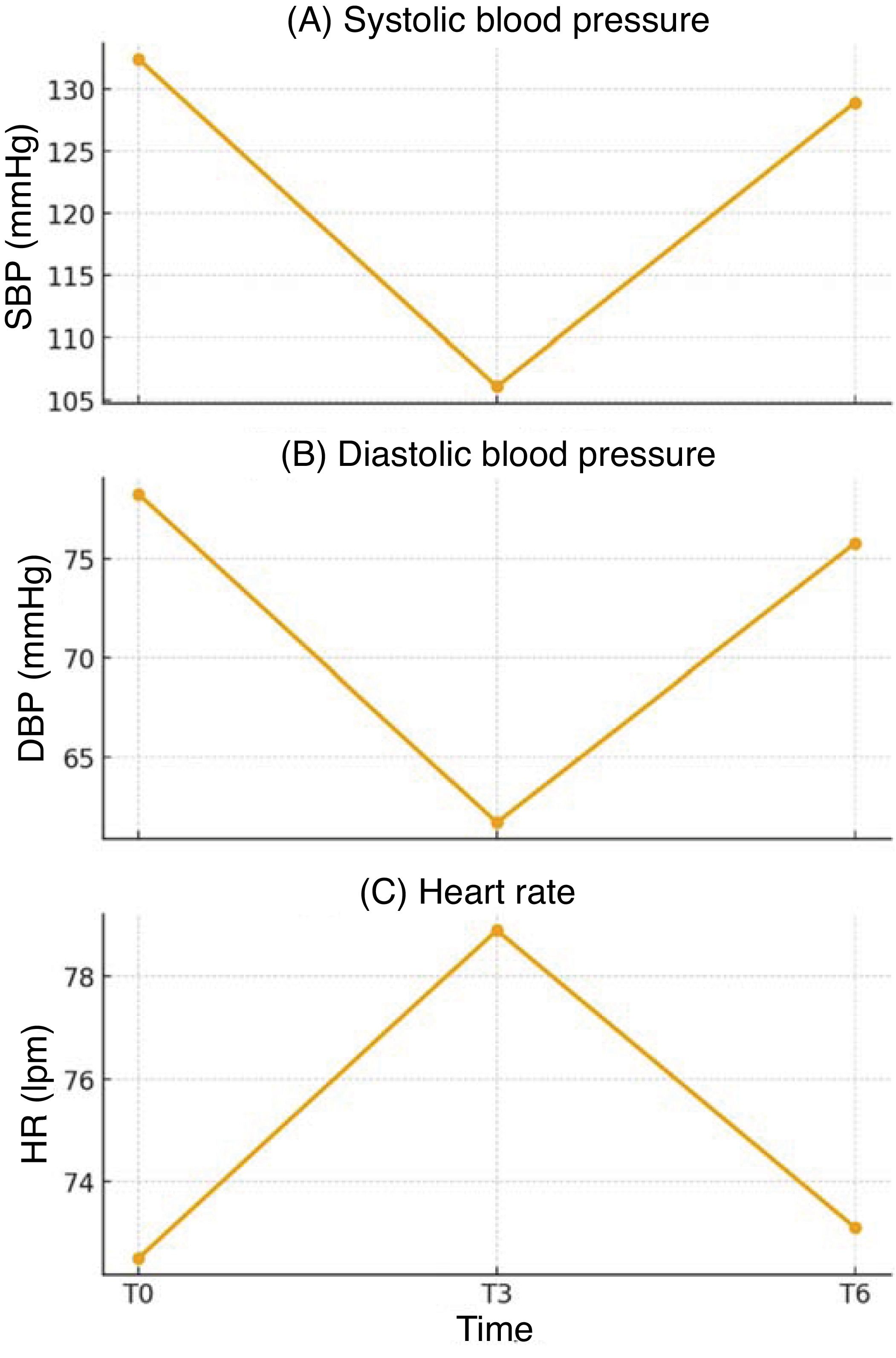
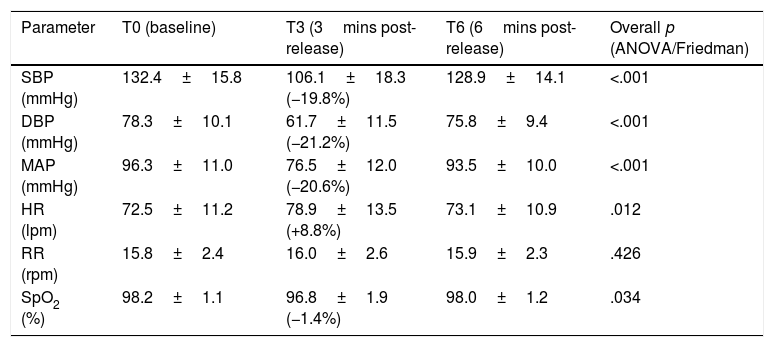
Haemodynamic changes following cuff releaseAfter release of the pneumatic cuff, significant haemodynamic changes were observed, distinguished by an acute drop in systolic blood pressure (SBP), diastolic blood pressure (DBP), and mean arterial pressure (MAP), with progressive recovery to baseline values 6min post-release (Table 1 and Fig. 2).
Haemodynamic parameters at the three measurement times (n=149).
| Parameter | T0 (baseline) | T3 (3mins post-release) | T6 (6mins post-release) | Overall p (ANOVA/Friedman) |
|---|---|---|---|---|
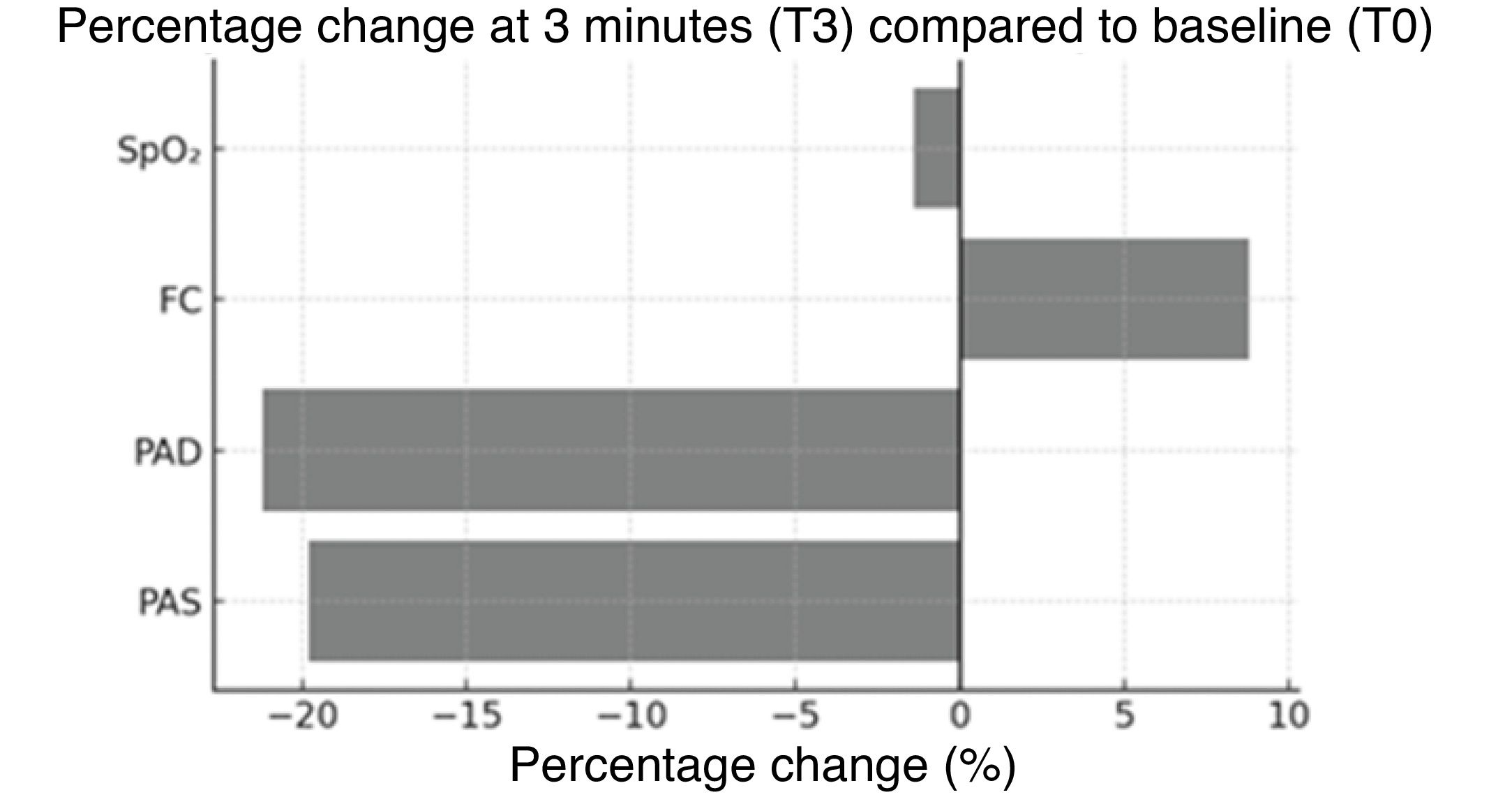
| SBP (mmHg) | 132.4±15.8 | 106.1±18.3 (−19.8%) | 128.9±14.1 | <.001 |
| DBP (mmHg) | 78.3±10.1 | 61.7±11.5 (−21.2%) | 75.8±9.4 | <.001 |
| MAP (mmHg) | 96.3±11.0 | 76.5±12.0 (−20.6%) | 93.5±10.0 | <.001 |
| HR (lpm) | 72.5±11.2 | 78.9±13.5 (+8.8%) | 73.1±10.9 | .012 |
| RR (rpm) | 15.8±2.4 | 16.0±2.6 | 15.9±2.3 | .426 |
| SpO2 (%) | 98.2±1.1 | 96.8±1.9 (−1.4%) | 98.0±1.2 | .034 |
Data are presented as mean±SD. Differences calculated using repeated measures ANOVA with Bonferroni correction.

Heart rate increased transiently from 72.5±11.2bpm to 78.9±13.5bpm (p=.012), while SpO2 decreased slightly from 98.2±1.1% to 96.8±1.9% (p=.034), remaining within physiological ranges. Respiratory rate showed no statistically significant changes (Table 1 and Fig. 3).

Transient arrhythmias were recorded in 13 patients (8.7%), consisting of isolated atrial or ventricular premature beats. Most of these events occurred in patients classified as ASA III and resolved spontaneously, without requiring specific treatment or interfering with haemodynamic recovery after cuff release.
Subgroup analysisWhen stratified by ASA classification, ASA III patients showed a more pronounced drop in systolic blood pressure (SBP) at 3min (−23.5%) compared to ASA I–II patients (−18.1%), although this difference was not statistically significant (p=.051). No relevant differences were found in heart rate or SpO2 between the groups.
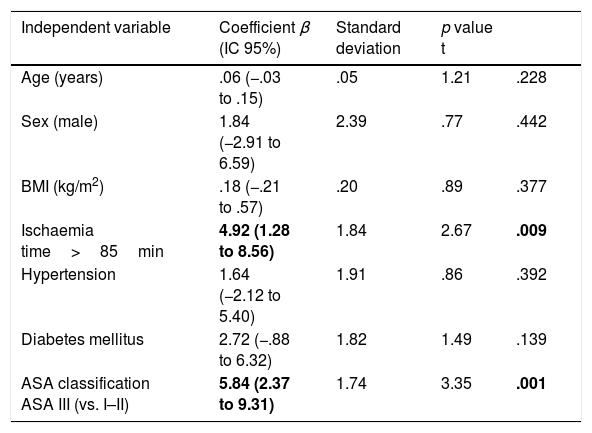
Multivariate analysisTo identify independent predictors of a greater drop in SBP at 3min after cuff release (T3), a multiple linear regression model was performed with the dependent variable “% drop in SBP at T3.” Covariates included age, sex, BMI, ischaemia time (>85min), comorbidities (hypertension and diabetes), and ASA classification.
The model showed an acceptable fit (adjusted R2=.21; F=4.18; overall p=.001).
The results showed that ischaemia time greater than 85min (β=4.92; 95% CI: 1.28–8.56; p=.009) and ASA III classification (β=5.84; 95% CI: 2.37–9.31; p=.001) were independently associated with a greater percentage decrease in systolic blood pressure. No significant associations were observed with age, sex, BMI, or the presence of comorbidities (Table 2).
Multivariate analysis of independent predictors of greater systolic blood pressure drop in T3.
| Independent variable | Coefficient β (IC 95%) | Standard deviation | p value t | |
|---|---|---|---|---|
| Age (years) | .06 (−.03 to .15) | .05 | 1.21 | .228 |
| Sex (male) | 1.84 (−2.91 to 6.59) | 2.39 | .77 | .442 |
| BMI (kg/m2) | .18 (−.21 to .57) | .20 | .89 | .377 |
| Ischaemia time>85min | 4.92 (1.28 to 8.56) | 1.84 | 2.67 | .009 |
| Hypertension | 1.64 (−2.12 to 5.40) | 1.91 | .86 | .392 |
| Diabetes mellitus | 2.72 (−.88 to 6.32) | 1.82 | 1.49 | .139 |
| ASA classification ASA III (vs. I–II) | 5.84 (2.37 to 9.31) | 1.74 | 3.35 | .001 |
Multiple linear regression model: Dependent variable: % drop in SBP at T3.
Adjusted R2=.21; F=4.18; overall p=.001.
The analysis of this subgroup was conducted with a descriptive and exploratory approach, given the small number of cases, and does not allow for establishing causal relationships, but only for generating hypotheses about possible clinical implications in selected patients.
To evaluate the clinical relevance of the most severe hypotension, a subgroup of 8 patients (5.4% of the cohort) who experienced a drop in systolic blood pressure (SBP) of >30% on T3 was identified.
Characteristics of the subgroup:
- •
6 patients (75% of the subgroup) were classified as ASA III.
- •
2 patients were classified as ASA II.
Required interventions:
- •
All 8 patients required active interventions during the post-release monitoring period:
- ∘
100% (8/8) received vasopressor boluses (phenylephrine or ephedrine).
- ∘
100% (8/8) received an additional intravenous fluid bolus (500–1000mL crystalloids).
Immediate postoperative complications: In the first 6h postoperatively, the following were recorded in this subgroup:
- •
Four patients (50%) experienced nausea. All of them were ASA III.
- •
One patient (12.5%) experienced episodes of vomiting.
- •
One patient (12.5%) experienced mild renal impairment, defined as an increase in serum creatinine >1.5 times the baseline value at 24h. This patient had a history of diabetes mellitus, chronic kidney disease, and was ASA III.
In this multicentre study, we observed that the release of the pneumatic cuff during total renal replacement therapy (TRT) induces an acute and transient drop in systolic and diastolic blood pressure, accompanied by an increase in heart rate, which returns to normal around 6min. These findings reinforce the notion that sudden reperfusion after mechanical ischaemia produces haemodynamic changes, albeit self-limiting ones, in a selected population
Our results are consistent with the classic reports by Song et al., who documented significant decreases in cardiac output and mean arterial pressure after tourniquet deflation, without compromising regional cerebral oxygen saturation (rSO2) in elderly patients.2 Previous studies have employed advanced monitoring techniques to characterise tissue reperfusion distal to the cuff. While these studies provide relevant mechanistic information, these variables were not directly evaluated in the present study and are mentioned only for contextual purposes.14–19 The ischaemia–reperfusion phenomenon associated with the release of the pneumatic cuff can induce transient systemic vasodilation and a reduction in peripheral vascular resistance, which explains the acute drop in blood pressure observed after reperfusion.17–19 Various strategies, such as gradual cuff release, have been proposed to improve haemodynamic stability after reperfusion. However, the available evidence is heterogeneous, and its systematic implementation in clinical practice remains a subject of debate.20 Prolonged cuff use as a risk factor has been widely discussed. Olivecrona et al. warned that excessive ischaemia times can induce hypoxic tissue damage and increase postoperative complications.21 In our study, the average duration was moderate (∼69min), which could explain the observed reversibility of haemodynamic values without apparent sequelae. Elmohamady et al., in a comparison between gradual vs. Intermittent tourniquet release was found to offer better haemodynamic stability and less acid–base disturbance.11 Our series supports the clinical plausibility of these techniques, as no significant haemodynamic collapses were observed. Furthermore, the effects of the tourniquet are not limited to immediate changes. Zhang et al. discuss that, although it reduces intraoperative bleeding, its use has been associated with more occult blood loss, increased pain, quadriceps weakness, and a risk of local complications.7 Accordingly, other systematic reviews suggest that the benefit in surgical visibility should be weighed against these potential adverse effects.22,23 The transient drop in blood pressure after cuff release may be due to several concurrent mechanisms: release of local vasodilators, sudden reduction of peripheral vascular resistance, and redistribution of blood volume to the ischaemic limb. Although these changes were temporary and well-tolerated in our patients, they could cause adverse events in individuals with compromised cardiovascular reserve.24 The observed increase in heart rate can be interpreted as a compensatory reflex response (activation of the sympathetic nervous system) to maintain cardiac output in the face of decreased afterload. The absence of significant changes in respiratory rate suggests that the respiratory component did not play a major role in this acute dynamic. The finding of transient arrhythmias in approximately 8–9% of patients is consistent with what has been described in other studies as possible effects of hyperkalaemia, sudden deceleration of venous return, or sudden ionic changes.25,26 Although these arrhythmias did not cause clinical complications in our sample, they warrant attention in at-risk populations.
Multivariate analysis identified clinical factors independently associated with increased hypotension following cuff release. Specifically, prolonged ischaemia time (>85min) and ASA III classification correlated with a more pronounced drop in systolic blood pressure (SBP) at T3. These findings are consistent with previous studies linking longer ischaemia duration with increased release of vasodilatory metabolites and free radicals during reperfusion, which potentiates transient vasoplegia and decreases systemic vascular resistance.19,20
Beyond the proposed pathophysiological mechanisms, the findings of this study are primarily relevant from a practical clinical perspective. Identifying patients at higher risk of post-release hypotension—particularly those classified as ASA III or with prolonged ischaemia times—allows for optimised haemodynamic monitoring, anticipation of the need for therapeutic interventions, and reinforcement of preventive strategies in vulnerable subgroups.
Identifying a subgroup of patients with pronounced hypotension (>30% drop in systolic blood pressure) allowed us to explore the tangible clinical consequences of this haemodynamic alteration. The fact that 75% of these patients were ASA III reinforces our previous finding regarding the vulnerability of this group. Beyond the universal need for pharmacological and fluid therapy interventions to stabilise them, this subgroup presented a higher incidence of immediate postoperative complications, such as nausea, vomiting, and, in one case with underlying comorbidities (diabetes and renal insufficiency), mild deterioration of renal function. While these events were not severe in this cohort, they suggest that the magnitude of post-release hypotension can extend beyond the intraoperative period and impact early postoperative morbidity.26–31 This is particularly relevant in high-risk patients, in whom already compromised renal and splanchnic perfusion may be more susceptible to episodes of sudden hypotension, however transient they may be.
This study has several inherent design limitations. First, the retrospective nature of the analysis carries a risk of selection and information bias, despite efforts to standardise data collection and apply strict inclusion and exclusion criteria. Second, no sample size calculation was performed a priori. As a result, some subgroup analyses (e.g., ASA III vs. I–II) may be underpowered to detect small differences. Third, haemodynamic monitoring relied on standard routine methods (non-invasive blood pressure and derived variables). The absence of advanced measurements (cardiac output, systemic vascular resistance) and reperfusion metabolic parameters (pH, lactate, potassium, base excess) limits the mechanistic characterisation of the ischaemia–reperfusion phenomenon. Additionally, although the need for haemodynamic interventions was recorded, it was not possible to retrospectively standardise the exact doses and timing of vasopressor/fluid administration across all centres, which could have influenced the magnitude of the observed response. Furthermore, the absence of a control group (e.g., with gradual cuff release) limits the possibility of establishing causal comparisons between different release strategies, an aspect that should be addressed in future prospective studies. Finally, the homogeneity of surgical and anaesthetic protocols may limit the generalisability of the findings to other clinical contexts. These limitations should be considered when interpreting the results. Nevertheless, the multicentre design suggests that the findings could be representative of real-world clinical practice.
ConclusionsCuff release in total knee replacement (TKR) is associated with acute and transient haemodynamic changes, distinguished by a significant decrease in blood pressure and a reflex increase in heart rate, with recovery within 6min in the studied population. These findings describe the temporal profile of the immediate haemodynamic response after cuff release and underline the importance of adequate monitoring during this period.
Level of evidenceLevel of evidence iii.
Ethical approvalThis retrospective study was conducted in accordance with the Declaration of Helsinki and was approved by the Research Ethics Committee of the Hip and Knee Reconstructive Surgery Specialist Group (Approval 2565, December 2023).
Consent for publicationAll patients signed an institutional informed consent form for the use of their data for research purposes.
Statement on the use of generative AI and AI-assisted technologies in the writing processDuring the preparation of this manuscript, the author(s) used ChatGPT to improve readability and language. After using this tool, the author(s) reviewed and edited the content as needed and assume full responsibility for the content of the publication.
FundingThis study received no funding from public, commercial, or non-profit organisations. All costs associated with the research were covered by the authors.
Conflict of interestsThe authors have no conflict of interests to declare.
Statement of originalityThis manuscript is original, has not been previously published, and is not under consideration for publication elsewhere. Each named author has made substantial contributions to the underlying research and to the writing of this manuscript.
Clinical trial numberNot applicable.


