

Anticoagulant treatment is key to reducing the risk of developing thromboembolic complications in patients with atrial fibrillation (AF).
MethodsThe RACOVIR study is a descriptive and observational study, whose main objective is to know the clinical profile and management of patients with AF on oral anticoagulant treatment in the clinical practice of Primary Care setting in Spain. Furthermore, the degree of anticoagulation control of patients taking vitamin K antagonists (VKAs), the reasons for not changing to direct-acting oral anticoagulants (DOACs) when indicated, the frequency of cardiovascular events, as well as the degree of satisfaction with oral anticoagulant treatment will be assessed. In this article, the design and baseline sociodemographic and physical examination data are presented.
ResultsIn total, 1901 patients have been enrolled, 428 (22.5%) taking VKAs and 1473 (77.5%) DOACs. Overall, 45.4% of patients were >80 years old, 52.0% were men, 66.3% lived in an urban habitat and 78.9% were retired. At baseline, compared to DOACs, patients taking VKA were older (>80 years: 52.6% vs 43.4%; P=0.003), lived less in an urban habitat (60.5% vs 68.0%; P<0.001), and were more frequently retired (84.5% vs 77.3%; P=0.004). Regarding physical examination parameters, patients taking VKA (vs taking DOACs) were more obese (body mass index 29.33±5.72 vs 28.75±5.03kg/m2; P=0.042) and had a lower diastolic blood pressure (73.89±10.41 vs 75.43±10.76mmHg; P=0.009).
ConclusionsThe RACOVIR study will offer an updated and very relevant information about patients with AF taking anticoagulant treatment treated in Primary Care in Spain.
El tratamiento anticoagulante es esencial para la reducción del riesgo de desarrollar complicaciones tromboembólicas en pacientes con fibrilación auricular.
MétodosEl estudio RACOVIR es un estudio observacional descriptivo cuyo objetivo principal es conocer el perfil clínico y el manejo de los pacientes con fibrilación auricular en tratamiento anticoagulante oral en la práctica clínica de la atención primaria en España. Además, se evaluará el grado de control de la anticoagulación de los pacientes que toman antagonistas de la vitamina K (AVK), los motivos para no cambiar a anticoagulantes orales de acción directa (ACOD) cuando están indicados, la frecuencia de eventos cardiovasculares y el grado de satisfacción con el tratamiento anticoagulante oral. En este artículo se presentan el diseño del estudio y los datos sociodemográficos y de exploración física basales del estudio.
ResultadosEn total, 1.901 pacientes han sido incluidos, 428 (22,5%) en tratamiento con AVK y 1.473 (77,5%) con ACOD. En global, el 45,4% de los pacientes era mayor de 80 años, el 52,0% eran hombres, el 66,3% vivía en un hábitat urbano y el 78,9% estaba jubilado. A nivel basal, los pacientes que tomaban AVK eran mayores en comparación con los que tomaban ACOD (>80 años: 52,6 frente a 43,4%; p=0,003), vivían menos en entornos urbanos (60,5 frente a 68,0%; p<0,001) y estaban jubilados con mayor frecuencia (84,5 frente a 77,3%; p=0,004). En cuanto a los parámetros de la exploración física, los pacientes que tomaban AVK (en comparación con los que tomaban ACOD) eran más obesos (índice de masa corporal 29,33±5,72 frente a 28,75±5,03kg/m2; p=0,042) y tenían una presión arterial diastólica más baja (73,89±10,41 frente a 75,43±10,76mmHg; p=0,009).
ConclusionesEl estudio RACOVIR ofrecerá información actualizada y muy relevante acerca de los pacientes con fibrilación auricular en tratamiento anticoagulante en el ámbito de la atención primaria en España.
Atrial fibrillation (AF) is the most common arrhythmia in clinical practice. It has been estimated a prevalence of AF in the general adult population of around 2–4%, although this increases markedly with age.1 In Spain, the OFRECE study that included subjects >40 years of age, showed a prevalence of AF of 4.4%, of which around 85% had non-valvular AF (NVAF), which translates into more than one million of subjects with NVAF in Spain.2 In the healthcare setting, the prevalence of AF is even higher. Thus, in the VAL-FAAP study, which included patients attended in Primary Care, the prevalence of AF was 6%, although in those individuals >70 years of age the prevalence exceeded 14%.3
Patients with AF have a higher risk of developing vascular complications, and the risk of death is double compared to patients without AF.4 But without a doubt, the most serious complication associated with AF is stroke, due to its high mortality and the risk of disability, significantly greater than strokes of other etiologies.5
Anticoagulation is key to reducing the risk of stroke in patients with AF.1 Vitamin K antagonists (VKAs) were the first anticoagulants used in patients with AF, reducing the risk of stroke by two thirds and mortality by a quarter.6 However, the administration of VKAs requires periodic controls to maintain adequate anticoagulation. Studies carried out in Spain in the past decade have shown that anticoagulation control is poor,7–11 which has very negative impact for the patient, since it is associated with a higher risk of stroke, bleeding and mortality.12 On the other hand, direct-acting oral anticoagulants (DOACs) not only do not require periodic control of anticoagulation but have shown a better efficacy and safety profile than VKAs.13 Although its use in Spain has increased in recent years, which has been related to a reduction in the incidence of ischemic strokes associated with AF, it is still low compared to other European countries, due to the restrictions that exist in Spain about its use, limiting their reimbursement according only to some specific clinical conditions.14–16 Although several studies have been published about the use of DOACs in clinical practice in Spain, the truth is that most of these studies have been limited to a single center or region, the number of patients has been limited, or they have focused on the analysis of a specific DOAC.17–25 At the same time, the COVID-19 pandemic could have had an impact on the management of anticoagulant treatment in patients with AF.26
For all these reasons, it is necessary to carry out a contemporary study that specifically analyzes the management of oral anticoagulation in patients with NVAF attended in Primary Care setting in Spain. For this purpose, the RACOVIR registry (Registro en anticoagulación oral de vida real en pacientes con fibrilación auricular en Atención Primaria – Real Life Oral Anticoagulation Registry in Patients with Atrial Fibrillation in Primary Care) was developed. The rationale and design of the RACOVIR study are presented in this article.
MethodsObjectivesThe main objective of the study is to determine the management of oral anticoagulation in patients with NVAF attended in Primary Care setting in Spain.
In addition, the study will allow:
- •
To analyze the clinical-epidemiological characteristics of anticoagulated patients attended in Primary Care setting in Spain.
- •
To estimate the degree of anticoagulation control of patients treated with VKAs, using the Time in therapeutic range (TRT) quantified by the Rosendaal method (poor control: TRT <65%) or the direct method (poor control: TRT <60%).27
- •
To ascertain the reasons for not switching from treatment with VKAs to DOACs when indicated.
- •
To determine the frequency of events (ischemic or hemorrhagic stroke, transient ischemic attack, systemic embolism, major hemorrhage, intracranial hemorrhage, gastrointestinal hemorrhage, myocardial infarction, hospitalizations) occurring since the start of anticoagulant treatment in patients with NVAF, making comparisons between VKAs and DOACs groups.
- •
To know the degree of autonomy of patients with NVAF treated with oral anticoagulants.
- •
To know the degree of satisfaction with oral anticoagulant treatment of patients with NVAF.
This is an observational descriptive study, developed in the setting of Primary Care in Spain in which different clinical and management variables collected from the patient's clinical history are being analyzed in the period from the diagnosis of AF to the moment of inclusion, in accordance with the physician's usual clinical practice. Furthermore, at the time of inclusion the patient must complete two routine use questionnaires to determine both their degree of autonomy and satisfaction with oral anticoagulant treatment. This study does not interfere with usual clinical practice, treatment or follow-up visits, since it is limited to retrospective data collection of patients who are treated according to usual clinical practice.
This study has been promoted by the SEMERGEN foundation (Sociedad Española de Médicos de Atención Primaria – Spanish Society of Primary Care Physicians). One hundred four researchers participated in the study. The researchers have been selected from the SEMERGEN Researchers Network, the Hematology Working Group and the Hypertension and Cardiovascular Disease Working Group of SEMERGEN, who have additionally recruited other Primary Care physicians interested in participating in the study. The Primary Care health centers participating in the study have been those in which the selected researchers develop their usual healthcare activity. Each of the participating researchers has randomly selected patients of both sexes from the list of patients assigned to their quota who meet the inclusion criteria, do not present any exclusion criteria, and give their written informed consent to participate in the study. The patient recruitment period began on October 11, 2021, and was closed on January 16, 2025. The study concluded with 1923 patients included, with 1901 patients ultimately eligible for statistical analysis of results.
Ethical considerationsThe research has been carried out in accordance with the standards of good epidemiological practices. In this way, the study has followed the fundamental principles established in the Declaration of Helsinki, in the Council of Europe Convention on Human Rights and Biomedicine, as well as the requirements established in the applicable legislation (of the European Union and Spanish), in the field of biomedical legislation, the protection of personal data and bioethics. The privacy of patients has been regulated in accordance with the aforementioned legislation and, where applicable, the requirements of the Directive (EU) 2016/680 of April 27, 2016, of the European Parliament and the Council. Likewise, the treatment, communication and the transfer of personal data of all participating subjects has complied with the provisions of Regulation (EU) No. 2016/679 of the European Parliament and the Council of April 27, 2016 on Data Protection (RGPD) and Organic Law 3/2018, of December 5, on the Protection of Personal Data and guarantee of digital rights. As a result, all patient information, the data collection and the results obtained during the development of the study have been treated confidentially and anonymously. The study was approved by the Clinical Research Ethics Committee of the San Carlos Clinical Hospital in Madrid. All patients have signed written informed consent before being included in the study.
Study populationThe study has included those patients who, meeting the selection criteria established in the protocol (all inclusion criteria and none of exclusion criteria) (Table 1), have signed the informed consent. In summary, patients ≥18 years of age with NVAF and treated with oral anticoagulants, attended in the Primary Care setting in Spain, have been included.
Study inclusion and exclusion criteria.
| Inclusion criteria | Exclusion criteria |
|---|---|
| • Patients aged ≥18 years at the time of inclusion.• Diagnosis of NVAF reported in the clinical medical history.• On anticoagulant treatment with VKAs or DOACs for at least 6 months prior to inclusion.• Among patients taking VKAs, access to at least 80% of the INR controls within the last year.• Patient (or legally authorized representative) must give written informed consent. | • Patients with a mechanical valve prosthesis or AF and moderate to severe mitral stenosis, in which only VKA are indicated, but not DOACs.• Other conditions in which the chronic use of VKAs is indicated.• Participating in a clinical trial at the time of inclusion. |
DOACs: direct acting oral anticoagulants; VKAs: vitamin K antagonists; NVAF: non-valvular atrial fibrillation.
In total, it was planned to include 2500 patients from 85 to 100 Primary Care centers (85–100 researchers) all around Spain. In order to participate, researchers had to send an email to the SEMERGEN research foundation, who sent the documentation to be completed to initiate the authorization procedures for incorporation into the study. In each center, the patients have been randomly selected from the list of patients assigned to the researcher's quota who meet the selection criteria to participate in the study and sign the informed consent. In cases in which the number of patients is very high (more than 35), 30 patients have been randomly chosen from all those who meet the inclusion and exclusion criteria.
In total, 1901 patients have been enrolled in the study, 428 (22.5%) taking VKAs and 1473 (77.5%) DOACs, from 86 centers (104 researchers). The patients have been randomly selected from the list of patients assigned to the researcher's quota who meet the selection criteria to participate in the study and sign the informed consent. In cases in which the number of patients is very high (more than 35), 30 patients have been randomly chosen from all those who meet the inclusion and exclusion criteria. The recruitment period has been 40 months (from October 2021 to January 2025).
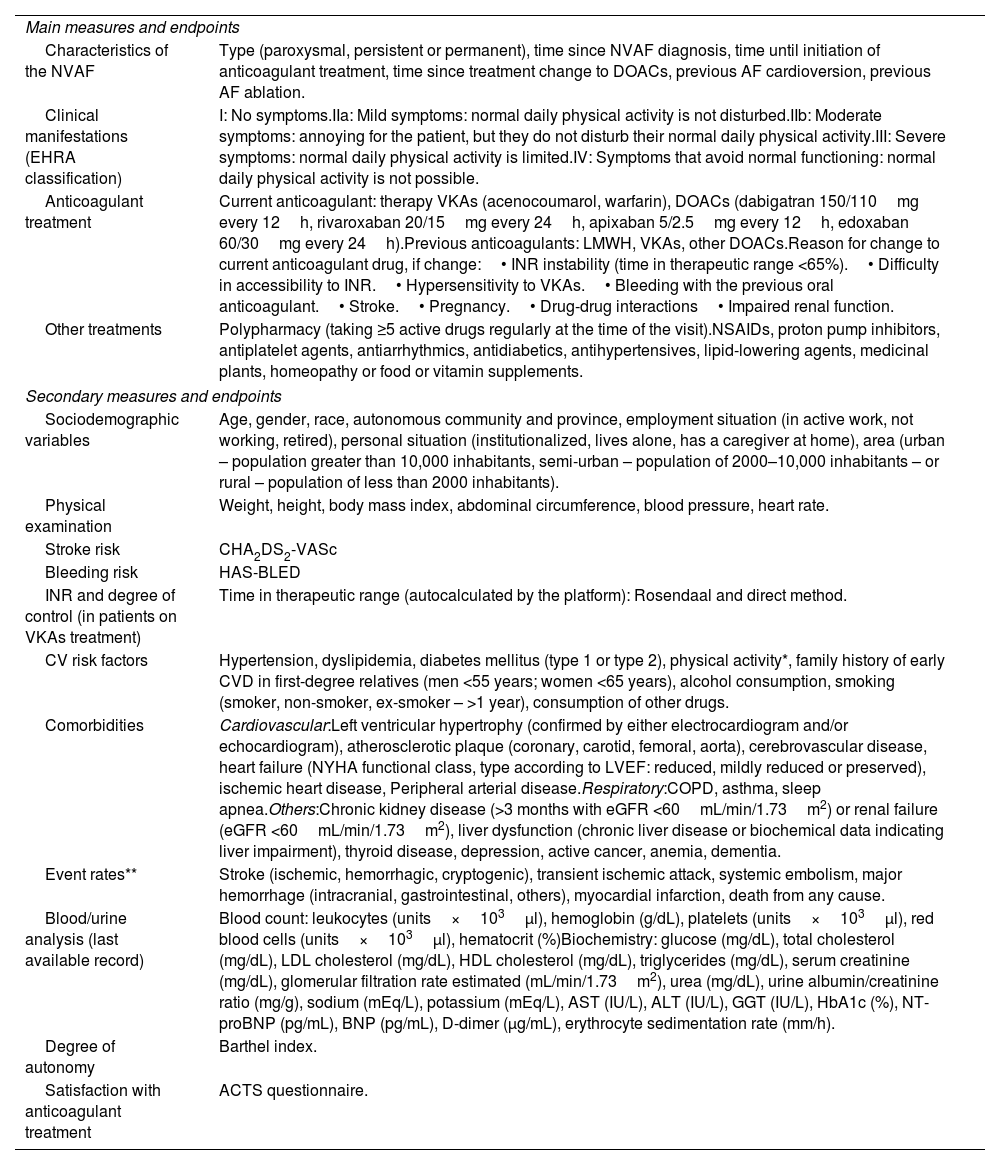
Study variablesThe information about the variables, both to respond to the main and secondary endpoints, has been collected from the patient's electronic medical records and from the clinical interview at the moment of inclusion, and has been included in the electronic case report form, specifically designed for the study (Table 2).
Variables collected in the study.
| Main measures and endpoints | |
| Characteristics of the NVAF | Type (paroxysmal, persistent or permanent), time since NVAF diagnosis, time until initiation of anticoagulant treatment, time since treatment change to DOACs, previous AF cardioversion, previous AF ablation. |
| Clinical manifestations (EHRA classification) | I: No symptoms.IIa: Mild symptoms: normal daily physical activity is not disturbed.IIb: Moderate symptoms: annoying for the patient, but they do not disturb their normal daily physical activity.III: Severe symptoms: normal daily physical activity is limited.IV: Symptoms that avoid normal functioning: normal daily physical activity is not possible. |
| Anticoagulant treatment | Current anticoagulant: therapy VKAs (acenocoumarol, warfarin), DOACs (dabigatran 150/110mg every 12h, rivaroxaban 20/15mg every 24h, apixaban 5/2.5mg every 12h, edoxaban 60/30mg every 24h).Previous anticoagulants: LMWH, VKAs, other DOACs.Reason for change to current anticoagulant drug, if change:• INR instability (time in therapeutic range <65%).• Difficulty in accessibility to INR.• Hypersensitivity to VKAs.• Bleeding with the previous oral anticoagulant.• Stroke.• Pregnancy.• Drug-drug interactions• Impaired renal function. |
| Other treatments | Polypharmacy (taking ≥5 active drugs regularly at the time of the visit).NSAIDs, proton pump inhibitors, antiplatelet agents, antiarrhythmics, antidiabetics, antihypertensives, lipid-lowering agents, medicinal plants, homeopathy or food or vitamin supplements. |
| Secondary measures and endpoints | |
| Sociodemographic variables | Age, gender, race, autonomous community and province, employment situation (in active work, not working, retired), personal situation (institutionalized, lives alone, has a caregiver at home), area (urban – population greater than 10,000 inhabitants, semi-urban – population of 2000–10,000 inhabitants – or rural – population of less than 2000 inhabitants). |
| Physical examination | Weight, height, body mass index, abdominal circumference, blood pressure, heart rate. |
| Stroke risk | CHA2DS2-VASc |
| Bleeding risk | HAS-BLED |
| INR and degree of control (in patients on VKAs treatment) | Time in therapeutic range (autocalculated by the platform): Rosendaal and direct method. |
| CV risk factors | Hypertension, dyslipidemia, diabetes mellitus (type 1 or type 2), physical activity*, family history of early CVD in first-degree relatives (men <55 years; women <65 years), alcohol consumption, smoking (smoker, non-smoker, ex-smoker – >1 year), consumption of other drugs. |
| Comorbidities | Cardiovascular:Left ventricular hypertrophy (confirmed by either electrocardiogram and/or echocardiogram), atherosclerotic plaque (coronary, carotid, femoral, aorta), cerebrovascular disease, heart failure (NYHA functional class, type according to LVEF: reduced, mildly reduced or preserved), ischemic heart disease, Peripheral arterial disease.Respiratory:COPD, asthma, sleep apnea.Others:Chronic kidney disease (>3 months with eGFR <60mL/min/1.73m2) or renal failure (eGFR <60mL/min/1.73m2), liver dysfunction (chronic liver disease or biochemical data indicating liver impairment), thyroid disease, depression, active cancer, anemia, dementia. |
| Event rates** | Stroke (ischemic, hemorrhagic, cryptogenic), transient ischemic attack, systemic embolism, major hemorrhage (intracranial, gastrointestinal, others), myocardial infarction, death from any cause. |
| Blood/urine analysis (last available record) | Blood count: leukocytes (units×103μl), hemoglobin (g/dL), platelets (units×103μl), red blood cells (units×103μl), hematocrit (%)Biochemistry: glucose (mg/dL), total cholesterol (mg/dL), LDL cholesterol (mg/dL), HDL cholesterol (mg/dL), triglycerides (mg/dL), serum creatinine (mg/dL), glomerular filtration rate estimated (mL/min/1.73m2), urea (mg/dL), urine albumin/creatinine ratio (mg/g), sodium (mEq/L), potassium (mEq/L), AST (IU/L), ALT (IU/L), GGT (IU/L), HbA1c (%), NT-proBNP (pg/mL), BNP (pg/mL), D-dimer (μg/mL), erythrocyte sedimentation rate (mm/h). |
| Degree of autonomy | Barthel index. |
| Satisfaction with anticoagulant treatment | ACTS questionnaire. |
ACTS: Anti-Clot Treatment Scale; COPD: chronic obstructive pulmonary disease; CVD: cardiovascular disease; DOACs: direct acting oral anticoagulants; eGFR: estimated glomerular filtration rate; INR: International Normalized Ratio; LMWH: low molecular weight heparins; LVEF, left ventricular ejection fraction; NVAF: non-valvular atrial fibrillation; NSAIDs: non-steroidal anti-inflammatory drugs; NYHA: New York Heart Association; VKAs: vitamin K antagonists.
Likewise, to measure the degree of autonomy or dependence to develop daily basic activities, the Barthel index28 was used, which is a heteroadministered questionnaire with 10 Likert-type items that the patient must complete at the time of the study. The score ranges from 0 to 100, where <20 indicates total dependence, 21–60 severe dependence, 61–90 moderate dependence, 91–99 mild dependence, and 100 total independence. Thus, the lower the score, the more dependence, and the higher the score, the more independence. Likewise, to measure satisfaction with anticoagulant treatment, the ACTS (Anti-Clot Treatment Scale) questionnaire has been used.29 It refers to the last 4 weeks before the visit and has 17 items, with Likert-type responses, with 5 response alternatives between 1 (not at all) and 5 (very much). The first 12 items evaluate the burden that taking anticoagulant treatment represents for the patient, question 13 evaluates the negative impact that taking this treatment has on their daily life in general, items 14–16 analyze the benefits of taking this treatment and question 17 analyzes the positive impact of the treatment on the patient's life (supplementary Table 1).
Statistical analysisA descriptive analysis will be carried out for all study variables. Qualitative variables will be described with their absolute frequencies and percentages for each of their categories, and quantitative variables with the mean and standard deviation, or median and interquartile range when appropriate. The normality of continuous variables will be checked using graphical methods and normality tests. To study the statistical significance of the differences between proportions, the Chi-square test will be used. To study the statistical significance of the differences between means, different tests will be used depending on the normality or not of the variables and the number of groups to be compared (Student's t, Mann–Whitney U, ANOVA, ANCOVA or Kruskal–Wallis tests). For all hypothesis tests, a significance level of 5% will be assumed (P<0.05). Statistical analysis will be performed with the statistical software package SPSS version 23.0.
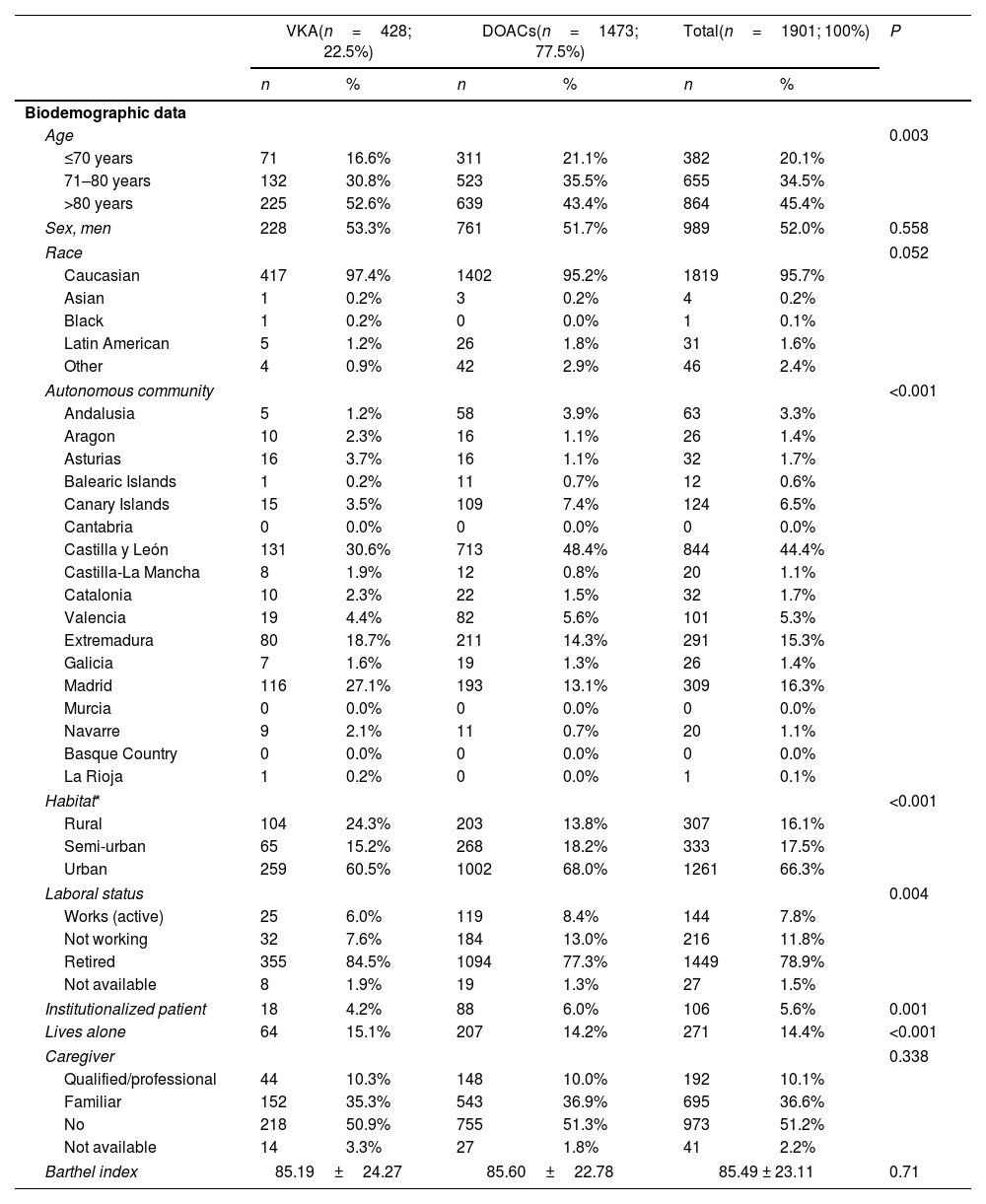
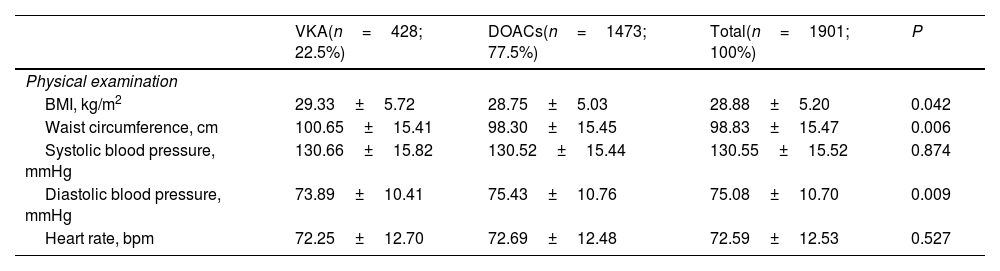
ResultsIn total, 1901 patients have been enrolled, 428 (22.5%) taking VKAs and 1473 (77.5%) DOACs. Baseline sociodemographic characteristics are shown in Table 3 and data about physical examination in Table 4. Overall, 45.4% of patients were >80 years old, 52.0% were men, 66.3% lived in an urban habitat and 78.9% were retired. At baseline, compared to DOACs, patients taking VKA were older (>80 years: 52.6% vs 43.4%; P=0.003), lived less in an urban habitat (60.5% vs 68.0%; P<0.001), and were more frequently retired (84.5% vs 77.3%; P=0.004). Regarding physical examination parameters, patients taking VKA (vs taking DOACs) were more obese (body mass index 29.33±5.72 vs 28.75±5.03kg/m2; P=0.042) and had a lower diastolic blood pressure (73.89±10.41 vs 75.43±10.76mmHg; P=0.009).
Baseline sociodemographic characteristics.
| VKA(n=428; 22.5%) | DOACs(n=1473; 77.5%) | Total(n=1901; 100%) | P | ||||
|---|---|---|---|---|---|---|---|
| n | % | n | % | n | % | ||
| Biodemographic data | |||||||
| Age | 0.003 | ||||||
| ≤70 years | 71 | 16.6% | 311 | 21.1% | 382 | 20.1% | |
| 71–80 years | 132 | 30.8% | 523 | 35.5% | 655 | 34.5% | |
| >80 years | 225 | 52.6% | 639 | 43.4% | 864 | 45.4% | |
| Sex, men | 228 | 53.3% | 761 | 51.7% | 989 | 52.0% | 0.558 |
| Race | 0.052 | ||||||
| Caucasian | 417 | 97.4% | 1402 | 95.2% | 1819 | 95.7% | |
| Asian | 1 | 0.2% | 3 | 0.2% | 4 | 0.2% | |
| Black | 1 | 0.2% | 0 | 0.0% | 1 | 0.1% | |
| Latin American | 5 | 1.2% | 26 | 1.8% | 31 | 1.6% | |
| Other | 4 | 0.9% | 42 | 2.9% | 46 | 2.4% | |
| Autonomous community | <0.001 | ||||||
| Andalusia | 5 | 1.2% | 58 | 3.9% | 63 | 3.3% | |
| Aragon | 10 | 2.3% | 16 | 1.1% | 26 | 1.4% | |
| Asturias | 16 | 3.7% | 16 | 1.1% | 32 | 1.7% | |
| Balearic Islands | 1 | 0.2% | 11 | 0.7% | 12 | 0.6% | |
| Canary Islands | 15 | 3.5% | 109 | 7.4% | 124 | 6.5% | |
| Cantabria | 0 | 0.0% | 0 | 0.0% | 0 | 0.0% | |
| Castilla y León | 131 | 30.6% | 713 | 48.4% | 844 | 44.4% | |
| Castilla-La Mancha | 8 | 1.9% | 12 | 0.8% | 20 | 1.1% | |
| Catalonia | 10 | 2.3% | 22 | 1.5% | 32 | 1.7% | |
| Valencia | 19 | 4.4% | 82 | 5.6% | 101 | 5.3% | |
| Extremadura | 80 | 18.7% | 211 | 14.3% | 291 | 15.3% | |
| Galicia | 7 | 1.6% | 19 | 1.3% | 26 | 1.4% | |
| Madrid | 116 | 27.1% | 193 | 13.1% | 309 | 16.3% | |
| Murcia | 0 | 0.0% | 0 | 0.0% | 0 | 0.0% | |
| Navarre | 9 | 2.1% | 11 | 0.7% | 20 | 1.1% | |
| Basque Country | 0 | 0.0% | 0 | 0.0% | 0 | 0.0% | |
| La Rioja | 1 | 0.2% | 0 | 0.0% | 1 | 0.1% | |
| Habitat* | <0.001 | ||||||
| Rural | 104 | 24.3% | 203 | 13.8% | 307 | 16.1% | |
| Semi-urban | 65 | 15.2% | 268 | 18.2% | 333 | 17.5% | |
| Urban | 259 | 60.5% | 1002 | 68.0% | 1261 | 66.3% | |
| Laboral status | 0.004 | ||||||
| Works (active) | 25 | 6.0% | 119 | 8.4% | 144 | 7.8% | |
| Not working | 32 | 7.6% | 184 | 13.0% | 216 | 11.8% | |
| Retired | 355 | 84.5% | 1094 | 77.3% | 1449 | 78.9% | |
| Not available | 8 | 1.9% | 19 | 1.3% | 27 | 1.5% | |
| Institutionalized patient | 18 | 4.2% | 88 | 6.0% | 106 | 5.6% | 0.001 |
| Lives alone | 64 | 15.1% | 207 | 14.2% | 271 | 14.4% | <0.001 |
| Caregiver | 0.338 | ||||||
| Qualified/professional | 44 | 10.3% | 148 | 10.0% | 192 | 10.1% | |
| Familiar | 152 | 35.3% | 543 | 36.9% | 695 | 36.6% | |
| No | 218 | 50.9% | 755 | 51.3% | 973 | 51.2% | |
| Not available | 14 | 3.3% | 27 | 1.8% | 41 | 2.2% | |
| Barthel index | 85.19±24.27 | 85.60±22.78 | 85.49 ± 23.11 | 0.71 | |||
AF: atrial fibrillation; COPD: chronic obstructive pulmonary disease; DOACs: direct oral anticoagulants; VKA: vitamin K antagonists.
Physical examination.
| VKA(n=428; 22.5%) | DOACs(n=1473; 77.5%) | Total(n=1901; 100%) | P | |
|---|---|---|---|---|
| Physical examination | ||||
| BMI, kg/m2 | 29.33±5.72 | 28.75±5.03 | 28.88±5.20 | 0.042 |
| Waist circumference, cm | 100.65±15.41 | 98.30±15.45 | 98.83±15.47 | 0.006 |
| Systolic blood pressure, mmHg | 130.66±15.82 | 130.52±15.44 | 130.55±15.52 | 0.874 |
| Diastolic blood pressure, mmHg | 73.89±10.41 | 75.43±10.76 | 75.08±10.70 | 0.009 |
| Heart rate, bpm | 72.25±12.70 | 72.69±12.48 | 72.59±12.53 | 0.527 |
ALT: alanine transaminase; BMI: body mass index; DOACs: direct oral anticoagulants; eGFR: estimated glomerular filtration rate; NT-proBNP: N-terminal pro b-type natriuretic peptide; UACR: urine albumin creatinine ratio; VKA: vitamin K antagonists.
AF is a very relevant arrhythmia in our daily clinical practice, not only because of its frequency, but also because of the prognostic implications it has,1–5 which requires updating knowledge in order to improve the care of our patients. The RACOVIR study is the first large multicenter study carried out in Spain about the use of anticoagulation in patients with AF treated in Primary Care after the COVID-19 pandemic.26 Consequently, it will provide very interesting information about the possible changes and consequences that have occurred after this period.
Since the inclusion and exclusion criteria of the RACOVIR study are very broad, its results could be extended to a large part of the population with NVAF in Spain, seeking great external validity so that the results can be generalizable and have a great clinical applicability. Thus, the baseline clinical characteristics of the study population showed that in Spain, anticoagulated patients with AF attended in Primary Care setting are old, overweight/obese, and live in an urban habitat. This is in line with previous studies.3,30,31 In addition, we provided relevant information about differences in the clinical profile of patients according to the type of oral anticoagulant.
Through the RACOVIR study we will know the clinical profile of anticoagulated patients in Spain and its evolution over last years, and if there have been major changes during this period of time. We will also know how symptomatic chronic AF patients treated in Primary Care are, and therefore, it will allow us to find points of improvement in this regard.
Other relevant aspect that will be analyzed in the RACOVIR study is the type of anticoagulant treatment that patients take (VKAs, DOACs and among these, the type and dose), which will help to know the current prescription of oral anticoagulants in Spain, if it is carried out appropriately, and in this way, determine how prescription patterns have evolved in recent years. Furthermore, this study will allow us to know in patients anticoagulated with VKAs which the current degree of INR control is and we will be able to compare it with previous studies7–11 and consequently determine if it has improved in the last years. In addition, we will also know the reasons for the change to DOACs and whether poor INR control continues to be the main cause of switching from VKAs to DOACs.30,31
Likewise, and although it will be carried out retrospectively, the RACOVIR study will allow to make an estimate in the risk of vascular events among anticoagulated patients with NVAF and in this way, be able to make indirect comparisons with previous studies, analyzing the changes in the risk of events that have occurred in the last years,4,32 in order to find points of improvement.
Finally, the RACOVIR study will also allow us to know the degree of autonomy of anticoagulated patients with AF, and also the degree of satisfaction with anticoagulant treatment. In short, analyzing how anticoagulation impacts on the daily life of our patients. It is important to know well how our patients feel, to be able to better explain the reasons for anticoagulation and the need for this treatment, taking into account the benefits and risks of anticoagulant therapy and, in this way, adequately motivate patients to take anticoagulant treatment.
This study is subject to the inherent limitations of real-world investigations utilizing retrospective patient data, where certain information may be incomplete. Furthermore, the absence of randomization between groups introduces the possibility that some comparisons reflect differences in baseline clinical characteristics rather than the specific types of oral anticoagulants administered to patients. On the other hand, since the patients have been recruited from Primary Care centers in Spain, the results of this study can only be applicable to similar populations with similar health care system.
Therefore, the RACOVIR study will offer an updated and very relevant information about patients with NVAF taking anticoagulant treatment treated in Primary Care in Spain, which will undoubtedly help to improve the health care management of these patients. The baseline data presented in this study provides a picture of the current clinical profile of anticoagulated patients with AF assisted in Primary Care setting.
RACOVIR Study Researchers (≥5 patients)Fernando Álvarez-Franco Cañas, Patricia Arbúes Espinosa, Lourdes Arias Egido, Margarita Arrimada García, Miguel Ángel Babiano Fernández, Patricia Calles Prieto, Pilar Cambero González, Raquel Cañera Romero, Vanessa Lilibeth Caraguay Patiño, María José Castillo Moraga, Amado Antonio Castro García, Víctor Climent Ferri, M. Lourdes Corisco Sánchez, Laura Correa Sandoval, María José Crespo Luis, Nuria Esther De la Puente Merino, Mª Teresa de la Torre de Dios, Blanca Delia de Román Martínez, María Del Real Monedero, Eduardo Díaz García, Norma Alejandra Doria Carlin, Olga Encinas Rodríguez, Ana Fernández García, Elena Ferrera Cruz, María Fuentes García, María Belén Fuentes Menéndez, Aitana Galán Gil, Aránzazu García Alonso, Esperanza García Gabriel, Laura María García García, Cristina García Iglesias, Aurora García Lerín, Carmen García-Rámila San José, Juan Manuel Gómez Brioso, Maialen González Albóniga-Menor, Mª Teresa González Díez, Amelia González Gamarra, Marina Granda Marqués, María de la O Gutiérrez García, Esther Gutiérrez Piedra, Laura Herguedas Herguedas, María del Carmen Hernández Carballo, Rebeca Hernández Román, Julia María Hervás Jerez, Nuria Hierro Vallejo, Leyre Iglesias González, Laura Jiménez, Silvia Juárez de Sosa, Carmen Mª López Martínez, Cristina López-Oliver Guerra, Edurne Madoz Zubillaga, Gregoria Manso Fernández, Juan Alejandro Marcano Caraballo, Noelia Martín Salvador, Francisco Vicente Martínez García, Elena Martínez Peña, Antonio Vicente Masiá Alegre, Araceli Maya Almeida, Marina María Mendoza Jiménez, Rafael M. Micó Pérez, Ana Isabel Millán Méndez, Irene Moreno Martínez, Ana Moyá Amengual, Jorge Pablo Ortega, Virginia Pecharroman Fuente, Verónica Yesenia Pérez Aradas, Zuriñe Pérez García, Francisco Javier Pérez Hernández, María Isabel Pérez Martín, Paula Sofía Pérez Martín, Adelina Pérez Simón, María José Pinazo Serón, José Polo García, Ana Isabel Rincón Ricote, Antonio Rivas Mena, Ernesto Rivas Mena, Juan Carlos Romero Vigara, Inmaculada Sánchez Vázquez, Carlos Andrés Sancho García, Eva María Santiago Sánchez, Carlos Santos Altozano, José Ignacio Sedano García, Daniel Suárez Hernández, Miguel Turégano Yedro, María Valdés Villar, Cristian Vale Varela.
Ethical considerationsThe study has followed the fundamental principles established in the Declaration of Helsinki, in the Council of Europe Convention on Human Rights and Biomedicine, as well as the requirements established in the applicable legislation (of the European Union and Spanish), in the field of biomedical legislation, the protection of personal data and bioethics.
The study was approved by the Clinical Research Ethics Committee of the San Carlos Clinical Hospital in Madrid. All patients have signed written informed consent before being included in the study.
FundingThis study has been funded and supported by the SEMERGEN Foundation.
Declaration of competing interestThe authors declare do not have any conflicts of interest regarding this article.
To the SEMERGEN Foundation (Spanish Society of Primary Care Physicians), and to all the medical researchers who have participated in the RACOVIR study Research Group, for their effort, dedication and collaboration, whose names appear in the supplementary materials.
The following are the supplementary data to this article: