
Invasive fungal infection (IFI) remains a serious complication after liver transplantation (LT). We evaluated IFI incidence within 180 days after LT, assessed the predictive performance of the neutrophil percentage-to-albumin ratio (NPAR) and MELD-Na for post-transplant IFI, and examined IFI-associated 1-year mortality.
MethodsWe conducted a retrospective, single-center study of adult LT recipients between 2003 and 2024. Risk factors were analyzed using multivariable logistic regression. Survival was assessed with Kaplan–Meier curves and Cox proportional hazards models, including 1:1 propensity score matching.
ResultsAmong 426 LT recipients, 37 (9%) developed IFI, most commonly Candida species (n=25), followed by Aspergillus species (n=12). Risk factors were evaluated separately for Candida and Aspergillus infections. Compared with recipients without invasive Candida infection, those with Candida IFI had greater disease severity at transplant (MELD-Na≥19: 44% vs 29%), a higher prevalence of upper-tertile NPAR (56% vs 32%; p=0.023), increased need for postoperative renal replacement therapy (44% vs 7%; p<0.001), more frequent early reintervention (40% vs 10%; p<0.001), and higher rates of biliary complications (24% vs 8%; p=0.017). Recipients with invasive Aspergillus infection were more likely to have upper-tertile NPAR (67% vs 32%; p=0.018) compared with those without Aspergillus infection. Elevated NPAR independently predicted both Candida (OR 2.65, 95% CI 1.17–6.01) and Aspergillus IFI (OR 4.17, 95% CI 1.23–14.35), whereas MELD-Na was not associated with either infection. After matching, IFI was associated with significantly higher 1-year mortality (HR 6.73; 95% CI, 1.53–29.62).
ConclusionPre-transplant NPAR was associated with an increased risk of post-transplant IFI, particularly Candida infection, and may contribute to risk stratification pending external validation.
La infección fúngica invasiva (IFI) sigue siendo una complicación grave tras el trasplante hepático (TH). Este estudio evaluó su incidencia durante los primeros 180 días después del trasplante, la capacidad predictiva del cociente entre el porcentaje de neutrófilos y la albúmina (NPAR) y del MELD-Na, y su impacto sobre la mortalidad al año.
MétodosEstudio retrospectivo y unicéntrico de receptores adultos de TH entre 2003 y 2024. Los factores de riesgo se analizaron mediante regresión logística multivariable. La supervivencia se estudió con curvas de Kaplan-Meier y modelos de Cox, incluyendo emparejamiento 1:1 por puntuación de propensión.
ResultadosEntre 426 receptores de LT, 37 (9%) desarrollaron IFI, principalmente por Candida (n=25), seguida de Aspergillus (n=12). Los factores de riesgo se evaluaron por separado. Los pacientes con IFI por Candida presentaron mayor gravedad al trasplante (MELD-Na ≥19: 44% vs 29%), mayor frecuencia de NPAR en el tercil superior (56% vs 32%; p=0.023), mayor necesidad de terapia de reemplazo renal postoperatoria (44% vs 7%; p<0.001), más reintervenciones precoces (40% vs 10%; p<0.001) y más complicaciones biliares (24% vs 8%; p=0.017). En la infección por Aspergillus, el NPAR en el tercil superior también fue más frecuente (67% vs 32%; p=0.018). El NPAR elevado predijo Candida (OR 2.65, 95% CI 1.17-6.01) y Aspergillus (OR 4.17, 95% CI 1.23-14.35), mientras que MELD-Na no se asoció con ninguna infección. Tras el emparejamiento, la IFI se asoció con mayor mortalidad al año (HR 6.73; 95% CI, 1.53-29.62).
ConclusiónEl NPAR pretrasplante se asoció con un mayor riesgo de IFI postrasplante, particularmente de infección por Candida, y podría contribuir a la estratificación del riesgo, a la espera de validación externa.
Liver transplantation (LT) is the definitive treatment for patients with decompensated advanced chronic liver disease (ACLD), acute liver failure (ALF), acute-on-chronic liver failure (ACLF), and selected cases of hepatocellular carcinoma (HCC).1 However, liver transplant recipients are among the most vulnerable populations to invasive fungal infections (IFIs), which are associated with significantly increased morbidity, mortality, and risk of graft loss.2,3 Previous studies have reported an incidence between 5% and 42% of liver transplant recipients,4 with associated mortality rates reaching up to 67%.4,5 The most common fungal pathogens are Candida spp. and Aspergillus spp., typically occurring within the first 180 days after transplantation.6 Antifungal prophylaxis has led to a decline in the incidence of IFIs.2 However, antifungal prophylaxis strategies vary significantly across transplant centers, ranging from universal prophylaxis to targeted prophylaxis for high-risk patients.7 While universal antifungal prophylaxis may reduce the overall incidence of IFI, it has important limitations, including the selection of infections caused by uncommon pathogens such as Mucorales, the emergence of azole- or echinocandin-resistant Candida species, clinically significant drug-drug interactions (particularly between triazoles and immunosuppressants), and increased healthcare costs.8,9 In contrast, targeted prophylaxis aims to minimize these risks by focusing on patients identified as high risk.8 This variability may be partly explained by the lack of consensus on risk stratification and on the optimal choice of prophylactic agent, including echinocandins, fluconazole, or mold-active azoles. Reported IFI risk factors span the preoperative, intraoperative, and postoperative periods, but their relative importance remains unclear.10 Risk factors include MELD≥30, ALF, renal replacement therapy (RRT), Candida colonization (defined as the presence of the fungus in one or more surveillance cultures: oropharynx, gastrointestinal tract, urine, and tracheal aspirates, in the absence of clinical symptoms or markers of infections), retransplantation, living donor transplant, reoperation, choledochojejunostomy, massive transfusion, biliary leaks, CMV viremia, prolonged ICU stay (>48h), and persistent renal failure.3,6,11–14 The relative weight of these factors remains a subject of debate. Some authors identify biliary leaks and living donor liver transplantation as the strongest predictors of adverse outcomes,8 whereas others emphasize choledochojejunostomy anastomosis, retransplantation, and renal failure as the most significant risk determinants.15 Furthermore, no study to date has evaluated the predictive value of the Model for End-Stage Liver Disease-sodium (MELD-Na) score, usually applied to refine donor liver allocation in different parts of world. Compared with MELD, MELD-Na provides a more accurate prediction of overall mortality.16
The neutrophil percentage-to-albumin ratio (NPAR) is a novel marker of systemic inflammation that can be easily obtained from routine blood tests. It has been studied as a predictor of spontaneous bacterial peritonitis in cirrhotic patients and has been associated with all-cause mortality in patients with severe sepsis or septic shock.17,18 To our knowledge, there has been no previous research on using NPAR as predictive biomarker for IFI after LT.
Given the variability in reported IFI risk factors after liver transplantation, this study aimed to determine IFI incidence within 180 days after LT, reassess previously described predictors, and evaluate NPAR and MELD-Na as potential biomarkers, including separate analyses for Candida and Aspergillus. We also used propensity score matching to assess the impact of IFIs on post-transplant mortality.
MethodsStudy designThis retrospective observational study was conducted at a liver transplant center in Spain and included all adult patients who underwent deceased-donor LT between 2003 and 2024, with follow-up through August 2025. Recipients of primary transplantation and retransplantation were included, while patients aged under 18 years, living-donor LT recipients, and combined liver-kidney transplant recipients were excluded. All patients underwent standardized infection screening on the day of transplantation, and only those without active infection proceeded to LT. The study was approved by the Research Ethics Committee of the Universidad de Navarra (2025.102), which waived informed consent due to the retrospective design, and was conducted in accordance with the Declaration of Helsinki.
Data collection and follow-upDemographic and laboratory variables were recorded on the day of LT, prior to the procedure. NPAR was derived from the neutrophil percentage and serum albumin concentration measured in the same admission blood sample, according to the following formula: NPAR=neutrophil percentage (%)×100/albumin (g/dL). Perioperative variables included retransplantation, biliary anastomosis type, procedure duration, and transfusion requirements. Post-transplant variables included RRT within 7 days, reintervention within 30 days, biliary complications, CMV viremia (detectable; assay limit of detection 60IU/mL), antibiotic therapy for suspected bacterial infection, IFI within 180 days, and immunosuppressive regimen. All patients were followed for at least 1 year to determine survival status.
Definition of invasive fungal infection: proven and probableInvasive fungal infections were classified according to the revised 2020 consensus definitions of the European Organization for Research and Treatment of Cancer and the Mycoses Study Group Education and Research Consortium (EORTC/MSGERC).19 IFIs were categorized as proven or probable for clinical purposes. A proven IFI was defined by histopathologic, cytopathologic, or direct microscopic evidence of fungal invasion in tissue from a normally sterile site, or by isolation of a fungal pathogen from a normally sterile site obtained by a sterile procedure. Candidemia documented by positive blood cultures was classified as proven invasive candidiasis. A probable IFI was defined in immunocompromised patients, including liver transplant recipients, by the simultaneous presence of at least one host factor, compatible clinical or radiologic features, and mycological evidence, as specified by the EORTC/MSGERC criteria. Mycological evidence included culture or microscopic detection of fungi from nonsterile sites. Serum β-d-glucan and galactomannan assays were not routinely available throughout the study period and therefore were not systematically used for the classification of probable IFI. Only proven and probable IFIs occurring within 180 days after LT were included in the analysis.
Immunosuppressive regimenImmunosuppression was individualized according to immunological risk, transplant indication, and comorbidities. Standard therapy consisted of prolonged- or modified-release tacrolimus plus mycophenolate mofetil, with prednisone added in selected high-risk patients or when adequate tacrolimus exposure was expected to be difficult. Maintenance therapy generally included tacrolimus and MMF with or without low-dose prednisone. Tacrolimus targets were progressively reduced over time after LT. In patients with renal dysfunction or related complications, tacrolimus initiation was delayed or started at low doses, and basiliximab induction was given on postoperative days 1 and 5. Biopsy-proven acute rejection was managed by optimizing tacrolimus exposure and adding prednisone, with higher corticosteroid doses in refractory cases.
Prophylaxis strategyPatients were considered at increased risk for fungal infection after LT if they required RRT within the first 7 days after LT and/or underwent reintervention within the first 30 days after LT. Antifungal prophylaxis was not protocol-mandated and was primarily targeted to the highest-risk subgroup, particularly patients with both early RRT and reintervention. Prophylaxis could also be initiated at the discretion of the treating physician in selected patients meeting only one of these criteria (RRT or reintervention) when additional clinical factors suggested increased risk (e.g., major hemorrhage requiring massive transfusion). When administered, prophylaxis consisted of an echinocandin for 3–7 days.
Statistical analysisPatients were grouped by the presence of proven or probable IFI, with additional analyses for Candida and Aspergillus infections. Continuous variables were compared using the Mann–Whitney U test, while categorical variables were analyzed using the Chi-square test or Fisher's exact test, as appropriate. Because the objective of this study was etiological, our multivariable analyses were designed to estimate the potential causal contribution of systemic inflammation (NPAR) and MELD-Na to IFI while appropriately accounting for confounding. Confounders were identified a priori based on established clinical and biological evidence and in accordance with standard etiological criteria: a true confounder must be associated with the outcome (IFI), associated with the exposure (NPAR, MELD-Na), and must not lie on the causal pathway between the exposure and the outcome. No data-driven or stepwise selection procedures were used. Consistent with our etiological framework, NPAR and MELD-Na were the exposure of interest, and both crude and adjusted effect estimates are reported, without interpreting the coefficients of confounders as causal effects. Multivariable logistic regression was used to assess whether NPAR and MELD-NA were independently associated with IFI.20,21 To assess the incremental discriminative value of NPAR over albumin alone, receiver operating characteristic (ROC) curve analyses were performed comparing NPAR and albumin for the prediction of overall IFI, as well as separately for Candida and Aspergillus infections. In the absence of established clinical thresholds for MELD-Na and NPAR, we categorized each variable into tertiles (based on the cohort distribution) to assess associations with IFI. Patients with and without IFI were propensity score-matched (1:1) on two IFI-related risk factors to minimize overfitting and assess whether IFI independently predicts mortality. Propensity scores were estimated by including RRT, reintervention, NPAR, and MELD-Na as covariates. We performed the nearest-neighbor without caliper propensity score matching (1-to-1 matching without replacement) to remove the selection bias and compare the outcomes between the IFI and the no IFI groups. Since the number of patients in IFI group is low (just 37) compared to the no IFI group (n=389), we identified the best matched patients from the no IFI group to make both groups comparable. Survival was analyzed using the Kaplan–Meier method, with differences between groups (IFI vs no IFI) assessed by the log-rank test. All p values were two-sided, and values<0.05 were considered statistically significant. Data were processed and analyzed using R version 4.4.0 (2024-04-24) and SPSS version 25.0 (IBM Corp., Armonk, NY, USA).
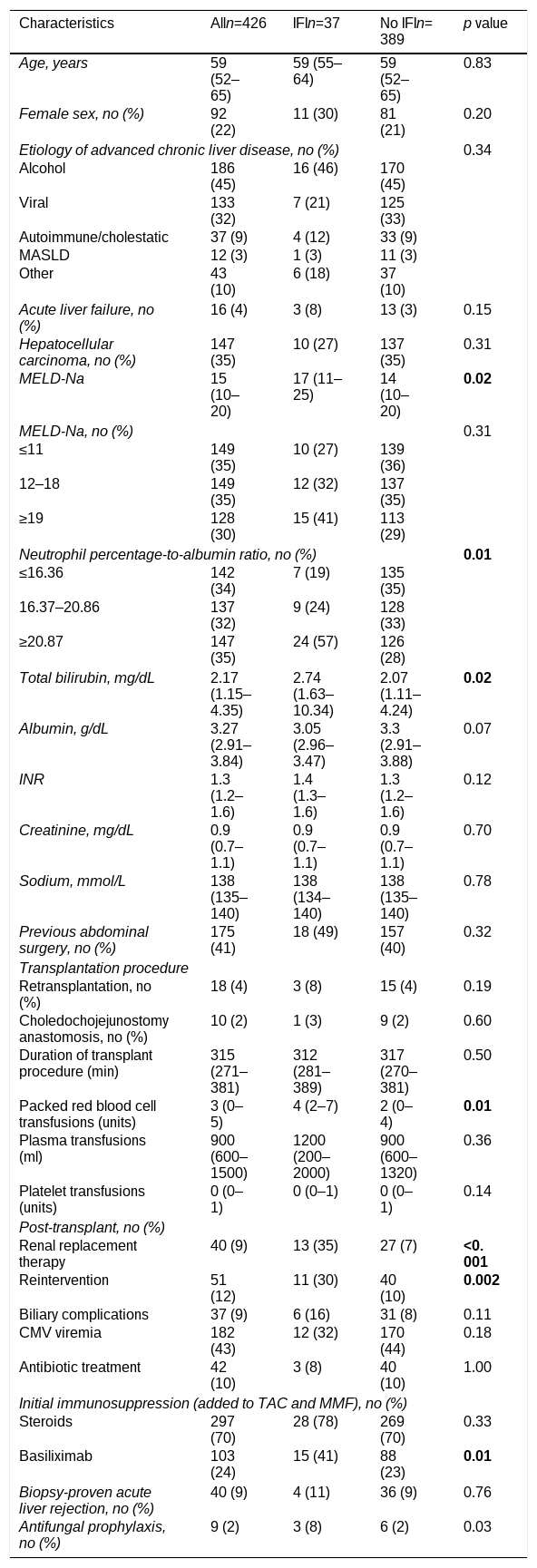
ResultsStudy populationBaseline characteristics of the 426 liver transplant recipients are summarized in Table 1. The median age was 59 years, and 22% were women. Alcohol-related liver disease was the leading cause of ACLD (45%), followed by viral hepatitis (32%). Sixteen patients (4%) underwent LT for ALF, and 147 (35%) for concomitant HCC. The median MELD-Na was 15. When categorized into tertiles, 30% were classified in the highest tertile, defined as MELD-Na ≥19. When NPAR was categorized into tertiles, 35% fell in the upper tertile (≥20.87). RRT and reintervention were required in 9% and 12% of cases, respectively, and 2% of patients required both. Basiliximab was included in 24% of initial immunosuppressive regimens, and antifungal prophylaxis was given to 9 (2%) of patients. Among the patients who received prophylaxis, 7 of 9 met both major risk criteria (early RRT and reintervention). The remaining two patients underwent reintervention and required>10 units of packed red blood cells
Baseline demographic and clinical characteristics of the study cohort and their association with invasive fungal infection status.
| Characteristics | Alln=426 | IFIn=37 | No IFIn=389 | p value |
|---|---|---|---|---|
| Age, years | 59 (52–65) | 59 (55–64) | 59 (52–65) | 0.83 |
| Female sex, no (%) | 92 (22) | 11 (30) | 81 (21) | 0.20 |
| Etiology of advanced chronic liver disease, no (%) | 0.34 | |||
| Alcohol | 186 (45) | 16 (46) | 170 (45) | |
| Viral | 133 (32) | 7 (21) | 125 (33) | |
| Autoimmune/cholestatic | 37 (9) | 4 (12) | 33 (9) | |
| MASLD | 12 (3) | 1 (3) | 11 (3) | |
| Other | 43 (10) | 6 (18) | 37 (10) | |
| Acute liver failure, no (%) | 16 (4) | 3 (8) | 13 (3) | 0.15 |
| Hepatocellular carcinoma, no (%) | 147 (35) | 10 (27) | 137 (35) | 0.31 |
| MELD-Na | 15 (10–20) | 17 (11–25) | 14 (10–20) | 0.02 |
| MELD-Na, no (%) | 0.31 | |||
| ≤11 | 149 (35) | 10 (27) | 139 (36) | |
| 12–18 | 149 (35) | 12 (32) | 137 (35) | |
| ≥19 | 128 (30) | 15 (41) | 113 (29) | |
| Neutrophil percentage-to-albumin ratio, no (%) | 0.01 | |||
| ≤16.36 | 142 (34) | 7 (19) | 135 (35) | |
| 16.37–20.86 | 137 (32) | 9 (24) | 128 (33) | |
| ≥20.87 | 147 (35) | 24 (57) | 126 (28) | |
| Total bilirubin, mg/dL | 2.17 (1.15–4.35) | 2.74 (1.63–10.34) | 2.07 (1.11–4.24) | 0.02 |
| Albumin, g/dL | 3.27 (2.91–3.84) | 3.05 (2.96–3.47) | 3.3 (2.91–3.88) | 0.07 |
| INR | 1.3 (1.2–1.6) | 1.4 (1.3–1.6) | 1.3 (1.2–1.6) | 0.12 |
| Creatinine, mg/dL | 0.9 (0.7–1.1) | 0.9 (0.7–1.1) | 0.9 (0.7–1.1) | 0.70 |
| Sodium, mmol/L | 138 (135–140) | 138 (134–140) | 138 (135–140) | 0.78 |
| Previous abdominal surgery, no (%) | 175 (41) | 18 (49) | 157 (40) | 0.32 |
| Transplantation procedure | ||||
| Retransplantation, no (%) | 18 (4) | 3 (8) | 15 (4) | 0.19 |
| Choledochojejunostomy anastomosis, no (%) | 10 (2) | 1 (3) | 9 (2) | 0.60 |
| Duration of transplant procedure (min) | 315 (271–381) | 312 (281–389) | 317 (270–381) | 0.50 |
| Packed red blood cell transfusions (units) | 3 (0–5) | 4 (2–7) | 2 (0–4) | 0.01 |
| Plasma transfusions (ml) | 900 (600–1500) | 1200 (200–2000) | 900 (600–1320) | 0.36 |
| Platelet transfusions (units) | 0 (0–1) | 0 (0–1) | 0 (0–1) | 0.14 |
| Post-transplant, no (%) | ||||
| Renal replacement therapy | 40 (9) | 13 (35) | 27 (7) | <0.001 |
| Reintervention | 51 (12) | 11 (30) | 40 (10) | 0.002 |
| Biliary complications | 37 (9) | 6 (16) | 31 (8) | 0.11 |
| CMV viremia | 182 (43) | 12 (32) | 170 (44) | 0.18 |
| Antibiotic treatment | 42 (10) | 3 (8) | 40 (10) | 1.00 |
| Initial immunosuppression (added to TAC and MMF), no (%) | ||||
| Steroids | 297 (70) | 28 (78) | 269 (70) | 0.33 |
| Basiliximab | 103 (24) | 15 (41) | 88 (23) | 0.01 |
| Biopsy-proven acute liver rejection, no (%) | 40 (9) | 4 (11) | 36 (9) | 0.76 |
| Antifungal prophylaxis, no (%) | 9 (2) | 3 (8) | 6 (2) | 0.03 |
Median (IQR) are shown unless otherwise specified. MASLD, metabolic dysfunction-associated steatotic liver disease; MELD-Na, Model for End-Stage Liver Disease-sodium; INR, International Normalized Ratio; CMV, cytomegalovirus; TAC, tacrolimus; MMF, mycophenolate mofeti.
IFI occurred in 37 of 426 recipients (9%). Compared with recipients without IFI, those with IFI had higher disease severity at transplant (MELD-Na 17 vs 14; p=0.02) and a greater proportion in the upper NPAR tertile (57% vs 28%; p=0.01). They received more packed red blood cell transfusions (p=0.01) and were more likely to require postoperative RRT (35% vs 7%; p<0.001) and early reintervention (30% vs 10%; p=0.002). Basiliximab was used more frequently in initial immunosuppression among IFI cases (41% vs 23%; p=0.01), and antifungal prophylaxis was also more common (8% vs 2%; p=0.03). No significant differences were observed in liver disease etiology (including ALF and HCC), surgical variables, initial corticosteroid use, or biopsy-proven acute rejection (all p>0.05) (Table 1). For the prediction of IFI, the area under the receiver operating characteristic curve (AUC) for NPAR was 0.64 (95% CI, 0.55–0.73), with a sensitivity of 0.65 and a specificity of 0.63 (Fig. S1). In comparison, albumin alone demonstrated a lower discriminative performance, with an AUC of 0.58 (95% CI, 0.50–0.67), a sensitivity of 0.62, and a specificity of 0.60 (Fig. S2).
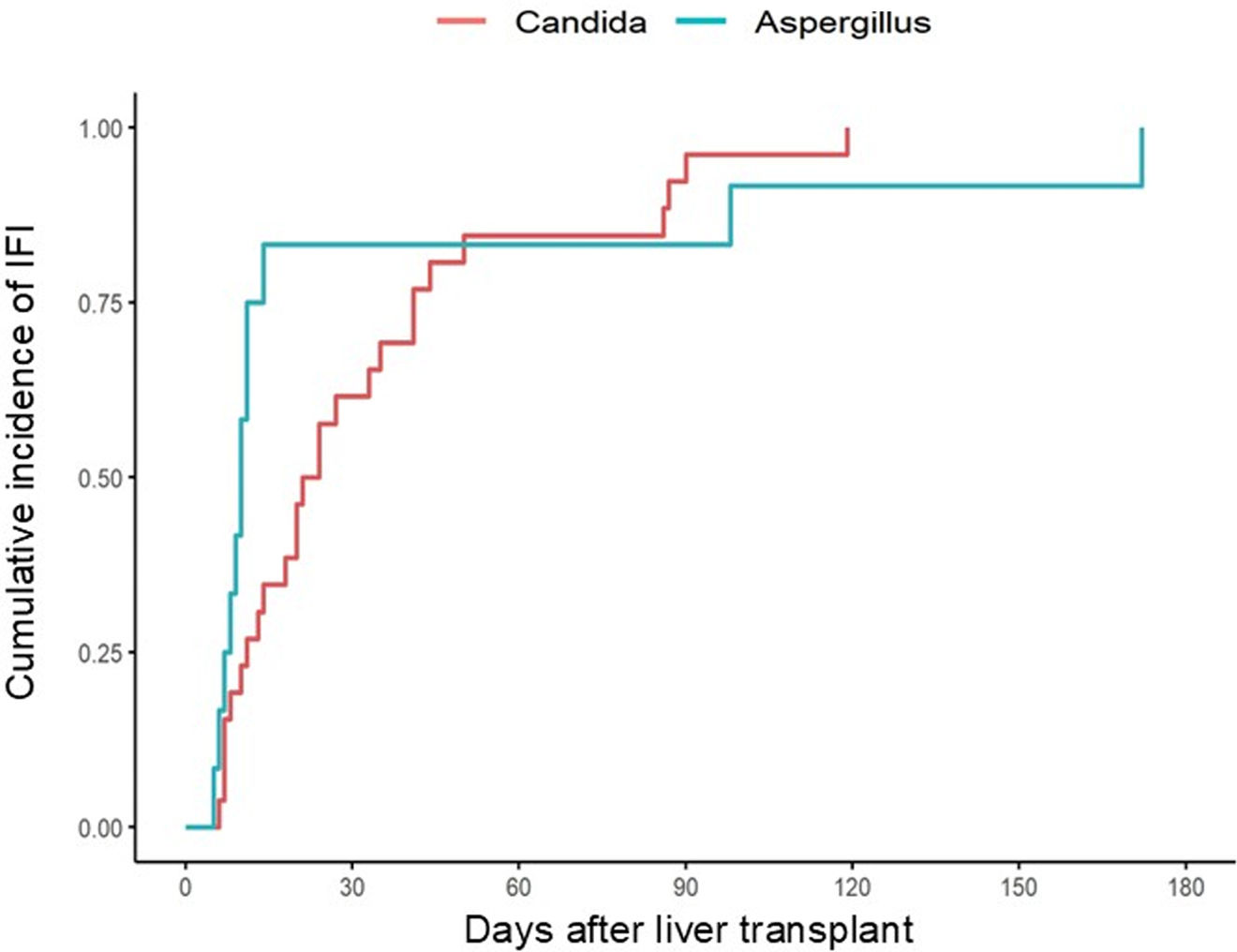
Types of fungal infectionsAmong invasive fungal infections, 37 patients met criteria for IFI (30 proven and 7 probable, per established definitions). The median time from LT to IFI diagnosis was 14 days (IQR9-41). Candida species accounted for 68% and Aspergillus species for 32%. Within the Candida isolates, C. albicans predominated (41%), followed by C. krusei (30%) and C. parapsilosis (18%); C. rugosa and C. tropicalis were less frequent (5% each). Clinically, Candida infections presented as candidemia in 24% of cases, 75% of which were catheter-related, followed by intra-abdominal abscesses (70%) and cutaneous abscesses (6%). Among Aspergillus infections, A. fumigatus was most common (62%), with A. nidulans and A. niger also observed (25% each), and isolates reported as Aspergillus spp. in 8%; all cases were invasive pulmonary Aspergillosis (IPA). Reintervention was associated with a higher proportion of Candida versus Aspergillus infections (40% vs 8%; p=0.06). Candida also occurred more often in patients with biliary complications than Aspergillus (24% vs 0%; p=0.14). Fungal type did not differ by ACLD etiology, ALF, HCC, RRT, orotracheal intubation for 24hours or longer, biopsy-proven acute rejection, or CMV viremia (all p>0.05). Median MELD-Na and NPAR were similar between Candida and Aspergillus infections (both p>0.05). Retransplantation was more frequent with Candida than Aspergillus (12% vs 0%; p=0.53). Procedure duration and the numbers of packed red blood cell, plasma, and platelet transfusions did not differ between groups (all p>0.05). Among the 9 patients who received antifungal prophylaxis, three developed breakthrough IFI, including two cases of Candida infection (both C. parapsilosis) and one case of IPA, and were switched to targeted therapy. IFI incidence was higher in 2003–2014 than in 2015–2024 (24/233 [10.3%] vs 13/193 [6.7%]; p=0.19). In time-to-event analyses restricted to patients who developed IFI, Aspergillus infections occurred earlier than Candida infections, with a median onset of 10 days (95% CI, 8–12) compared with 21 days (95% CI, 15–27), respectively (Fig. 1). Despite this earlier clustering of Aspergillus events, the overall time-to-infection distributions did not differ significantly between pathogens (log-rank p=0.49).
Association between invasive Candida infections and clinical features
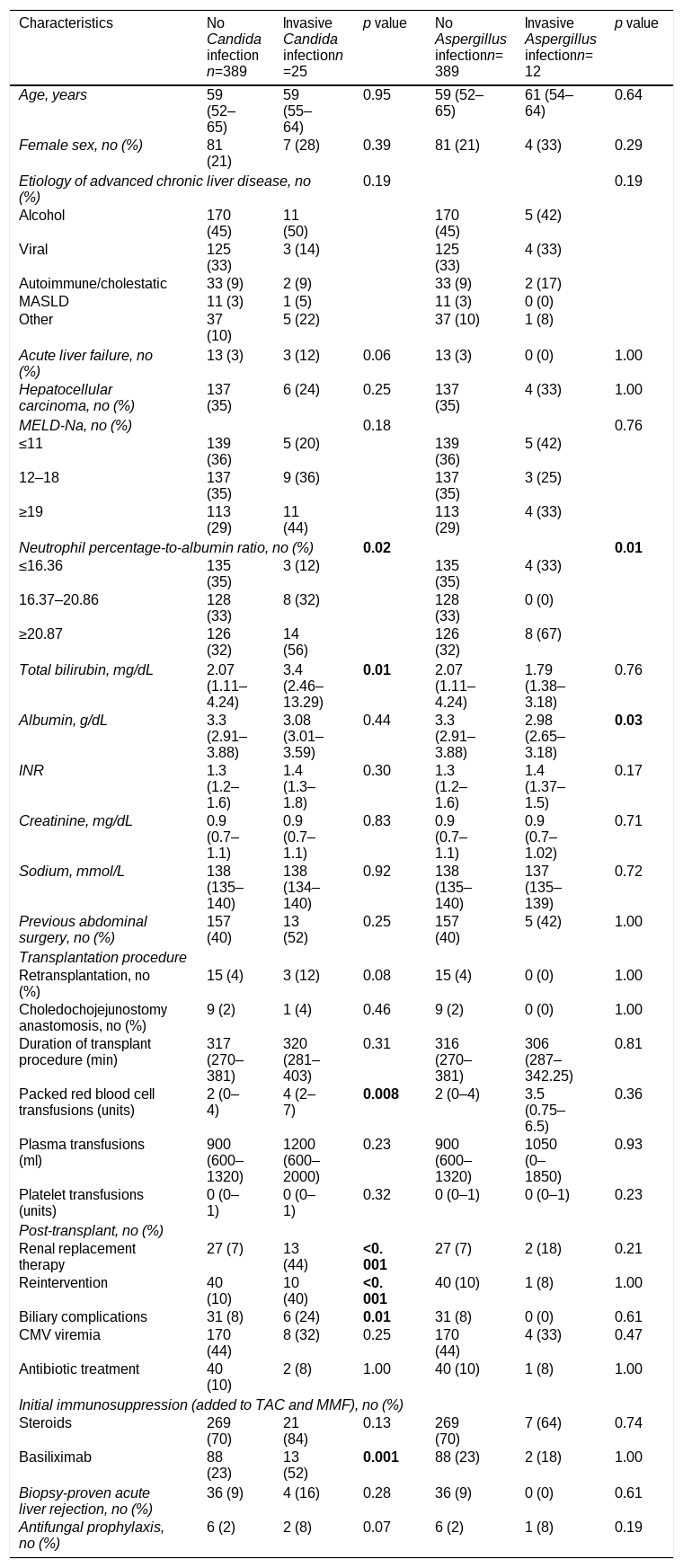
Associations between invasive Candida infection (excluding patients with invasive Aspergillus infection) and clinical or laboratory characteristics are shown in Table 2. Invasive Candida infection occurred in 25 of 426 recipients (9%). Compared with recipients without Invasive Candida infection, those with Invasive Candida infection had higher disease severity at transplant (MELD-Na≥19, 44% vs 29%; p=0.18) and a greater proportion in the upper NPAR tertile (56% vs 32%; p=0.02). They received more packed red blood cell transfusions (p=0.008), were more likely to require postoperative RRT (44% vs 7%; p<0.001) and early reintervention (40% vs 10%; p<0.001) and more likely to have biliary complications (24% vs 8%; p=0.01). Basiliximab was used more frequently in initial immunosuppression among invasive Candida infection cases (52% vs 23%; p=0.001), and antifungal prophylaxis was also more common (8% vs 2%; p=0.03). No significant differences were observed in liver disease etiology (including ALF and HCC), surgical variables, initial corticosteroid use, antifungal prophylaxis, or biopsy-proven acute rejection (all p>0.05). In ROC analyses restricted to Candida infections, NPAR demonstrated superior discriminative performance compared with albumin alone. The AUC for NPAR was 0.62 (95% CI: 0.53–0.71), with a sensitivity of 0.88 and a specificity of 0.41 (Fig. S3), whereas albumin alone yielded a lower AUC of 0.54 (95% CI: 0.45–0.63), with a sensitivity of 0.92 and a specificity of 0.27 (Fig. S4).
Association between invasive Candida and Aspergillus infection and clinical features.
| Characteristics | No Candida infectionn=389 | Invasive Candida infectionn=25 | p value | No Aspergillus infectionn=389 | Invasive Aspergillus infectionn=12 | p value |
|---|---|---|---|---|---|---|
| Age, years | 59 (52–65) | 59 (55–64) | 0.95 | 59 (52–65) | 61 (54–64) | 0.64 |
| Female sex, no (%) | 81 (21) | 7 (28) | 0.39 | 81 (21) | 4 (33) | 0.29 |
| Etiology of advanced chronic liver disease, no (%) | 0.19 | 0.19 | ||||
| Alcohol | 170 (45) | 11 (50) | 170 (45) | 5 (42) | ||
| Viral | 125 (33) | 3 (14) | 125 (33) | 4 (33) | ||
| Autoimmune/cholestatic | 33 (9) | 2 (9) | 33 (9) | 2 (17) | ||
| MASLD | 11 (3) | 1 (5) | 11 (3) | 0 (0) | ||
| Other | 37 (10) | 5 (22) | 37 (10) | 1 (8) | ||
| Acute liver failure, no (%) | 13 (3) | 3 (12) | 0.06 | 13 (3) | 0 (0) | 1.00 |
| Hepatocellular carcinoma, no (%) | 137 (35) | 6 (24) | 0.25 | 137 (35) | 4 (33) | 1.00 |
| MELD-Na, no (%) | 0.18 | 0.76 | ||||
| ≤11 | 139 (36) | 5 (20) | 139 (36) | 5 (42) | ||
| 12–18 | 137 (35) | 9 (36) | 137 (35) | 3 (25) | ||
| ≥19 | 113 (29) | 11 (44) | 113 (29) | 4 (33) | ||
| Neutrophil percentage-to-albumin ratio, no (%) | 0.02 | 0.01 | ||||
| ≤16.36 | 135 (35) | 3 (12) | 135 (35) | 4 (33) | ||
| 16.37–20.86 | 128 (33) | 8 (32) | 128 (33) | 0 (0) | ||
| ≥20.87 | 126 (32) | 14 (56) | 126 (32) | 8 (67) | ||
| Total bilirubin, mg/dL | 2.07 (1.11–4.24) | 3.4 (2.46–13.29) | 0.01 | 2.07 (1.11–4.24) | 1.79 (1.38–3.18) | 0.76 |
| Albumin, g/dL | 3.3 (2.91–3.88) | 3.08 (3.01–3.59) | 0.44 | 3.3 (2.91–3.88) | 2.98 (2.65–3.18) | 0.03 |
| INR | 1.3 (1.2–1.6) | 1.4 (1.3–1.8) | 0.30 | 1.3 (1.2–1.6) | 1.4 (1.37–1.5) | 0.17 |
| Creatinine, mg/dL | 0.9 (0.7–1.1) | 0.9 (0.7–1.1) | 0.83 | 0.9 (0.7–1.1) | 0.9 (0.7–1.02) | 0.71 |
| Sodium, mmol/L | 138 (135–140) | 138 (134–140) | 0.92 | 138 (135–140) | 137 (135–139) | 0.72 |
| Previous abdominal surgery, no (%) | 157 (40) | 13 (52) | 0.25 | 157 (40) | 5 (42) | 1.00 |
| Transplantation procedure | ||||||
| Retransplantation, no (%) | 15 (4) | 3 (12) | 0.08 | 15 (4) | 0 (0) | 1.00 |
| Choledochojejunostomy anastomosis, no (%) | 9 (2) | 1 (4) | 0.46 | 9 (2) | 0 (0) | 1.00 |
| Duration of transplant procedure (min) | 317 (270–381) | 320 (281–403) | 0.31 | 316 (270–381) | 306 (287–342.25) | 0.81 |
| Packed red blood cell transfusions (units) | 2 (0–4) | 4 (2–7) | 0.008 | 2 (0–4) | 3.5 (0.75–6.5) | 0.36 |
| Plasma transfusions (ml) | 900 (600–1320) | 1200 (600–2000) | 0.23 | 900 (600–1320) | 1050 (0–1850) | 0.93 |
| Platelet transfusions (units) | 0 (0–1) | 0 (0–1) | 0.32 | 0 (0–1) | 0 (0–1) | 0.23 |
| Post-transplant, no (%) | ||||||
| Renal replacement therapy | 27 (7) | 13 (44) | <0.001 | 27 (7) | 2 (18) | 0.21 |
| Reintervention | 40 (10) | 10 (40) | <0.001 | 40 (10) | 1 (8) | 1.00 |
| Biliary complications | 31 (8) | 6 (24) | 0.01 | 31 (8) | 0 (0) | 0.61 |
| CMV viremia | 170 (44) | 8 (32) | 0.25 | 170 (44) | 4 (33) | 0.47 |
| Antibiotic treatment | 40 (10) | 2 (8) | 1.00 | 40 (10) | 1 (8) | 1.00 |
| Initial immunosuppression (added to TAC and MMF), no (%) | ||||||
| Steroids | 269 (70) | 21 (84) | 0.13 | 269 (70) | 7 (64) | 0.74 |
| Basiliximab | 88 (23) | 13 (52) | 0.001 | 88 (23) | 2 (18) | 1.00 |
| Biopsy-proven acute liver rejection, no (%) | 36 (9) | 4 (16) | 0.28 | 36 (9) | 0 (0) | 0.61 |
| Antifungal prophylaxis, no (%) | 6 (2) | 2 (8) | 0.07 | 6 (2) | 1 (8) | 0.19 |
Median (IQR) are shown unless otherwise specified. MASLD, metabolic dysfunction-associated steatotic liver disease; MELD-Na, Model for End-Stage Liver Disease-sodium; INR, International Normalized Ratio; CMV, cytomegalovirus; TAC, tacrolimus; MMF, mycophenolate mofetil.
Associations between invasive Aspergillus infection (excluding patients with invasive Candida infection) and clinical or laboratory characteristics are shown in Table 2. invasive Aspergillus infection occurred in 12 of 426 recipients (3%). Compared with recipients without invasive Aspergillus infection, those with invasive Aspergillus infection had a greater proportion in the upper NPAR tertile (67% vs 32%; p=0.01) and have lower albumin levels (2.9 vs 3.3; p=0.03). No significant differences were observed in liver disease etiology (including ALF and HCC), MELD-Na, surgical variables, RRT, reintervention, biliary complication, CMV viremia, initial corticosteroid use, antifungal prophylaxis, or biopsy-proven acute rejection (all p>0.05). In ROC analyses restricted to Aspergillus infections, NPAR and albumin demonstrated comparable discriminative performance. The AUC for NPAR was 0.66 (95% CI: 0.46–0.85), with a sensitivity of 0.67 and a specificity of 0.68 (Fig. S5), whereas albumin alone yielded an AUC of 0.67 (95% CI: 0.53–0.81), with a sensitivity of 0.75 and a specificity of 0.59 (Fig. S6).
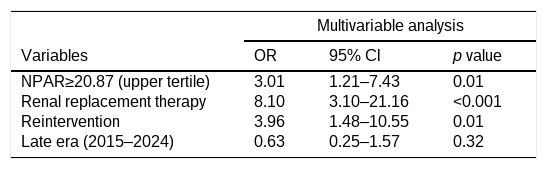
Risk factors for invasive Candida infectionTo estimate the potential causal contribution of NPAR and MELD-Na to invasive Candida infection, beyond established determinants of this infection such as RRT and reintervention, using multivariable logistic regression analyses. In addition, a separate model was constructed to evaluate the potential effect of transplant era (early era: 2003–2014 vs. late era: 2015–2024). A high NPAR was significantly associated with invasive Candida infection in both the unadjusted and adjusted models (unadjusted OR, 2.65; 95% CI, 1.17–6.01; p=0.01; adjusted OR, 2.79; 95% CI, 1.14–6.79; p=0.02). The association remained statistically significant in the model that additionally included transplant era (adjusted OR, 3.01; 95% CI, 1.21–7.43; p=0.01) (Table 3). While a high MELD-Na (≥19) was not associated in the unadjusted model (OR 1.91, 95% CI 0.84–4.35, p=0.11)
Variables independently associated with invasive Candida infection in multivariable logistic regression models.
| Multivariable analysis | |||
|---|---|---|---|
| Variables | OR | 95% CI | p value |
| NPAR≥20.87 (upper tertile) | 3.01 | 1.21–7.43 | 0.01 |
| Renal replacement therapy | 8.10 | 3.10–21.16 | <0.001 |
| Reintervention | 3.96 | 1.48–10.55 | 0.01 |
| Late era (2015–2024) | 0.63 | 0.25–1.57 | 0.32 |
NPAR, neutrophil percentage-to-albumin ratio.
Given the limited number of invasive Aspergillus infection events (n=12), these analyses were considered strictly exploratory. Univariable logistic regression was used to estimate the potential association of NPAR and MELD-Na with invasive aspergillosis. Elevated NPAR was significantly associated with invasive Aspergillus infection in the unadjusted analysis (OR 4.17, 95% CI 1.23–14.35, p=0.01). In contrast, a high MELD-Na score (≥19) was not associated with invasive aspergillosis in the unadjusted model (OR 1.22, 95% CI 0.36–4.31, p=0.74).
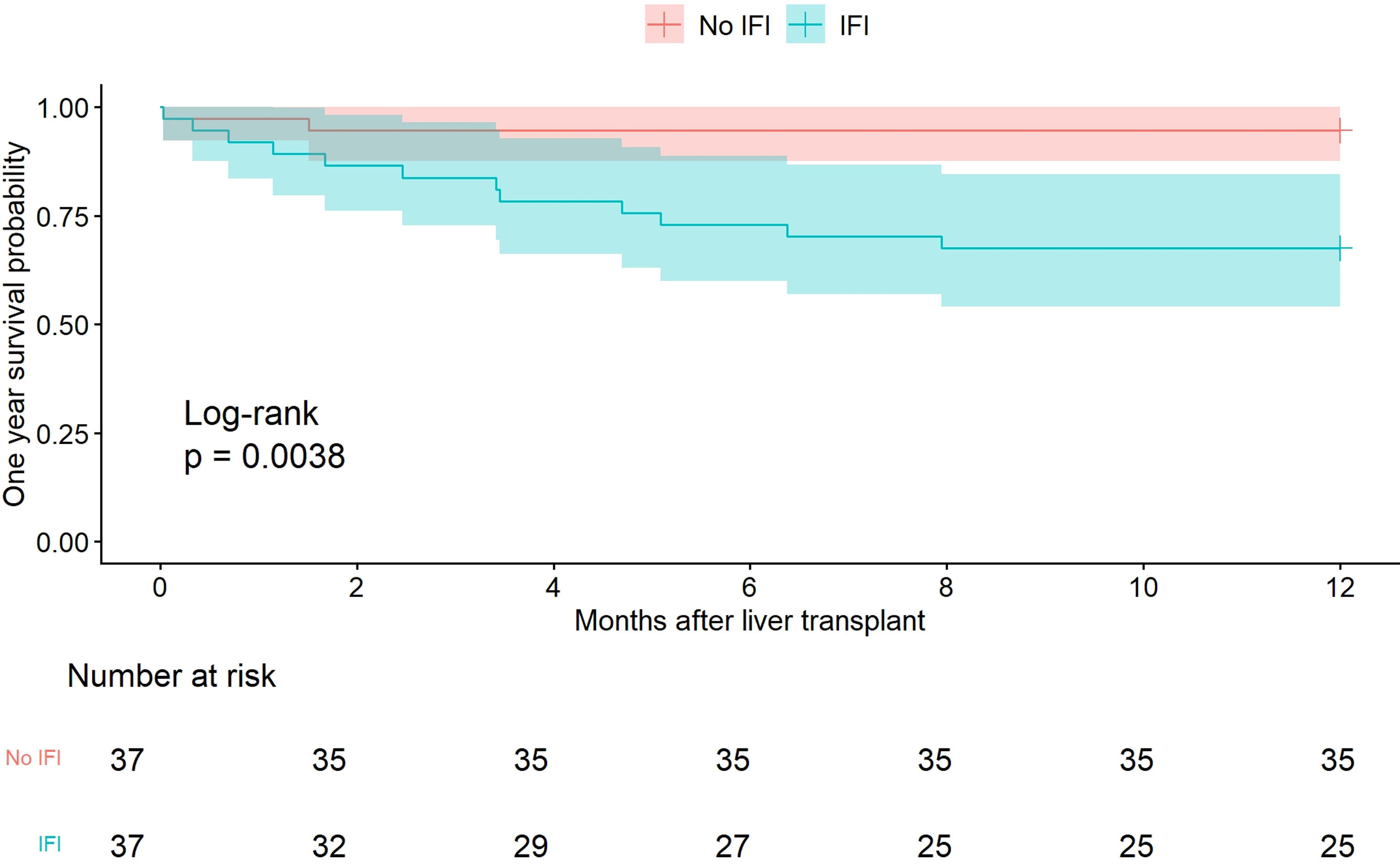
Survival impact of IFIs in the pre-matched and matched cohortIn the unmatched cohort, IFI was associated with higher 1-year mortality versus no IFI (HR 6.51; 95% CI, 3.23–13.10). There were no significant differences in 1-year mortality between Aspergillus and Candida infections (log-rank p=0.34). Propensity-score matching (nearest neighbor, 1:1, without replacement) yielded 37 matched pairs (n=74). Adequate balance was achieved for RRT, NPAR, and MELD-Na, with standardized mean differences of 0.000, 0.044, and 0.018, respectively. A small residual imbalance remained for reintervention, with a standardized mean difference of 0.118 (Table S1). Kaplan–Meier analysis demonstrated significantly lower 1-year survival in patients with IFI than in matched patients without IFI (log-rank p=0.0038; Fig. 2). In the Cox proportional hazards model with robust standard errors clustered by matched pair, IFI was associated with a higher hazard of 1-year mortality (HR 6.73; 95% CI, 1.53–29.62; p=0.012).
Discussion
In this large single-center cohort of liver transplant recipients, IFIs were independently associated with higher 1-year mortality after propensity score matching, underscoring their strong association with adverse post-transplant outcomes even among critically ill patients, many of whom required RRT or reintervention. An elevated NPAR was independently associated with increased odds of invasive Candida infection. NPAR was also associated with invasive Aspergillus infection. However, this finding was based on only 12 cases and an univariable analysis and should therefore be interpreted as strictly exploratory and hypothesis-generating. In both analyses, an NPAR value ≥20.87 identified patients with higher odds of infection. However, this threshold was derived from the present cohort and should not be regarded as a validated clinical cutoff.
Importantly, although albumin contributes substantially to the NPAR calculation, our analyses demonstrate that the ratio provides incremental predictive value beyond albumin alone for overall IFI and Candida infections, as reflected by improved discriminative performance. In contrast, NPAR and albumin showed comparable performance for Aspergillus infections, a finding that may reflect pathogen-specific host-pathogen interactions. Consistent with prior studies, our findings further confirm that post-transplant RRT and reintervention are important independent risk factors for invasive Candida infection. Taken together, these results underscore the multifactorial nature of IFI risk and the importance of comprehensive stratification strategies to optimize prophylaxis and ultimately improve 1-year survival.
The NPAR, a simple and readily obtainable marker of both local immune activation and systemic inflammation, has emerged as a prognostic biomarker across a variety of clinical conditions, such as cancer,22 metabolic dysfunction–associated steatotic liver disease (MASLD)23 and ACLF,24 among others. Neutrophils are central mediators of inflammatory responses, while albumin is influenced by inflammatory activity, making NPAR an integrative indicator of host response.24 In the context of liver disease, systemic inflammation is increasingly recognized as a key driver of disease progression, accompanying the transition from compensated advanced chronic liver disease (low-grade inflammation) to decompensated disease (high-grade inflammation).25,26 Even in compensated ACLD, where systemic inflammation is typically low grade, features of immune dysfunction are already present.27 As ACLD progresses, persistent exposure to pathogen- and damage-associated molecular patterns (PAMPs/DAMPs) amplifies inflammation and precipitates a compensatory anti-inflammatory response syndrome characterized by increased lymphocyte apoptosis and anergy,26,28 reduced cytokine production and diminished monocyte HLA expression upon stimulation,26,29 and upregulation of anti-inflammatory cytokines such as IL-10.30 The combined effects of immune exhaustion and endotoxin tolerance impair protective innate and adaptive responses, culminating in a predominantly immunodeficient phenotype.25 This immunological background provides a strong rationale for the increased susceptibility to IFIs (both Candida and Aspergillus) observed in liver transplant candidates. Within this context, NPAR may reflect the interplay between systemic inflammation and immune dysfunction, thereby serving as a potential predictive biomarker to identify patients at risk of post-transplant IFIs, particularly those caused by Candida.
A meta-analysis of 14 studies (4284 recipients) aligns with our findings, identifying reintervention (OR 2.18, 95% CI 1.61–2.94) and post-transplant RRT (OR 2.03, 95% CI 1.52–2.72) as among the strongest risk factors for IFI.31 Renal dysfunction compromises cellular and humoral immunity, increasing the overall immunosuppressive burden and the required vascular access further increases the risk of catheter-related candidemia.2 Taken together, NPAR may add incremental value to established clinical factors such as reintervention and RRT in supporting a more personalized risk stratification approach for targeting antifungal prophylaxis, particularly for Candida infections.
Additionally, we explored other potential predictors. We evaluated MELD-Na as a risk factor for post-transplant IFI, a variable that, to our knowledge, has not been specifically assessed in prior studies. Previous reports have shown that higher MELD scores (>20, particularly >30) are associated with increased IFI risk. However, those cohorts were enriched with patients with decompensated cirrhosis (47%) and included fewer patients transplanted for HCC (22%),3 in contrast to our population. Collectively, these findings suggest that MELD-Na alone has limited predictive value for post-LT IFI in a cohort with a high prevalence of HCC.
Other risk factors reported in the literature, including poor baseline renal function, longer operative time, greater use of blood products, CMV viremia, ALF, and perioperative antibiotic therapy, did not differ between patients with and without IFI (Candida and Aspergillus for separate) in our cohort. Although several prior studies identified these variables as predictors, they were not the primary drivers of risk in those cohorts.2,3,6,11–14
Our study has several strengths. The large contemporary cohort supports generalizability to liver transplant recipients. It provides proof of concept for the association between pre-transplant NPAR and subsequent IFIs, supporting the hypothesis that NPAR may reflect the interplay between systemic inflammation and immune dysfunction. We identified NPAR as a simple and readily available biomarker associated with IFI risk, particularly for Candida, with findings regarding Aspergillus remaining exploratory due to the limited number of cases. Importantly, the association between NPAR and IFI risk remained independent of transplant era, underscoring the robustness of this relationship across periods of evolving clinical practice. In addition, we confirmed RRT and early reintervention as factors independently associated with IFIs. We also used propensity score matching, to our knowledge a first in this setting, providing a more robust estimate of the mortality impact of post transplant IFI.
This study has limitations. The retrospective design introduces potential bias. The long study period (2003–2024) may capture secular changes in practice, including shifts in donor acceptance and in the acuity and composition of liver transplant candidates, which could influence outcomes despite our efforts to adjust for confounders. Importantly, antifungal prophylaxis strategies, fungal epidemiology, and resistance patterns have also evolved over time. These changes may have affected the incidence of invasive fungal infections, the spectrum of causative pathogens, and the interpretation of breakthrough infections. This temporal heterogeneity represents an important source of variability and should be considered when interpreting our findings. Another limitation is the lack of routine use of fungal biomarkers such as serum β-d-glucan and galactomannan for the diagnosis of probable IFI. The predictive performance of NPAR requires external validation, particularly for invasive aspergillosis. Validation in larger, contemporary, multicenter cohorts, ideally including centers from different geographic regions, incorporating fungal biomarkers, including populations with a lower proportion of HCC indications, higher MELD-Na scores, and living donor liver transplant recipients, would help confirm and extend these results.
ConclusionIn conclusion, pre-transplant NPAR was associated with an increased risk of post-transplant IFIs, particularly Candida infections, while findings for Aspergillus remain exploratory. Reintervention and RRT were also independently associated with Candida infection. Together, these variables may support a simple risk stratification approach in liver transplant recipients, identifying patients at higher risk who may benefit from closer monitoring and consideration of targeted antifungal prophylaxis. Prospective studies are required to validate the predictive value of NPAR and to determine whether this strategy improves outcomes.
Ethical considerationsThis study was approved by the Research Ethics Committee of the Universidad de Navarra (approval no. 2025.102). Given the retrospective nature of the study, the requirement for informed consent was waived by the Committee. The study was conducted in accordance with the ethical principles of the Declaration of Helsinki and applicable institutional and regulatory standards.
AI use disclosure statementNo AI were used to create or assist the submitted work.
Financial support and sponsorshipNone.
Conflicts of interestNothing to report.
We would like to acknowledge the valuable contribution of Amaya Redín, Liver Unit, Clínica Universidad de Navarra.
The followings are the supplementary data to this article: