metricas

Medicina Clínica

Sugerencias
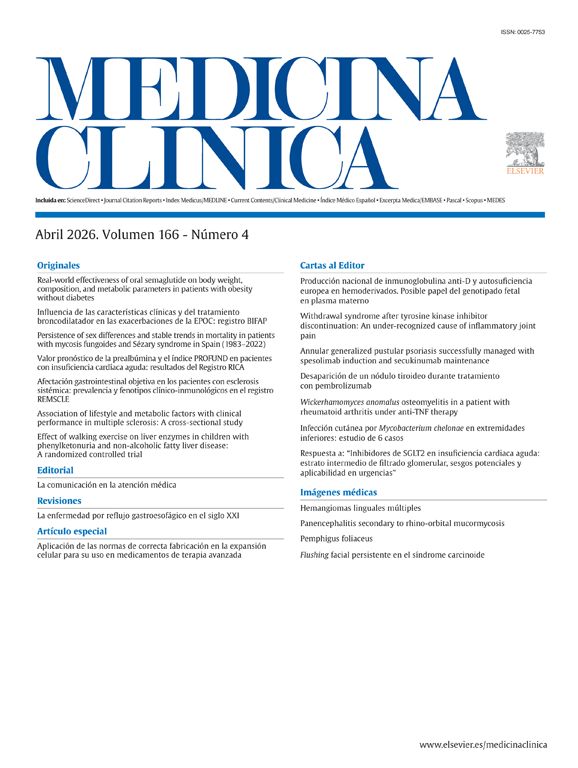
Medicina Clínica Intensive versus standard blood pressure control in patients with and without ty...
Información de la revista
Cita
Cita
Compartir
Descargar PDF
Más opciones de artículo
Visitas
637
Systematic review

Intensive versus standard blood pressure control in patients with and without type 2 diabetes: A systematic review and meta-analysis

Control intensivo frente a control estándar de la presión arterial en pacientes con y sin diabetes tipo 2: revisión sistemática y metaanálisis
Visitas
637
João Victor de Oliveira Ramosa,
Autor para correspondencia
ramosjoaovictor9713@gmail.com

Corresponding author.
, João Vitor Andrade Fernandesa, Flávia Maria Camilo Madruga de Oliveira Limaa, José Lucas Toscano Matiasa, Fabyan Esberard de Lima Beltrãob, Marcelo Dantas Tavares de Meloa
a Medical Sciences Center, Federal University of Paraíba, João Pessoa, Brazil
b Lauro Wanderley University Hospital, Department of Internal Medicine, Federal University of Paraíba, João Pessoa, Brazil
Este artículo ha recibido
Información del artículo
Resumen
Texto completo
Bibliografía
Descargar PDF
Estadísticas
Abstract
Background

The optimal intensity of blood pressure (BP) control in patients with and without type 2 diabetes mellitus (T2D) remains unclear.

Objectives

We performed a systematic review and meta-analysis of randomized controlled trials comparing intensive versus standard BP control, stratified by T2D status.

Methods

Primary outcomes were all-cause mortality and serious adverse events (SAEs); secondary outcomes included death from cardiovascular causes and occurrence of myocardial infarction (MI) and stroke. Pooled odds ratios (ORs) with 95% confidence intervals (CIs) were calculated using DerSimonian–Laird random-effects models. Heterogeneity was assessed with the I2 statistic, and leave-one-out sensitivity analyses were conducted for all outcomes.

Results

Six trials comprising 41,210 participants were included. Intensive BP control significantly reduced death from cardiovascular causes (OR 0.72; 95% CI 0.56–0.93), incidence of MI (OR 0.85; 95% CI 0.74–0.97), and stroke (OR 0.78; 95% CI 0.68–0.89). The reduction in all-cause mortality was significant in patients without T2D (OR 0.73; 95% CI 0.59–0.90), but not in those with T2D (OR 0.99; 95% CI 0.85–1.14). Intensive control was associated with a non-significant increase in SAEs overall (OR 1.15; 95% CI 0.90–1.46), with higher estimates in patients with T2D.

Conclusions

Intensive BP control reduces cardiovascular events and mortality in non-diabetic patients. In those with T2D, benefits are attenuated and may be counterbalanced by safety concerns. BP targets should be individualized based on diabetes status and clinical context.

Keywords:
Blood pressure
Hypertension
Type 2 diabetes
Resumen
Introducción

La intensidad óptima del control de la presión arterial (PA) en pacientes con y sin diabetes mellitus tipo 2 (DM2) sigue sin estar clara.

Objetivos

Realizamos una revisión sistemática y un metaanálisis de ensayos controlados aleatorios que comparaban el control intensivo de la PA con el control estándar, estratificados según el estado de DM2.

Métodos

Los resultados primarios fueron la mortalidad por todas las causas y los eventos adversos graves (EAG); los resultados secundarios incluyeron la muerte por causas cardiovasculares y la aparición de infarto de miocardio (IM) y accidente cerebrovascular. Se calcularon las odds ratio (OR) combinadas con intervalos de confianza (IC) del 95% utilizando modelos de efectos aleatorios de DerSimonian-Laird. La heterogeneidad se evaluó con la estadística I2, y se realizaron análisis de sensibilidad de «dejar uno fuera» para todos los resultados.

Resultados

Se incluyeron seis ensayos con 41.210 participantes. El control intensivo de la PA redujo significativamente la mortalidad por causas cardiovasculares (OR 0,72; IC del 95%: 0,56-0,93), la incidencia de IM (OR 0,85; IC del 95%: 0,74-0,97) y los accidentes cerebrovasculares (OR 0,78; IC del 95%: 0,68-0,89). La reducción de la mortalidad por todas las causas fue significativa en los pacientes sin DM2 (OR 0,73; IC del 95%: 0,59-0,90), pero no en los que padecían DM2 (OR 0,99; IC del 95%: 0,85-1,14). El control intensivo se asoció con un aumento no significativo de los EAG en general (OR 1,15; IC del 95%: 0,90-1,46), con estimaciones más altas en pacientes con DM2.

Conclusiones

El control intensivo de la PA reduce los eventos cardiovasculares y la mortalidad en pacientes no diabéticos. En los pacientes con DM2, los beneficios se atenúan y pueden verse contrarrestados por cuestiones de seguridad. Los objetivos de PA deben individualizarse en función del estado de la diabetes y el contexto clínico.

Palabras clave:
Presión arterial
Hipertensión
Diabetes tipo 2

Artículo

Opciones para acceder a los textos completos de la publicación Medicina Clínica
Suscriptor
Suscriptor de la revista

Si ya tiene sus datos de acceso, clique aquí.

Si olvidó su clave de acceso puede recuperarla clicando aquí y seleccionando la opción "He olvidado mi contraseña".
Comprar
Comprar acceso al artículo

Comprando el artículo el PDF del mismo podrá ser descargado

Comprar ahora
Contactar
Teléfono para suscripciones e incidencias
De lunes a viernes de 9h a 18h (GMT+1) excepto los meses de julio y agosto que será de 9 a 15h
Llamadas desde España
932 415 960
Llamadas desde fuera de España
+34 932 415 960
E-mail
References
[1]
M. Burnier, A. Damianaki.
Hypertension as cardiovascular risk factor in chronic kidney disease.
Circ Res, 132 (2023), pp. 1050-1063
[2]
F.D. Fuchs, P.K. Whelton.
High blood pressure and cardiovascular disease.
Hypertension, 75 (2020), pp. 285-292
[3]
A.S. Upoyo, I. Setyopranoto, H.S. Pangastuti.
The modifiable risk factors of uncontrolled hypertension in stroke: a systematic review and meta-analysis.
Stroke Res Treat, 2021 (2021),
[4]
N.H. Siam, N.N. Snigdha, N. Tabasumma, I. Parvin.
Diabetes mellitus and cardiovascular disease: exploring epidemiology pathophysiology, and treatment strategies.
Rev Cardiovasc Med, 25 (2024), pp. 436
[5]
F. Jyotsna, A. Ahmed, K. Kumar, et al.
Exploring the complex connection between diabetes and cardiovascular disease: analyzing approaches to mitigate cardiovascular risk in patients with diabetes.
[6]
K.T. Mills, A. Stefanescu, J. He.
The global epidemiology of hypertension.
Nat Rev Nephrol, 16 (2020), pp. 223-237
[7]
R.M. Carey, J.T. Wright Jr., S.J. Taler, P.K. Whelton.
Guideline-driven management of hypertension: an evidence-based update.
Circ Res, 128 (2021), pp. 827-846
[8]
X. Xie, E. Atkins, J. Lv, et al.
Effects of intensive blood pressure lowering on cardiovascular and renal outcomes: updated systematic review and meta-analysis.
[9]
Y. Yu, Y. Gong, B. Hu, et al.
Expert consensus on blood pressure management in critically ill patients.
J Intensive Med, 3 (2023), pp. 185-203
[10]
I. Martín-Timón, C. Sevillano-Collantes, A. Segura-Galindo, F.J. Del Cañizo-Gómez.
Type 2 diabetes and cardiovascular disease: have all risk factors the same strength?.
World J Diabetes, 5 (2014), pp. 444-470
[11]
S. Seidu, H. Willis, S.K. Kunutsor, K. Khunti.
Intensive versus standard blood pressure control in older persons with or without diabetes: a systematic review and meta-analysis of randomised controlled trials.
J R Soc Med, 116 (2023), pp. 133-143
[12]
M.J. Page, J.E. McKenzie, P.M. Bossuyt, et al.
The PRISMA 2020 statement: an updated guideline for reporting systematic reviews.
[13]
M.S. Cumpston, J.E. McKenzie, V.A. Welch, S.E. Brennan.
Strengthening systematic reviews in public health: guidance in the Cochrane Handbook for Systematic Reviews of Interventions, 2nd edition.
J Public Health (Oxf), 44 (2022), pp. e588-e592
[14]
J.A.C. Sterne, J. Savović, M.J. Page, et al.
RoB 2 a revised tool for assessing risk of bias in randomised trials.
[15]
W.C. Cushman, G.W. Evans, R.P. Byington, et al.
Effects of intensive blood-pressure control in type 2 diabetes mellitus.
N Engl J Med, 362 (2010), pp. 1575-1585
[16]
Y. Bi, M. Li, Y. Liu, et al.
Intensive blood-pressure control in patients with type 2 diabetes.
N Engl J Med, 392 (2025), pp. 1155-1167
[17]
J. Liu, Y. Li, J. Ge, et al.
Lowering systolic blood pressure to less than 120mm Hg versus less than 140mm Hg in patients with high cardiovascular risk with and without diabetes or previous stroke: an open-label, blinded-outcome, randomised trial.
[18]
K. Ueki, T. Sasako, Y. Okazaki, et al.
Effect of an intensified multifactorial intervention on cardiovascular outcomes and mortality in type 2 diabetes (J-DOIT3): an open-label, randomised controlled trial.
Lancet Diabetes Endocrinol, 5 (2017), pp. 951-964
[19]
B.V. Howard, M.J. Roman, R.B. Devereux, et al.
Effect of lower targets for blood pressure and LDL cholesterol on atherosclerosis in diabetes: the SANDS randomized trial.
JAMA, 299 (2008), pp. 1678-1689
[20]
J.T. Wright Jr., J.D. Williamson, P.K. Whelton, et al.
A randomized trial of intensive versus standard blood-pressure control.
N Engl J Med, 373 (2015), pp. 2103-2116
[21]
Y. Liu, X. Luo, H. Jia, B. Yu.
The effect of blood pressure variability on coronary atherosclerosis plaques.
Front Cardiovasc Med, 9 (2022),
[22]
G. Tsivgoulis, A. Safouris, D.E. Kim, A.V. Alexandrov.
Recent advances in primary and secondary prevention of atherosclerotic stroke.
J Stroke, 20 (2018), pp. 145-166
[23]
S.K. Masenga, A. Kirabo.
Hypertensive heart disease: risk factors, complications and mechanisms.
Front Cardiovasc Med, 10 (2023),
[24]
D. Canoy, M. Nazarzadeh, E. Copland, et al.
How much lowering of blood pressure is required to prevent cardiovascular disease in patients with and without previous cardiovascular disease?.
Curr Cardiol Rep, 24 (2022), pp. 851-860
[25]
M.E. Makover, M.D. Shapiro, P.P. Toth.
There is urgent need to treat atherosclerotic cardiovascular disease risk earlier, more intensively, and with greater precision: a review of current practice and recommendations for improved effectiveness.
Am J Prev Cardiol, 12 (2022),
[26]
A.J.S. Webb, D.J. Werring.
New insights into cerebrovascular pathophysiology and hypertension.
Stroke, 53 (2022), pp. 1054-1064
[27]
M.M. Al-Salihi, S.A. Gillani, R. Saha, et al.
Systolic blood pressure reduction strategies in acute ischemic stroke patients following endovascular thrombectomy: a systematic review and meta-analysis.
[28]
S. Shihab, R.E. Boucher, N. Abraham, G. Wei, S. Beddhu.
Influence of baseline diastolic blood pressure on the effects of intensive systolic blood pressure lowering on the risk of stroke.
Hypertension, 79 (2022), pp. 785-793
[29]
A. Beros, J. Sluyter, R.K.R. Scragg.
Association of arterial stiffness and neuropathy in diabetes: a systematic review and meta-analysis.
BMJ Open Diabetes Res Care, 11 (2023),
[30]
S. Theilade, M. Lajer, F. Persson, C. Joergensen, P. Rossing.
Arterial stiffness is associated with cardiovascular, renal, retinal, and autonomic disease in type 1 diabetes.
Diabetes Care, 36 (2013), pp. 715-721
[31]
B.M. Leon, T.M. Maddox.
Diabetes and cardiovascular disease: epidemiology, biological mechanisms, treatment recommendations and future research.
World J Diabetes, 6 (2015), pp. 1246-1258
[32]
S.Z. Sudo, T.L. Montagnoli, B.S. Rocha, A.D. Santos, M.P.L. de Sá, G. Zapata-Sudo.
Diabetes-induced cardiac autonomic neuropathy: impact on heart function and prognosis.
[33]
C. Damaskos, N. Garmpis, P. Kollia, et al.
Assessing cardiovascular risk in patients with diabetes: an update.
Curr Cardiol Rev, 16 (2020), pp. 266-274
[34]
J.R. Petrie, T.J. Guzik, R.M. Touyz.
Diabetes hypertension, and cardiovascular disease: clinical insights and vascular mechanisms.
Can J Cardiol, 34 (2018), pp. 575-584
[35]
J.R. Sowers, M. Epstein, E.D. Frohlich.
Diabetes, hypertension, and cardiovascular disease: an update.
Hypertension, 37 (2001), pp. 1053-1059
[36]
H.E. Aschmann, C.M. Boyd, C.W. Robbins, et al.
Balance of benefits and harms of different blood pressure targets in people with multiple chronic conditions: a quantitative benefit-harm assessment.
[37]
O. Quesada, B. Claggett, F. Rodriguez, et al.
Associations of insulin resistance with systolic and diastolic blood pressure: a study from the HCHS/SOL.
Hypertension, 78 (2021), pp. 716-725
[38]
M. Nazarzadeh, Z. Bidel, D. Canoy, et al.
Blood pressure-lowering treatment for prevention of major cardiovascular diseases in people with and without type 2 diabetes: an individual participant-level data meta-analysis.
Lancet Diabetes Endocrinol, 10 (2022), pp. 645-654
[39]
M. Brunström, B. Carlberg.
Association of blood pressure lowering with mortality and cardiovascular disease across blood pressure levels: a systematic review and meta-analysis.
JAMA Intern Med, 178 (2018), pp. 28-36
[40]
F. Rahman, J.W. McEvoy, T. Ohkuma, et al.
Effects of blood pressure lowering on clinical outcomes according to baseline blood pressure and cardiovascular risk in patients with type 2 diabetes mellitus.
Hypertension, 73 (2019), pp. 1291-1299
[41]
Z. Zhang, Z. Nie, K. Chen, et al.
Association between intensive blood pressure lowering and stroke-free survival among patients with and without diabetes.
[42]
G.Y.H. Lip, D.A. Lane, R. Lenarczyk, et al.
Integrated care for optimizing the management of stroke and associated heart disease: a position paper of the European Society of Cardiology Council on Stroke.
Eur Heart J, 43 (2022), pp. 2442-2460
[43]
K.M. Wang, M.R. Stedman, G.M. Chertow, T.I. Chang.
Factors associated with failure to achieve the intensive blood pressure target in the Systolic Blood Pressure Intervention Trial (SPRINT).
Hypertension, 76 (2020), pp. 1725-1733
[44]
S. Beddhu, G.M. Chertow, T. Greene, et al.
Effects of intensive systolic blood pressure lowering on cardiovascular events and mortality in patients with type 2 diabetes mellitus on standard glycemic control and in those without diabetes mellitus: reconciling results from ACCORD BP and SPRINT.
J Am Heart Assoc, 7 (2018),
[45]
R. Rodriguez-Gutierrez, A. Flores-Rodríguez, K. Raygoza-Cortez, et al.
Intensive vs. conventional blood pressure goals in older patients with type 2 diabetes: a systematic review and meta-analysis.
Endocrine, 78 (2022), pp. 13-23
[46]
L. Frey, I. Gravestock, G. Pichierri, J. Steurer, J.M. Burgstaller.
Serious adverse events in patients with target-oriented blood pressure management: a systematic review.
J Hypertens, 37 (2019), pp. 2135-2144
[47]
M. Saad, M.U. Sohail, S.A. Waqas, et al.
Effects of intensive blood pressure control on cardiovascular outcomes in patients with diabetes: a systematic review and meta-analysis.
Prim Care Diabetes, 19 (2025), pp. 422-425
[48]
T. Haze, K. Katsurada, S. Sakata, et al.
Effect of intensive versus standard blood pressure control on cardiovascular outcomes in adult patients with hypertension: a systematic review and meta-analysis.
Hypertens Res, 48 (2025), pp. 1846-1858
asdasdasd
Opciones de artículo
Herramientas
Material suplementario