Ulcerative colitis (UC) remains challenging to diagnose, monitor, and treat due to heterogeneous disease presentation and lack of reliable non-invasive markers. Current diagnostic tools, including endoscopy and routine laboratory tests, are limited by invasiveness, cost, and low sensitivity.
AimThis review evaluates emerging biomarkers and multi-omics strategies in UC, highlighting their potential role in disease diagnosis, prognosis, and therapeutic response prediction.
MethodsA comprehensive literature analysis was conducted, focusing on faecal, serological, genetic, epigenetic, microbial, and metabolite-based biomarkers, as well as recent advances in transcriptomics, proteomics, and metabolomics. Integration with machine learning approaches was also assessed for their clinical applicability.
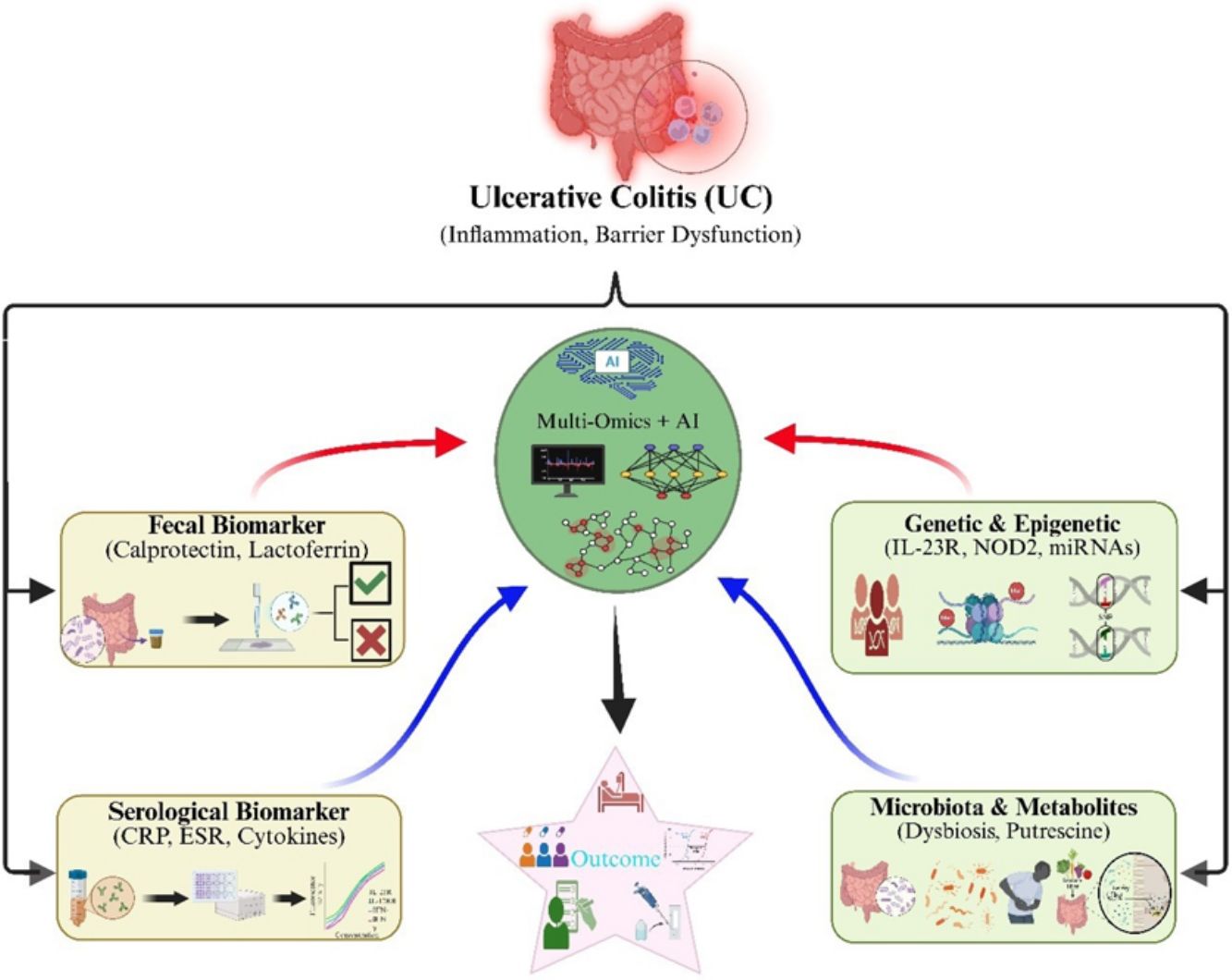
ResultsFaecal calprotectin and lactoferrin remain reliable non-invasive markers for mucosal inflammation, while serological markers such as CRP and ESR show limited specificity. Genetic variants (IL23R, NOD2) and epigenetic regulators, particularly microRNAs, demonstrate potential for disease stratification. Dysbiosis and altered microbial metabolites further correlate with disease severity and treatment response. Multi-omics integration offers a systems-level view of UC, enabling biomarker panels that improve diagnostic precision and predict therapeutic outcomes. Machine learning tools enhance biomarker-based models, but clinical translation is constrained by variability, validation gaps, and regulatory hurdles.
ConclusionEmerging biomarkers, especially when integrated across omics platforms and supported by artificial intelligence, provide promising avenues for precision medicine in UC. However, standardisation, external validation, and regulatory qualification remain essential for their successful clinical implementation.
La colitis ulcerosa (CU) sigue siendo difícil de diagnosticar, monitorizar y tratar debido a la heterogeneidad clínica y a la falta de marcadores no invasivos fiables. Las herramientas diagnósticas actuales, como la endoscopia y las pruebas de laboratorio rutinarias, se ven limitadas por su carácter invasivo, elevado coste y baja sensibilidad.
ObjetivoEsta revisión evalúa biomarcadores emergentes y estrategias multi-ómicas en CU, destacando su papel potencial en el diagnóstico, el pronóstico y la predicción de la respuesta terapéutica.
MétodosSe realizó un análisis exhaustivo de la literatura, centrado en biomarcadores fecales, serológicos, genéticos, epigenéticos, microbianos y metabolómicos, así como en los avances recientes en transcriptómica, proteómica y metabolómica. También se valoró la integración con enfoques de aprendizaje automático para su aplicabilidad clínica.
ResultadosLa calprotectina y la lactoferrina fecales siguen siendo marcadores no invasivos fiables de inflamación mucosa, mientras que los marcadores serológicos como la PCR y la VSG presentan una especificidad limitada. Variantes genéticas (IL23R, NOD2) y reguladores epigenéticos, especialmente microARN, muestran potencial en la estratificación de pacientes. La disbiosis y las alteraciones en metabolitos microbianos también se correlacionan con la gravedad de la enfermedad y la respuesta al tratamiento. La integración multi-ómica ofrece una visión sistémica de la CU, permitiendo paneles de biomarcadores que mejoran la precisión diagnóstica y predicen los resultados terapéuticos. Las herramientas de aprendizaje automático potencian los modelos basados en biomarcadores, aunque su traslación clínica está limitada por la variabilidad, la falta de validación externa y los retos regulatorios.
ConclusionesLos biomarcadores emergentes, especialmente cuando se integran en plataformas ómicas y se apoyan en inteligencia artificial, representan vías prometedoras para la medicina de precisión en CU. Sin embargo, la estandarización, la validación externa y la cualificación regulatoria son esenciales para su implementación clínica exitosa.

Chronic gastrointestinal inflammatory conditions such as Crohn's disease (CD) and ulcerative colitis (UC) are collectively classified as inflammatory bowel disease (IBD), a group of immune-mediated disorders characterised by persistent inflammation of the gastrointestinal (GI) mucosa. Although both conditions share this underlying inflammatory basis, they present with a wide range of clinical manifestations, including diarrhoea, abdominal pain, rectal bleeding, fatigue, and extraintestinal symptoms such as joint pain and systemic discomfort. If not diagnosed and managed early, disease progression can lead to severe complications and may become life-threatening.1
Ulcerative colitis is an immune-mediated disease secondary to a dysregulated immune response targeting the colonic mucosa, resulting in inflammation and ulcers in the colon. The relapsing and remitting nature of UC significantly impairs patients’ quality of life. Clinical symptoms such as persistent diarrhoea, abdominal discomfort, and fatigue can interfere with daily functioning and overall well-being. The disease often begins during adolescence or early adulthood, a critical period for personal and professional development. In addition to physical symptoms, UC is associated with considerable psychological burden, including stress, anxiety, and depression, largely due to its chronic course and need for long-term management. Accordingly, current clinical approaches emphasise the importance of addressing both the biological and psychosocial aspects of the disease to improve patient outcomes.2
Despite advances in understanding UC, current diagnostic and monitoring tools remain limited. The diagnosis relies on a combination of clinical, laboratory, endoscopic, and histopathological evaluations, as no single test is sufficiently definitive. Common inflammatory markers such as erythrocyte sedimentation rate (ESR) and C-reactive protein (CRP) lack specificity and may not accurately reflect disease activity, with a proportion of patients showing normal levels even during active disease. Faecal calprotectin (FC) is widely used as a non-invasive biomarker to distinguish inflammatory from non-inflammatory conditions and to monitor treatment response; however, it does not always correlate precisely with mucosal healing. Serological markers such as antineutrophil cytoplasmic antibodies (ANCA) and anti-Saccharomyces cerevisiae antibodies (ASCA) have limited sensitivity and are not recommended for routine diagnostic use. Imaging modalities, including CT and MRI, have restricted utility in assessing luminal disease and are generally reserved for complications or specific clinical scenarios.3
Furthermore, symptom-based assessment alone is insufficient for accurate disease monitoring, as mucosal inflammation may persist even during clinical remission. Although endoscopy remains the gold standard for evaluating disease severity and mucosal healing, it is invasive, costly, and subject to interobserver variability, and it may underestimate disease extent compared to histopathological findings. Repeated colonoscopic evaluations are often impractical for routine monitoring due to associated risks and patient burden. While emerging techniques such as intestinal ultrasonography show promise as non-invasive alternatives, their application is limited by availability and operator dependency. Collectively, these limitations highlight the need for more reliable, non-invasive, and accessible approaches for the diagnosis and monitoring of ulcerative colitis.4
This review's objective is to present an extensive and critical examination of novel biomarkers and multi-omics approaches in ulcerative colitis (UC), emphasising their potential for diagnosis, prognosis, and therapy. This article shows advances in transcriptomics, proteomics, metabolomics, microbiome research, and the use of AI and machine learning for biomarker panel prediction. The scope of this paper includes a review of the methodological benefits and drawbacks, clinical and regulatory implementation challenges, and possible future paths for incorporating these tools into individualised UC therapy.
Literature search strategyThis study was conducted as a non-systematic narrative review to summarise current evidence on emerging biomarkers and multi-omics approaches in ulcerative colitis (UC). A structured literature search was performed using electronic databases including PubMed, Scopus, and Web of Science to identify relevant articles published in English. Keywords related to ulcerative colitis, biomarkers, microbiome, metabolomics, transcriptomics, proteomics, and machine learning were used in various combinations. The search was limited to studies published between 2013 and 2025, in accordance with the timeframe covered by the cited literature.
Articles were screened based on predefined inclusion and exclusion criteria. Studies focusing on UC-related biomarkers, multi-omics approaches, and their clinical or translational relevance were included, while non-relevant articles, duplicate records, and studies lacking sufficient methodological detail were excluded. Titles, abstracts, and full texts were evaluated for eligibility.
After the screening process, approximately 34 articles were included in this review based on their relevance to the scope of the manuscript. Given the narrative nature of this review, no formal risk-of-bias or quantitative quality assessment was performed. The included studies were interpreted qualitatively to provide an updated and narrative overview of the field.
Ethical considerationsThis article is a narrative review based on previously published studies and does not involve human participants or animal experimentation. Therefore, ethical approval and informed consent were not required.
Biomarkers predicting disease course and complicationsGenetic and epigenetic markersIn UC, single-nucleotide polymorphisms (SNPs) in genes related to immune modulation have been frequently demonstrated to affect susceptibility, phenotype, and perhaps therapy response. In many populations, particularly in Caucasians, IL23R (rs7517847) tends to be protective against UC; meta-analyses show that carriers of the minor allele have a lower risk of disease (OR ∼0.65 in some allelic/dominant models) than non-carriers. This is one of the most frequently replicated findings. NOD2 is a well-established susceptibility gene for Crohn's disease; however, its role in ulcerative colitis (UC) remains inconsistent and appears to be population dependent. Most studies report no strong association between NOD2 variants and UC risk, suggesting a limited contribution. Current evidence indicates that NOD2 may act primarily as a disease-modifying factor rather than a principal genetic driver in UC. Some reports further suggest that UC patients carrying NOD2 variants may experience a more severe disease course, although these observations require further validation.5 On the other hand, the human leucocyte antigen (HLA) locus within the major histocompatibility complex (MHC) represents the most consistent and strongest genetic association identified in ulcerative colitis (UC), highlighting the central importance of antigen presentation and adaptive immune dysregulation in disease pathogenesis. Genome-wide association studies have repeatedly implicated class II variants, particularly HLA-DRB1 and HLA-DQA1, as key susceptibility loci across diverse populations. Specific alleles, including HLA-DRB101 and HLA-DRB115, have been associated with differences in disease susceptibility and clinical phenotype in UC. Mechanistically, these variants are thought to alter peptide presentation to CD4+ T lymphocytes, thereby shaping mucosal immune responses and promoting chronic intestinal inflammation.6
In addition to the HLA region, several non-HLA loci such as IL-10, ECM1, LAMB1, and CDH1 further support the combined contribution of immune dysregulation and epithelial barrier dysfunction in UC pathophysiology. Importantly, despite robust genetic associations, currently identified genetic biomarkers have limited direct utility in guiding therapeutic decisions in routine UC clinical practice.7
Since epigenetic regulation is dynamic, reversible, and heritable and regulates gene expression without changing the DNA sequence, it presents a prospective therapeutic target for ulcerative colitis (UC). Histone modification, DNA methylation, and non-coding RNAs, especially microRNAs (miRNAs), are important epigenetic processes. Intestinal inflammation, immunological responses, barrier integrity, and mucosal healing in UC are all impacted by miRNAs, which are short (17–25 nucleotides) endogenous non-coding RNAs that control gene expression by altering mRNA stability and translation. Important miRNAs associated with UC include miR-21 (which increases inflammation and dysfunction of the epithelial barrier), miR-155 (which boosts immune activation and pro-inflammatory signalling), miR-146a (which is a negative regulator of NF-κB and inflammatory pathways), and miR-223 (which is associated with mucosal inflammation and neutrophil activity). Importantly, miRNAs can be detected in blood/plasma, highlighting their potential as non-invasive diagnostic and prognostic biomarkers, although further validation is needed for routine clinical use.8
In UC, miRNA profiles may influence clinical care by classifying patients as having moderate or aggressive illness, directing decisions on early biologic escalation, tighter follow-up, or closer relapse surveillance. Furthermore, certain miRNAs (such as miR-21, miR-155, and miR-146a) are being studied as non-invasive biomarkers to predict therapy response (steroids/anti-TNF) and risk of refractory illness; however, they have not yet been validated for regular clinical decision-making.9 Recent research indicates that certain miRNA signatures (in blood or mucosa) may be predictive of treatment response in ulcerative colitis, especially for steroids and biologics (e.g., anti-TNF therapy), enabling early detection of responder's vs non-responders. In high-risk patients, these biomarkers may help with prompt escalation and tailored treatment selection. These results need to be validated in larger multicenter cohorts because they are not yet standardised for ordinary clinical practice.10 A study showed that miRNAs have moderate diagnostic accuracy for IBD with pooled sensitivity 0.80, specificity 0.84, and AUC 0.89, with even better performance in UC (AUC 0.93); consistently upregulated blood miRNAs included miR-21, miR-16, and miR-192.11
Microbiota and metabolite-based biomarkersIn ulcerative colitis (UC), alterations in the gut microbiota and their metabolic products are increasingly recognised as potential indicators of disease activity. The aetiology of UC has been associated with gut microbiome dysbiosis, which may impair intestinal barrier integrity and exacerbate mucosal immune responses. Additionally, the gut microbiota has been investigated as a potential biomarker source in UC. At present, conventional therapies targeting pro-inflammatory cytokines and pathways associated with dysbiosis show variable effectiveness. An uncontrolled immune response to microbial imbalance is considered one of the contributing mechanisms in UC. Microbial dysbiosis is typically characterised by reduced biodiversity, altered microbial composition, and disrupted host-microbe interactions.12 In UC, higher microbial dysbiosis scores have been associated with increased inflammatory burden and disease severity. When integrated with clinical laboratory parameters and metabolite profiles, gut microbiome signatures derived from stool, colonic lavage fluid, mucosal biopsies, and serum may serve as emerging investigational targets for improving disease characterisation in UC.13
The phyla Actinobacteria, Firmicutes, Bacteroidetes, and Proteobacteria together constitute the majority of the human gut microbial community. Accumulating evidence indicates that dysregulation of these microbial populations is associated with several metabolic and inflammatory disorders, including UC. Studies in UC cohorts have reported a marked reduction in microbial diversity, with decreased levels of anti-inflammatory taxa such as Bacteroidetes and enrichment of inflammation-associated Proteobacteria and Actinobacteria. Therapeutic strategies targeting dysbiosis, including probiotics and faecal microbiota transplantation, have shown variable success in restoring microbial balance in UC, although further standardisation and validation are required.14
The growing identification of microbial metabolites in UC reflects the complex interplay between dysbiosis, host metabolism, and inflammation. Putrescine was reported as one of the most elevated metabolites in UC patients in one investigation and has been linked to epithelial regeneration and inflammatory processes. Its increase in UC patients with Clostridium difficile infection may indicate enhanced inflammation and epithelial injury. Other metabolites, such as maltose, have also been reported to be elevated and associated with altered microbial correlations. Similarly, increased levels of 4-hydroxybenzoic acid, a product of microbial aromatic amino acid metabolism, have been associated with inflammatory activity. Elevated 4-hydroxybutyrate suggests disruption of butyrate metabolism and impaired epithelial healing, while amino malonic acid has been linked to inflammation and altered iron metabolism in UC. However, these metabolite alterations remain exploratory findings and currently lack sufficient validation for routine clinical application in UC.15
Biomarkers for therapeutic responseThe management of ulcerative colitis (UC) has changed dramatically since the introduction of biologics, leading to improved rates of mucosal and histologic healing, fewer hospitalizations, and reduced need for surgery. Anti-TNF agents such as adalimumab and infliximab were the first licensed class, followed by anti-integrins like vedolizumab (VDZ) and anti-interleukin therapy such as ustekinumab (UST), which demonstrate relatively low immunogenicity. Although anti-TNF medications remain a mainstay for moderate-to-severe UC, predictive biomarkers are needed because of variable therapeutic responses.
Faecal calprotectin (FC) is well established; low levels are associated with clinical remission and mucosal healing, whereas elevated baseline FC has been linked to poorer therapeutic outcomes. CRP normalisation is generally associated with durable response, while higher baseline CRP may predict lower remission rates in steroid-refractory or moderate-to-severe UC. Therapeutic drug monitoring (TDM) also informs clinical decision-making, as higher serum trough concentrations of infliximab or adalimumab correlate with improved remission and mucosal healing, whereas low levels are associated with relapse risk.
For moderate-to-severe UC, JAK inhibitors (tofacitinib, upadacitinib, filgotinib) and the IL-23p19 inhibitor mirikizumab represent important emerging therapies; however, validated predictive biomarkers remain limited. Early symptomatic improvement within the first 1–2 weeks of JAK inhibitor therapy has been reported to correlate with subsequent outcomes in some studies, but this should be interpreted as a clinical observation rather than a validated predictive biomarker. At present, no clinically validated markers reliably predict response to filgotinib or mirikizumab.16
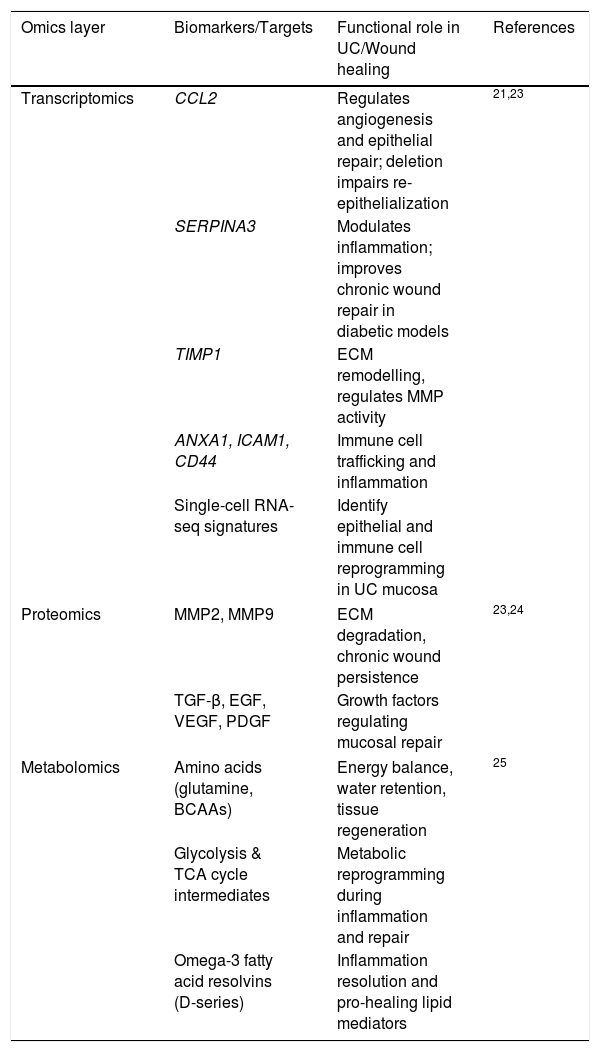
Multi-omics integration and systems biomarkersTranscriptomics, proteomics, and metabolomics in UC biomarker discoveryThe development of multi-omics technology has revolutionised the search for biomarkers in complicated illnesses like ulcerative colitis (UC). Researchers may produce a thorough systems-level knowledge of disease causes and treatment responses by combining genomes, transcriptomics, proteomics, and metabolomics. For example, transcriptomics reveals the patterns of gene expression, proteomics finds functional proteins and post-translational modifications, and metabolomics records metabolic changes that correspond to physiological states. Each omics layer offers distinct insights. Together, these methods allow for the mapping of intricate molecular interactions between genes, proteins, and metabolites, overcoming the drawbacks of single-omics research.17
Transcriptomics has been used to identify gene expression patterns linked to repair and inflammation pathways in ulcerative colitis. Epigenetic profiling and single-cell RNA sequencing have demonstrated that immune and epithelial cells undergo transcriptional reprogramming during inflammation and wound healing, identifying potential genes like TIMP1, SERPINA3, and CCL2 as modulators of angiogenesis and extracellular matrix remodelling.18 In order to differentiate healing from non-healing lesions, proteomic investigations reveal proteins that are differently expressed in intestinal tissues and wound exudates. Examples of these proteins include matrix metalloproteinases (MMPs) and cytokine-related proteins. Characterising signalling pathways that are dysregulated in chronic inflammatory conditions, such as PI3K-Akt, focal adhesion, and immune-modulating processes, is another benefit of proteomics.19 The downstream metabolic effects of inflammation and tissue healing are captured by metabolomics, which enhances transcriptomics and proteomics. UC is linked to metabolic changes that include disturbances in the metabolism of amino acids, glycolysis, lipid mediators (such resolvins), and oxidative stress reactions. These metabolic fingerprints offer new targets for intervention as well as possible biomarkers for treatment monitoring in addition to reflecting disease activity.20
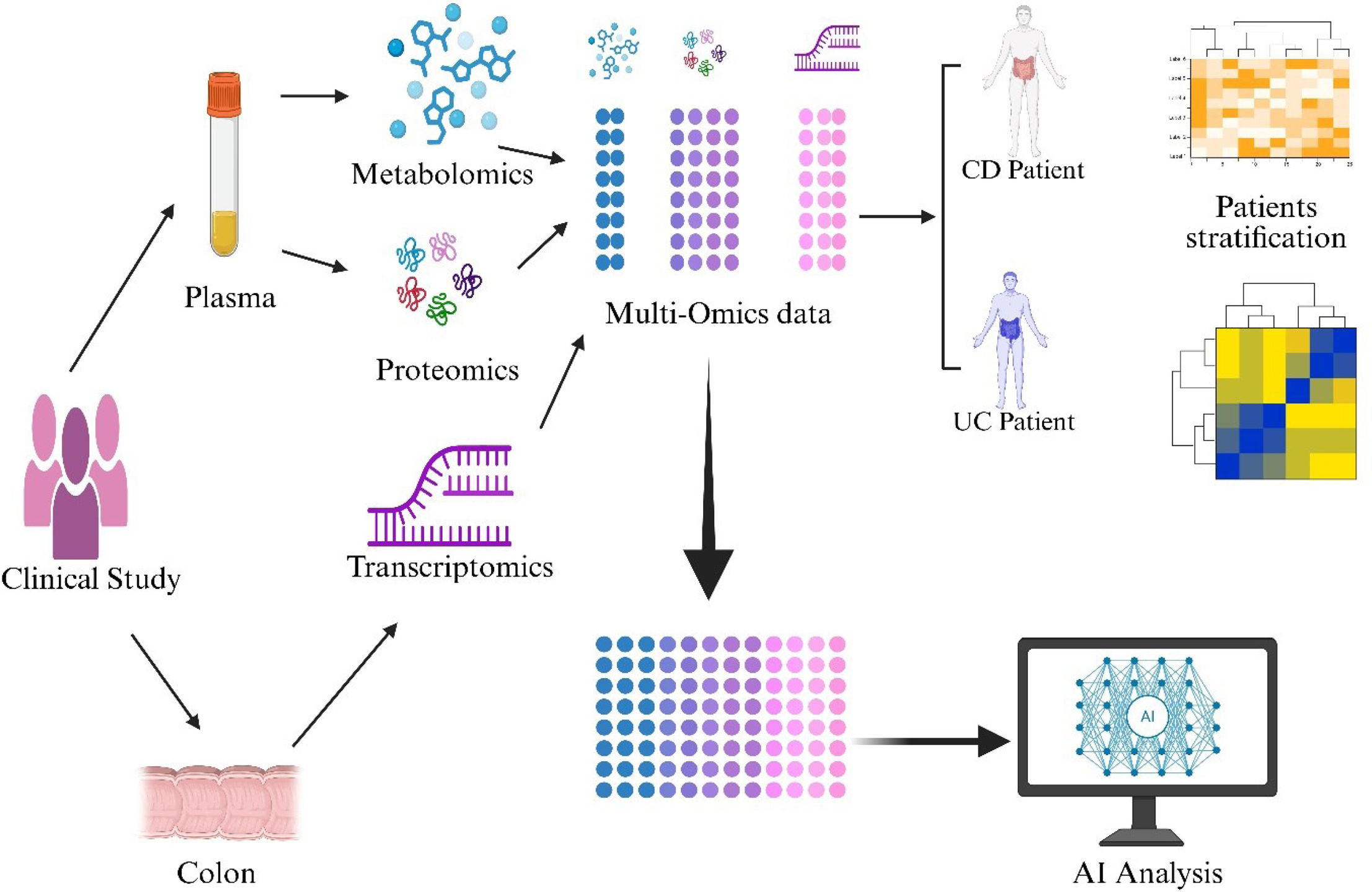
By combining these omics platforms, often known as “systems biomarkers”, it is possible to identify new pharmacological targets, predict therapy response, and stratify UC patients more precisely. For instance, crosstalk between inflammatory signalling, extracellular matrix remodelling, and metabolic pathways has been discovered using correlation analysis between proteome and metabolomic datasets. Similar to this, multi-omics research on mucosal healing shows how coordinated changes in transcriptome, proteome, and metabolome control regenerative rather than fibrotic outcomes; these findings can be applied to mucosal repair in ulcerative colitis.21 Ultimately, a comprehensive strategy to biomarker identification in ulcerative colitis is offered by multi-omics integration, which enables researchers to capture the interaction of genetic, transcriptional, protein, and metabolic changes that drive inflammation and mucosal healing. In order to find reliable biomarkers, therapeutic targets, and individualised treatment plans for UC, this systems biology paradigm is crucial (Fig. 1; Table 1).22

Integration of multi-omics and AI for patient stratification in IBD. (Clinical studies collecting plasma and colon samples enable multi-omics profiling, including metabolomics, proteomics, and transcriptomics. The resulting datasets are integrated and analysed using artificial intelligence (AI) tools to differentiate Crohn's disease (CD) from ulcerative colitis (UC) patients. This approach supports precise patient stratification and personalised management of inflammatory bowel disease (IBD).).
Multi-omics biomarkers in ulcerative colitis (UC).
| Omics layer | Biomarkers/Targets | Functional role in UC/Wound healing | References |
|---|---|---|---|
| Transcriptomics | CCL2 | Regulates angiogenesis and epithelial repair; deletion impairs re-epithelialization | 21,23 |
| SERPINA3 | Modulates inflammation; improves chronic wound repair in diabetic models | ||
| TIMP1 | ECM remodelling, regulates MMP activity | ||
| ANXA1, ICAM1, CD44 | Immune cell trafficking and inflammation | ||
| Single-cell RNA-seq signatures | Identify epithelial and immune cell reprogramming in UC mucosa | ||
| Proteomics | MMP2, MMP9 | ECM degradation, chronic wound persistence | 23,24 |
| TGF-β, EGF, VEGF, PDGF | Growth factors regulating mucosal repair | ||
| Metabolomics | Amino acids (glutamine, BCAAs) | Energy balance, water retention, tissue regeneration | 25 |
| Glycolysis & TCA cycle intermediates | Metabolic reprogramming during inflammation and repair | ||
| Omega-3 fatty acid resolvins (D-series) | Inflammation resolution and pro-healing lipid mediators | ||
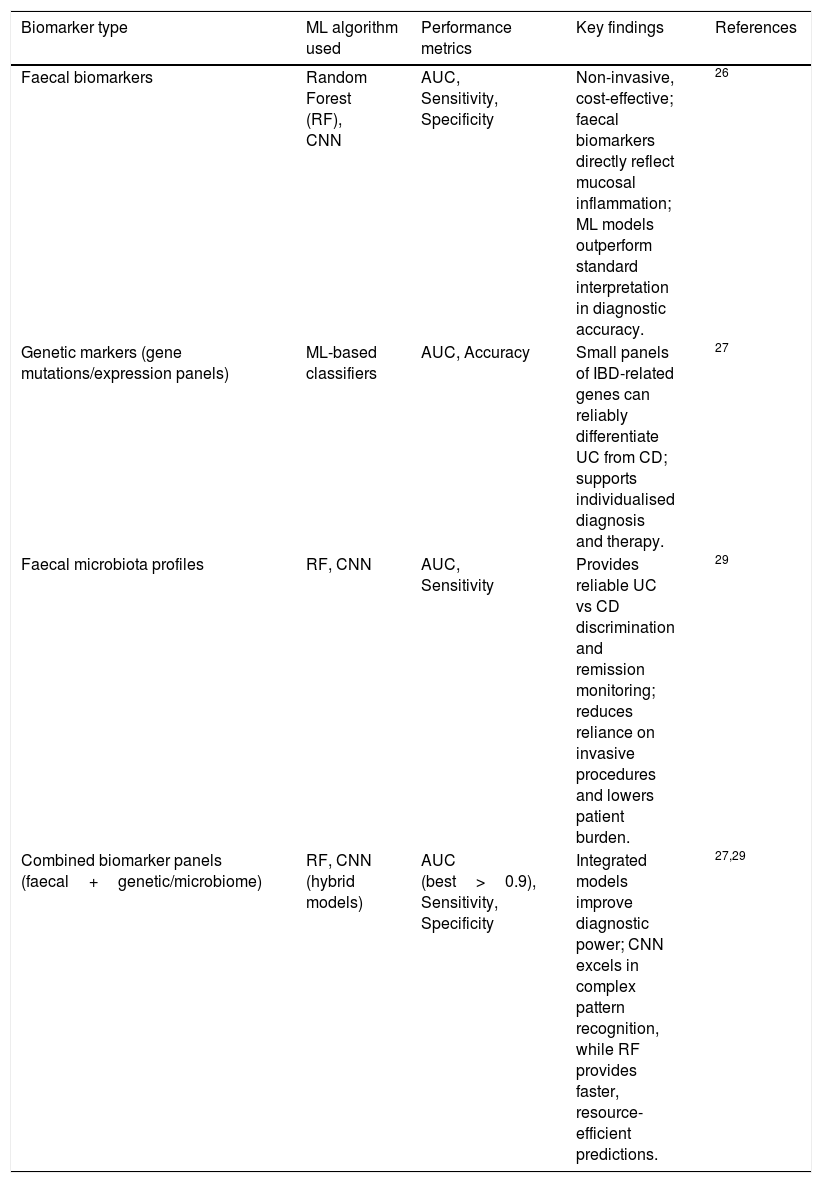
Machine learning (ML)-enabled biomarker-based methods are being investigated more and more as non-invasive substitutes for ulcerative colitis (UC) diagnosis and differential diagnosis. Faecal biomarkers are especially appealing because of their affordability, accessibility, high local concentrations, and direct correlation with intestinal inflammation, which makes them appropriate even for home monitoring. Inflammatory bowel disease (IBD) is also heavily influenced by genetic susceptibility; 15% of individuals with Crohn's disease (CD) report having a favourable family history.26 UC and CD have been linked to a number of gene alterations and differential expression patterns, indicating that genetic indicators might direct personalised treatment and early diagnosis. The viability of including these biomarkers into prediction panels has been shown by ML models. The potential for biomarker-guided stratification was highlighted by Pérez et al.’s demonstration that ML algorithms could differentiate between UC and CD by identifying a small sample of IBD-related genes.27 Area under the curve (AUC), sensitivity, and specificity are often reported in performance evaluations of machine learning (ML) biomarker models; AUC is the most widely used statistic (74%). While convolutional neural networks (CNN) have shown great diagnostic performance despite increased implementation complexity, Random Forest (RF) has been frequently used because it offers quick and resource-efficient predictions (Table 2).26
Machine learning applications in biomarker panel prediction for UC.
| Biomarker type | ML algorithm used | Performance metrics | Key findings | References |
|---|---|---|---|---|
| Faecal biomarkers | Random Forest (RF), CNN | AUC, Sensitivity, Specificity | Non-invasive, cost-effective; faecal biomarkers directly reflect mucosal inflammation; ML models outperform standard interpretation in diagnostic accuracy. | 26 |
| Genetic markers (gene mutations/expression panels) | ML-based classifiers | AUC, Accuracy | Small panels of IBD-related genes can reliably differentiate UC from CD; supports individualised diagnosis and therapy. | 27 |
| Faecal microbiota profiles | RF, CNN | AUC, Sensitivity | Provides reliable UC vs CD discrimination and remission monitoring; reduces reliance on invasive procedures and lowers patient burden. | 29 |
| Combined biomarker panels (faecal+genetic/microbiome) | RF, CNN (hybrid models) | AUC (best>0.9), Sensitivity, Specificity | Integrated models improve diagnostic power; CNN excels in complex pattern recognition, while RF provides faster, resource-efficient predictions. | 27,29 |
Additionally, faecal microbiota data has been incorporated into machine learning frameworks, allowing for the precise and non-invasive separation of UC from CD and the tracking of patients in remission to lower the expense of invasive testing and medical care. Concerns regarding the model's generalisability across various populations are raised by the fact that only 19% of studies so far have included external validation.28 The credibility of the results that are now available is also jeopardised by methodological problems such selection bias, ambiguous thresholds, and inconsistent reference standards. The focus of future studies should be on consistent reporting and strong methodological frameworks. It will be essential to integrate AI-specific recommendations like SPIRIT-AI and STARD-AI in order to convert ML-based biomarker panels into clinically valid instruments for UC monitoring and diagnosis.26
Clinical implementation and limitationsAI has the potential to improve disease activity assessment and reduce interobserver variability in activity grading in UC. The majority of studies have concentrated on the binary classification of UC states, which separates the disease's quiescent and active phases. A revolutionary approach to gastroenterology diagnostic methods, especially those pertaining to ulcerative colitis, is provided by the application of deep learning (DL) models. By offering a standardised diagnostic guidance, it is a great help to both seasoned practitioners who handle several patients on a daily basis and fellows or newcomers entering clinical settings. Given the inherent subjectivity and heterogeneity in endoscopic picture interpretation, this standardised technique is particularly important.30
Despite its potential, there is a lack of information about the viability and economics of biomarker-based surveillance for ulcerative colitis-associated colorectal cancer (UC-CRC). Methylation panels, low-pass whole genome sequencing, and PCR-based TP53 mutation detection are among the increasingly available assays; nonetheless, formal economic evaluation and standardisation are necessary before they can be included into regular surveillance. Integration with current endoscopic workflows, repeatable tests, and established cut-offs would be necessary for implementation. However, the absence of high-quality, prospective evidence demonstrating the predictive accuracy of biomarkers currently limits their inclusion into regular monitoring. Detecting dysplasia still relies heavily on histologic assessment.28
Each biomarker has unique advantages and disadvantages, and careful interpretation and subtlety are necessary for therapeutic usage. A useful manual to support physicians in their daily work and investigate the potential applications of biomarkers in IBD. However, because its expression is elevated in many inflammatory and infectious diseases, CRP's lack of specificity as a biomarker for IBD limits its utility in differentiating IBD from other differential diagnoses. Its main use in IBD is as a supplement to endoscopic and clinical results. FCP has a limited capacity to precisely identify disease activity in individuals with isolated ileal CD, although CD is less sensitive than it is in assessing disease activity in UC. FCP interpretation in UC is influenced by the severity of the disease; patients with proctitis have a modest correlation between endoscopic activity and FCP concentration.31 The most apparent obstacle to translating promising early findings on new markers for normal practice is the need for rigorous, persuasive, and indisputable independent validation. Completing such studies can be time-consuming, expensive, and challenging. The fast advancements in computers and technology, as well as the resulting flexibility and vulnerability to modification of the intricate models and machine learning algorithms that form the basis of diagnostic panels, provide another contradictory obstacle. Adoption may be hampered by the models’ sensitivity to modifications in specific reagents or even laboratory procedures, which might raise prices and decrease availability. Additionally, any test developed for routine clinical use needs to be rapid, simple, affordable, easy to use, highly specific for the disease of concern, and, most importantly, reproducible across several labs.32
Future perspectivesFuture studies on ulcerative colitis (UC) will depend more and more on multimodal machine learning (ML) techniques that include diverse data sources including histology, clinical notes, endoscopic pictures, and longitudinal biomarkers. In addition to the technological challenges of synchronising multiple modalities across time, a major obstacle is the scarcity of high-quality multimodal datasets because of privacy concerns, ethical dilemmas, and budget limitations.33 The computational demands are still significant since multimodal fusion techniques frequently need sophisticated hardware and a lot of pre-processing to function reliably. New approaches like federated learning may help with data integration across universities while protecting privacy, while self-supervised learning provides chances to efficiently use big unlabelled UC datasets. It may be possible to construct generalist AI models that are adaptive to UC by using foundation models that have been trained on extensive multimodal medical datasets. This might enhance predicted accuracy and facilitate personalised treatment. To guarantee clinical trust, ethical adherence, and the successful use of multimodal AI in UC care, major obstacles such as interpretability, regulatory obstacles, and workflow integration must be addressed.34
ConclusionBeyond traditional inflammatory indicators, the integration of machine learning and multi-omics technologies has greatly expanded the research of biomarkers in ulcerative colitis (UC), offering systems-level insights into disease processes, activity, and response to therapy. Transcriptomic studies have revealed significant regulators of immune activation and epithelial repair, while proteomic and metabolomic profiling provide additional evidence of dysregulated pathways in extracellular matrix remodelling, metabolic reprogramming, and lipid-mediated inflammation resolution. Together, these techniques provide the foundation for developing systems biomarkers that faithfully capture the complexity of UC aetiology and recovery.
The identification of biomarkers has been further advanced by machine learning, which makes it easier to integrate genetic, faecal, and microbial data into predictive models that can follow relapse, distinguish UC from Crohn's disease, and forecast treatment effects. Methodological variability, selection bias, and a lack of external validation restrict these models’ clinical usefulness, despite their remarkable efficacy in controlled settings.
The invention of multimodal frameworks that integrate clinical, molecular, imaging, and digital data into tools that are both interpretable and therapeutically actionable is necessary for the future use of biomarkers in UC. While advances like federated learning and self-supervised techniques could be able to overcome challenges with data availability, privacy, and scalability, foundation models have the potential to generalise across a range of UC populations. For future research to capitalise on these potential, comprehensive validation, the development of uniform assays, and standardised reporting systems (such as SPIRIT-AI and STARD-AI) must be major priorities. Equally important is incorporating biomarker-guided methods into clinical workflows using cheap, repeatable, and easy-to-use platforms that meet legal and healthcare system requirements.
In conclusion, the exploration for biomarkers in UC is shifting away from single molecular signals and towards integrated, AI-enhanced, multimodal systems biology techniques. Though there are still challenges to be addressed, particularly in validation and regulatory approval, the convergence of omics science, machine learning, and improved long-term results, individualised care, and accurate diagnosis for ulcerative colitis patients are made possible by translational research.
Credit author statementA.D. wrote the main manuscript text and S.M. prepared figures. M.K.G. supervision, editing and project administration. S.S. Review and editing. The final manuscript was reviewed and approved by all authors.
Ethical considerationsThis article is a narrative review based on previously published studies and does not involve human participants or animal experimentation. Therefore, ethical approval and informed consent were not required.
Funding statementThere was no external funding for this study.
Conflict of interestsThe authors declare that they have no competing interests.
All the authors sincerely acknowledge Assam down town University, Guwahati, Assam, India, for providing the necessary support and resources that facilitated the successful completion of this review work.