Family screening is universally recommended in Wilson disease (WD) because early diagnosis allows timely treatment and better prognosis. However, data about family screening implementation in routine clinical practice and systematic verification is scarce. We aimed to assess patients’ knowledge and recall regarding family screening, identify relatives with absent or uncertain screening status, and explore potential barriers.
MethodsIn this prospective, single-center, nurse-led study, adults with WD underwent structured face-to-face interviews regarding the reported screening status of their first-degree relatives. Information on screening modality, patient knowledge, and perceived barriers was collected.
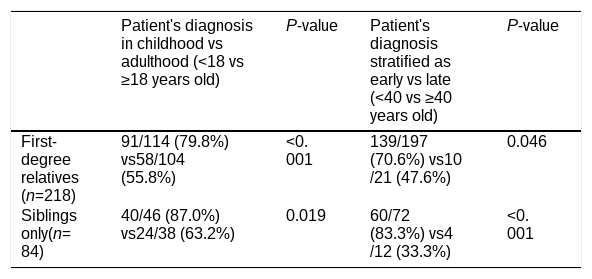
ResultsFifty-four patients identified 218 first-degree relatives, including 84 siblings. According to patients’ reports, 149 relatives (68.3%) had undergone WD screening, whereas 35 (16.1%) had not, and the screening status of 34 (15.6%) was unknown. Targeted ATP7B genetic testing was reported as the most common screening strategy (72.5%). Seven new WD cases had been previously identified through family screening. Reported family screening was more frequent among patients diagnosed during childhood compared to adulthood (79.8% vs. 55.8%; P<0.001), whereas lower family screening rates were reported in late diagnosis (above 40 years of age) than in earlier diagnosis (47.6% vs. 70.6%; P=0.046).
ConclusionsA structured nurse-led assessment identified a substantial proportion of first-degree relatives with reported absent or uncertain screening status despite current recommendations. Rather than assuming cascade screening has been completed, systematic verification and documentation during routine follow-up may help identify missed opportunities for family evaluation and improve implementation of guideline-recommended screening in WD.
El cribado familiar se recomienda universalmente en la enfermedad de Wilson (EW), porque el diagnóstico precoz permite un tratamiento temprano y mejora el pronóstico. Sin embargo, su implementación y verificación sistemática en la práctica clínica se desconocen. El objetivo fue evaluar la información aportada por los pacientes sobre el cribado familiar, identificar familiares con cribado ausente o incierto y explorar posibles barreras.
MétodosEstudio prospectivo, unicéntrico y liderado por enfermería, donde adultos con EW fueron entrevistados sobre el estado de cribado de sus familiares de primer grado. Se recogió información sobre el método utilizado, el conocimiento de los pacientes y las barreras percibidas.
Resultados54 pacientes identificaron 218 familiares de primer grado, incluidos 84 hermanos. Según la información proporcionada, 149 (68,3%) habían sido sometidos a cribado de EW, 35 (16,1%) no y en 34 (15,6%) se desconocía su estado. El test genético fue la estrategia más frecuente (72,5%). El cribado familiar permitió identificar previamente siete nuevos casos de EW, fue más frecuente en pacientes diagnosticados en la infancia que en la edad adulta (79,8% vs. 55,8%; p<0,001) y menos frecuente en el diagnóstico tardío (a partir de los 40 años) frente a edades más tempranas (47,6% vs. 70,6%; p=0,046).
ConclusionesTras una evaluación estructurada realizada por enfermería, se reportaron un tercio de familiares de primer grado en los que no se había realizado el cribado o este era desconocido. Verificar sistemáticamente su realización durante el seguimiento, en lugar de asumirlo, podría identificar oportunidades perdidas y mejorar su implementación según las guías clínicas en EW.
Patients with rare genetic diseases often experience substantial diagnostic delays. This is the case for Wilson disease (WD), a recessive disorder of copper metabolism, characterized by pathogenic variants in the ATP7B gene.1–3 Deficient ATP7B protein function impairs biliary copper excretion, resulting in progressive systemic accumulation, particularly in the liver and brain.1–3 WD is characterized by heterogeneous phenotypical presentation, including hepatic, neurological, or psychiatric symptoms of variable severity. This broad clinical spectrum frequently contributes to delayed diagnosis and may result in irreversible organ damage and permanent disability.4 Effective treatments for WD exist and may prevent the development of symptoms if administered at an early stage.1,2,5,6 While disease onset typically occurs in children and young adults, diagnosis may also occur later in life, particularly in individuals with milder disease or non-specific clinical manifestations.1,4 This may be especially relevant in Spain, where the ATP7B p.Met645Arg variant is highly prevalent and has been associated with later and generally milder presentations.7
Although WD is rare, affecting approximately 1 in 30,000 individuals,8 the risk of WD is markedly increased among first-degree relatives of an affected proband. Assuming a carrier rate of 1 in 909 and complete penetrance, the estimated risk of WD is approximately 1 in 200 for parents and offspring, and 1 in 4 for siblings. Given this high risk and the availability of effective treatments capable of preventing disease progression, systematic family screening is strongly recommended in all newly diagnosed patients.1,10 In a large multicentric Spanish cohort, 11.2% of patients with WD were diagnosed through family screening,11 however this proportion may be considerably higher in expert referral centers.12
Family screening should be systematically offered to siblings of an index case (IC), parents of affected children, and children of affected adults above the age of 5.1,2,13 However, the optimal screening strategy remains uncertain and may rely on genetic testing, biochemical assessment, or a combination. In the absence of cost or access constraints, targeted genetic testing for the pathogenic ATP7B variants identified in the IC should be preferred.2 Nonetheless, little is known about how WD family screening is implemented in routine clinical practice. Recent physician surveys conducted in Europe suggest that genetic testing is incorporated into family screening by approximately 50–80% of clinicians managing patients with Wilson disease.14,15 Whether these reported practices accurately reflect real-world implementation remains unknown.
Given these uncertainties, we designed a structured nurse-led assessment to systematically review family screening among patients with WD, identify relatives with incomplete or uncertain screening status, and explore barriers to successful cascade screening in our setting, with the aim of future improvements in patients’ pathways.
Patients and methodsPatientsThis prospective, single-center, nurse-led study was conducted at Hospital Clínic of Barcelona. Consecutive adult patients with WD attending routine follow-up visits at the Hepatology outpatient clinic between November 2023 and January 2025 were invited to participate.
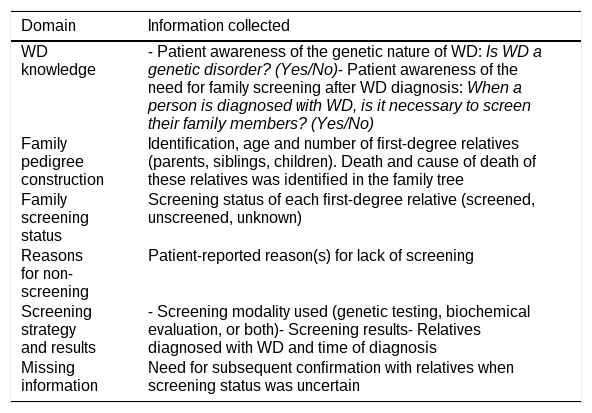
Study procedures and definitionsFace-to-face structured interviews were conducted by the same study nurse (AM) during the study period (see Table 1).
Structured nurse-led interview and information collected.
| Domain | Information collected |
|---|---|
| WD knowledge | - Patient awareness of the genetic nature of WD: Is WD a genetic disorder? (Yes/No)- Patient awareness of the need for family screening after WD diagnosis: When a person is diagnosed with WD, is it necessary to screen their family members? (Yes/No) |
| Family pedigree construction | Identification, age and number of first-degree relatives (parents, siblings, children). Death and cause of death of these relatives was identified in the family tree |
| Family screening status | Screening status of each first-degree relative (screened, unscreened, unknown) |
| Reasons for non-screening | Patient-reported reason(s) for lack of screening |
| Screening strategy and results | - Screening modality used (genetic testing, biochemical evaluation, or both)- Screening results- Relatives diagnosed with WD and time of diagnosis |
| Missing information | Need for subsequent confirmation with relatives when screening status was uncertain |
As a first step, participants’ knowledge of the genetic basis of WD and the rationale for family screening was assessed using two study-specific questions: (1) “Is Wilson disease a genetic disorder?” and (2) “When a person is diagnosed with Wilson disease, is it necessary to screen their family members?”. Subsequently, a detailed interview was performed to explore the participants’ family screening status. Based on the information obtained, a family pedigree was constructed for each patient. First-degree relatives were defined as parents, siblings, or children of patients with WD. Information collected included the number, age, and relationship of relatives, their screening status, reasons for non-screening when applicable, and, among those screened, the diagnostic approach used (genetic testing, biochemical evaluation, or both). Whenever participants were uncertain about a relative's screening status, they were encouraged to verify this information with their family members and report any missing data afterwards.
Demographic and genetic data were obtained from each participant after reviewing electronic medical records. Importantly, all collected data regarding patients’ family screening was purely obtained from patients’ interviews and could not be independently verified.
Relatives who had not been screened and those whose screening status was unknown were grouped together for statistical analysis. Although these categories are not necessarily equivalent, both represent target populations for our study, as they identify potential opportunities to improve family screening.
Regarding the age of WD diagnosis, “childhood” was defined as an age below 18 years, as it represents the legal boundary to adulthood, and corresponds with the age at which patients are generally transitioned from pediatric to adult care at our center. “Late diagnosis” of WD was defined as a diagnosis at or after the age of 40 years, consistent with previous definitions1,2 and studies on late-onset Wilson disease.4
Statistical analysisContinuous variables were reported as median and interquartile range (IQR25–75), whereas categorical variables were expressed as absolute and relative frequencies (n, %). Comparison between groups was performed by Chi-square or Fisher's exact tests for categorical variables, with Holm correction for multiple comparisons when applicable. Significance was established with a 2-sided P value of <0.05. IBM SPSS v31 (IBM Corp, Armonk, NY, USA) was used for analysis.
EthicsThe study was approved by the Institutional Review Board of Hospital Clínic of Barcelona (reference HCB/2023/0780), and all participants provided written informed consent before enrollment. All information regarding family screening was obtained from patients and could not be independently verified, as direct review of first-degree relatives’ medical records was precluded by ethical and privacy considerations.
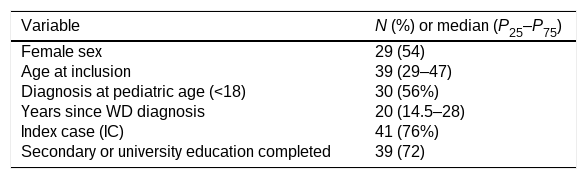
ResultsPatientsFifty-four adult patients (median age, 39 years [IQR, 29–47]) with a confirmed diagnosis of WD (Leipzig score ≥4) were included in this study. The baseline characteristics of the included patients are shown in Table 2. Most (n=30, 56%) had been diagnosed during childhood (<18 years), with a median age at diagnosis of 13.5 years (IQR, 8.0–28.3). ATP7B genotyping results were available for all participants at the time of the survey: 42 (77.8%) were compound heterozygotes, 10 (18.5%) were homozygotes, and in 2 patients (3.7%) only one pathogenic variant was identified. Notably, ATP7B genotyping had not been performed before referral to our center in 23 of the 39 patients (59%).
When participants’ knowledge of WD was assessed, 51 of 54 (94.4%) correctly recognized its genetic basis, and 53 of 54 (98.1%) were aware that first-degree relatives should undergo screening following the diagnosis of an index case (IC).
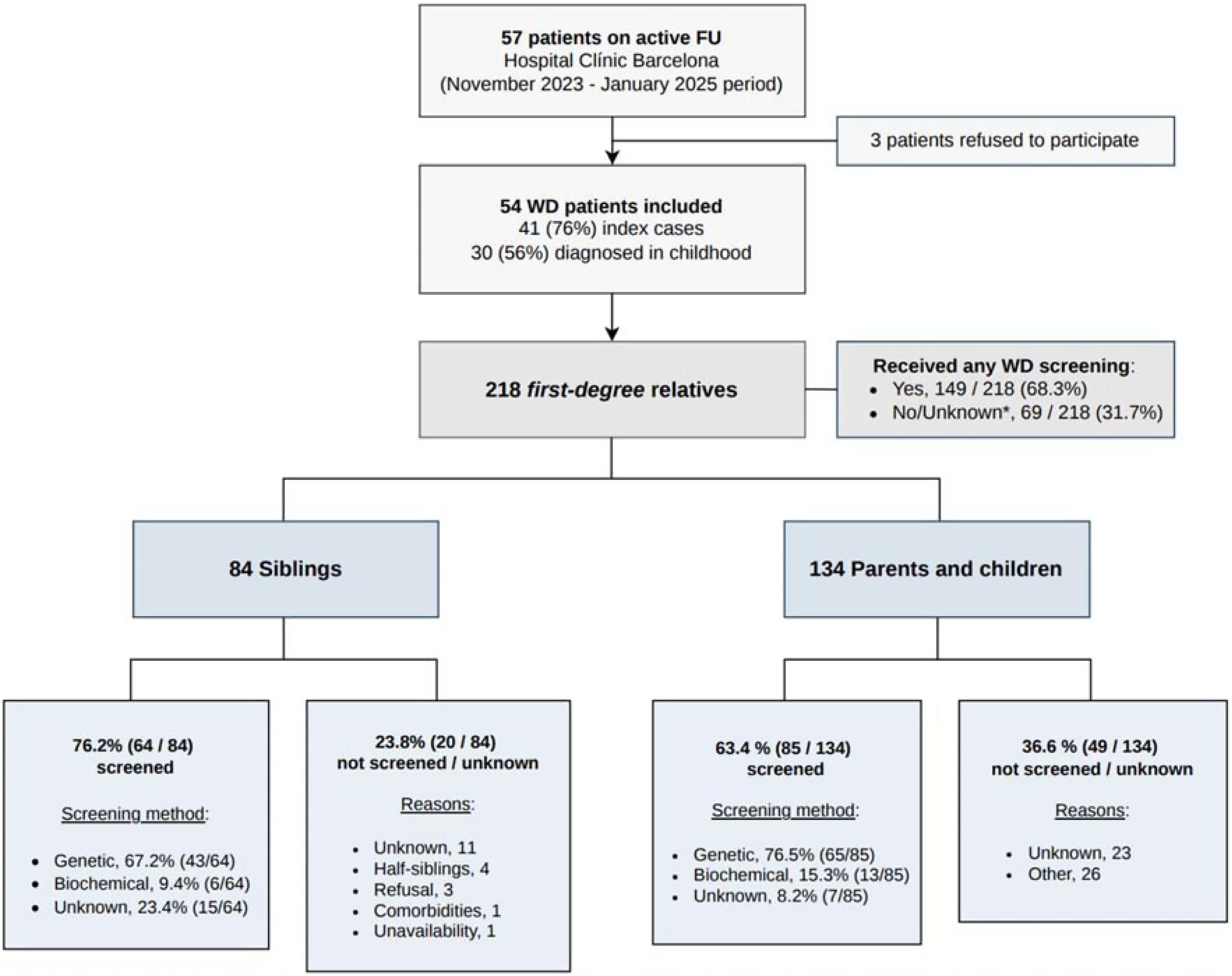
A total of 218 first-degree relatives were identified from the 54 patients, including 90 parents, 84 siblings, and 44 children. Forty-one patients (76%) were considered the IC within their family and therefore represented the starting point for cascade family screening. Importantly, those family screening procedures had led to the identification of seven additional patients with WD, all of whom were siblings of an IC; four of them were part of this cohort. The overall results of first-degree family screening are summarized in Fig. 1.
Schematic overview of patient-reported family WD screening among first-degree relatives. Legend: Overall responses and responses restricted to siblings, as reported by patients. *Relatives with an unknown screening status were considered not to have confirmed completion of family screening.
Overall, patients reported that 149 of 218 first-degree relatives (68.3%) had undergone some screening for WD. However, a substantial proportion remained unevaluated: 35 relatives (16.1%) had not been screened, while the screening status of 34 further cases (15.6%) remained unknown. Consequently, according to patient report, screening could not be confirmed in nearly one-third of first-degree relatives (31.7%) (Fig. 1), despite their high reported level of awareness. Among relatives reported to have undergone screening, targeted ATP7B genetic testing was recalled as the most frequently used diagnostic approach (108/149, 72.5%). Biochemical screening, based on serum ceruloplasmin and/or 24-h urinary copper excretion, was reported in 19 relatives (12.7%), whereas the screening modality was unknown for the remaining 22 (14.8%) screened individuals.
According to patients’ report, first-degree relatives of patients diagnosed during childhood were more likely to undergo screening compared with those of patients diagnosed in adulthood (79.8% vs 55.8%, P<0.001; see Table 3). Consistently, relatives of patients diagnosed at age 40 or after (late diagnosis) were less likely to be screened than those diagnosed at earlier timepoints (47.6% vs 70.6%, P=0.046). Similar findings were observed when the analysis was only restricted to siblings, the highest-risk group (see Table 3). However, these associations should be cautiously considered, given the source of data and limited sample size of the study.
Patient-reported family screening according to the patient's age at diagnosis of WD.
| Patient's diagnosis in childhood vs adulthood (<18 vs ≥18 years old) | P-value | Patient's diagnosis stratified as early vs late (<40 vs ≥40 years old) | P-value | |
|---|---|---|---|---|
| First-degree relatives(n=218) | 91/114 (79.8%) vs58/104 (55.8%) | <0.001 | 139/197 (70.6%) vs10/21 (47.6%) | 0.046 |
| Siblings only(n=84) | 40/46 (87.0%) vs24/38 (63.2%) | 0.019 | 60/72 (83.3%) vs4/12 (33.3%) | <0.001 |
Legend: Proportion of first-degree relatives reported by patients to have undergone WD screening, stratified according to the patient's age at diagnosis.
As an exploratory analysis, patient-reported family screening was compared between patients diagnosed within the previous 15 years and those diagnosed earlier to explore potential temporal changes in clinical practice. No significant differences were observed. This finding remained unchanged when the analysis was restricted to patients diagnosed in adulthood or when only genetic screening was considered (data not shown).
Siblings: the group at the highest genetic riskBecause siblings have a substantially higher risk of WD than parents or offspring, we performed a separate analysis of this subgroup. A total of 84 siblings were identified (Fig. 1). According to patients’ reports, 64 (76.2%) had undergone family screening, whereas in 20 cases (23.8%) the screening status was unknown or had not been performed. Among screened siblings, targeted ATP7B genetic testing was reported in 43 cases (67.2%), biochemical screening alone in 6 (9.4%), while the screening modality was unknown for the remaining 15 (23.4%).
As observed in the overall cohort, siblings were more likely to undergo screening when the patient had been diagnosed during childhood or before the age of 40 (see Table 3). Overall, siblings were reported to have undergone screening more frequently than parents and offspring combined (76.2% vs. 63.4%, P=0.025). However, this difference was no longer statistically significant when the analysis was restricted to those patients diagnosed in adulthood (63.1% vs. 51.5%, P=0.307).
Reported barriers to family screeningAccording to patients, the reasons for incomplete family screening were heterogeneous and did not reveal a consistent pattern. Reported screening rates differed across relative groups, being highest among siblings (64/84, 76.2%), followed by parents (60/90, 66.7%) and offspring (25/44, 56.8%).
Among offspring, the most frequently reported reason for not undergoing screening was previous medical or genetic advice, most commonly because of young age or the presence of a confirmed negative ATP7B genotype in the other parent (13/44, 29.5%; data not shown). Among siblings with an identifiable reason for non-screening, the most common reasons were exclusion of half-siblings in accordance with current guidelines recommendations (4/84, 4.7%) and refusal to undergo screening for unspecified reasons (3/84, 3.6%).
DiscussionFamily screening is universally recommended in WD as it enables early detection and timely treatment.1,2 Despite its conceptual simplicity, the real-world implementation of this screening remains insufficiently explored and poorly documented. Rather than assuming that cascade screening has been completed, we found that, in our setting, a significant proportion of first-degree relatives of patients with WD had either never undergone screening or had an unknown screening status.
In this survey-based study, patients with WD were interviewed regarding family screening among their first-degree relatives using a structured, face-to-face nurse-led approach. To our knowledge, this is the first study of its kind and one of the few addressing family screening practices in WD. A total of 54 patients (most of them ICs) were included, identifying 218 first-degree relatives, of whom 84 were siblings, the highest risk group. Most patients were aware of the genetic origin of WD and the need to actively exclude it among their relatives.
The main finding of this study was that, according to the participants, nearly one-third of first-degree relatives had absent or uncertain screening status, representing a substantial proportion of uncertainty given the potentially severe consequences of undiagnosed and untreated WD.1,2 Reported screening rates were lower than those reported in a recent physician-oriented European survey.14 This discrepancy may reflect differences between physicians’ reported practices and patients’ recollection of the screening process, but it also suggests that family screening should be actively verified rather than assumed during routine follow-up.14
Importantly, our findings reflect patients’ recollection and understanding of the family screening process rather than an objective verification of implementation, as direct review of relatives’ medical records was not ethically permissible without their informed consent. From a clinical perspective, however, the inability to confirm completion of family screening should itself prompt attention, regardless of whether screening was never performed or simply could not be verified.
Reported family screening was more frequent when the patient was diagnosed in childhood, consistent with observations in other genetic disorders.16 Although direct causality cannot be guaranteed, this may reflect greater awareness among pediatricians, as well as the role of parents in making healthcare decisions for their children. On the other hand, a diagnosis at or after 40 years of age appeared to be a previously unrecognized risk factor for inadequate family evaluation, despite the increasing recognition that WD onset may occur in adults after the fourth decade.4,17,18 This finding may reflect lower awareness of the need for cascade screening when WD is diagnosed later in life or is managed outside pediatric settings, highlighting an area for improvement in adult clinical practice.
Barriers to family screening can be heterogeneous and include both healthcare-related and family-related factors. Among the few siblings reported as not having undergone screening, the most common reason was exclusion of half-siblings according to the current recommendations, refusal or significant comorbidities. Although access to screening is unlikely to represent a major barrier within the Spanish public healthcare system, previous studies in other inherited disorders have highlighted the contribution of patient-, provider-, and healthcare system-related factors to incomplete cascade screening (limited knowledge, older age and male sex, lack of family support, limited awareness and engagement, costs, or accessibility, among others).19,20
Current guidelines recommend targeted ATP7B genetic testing as the preferred strategy for family screening whenever the familial pathogenic variants are known.1,2,14 Compared with biochemical testing alone, this approach more reliably distinguishes affected individuals from heterozygous carriers, who may present with mild abnormalities in copper biomarkers.4,21,22 Nevertheless, genetic testing is not universally available, may be inconclusive in a minority of ICs, and its implementation has historically been influenced by cost and local expertise.8,14,23,24 These factors may partly explain the heterogeneous screening strategies reported by our patients.
Unlike many inherited disorders requiring broad genetic analysis,25 WD is a monogenic disease with more than 800 pathogenic variants described to date. Once the familial variants have been identified, targeted testing enables rapid and reliable assessment of both alleles in relatives. Nevertheless, biochemical evaluation remains essential for phenotypic characterization afterwards, assessment of disease activity, and therapeutic decision-making.26 Although siblings often show similar biochemical phenotypes,27 conventional copper biomarkers have limited ability to distinguish affected individuals from heterozygous carriers, who may also exhibit mild abnormalities in copper metabolism.21,28,29 New copper biomarkers, such as relative exchangeable copper (REC), may improve diagnostic accuracy, although their role in family screening has not yet been adequately evaluated and their availability remains limited.4,30 REC values above 15% have demonstrated excellent diagnostic performance in symptomatic WD and have been recently incorporated into the EASL-ERN diagnostic algorithm.1,31 However, lower thresholds may be required in presymptomatic individuals, highlighting the need for further validation in this setting.
This study has several limitations. First and most importantly, family screening status was entirely based on patient reports and could not be independently verified in the relatives’ medical records, due to inherent ethical constraints. Consequently, our findings reflect patients’ understanding of the screening process rather than its objectively documented implementation. This may have introduced an overestimation of the screening failure, as well as a recall bias, particularly among patients diagnosed many years before the survey or followed at different institutions. Notably, an unknown screening status does not necessarily imply that family screening had not been performed, but rather that its completion could not be verified. However, we firmly believe these are the two target groups in which a clinical intervention could make a difference with our patients. Secondly, the relatively small sample size and single-center design limit the generalizability of our findings. In addition, some relatives belonged to the same family unit and therefore may not represent completely independent observations. Finally, the study was conducted at a national referral center with integrated hepatology, genetics, and specialist nursing support. As family screening may be less systematically implemented in smaller or non-specialized centers, our results may even overestimate screening practices in routine care.
Despite these limitations, this study provides one of the first patient-centered evaluations of family screening in WD and highlights the potential role of structured nurse-led interviews in routine follow-up. Rather than auditing previous clinical practice, this approach aims to identify relatives with absent or uncertain screening status and facilitate reassessment whenever appropriate. In addition to reinforcing the need for systematic family screening as a fundamental part of medical care in WD, our results support the systematic documentation of when and how first-degree relatives of patients with WD undergo screening. Moreover, routine documentation of screened relatives and the used diagnostic approach (genetic testing, biochemical evaluation, or both) could facilitate genetic counseling, improve continuity of care, and enhance the quality of epidemiological data available through national WD registries. Strengthening national registries, such as the case of the Spanish Wilson Registry (https://aeeh.es/registro/registro-de-enfermedad-de-wilson/), promoting collaboration with patient associations (i.e. AEFE Wilson), and implementing structured educational initiatives may further improve awareness of family screening among patients and healthcare professionals.
In conclusion, according to patient report, family screening had been performed in most—but not all—first-degree relatives of patients with WD. Importantly, nearly one-third of relatives had absent or uncertain screening status, supporting the need to actively verify and document, rather than assume, completion of cascade screening during routine follow-up. These findings underscore the need to improve awareness of the importance of family screening in WD, particularly among adult hepatologists and in cases of late diagnosis. Structured nurse-led assessment may represent a practical strategy to identify gaps in family evaluation and facilitate timely referral for genetic counseling and screening.
ContributionsZM and AM conceptualized, investigated and administered the project. AM recruited the patients, collected data, and performed the statistical analysis. ZM and FTK provided essential input for interpretation of the results. AM, FTK and ZM wrote the original manuscript. All authors reviewed, edited, and approved the final manuscript.
Ethical considerationsThe study was performed in accordance with the Declaration of Helsinki. All participants provided written informed consent. The privacy of human subjects was observed. The study was approved by the Hospital Clínic of Barcelona institutional review board (Reference HCB/2023/0780).
Declaration of generative AI and AI-assisted technologies in the manuscript preparation processDuring the preparation of this work, the authors used Microsoft Copilot and ChatGPT to improve the grammar, clarity, and readability of the manuscript. After using these tools, all suggestions were reviewed, edited, and verified by the authors, who take full responsibility for the content of the published article.
FundingZM, SL and MCL received support from Secretaria d’Universitats i Recerca del Departament d’Economia i Coneixement (grant 2021_SGR_01322) and CERCA Programme/Generalitat de Catalunya. This study was partially sponsored by Instituto de Salud Carlos III (ISCIII) through project PI25/00229 (ZM), co-funded by the European Union. AM received the Asociación Española para el Estudio del Hígado (AEEH) Nurse Research Grant (2026). NF received the Asociación Española para el Estudio del Hígado (AEEH) Carlos Hernández Guío Research Grant (2025). FTK received travel grants from Aarhus University and Etly og Jørgen Stjerngrens Fond.
Conflict of interestAM received consultancy and speaker fees from Orphalan. FTK received speaker fees from Orphalan. ZM received advisory fees from Prime Medicine, advisory and speaker fees from Orphalan, speaker fees from Elea, and research unrestricted grant from Orphalan.