


metricas
covid
Enfermería Clínica (English Edition) Factors related to the intention to perform a fecal occult blood test for colore...
Journal Information
Original Article
Available online 11 November 2025
Factors related to the intention to perform a fecal occult blood test for colorectal cancer screening, based on the Health Belief Model and health literacy: A cross-sectional study
Factores relacionados con la intención de realizar una prueba de sangre oculta en heces para el cribado del cáncer colorrectal, basados en el modelo de creencias de salud y la alfabetización en salud: un estudio transversal
Zahra Khazira, Mohammad Saeed Jadgalb,c,
Corresponding author
jadgal15@gmail.com

Corresponding author.
, Javad Shahrakid
a Department of Public Health, Torbat Jam Faculty of Medical Sciences, Torbat Jam, Iran
b Tropical and Communicable Diseases Research Center, Iranshahr University of Medical Sciences, Iranshahr, Iran
c Department of Public Health, Chabahar University of Medical Sciences, Chabahar, Iran
d Department of Public Health, Mashhad University of Medical Sciences, Mashhad, Iran
Article information
Abstract
Full Text
Bibliography
Download PDF
Statistics
Tables (6)
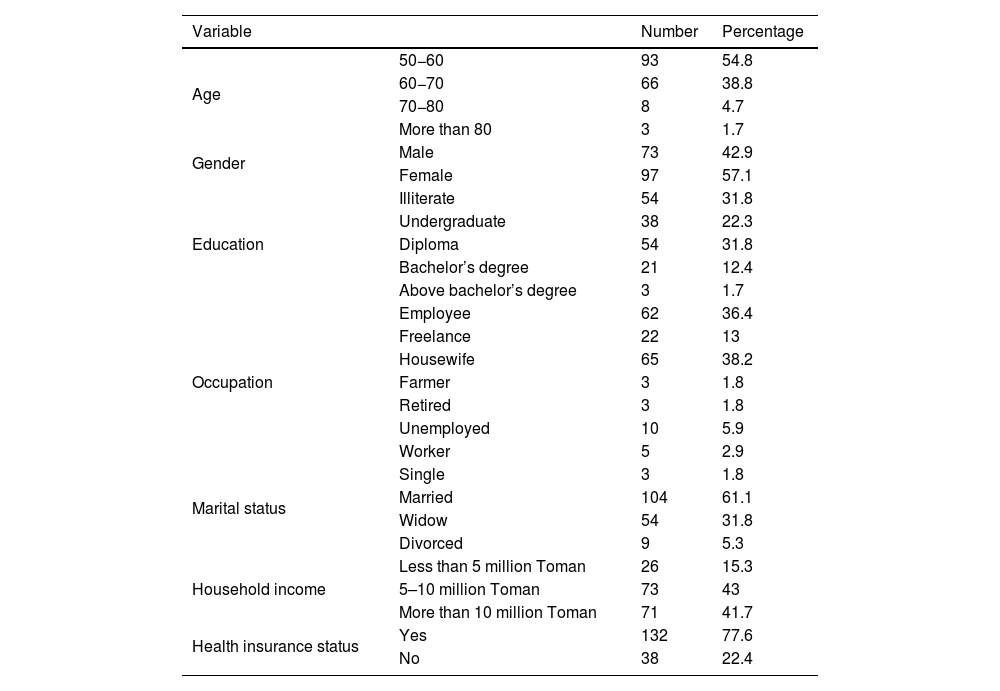
Table 1. Determining the frequency distribution of the demographic variables of the participants in the study.
Tables
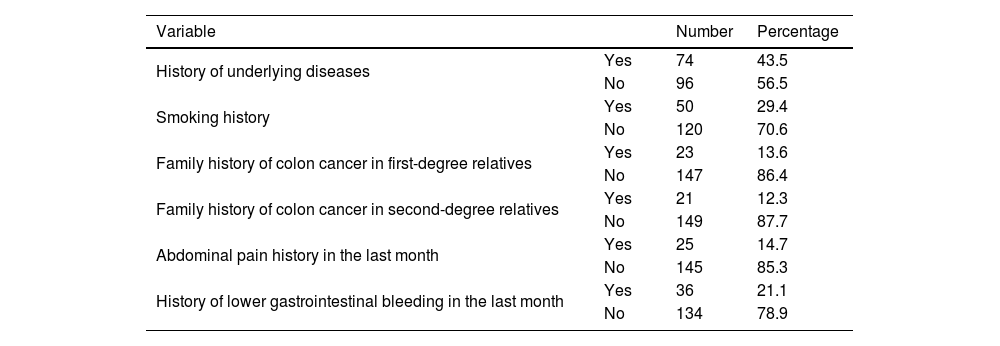
Table 2. Determining the frequency distribution of background variables of people participating in the study.
Tables
Table 3. Determining the average score of health belief model and health literacy constructs in people participating in the study.
Tables
Table 4. Determining the relationship between the intention to perform a fecal occult blood test with the health literacy score and the constructs of the health belief model in the studied subjects.
Tables
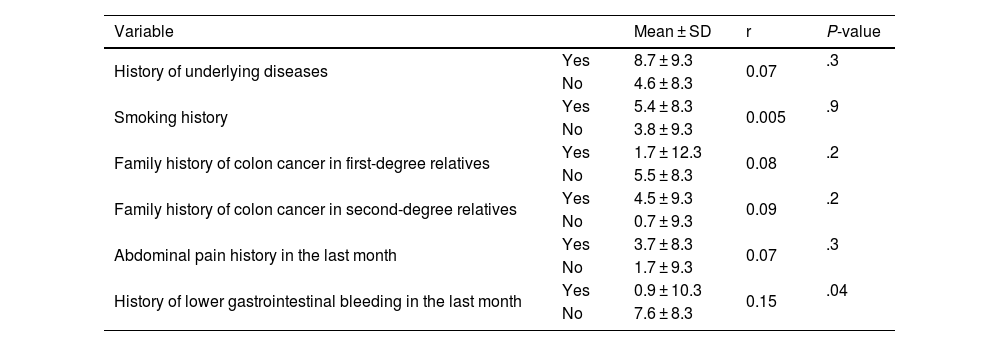
Table 5. Determining the relationship of background variables to perform a fecal occult blood test in the studied subjects.
Tables
Table 6. Predictor variables of intention to perform a fecal occult blood test.
Tables
Show moreShow less
Abstract
Introduction and objective

Colorectal cancer is one of the most common gastrointestinal cancers, accounting for approximately 10% of cancer-related deaths. This study aimed to determine determine factors associated with the intention to perform a fecal occult blood test for colorectal cancer screening, based on the health belief model and health literacy.

Methods

In this descriptive-analytical and cross-sectional study, 170 elderly people were selected through multi-stage simple random sampling. Data were collected using a questionnaire comprising demographic and background characteristics, health literacy questions, and the Health Belief Model constructs. Data were analyzed using SPSS software version 16 through descriptive and analytical tests.

Results

Logistic regression results showed that self-efficacy (OR = 1.40, P = .000), access dimension (OR = 0.28, P = .009), understanding and comprehension dimension (OR = 0.05, P = .000), and history of lower gastrointestinal bleeding in the last month (OR = 0.03, P = .000) increased the likelihood of intending to undergo colorectal cancer screening.

Conclusion

It seems that using a health belief model combined with health literacy with an emphasis on self-efficacy constructs, access, and understanding of health information can increase individuals' intention to undergo FOBT.

Keywords:
Colorectal cancer
Health Belief Model
Health literacy
Resumen
Introducción y objetivo

El cáncer colorrectal es uno de los cánceres gastrointestinales más comunes y representa aproximadamente el 10% de las muertes relacionadas con el cáncer. Este estudio tuvo como objetivo determinar los factores asociados con la intención de realizar una prueba de sangre oculta en heces para la detección del cáncer colorrectal, con base en el modelo de creencias de salud y la alfabetización en salud.

Métodos

En este estudio descriptivo-analítico y transversal se seleccionaron 170 adultos mayores mediante un muestreo aleatorio simple multietápico. Los datos se recogieron mediante un cuestionario que incluía características demográficas y antecedentes, preguntas sobre alfabetización en salud y el modelo de creencias sobre salud. Los datos se analizaron utilizando el software SPSS® versión 16 mediante pruebas descriptivas y analíticas.

Resultados

Los resultados de la regresión logística mostraron que la autoeficacia (OR = 1,40, P = ,000), la dimensión de acceso (OR = 0,28, P = ,009), la dimensión de entendimiento y comprensión (OR = 0,05, P = ,000) y el antecedente de sangrado gastrointestinal inferior en el último mes (OR = 0,03, P = ,000) aumentaron la probabilidad de tener la intención de someterse a una prueba de detección de cáncer colorrectal.

Conclusión

Parece que el uso de un modelo de creencias de salud combinado con alfabetización en salud con énfasis en los constructos de autoeficacia, el acceso y la comprensión de la información de salud puede aumentar la intención de las personas de someterse a una prueba de sangre oculta en heces.


Palabras clave:
Cáncer colorrectal
Modelo de creencias de salud
Alfabetización en salud

Article

These are the options to access the full texts of the publication Enfermería Clínica (English Edition)
Subscriber
Subscriber

If you already have your login data, please click here .

If you have forgotten your password you can you can recover it by clicking here and selecting the option “I have forgotten my password”
Subscribe
Subscribe to

Enfermería Clínica (English Edition)

Purchase
Purchase article

Purchasing article the PDF version will be downloaded

Purchase now
Contact
Phone for subscriptions and reporting of errors
From Monday to Friday from 9 a.m. to 6 p.m. (GMT + 1) except for the months of July and August which will be from 9 a.m. to 3 p.m.
Calls from Spain
932 415 960
Calls from outside Spain
+34 932 415 960
E-mail
Article options
Tools