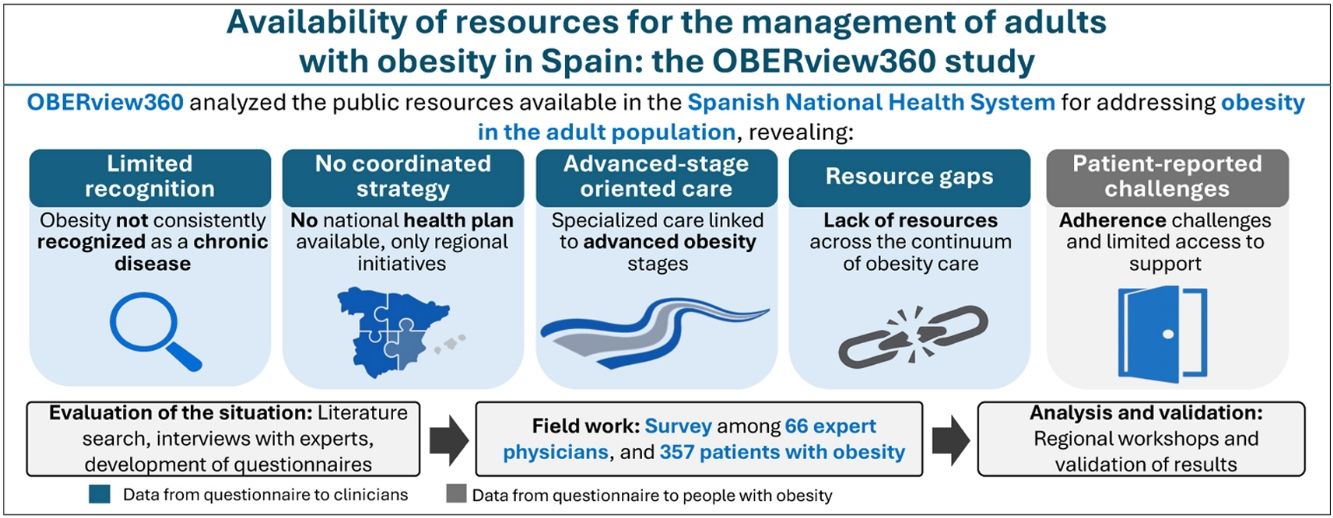

Obesity represents a major challenge for health systems. OBERview360 characterised the available resources for obesity care in adults within the Spanish National Health System, explored the perceptions of people with obesity (PwO), and identified key gaps and areas for improvement in current disease management.
MethodsPhysicians with clinical experience in obesity management and PwO were surveyed from March to July 2024 using two ad-hoc questionnaires. The questionnaire for clinicians included 102 items on awareness, health care planning, organizational resources, and the clinical care process. The PwO questionnaire consisted of 19 items. Data analysis was descriptive.
ResultsA total of 66 physicians and 357 PwO participated. Overall, 68.2% of physicians indicated that obesity is generally under-recognised as a chronic multifactorial disease by health care professionals and society. The lack of institutional policies and scarcity of resources were ranked as the highest-priority barrier (45.5%). Health care planning tools were rated as limited (95.5%), with no comprehensive national plan in place. Specialised obesity units, where available, were reported to be structured around bariatric surgery (74%). According to 90.9% of participants, there is no systematic screening for obesity, and resources were deemed insufficient for implementing lifestyle changes (98.5%), pharmacological treatment (98.5%), surgery (86.4%), and follow-up (95.5%). More than half of PwO reported difficulties with treatment adherence and access to support resources.
ConclusionsObesity experts across Spain identified underdiagnosis and undertreatment of obesity linked to low recognition, insufficient planning, and scarce resources focused on severe stages, reinforcing the need for systematic screening, structured care pathways, and a comprehensive national strategy.
La obesidad representa un desafío importante para los sistemas sanitarios. OBERview360 caracterizó los recursos disponibles para la atención de personas adultas con obesidad en el Sistema Nacional de Salud español, exploró la percepción de las personas con obesidad (PcO) e identificó deficiencias y áreas de mejora en el manejo de la enfermedad.
MétodosSe encuestó a médicos con experiencia en el manejo de la obesidad y a PcO entre marzo y julio de 2024 mediante dos cuestionarios: uno dirigido a médicos (102 ítems: conocimientos, planificación sanitaria, recursos organizativos y proceso asistencial) y otro a PcO (19 ítems). El análisis fue descriptivo.
ResultadosParticiparon un total de 66 médicos y 357 PcO. El 68,2% de los médicos indicó que la obesidad no se reconoce de forma general como una enfermedad crónica multifactorial ni entre los profesionales sanitarios ni en la sociedad. La falta de políticas institucionales y la escasez de recursos se consideraron las barreras prioritarias (45,5%). Las herramientas de planificación sanitaria se consideraron limitadas (95,5%) y no existía un plan nacional integral vigente. Las unidades especializadas en obesidad, cuando estaban disponibles, se estructuraban en torno a la cirugía bariátrica (74%). El 90,9% indicó que no existe un cribado sistemático y que los recursos son insuficientes para implementar cambios en el estilo de vida (98,5%), tratamiento farmacológico (98,5%), cirugía (86,4%) y seguimiento (95,5%). Más del 50% de las PcO refirieron dificultades de adherencia al tratamiento y de acceso a recursos de apoyo.
ConclusiónLos expertos españoles en obesidad señalaron la existencia de infradiagnóstico e infratratamiento de la obesidad, asociados a un escaso reconocimiento de la enfermedad, una planificación insuficiente y recursos limitados centrados en los estadios más graves, lo que refuerza la necesidad de un cribado sistemático, vías asistenciales estructuradas y una estrategia nacional integral.
Obesity is a chronic progressive disease characterised by excess and dysfunction of adipose tissue.1 Due to its increasing prevalence and its clinical, social, and economic impact, obesity has become a major global public health concern.2,3 In Spain, obesity currently affects approximately 22% of the adult population,4 and its prevalence is projected to increase to 37% by 2035.5 Obesity is associated with more than 200 obesity-related complications (ORCs), including major causes of mortality such as cardiovascular disease and cancer, and ranks as the fourth leading cause of death in Europe.6,7
Beyond its clinical consequences, obesity places a significant economic burden on health care systems. Health care resource utilisation – including primary, hospital, and emergency care – is comparatively greater for PwO than for people without obesity in Spain, mainly due to ORCs.8,9 In 2016, the cost of obesity accounted for 2% of the total budget of the Spanish National Health System (NHS), equivalent to €1951 million, and is expected to rise to 7% by 2030, representing more than €3 billion.10 Obesity is also associated with indirect costs, estimated at more than 60%, such as loss of work productivity and absenteeism, which further widen the economic and social impact of this disease.8,11
Given the impact of obesity, diagnosing and treating it is essential, and treatments have consistently demonstrated clinical benefits and improvements in quality of life.12 However, the lack of understanding of obesity as a disease increases social and clinical stigma, leading to a lack of early diagnosis and adequate treatment, which limits effective interventions.13,14 Obesity management relies on four fundamental pillars: lifestyle modifications (e.g., nutrition, physical activity, sleep), psychological therapy, pharmacological treatment, and/or metabolic and bariatric surgery.15 The therapeutic strategy must be personalised and adapted to each patient's objectives and preferences.14 However, treatment effectiveness and adherence are critical to achieving goals that confer clinical benefits and health improvements in PwO.
A comprehensive description of the resources currently allocated to public health care management of obesity in adults in Spain is needed to identify gaps in current disease management and areas for improvement to advance obesity care. The objective of the OBERview360 study was to analyse the availability of resources within the NHS for managing adult obesity and to identify the main barriers and areas for improvement, as perceived by clinicians managing obesity across various medical specialties. To obtain a comprehensive overview of the current status of obesity management in Spain, the study also included an analysis of the perceptions, opinions, and personal experiences of individuals with obesity.
MethodologyStudy design and ethicsOBERview360 was a cross-sectional observational study that used questionnaires to explore the perceptions and opinions of both clinicians and PwO regarding obesity management. Participating clinicians were asked to base their answers on the broader situation of obesity management within their specialty and geographic area rather than solely on their personal experience. No clinical record review was performed, and data collection relied exclusively on self-reported perceptions.
The study was conducted in full compliance with the clinical practice guidelines and standards established by the Declaration of Helsinki. In compliance with Organic Law 3/2018 on personal data protection, all data presented were anonymised. The study was approved by the accredited Clinical Research Ethics Committee of Hospital Clínico San Carlos (Madrid, Spain) (code 24/307-E) on 24 April 2024. All participants provided informed consent before participating in the study.
ParticipantsThe development of the questionnaires was guided by a Study Committee, composed of a Scientific Committee and an expert patient. The Scientific Committee, comprising four clinicians with extensive experience in obesity management within the Spanish NHS (Internal Medicine, n=1; Family and Community Medicine, n=1; Endocrinology, n=2), contributed to the development of the questionnaires, thus ensuring that the questions were appropriate for addressing the study objectives. The expert patient was a member of the National Association of People Living with Obesity (ANPO, which stands for “Asociación Nacional de Personas que viven con Obesidad”) and participated in the development of the patient questionnaire to ensure that the questions reflected the experiences, concerns, and needs of PwO, as well as clarity and ease of comprehension.
An Expert Panel was recruited to include health care professionals involved in obesity management from different medical specialties (Internal Medicine, Family and Community Medicine, and Endocrinology) and actively practising across Spain to represent all autonomous communities (Table S1). Members of the Expert Panel were selected based on their academic background and experience in the field of obesity, as well as their ability to provide a broad and objective perspective on obesity management at the regional and/or national level.
A purposive sampling approach was applied whereby participants were selected based on predefined criteria, including experience in obesity, academic background, and the ability to provide a broad and objective perspective on obesity management at the regional and/or national level, with inclusion limited to those who expressed willingness to participate.
Members of the Scientific Committee and the Expert Panel completed the questionnaire designated for clinicians individually between March and April 2024. PwO were recruited for this study through ANPO or during an obesity consultation with any of the members of the Expert Panel and completed the questionnaire between June and July 2024. Members of the Scientific Committee and the Expert Panel received financial compensation for their participation; PwO participated voluntarily and were not compensated.
QuestionnairesTwo distinct questionnaires were designed: one tailored to clinicians and another specifically for PwO, each approved by clinicians on the Study Committee and the expert patient, respectively. The questionnaires were developed based on an extensive review of the literature, supplemented with semi-structured interviews with members of the Study Committee.
The questionnaire addressed to clinicians included a total of 102 questions structured into four sections: awareness of obesity as a disease; availability of health planning tools; general resources and obesity care organisation; and the obesity care process. The questionnaire included single-response, multiple-response, open-ended, prioritisation, and rating questions. The prioritisation questions asked respondents to select the three most important responses and rank them from 1 to 3, with 1 being the most important and 3 the least important, among those selected. In the rating questions, respondents were asked to rate items on a scale from 1 to 5, where 1 indicated very limited/insufficient/very low/large room for improvement, as appropriate, and 5 indicated optimal. Responses were recorded only if all questionnaire questions were answered. Some questions were designed with conditional logic so that their inclusion depended on answers to previous questions.
The questionnaire targeting PwO consisted of 19 items with single-response, multiple-response, open-ended, and rating questions. Rating questions asked respondents to score the answers on a scale from 1 (insufficient/unsatisfactory/not very understandable/very dissatisfied, as appropriate) to 5 (excellent/very satisfactory/fully understandable/very satisfied). Responses were recorded only if all questionnaire questions were answered; some questions were designed with conditional logic.
Clinicians received an email containing information about the study and a link to a dedicated platform where the survey was hosted. PwO recruited during consultation with members of the Expert Panel could complete the questionnaire either electronically, using a QR code available at the consultation, or in paper format, according to their preferences and needs. Before completing the questionnaire, they were informed about the study and asked to provide informed consent. Additionally, ANPO informed its members about the study and invited them to participate via a QR code.
Data analysisGiven the descriptive design of the study and the use of purposive (clinicians) and voluntary (PwO) sampling strategies, no sample size calculation was performed. Data from the questionnaires were de-identified and aggregated for evaluation. Descriptive statistics were used to summarise questionnaire responses, including mean and standard deviation (SD) for continuous variables, as well as frequencies and percentages for categorical variables. Responses to qualitative, open-ended questions were analysed in a structured way to detect recurring themes and were then coded and labelled for further categorisation and analysis. Statistical analysis was performed using Microsoft Excel.
ResultsClinician perspectivesA total of 66 clinicians (28 Endocrinology, 21 Family and Community Medicine, and 17 Internal Medicine specialists) responded to the survey (Table S1).
Awareness of obesity as a diseaseMost participants (68.2%) indicated that the level of awareness of obesity as a chronic disease was low among the general public and public administrations, and 75.8% indicated that it was medium or high among health care professionals (Fig. 1A). Most respondents (65.2%) also reported that health planning documents and other regional planning resources do not refer to obesity as a disease per se but rather describe it as a public health problem or as a condition related to lifestyle factors or other diseases (Fig. 1B).
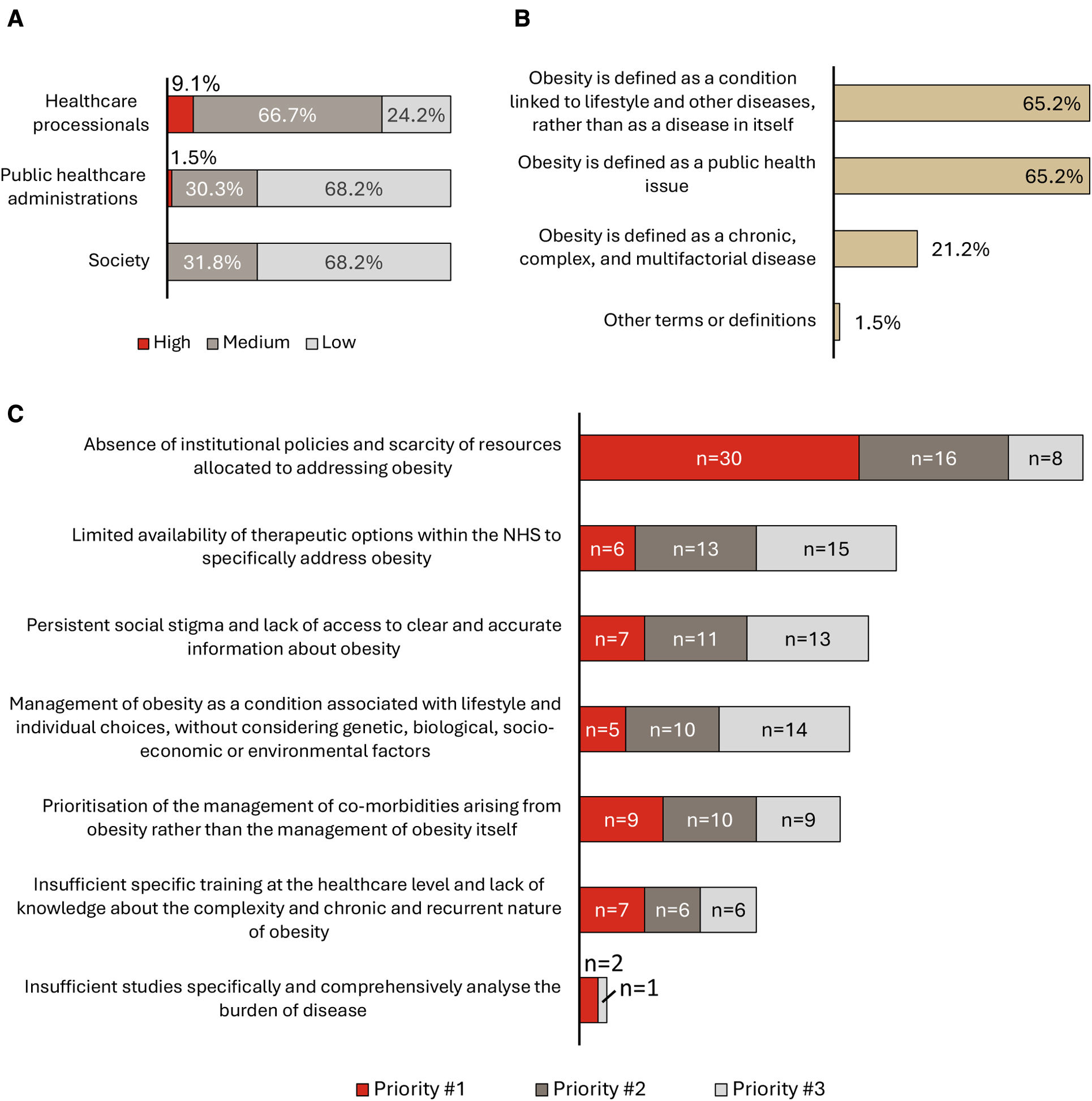
(A) Recognition of obesity as a chronic disease with a high associated burden by health care professionals, public health care administrations, and society (bars indicate the percentage of respondents [n=66] indicating high, medium, or low). (B) Definition of obesity in health care planning documents and other regional resources (percentage of respondents indicating each option; multiple-choice answer). (C) Barriers or aspects to address to achieve greater awareness and recognition of obesity. Values represent the number of respondents who selected each statement as a priority. Of all the statements, respondents (n=66) prioritised 3 possible barriers based on their relevance.
When respondents ranked barriers to recognising obesity as a disease, the most frequently selected were the lack of institutional policies and scarcity of resources allocated to address obesity and the limited availability of treatment options in the Spanish NHS to manage obesity (Fig. 1C). Other important barriers were prioritising the management of ORCs rather than addressing obesity directly, persistence of social stigma, and limited access to clear and accurate information about obesity.
Health planning toolsIn general, the availability of health planning tools was rated by respondents as limited or very limited (95.5%) (Fig. S1). No national obesity plan was identified in Spain; only regional obesity plans are currently in effect or under development in Andalusia, Galicia, and La Rioja (Fig. 2A). However, all autonomous communities have guidelines or protocols that specifically address obesity (Fig. 2A and Table S2). Regarding health planning tools that would have an impact on obesity care, the top three selected were the implementation of a comprehensive national strategy, followed by regional plans and other local strategies with specific obesity objectives, and training programmes for health care professionals or students specifically focused on the comprehensive management of obesity (Fig. 2B).
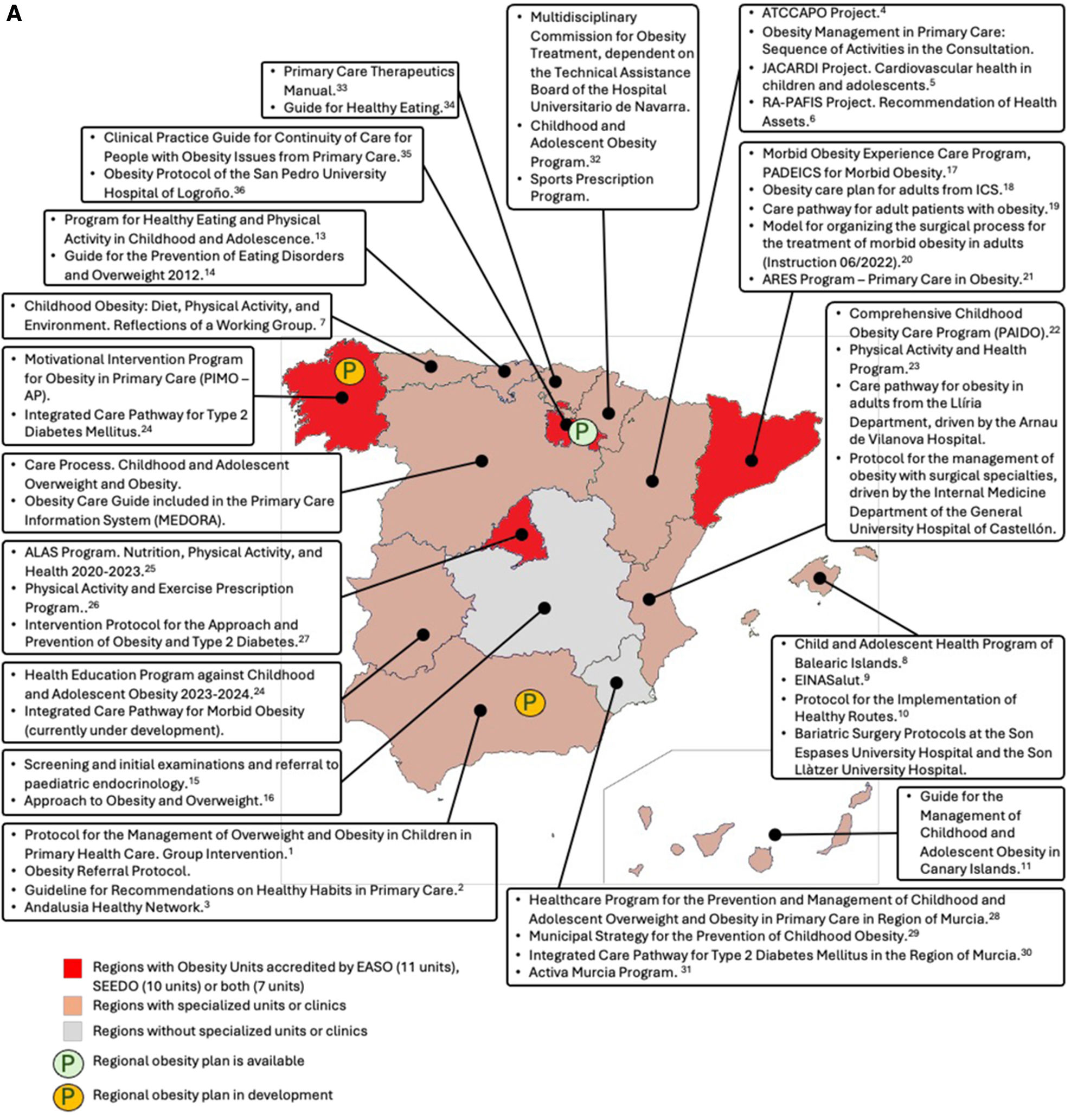
Health planning tools. (A) Obesity in plans and strategies of each autonomous community, and summary of other planning tools, clinical practice guidelines, protocols, and care pathways addressing obesity (please see Table S2 for references). (B) Main health planning tools or resources whose implementation would have the greatest impact on obesity care. Values represent the number of respondents who selected each statement as a priority. Of all the statements, the experts (n=66) prioritised 3 possible barriers based on their relevance.
Few respondents (<10%) identified the availability of PwO registries at the regional, hospital, or health-area levels (Fig. S2). Most respondents indicated that they would find it highly useful to have a PwO registry at the hospital (42.4%) or regional level (47.0%). The inclusion of obesity as an area of knowledge in training plans for health care professionals (undergraduate or specialised training, postgraduate programmes, or professional development programmes) was assessed as limited (range, 1.7–2.2 on a scale of 5) (Fig. S3).
When asked to identify key areas for improvement in resource availability and health care organisation for obesity management in Spain, most respondents prioritised having ‘greater availability of specialised obesity units (in terms of number and distribution) to provide a comprehensive approach’, ‘definition of referral programmes to specialised obesity units or consultations, with standardised criteria’, and ‘enhancement of continuous and bidirectional communication and coordination between specialised units and the Primary Care physicians responsible for patient management’ (Fig. 3).
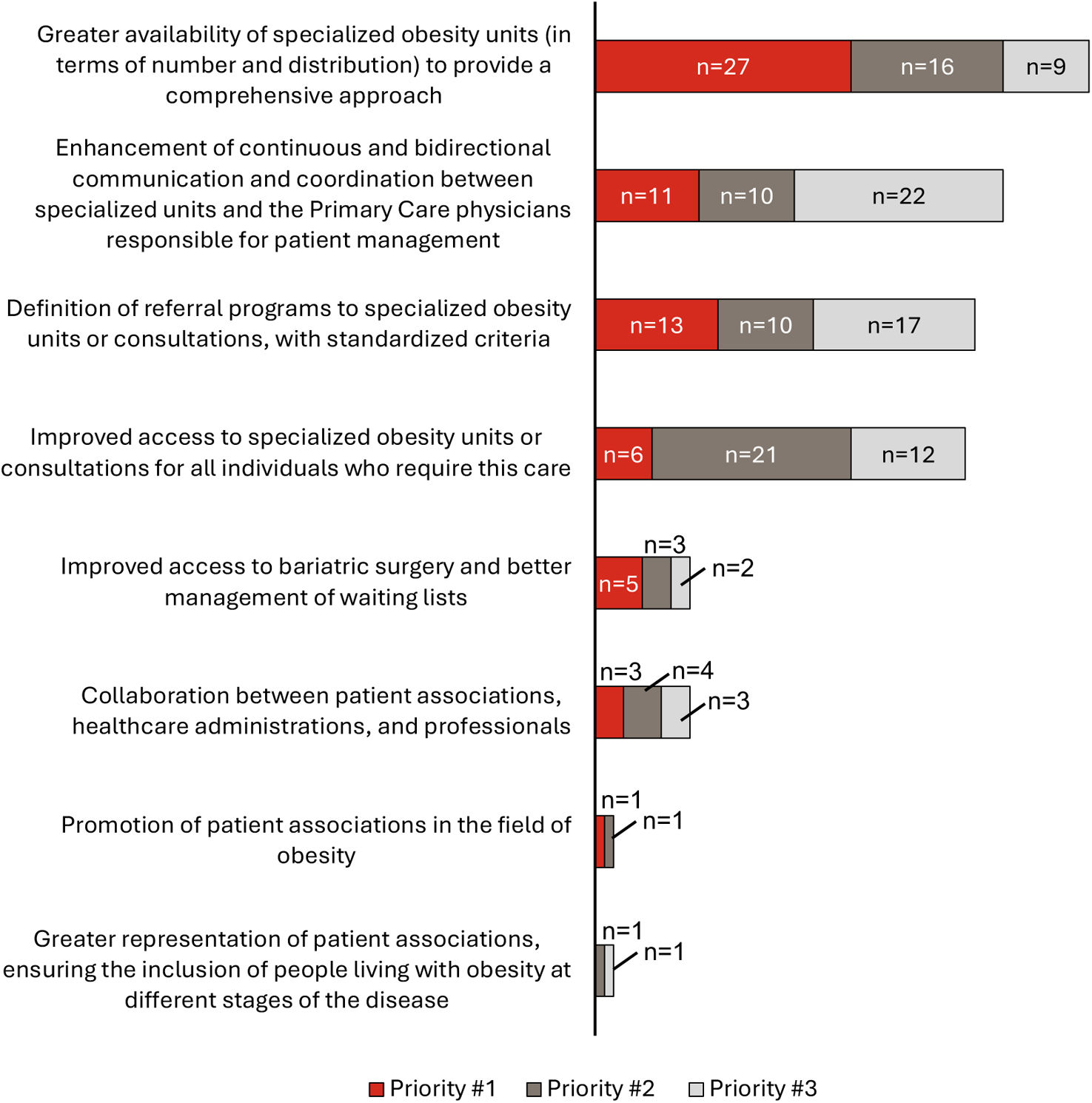
Key areas for improvement in resource availability and health care organisation for obesity management in Spain. Values represent the number of respondents who selected each statement as a priority. Of all the statements, respondents (n=66) prioritised 3 possible areas for improvement based on their relevance.
The two main criteria used to refer PwO to specialised Obesity Units/Clinics or to Endocrinology and Nutrition Services were BMI ≥35kg/m2 and at least two poorly controlled comorbidities (87.1% and 74.2%, respectively), or BMI ≥40kg/m2 regardless of the presence of comorbidities (80.6% and 66.7%, respectively) (Fig. 4A). The specialties that preferentially referred PwO to specialised Obesity Units/Clinics or to Endocrinology and Nutrition Services were Family and Community Medicine (90.3% and 96.4%, respectively) and Traumatology/Rheumatology (58.1% and 75.0%, respectively) (Fig. 4B). Respondents identified relevant limitations in the referral process for PwO, especially ‘the need for defined and standardised criteria’ (Fig. 4C).
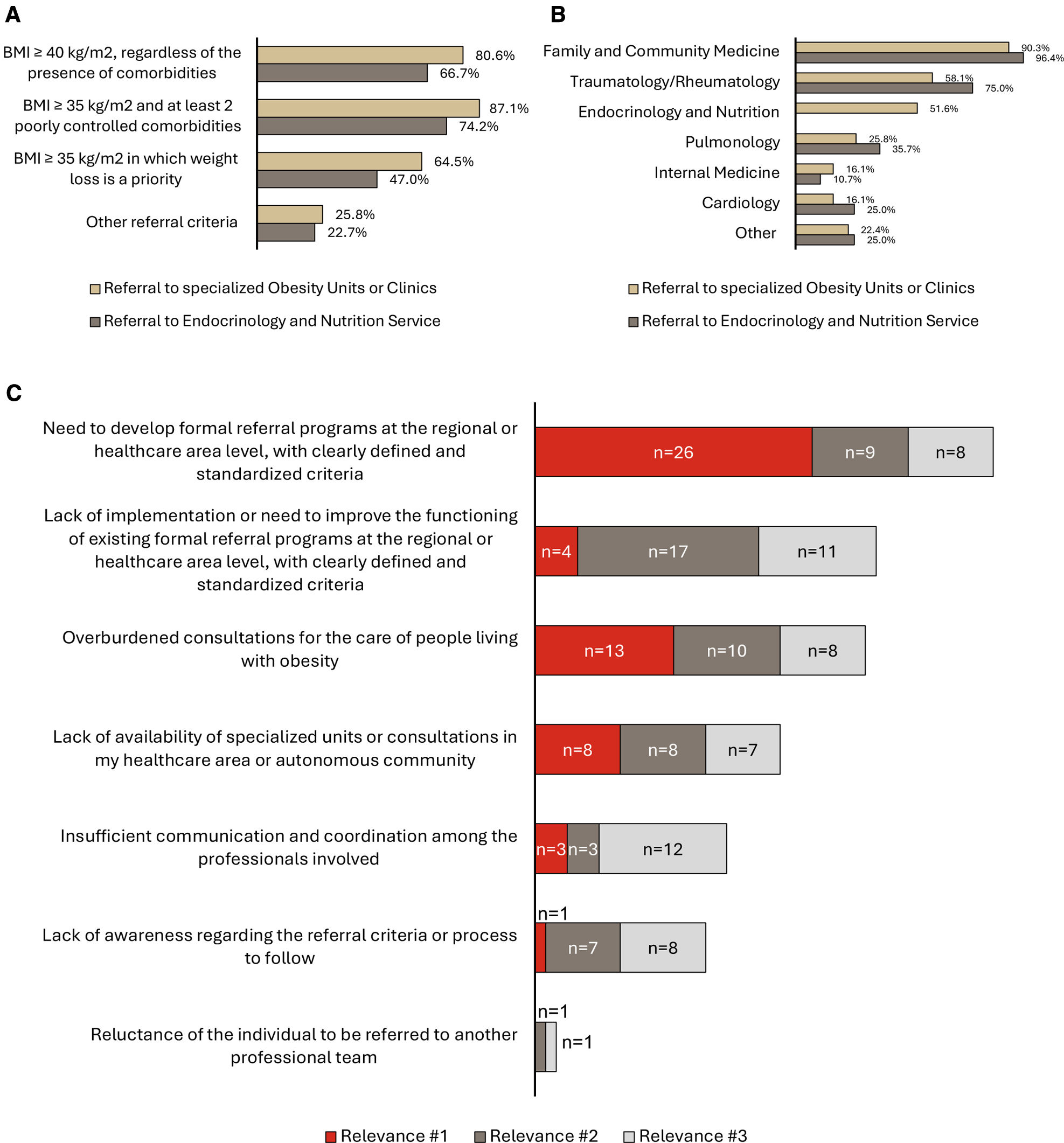
Referral and access to specialised care. (A) Main referral criteria to Obesity Units or Clinics or to the Endocrinology and Nutrition Service (percentage of experts indicating each option; multiple-choice answer). (B) Specialties or levels of care mainly referring PwO to Obesity Units or Clinics or to the Endocrinology and Nutrition Service (percentage of experts indicating each option; multiple-choice answer). (C) Identification of limitations in the referral process for PwO. Values represent the number of respondents who selected each statement as a priority. Of all the statements, the experts (n=66) prioritised 3 possible barriers based on their relevance.
According to respondents’ estimates, the most common waiting time for specialised Obesity Units or Clinics was 3–6 months, similar to the waiting time for access to general Endocrinology and Nutrition Units (Fig. S4). The most frequent waiting time for PwO to access bariatric surgery ranged between 1 and 2 years (36.4%). Waiting times varied widely between autonomous communities (Fig. S4, C–E).
Obesity prevention, diagnosis and codingVery few respondents (7.6%) reported the availability of obesity prevention programmes for adults, although 48.5% of them believed these programmes would be highly beneficial (Table S3). A total of 90.9% of experts estimated that obesity screening (annual measurement of weight, height, and ideally waist circumference) is performed in fewer than 50% of cases (Table S4). The primary reasons identified for the lack of systematic obesity screening in all patients were insufficient awareness of obesity as a disease (89.4%), lack of a standardised obesity screening protocol (62.1%), and lack of time during consultation to perform these measurements (56.1%) (Fig. S5).
On average, obesity diagnosis occurs mainly in Primary Care (42.4%) and, to a lesser extent, in Endocrinology and Nutrition (32.2%) (Table S5). BMI is the primary tool used to diagnose obesity (97.0%) (Table S6). However, respondents indicated that key tests to assess obesity include a complete medical history with specific information related to obesity (81.8%), measurement of waist circumference (60.6%), and analysis of body composition (54.5%) (Table S7).
Obesity diagnosis is often not included in the health record; however, 77.3% of respondents indicated that health records include complications related to obesity that are adequately classified and coded (Table S8). Most respondents indicated that the main consequence of under-coding obesity in health records was underestimation of the magnitude of the disease (Fig. S6).
Treatment and follow-upThe approach to obesity treatment was considered to focus mainly on modifying eating habits and promoting a healthy lifestyle, potentially combined with medications for obesity management and bariatric surgery, depending on the degree of obesity and PwO preferences (60.6%) (Table S9). However, some participants considered that treatment consisted of dietary modifications and a healthy lifestyle in addition to bariatric surgery only (18.2%) or medications for obesity only (7.6%). Few respondents believed that treatment should consist solely of diet and lifestyle changes (13.6%).
In clinical practice, therapeutic goals of obesity treatment mainly focus on reducing BMI (75.8%) and improving clinical and laboratory parameters related to obesity complications (71.2%) (Table S10). However, most respondents (84.8%) considered current treatment targets to be insufficient. As alternative therapeutic goals, they suggested changes in body composition (fat mass reduction) (75.0%) and improving quality of life (64.3%).
The barriers to providing adequate treatment for obesity were evaluated. Most respondents (98.5%) considered that there are limited resources to implement lifestyle changes (Fig. 5A), citing as the main barriers the lack of structured intervention programmes or other resources for effective and lasting lifestyle changes (89.4%) and time constraints among health care professionals to implement healthy lifestyle education programmes (77.3%). Similarly, nearly all respondents (98.5%) agreed that additional resources are needed to ensure adequate pharmacological treatment (Fig. 5B), identifying as the main barriers the lack of reimbursement by the NHS (93.9%), insufficient knowledge or training on obesity among health care professionals (74.2%), and a lack of a sense of urgency in addressing obesity (48.5%). The resources needed to implement bariatric surgery (Fig. 5C) were considered insufficient (86.4%). The main barriers identified were limited access due to long waiting lists (80.3%), strict eligibility criteria, with surgery focused on advanced stages of the disease (51.5%), concerns among PwO regarding the risks and complications associated with the procedure (45.5%), and insufficient knowledge or training on obesity among health care professionals (43.9%).
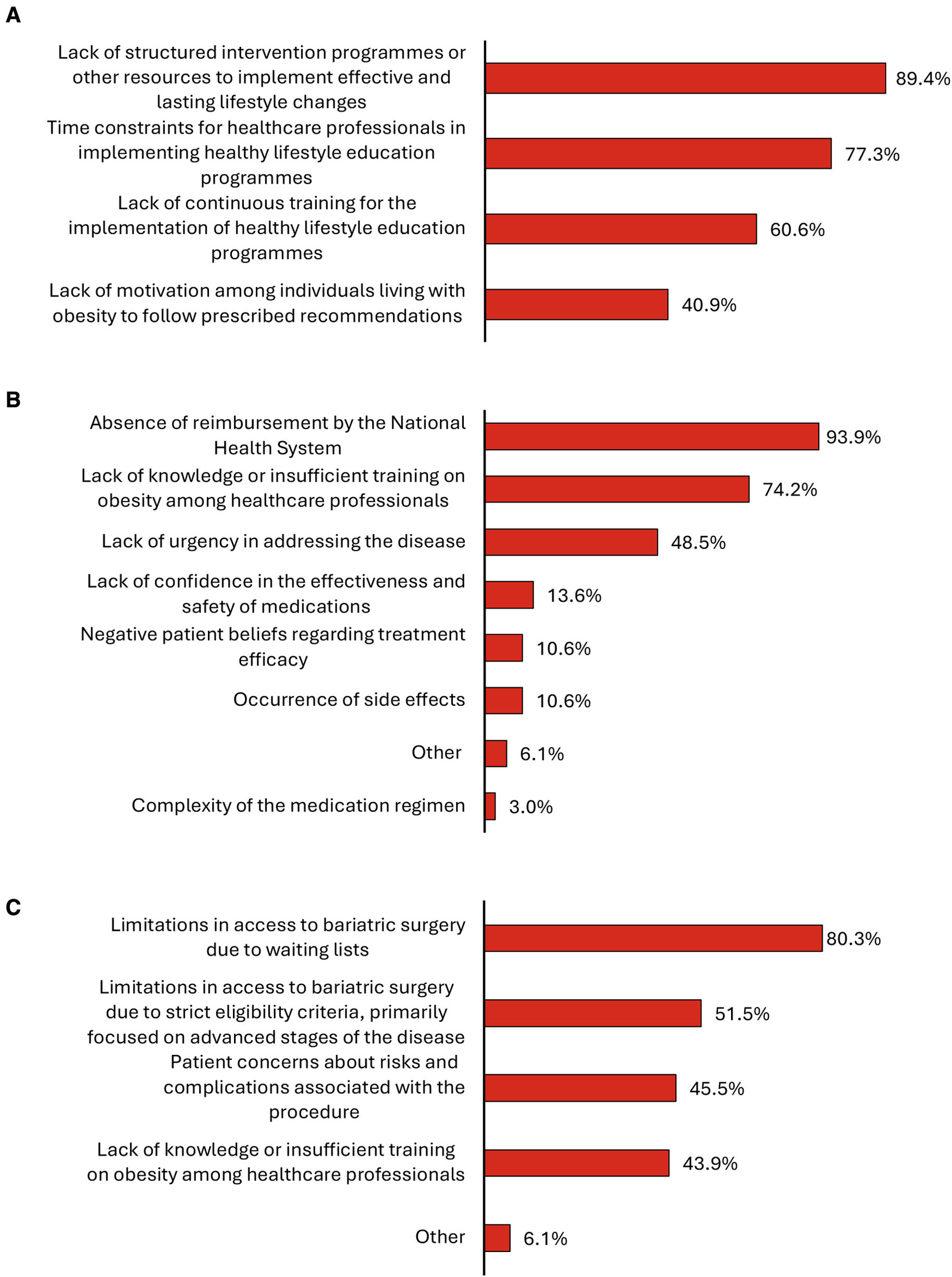
Main barriers to adequate implementation of treatment for obesity. Values represent the percentage of respondents selecting each statement. (A) lifestyle-based treatment; (B) pharmacological treatment; (C) surgery. ‘Other’ in pharmacological treatment includes: lack of consideration of obesity as a disease, scarce resources preventing regular follow-up by the care team, supply problems, and insufficient capacity for longer follow-up. ‘Other’ in surgery includes: lack of multidisciplinary teams, lack of professionals for adequate follow-up, especially regarding maintenance of dietary treatment and adherence to physical exercise, lack of a structured pre- and post-bariatric surgery programme to promote good habits, provide adjuvant pharmacological and psychological treatment, promote adherence to treatment and visits, and thus favour preprocedural weight loss and avoid postprocedural weight regain, and lack of coordination protocols between surgical and medical teams.
Follow-up of PwO corresponds primarily to Endocrinology and Nutrition specialists (98.5%, n=65), Family and Community Medicine specialists (90.9%, n=60), and Nursing (65.2%, n=43) (Table S11). Most respondents (95.5%, n=63) indicated that there is a lack of resources and a coordination system to closely follow up PwO at the desired frequency required to meet individual patient needs (Table S12). The main barriers to proper follow-up were economic barriers related to the lack of reimbursement for pharmacological treatments by the NHS (77.3%), which may lead to patient disengagement from the care pathway, difficulties in maintaining long-term lifestyle changes (62.1%), and challenges in accessing follow-up services due to overcrowding (60.6%) (Table S13). Shared decision-making was reported as poor by approximately half of respondents (56.1%), who noted limited involvement of PwO, who lack opportunities to actively influence the therapeutic strategy (36.4%).
Availability of resources for managing obesity varies depending on the health care area, health centre, and specialties. An overview of the available tools is shown in Table S14. Up to 27.3% reported that they lacked equipment and facilities for clinical practice in obesity (e.g., scales and blood pressure monitors adapted for PwO), and 19.7% reported that they did not use such equipment. In addition, 57.6% reported that they did not have nutritional and physical exercise programmes available. Overall, most participants (86.4%, n=57) reported lacking the necessary resources to adequately manage all stages of obesity (Table S15). In this regard, the key resources identified as needed were nutritional and physical exercise programmes, continuing education for health care professionals, and information materials for PwO. The clinical profiles most needed to improve obesity care are nutritionists (97.0%) and Family and Community Medicine specialists (81.8%). Access to psychological treatment and other supporting cross-disciplinary specialties was largely rated as low (42.4%) or very low (53.0%).
Clinicians identified key areas for improvement in the prevention, screening, diagnosis, treatment, and follow-up of obesity in Spain, as well as in transversal topics. Initiatives were proposed to address these areas and are detailed in Table S16.
PwO perceptions and experiencesThe PwO questionnaire was completed by 357 respondents from all autonomous communities except Navarra; 63.6% (n=227) were women and 55.7% (n=199) were older than 50 years. Overall, 76.8% of respondents (n=274) regarded obesity as a chronic disease influenced by multiple factors that require treatment, whereas 22.1% (n=79) considered it a condition associated with lifestyle habits (Table S17).
At the time of their first obesity-related medical consultation, 47% were <40 years old and 32% had a BMI ≥40kg/m2. The main motivations for seeking medical care were general discomfort related to health or self-image (30.8%), difficulty performing daily activities (24.1%), and having obesity discussed at a consultation unrelated to obesity (23.2%) (Table S18). The initial recommendation to treat obesity was made by Family and Community Medicine specialists in approximately half of cases (54.9%), followed by Endocrinology and Nutrition (20.4%) (Table S19).
The most frequently reported treatments used by PwO were lifestyle changes such as diet and exercise (85.2%), followed by pharmacological treatment (44.3%) and bariatric surgery (21.8%). Additionally, 41.5% (n=148) of PwO reported having received treatment recommendations that focused solely on lifestyle changes and healthy living habits (Table S20). The main goal of treatment for PwO was to improve their health status (40.6%) – especially concerning other diseases, such as cardiovascular disease or diabetes – and achieve overall weight loss (32.8%) (Table S21).
Overall, 52.1% of respondents reported difficulties adhering to lifestyle changes and healthy habits (Table S22), mainly due to incompatibility with their current lifestyle (32.8% of those who reported difficulties), lack of motivation or confidence to be physically active (30.6%), and the long-term commitment required (30.1%) (Fig. 6). Among PwO who faced difficulties with pharmacological treatments (11.2%), the most common barrier was their high cost (60.0%), followed by side effects associated with treatment (25.0%). Approximately one-quarter of PwO reported not receiving psychological (28.9%) or nutritional (27.5%) support despite considering it essential.
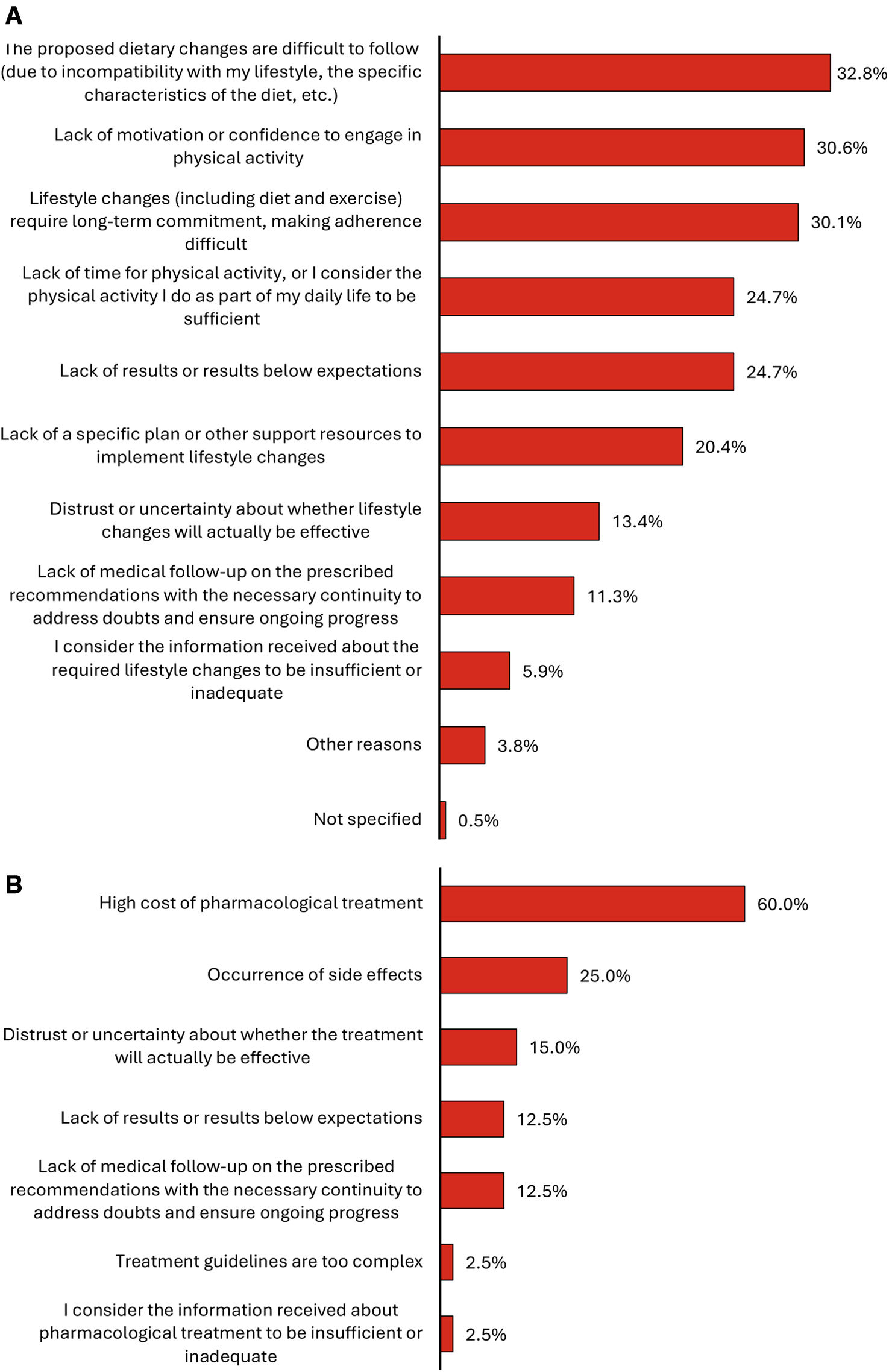
Difficulties in following recommendations, and their causes, according to the perspective and experience of PwO. (A) Reasons why PwO experienced difficulties following medical recommendations related to lifestyle changes (n=186, corresponding to those who reported difficulties following dietary and exercise recommendations). “Other reasons” include: “joint pain” and “losing weight is becoming increasingly difficult.” (B) Reasons why PwO experienced difficulties following pharmacological treatment (n=40, corresponding to those who reported difficulties following pharmacological treatment). Values represent the percentage of respondents selecting each statement. Multiple-response question (up to 3 responses selected).
The areas regarded as excellent or very satisfactory by PwO were communication with health professionals (56.1%) and information received about their disease and its treatment (56.5%) (Fig. S7).
DiscussionThe OBERview360 study showed low recognition of obesity as a chronic, multifactorial disease. The main reasons for this situation are the lack of institutional policies, the limited availability of therapeutic options, and the prioritisation of obesity-related complications. With no comprehensive national strategy in place, the availability of planning tools is limited, and specialised care primarily focuses on the more advanced stages of obesity and on the management of ORCs rather than obesity itself. Furthermore, there are limited resources to support lifestyle-based and pharmacological treatments or bariatric and metabolic surgery. PwO also report limitations in access to support resources intended for the follow-up and management of obesity as a chronic disease. In conclusion, the findings suggest that current resources may be insufficient to effectively address obesity as a chronic disease.
The OBERview360 study revealed a discrepancy between the scientific definition of obesity as a complex, multifactorial, chronic adipose-based disease2,13 and its recognition by public administrations, the general public, and health care professionals. In part, the lack of recognition among health care professionals could have resulted from the limited availability of pharmacological tools with a clinically acceptable risk–benefit profile in the past. Coding of obesity as a disease by health care professionals has been shown to be low compared with the prevalence of obesity, as revealed by the recent RECALSEEN and IMPACT-O studies.16,17 The lack of recognition could lead to biased attitudes towards PwO and hinder the allocation of resources and the development of effective policies, negatively affecting PwO access to comprehensive treatment.18,19 The stigma associated with obesity may also contribute to increased health risks, loss of quality of life, and barriers to prevention.14,19 In line with the results presented in our study, others have suggested that many PwO experience negative feelings such as frustration and demoralisation, which affect and delay seeking medical help.20,21
The study presented here suggests that obesity care in Spain focuses mainly on the most severe cases, such as candidates for metabolic and bariatric surgery, leaving individuals with earlier stages of the disease unattended. Early treatment of obesity could avoid the high burden of complications later in life, which have a major clinical, economic, and social impact,22,23 because the duration of exposure to excess adiposity is associated with the development of complications.24 The lack of access to effective treatment and close follow-up leads many PwO to drop out of the care pathway, negatively affecting their health and preventing continuous and appropriate management.25 This is especially relevant because lifestyle interventions are known to have poor long-term adherence, as indicated by several studies, making them inadequate for many people in the long term.26
In addition, the generalised shortage of human and material resources and the overload of services result in long waiting times for specialised care and create significant inequalities.14 Although differences in care organisation are inevitable, these should not translate into inequities in the quality and availability of care provided to PwO.14 The lack of formal referral programmes and limited integration between levels of care further reinforce these disparities, hindering an equitable and coordinated approach. These limitations are compounded by the absence of proactive strategies for obesity screening and prevention, which prevents systematic detection of both the disease and its associated risk factors.
The lack of standardisation in care processes and limited multidisciplinary coordination pose significant challenges in obesity management, which requires adequately trained multidisciplinary teams.14 Additionally, there is a lack of comprehensive frameworks that address obesity in a coordinated manner at all stages: prevention, diagnosis, treatment, and multidisciplinary follow-up. Key elements for ensuring an equitable and effective approach to obesity are improved communication and coordination between all levels of care, implementation of standardised protocols, and creation of well-integrated multidisciplinary teams.27
These teams should bring together professionals from all relevant disciplines – including Primary Care, Endocrinology and Nutrition, Internal Medicine, Nutrition, Nursing, Clinical Psychology, Psychiatry, Endoscopy, Surgery, Pulmonology, Physiotherapy, Physical Education, and Anaesthesiology – whose involvement should be determined by the individual's clinical complexity and disease stage, ensuring that the appropriate professionals are involved at each point of the care pathway.14,27,28 In this regard, a recent Spanish multisociety consensus document proposes a model linking disease severity staging (based on the Edmonton Obesity Staging System) to specific referral pathways between Primary Care and specialised multidisciplinary teams.29
In the OBERview360 study, respondents advocated revising diagnostic processes, going beyond BMI by incorporating tools that allow a more comprehensive assessment of body composition and anthropometric parameters as individual measures of health.2,14 This study also highlights the need for obesity treatment to go beyond weight loss and include prevention, resolution or improvement of complications, better quality of life and mental well-being, and improvement of physical and social functioning, in line with national and international standards.15 The discrepancies identified in the study between routine clinical practice and the therapeutic targets considered most appropriate underline the need for a more holistic and personalised approach tailored to individual needs.
The results of OBERview360 highlighted the limitations perceived by PwO in the management of their disease. A significant proportion of PwO continue to view obesity as a purely lifestyle-related problem. This perception, also observed in the ACTION-IO study, not only affects their motivation to seek medical care but also their adherence to proposed treatments.20
This study is strengthened by its representation of all autonomous communities in Spain and by the inclusion of both clinician and PwO perspectives. The participating clinicians were experts in obesity who are directly involved in the continuous and complex management of the disease and have an accurate and up-to-date understanding of both the available resources and their actual limitations. In line with this, OBERview360 complements previous research such as the Spanish cohort of ACTION-IO, which focused on individual-level attitudes and behaviours, by providing an updated system-level assessment of the Spanish NHS and identifying structural gaps in obesity management.20 However, several limitations should be acknowledged. First, the cross-sectional study design precludes establishing causal relationships. Second, the use of purposive sampling and voluntary participation should be considered when interpreting the generalisability of the results. Because respondents were clinicians with recognised expertise in obesity, their views may not reflect those of non-specialists managing the condition in Spanish real-world settings. Similarly, PwO recruitment may have favoured individuals who were more aware of and actively engaged in the management of their condition, limiting the representativeness of the findings for the broader population of PwO in Spain. Furthermore, results were analysed at an overall level and were not stratified by medical specialty; therefore, potential differences in perspectives across specialties were not captured. Finally, the study primarily captured perceptions rather than objective measurements, which are inherently susceptible to social desirability bias, with participants potentially responding according to what is socially accepted rather than actual clinical practice or lived experience.
ConclusionsIn conclusion, the OBERview360 study evaluated the availability of resources for obesity management in Spain from the perspectives of health care professionals and PwO, identifying significant barriers and priority areas for improvement. Our findings highlight that obesity is not recognised as a disease but rather as a problem linked to lifestyle choices. Key barriers to its recognition as a disease include the absence of institutional policies, particularly a national obesity strategy, and limited resources. Obesity is significantly underdiagnosed and undertreated because of a lack of systematic screening and insufficient material and human resources, as well as limited health planning for early, comprehensive, and continuous management. Moreover, resources are insufficient to adequately implement treatment and ensure follow-up. These results can inform policymakers about areas requiring improvement and additional resources. A better understanding of resource availability may help optimise treatment strategies and improve health outcomes for patients with obesity. This study highlights the need for an integrated model of care supported by appropriate resources, adequate training, and consistent policies to ensure recognition of obesity as a disease requiring specific and structured management.
Conflict of interestsAndreea Ciudin has received speaking fees from Astra Zeneca, Boehringer-Ingelheim, Eli-Lilly, Novo Nordisk, Sanofi, and Menarini, and and research grants from Eli Lilly, NovoNordisk and Menarini. Member of the DMC of Boehringer Ingelheim.
Miguel Ángel Rubio Herrera has received consulting fees and/or speaker from Adventia, Amgen, Astra-Zeneca, Boehringer Ingelheim, Janssen, Eli-Lilly, MSD, Novo-Nordisk, Nutrisense, Roche and research grants from Adventia, Novo-Nordisk, Nutrisense.
Juana Carretero Gómez has received consulting fees and/or speaker from Astra Zeneca, Boehringer-Ingelheim, Abbot, Ely Lilly and Novo-Nordisk.
Francesc Xavier Cos Claramunt has received consulting fees and/or speaker from AstraZeneca, Abbott, Boehringer Ingelheim, Lilly, Novo Nordisk, Menarini.
Miguel Ángel Rubio Herrera, Juana Carretero Gómez, Francesc Xavier Cos Claramunt and Andreea Ciudin received funding from Eli Lilly Spain for their participation as members of the scientific committee of this study.
Javier Miró, Jennifer Redondo-Antón, Silvia Díaz-Cerezo, and Miriam Rubio-de Santos are employees and minor shareholders of Eli Lilly and Company.
The following are the supplementary data to this article: