



Ischemic diseases are the second leading cause of death in Mexico and account for over 30% of deaths worldwide. Atherosclerosis, in particular, obstructs arteries and impairs blood circulation, contributing to increased mortality and reduced quality of life.
ObjectiveIn this study, adhesion energies and their influence on the structural arrangement of an atheroma were determined.
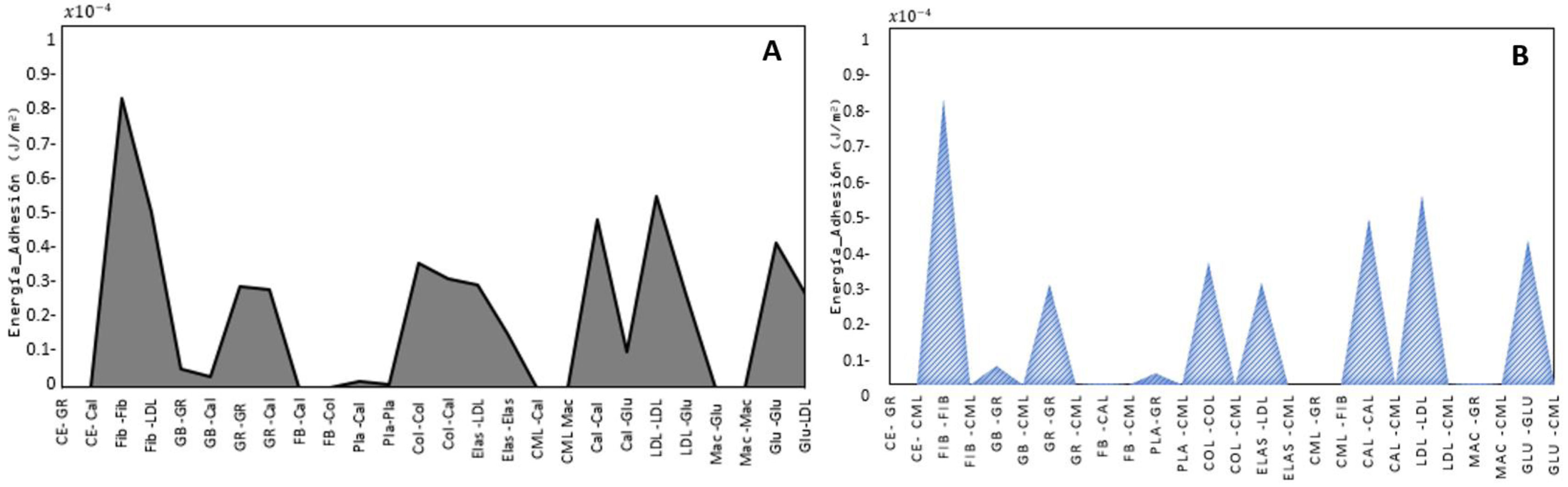
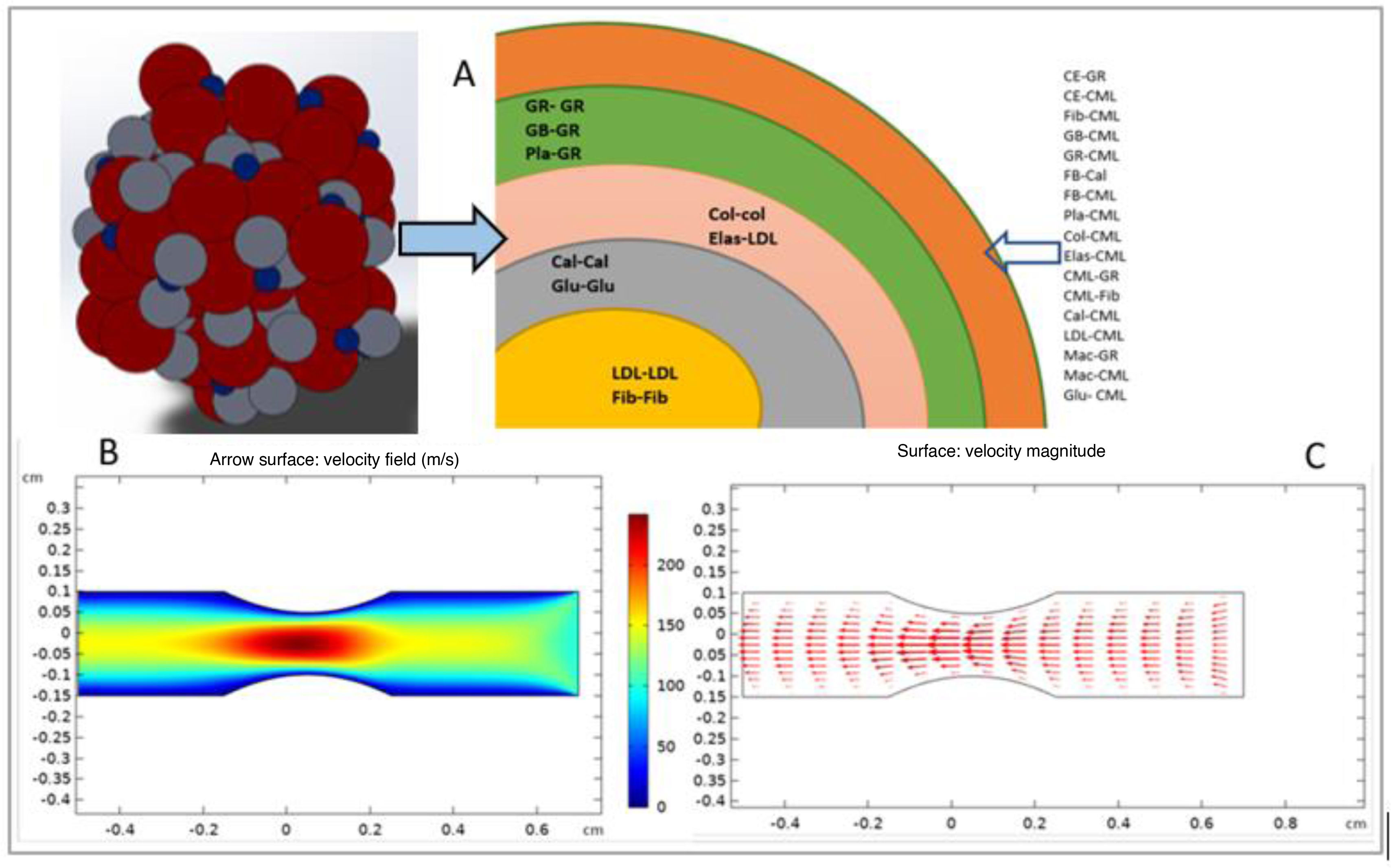
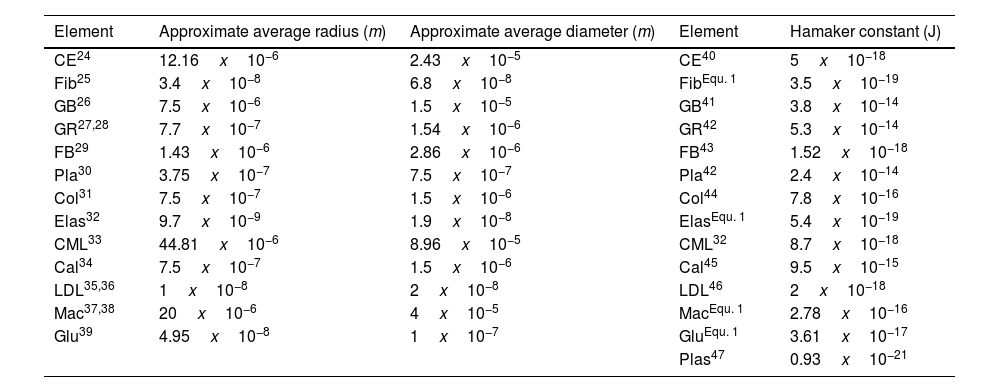
MethodologyAdhesion energies were measured for each main component of the atheroma, including arteries and plaque components such as cholesterol, calcium, collagen, glucose, and elastin. The relationship between adhesion and atheroma formation is demonstrated, highlighting the significant interaction of adhesion energies between fibrinogen and cholesterol. Numerical results showed that fibrinogen and cholesterol have the highest adhesion energy, followed by collagen-glucose and cholesterol-elastin combinations.
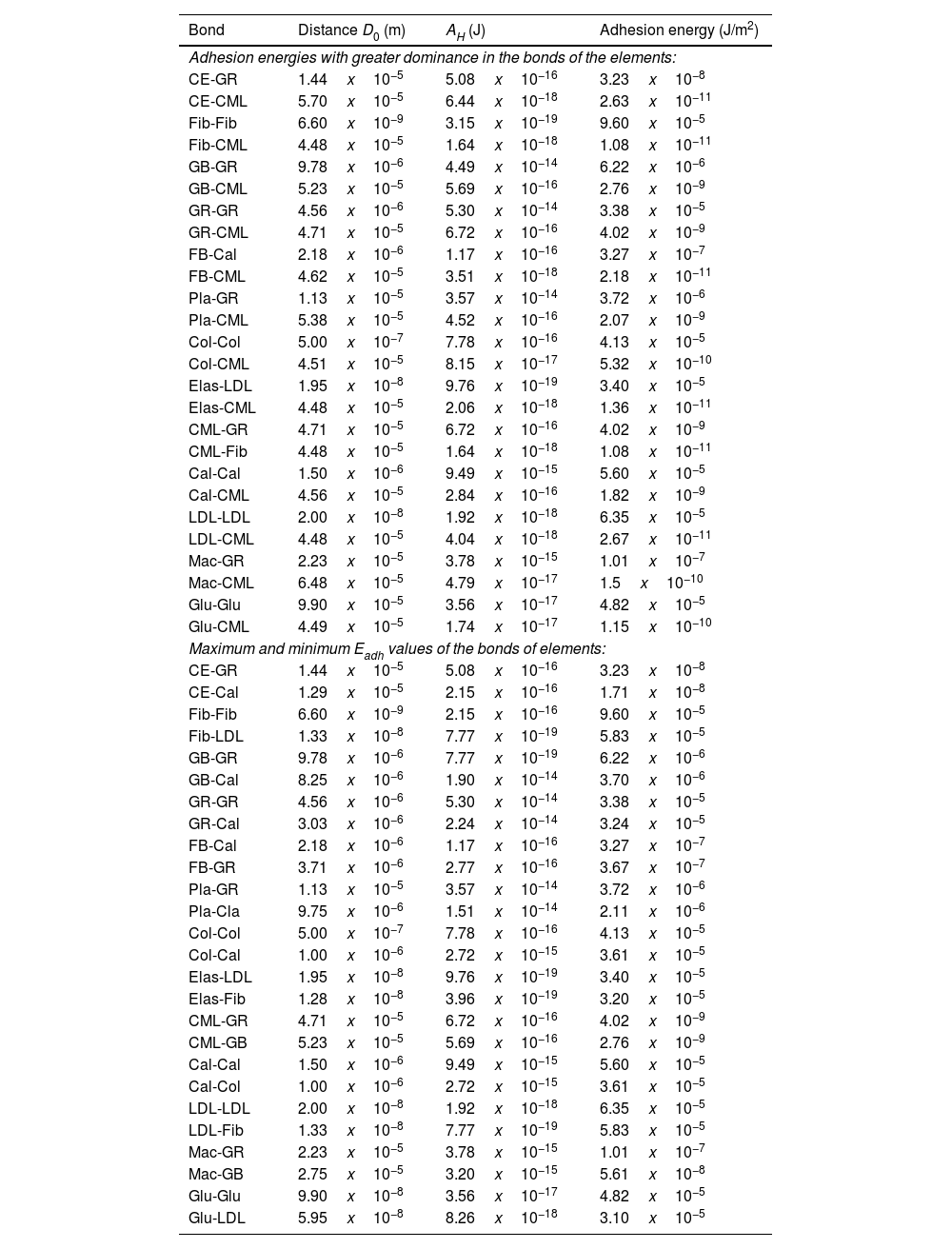
ResultsAdditionally, interactions with the highest adhesion energy, such as Fib-Fib with an energy value of 9.60x10⁻⁵J/m2, CML-GB with a value of 2.76x10⁻⁹J/m2, along with LDL-LDL with an adhesion value of 6.35x10⁻⁵J/m2 and Elas-LDL with a J value of 3.40x10⁻⁵J/m2, influence the atheroma structure formation.
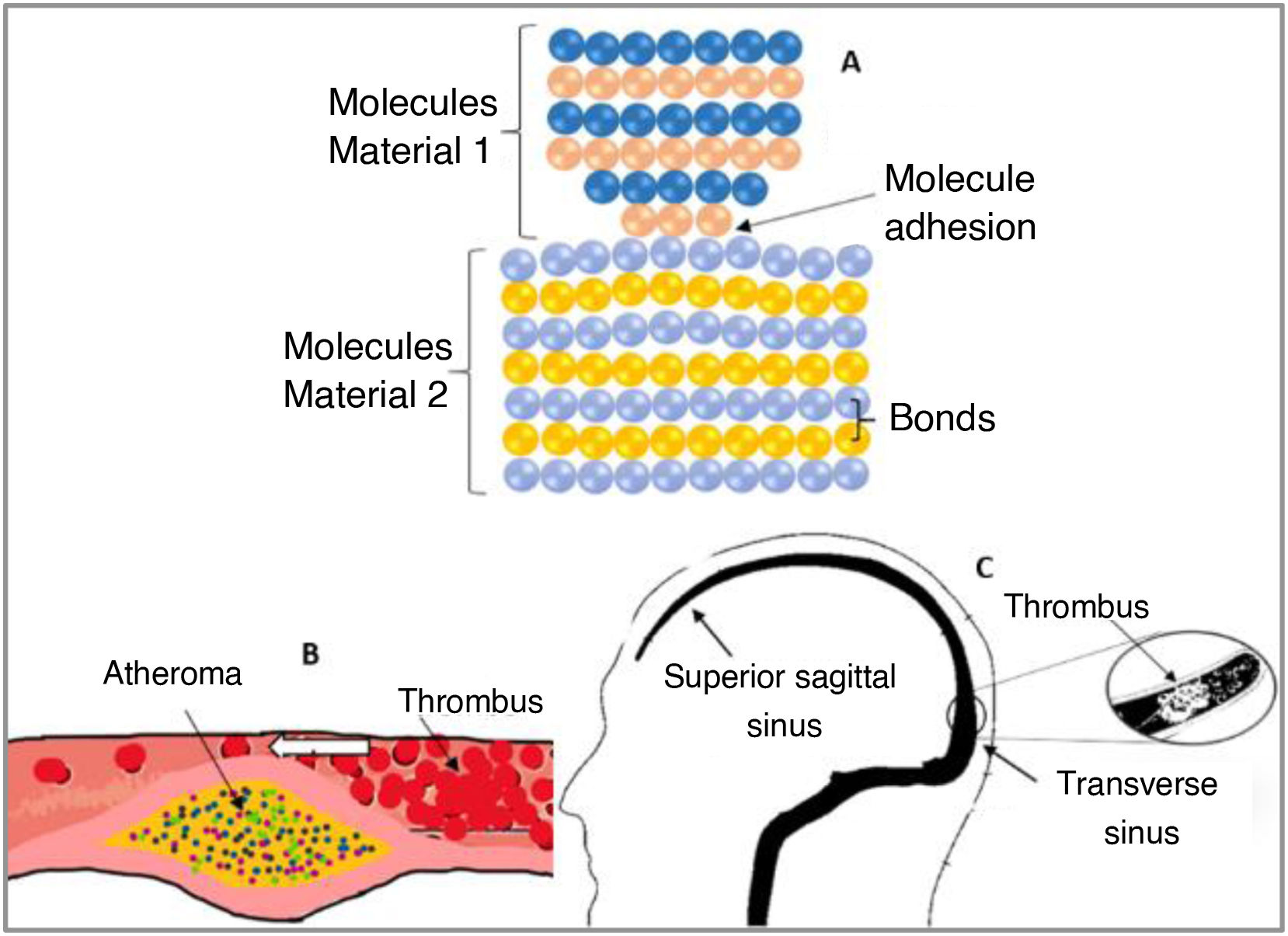
ConclusionsThese results demonstrate the association between adhesion energy in forming an atheroma that obstructs arteries, reduces blood flow, and the pathology of thrombus formation.
Las enfermedades isquémicas son la segunda causa principal de muerte en México y representan más del 30% de los fallecimientos a nivel mundial. En particular la aterosclerosis que obstruye arterias y deteriora la circulación sanguínea, contribuyendo a un aumento de la mortalidad y una disminución en la calidad de vida.
ObjetivoEn este trabajo se comprobaron las energías de adhesión y su influencia en el acomodo estructural de un ateroma.
MetodologíaSe determinaron las energías de adhesión de cada uno de los componentes principales del ateroma, como las energías de adhesión en arterias y componentes de placas tales como: colesterol, calcio, colágeno, glucosa y elastina. Se muestra la relación entre adhesión y formación del ateroma, resaltando la significativa interacción de las energías de adhesión entre el fibrinógeno y el colesterol. Los resultados numéricos mostraron como que el fibrinógeno y el colesterol tienen una energía de adhesión superior, seguido por combinaciones de colágeno con glucosa y colesterol con elastina.
ResultadosTambién que las interacciones con mayor energía de adhesión, como Fib-Fib un valor de energía 9.60x10⁻⁵J/m2, CML-GB con un valor de 2.76x10⁻⁹J/m2, junto con LDL-LDL el valor de adhesión 6.35x10⁻⁵J/m2 y Elas-LDL valor de J de 3.40x10⁻⁵J/m2 influyen en la formación de la estructura del ateroma.
ConclusionesEstos resultados demuestran la asociación existente entre la energía de adhesión para formar un ateroma que obstruye las arterias y disminuye el flujo de sangre y la patología de la formación de trombos.
