La cirugía resectiva es el pilar del tratamiento en el cáncer gástrico, pero presenta una morbimortalidad considerable, siendo la fuga anastomótica (FA) la complicación más temida. Este trabajo pretende describir la prevalencia y el manejo diagnóstico de la FA tras una gastrectomía oncológica, analizando parámetros clínicos y analíticos que puedan facilitar su diagnóstico precoz.
MétodosEstudio prospectivo y multicéntrico nacional realizado entre 2023 y 2024. Se incluyeron 435 pacientes intervenidos por neoplasia gástrica en 43 centros. Se describieron variables sociodemográficas y de manejo diagnóstico y terapéutico, comparando la evolución postoperatoria de variables clínicas y analíticas en los pacientes con y sin FA.
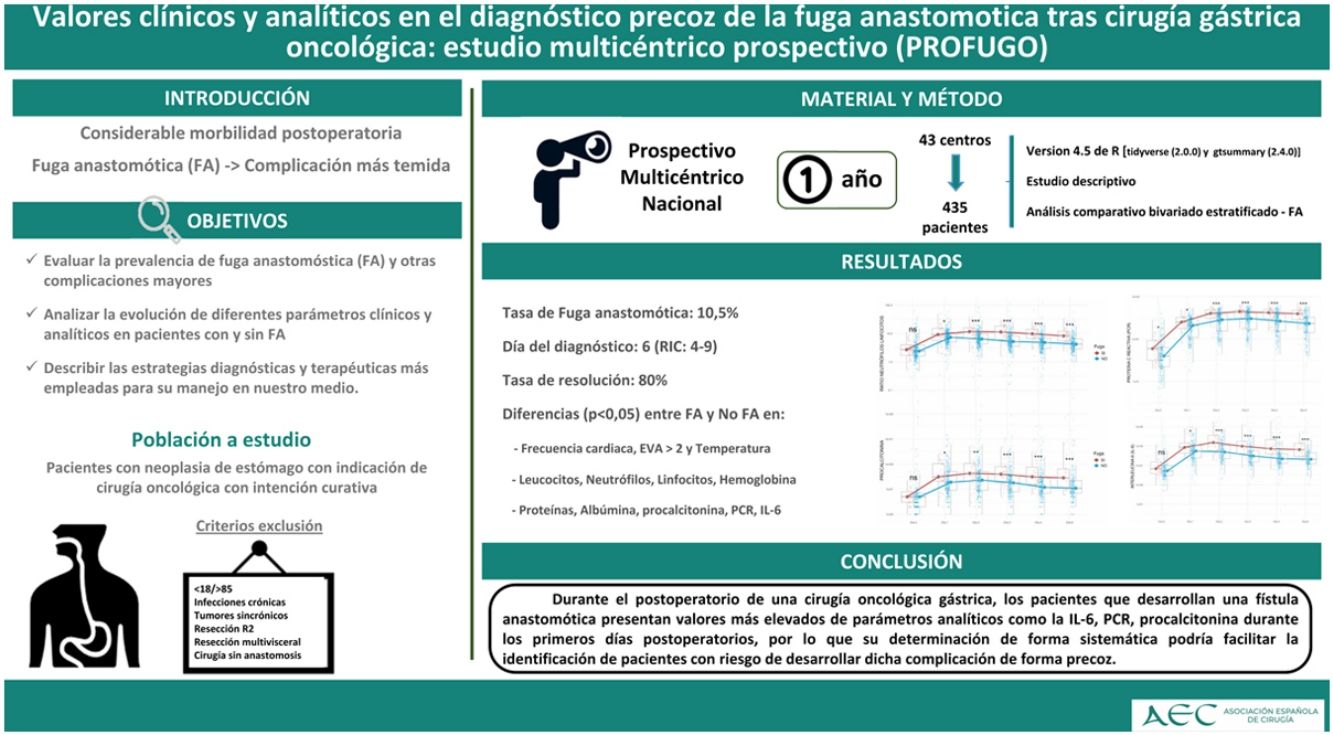
ResultadosLa prevalencia global de la FA fue del 10,5%, presentando los pacientes con FA una frecuencia cardíaca significativamente mayor desde el segundo día postoperatorio. En el grupo de pacientes con FA, la proteína C reactiva, la procalcitonina y la interleucina-6 mostraron niveles más elevados desde el primer día postoperatorio. Otros marcadores como leucocitos y el ratio neutrófilo / linfocito también fueron significativamente mayores en el grupo FA. El diagnóstico de FA se estableció con una mediana de 6 días poscirugía, siendo la tasa de resolución de la misma del 80%, empleando terapias endoscópicas, radiología intervencionista y cirugía.
DiscusiónAunque el diagnóstico de FA suele demorarse hasta el sexto día postoperatorio, las diferencias en los valores de variables como la proteína C reactiva, la procalcitonina y la interleucina-6 entre los pacientes con y sin FA se hacen notorias más temprano. Estos hallazgos fundamentan la creación de modelos predictivos basados en las variables estudiadas para diagnosticar precozmente esta complicación.
Resective surgery is the cornerstone of gastric cancer treatment, but it carries considerable morbidity and mortality, with anastomotic leak (AL) being the most feared complication. This study aims to describe the prevalence and diagnostic management of AL after oncological gastrectomy, analyzing clinical and laboratory parameters that may facilitate its early diagnosis.
MethodsA prospective, multicenter, national study was conducted between 2023 and 2024. 435 patients who underwent surgery for gastric cancer at 43 centers were included. Sociodemographic variables and diagnostic and therapeutic management data were described, comparing the postoperative evolution of clinical and laboratory variables in patients with and without anastomotic leak.
ResultsThe overall prevalence of AL was 10.5%, with patients exhibiting a significantly higher heart rate from the second postoperative day. In the group of patients with AL, C-reactive protein, procalcitonin, and interleukin-6 showed higher levels from the first postoperative day. Other markers, such as leukocytes and the neutrophil-to-lymphocyte ratio, were also significantly higher in the AL group. The diagnosis of AL was established at a median of 6 days post-surgery, with a resolution rate of 80% using endoscopic therapies, interventional radiology and surgery.
DiscussionAlthough the diagnosis of AL is often delayed until the sixth postoperative day, the differences in the values of variables such as C-reactive protein, procalcitonin, and interleukin-6 between patients with and without AL become noticeable earlier. These findings support the creation of predictive models based on the variables studied to diagnose this complication early.