





This study aims to evaluate the clinical impacts of topical and/or oral administration of compounds rich in omega-3 fatty acids from various sources, such as oils and foods, on psoriatic lesions.
DesignA systematic review was carried out. Data sources: Searches were conducted in six databases (PubMed, Cochrane, VHL, Scopus, Embase, and Web of Science) using descriptors related to fatty acids and psoriasis.
Study selectionInclusion criteria were studies published in the last 10 years (2013–2023) that involved patients with psoriasis and provided quantitative clinical outcome data, such as psoriasis severity scale.
Data extractionTwo independent reviewers carried out the initial screening of the titles and abstracts identified in the search. The quality of studies was evaluated using the Newcastle-Ottawa Scale, the Risk of Bias in Randomized Studies of Interventions, and the Joanna Briggs Institute critical appraisal checklist.
ResultsOut of 8570 articles identified, 9 met the inclusion criteria. The quality of randomized clinical trials and observational studies varied from low to high risk of bias, according to the respective parameters of each checklist.
ConclusionsMost studies demonstrated that the topical and/or oral administration of omega-3 fatty acids from different sources significantly improved clinical parameters, as measured by severity scales and the Psoriasis Area and Severity Index (PASI).
Este estudio tiene como objetivo evaluar los impactos clínicos de la administración tópica y/u oral de compuestos ricos en ácidos grasos omega-3 de diversas fuentes, como aceites y alimentos, sobre lesiones psoriásicas.
DiseñoSe realizó una revisión sistemática.
Fuentes de datos Se realizaron búsquedas en 6 bases de datos (PubMed, Cochrane, VHL, Scopus, Embase y Web of Science) utilizando descriptores relacionados con ácidos grasos y psoriasis.
Selección de estudios Los criterios de inclusión fueron estudios publicados en los últimos 10 años (de 2013 a 2023) que involucraran pacientes con psoriasis y proporcionaran datos cuantitativos de resultados clínicos, como la escala de gravedad de la psoriasis.
Extracción de datos Dos revisores independientes realizaron la selección inicial de los títulos y resúmenes identificados en la búsqueda. La calidad de los estudios se evaluó utilizando la escala de Newcastle-Ottawa, el riesgo de sesgo en estudios aleatorizados de intervenciones y la lista de verificación del Instituto Joanna Briggs.
ResultadosDe los 8.570 artículos identificados, 9 cumplieron con los criterios de inclusión. La calidad de los ensayos clínicos aleatorizados y los estudios observacionales varió de bajo a alto riesgo de sesgo, según los respectivos parámetros de cada lista de verificación.
ConclusionesLa mayoría de los estudios demostraron que la administración tópica y/u oral de ácidos grasos omega-3 de diferentes fuentes mejoró significativamente los parámetros clínicos, medidos mediante escalas de gravedad y el índice de área y gravedad de la psoriasis.
Psoriasis is a chronic skin disease characterized by inflammatory, scaly, and itchy lesions, affecting approximately 2–11% of the world's population.1 In addition to being a dermatological condition, psoriasis is a multisystemic disease that significantly impacts the quality of life of affected individuals and may lead to psychosocial disorders, such as anxiety and depression.2 The pathogenesis of psoriasis is complex and multifactorial, involving interactions of genetic, immunological, and environmental factors. These interactions result in an acceleration of inflammatory mediators, hyperproliferation, and abnormal differentiation of epidermal keratinocytes.3
The prevalence of psoriasis varies across different regions of the world, with a nonhomogeneous geographic distribution. Recent estimates indicate that approximately 125 million people worldwide are affected by psoriasis.4 A population-based study estimated that 1.9% of the Spanish population had psoriasis in 2022, marking a 43.3% increase in cases from 2018 to 2022.5 The diagnosis of psoriasis is primarily clinical and based on the characteristics of skin lesions, such as reddish plaques with thick silvery scales. There is a strong correlation between the lipid profile of psoriasis patients and metabolic syndrome, atherosclerotic diseases, increased serum triglycerides, cholesterol, and LDL, as well as significantly decreased HDL compared to healthy controls. This results in an increased cardiovascular risk.6,7
The exact etiology of psoriasis is not completely understood, but evidence suggests a complex interaction between genetic and environmental factors. Recent studies have explored the relationship between diet and psoriasis, highlighting the role of fatty acids in modulating skin inflammation. Omega-3 fatty acids, found in fish and vegetable oils, have garnered growing interest as potential modulators of inflammation and complementary therapies for psoriasis.8 Furthermore, essential oils with anti-inflammatory properties have also been explored as possible therapeutic interventions.9
In dermatology and related disciplines, lipids play a fundamental role as essential constituents of the skin barrier and are involved in various biological processes. N-3 and N-6 polyunsaturated fatty acids (PUFAs) became a target of interest in the 1920s when studies in rodents revealed their effects through dietary supplementation.10 Two essential PUFAs were identified, linoleic acid (LA, n-6 PUFA) and α-linolenic acid (ALA, n-3 PUFA), which must be obtained from food due to their inability to be synthesized by the body. These PUFAs and their bioactive lipid mediators play a crucial role in regulating biological processes, including the inflammatory response. Each tissue presents a specific profile of bioactive lipid mediators influenced by the expression of different PUFAs and proteins involved in their synthesis, which are affected by the individual's nutritional status.11
In the context of psoriasis, significant deregulation of lipid mediators is observed. This condition affects the levels of structural lipids, such as phospholipids, triglycerides, and ceramides, as well as inflammatory mediators present in the skin. A marked change in the metabolism of polyunsaturated fatty acids (PUFAs) is evident, with a high presence of n-6 PUFAs in the blood and skin of patients with psoriasis. This alteration results in abnormal levels of bioactive mediators derived from these PUFAs, with arachidonic acid being the most affected. Arachidonic acid plays a crucial role in the development of the characteristic lesions of psoriasis, and recent studies suggest it is involved in the severity of the disease.12
This systematic review provides a critical analysis of therapeutic approaches involving fatty acids in psoriasis patients, focusing on clinical studies conducted on humans. The primary objective of this study was to evaluate the clinical repercussions of topical, oral, or combined use of compounds rich in fatty acids, mainly omega-3, on psoriasis lesions. The analysis and synthesis of available data are expected to provide insights into the potential role of fatty acids in the treatment of psoriasis and guide future research in this area.
Materials and methodsResearch designThis systematic review followed the PRISMA (Preferred Reporting Items for Systematic Reviews and Meta-Analyses) guidelines and the guidelines provided by the Cochrane Handbook for Systematic Reviews of Interventions.13
Research strategyThe following clinical questions were addressed using the PICO framework: population (P), intervention (I), intervention or exposure comparison (C), and outcome of interest (O). In this study, PICO consisted of (P) patients with psoriasis, (I) fatty acids used in the treatment, (C) controls with psoriasis receiving conventional or placebo treatment, and (O) severity, treatment response rates, quality of life, and remission or improvement of lesions. A systematic literature search was conducted in May 2023 using the following databases: Biblioteca Virtual em Saúde (BVS), PubMed, Cochrane Library, Web of Science, Embase, and Scopus. The search strategy involved using standard terms related to “psoriasis” and “fatty acids,” based on Medical Subject Headings (MeSH) and Health Sciences Descriptors (DeCS). Each of these terms was grouped with their synonyms and variations using Boolean operators (AND and OR) to maximize the sensitivity of the search and ensure the inclusion of relevant studies.
This strategy was adapted for each of the databases searched, ensuring broad coverage of relevant studies. This rigorous stage of the search strategy aimed to include as many relevant studies as possible using a combination of MeSH/DeCS terms and keywords. This broad and systematic approach helps ensure that the review is comprehensive and adequately represents the current literature on therapeutic approaches involving fatty acids for psoriasis in clinical cohort studies and randomized clinical trials.
Inclusion and exclusion criteriaStudies eligible for inclusion had to meet the following criteria: (I) patients with psoriasis and (II) clinical analysis of these patients, including quantitative data on clinical outcomes, such as severity of psoriasis, response rates, or quality of life. Excluded studies were (I) conference abstracts, (II) letters to the editor, (III) systematic reviews or meta-analyses, (IV) studies not available in full, and (V) studies published before 2013.
Data extractionAfter extracting the articles from each database and excluding duplicate studies, two researchers independently reviewed the titles and abstracts. Next, they conducted a full reading of the studies selected in the first stage, using the Rayyan© tool. For data collection, a preformatted Microsoft Excel spreadsheet was created, including information about the study design, population characteristics, fatty acid interventions, forms of administration, Psoriasis Area and Severity Index (PASI), and reported results. The data were independently extracted by the reviewers, and any disagreements were resolved by consensus through discussion.
Quality assessment and risk of biasThe quality of the included studies was assessed using the Newcastle-Ottawa Scale (NOS), which is appropriate for cohort studies. The NOS uses a star system to evaluate studies in three domains: selection of groups studied, comparability between groups, and measurement of exposure and outcome. Higher scores indicate better quality. Reviewers individually evaluated each study based on sample selection, comparability between groups, outcome assessment, and bias control, classifying studies as high, moderate, or low quality based on the total score. The Risk of Bias in Randomized Studies of Interventions (ROB II) tool, provided by Cochrane, was used to assess the risk of bias in randomized clinical trials. ROB II consists of five domains: bias related to randomization, deviations from intended intervention, missing outcome data, outcome measurement, and selection of the reported result. This approach enabled a thorough analysis of the methodological quality of the studies and identified potential sources of bias. Additionally, the Joanna Briggs Institute (JBI) critical appraisal checklist was used to assess the risk of bias in cross-sectional analytical studies. This tool evaluates several aspects of these studies, including study design, sample selection and representativeness, mediation and control of confounding variables, statistical analysis, and interpretation of results.
This methodological approach allowed for a systematic analysis of clinical cohort studies investigating the efficacy and safety of the fatty acid therapeutic approach in the treatment of psoriasis. The use of PRISMA guidelines and Cochrane Handbook recommendations ensured the transparency and replicability of this systematic review process.
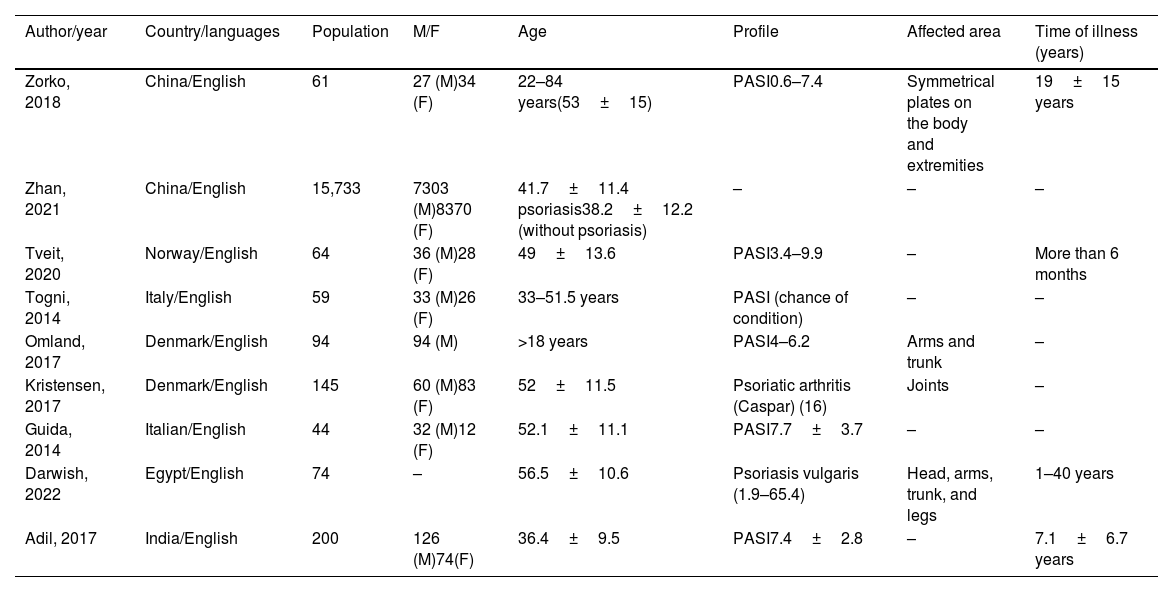
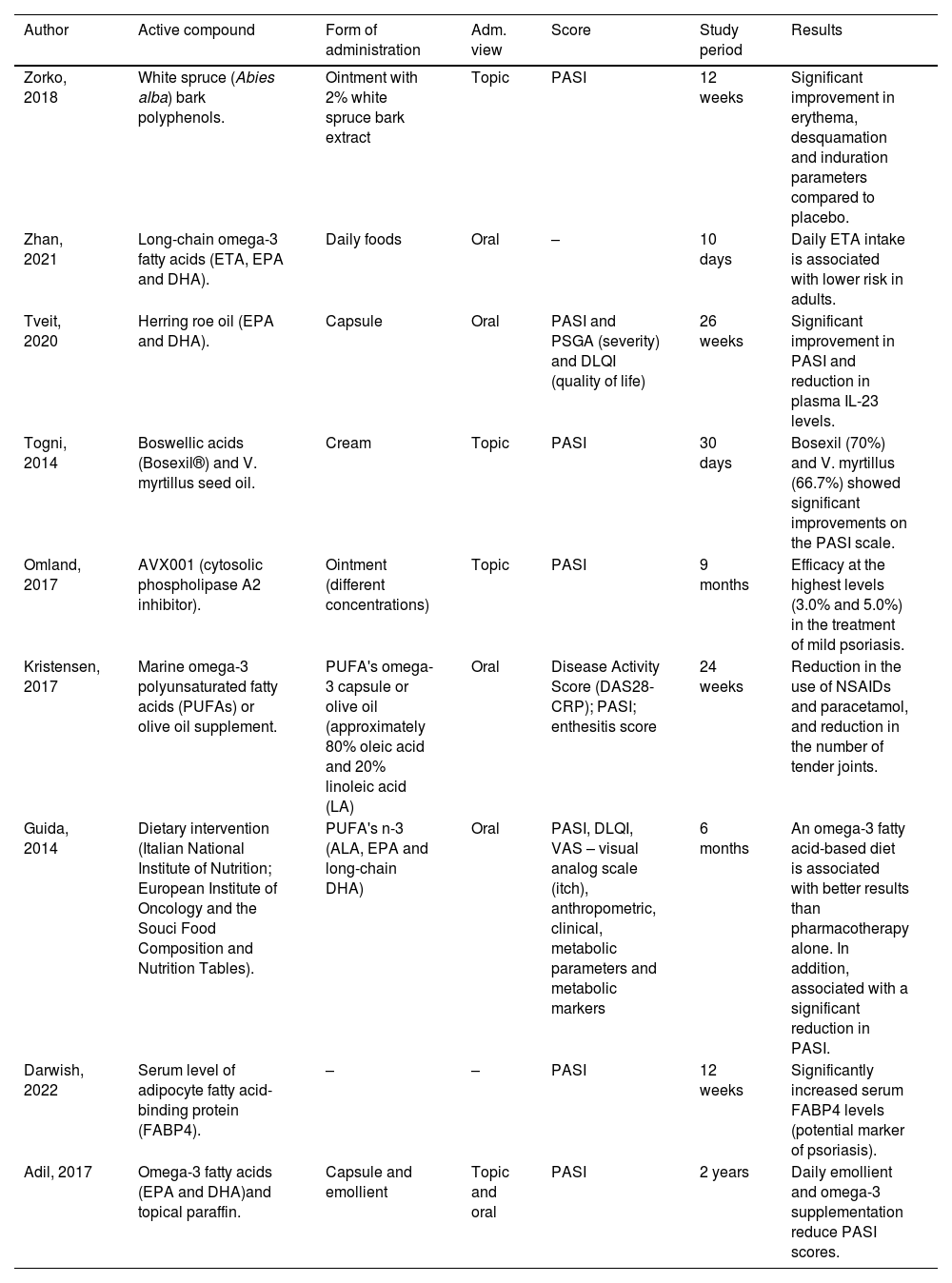
Results and discussionA total of 8570 articles were identified from the initial database search. After excluding duplicate or irrelevant articles based on titles and abstracts, 58 potentially relevant articles were retrieved for full-text evaluation. Of these, nine met the inclusion criteria and were included in this systematic review, as shown in Fig. 1 (PRISMA flowchart). Table 1 indicates that the study population ranged from 61 to 15,733 individuals. The studies did not follow a standard distribution for age and sex, except that all included patients were over 18 years of age. Most authors used the Psoriasis Area and Severity Index (PASI) to select groups for intervention, rather than information about the affected area and onset of the clinical case. As shown in Table 2, the authors primarily used omega-3 fatty acids from sources like olive oils and diet. Three main forms of administration predominated: extract, cream, and capsule, administered topically, orally, or both. In addition to the PASI scale, some authors used quality of life, visual analog, and psoriatic arthritis scales. The intervention period varied from weeks to years. Overall, the main outcomes showed a significant improvement in PASI scale parameters before and after treatment with omega-3.

Population's characteristics about age, profile, affected area and time of illness.
| Author/year | Country/languages | Population | M/F | Age | Profile | Affected area | Time of illness (years) |
|---|---|---|---|---|---|---|---|
| Zorko, 2018 | China/English | 61 | 27 (M)34 (F) | 22–84 years(53±15) | PASI0.6–7.4 | Symmetrical plates on the body and extremities | 19±15 years |
| Zhan, 2021 | China/English | 15,733 | 7303 (M)8370 (F) | 41.7±11.4 psoriasis38.2±12.2 (without psoriasis) | – | – | – |
| Tveit, 2020 | Norway/English | 64 | 36 (M)28 (F) | 49±13.6 | PASI3.4–9.9 | – | More than 6 months |
| Togni, 2014 | Italy/English | 59 | 33 (M)26 (F) | 33–51.5 years | PASI (chance of condition) | – | – |
| Omland, 2017 | Denmark/English | 94 | 94 (M) | >18 years | PASI4–6.2 | Arms and trunk | – |
| Kristensen, 2017 | Denmark/English | 145 | 60 (M)83 (F) | 52±11.5 | Psoriatic arthritis (Caspar) (16) | Joints | – |
| Guida, 2014 | Italian/English | 44 | 32 (M)12 (F) | 52.1±11.1 | PASI7.7±3.7 | – | – |
| Darwish, 2022 | Egypt/English | 74 | – | 56.5±10.6 | Psoriasis vulgaris (1.9–65.4) | Head, arms, trunk, and legs | 1–40 years |
| Adil, 2017 | India/English | 200 | 126 (M)74(F) | 36.4±9.5 | PASI7.4±2.8 | – | 7.1±6.7 years |
M: male; F: female; PASI: Psoriasis Area and Severity Index.
Characteristics and results of interventions.
| Author | Active compound | Form of administration | Adm. view | Score | Study period | Results |
|---|---|---|---|---|---|---|
| Zorko, 2018 | White spruce (Abies alba) bark polyphenols. | Ointment with 2% white spruce bark extract | Topic | PASI | 12 weeks | Significant improvement in erythema, desquamation and induration parameters compared to placebo. |
| Zhan, 2021 | Long-chain omega-3 fatty acids (ETA, EPA and DHA). | Daily foods | Oral | – | 10 days | Daily ETA intake is associated with lower risk in adults. |
| Tveit, 2020 | Herring roe oil (EPA and DHA). | Capsule | Oral | PASI and PSGA (severity) and DLQI (quality of life) | 26 weeks | Significant improvement in PASI and reduction in plasma IL-23 levels. |
| Togni, 2014 | Boswellic acids (Bosexil®) and V. myrtillus seed oil. | Cream | Topic | PASI | 30 days | Bosexil (70%) and V. myrtillus (66.7%) showed significant improvements on the PASI scale. |
| Omland, 2017 | AVX001 (cytosolic phospholipase A2 inhibitor). | Ointment (different concentrations) | Topic | PASI | 9 months | Efficacy at the highest levels (3.0% and 5.0%) in the treatment of mild psoriasis. |
| Kristensen, 2017 | Marine omega-3 polyunsaturated fatty acids (PUFAs) or olive oil supplement. | PUFA's omega-3 capsule or olive oil (approximately 80% oleic acid and 20% linoleic acid (LA) | Oral | Disease Activity Score (DAS28-CRP); PASI; enthesitis score | 24 weeks | Reduction in the use of NSAIDs and paracetamol, and reduction in the number of tender joints. |
| Guida, 2014 | Dietary intervention (Italian National Institute of Nutrition; European Institute of Oncology and the Souci Food Composition and Nutrition Tables). | PUFA's n-3 (ALA, EPA and long-chain DHA) | Oral | PASI, DLQI, VAS – visual analog scale (itch), anthropometric, clinical, metabolic parameters and metabolic markers | 6 months | An omega-3 fatty acid-based diet is associated with better results than pharmacotherapy alone. In addition, associated with a significant reduction in PASI. |
| Darwish, 2022 | Serum level of adipocyte fatty acid-binding protein (FABP4). | – | – | PASI | 12 weeks | Significantly increased serum FABP4 levels (potential marker of psoriasis). |
| Adil, 2017 | Omega-3 fatty acids (EPA and DHA)and topical paraffin. | Capsule and emollient | Topic and oral | PASI | 2 years | Daily emollient and omega-3 supplementation reduce PASI scores. |
Adm.: administration; ALA: linolenic acid; DHA: docosahexaenoic acid; DLQI: Dermatology Life Quality Index; EPA: eicosapentaenoic acid; ETA: eicosatetraenoic acid; FABP4: Fatty Acid-Binding Protein 4; NSAIDS: non-steroidal anti-inflammatory drugs; PASI: Psoriasis Area and Severity Index; PSGA: physician static global assessment; PUFAS: polyunsaturated fatty acids; VAS: visual analog scale.
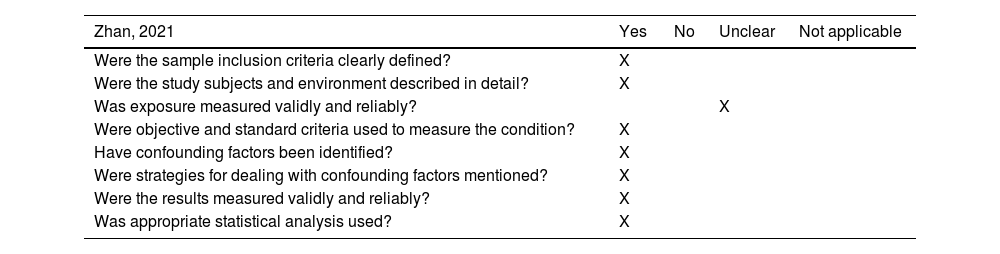
Among all six randomized studies included, only one14 presented a high risk of bias due to multiple eligible outcome measures. Fig. 2 illustrates the main bias assessment items. Table 3 represents the critical evaluation of the only analytical cross-sectional study. In this assessment of the risk of bias, the study15 was classified as “unclear” concerning the measurement of exposure, whether it was valid or reliable. Table 4 covers cohort and case–control studies, with one author16 achieving a score of 6.

JBI critical appraisal checklist for analytical cross-sectional studies.
| Zhan, 2021 | Yes | No | Unclear | Not applicable |
|---|---|---|---|---|
| Were the sample inclusion criteria clearly defined? | X | |||
| Were the study subjects and environment described in detail? | X | |||
| Was exposure measured validly and reliably? | X | |||
| Were objective and standard criteria used to measure the condition? | X | |||
| Have confounding factors been identified? | X | |||
| Were strategies for dealing with confounding factors mentioned? | X | |||
| Were the results measured validly and reliably? | X | |||
| Was appropriate statistical analysis used? | X |
The studies included in this review explored the use of fatty acids through various methods, such as topical application in ointments containing specific substances, and oral consumption through food sources or capsules containing herring and olive oils. Some studies combined both approaches. Most studies reported significant improvements in psoriasis severity parameters, including reduced medication use and relief of joint pain. The systematic review involved patients with psoriasis of varying profiles. One study had a sample consisted of 61 patients (27 men and 34 women), with an average age of 53 years.17 Another study included 15,733 patients (7303 men and 8370 women), with a mean age of 41.72 years.15 Other studies had smaller samples, ranging from 44 to 200 participants, with different proportions of men and women and varying average ages. One study, although not providing data on sex, reported an average age of 56.59 years.18 These findings highlight the heterogeneity of patient profiles with psoriasis regarding age, sex, and sample size, which is relevant for understanding the representativeness of the studies and the applicability of the results to different population groups.
These findings are consistent with the literature, which shows that psoriasis is a chronic inflammatory skin disease that can affect people of different age groups, sexes, and special conditions. Recent studies have revealed that age plays an important role, with a greater prevalence in young adults (20–40 years old) and older individuals (over 50 years old).19 Early-onset psoriasis may be associated with more severe forms of the disease.19 Psoriasis is more common in women, at a ratio of 1.2:1 to 1.4:1, and it has a greater severity and impact on quality of life compared to men.20 Hormonal, genetic, and immunological factors can contribute to this difference. Furthermore, special conditions such as psoriatic arthritis and comorbidities like obesity and cardiovascular diseases, are often associated with psoriasis, influencing its severity and response to treatment.21 These findings provide crucial information for understanding the complex nature of psoriasis and identifying more effective therapeutic approaches.
Regarding the intervention of the included studies, three studies17,22,23 opted for topical administration. Two of these studies17,22 used ointments: one utilized a 2% ointment based on a phenolic extract from the bark of white spruce (Abies alba),17 while the other22 employed an ointment based on a phospholipase A2 inhibitor drug. The third study used a cream based on boswellic acid (Bosexil®) and V. myrtillus seed oils for administration. Additionally, four studies14,15,24,25 adopted an oral administration strategy. Two of these studies14,15 used interventions based on food sources rich in omega-3 polyunsaturated fatty acids, such as eicosapentaenoic acid (EPA), docosahexaenoic acid (DHA), and alpha-linolenic acid (ALA). Among the other two studies, one (25) administered capsules containing herring oils rich in omega-3 (EPA and DHA), while the other (24) used capsules rich in omega-3 or olive oils.
Additionally, only one of the nine studies16 administered their intervention topically and orally. The other study16 used a capsule composed of omega-3 (EPA and DHA) and an emollient, such as paraffin.
The studies included in this systematic review showed wide variation in treatment durations with fatty acid therapy, ranging from 10 days to 2 years.15,16 Most studies used a short to medium duration of treatment, from 30 days to 6 months, with an average duration of 12 weeks. However, two studies involved longer treatment times, lasting 9 months and 2 years.16,22 These results suggest that fatty acid therapy may be effective across different treatment durations, with positive results reported in both shorter and long-term treatments.
Assessing the severity of psoriasis and its impact on patients’ quality of life is fundamental in the management of this dermatological condition. Several scales have been developed and used in clinical practice and research for this purpose. The Psoriasis Area and Severity Index (PASI) is widely used to assess the extent and severity of skin lesions.26 The Dermatology Life Quality Index (DLQI) measures the impact of psoriasis on patients’ quality of life.27 In inflammatory skin diseases, other specific scales are also used, such as the Disease Activity Score 28 (DAS28-CRP) to assess the severity of rheumatoid arthritis, and the visual analog scale (VAS) to classify the severity of itching.28 These scales play a crucial role in clinical assessment, providing both objective and subjective measures to monitor the effectiveness of treatments and their impact on patients’ quality of life.29
Regarding the scores used in the included articles, approximately five studies16–18,22,23 applied only the PASI score to assess the severity of the areas affected. Among the remaining four studies, one study25 used the DLQI in addition to the PASI score; another study24 used the DAS28-CRP (Disease Activity Score 28 for rheumatoid arthritis with CRP) and the enthesitis score to evaluate joint pain and inflammation; and the fourth study14 used both the DLQI and the VAS, with the latter classifying pruritus.
While five included studies16,17,22,23,25 showed significant improvement in severity parameters/symptoms according to the PASI scale, another study15 evaluated the risk of developing psoriasis from a diet rich in omega-3 fatty acids. One study24 concluded that the consumption of omega-3 resulted in reduced need for NSAIDs and paracetamol, as well as providing benefits to joint pain. Another study14 found that omega-3 fatty acids were associated with improvements in symptoms compared to those achieved with monotherapy, and improvements in PASI parameters. Notably, one study18 concluded that significantly elevated serum levels of Fatty Acid-Binding Protein 4 (FABP4), an adipocyte fatty acid-binding protein, may represent a potential marker of psoriasis. Therefore, studies show promise in the use of fatty acids for treating psoriasis, improving symptoms and quality of life. Further research with larger and more diverse samples is needed to confirm these results and explore their therapeutic potential. Considering patient heterogeneity and using appropriate scales is crucial. These findings will advance knowledge and enable more effective and personalized therapeutic strategies for psoriasis.
ConclusionThis systematic review made significant contributions to the understanding of psoriasis, revealing various therapeutic approaches using fatty acids and their respective clinical impacts. The positive results demonstrated significant improvements in disease severity and patient quality of life, as well as a reduction in the need for additional medications and relief of associated symptoms such as pain and inflammation. These findings are highly relevant to the scientific community, providing evidence on the role of fatty acids in modulating skin inflammation and suggesting new therapeutic options for patients with psoriasis. Healthcare professionals can benefit from this information when considering the inclusion of fatty acids in therapeutic strategies, taking into account the patient's clinical picture and individual needs. However, it is important to highlight some limitations, such as the limited number of studies included and the heterogeneity of the samples analyzed. Therefore, it is suggested that the scientific community conduct more comprehensive studies, with larger samples and rigorous evaluation of results, aiming to strengthen the available evidence and improve understanding of the role of fatty acids in psoriasis. Furthermore, additional research is necessary to investigate possible adverse effects and drug interactions related to the use of fatty acids as complementary therapy to enhance safety.
CRediT authorship contribution statementOS and ML collected, tabulated and analyzed the data, and participated in writing. KC and MS analyzed the data, coordinated and guided the production of the study. AA and LM participated in the writing, formatting and submission process. All authors read and approved the final manuscript.
Ethics approval and consent to participateNot applicable.
Consent for publicationNot applicable.
FundingNo funding was received.
Declaration of competing interestThe authors declare that they have no competing interests.
The authors extend their heartfelt gratitude to the University of the State of Pará and the University of Brasilia for their unwavering support and encouragement in fostering scientific production. The authors thank the DPI/BCE/UnB for the financial support, in accordance with public call No. 001/2025 DPI/BCE/UnB.
#1 MH:(Psoríase) OR Psoriasis OR (Psoríase Pustular de Palmas e Plantas dos Pés) OR (Pustulose Palmoplantar) OR (Pustulose de Palmas e Plantas dos Pés) OR MH:C17.800.859.675
#2 MH:(Óleo de Plantas) OR (Plant Oils) OR (Aceites de Plantas) OR (Huiles Végétales) OR (Azeite Vegetal) OR (Azeite de Planta) OR (Óleo vegetal) OR (Óleo de Planta) OR (Óleos Vegetais) OR MH:D10.627.700 OR MH:D20.215.784.750 OR MH:SP4.606.837.372 OR MH:VS2.001.001.002.026
#3 MH:(Ácidos Graxos) OR (Fatty Acids) OR (Ácidos Grasos) OR (Acides gras) OR (Ácido Alifático) OR (Ácido Graxo) OR (Ácido Graxo Esterificado) OR (Ácido Graxo Saturado) OR (Ácidos Graxos Esterificados) OR (Ácidos Graxos Saturados) OR MH:D10.251 OR MH:SP4.606.635.419.124.033
(MH:(Psoríase) OR Psoriasis OR (Psoríase Pustular de Palmas e Plantas dos Pés) OR (Pustulose Palmoplantar) OR (Pustulose de Palmas e Plantas dos Pés) OR MH:C17.800.859.675) AND (MH:(Ácidos Graxos) OR (Fatty Acids) OR (Ácidos Grasos) OR (Acides gras) OR (Ácido Alifático) OR (Ácido Graxo) OR (Ácido Graxo Esterificado) OR (Ácido Graxo Saturado) OR (Ácidos Graxos Esterificados) OR (Ácidos Graxos Saturados) OR MH:D10.251 OR MH:SP4.606.635.419.124.033)
P = “Psoriasis”[Mesh] OR “Psoriases” OR “Pustulosis of Palms and Soles” OR “Pustulosis Palmaris et Plantaris” OR “Palmoplantaris Pustulosis” OR “Pustular Psoriasis of Palms and Soles”
I = “Plant Oils”[Mesh] OR “Oils, Plant” OR “Plant Oil” OR “Oil, Plant” OR “Oils, Vegetable” OR “Vegetable Oils” OR “Vegetable Oil” OR “Oil, Vegetable”
C = “Fatty Acids”[Mesh] OR “Fatty Acid” OR “Fatty Acids, Esterified” OR “Esterified Fatty Acids” OR “Esterified Fatty Acid” OR “Acid, Esterified Fatty” OR “Fatty Acid, Esterified” OR “Fatty Acids, Saturated” OR “Saturated Fatty Acids” OR “Saturated Fatty Acid” OR “Acid, Saturated Fatty” OR “Fatty Acid, Saturated” OR “Aliphatic Acids” OR “Aliphatic Acid” OR “Acid, Aliphatic”
P = “Psoriasis” OR “Psoriases” OR “Pustulosis of Palms and Soles” OR “Pustulosis Palmaris et Plantaris” OR “Palmoplantaris Pustulosis” OR “Pustular Psoriasis of Palms and Soles”
I = “Plant Oils” OR “Oils, Plant” OR “Plant Oil” OR “Oil, Plant” OR “Oils, Vegetable” OR “Vegetable Oils” OR “Vegetable Oil” OR “Oil, Vegetable”
C = “Fatty Acids” OR “Fatty Acid” OR “Fatty Acids, Esterified” OR “Esterified Fatty Acids” OR “Esterified Fatty Acid” OR “Acid, Esterified Fatty” OR “Fatty Acid, Esterified” OR “Fatty Acids, Saturated” OR “Saturated Fatty Acids” OR “Saturated Fatty Acid” OR “Acid, Saturated Fatty” OR “Fatty Acid, Saturated” OR “Aliphatic Acids” OR “Aliphatic Acid” OR “Acid, Aliphatic”
((ALL=(“Psoriasis” OR “psoriasis” OR “Pustulosis of Palms and Soles” OR “Pustulosis Palmaris et Plantaris” OR “Palmoplantaris Pustulosis” OR “Pustular Psoriasis of Palms and Soles”)) AND ALL=(“Fatty Acids” OR “Fatty Acid” OR “Fatty Acids, Esterified” OR “Esterified Fatty Acids” OR “Esterified Fatty Acid” OR “Acid, Esterified Fatty” OR “Fatty Acid, Esterified” OR “Fatty Acids, Saturated” OR “Saturated Fatty Acids” OR “Saturated Fatty Acid” OR “Acid, Saturated Fatty” OR “Fatty Acid, Saturated” OR “Aliphatic Acids” OR “Aliphatic Acid” OR “Acid, Aliphatic”)) AND ALL=(“Fatty Acids” OR “Fatty Acid” OR “Fatty Acids, Esterified” OR “Esterified Fatty Acids” OR “Esterified Fatty Acid” OR “Acid, Esterified Fatty” OR “Fatty Acid, Esterified” OR “Fatty Acids, Saturated” OR “Saturated Fatty Acids” OR “Saturated Fatty Acid” OR “Acid, Saturated Fatty” OR “Fatty Acid, Saturated” OR “Aliphatic Acids” OR “Aliphatic Acid” OR “Acid, Aliphatic”)
‘Psoriasis’/exp OR ‘psoriasiform dermatitis’ OR ‘psoriasiform dermatosis’ OR ‘psoriasiform lesion’ OR ‘psoriasiform rash’ OR ‘psoriasiform skin rash’ OR ‘psoriatic epidermis’ OR ‘psoriatic skin’ OR ‘skin rash, psoriasiform’ OR ‘willan lepra’ OR ‘psoriasis’ AND ‘fatty acid’/exp OR ‘fatty acid, free’ OR ‘fatty acids’ OR ‘fatty acids, nonesterified’ OR ‘FFA’ OR ‘free fatty acid’ OR ‘nefa’ OR ‘non esterified fatty acid’ OR ‘nonesterified fatty acid’ OR ‘nonesterized fatty acid’ OR ‘phosphatide fatty acid’ OR ‘phospholipid fatty acid’ OR ‘triglyceride fatty acid’ OR ‘unesterified fatty acid’ OR ‘fatty acid’
“Psoriasis” OR “Psoriases” OR “Pustulosis of Palms and Soles” OR “Pustulosis Palmaris et Plantaris” OR “Palmoplantaris Pustulosis” OR “Pustular Psoriasis of Palms and Soles” AND “Fatty Acids” OR “Fatty Acid” OR “Fatty Acids, Esterified” OR “Esterified Fatty Acids” OR “Esterified Fatty Acid” OR “Acid, Esterified Fatty” OR “Fatty Acid, Esterified” OR “Fatty Acids, Saturated” OR “Saturated Fatty Acids” OR “Saturated Fatty Acid” OR “Acid, Saturated Fatty” OR “Fatty Acid, Saturated” OR “Aliphatic Acids” OR “Aliphatic Acid” OR “Acid, Aliphatic”


