


Analyze spatiotemporal trends in mental disorder diagnoses in Mexico between 2019 and 2023.
DesignAn ecological study was conducted based on records of mental disorder diagnoses in the population aged ≥21 years with social security coverage.
SiteMexico, based on data from the National Open Data Platform on primary care units of the Mexican Social Security Institute (IMSS).
ParticipantsA total of 12,561,531 records obtained from diagnoses of mental disorders in the population aged ≥21 years with social security coverage during the period 2019–2023.
InterventionsRates were estimated, adjusted for sex and age. Spatio-temporal trends were evaluated using Moran's I index.
Main measuresClassification of mental disorder, sex, age, entity, year.
ResultsAt the national level, the mental disorder rate rose from 2419 per 100,000 population in 2019 to 7192 in 2023. Anxiety and obsessive–compulsive disorders, substance use disorders, and depressive episodes were the main diagnosis in both sexes. The data show a growing trend in mental disorders of various etiologies, in addition to depression and anxiety, which are treated by healthcare services. These disorders exhibited regional and gender-based variations during the study period.
ConclusionsIt is recommended to expand health service coverage to strengthen the detection and diagnosis of mental disorder, reinforce primary care in regions at greatest risk, and incorporate prevention strategies for disorders that may increase in magnitude (dementias, Alzheimer's disease, schizophrenia, and delusional disorders).
Analizar las tendencias espaciotemporales de los diagnósticos de trastornos mentales en México durante el período 2019-2023.
DiseñoSe realizó un estudio ecológico basado en los registros de diagnósticos de trastornos mentales en la población con seguro social de ≥21 años.
EmplazamientoMexico, a partir de datos de la Plataforma Nacional de Datos Abiertos sobre unidades médicas de primer nivel del Instituto Mexicano del Seguro Social (IMSS).
ParticipantesUn total de 12,561,531 registros obtenidos de los diagnósticos de trastornos mentales en la población ≥21 años con seguridad social durante el período 2019-2023.
IntervencionesSe estimaron las tasas, ajustadas por sexo y edad. Las tendencias espaciotemporales se evaluaron utilizando Moran I.
Mediciones principalesClasificación del desorden mental, sexo, edad, entidad, año.
ResultadosA nivel nacional, la tasa de trastornos mentales aumentó de 2419 por cada 100 000 habitantes en 2019 a 7192 en 2023. Los trastornos de ansiedad y obsesivo-compulsivos; abuso de sustancias y episodios depresivos fueron los principales diagnósticos en ambos sexos. Los datos muestran una tendencia al alza en los trastornos mentales de diversas etiologías, además de la depresión y la ansiedad, que son tratados por los servicios sanitarios. Estos trastornos mostraron variaciones regionales y de género durante el periodo de estudio.
ConclusionesSe recomienda ampliar la cobertura de servicios de salud para fortalecer la detección y diagnóstico de trastornos mentales, reforzar la atención primaria en las regiones de mayor riesgo, además de incorporar estrategias de prevención para trastornos que podrían incrementar su magnitud (dementias; Alzheimer's disease; schizophrenia and delusional disorders).
Mental health is an essential and integral component of people's health. However, in most countries, health systems often lack sufficient resources to adequately address mental health needs,1 resulting in delayed diagnosis and limited access to care. Consequently, a substantial proportion of individual experience mental disorders without timely identification or treatment, despite mental health being recognized as a fundamental human right.1 Mental disorders are defined clinically significant disturbances in cognition, emotional regulation or behavior, reflecting dysfunctions in the psychological, biological or developmental processes underlying mental functioning.2,3 These conditions are often associated with significant distress or impairment in various areas of daily life.2,4 Generating descriptive epidemiological evidence on mental, behavioral and neurodevelopmental disorders in Mexico is therefore essential to inform evidence-based public policies and strengthen equitable access to care.
Globally, an estimated 970 million people worldwide were living with a mental disorder in 2019, with anxiety and depression being the most prevalent conditions.1,2,5–7 In the Region of the Americas, mental, neurological, substance use disorders, along with suicide, account for nearly one third of the years of life lost (YLL).2,5 This burden contrasts with relatively low level of investment, as average expenditure on mental health represents only 2.8% of the total health budget, with marked inequalities between countries.5 In Latin America and the Caribbean, the growing impact of noncommunicable diseases has been documented in the context of the epidemiological and demographic transition, including accelerated population aging.8 Mental disorders often have an early onset and chronic course and contribute substantially to disability, particularly among adults in middle and older age groups.9,10
In Mexico, mental disorders represent a significant and growing public health concern. Between 2019 and 2021, a 15.4% increase in DALYs attributable to mental disorders was reported, mainly driven by depressive and anxiety.11 Consistently, national report based on data from primary care units and hospitals have identified anxiety (51.5%) and depression (25.9%) as the most frequently diagnosed conditions.12 Despite existing evidence on the prevalence of mental disorders in Mexico.11,13–15 Few studies have examined their national trends, particularly in the post-pandemic context.1,4,6,16 In this context, the aim of this study was to analyze the spatiotemporal trends of mental disorders reported by a health institution in Mexico during the period 2019–2023.
MethodsStudy design, population and data sourceAn ecological study was conducted based on the records of mental disorders of population with social insurance ≥21 years of age of the Mexican Institute of Social Security (IMSS). The data was obtained for all 32 states in Mexico between January 2019 and December 2023 from records concentrated in information systems of medical units that are part of the National Open Data Platform, which can be consulted at the following link: https://datos.gob.mx/dataset/deteccion_padecimientos_delegacion. Population data for each of the 32 states were analyzed in aggregate by entity. Therefore, based on the epidemiological design, it cannot be assumed that group trends apply to individuals. This requires caution when interpreting the results to avoid ecological fallacy.
Screening and diagnosis of mental disordersAt IMSS, the process of diagnosing mental health conditions is carried out in stages at the primary care level. It consists of three phases: detection, clinical evaluation and final registration. The process begins with the timely detection of symptoms through a clinical interview and an assessment of overall functioning using the Global Assessment of Functioning (GAF) scale. A comprehensive clinical assessment is then carried out in accordance with the International Classification of Diseases (ICD-10), evaluating the severity of the condition, and particularly the risk of suicide. The diagnosis is then documented and the appropriate course of care defined: management and follow-up at the primary care level for mild and moderate cases, or immediate referral to emergency services and secondary or tertiary psychiatric care for severe dysfunction or psychiatric emergency.17,18 Finally, the results are integrated into a nominal information system that collates the diagnoses recorded in each primary care unit, enabling analysis at state level.
The analysis is based on the frequency of diagnoses recorded by state, sex, and year. It is therefore not possible to identify individuals uniquely or control repeated diagnoses within the same person during the period studied (2019–2023).
Statistical and geospatial analysisAbsolute and relative frequencies of mental disorders diagnoses were estimated according to sex, year and state. Data analysis was performed using Stata Statistical Software Release (STATA Corporation, Texas, United States) Stata 15.19 The trend of mental disorders diagnoses per 100,000 population ≥21 years of age during the study period was analyzed to evaluate annual variations from rates adjusted by sex, year and state. The analysis of mental disorders was heterogeneous because the ICD-10 classifies mental disorders with a hybrid clinical-dimensional approach. Choropleth maps were elaborated in QGIS (Creative Commons Corporation, California, United States) software version 3.22.3.20
The local Moran I statistic, also known as local spatial cluster analysis,21 was used to assess the magnitude, location, and spatial variations in the rates of mental disorders diagnosis. Due to the nature of the data (irregular polygons), a spatial weighting matrix based on the queen contiguity criterion was used to ensure at least one neighboring polygon (federal entity).
These rates, at state level, were classified into High–High or Low–Low categories, which indicated similar values in territorially close locations (positive autocorrelation), or High–Low and Low–High, which indicated states with different values in neighboring locations (negative autocorrelation). These categories made it possible to determine whether the spatial distribution of the high or low values followed a concentrated, dispersed or random pattern (p<0.05) compared to the average rate for each year,21,22 to identify whether the states with the highest values were located territorially close to each other and their behavior remained the same, or whether there were changes in the location of the patterns.
The results were presented in spatial cluster maps,21,22 which made it possible to identify the states that integrated the spatial patterns, and which could suggest areas with a higher risk of mental disorders, based on the trends observed. Spatial cluster analysis was performed using Geoda software,23 while the final editing of the results using maps was performed using QGIS software (Creative Commons Corporation, California, United States) software version 3.22.3.20
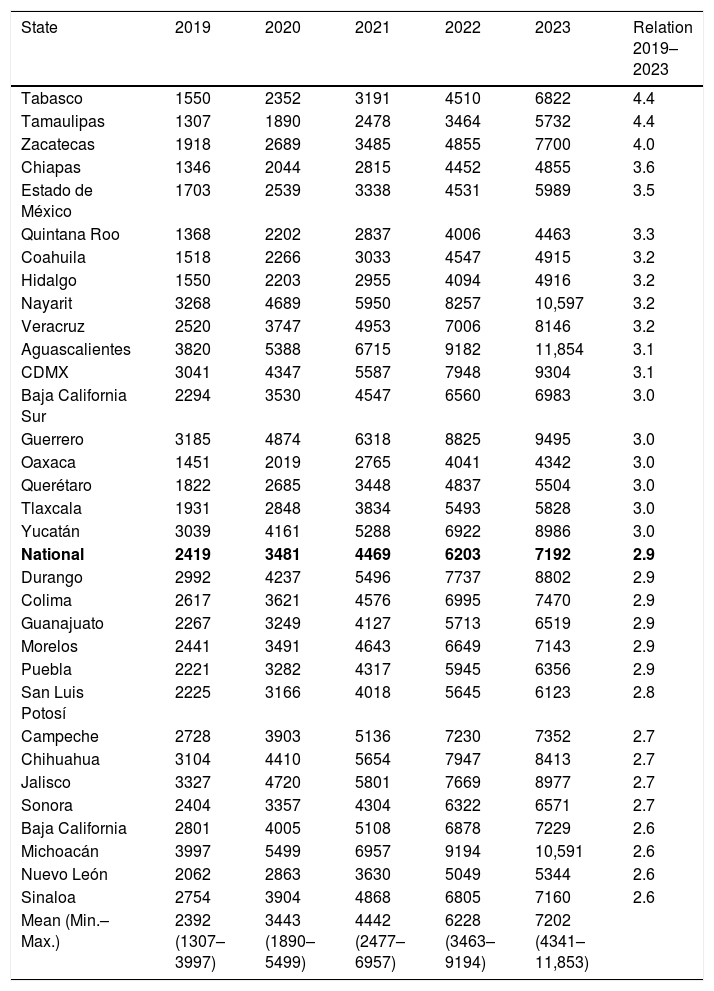
ResultsBetween 2019 and 2023, a total of 12,561,531 diagnoses of mental disorders were registered among individuals aged ≥21 years with IMSS social insurance in Mexico (median: 2,286,328; interquartile range: 1,763,185–3,306,919). At the national level, the diagnosis rate rose from 2419 per 100,000 population in 2019 to 7192 in 2023 (Table 1). All states registered higher rates in 2023 than in 2019, with differences in magnitude. The largest relative increases were observed in Tabasco and Tamaulipas (4.4-fold), followed by Zacatecas (4.0-fold) and Chiapas (3.6-fold). In 2023, the highest rates were recorded in Aguascalientes (11,854 per 100,000), Nayarit (10,597), Michoacán (10,591), and Mexico City (9304).
Rate ratios of mental disorder diagnoses per 100,000 population ≥21 years of age with IMSS social insurance, Mexico; 2019–2023.
| State | 2019 | 2020 | 2021 | 2022 | 2023 | Relation 2019–2023 |
|---|---|---|---|---|---|---|
| Tabasco | 1550 | 2352 | 3191 | 4510 | 6822 | 4.4 |
| Tamaulipas | 1307 | 1890 | 2478 | 3464 | 5732 | 4.4 |
| Zacatecas | 1918 | 2689 | 3485 | 4855 | 7700 | 4.0 |
| Chiapas | 1346 | 2044 | 2815 | 4452 | 4855 | 3.6 |
| Estado de México | 1703 | 2539 | 3338 | 4531 | 5989 | 3.5 |
| Quintana Roo | 1368 | 2202 | 2837 | 4006 | 4463 | 3.3 |
| Coahuila | 1518 | 2266 | 3033 | 4547 | 4915 | 3.2 |
| Hidalgo | 1550 | 2203 | 2955 | 4094 | 4916 | 3.2 |
| Nayarit | 3268 | 4689 | 5950 | 8257 | 10,597 | 3.2 |
| Veracruz | 2520 | 3747 | 4953 | 7006 | 8146 | 3.2 |
| Aguascalientes | 3820 | 5388 | 6715 | 9182 | 11,854 | 3.1 |
| CDMX | 3041 | 4347 | 5587 | 7948 | 9304 | 3.1 |
| Baja California Sur | 2294 | 3530 | 4547 | 6560 | 6983 | 3.0 |
| Guerrero | 3185 | 4874 | 6318 | 8825 | 9495 | 3.0 |
| Oaxaca | 1451 | 2019 | 2765 | 4041 | 4342 | 3.0 |
| Querétaro | 1822 | 2685 | 3448 | 4837 | 5504 | 3.0 |
| Tlaxcala | 1931 | 2848 | 3834 | 5493 | 5828 | 3.0 |
| Yucatán | 3039 | 4161 | 5288 | 6922 | 8986 | 3.0 |
| National | 2419 | 3481 | 4469 | 6203 | 7192 | 2.9 |
| Durango | 2992 | 4237 | 5496 | 7737 | 8802 | 2.9 |
| Colima | 2617 | 3621 | 4576 | 6995 | 7470 | 2.9 |
| Guanajuato | 2267 | 3249 | 4127 | 5713 | 6519 | 2.9 |
| Morelos | 2441 | 3491 | 4643 | 6649 | 7143 | 2.9 |
| Puebla | 2221 | 3282 | 4317 | 5945 | 6356 | 2.9 |
| San Luis Potosí | 2225 | 3166 | 4018 | 5645 | 6123 | 2.8 |
| Campeche | 2728 | 3903 | 5136 | 7230 | 7352 | 2.7 |
| Chihuahua | 3104 | 4410 | 5654 | 7947 | 8413 | 2.7 |
| Jalisco | 3327 | 4720 | 5801 | 7669 | 8977 | 2.7 |
| Sonora | 2404 | 3357 | 4304 | 6322 | 6571 | 2.7 |
| Baja California | 2801 | 4005 | 5108 | 6878 | 7229 | 2.6 |
| Michoacán | 3997 | 5499 | 6957 | 9194 | 10,591 | 2.6 |
| Nuevo León | 2062 | 2863 | 3630 | 5049 | 5344 | 2.6 |
| Sinaloa | 2754 | 3904 | 4868 | 6805 | 7160 | 2.6 |
| Mean (Min.–Max.) | 2392 (1307–3997) | 3443 (1890–5499) | 4442 (2477–6957) | 6228 (3463–9194) | 7202 (4341–11,853) |
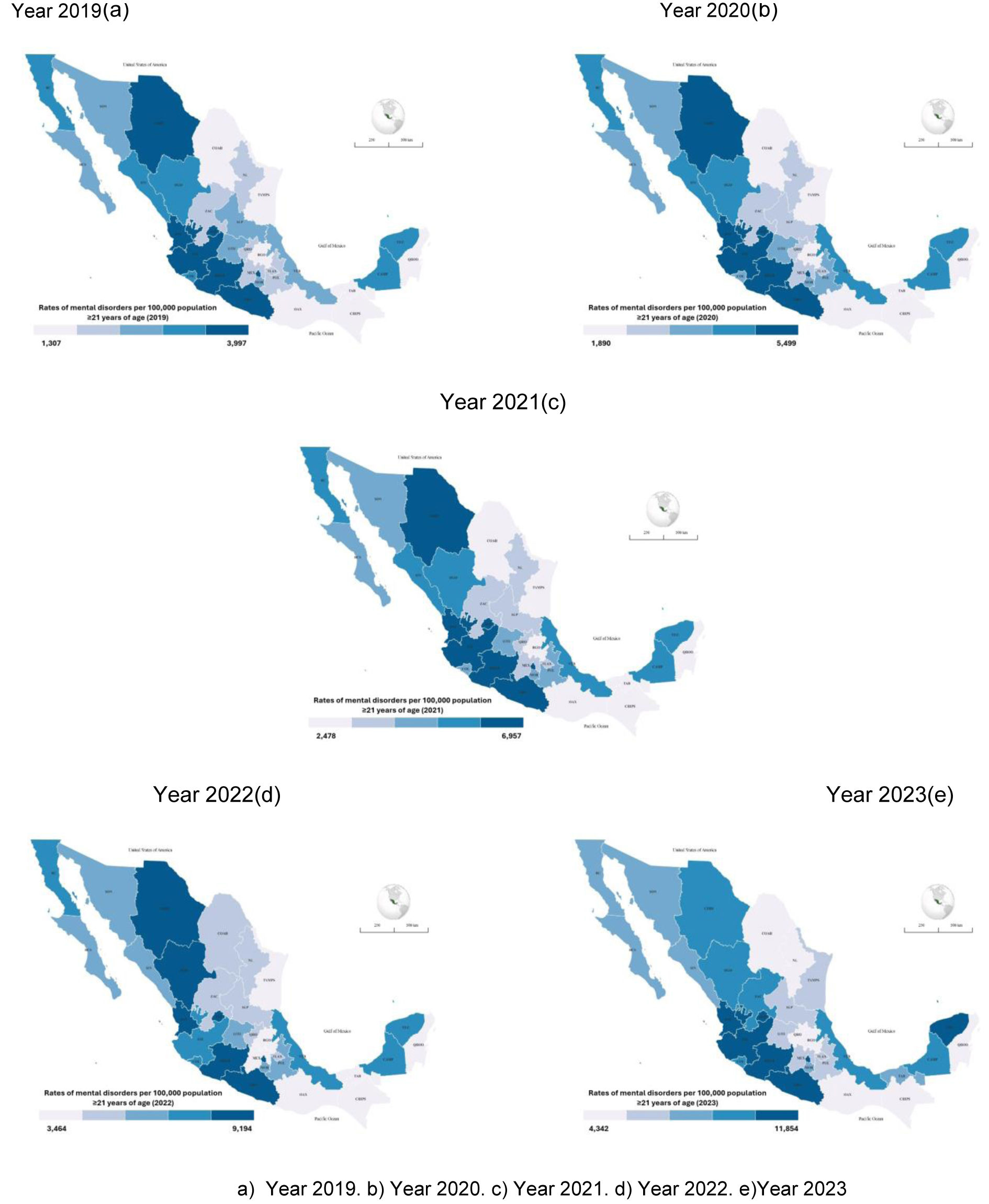
Fig. 1 shows diagnosis rates by state, ranging from 3997 to 11,854 per 100,000 population aged ≥21 years with social insurance. States in the northern, western, and southern regions were classified in the highest quintile throughout the study period. In 2023, Yucatán was also classified in this quintile.

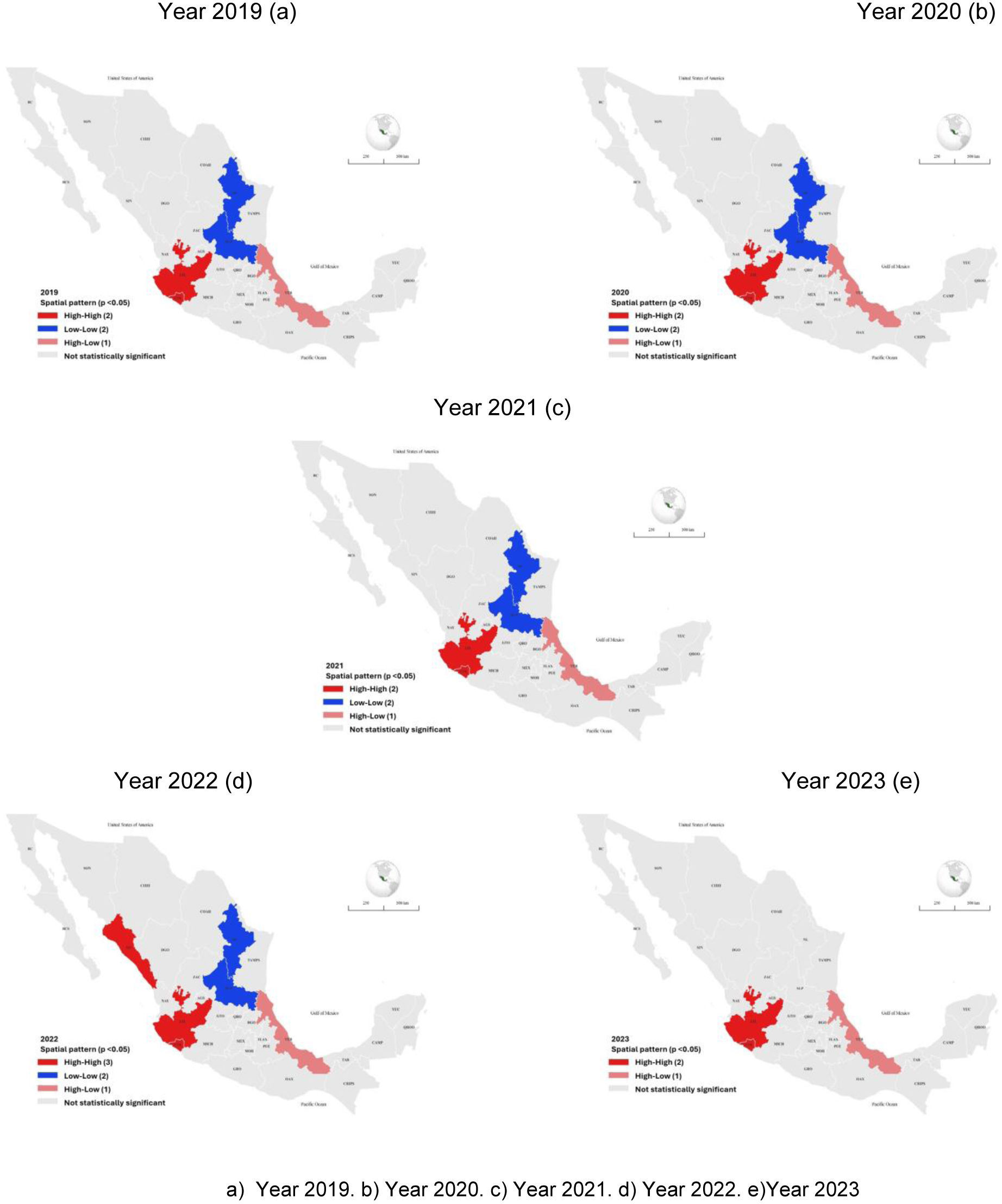
Fig. 2 presents the spatial cluster analysis. Jalisco and Colima in the western region, and Veracruz in the eastern region, were classified in the High–High or High–Low categories (p<0.05). Nuevo León and San Luis Potosí were classified in the Low–Low category (p<0.05).

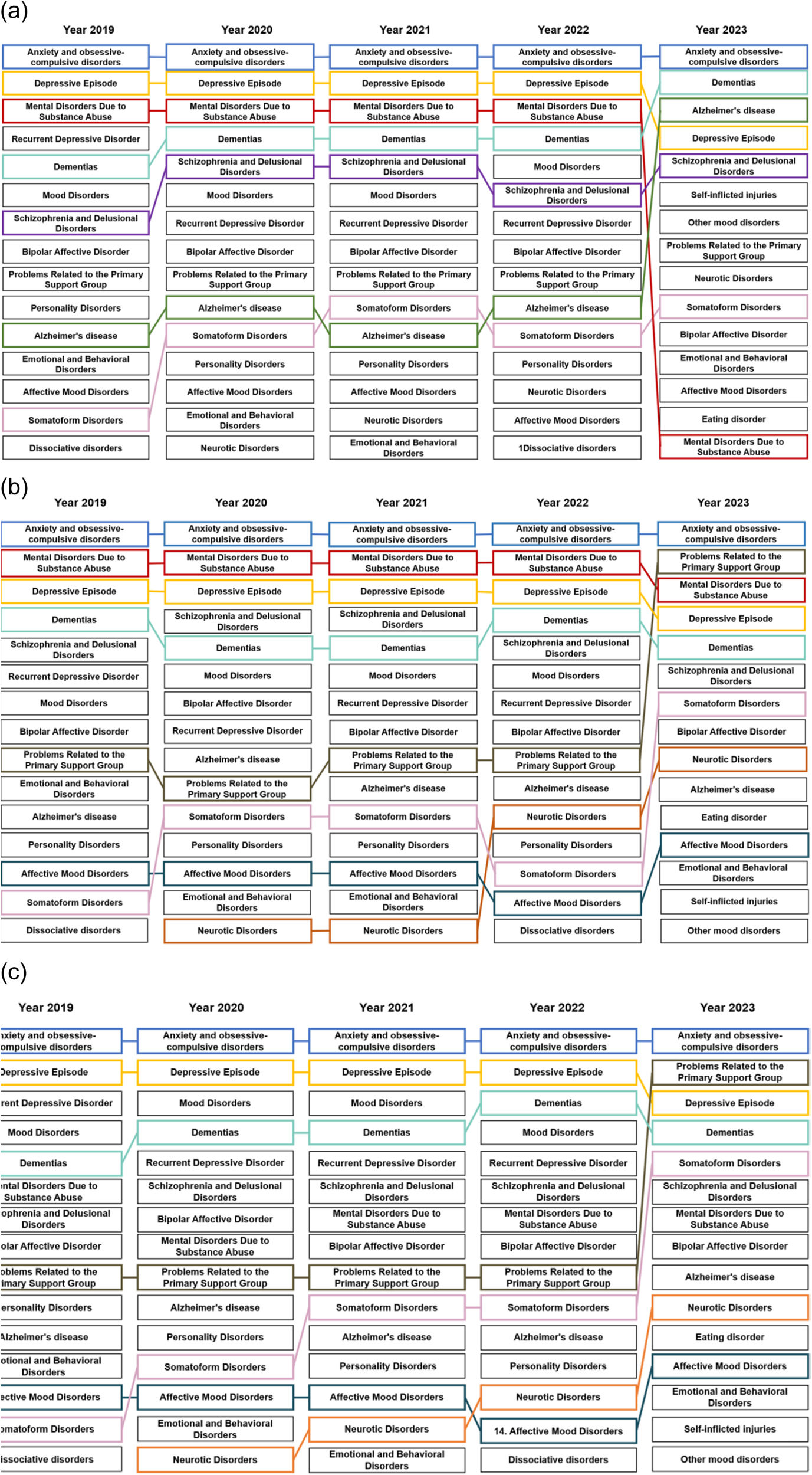
Fig. 3 show the distribution of mental health disorder diagnoses by sex. In both women and men (Fig. 3b and c), anxiety and obsessive–compulsive disorders ranked as the most frequent diagnoses. Among women, depressive episodes were also among the most frequent conditions. In 2023, problems related to the primary support group ranked second and somatoform disorders ranked fifth. Among men, substance use-related mental disorders ranked second overall and third in 2023, while problems related to the primary support group ranked second in that year.

Ranking of the main diagnoses of mental disorders reported in population ≥21 years with social security attended at the first level of care of the IMSS, 2019–2023. (a) Ranking of the main diagnoses of mental disorders reported in population ≥21 years. (b) Ranking of the main diagnoses of mental disorders reported in women ≥21 years. (c) Ranking of the main diagnoses of mental disorders reported in men ≥21 years.
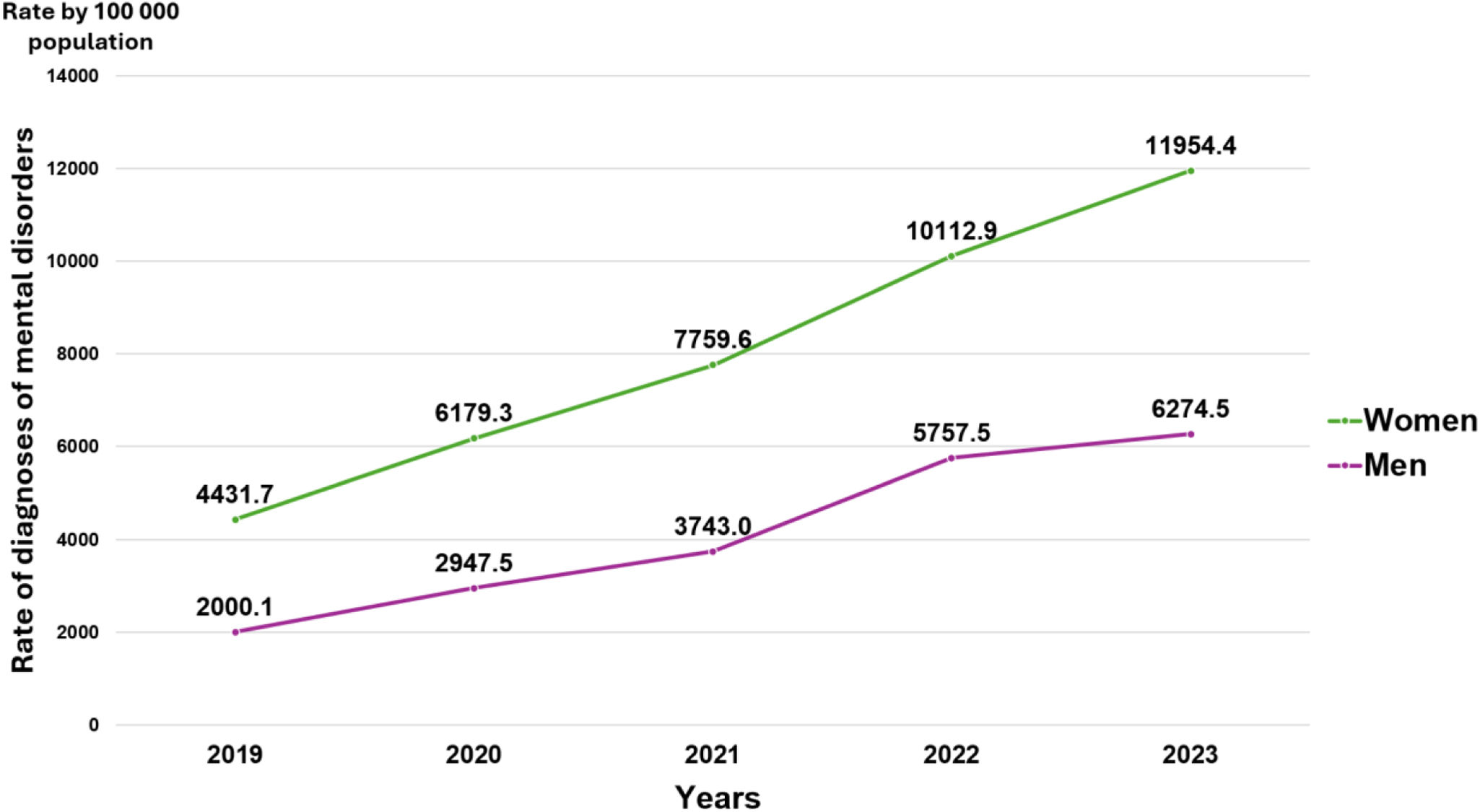
Fig. 4 shows diagnosis rates by sex. Among women, rates ranged from 4432 per 100,000 in 2019 to 11,954 in 2023. Among men, rates ranged from approximately 2000 per 100,000 in 2019 to 6274 in 2023.
Discussion
The results document an increase in the number and rate of mental health disorder diagnoses among adults receiving care at the IMSS between 2019 and 2023. This increase was observed in all states, although with differences in magnitude and spatial distribution, including the presence of geographic clusters. The diagnoses recorded were primarily related to anxiety and obsessive–compulsive disorders in both women and men, while depressive episodes were more frequent among women and substance use disorders among men. These findings describe an increasing volume and diversity of mental health conditions managed within healthcare services, as well as variations by region and sex during the study period.
The observed increase in mental health disorder diagnoses coincides temporally with the COVID-19 pandemic period. Although the present analysis does not allow causal inferences, previous studies have reported increases in diagnoses or service utilization related to depression, anxiety, suicidal ideation, and substance use during this period.1,6,11,16,24,25 These changes have been discussed in relation to social restrictions, disruptions in daily activities, and modifications in healthcare utilization patterns. In this context, periodic updates of administrative health records remain relevant for monitoring trends in mental health service utilization and for informing the planning and organization of mental health services within the health system.7,16,25
Marked geographic differences in diagnosis rates were identified across states, with heterogeneity in both magnitude and spatial distribution. Some states with higher rates or larger relative increases coincide with regions characterized by unfavorable sociodemographic conditions, including income inequality, illiteracy, or indicators of social violence, as documented in previous studies.26–30 However, these factors were not directly analyzed in the present study and should therefore be interpreted as contextual characteristics rather than explanatory variables.16,31,32 Further analytical studies incorporating sociodemographic indicators are needed to explore these associations in the Mexican context.
Dementia-related diagnoses, including Alzheimer's disease, were among the mental disorders identified during the study period. Their presence in the diagnostic distribution could be interpreted within the context of population aging in Mexico, which has been documented in national studies conducted prior to and during the pandemic period.33 Previous research has reported increasing mortality and prevalence Alzheimer's disease among older adults.6,34,35 As age-specific analyses were not included in the present study, these observations should be considered exploratory.
Sex differences in diagnostic patterns were also observed. Anxiety and obsessive–compulsive disorders were the most frequent diagnoses in both women and men, while depressive episodes were more frequent among women and substance use-related disorders among men. These findings are consistent with previous studies reporting sex differences in the distribution of this mental disorders.6,11,13,36–38 Nevertheless, the absence of age-specific and other sociodemographic variables in the present analysis limits more detailed comparisons with existing evidence.
Overall, the results are consistent with reports from other countries, although direct comparisons should be interpreted with caution due to differences in population structure, data sources, health system organization, and the timing and impact of the COVID-19 pandemic.39,40 The findings describe the frecuence of mental disorders of diverse etiology within primary care services and underscore the relevance of first-level care as a key point of contact for the identification, diagnosis, and initial management of mental health conditions across the adult population. In low- and middle-income countries, previous reports have documented substantial gaps in access to mental health care, particularly at early stages of the disease course.11,15,25,38,41
Several limitations should be considered. First, the analysis was based on secondary administrative data from a single institution within the Mexican National Health System, which limits the generalizability of the results to other health subsystems and to the population. The use of routine health information systems inherently reflects patterns of service provision and utilization rather than true population prevalence, introducing potential access-to-care bias, as individuals with limited or no access to mental health services are likely underrepresented.42,43 Furthermore, some diagnoses may not have been established by mental health specialists, and variability in clinical practices, diagnostic criteria, and coding procedures across regions and levels of care may have contributed to diagnostic heterogeneity, potentially resulting in underestimation or misclassification of mental disorders.36
Another important limitation is the absence of key sociodemographic and contextual variables, such as age group, occupation, or specific etiological factors, which restricted a more detailed characterization of mental health needs and limited the possibility of subgroup analyses. Additionally, the observed increase in diagnosis rates during the post-pandemic period may partially reflect improved detection, increased mental health awareness, and changes in help-seeking behavior, rather than a true increase in incidence, as has been documented in other settings following the COVID-19 pandemic.44 Despite these constraints, similar temporal trends and patterns have been reported in other national studies using different data sources, supporting the external consistency and robustness of the findings.12 Despite these limitations, this study provides a recent epidemiological overview of mental health diagnoses recorded in primary care units across all 32 states of Mexico over a five-year period.30
ConclusionBetween 2019 and 2023, rates of mental disorder diagnoses recorded in IMSS primary care units increased across all states of Mexico, with variability by sex and geographic region. Anxiety and obsessive–compulsive disorders were the most frequently diagnosed conditions in both women and men, while depressive episodes were more common among women and substance use-related disorders among men. These results describe the growing demand for mental health care and highlight the central role of identification and initial management of mental conditions.
- •
Globally, mental disorders represent the leading cause of years lived with disability (DALYs).
- •
The COVID-19 pandemic increased mental health disorders.
- •
Anxiety and depression account for the greatest burden of DALYs among the Mexican population aged 15–49.
- •
A growing number of mental health disorders beyond anxiety and depression are being diagnosed.
- •
Mental health diagnoses and care must be accessible to people of all ages.
- •
The increase in mental health patterns may be determined by some geographic territories.
ARS, RGO, and MGL collected, tabulated and analyzed the data, ARS, RRB, OAPR, RGO, MGL, and IHOI participated in writing. ARS, RGO and MGL analyzed the data, coordinated and guided the production of the study. ARS, RRB, OAPR, RGO, MGL, IHOI participated in the writing, formatting and submission process. All authors read and approved of the final manuscript.
Ethics approval and consent to participateAs the study involved analyzing secondary epidemiological data and the research centers’ protocols regarding the publication of patient data were followed, ensuring the privacy of the participants, approval from the local Ethics Committee was not required. However, the study complied with current Mexican health research regulations. The datasets used and analyzed during the current study are available in https://datos.gob.mx/dataset/deteccion_padecimientos_delegacion.
Use of AINot applicable.
FundingNot funding.
Conflict of interestThe authors declare that they have no competing interests.
Not applicable.


