

To identify and analyse determinants of hypertension self-care from a gender perspective, integrating the experiences of patients and primary care professionals.
DesignDescriptive qualitative study using focus groups and Giorgi's phenomenological approach.
SettingPublic primary care centre in Barcelona, Spain.
ParticipantsTwenty-four participants distributed across four focus groups: 12 patients with hypertension (6 women, 6 men) and 12 professionals (10 women, 2 men; 8 nurses, 4 physicians), recruited through purposive sampling.
MethodsSessions lasting 60–80min followed a semi-structured guide addressing knowledge, beliefs, diet, physical activity, self-monitoring, adherence, stress, social support, roles and gender influences. They were transcribed verbatim and analysed by three researchers using Giorgi's descriptive phenomenological method, with iterative consensus. Factors were subsequently categorised according to the PRECEDE model.
ResultsDeterminants common to both genders and determinants with gender-differentiated expression were identified. The belief that medication alone is sufficient acted as a cross-cutting determinant. Predominantly female determinants included caregiving-related guilt, subordination of self-care, time poverty, schedule incompatibility, asymmetry of intrafamilial support and family food management shaped by gender roles. Predominantly male determinants included low risk perception, symptom-guided help-seeking, reliance on partners for dietary management and triggers in masculinised social contexts. Professionals reported limited specific training and low confidence in applying a gender perspective.
ConclusionsThe identified determinants support the relevance of gender-sensitive educational interventions in hypertension care. Professional training in applying a gender perspective represents a priority for continuing professional development in primary care.
Identificar y analizar los determinantes del autocuidado en hipertensión arterial desde una perspectiva de género, integrando experiencias de pacientes y profesionales de atención primaria.
DiseñoEstudio cualitativo descriptivo con grupos focales y enfoque fenomenológico de Giorgi.
EmplazamientoCentro público de atención primaria en Barcelona, España.
ParticipantesVeinticuatro participantes distribuidos en cuatro grupos focales: 12 pacientes con hipertensión arterial (6 mujeres, 6 hombres) y 12 profesionales (10 mujeres, 2 hombres; 8 de enfermería, 4 de medicina), seleccionados intencionalmente.
MétodosLas sesiones, de 60-80 minutos, siguieron un guion semiestructurado sobre conocimientos, creencias, alimentación, actividad física, automonitorización, adherencia, estrés, apoyo social, roles e influencias de género. Fueron transcritas literalmente y analizadas por tres investigadoras mediante el método fenomenológico descriptivo de Giorgi, con consenso iterativo. Posteriormente, los factores se categorizaron según el modelo PRECEDE.
ResultadosSe identificaron determinantes comunes y con expresión diferencial según género. La creencia de que la medicación es suficiente actuó como determinante transversal. En mujeres destacaron la culpa vinculada al cuidado, la subordinación del autocuidado, la pobreza de tiempo, la incompatibilidad horaria, la asimetría del apoyo intrafamiliar y la gestión de la alimentación familiar condicionada por los roles de género. En hombres predominaron la baja percepción de riesgo, la búsqueda de atención guiada por síntomas, el apoyo en la pareja para la gestión dietética y los disparadores en contextos sociales masculinizados. Los profesionales refirieron escasa formación específica y baja confianza para aplicar la perspectiva de género.
ConclusionesLos determinantes identificados respaldan intervenciones educativas con enfoque de género y formación profesional específica en atención primaria.
Hypertension is one of the leading modifiable risk factors for cardiovascular morbidity and mortality worldwide.1,2 Although pharmacological treatment is essential, long-term control also depends on sustained self-care behaviours, including dietary modification, physical activity, stress management, blood pressure self-monitoring and medication adherence.3 In primary care, health education programmes support these behaviours and have shown modest but reproducible effects on blood pressure control.4,5
In Spain, hypertension is mainly managed in primary care, where family physicians and nurses provide diagnosis, pharmacological titration, lifestyle counselling, blood pressure monitoring and follow-up. However, limited consultation time and uneven implementation of group or community-based education constrain sustained self-care support.
Evidence shows that women and men do not respond equally to self-care interventions in hypertension. In this article, sex refers to biological characteristics, including reproductive ageing and menopause, whereas gender refers to socially constructed roles, behaviours, identities and power relations that shape self-care opportunities, support and access to care.6 Sex- and gender-related differences have been reported in dietary response,7 barriers to physical activity,8 cardiac rehabilitation referral and completion,9,10 acceptability of self-management interventions among men,11 and predictors of antihypertensive medication adherence.12
One possible explanation is that self-care interventions are often based on determinants that have not been operationalised through an explicit sex/gender lens. Some differences may relate to biological sex, whereas others reflect gendered roles, care responsibilities, masculinities and femininities, and differential access to support. Behaviour change interventions depend on accurately targeting the mechanisms through which change occurs,13 yet determinants such as motivation, self-efficacy, social support and risk perception are usually specified in gender-neutral terms. Gender awareness should therefore be understood as a property of both the determinants and the professionals who address them, not only as a patient characteristic.14–16
Despite this evidence, the gender perspective remains marginal in hypertension self-care interventions and clinical guidelines. A previous scoping review identified only 18 studies applying a gender approach to nursing interventions in hypertensive patients.17 Current guidelines remain insufficiently inclusive in lifestyle counselling,18 and many behavioural trials fail to report sex-disaggregated outcomes or consider gender as a moderator of intervention effects.19,20
To contribute to this gap, the present study aimed to identify and analyse determinants of hypertension self-care from a gender perspective, integrating the experiences of patients and primary care professionals. The findings are intended to inform gender-sensitive health education programmes in primary care, as part of the formative phase of a complex intervention development process aligned with the Medical Research Council framework.21
Participants and methodsDesignDescriptive qualitative study using focus groups and a descriptive phenomenological approach. This design is well suited to the in-depth exploration of attitudes, perceptions and beliefs about self-care. Reporting follows the Consolidated Criteria for Reporting Qualitative Research (COREQ)22 and the Sex and Gender Equity in Research (SAGER) guidelines.20
Theoretical frameworkData were analysed using Giorgi's descriptive phenomenological method.23 After inductive coding and preliminary theme development, findings were organised within the PRECEDE model as predisposing, enabling and reinforcing determinants of self-care.24
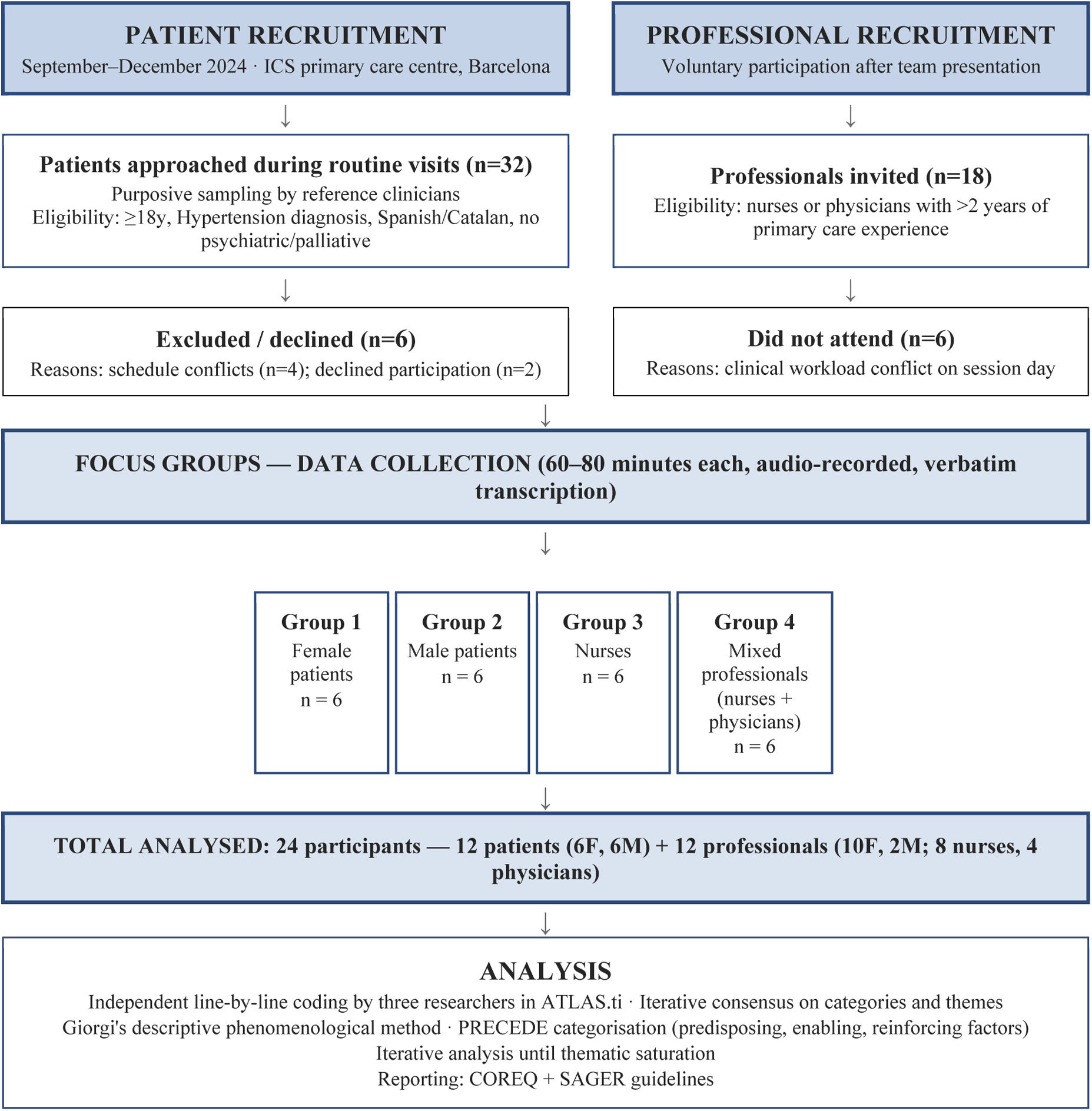
Setting, participants and recruitmentThe study was conducted between September and December 2024 at a public primary care centre (Institut Català de la Salut) in Barcelona, Spain. Purposive sampling was used to recruit adult patients diagnosed with hypertension and primary care professionals. Patients were informed during routine consultations by their reference clinicians. The research team contacted them when they expressed interest. Healthcare professionals were recruited following a presentation to the team and participated voluntarily (Fig. 1).
Inclusion criteria for patients were aged ≥18 years, diagnosed with hypertension, and able to provide informed consent. Exclusion criteria: inability to communicate in Spanish or Catalan, a diagnosed psychiatric condition or palliative care. Inclusion criteria for professionals were nurses or physicians with more than two years of primary care experience.
Data collectionFour focus groups were conducted (60–80min each): female patients (n=6), male patients (n=6), nurses (n=6) and a mixed group of professionals (n=6; nurses and physicians). A semi-structured guide was used to explore self-care dimensions: knowledge of the condition, beliefs and attitudes, dietary and physical activity habits, blood pressure self-monitoring, medication adherence, stress management, social and family support, caregiving and work roles, and gender influences. Focus groups were moderated by DNG, a nurse and doctoral researcher with training in qualitative health research; NGB acted as observer and took field notes on group interaction and non-verbal cues. DNG had no prior care relationship with patient participants, and her professional background and interest in gender-sensitive care were considered during reflexive analysis. Sessions were audio-recorded, transcribed verbatim and anonymised. The guide was piloted with two participants from each group to ensure clarity. No substantive changes were required after piloting.
Data analysisTranscripts were imported into ATLAS.ti and analysed following Giorgi's descriptive phenomenological approach. First, each transcript was read in full to obtain a global sense of participants’ experiences. Meaning units were then identified when a change in meaning was observed in relation to hypertension self-care, gender roles, access to care, social support or professional counselling. These meaning units were transformed into analytic codes while preserving participants’ original meanings. Codes were compared across groups and grouped into preliminary themes. Three researchers independently coded the transcripts, and discrepancies were resolved through iterative consensus meetings by returning to the original text and illustrative quotations.
The PRECEDE model was not used as an a priori coding framework, but as an organising framework after inductive theme development. This allowed the phenomenological findings to be translated into modifiable predisposing, enabling and reinforcing determinants for intervention design. Credibility was strengthened through independent coding, researcher triangulation, iterative consensus meetings and use of verbatim quotations. Thematic saturation was assessed during concurrent data collection and analysis. After the fourth focus group, no new major themes emerged in relation to the PRECEDE domains or gender-related determinants; subsequent coding mainly refined existing categories rather than generating new analytic codes. COREQ was used to guide reporting.
Ethical considerationsThe study adhered to the Declaration of Helsinki and received approval from the Ethics and Clinical Research Committee of IDIAP Jordi Gol (P14/131). All participants received complete information about the aims and procedures of the study and provided written informed consent prior to participation. Consent included the use of anonymised data for publication. All data were stored securely and confidentiality was maintained throughout.
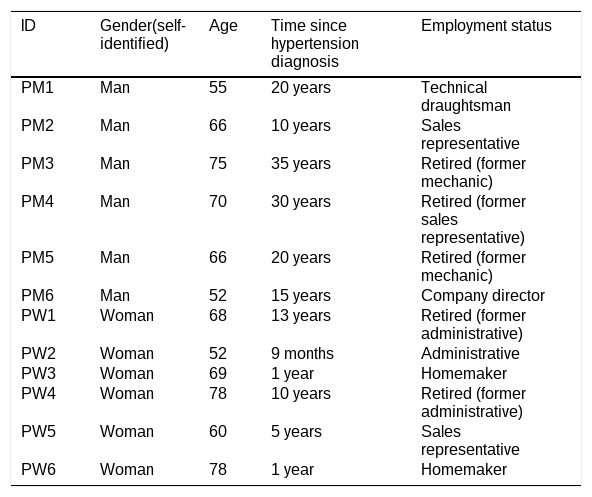
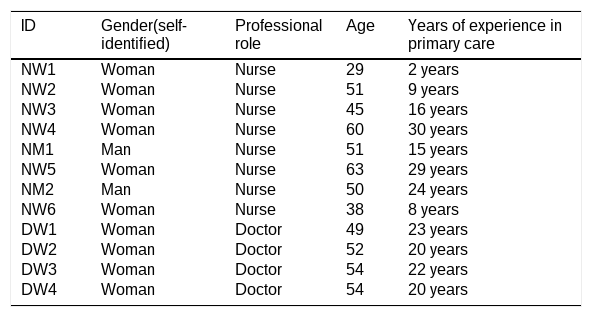
Results and discussionParticipant characteristicsThe patient sample included 12 adults with hypertension (6 women, 6 men). Time since diagnosis ranged from 9 months to 13 years in women and from 10 to 35 years in men. The professional sample included 12 participants (8 nurses, 4 physicians; 10 women, 2 men) with 2–30 years of primary care experience. Detailed characteristics are presented in Tables 1 and 2.
Characteristics of patient participants (n=12).
| ID | Gender(self-identified) | Age | Time since hypertension diagnosis | Employment status |
|---|---|---|---|---|
| PM1 | Man | 55 | 20 years | Technical draughtsman |
| PM2 | Man | 66 | 10 years | Sales representative |
| PM3 | Man | 75 | 35 years | Retired (former mechanic) |
| PM4 | Man | 70 | 30 years | Retired (former sales representative) |
| PM5 | Man | 66 | 20 years | Retired (former mechanic) |
| PM6 | Man | 52 | 15 years | Company director |
| PW1 | Woman | 68 | 13 years | Retired (former administrative) |
| PW2 | Woman | 52 | 9 months | Administrative |
| PW3 | Woman | 69 | 1 year | Homemaker |
| PW4 | Woman | 78 | 10 years | Retired (former administrative) |
| PW5 | Woman | 60 | 5 years | Sales representative |
| PW6 | Woman | 78 | 1 year | Homemaker |
IDs correspond to anonymised participant codes used in the findings (PM/PW=patient man/woman).
Characteristics of healthcare professional participants (n=12).
| ID | Gender(self-identified) | Professional role | Age | Years of experience in primary care |
|---|---|---|---|---|
| NW1 | Woman | Nurse | 29 | 2 years |
| NW2 | Woman | Nurse | 51 | 9 years |
| NW3 | Woman | Nurse | 45 | 16 years |
| NW4 | Woman | Nurse | 60 | 30 years |
| NM1 | Man | Nurse | 51 | 15 years |
| NW5 | Woman | Nurse | 63 | 29 years |
| NM2 | Man | Nurse | 50 | 24 years |
| NW6 | Woman | Nurse | 38 | 8 years |
| DW1 | Woman | Doctor | 49 | 23 years |
| DW2 | Woman | Doctor | 52 | 20 years |
| DW3 | Woman | Doctor | 54 | 22 years |
| DW4 | Woman | Doctor | 54 | 20 years |
IDs correspond to anonymised participant codes used in the findings (NW/NM=nurse woman/man; DW/DM=doctor woman/man).
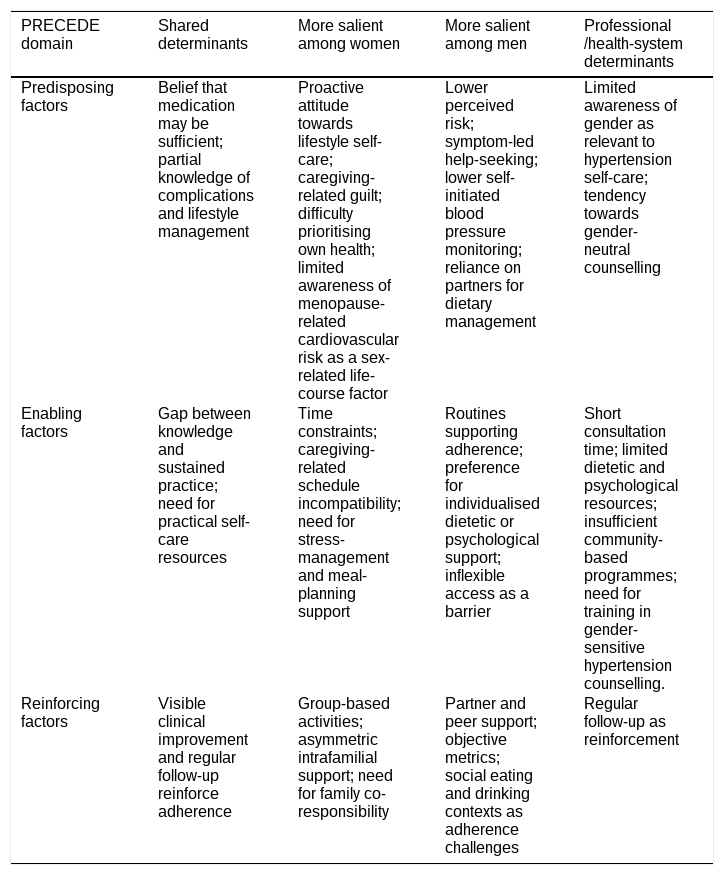
The analysis identified determinants common to both genders and determinants with gender-differentiated expression. Findings are organised below by PRECEDE domain. The proposed gender-sensitive determinants are summarised in Table 3. Illustrative quotations from patients and professionals are presented in Tables 4 and 5, respectively.
Summary of shared and gender-differentiated determinants of hypertension self-care according to the PRECEDE model.
| PRECEDE domain | Shared determinants | More salient among women | More salient among men | Professional/health-system determinants |
|---|---|---|---|---|
| Predisposing factors | Belief that medication may be sufficient; partial knowledge of complications and lifestyle management | Proactive attitude towards lifestyle self-care; caregiving-related guilt; difficulty prioritising own health; limited awareness of menopause-related cardiovascular risk as a sex-related life-course factor | Lower perceived risk; symptom-led help-seeking; lower self-initiated blood pressure monitoring; reliance on partners for dietary management | Limited awareness of gender as relevant to hypertension self-care; tendency towards gender-neutral counselling |
| Enabling factors | Gap between knowledge and sustained practice; need for practical self-care resources | Time constraints; caregiving-related schedule incompatibility; need for stress-management and meal-planning support | Routines supporting adherence; preference for individualised dietetic or psychological support; inflexible access as a barrier | Short consultation time; limited dietetic and psychological resources; insufficient community-based programmes; need for training in gender-sensitive hypertension counselling. |
| Reinforcing factors | Visible clinical improvement and regular follow-up reinforce adherence | Group-based activities; asymmetric intrafamilial support; need for family co-responsibility | Partner and peer support; objective metrics; social eating and drinking contexts as adherence challenges | Regular follow-up as reinforcement |
Predisposing, enabling and reinforcing factors influencing hypertension self-care: illustrative quotations mapped to PRECEDE domains and participant groups.
| Construct | Group | Positive: enablers/facilitators | Negative: barriers/challenges |
|---|---|---|---|
| Predisposing factors | |||
| Beliefs and attitudes | Women | “I think as they do [the other women in the group]; I believe—and have verified—that since I’ve been eating healthier and staying calmer, my blood pressure is under better control.” (PW3) | “It's something I said earlier—[that women are expected to care]: generation after generation we’ve been taught that we must sacrifice ourselves for others, look after others, and if we don’t… the guilt sets in.” (PW1) |
| Men | “Since I take the pill, my blood pressure is when it is at its best. Of course, I imagine that trying not to overdo it with food and not being lying down all day helps, but the pill should never be forgotten… that is what is most important.” (PM5) | “… [self-monitoring my blood pressure] almost never, unless my wife or the nurse tells me to.” (PM1) | |
| Professionals | “Many times, women know more about health because they have cared for someone or are currently caring for someone. As a result, they tend to take better care of themselves than men, at least they make more of an effort.” (DW4) | “But in general, I think the reasons are much more practical [in men], more about immediate effects. For example, ‘I twisted my ankle’ or ‘I have a spot,’ the symptom is more directly related to the reason for the visit—in men, I mean. So, the consultation demand usually responds to something very specific and is directly linked to the symptom. In contrast, women often describe symptoms that do not correspond to the real reason, and there are other issues behind them.” (DW1) | |
| Knowledge | Women | “That, [my knowledge of what helps manage hypertension] diet, exercise, and not having stress.” (PW6) | “It's something related to the blood, right? But I don’t really know exactly what it is.” (PW4) |
| Men | “When I was diagnosed with hypertension, I thought, well, it was kind of expected because many of my relatives have had it, it's my family inheritance, so I already more or less knew what I had to take care of.” (PM1) | “I haven’t really changed anything. I just take the pill. But since retiring I’ve had less stress, and I think that's what has made my blood pressure better.” (PM5) | |
| Professionals | “… since women are usually the ones who cook at home, they often know a bit more about diets, either because they are in charge of the meals or because they have tried several diets themselves.” (NW5) | “… they [patients] have a general idea, but they lack deeper knowledge—such as the specific complications that can occur, what and how to modify in the diet, and what else, beyond treatment, can be done.” (NW1) | |
| Enabling factors | |||
| Resources | Women | “I see a psychologist in the public system, but the sessions are very spaced out. They help, but I think I’d need them more frequently.” (PW5) | “If there were something practical to help with meal planning and preparation… it's not that I don’t want to cook healthy, but… there are four people at home, and everyone has different tastes and preferences.” (PW4) |
| Men | “Five years ago, I was given a bicycle as a gift. I use it to go to work. I don’t go every day, but I have to change clothes each time I ride back and forth. Still, it makes me feel really good.” (PM4) | “I would ask for psychological support, more psychological resources, and also a dietitian because I have many doubts.” (PM6) | |
| Professionals | “… attempts to quit smoking have increased now that there is a subsidized treatment, but only because it is subsidized; otherwise, they might not even try…” (NM1) | “I think community activity support would be quite important. Regarding healthy lifestyle habits, cooking courses could be offered, group sports activities, stress management, self-care—these are already being done, but perhaps they are not sufficient or do not reach everyone. If we could adopt a more community-based approach, not only from the health centre, it could be important.” (DW1) | |
| Accessibility of services | Women | None identified | “There are some free activities in the mornings, but I can’t go out then because I have to get everything organised for the children, grandchildren, the meals, etc…” (PW2) |
| Men | None identified | “… from the patient's perspective, it feels like you call by phone and get an appointment for two weeks later. By then you may no longer need it because you’re already better. And if you do go, you end up seeing a doctor or nurse who doesn’t know you, who doesn’t have your history, and with whom you don’t build empathy…” (PM3) | |
| Professionals | None identified | “There are group interventions, but they’re not enough, and many people can’t attend because of their schedules or other reasons. And during appointments, there just isn’t enough time to cover everything you’d like, or to do it the way you’d like.” (DW3) | |
| Skills | Women | “… all our lives, always looking after the children, looking after parents, some grandchildren… There comes a time when we have to start thinking about ourselves…” (PW1) | “Honestly, it's not that I don’t want to follow the diet, but there are four of us at home. I don’t want to cook two different meals. I refuse. …I don’t like cooking. So, I just make one meal, and I don’t want to prepare something special for each person.” (PW3) |
| Men | “Having a routine helps a lot with taking your medication, using pill organisers… or for example having a routine where you get up in the morning, go out for a walk, and then do the other tasks.” (PM6) | “My wife is responsible for the kitchen. She plans the meals and tries to make them healthier because of my blood pressure, but I leave all that to her.” (PM2) | |
| Professionals | “…group and community interventions have significant effects—there's evidence for that… we need to do more of this, rather than going round in circles in time-limited, one-to-one consultations.” (NW4) | “From a certain age onwards, it is very difficult to start exercising or to change exercise habits if one has never done so… especially for women. The age and profile of the women we see in the clinic are not those who have engaged in sport throughout their lives as a preventive healthy habit. Rather, they have worked a lot at home and have not had the time.” (NM1) | |
| Reinforcing factors | |||
| Social support | Women | “Dancing, I love dancing, not just as exercise, but it's like therapy for me. And we also have a really nice little group.” (PW3) | “My daughter shares her things when she needs someone to listen, and my husband does the same when it suits him. But when I want to share something, it seems to have no importance or interest to them, and I feel unheard.” (PW4) |
| Men | “I would highlight pets. I had a dog until about 3–4 years ago, and it was one of the things that helped me get through after my heart attack, because I had the obligation to take him out for walks, and that made me walk.” (PM6) | “Group meals, family meals… in the end, no one makes food adapted for you, you eat what there is, and you also kind of go along with the atmosphere. It's very hard to control yourself in those moments.” (PM1) | |
| Professionals | “Men usually go to the gym more or go out walking on their own. Women tend to ask for, or prefer, something in a group, like Zumba, and sometimes they go to an activity because afterwards they stay to have a coffee together…” (DW1) | “Men have much more support, especially if they live with a partner, than women do. And often they also receive more family support than women. In fact, as we have said, it is not that women lack support, but many times they forget about themselves. First the husband, then the children, then the parents, and then come the grandchildren… And then perhaps they haven’t had time to get ready, or to go to the gym, but it's not really their priority. They do not prioritise themselves.” (DW4) | |
| Perceived consequences | Women | “When I take it [my blood pressure] and I see that it's fine, I get happy and I say, okay, keep it up like this.” (PW6) | “Anger [when she cannot take care of herself due to lack of time]” (PW2) |
| Men | “I’ve already lost a several kilos… and now I’m even taking half the dose of the pill I used to.” (PM4) | None identified | |
| Professionals | “When patients see that their blood pressure is well controlled, including on home blood pressure monitoring, the number itself reinforces adherence to antihypertensive medication…” (NW5) | “Sometimes, of course… I’m sure that's the case… and I also think that, even if we explain it well, they [men] are not fully aware, right? Of what could happen to them if their blood pressure is not well controlled.” (DW2) | |
| Professional reinforcement | Women | “You end up having to make serious or more radical changes when doctors tell you: either you do this… or the consequences will be very serious.” | None identified |
| Men | “I feel motivated when I go to the doctor and see that the numbers are good: my weight, blood tests, blood pressure…” (PM6) | None identified | |
| Professionals | “The pill almost always works. The solution is to open the pill every day, blood pressure goes down, and I don’t change anything else, because the pressure is already fine. The problem is when you have to tell them that before taking the pill we’re going to try to see if modifying something lowers the pressure. And that's where the difficulty is, it's harder. But it's like everything else, it happens with other things too: if the pill works, that's it, it's easier than anything else.” (NW5) | None identified | |
IDs correspond to anonymised participant codes used in the findings (PM/PW=patient man/woman; NW/NM=nurse woman/man; DW/DM=doctor woman/man).
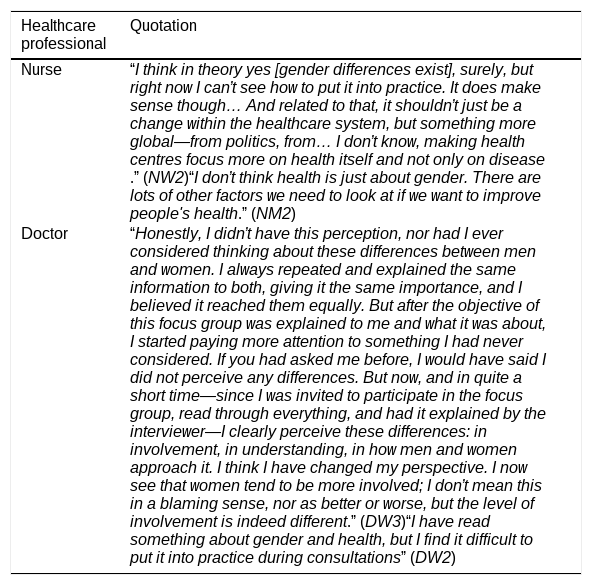
Healthcare professionals’ readiness for gender-sensitive hypertension education and counselling: exemplar quotations on training and implementation needs.
| Healthcare professional | Quotation |
|---|---|
| Nurse | “I think in theory yes [gender differences exist], surely, but right now I can’t see how to put it into practice. It does make sense though… And related to that, it shouldn’t just be a change within the healthcare system, but something more global—from politics, from… I don’t know, making health centres focus more on health itself and not only on disease.” (NW2)“I don’t think health is just about gender. There are lots of other factors we need to look at if we want to improve people's health.” (NM2) |
| Doctor | “Honestly, I didn’t have this perception, nor had I ever considered thinking about these differences between men and women. I always repeated and explained the same information to both, giving it the same importance, and I believed it reached them equally. But after the objective of this focus group was explained to me and what it was about, I started paying more attention to something I had never considered. If you had asked me before, I would have said I did not perceive any differences. But now, and in quite a short time—since I was invited to participate in the focus group, read through everything, and had it explained by the interviewer—I clearly perceive these differences: in involvement, in understanding, in how men and women approach it. I think I have changed my perspective. I now see that women tend to be more involved; I don’t mean this in a blaming sense, nor as better or worse, but the level of involvement is indeed different.” (DW3)“I have read something about gender and health, but I find it difficult to put it into practice during consultations” (DW2) |
IDs correspond to anonymised participant codes used in the findings (NW/NM=nurse woman/man; DW/DM=doctor woman/man).
Across groups, pharmacological treatment was often framed as sufficient for blood pressure control, displacing preventive and lifestyle behaviours. Women described proactive engagement in self-care, but internalised caregiving norms generated guilt when prioritising their own health over the care of others. Men placed medication as the main route to control, with several accounts reflecting lower perceived risk, less self-initiated monitoring and reliance on partners for dietary management. Healthcare professionals described similar patterns.
Women showed greater familiarity with concrete dietary changes such as reducing salt and limiting alcohol. They also described a more explicit connection between blood pressure, stress and activity. Men's knowledge was more variable, with greater specificity when family experience was present. A recurrent gap among women was low awareness of menopause-related cardiovascular risk, interpreted here as a sex-related life-course factor whose recognition and counselling may be shaped by gendered patterns of cardiovascular prevention.
Enabling factorsWomen valued psychological support, flexible access and practical help with meal planning or stress management, but caregiving and household duties limited time for appointments and community programmes. Men identified routines, accessible physical activity and individualised dietetic or psychological support as relevant enablers, while describing waiting times and inflexible services as barriers. Healthcare professionals identified a gap between knowledge and sustained practice, particularly in older adults.
Reinforcing factorsReinforcement was linked to social support, visible clinical improvement and regular follow-up. Women valued group activities and family co-responsibility, while also describing asymmetric support within the household. Men referred to partner or peer support, objective metrics and social eating or drinking contexts that challenged adherence. Professionals highlighted loneliness in older adults and the reinforcing role of regular follow-up.
Professional competence in gender perspectiveHealthcare professionals rarely identified gender as relevant to hypertension self-care without prompting. Those who did expressed uncertainty about how to apply it in practice. Familiarity with gender and health literature was limited. Several professionals acknowledged not having previously considered gender differences in this context. Gendered authority dynamics were also identified in the consultation. Most participants reported no pre-graduate or continuing training in gender-sensitive care and low confidence in its routine application.
This study identifies gender-related determinants of hypertension self-care from the perspectives of patients and primary care professionals. Its main contribution is to translate observed differences between women and men into modifiable determinants that may inform gender-sensitive educational interventions in primary care. Organising the findings according to PRECEDE links qualitative evidence with practical targets for intervention design.
The findings suggest that hypertension self-care is shaped not only by knowledge, motivation or access to treatment, but also by everyday roles, responsibilities and social expectations. In women's accounts, self-care was viewed as desirable and necessary, but difficult to prioritise when caregiving responsibilities, household work, limited discretionary time and guilt competed with their own health needs. This is consistent with previous literature showing that unpaid care work and gendered family responsibilities influence women's health behaviours and access to care.25–28 Thus, in these participants, the challenge appeared to lie not only in information gaps, but also in the difficulty of translating knowledge into sustained self-care when women's health was subordinated to others’ needs.
Men's accounts more often reflected lower perceived personal risk, symptom-led help-seeking and reliance on partners for dietary management. These patterns are consistent with evidence that masculine norms may reduce preventive health behaviours and delay help-seeking.25,26 Rather than individual traits, these patterns may reflect gender norms and social expectations that shape men's hypertension self-care practices.
These findings extend previous literature. Although women are often described as more engaged in prevention and health-related self-management,25 this study suggests that greater awareness and involvement do not necessarily translate into greater capacity to prioritise self-care. In women's accounts, gendered caregiving responsibilities, household work, limited discretionary time and guilt often redirected attention towards the care of others, limiting the implementation of self-care despite awareness of its importance.26,27 Conversely, while masculine norms have been associated with lower acceptability of self-management support and delayed help-seeking,11,25 several men in this study described change when self-care was linked to routines, measurable feedback or cardiovascular events in relatives. These findings suggest that gender-sensitive interventions should address the gendered mechanisms that shape self-care priorities, while also identifying the practical and social conditions that make self-care feasible for each patient.
Across groups, several accounts reflected the belief that medication may be sufficient to control hypertension. Although pharmacological treatment is essential, this belief may displace lifestyle-related self-care.3 Its implications appeared to vary according to gendered roles and routines. In women, it may coexist with responsibility for family health but limited time for preventive behaviours. In men, it may reinforce passive reliance on medication and on partners’ dietary management. Therefore, challenging this belief may require counselling that connects biomedical control with feasible behavioural changes adapted to patients’ routines, roles and support.
Women's accounts suggested limited awareness of menopause-related cardiovascular risk. This was interpreted as a sex-related life-course factor whose recognition in counselling may be influenced by gendered patterns in cardiovascular prevention. Incorporating menopause and gendered barriers to self-care into routine education could make counselling more relevant for women.6,18,25
The professional perspective added a complementary dimension to the interpretation of patient accounts. Healthcare professionals recognised some gendered patterns, but many reported limited training and low confidence in applying a gender perspective in routine consultations. This is consistent with previous work on gender awareness in health care and medical education.14,15 Gender-sensitive education may therefore need to combine patient-facing materials with professional training. In primary care, limited training may shape the educational encounter itself. Future training could include practical skills for identifying gender-related barriers, avoiding stereotypes and adapting counselling to patients’ contexts.
These findings provide formative evidence for intervention design within the Medical Research Council framework.21 At the predisposing level, programmes could address risk perception, caregiving-related guilt, life-course cardiovascular risk and the belief that medication alone may be sufficient. At the enabling level, relevant components may include flexible access, micro-habit strategies, stress-management and meal-planning support. At the reinforcing level, potentially relevant components include family co-responsibility, peer support, structured follow-up and strategies for social situations that challenge adherence.
StrengthsThe simultaneous inclusion of patient and professional perspectives allows analysis from both sides of the educational encounter. Researcher triangulation with three independent coders and iterative consensus strengthens credibility. The combination of inductive phenomenological analysis with PRECEDE organisation provides depth and theoretical coherence. Adherence to COREQ and SAGER reporting guidelines supports transparency and equity in research. The Mediterranean public primary care setting is underrepresented in international literature on gender-sensitive cardiovascular care.
LimitationsThe qualitative single-centre design limits transferability, although it is appropriate for hypothesis generation. Voluntary participation may have introduced selection bias, as people with greater availability or interest in self-care may have been more likely to participate. The predominance of women among healthcare professionals reflected the composition of the participating primary care team, as all male physicians and nurses in the team participated; however, this limited the depth with which gender dynamics among professionals could be explored. Binary coding of gender and language criteria (Spanish or Catalan) may have under-represented gender-diverse people and migrant participants. Other intersectional axes, such as social class, migration status, educational level and family situation, were not analysed in depth.29 The focus group format may have influenced responses through group dynamics or social desirability.
ConclusionThis study identifies common and gender-differentiated determinants of hypertension self-care in primary care. The findings suggest that gender-sensitive education may need to move beyond generic lifestyle advice and address the social conditions that shape patients’ capacity to care for themselves. They also highlight the need to train primary care professionals in the practical application of a gender perspective. These results provide formative evidence for designing and evaluating future hypertension education programmes aimed at reducing gender-related inequities in self-care.
- •
Self-care interventions in arterial hypertension show differential patterns of uptake, adherence and effectiveness between women and men.
- •
Despite international recommendations on sex and gender equity in research and practice, hypertension education interventions with a gender approach remain scarce and are not systematically operationalised.
- •
Existing literature documents gender differences in risk perception and health behaviours but has not yet articulated the specific determinants of self-care that an educational programme should target if it is to be gender sensitive.
- •
It identifies determinants of hypertension self-care that emerge only when patient and professional perspectives are integrated under an explicit gender lens, including determinants – such as caregiving-related guilt, household food work shaped by gender roles and asymmetric intrafamilial support – that are not addressed in current educational programmes.
- •
It suggests that the gender-neutral design of many hypertension self-care interventions may contribute to differential uptake and acceptability between women and men and provides operational determinants that can be translated into gender-sensitive intervention components.
- •
It reports a previously unrecognised determinant: primary care professionals report no specific training in gender-sensitive care of hypertension and low confidence in its routine application, identifying a concrete priority for continuing professional development in primary care.
All authors have contributed significantly to the conception, design, data collection, analysis and interpretation of the study. They have drafted or critically revised the manuscript, approved the final version, and agree to be accountable for all aspects of the work.
Ethical considerationsThis study was conducted in accordance with the Declaration of Helsinki and received approval from the Ethics and Clinical Research Committee of IDIAP Jordi Gol (approval code: P14/131). All participants received complete written information about the aims and procedures of the study prior to participation and provided written informed consent, including consent for the use of anonymised data for publication. No personal or identifying data were collected or disclosed. All data were stored securely, and confidentiality was maintained throughout the study.
Informed consentAll participants provided written informed consent to participate in the study and for anonymised quotations to be used in publications. The study did not collect any identifying personal data or images.
Declaration of generative AI and AI-assisted technologies in the writing processDuring the preparation of this work, the authors used ChatGPT (OpenAI) in order to improve the readability and language of the manuscript. After using this tool, the authors reviewed and edited the content as needed and take full responsibility for the content of the publication. The tool was not used to generate data, results or original scientific content.
FundingThis research did not receive any specific grant from funding agencies in the public, commercial or not-for-profit sectors.
Conflict of interestThe authors declare no conflict of interest.
The authors thank the focus group participants and the staff of the primary care centre for their time and willingness to take part.
The following are the supplementary data to this article: