



To describe the impact of COVID-19 on oncology care providers’ self-reported perceived stress, resilience, moral distress, anxiety, and depression in Colombia.
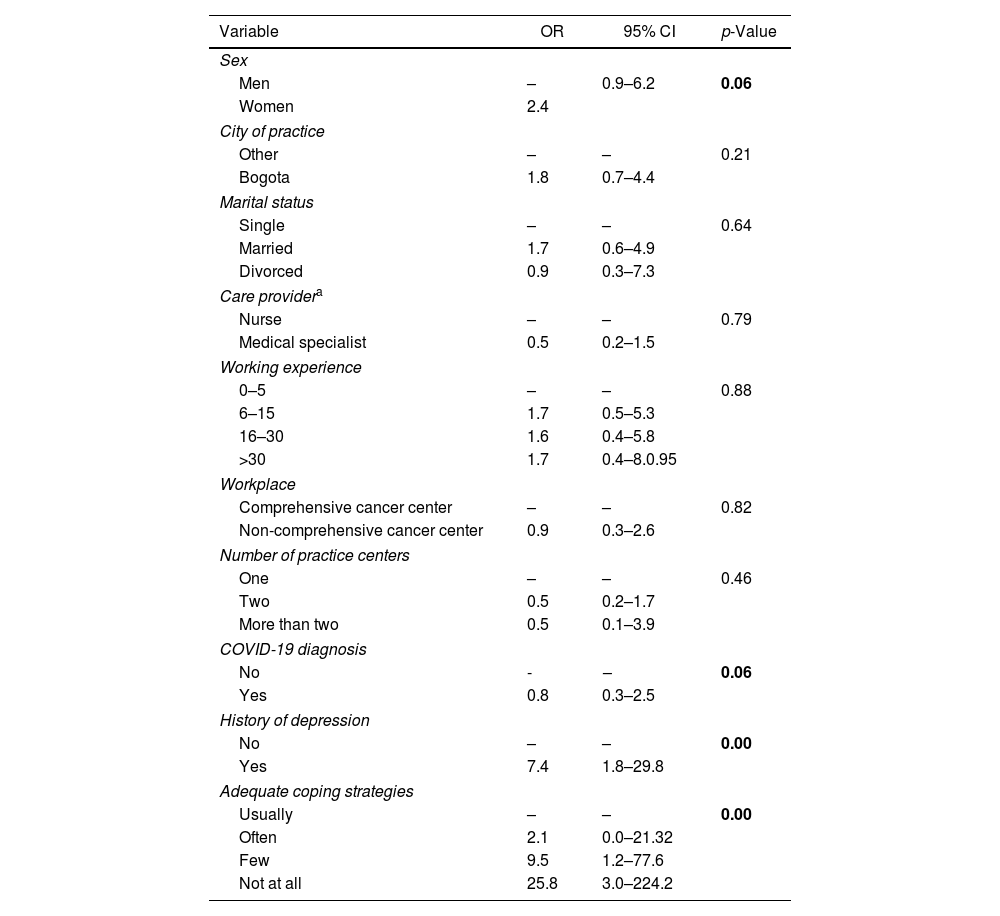
MethodsDuring 2020, a cross-sectional survey was carried out among oncology care providers. The Perceived Stress Scale, Connor–Davidson Resilience Scale, Moral Distress Thermometer, and the PHQ-4 were used. Basic socio-demographic and occupational characteristics are described, and bivariate and multivariate analyses were done to investigate their association with a high PHQ-4 score (>6).
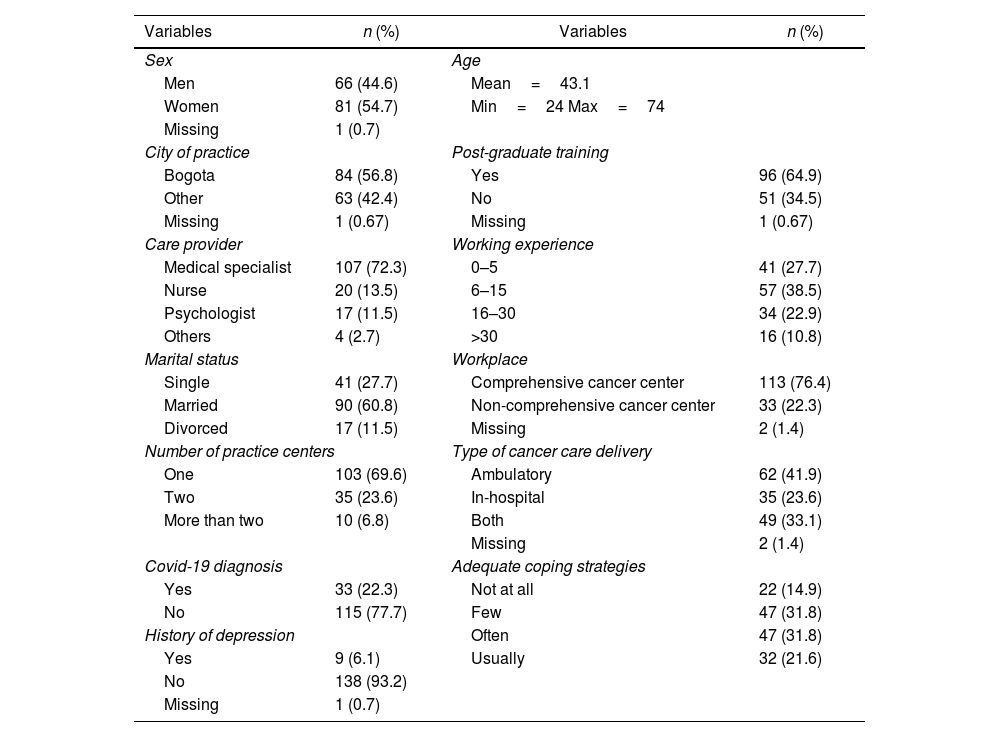
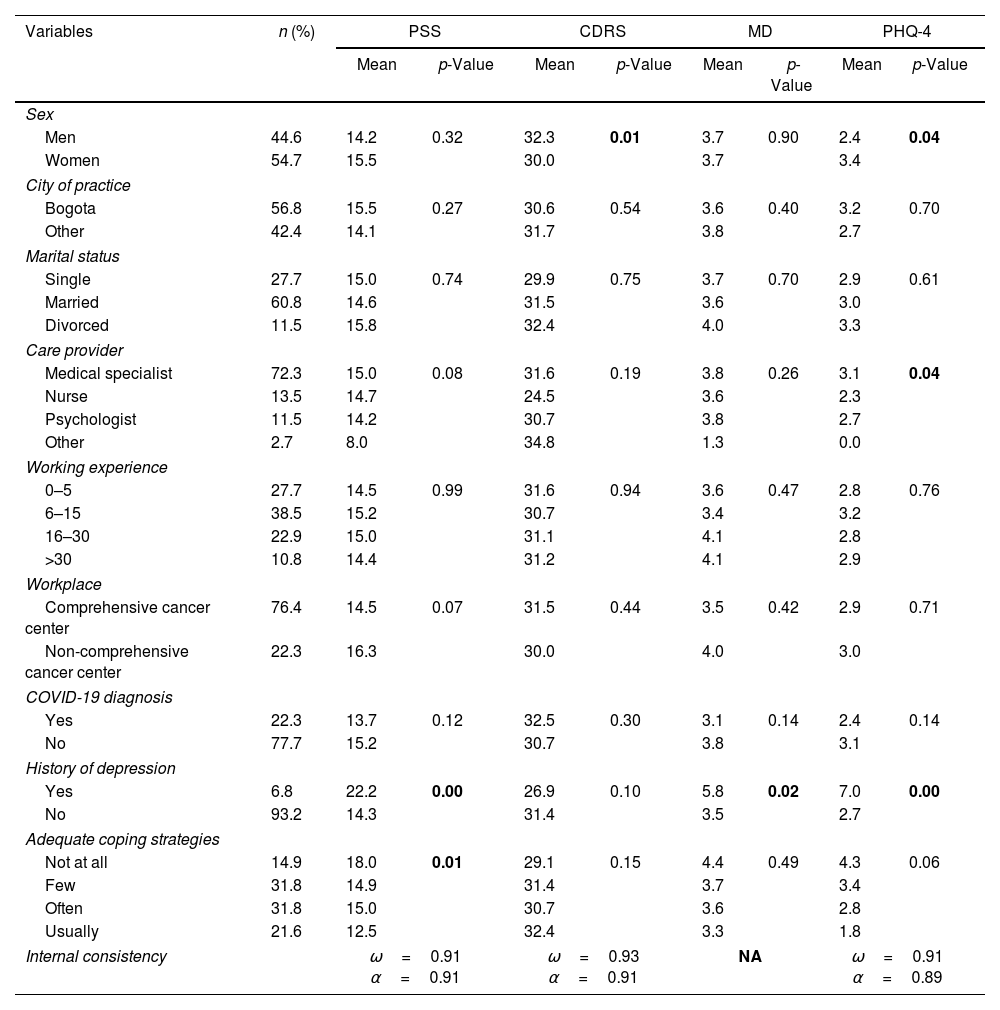
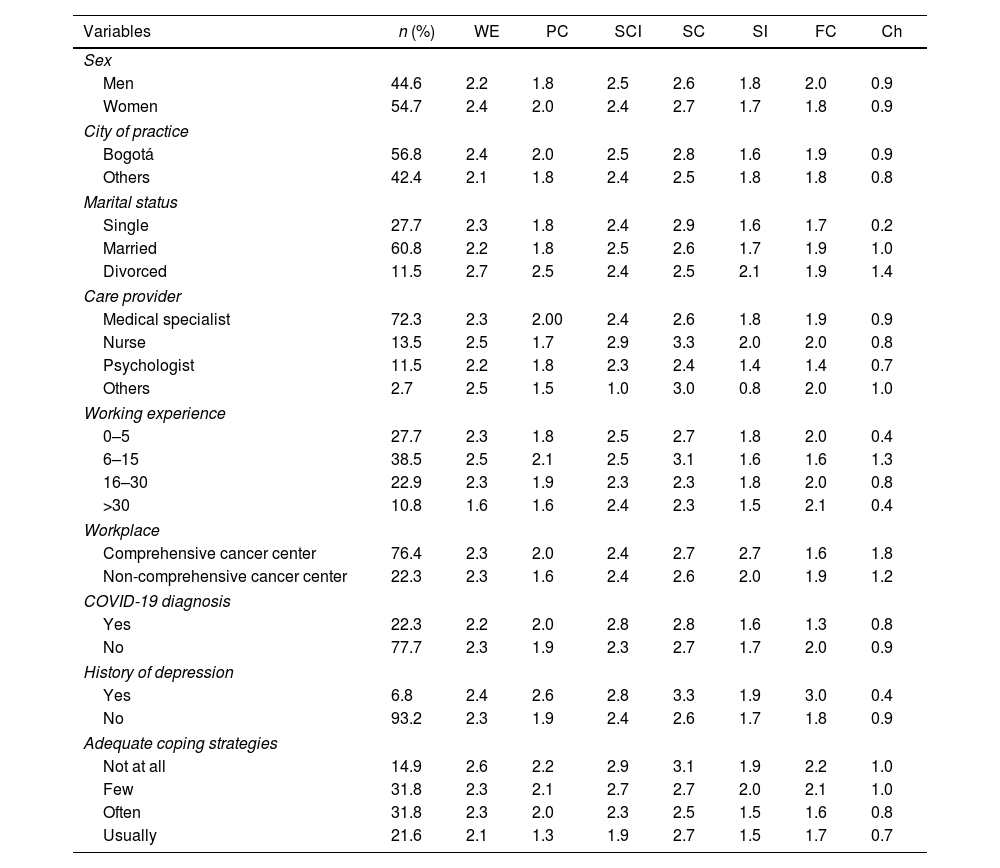
Results148 participants (mean age 43.1 years, 54.6% women, 72.3% medical specialists) were recruited. The major source of stress was not being infected, but spreading COVID-19. A low prevalence of depression/anxiety was found, as well as low resilience and moral distress. Women reported lower resilience and higher depression/anxiety. History of depression and lack of adequate coping strategies were associated with higher levels of depression/anxiety.
ConclusionsThe impact of the COVID-19 pandemic on the mental health of oncology care providers was mild, probably due to the protection for oncology patients during this period; however, women reported a greater impact. The association of demographic and clinical variables with higher levels of depression/anxiety should inform further preventive measures to reduce the impact of prolonged public health crises on healthcare providers’ mental health.
Describir el impacto del COVID-19 en el estrés, la resiliencia, el sufrimiento moral, la ansiedad y la depresión percibidos por los proveedores de atención oncológica en Colombia.
MétodosDurante el año 2020 se realizó una encuesta entre prestadores de atención oncológica. Se utilizaron la escala de estrés percibido, la escala de resiliencia de Connor-Davidson, el termómetro de angustia moral y el PHQ-4. Se describen las características sociodemográficas y ocupacionales básicas, y se realizaron análisis bivariados y multivariados para investigar su asociación con una puntuación alta de PHQ-4 (>6).
ResultadosSe reclutaron 148 participantes (edad media 43.1 años, el 54.6% mujeres y el 72.3% médicos especialistas). La principal fuente de estrés no era estar infectado, sino propagar el COVID-19. Se encontró baja prevalencia de depresión/ansiedad, baja resiliencia y angustia moral. Las mujeres reportaron menor resiliencia y mayor depresión/ansiedad. Los antecedentes de depresión y la falta de estrategias de afrontamiento adecuadas se asociaron con niveles más altos de depresión/ansiedad.
ConclusionesEl impacto de la pandemia de COVID-19 en la salud mental de los proveedores de atención oncológica fue leve, probablemente debido a la protección de los pacientes oncológicos durante este período; sin embargo, las mujeres reportaron un mayor impacto. La asociación de variables demográficas y clínicas con niveles más altos de depresión/ansiedad debería reportar medidas preventivas adicionales para reducir el impacto de las crisis de salud pública prolongadas en la salud mental de los proveedores de atención médica.

