


metricas
covid
Revista Colombiana de Psiquiatría (English Edition) Exploring Depressive and Anxiety Symptoms Among Employees from a General Hospita...
Journal Information
Vol. 54. Issue 2.
Pages 196-204 (April - June 2025)
Share
Download PDF
More article options
Vol. 54. Issue 2.
Pages 196-204 (April - June 2025)
Original Article
Exploring Depressive and Anxiety Symptoms Among Employees from a General Hospital in Need of Mental Health Treatment: A Cross-sectional Study
Explorando los síntomas depresivos y ansiosos entre empleados de un hospital general que necesitan tratamiento de salud mental: un estudio transversal
Nilson Sivaa, Anderson Sousa Martins-da-Silvab, Lucas Pequeno Galvãoc, Júlio Toralesd, Antonio Ventriglioe, João Mauricio Castaldelli-Maiaf,i, Sergio Baldassing,h,
Corresponding author
sergio.baldassin@fmabc.br

Corresponding author.
a Psychologist, Associate Professor, Department of Neuroscience, Faculdade de Medicina do ABC (FMABC), Santo André (SP), Brazil
b Master's Student, Department of Psychiatry, Medical School, Universidade de São Paulo (USP), São Paulo (SP), Brazil
c Psychyatry Resident, Department of Psychiatry, Secretaria de Saúde de São Bernardo do Campo, São Bernardo do Campo (SP), Brazil
d Chief of the Department of Medical Psychology, School of Medical Sciences, National University of Asunción, Asunción, Paraguay
e Honorary Researcher, Department of Clinical and Experimental Medicine, University of Foggia, Foggia, Italy
f Post-graduation Advisor, Department of Psychiatry, Medical School, Universidade de São Paulo (USP), São Paulo (SP), Brazil
g Assistant Professor, Department of Neuroscience, Centro Universitário Faculdade Medicina do ABC (FMABC), Santo André (SP), Brazil
h Head of Psychiatry, Support Center, Hospital Estadual Mário Covas, Santo André (SP), Brazil
i Associate Professor, Department of Neuroscience, Centro Universitário Faculdade Medicina do ABC (FMABC), Santo André (SP), Brazil
Ver más
Article information
Abstract
Full Text
Bibliography
Download PDF
Statistics
Tables (5)
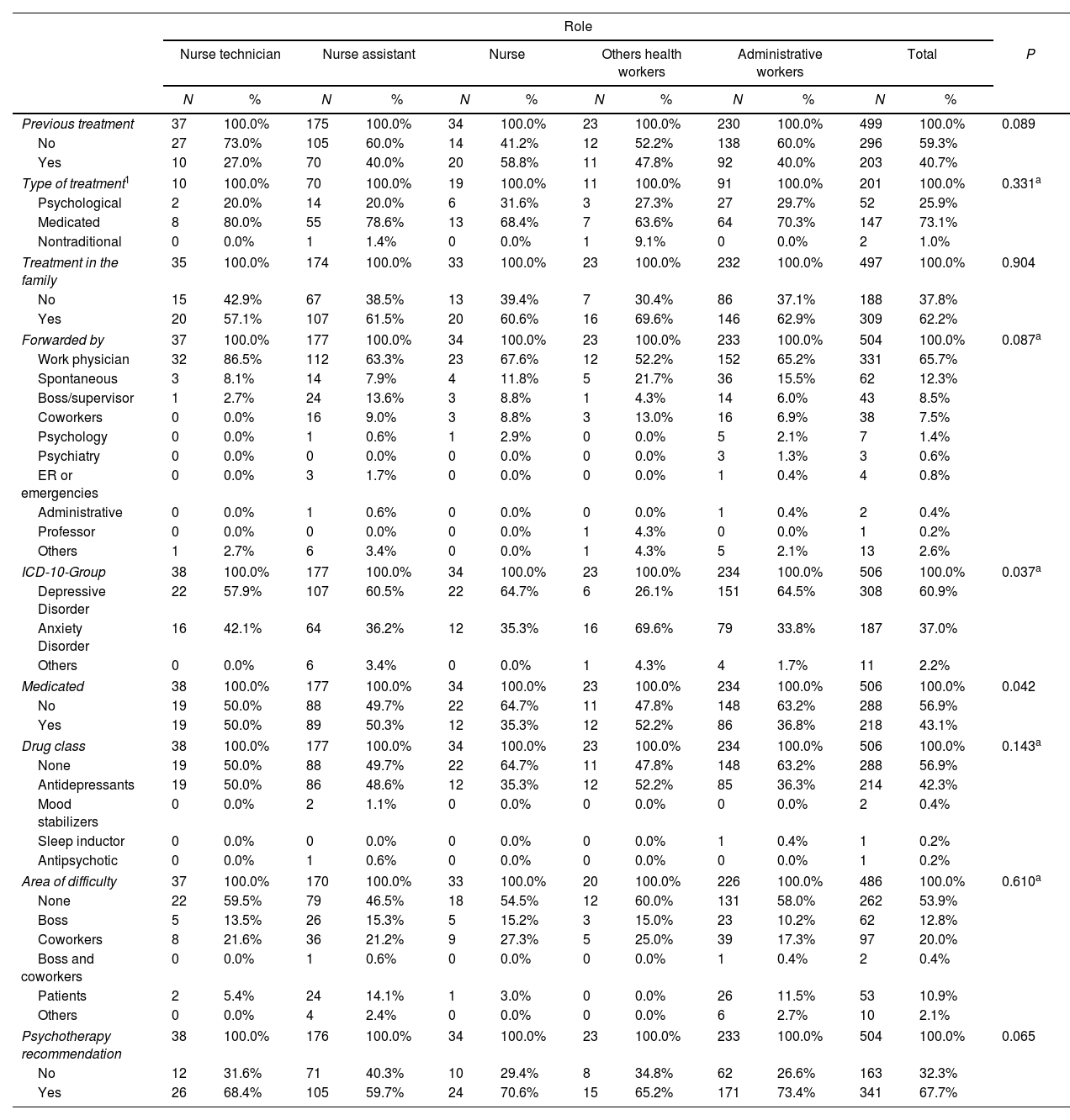
Table 1. Distribution of professionals by clinical characteristics, according to occupation.
Tables
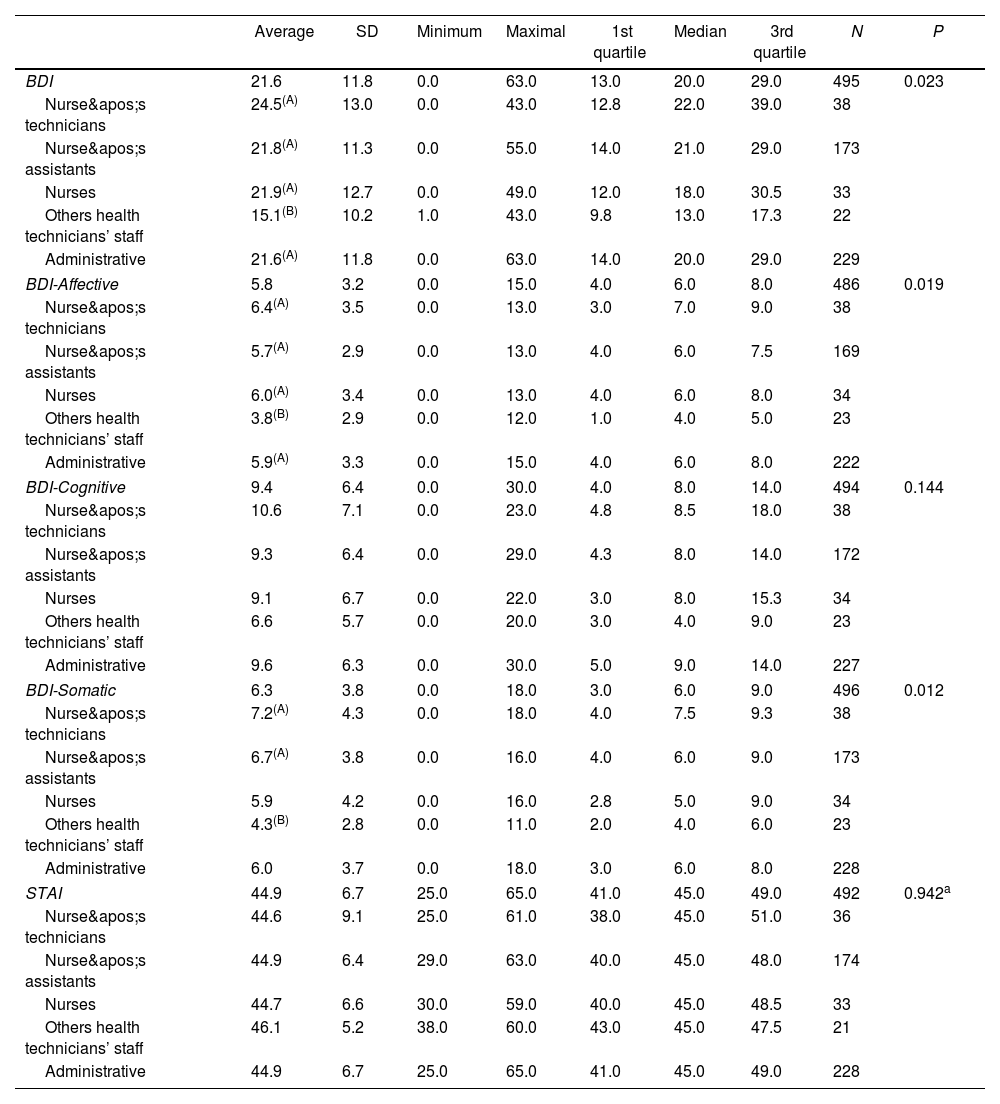
Table 2. Measures-summary of Beck Depression Inventory (BDI) (total and clusters) and the Spielberger State Anxiety Inventory (STAI-S), according to occupation.
Tables
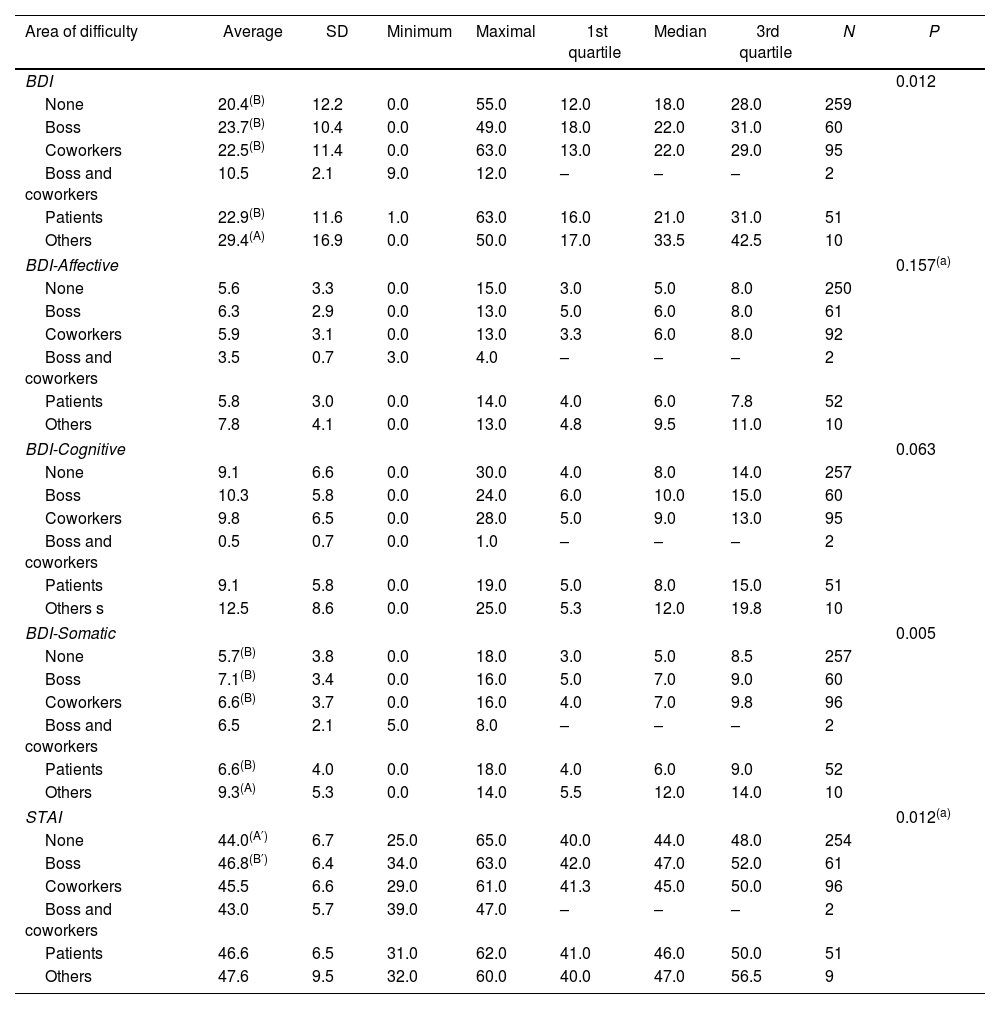
Table 3. Beck Depression Inventory (BDI) measures (total and clusters) and Spielberger State Anxiety Inventory (STAI-S) by areas of difficulty.
Tables
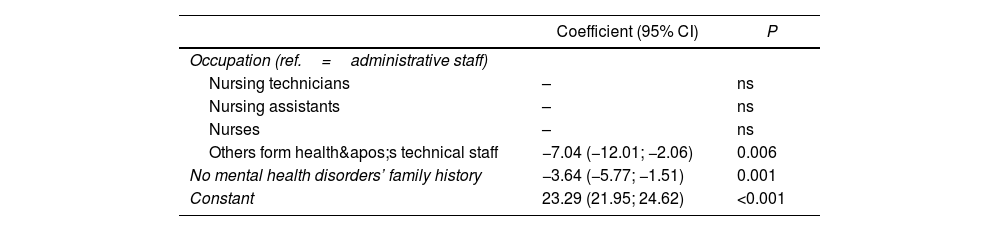
Table 4. Multiple linear regression model's estimates for total Beck Depression Inventory (BDI).
Tables
Table 5. Multiple linear regression model's estimates for Spielberger State Anxiety Inventory (STAI-S).
Tables
Show moreShow less
Additional material (1)
Abstract
Objective

This study aimed to investigate the association between occupation and depressive/anxiety symptoms, and education levels, among professionals from a Brazilian General Hospital in need of mental health treatment.

Design and setting

This is a cross-sectional study, involving professionals from a teaching hospital in São Paulo.

Methods

Socio-demographic data were collected as well as two standardized scales for depression and anxiety symptoms.

Results

Data from 506 employees seeking mental health assistance have been described: mean age was 34.6 years, 46.2% of them worked in the administrative sector, 35.0% were nursing assistants, 7.5% were nursing technicians, 6.7% were nurses, and 4.5% reported other occupations. According to the International Classification of Diseases-10th edition (ICD-10) criteria, the rates of diagnosis of depressive disorders and anxiety disorders were 60.9% and 37%, respectively. Nursing technicians and nursing assistants reported higher somatic cluster Beck Depression Inventory (BDI) scores (P=0.012) than other professionals of technical staff, but they were less inclined to receive a psychiatric diagnosis.

Conclusions

Our study demonstrated prevalence rates higher than similar studies in university hospitals, fact that associated with difficulties of the studied population as seeing themselves as sick, and the social discrimination suffered by people with mental disorders can make this problem even worse.

Keywords:
Mental health
Depression
Anxiety
Occupational groups
Outpatient clinics, hospital
Resumen
Objetivo

Este estudio tuvo como objetivo investigar la asociación entre la ocupación y los síntomas depresivos/ansiosos, los niveles de educación, entre los profesionales de un hospital general brasileño en necesidad de tratamiento de salud mental.

Diseño y escenario

Este es un estudio transversal, involucrando profesionales de un hospital escuela en São Paulo.

Métodos

Se recogieron datos sociodemográficos y dos escalas estandarizadas para síntomas de depresión y ansiedad.

Resultados

Se describen datos de 506 empleados que buscaban asistencia en salud mental: la edad media fue de 34,6 años, el 46,2% trabajaba en el sector administrativo, el 35,0% eran auxiliares de enfermería, el 7,5% eran técnicos de enfermería, el 6,7% eran enfermeros y el 4,5% reportaron otras ocupaciones. Según los criterios de la Clasificación Internacional de Enfermedades, 10.ª edición (CIE-10), las tasas de diagnóstico de los trastornos depresivos y los trastornos de ansiedad fueron del 60,9% y del 37%, respectivamente. Los técnicos y auxiliares de enfermería relataron puntajes más altos (P=0,012) del Inventario de Depresión de Beck del clúster somático que otros profesionales del cuerpo técnico, pero se mostraron menos inclinados a recibir un diagnóstico psiquiátrico.

Conclusiones

Nuestro estudio demostró tasas de prevalencia superiores a estudios similares en hospitales universitarios, hecho que asociado a las dificultades de la población estudiada para verse a sí mismos como enfermos, y la discriminación social que sufren las personas con trastornos mentales puede agravar aún más este problema.


Palabras clave:
Salud mental
Depresión
Ansiedad
Grupos profesionales
Servicio ambulatorio en hospital

Article

These are the options to access the full texts of the publication Revista Colombiana de Psiquiatría (English Edition)
Subscriber
Subscriber

If you already have your login data, please click here .

If you have forgotten your password you can you can recover it by clicking here and selecting the option “I have forgotten my password”
Purchase
Purchase article

Purchasing article the PDF version will be downloaded

Purchase now
Contact
Phone for subscriptions and reporting of errors
From Monday to Friday from 9 a.m. to 6 p.m. (GMT + 1) except for the months of July and August which will be from 9 a.m. to 3 p.m.
Calls from Spain
932 415 960
Calls from outside Spain
+34 932 415 960
E-mail
Article options
Tools
Supplemental materials