




A distorted body image and body dissatisfaction (BD) are key features of eating disorders (ED). Stressful life events (SLEs) are involved in the evolution of the illness. The study aims to evaluate the relationship between SLEs and disturbance in body image.
MethodCross-sectional, retrospective study. ED participants were outpatients from the unit care of ED. Healthy subjects (HS) were recruited by general advisements. A final sample of 119 (78 patients and 41 HS) was recruited. The traumatic life event questionnaire, the dissociative experiences scale, the Contour Drawing Rating Scale, and the eating disorder inventory (EDI) were used for assessment.
ResultsNo differences between groups were found in mean age, sex, level of study, or SLEs prevalence. ED patients reported significantly more levels of dissociative experiences, BD, and body misperception. ED patients who reported SLEs presented more levels of dissociation, bulimia, perfectionism, impulsivity, and overestimation of the shape in the mirror. Besides, patients who overestimated their shape seemed to show more impulsivity. BD correlated with social insecurity and binging in the control group. HS with overestimation of their shape presented more punctuation in the EDI subscale of bulimia.
ConclusionsED patients tend to overestimate their bodies more than HS both when they look in the mirror and when they feel their shape. Those with a greater number of SLEs have greater levels of dissociation. The presence of interpersonal SLEs determined more perfectionism, impulsivity, a distorted body image in the mirror, and a drive of thinness only in ED patients, while healthy subjects reported more anxiety, social insecurity, and non-planned impulsivity.
La distorsión y la insatisfacción de la imagen corporal son aspectos clave de los trastornos alimentarios (TA). Los eventos estresantes vitales (EEV) se han involucrado en la evolución de la enfermedad. El objetivo del presente trabajo es estudiar la relación entre los EEV y la distorsión de la imagen corporal.
MétodoSe realizó un estudio retrospectivo caso-control con 78 pacientes en tratamiento ambulatorio que se reclutaron consecutivamente en una unidad de TA, y 41 sujetos sanos. Para la evaluación se utilizaron el cuestionario de eventos traumáticos, la escala de experiencias disociativas, el test de la silueta y el inventario de trastornos alimentarios (EDI).
ResultadosNo hubo diferencia entre grupos para la edad, el sexo, el nivel de estudios o la prevalencia de EEV. Los pacientes con TA refirieron significativamente más experiencias disociativas, más insatisfacción y más distorsión corporal. Los pacientes con TA y EEV tenían más niveles de disociación, bulimia, perfeccionismo, impulsividad y sobreestimación de la silueta al espejo. Los pacientes más impulsivos presentan más distorsión de la imagen corporal. En los controles sanos la insatisfacción corporal se asocia a inseguridad social e impulsividad y, los que sobrestiman su silueta, muestran asociación positiva con la subescala EDI de bulimia.
ConclusionesLos pacientes con TA sobrestiman su figura, sea al espejo o sin él. Los que tienen más EEV presentan más experiencias disociativas. La presencia de EEV interpersonales determina más perfeccionismo, impulsividad, distorsión de la imagen corporal y obsesión para la delgadez solo en los pacientes, mientras que en los controles sanos se asocian a más ansiedad, inseguridad social e impulsividad no planificada.
Eating disorders (ED) are serious illnesses with a high psychiatric co-morbidity, as well as mortality, and a very important reduction in quality of life. ED patients change their eating behaviors to control their weight using different strategies such as reducing meals and increasing exercise in anorexia nervosa, or purging and dieting in bulimia nervosa. Besides, they have low body self-esteem, difficulties recognizing and regulating emotions, high impulsivity, and high levels of depression and anxiety.1
Drive for thinness, concerns about body image and body dissatisfaction have been associated with a poor course of the illness.2 The particular body self-image of ED patients causes a relapse once they have achieved psychopathological and weight restoration, and current therapies are useless.3–5
Body image and eating disordersThe development of our body identity is complex and it is based on psychological, social, neurological, and affective factors.6,7 It can be useful thinking about our body image as a construct made of three parts: (1) the perceptive one that helps us to estimate the body; (2) the behavioral that defines our actions toward it, and (3) the cognitive-affective one represented by the emotions and the concerns about it.7 Some studies suggest that the overestimation of the body is due to an alteration of the right parietal cortex, while our attitude toward it drifts from interpersonal, and social factors and is represented by body dissatisfaction.8,9
The construction of our body image begins in the first months of our life when we explore the environment, feel pain or hunger, or our parents touch us.10 A five years old child can already think about his body through the sensorial perception that he has been experimenting with, while social influence is responsible for the body's self-esteem during adolescence.6
Although body dissatisfaction is common in a no-clinical population, the relationship between ED patients and their shape is more complicated because they feel their body as an enemy that is always threatening.11–13 The quarrel about body image construct in ED patients is already open because of controversial results in the studies.14,15 For example, Hsu and Sobkiewicz (1991) do not believe that the body distortion of ED patients is due to a perceptual alteration. They hypothesize that negative emotions lead to a bad estimation of the body in ED patients.16 Indeed, beyond the controversy about ED body image, it is known how high levels of body dissatisfaction and distorted body perception are associated with a poor quality of life.17
Stressful life events and body image in patients with eating disordersDifferent studies reported the prevalence of SLEs in ED patients at 5–66%.18,19 In addition, poor functionality, more depression, and more concerns about shape and weight have been described in ED patients who have experienced multiple SLEs throughout their life.20,21
SLEs have been involved in body image construct among the social, interpersonal, and personal factors.6,8,14,15 A positive association between the lack of warm experiences during childhood and the presence of disordered eating, emotions such as shame, and body dissatisfaction in adulthood has been described.22
Childhood maltreatment, like emotional, physical, and sexual abuse, has been marked as a possible trigger or prognostic factor in ED.23–27 Bullying, natural disaster, losses of dear ones, and gender violence are other SLEs evaluated in ED patients.28–30
Studies about SLEs and body image use to explore the relationship between traumatic experience and the cognitive aspects of body dissatisfaction as concerns about weight and shape, or the body mass index (BMI).31,32 Data suggest a positive correlation with the severity of clinical presentation, especially with bulimic symptoms and distorted body Image.33 Besides the posttraumatic symptoms, dissociative experiences and emotional dysregulation have been identified as mediating factors between childhood adverse events and body dissatisfaction, mostly in binging disorder patients with high impulsivity.34–39
It is suggested that sexual violence presents a positive direct association with body dissatisfaction, while physical and emotional abuse before the age of eleven has been correlated with high BMI and body dissatisfaction.40,41 Emotional abuse has been associated with concerns about shape in bulimia nervosa, while physical abuse has been found in bulimic and binging disorder patients with more concerns about weight and more self-injury.42 Interfamilial emotional maltreatment and bullying have been reported in bulimia nervosa and binging disorder, mostly in patients who reported high BMI and posttraumatic symptoms.34,43
To the best of our knowledge, there are not a lot of studies about SLEs, ED, and body image. Research on maltreatment in ED focuses on the relationship between traumatic events and other psychopathological features of the illness as binges, and BMI. Results support the idea that adverse experiences generate posttraumatic symptoms and emotional dysregulation as a consequence of the negative emotions associated with SLEs.33–39 Negative emotions related to SLEs result in low self-esteem and a negative rumination about oneself in people who have been abused. The traumatic events create self-distrust, which people try to overcome by controlling their weight and body.41
We hypothesize that it is necessary to clarify this relationship because it could be the way to create new interventions. It is known resistance of distorted body image to current approaches.3,5
Considering that body dissatisfaction is a maintaining factor in ED and the distorted image a key feature of the illness, it is important to improve our knowledge about how SLEs take part in the development of body image.
We hypothesize that ED patients who have experienced different and continuous SLEs are more vulnerable and they create a safe world through control of body and food. If they feel ashamed or guilty, binging and purging could be the solution in an attempt to cope with these emotions. Body dissatisfaction would be the reflection of negative affectivity associated with the SLEs that they transfer to their body through a mechanism of dissociation.
The general objective of this study is to evaluate and describe characteristics of SLEs in patients with ED and to evaluate its relationship with a distorted body image.
Specific aims are
- a)
To study relationships between SLEs and some of the psychopathological features of the illness.
- b)
To study the possible association between SLEs and the level of dissociative symptoms.
- c)
To study a possible association between SLEs and perfectionism and impulsivity.
We realized a cross-sectional, case–control, retrospective study. It was approved by the ethics committee of the Miguel Servet Hospital (data approval: September 2020). Participants were adult outpatients, consecutively admitted to the unit care of ED of Zaragoza. We presented the research to the patients who started treatment. Inclusion criteria for the study were age between 18 and 65, diagnoses of bulimia nervosa, restrictive and purging anorexia nervosa, and binging disorder according to diagnostic criteria reported in the Diagnostic and statistical manual of Mental Disorders, fifth edition,44 good knowledge of the Spanish language, and providing the written informed consent. Exclusion criteria were BMI<15, high suicidal risk, presence of psychotic symptoms, or intellectual disability. A control group was represented by healthy subjects (HS). Recruitment of HS was performed with printed advisements of the study on the hospital bulletin board. People volunteered after reading the advisements. The sample size was calculated considering the prevalence of ED, characteristics of variables of the study, and the current size sample of other studies. Generally, size samples of ED studies range from 42 to 299 subjects.28,31,35–38 The final sample consisted of 119 (78 ED patients and 41 HS). ED patients were 96.8% women with a mean age of 37.7 years (range: 18–59, SD: 12.7) and a mean illness duration of 17.1 years (range: 1–47; SD: 2.9). The rest of the baseline characteristics are reported in Table 1.
Baseline characteristic of the ED sample.
| Total sample: 78 | ||
|---|---|---|
| Characteristic | N | % |
| Eating disorder diagnosis | ||
| Bulimia nervosa | 22 | 28.2 |
| Bulimia subclinical nervosa | 1 | 1.3 |
| Binge eating disorder | 7 | 9 |
| Subclinical binge eating disorder | 1 | 1.3 |
| Purging anorexia nervosa | 28 | 35.9 |
| Restrictive anorexia nervosa | 14 | 17.9 |
| Atypical anorexia nervosa | 1 | 1.3 |
| Other eating disorders not specified | 4 | 5.9 |
| Drug abuse | ||
| No | 73 | 93.6 |
| Yes | 5 | 6.4 |
| Education | ||
| Primary | 4 | 5.1 |
| Secondary | 21 | 26.9 |
| University | 53 | 67.9 |
| Marital status | ||
| Single | 19 | 24.4 |
| Married/living with a partner | 44 | 56.4 |
| Divorced | 15 | 19.2 |
| Employment | ||
| Presence | 46 | 59 |
| Unemployment | 32 | 51 |
| Social relationship | ||
| Good | 48 | 61.5 |
| Bad | 4 | 5.1 |
| Absence | 26 | 33.3 |
| Familiar relationship | ||
| Good | 52 | 62.7 |
| Bad | 17 | 21.7 |
| Absence | 9 | 11.6 |
The group control consisted of 41 subjects without mental disorders, with a mean age of 35.7 years (range: 19–60; SD: 11.3). The 90.2% of the control group were women, 90% were working, 78% had a university degree, and 90.2% were satisfied with their social and familial relationships.
All participants provided informed consent.
Measures and procedureAll subjects were assessed with a clinical interview for medical and psychiatric history to obtain the following variables: age, gender, ED diagnosis, drug abuse, illness duration, and the number of hospitalizations. On the day of the interview, we measured the height and weight to calculate BMI. Besides, we used different tests to assess ED clinical features, traumatic experiences, and body image:
- -
Traumatic Life Events Questionnaire (TLEQ): It is a self-report assessment with 23 items (dichotomous answer YES/NO) to evaluate different SLEs as physical aggression, sexual violence, interfamilial maltreatment, and war experiences among others. Subjects choose the most traumatic experiences, and they mark the age of the SLEs and the level of perturbation associated with it. It has been tested in different populations and it has demonstrated good psychometric properties (internal consistency ranges between 0.74 and 0.91).45
- -
Dissociative Experiences Scale (DES): It was developed by Bernstein and Putnam (1986) for the assessment of dissociative symptoms commonly associated with posttraumatic stress disorder. It contains 28 items; people must point out how many times (expressed in percentages from 0% to 100%) they have experienced the situation described in the test. We should search for posttraumatic stress disorder with scores above 30. It has been used in different studies with a clinical population. Its Cronbach's alpha coefficient is 0.59.46
- -
Body attitude test (BAT): It is a self-report questionnaire that evaluates the behavior toward the body, including both cognitive and emotional aspects. It contains 20 items on a 0–5 scale (0=never; 5=always) with a final score of up to 100. Punctuation superior to 36 is significant. It has a good internal consistency (Cronbach's alpha coefficient: 0, 92).47
- -
Body Shape Questionnaire (BSQ): This test assesses fear of getting fat, low self-esteem associated with shape, body dissatisfaction, and rumination about weight. It contains 34 questions (scale 1=never to 6=always) divided into two subscales; the final score range is 34–204, being significant above 105. Usually, it has been assessed with both clinical populations, and its Cronbach's alpha coefficient is 0.93–0.97.48
- -
Contour Drawing Rating Scale (CDS): It was developed and validated by Thompson and Gray (1995). Nine masculine and nine feminine drawing shapes compose it; they are precisely graduated size from number 1 to 9. The subjects must choose their ideal body and which drawing they think could represent their actual weight. We can measure body dissatisfaction and the presence of a distorted body image. It has been used in the nonclinical population to identify a person at risk for developing ED, and it has a good internal consistency (Cronbach's alpha coefficient=0.78).49
- -
Eating disorder inventory (EDI-2): This self-administered 91-item questionnaire on a 6-point Likert scale (1=never; 6=always) explores different clinical features of ED patients. Results are divided into 11 subscales: Drive for Thinness, Bulimia, Body Dissatisfaction, Ineffectiveness, Perfectionism, Interpersonal Distrust, Interoceptive Awareness, Maturity Fears, Ascetism, Impulse Regulation, and Social Insecurity. It allows for differentiation between ED patients and nonclinical populations; its internal consistency range is 0.83–0.93.50
- -
Bulimic Investigatory Test Edinburgh (BITE): This questionnaire with 30 items (answer YES/NO) describes the presence and severity of binge eating. It has good validity (Cronbach's alpha coefficient=0.62–0.96); scores above 10 suggest active bulimia nervosa.51
- -
Barratt Impulsivity Scale (BIS): It is a self-administered scale used for the assessment of impulsiveness. It is composed of 30 items on a Likert answer (0=never to 4=always or almost always), divided into 3 scales to evaluate no planned impulsivity, motor impulsivity, and cognitive impulsivity. Every scale has been validated in different populations with Alpha Cronbach 0.72, 0.74, and 0.59 respectively. For this study, we have considered total punctuation (range: 30–120).52
- -
State-trait anxiety inventory (STAI): This questionnaire values levels of anxiety as a permanent characteristic of the temper and as a state. It is a self-report with 40 items on a 4-point Likert scale (0=not at all; 3=very much) with good psychometric properties (Cronbach's alpha coefficient=0.87–0.92).53
Recruitment was performed from January 2021 to May 2022. When patients begin the treatment in the unit, if they fulfilled the inclusion criteria, they were offered to participate in the study. Participants who were accepted went to the hospital for a personal interview where they signed the informed consent and fill up the questionnaires after an evaluation with the researcher. The control group wrote a mail to the researcher, and they were given an appointment, too. Each subject answers a face-to-face interview for general information. Contour Drawing Rating Scale was performed with the interviewer to identify: (a) the ideal body image of the subject; (b) the silhouette they thought they had when they saw themselves in the mirror; (c) the body they thought had, feeling it (no-visual shape) and; (d) the real body according to the actual and current BMI.49
The primary outcome measure was the presence of SLEs. To study the relationship between SLEs and body image, we have considered different categories to perform the analysis: (1) the presence of SLEs versus absence; (2) the presence of childhood maltreatment before age of thirteen; (3) the presence of sexual abuse; (4) level of perturbation; (5) presence of interpersonal SLEs versus impersonal SLEs; and (6) number of SLEs. Secondary outcomes were BMI (as a continuous variable), body dissatisfaction, and the presence of distorted body image measured by the Contour Drawing Rating Scale.49 We divided the variable distorted body image into three categories: 1=overestimation of the silhouette, 2=underestimation of the silhouette, and, 3=absence of distorted body image.
Statistical analysisAll statistical analyses and outputs were performed using the Statistical Package for Social Science 24.0.54 We performed the T-Student and Mann–Whitney tests for continuous measures and Fisher exact test for ordinal measures to study the homogeneity between patients and the control group. First, we realized correlations to study associations among different variables. Besides, a t-test was used to evaluate significant differences in the number of SLEs, levels of dissociative experiences, and body dissatisfaction between ED patients and healthy subjects. Secondly, a chi-squared test was performed to study differences between categorical variables. Linear regression models were calculated to analyze the predictive role of variables such as having suffered an adverse interpersonal life experience before the age of 13 on body distortion (measured with CDS) and the psychological variables perfectionism and impulsivity (EDI-2). All tests were 2-tailed with alpha at 0.05 for statistical significance.
ResultsAnalysis of homogeneity between ED patients and the control group found no difference for age (p=.279), the prevalence of SLEs (p=.573), or percentage of female gender (p=.421).
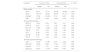
Characteristics of SLEs and body imageThe presence of SLEs was reported in 91% of ED patients and 78% of the control group. ED patients reported significantly more sexual abuse and more interpersonal SLEs. Characteristics of traumatic experiences are described in Table 2.
Characteristics of traumatic experience.
| Variable | ED (N: 78) | HS (N: 41) | ||
|---|---|---|---|---|
| N | % | N | % | |
| Absence of SLEs | 8 | 10.3 | 8 | 19.5 |
| Type of SLEs | ||||
| Impersonal | 30 | 38.5 | 20 | 48.8 |
| Interpersonal | 40 | 51.3* | 13 | 21.7 |
| Number of SLEs | ||||
| 2–4 | 30 | 38.5 | 20 | 48.8 |
| >4 | 34 | 43.6* | 5 | 12.2 |
| Emotional impact | ||||
| Mild | 2 | 2.6 | 4 | 9.8 |
| Moderate | 13 | 16.7 | 19 | 46.3 |
| Serious | 23 | 29.5 | 9 | 22 |
| Extreme | 30 | 38.5* | 2 | 4.9 |
| Duration of SLEs | ||||
| Single | 43 | 55.1 | 26 | 63.4 |
| Continuous | 27 | 34.6 | 8 | 19.5 |
| Childhood SLEs (<13 years) | 40 | 51.3* | 6 | 14.6 |
ED patients reported significantly more levels of dissociative experiences (p<0.001), body dissatisfaction (p<0.001), and body misperception both in the mirror (p=.001) and without it (p=.037). The rest of the psychopathological differences between groups are described in Table 3.
Psychopathological differences between ED patients and healthy subjects reporting traumatic experiences.
| Variable | ED (N:71/78) | HS (N:32/41) | p* SLEs | ||
|---|---|---|---|---|---|
| Mean | SD | Mean | SD | ||
| Body image | |||||
| BAT | 62.77 | 27.21 | 26.56 | 10.98 | .000 |
| BSQ | 125.74 | 48.83 | 65.18 | 19.14 | .000 |
| EDI-BD | 17.08 | 10.83 | 5.12 | 5.03 | .000 |
| BMI | 25.78 | 8.36 | 23.28 | 3.29 | .075 |
| ED psychopathology | |||||
| BITE-S | 16.33 | 8.55 | 3.87 | 3.31 | .000 |
| BITE-G | 7.63 | 7.24 | 1.09 | 1.98 | .000 |
| EDI-DT | 13.39 | 18.59 | 2.56 | 3.47 | .000 |
| EDI-B | 3.07 | 4.09 | 0.46 | 1.58 | .000 |
| EDI-I | 8.36 | 6.29 | 1.62 | 3.41 | .000 |
| EDI-ID | 5.35 | 3.89 | 3.00 | 2.55 | .003 |
| EDI-P | 7.16 | 4.19 | 3.59 | 3.32 | .000 |
| General psychopathology | |||||
| DES | 14.28 | 14.26 | 4.34 | 3.22 | .000 |
| BIS-NPI | 16.28 | 6.80 | 13.28 | 3.53 | .023 |
| BIS-MI | 17.77 | 7.91 | 11.40 | 5.12 | .000 |
| BIS total | 49.59 | 15.29 | 35.87 | 8.09 | .000 |
Abbreviations. ED: eating disorders; HS: healthy subjects; SLEs: stressful life events; BAT: body attitude test; BSQ-PP: body shape questionnaire; EDI-BD: Eating Disorder Inventory, subscale body dissatisfaction; BMI: body mass index; BITE-S: Bulimic Investigatory Test Edinburgh subscale symptoms; BITE-G: Bulimic Investigatory Test Edinburgh subscale severity; EDI-DT: Eating Disorder Inventory, subscale drive for thinness; EDI-B: Eating Disorder Inventory, subscale bulimia; EDI-I: Eating Disorder Inventory subscale impulsivity; EDI-ID: Eating Disorder Inventory subscale interpersonal distrust; EDI-P: Eating Disorder Inventory subscale perfectionism; DES: Dissociative experiences scale; BIS-NPI: Barrat Impulsivity scale, no-planned impulsivity; BIS-MI: Barrat Impulsivity scale, motor impulsivity; BIS-total: Barrat Impulsivity scale, total score.
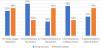
The 45% of ED patients overestimate their shape versus 22% of healthy subjects. This distorted body image was present both in the mirror and without it (see Fig. 1). ED patients who have experienced some SLEs throughout their life have significantly longer evolution of the illness (p=.018), and greater levels of dissociative experiences (p<0.001). Besides, they have experienced more SLEs more frequently in childhood and with a greater level of perturbation.
Relationship between SLEs and body imageED patients
When we consider the presence of SLEs in childhood, we found more overestimation both at the mirror and without in patients who reported SLEs before thirteen, although the difference did not achieve significance (p=.061). Linear regression models show as having suffered SLEs before 13 predicts impulsivity (p=.044) and perfectionism (p=.022).
Having experienced interpersonal SLEs versus impersonal SLEs was associated with more level of perfectionism (p=.041), impulsivity (p=.049), and drive of thinness (p=.013), measured with EDI-2, and a distorted body image at the mirror (p=.029) in patients with an interpersonal traumatic event.
The presence of sexual abuse was associated with a greater level in the EDI-2 scale of bulimia (p=.018) but not with a greater distorted body image.
Patients who reported more than 4 SLEs presented greater levels of dissociation (p=.028) and a distorted body image in the mirror (p=.024).
Chi-square analyses with other categories of the patient's sample found that ED subjects with familiar obesity tend to overestimate their silhouette (p=.050) and, if we consider performing ED diagnostic by group (restrictive versus impulsive), patients with bulimic symptoms present more distorted body image in the mirror (p=.048).
Healthy subjectsThe analysis of SLEs in HS shows the presence of higher levels of anxiety (p=.049) when we considered the presence versus absence of SLEs, but we did not find a relationship with a distorted body image.
The analysis of other categories (interpersonal versus impersonal; level of perturbation, childhood SLEs, sexual abuse, and number of SLEs) did not find differences in means of body dissatisfaction, or in distorted body image both in the mirror or how subjects feel their body.
Sexual abuse identified subjects with higher levels of no planned impulsivity (p=.022) and interpersonal traumatic events were associated with social insecurity (p=.031).
Correlations in ED patientsCorrelation analyses (p-value significant<.05) show how patients with long duration of SLEs had an onset of the illnesses at lower ages; besides the number of SLEs correlated with the level of dissociation but not with a distorted body image. Patients with continuous trauma have greater levels of impulsivity.
DES levels have a positive association with higher body dissatisfaction (measured with CDS, BSQ, and BAT), EDI's scales of bulimia, perfectionism, impulsivity, and with the severity of bulimic symptoms.
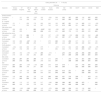
Levels of perfectionism were associated with an overestimation of the silhouette, more body dissatisfaction, and levels of dissociation but we did not find an association with lower BMI. In Table 4 we resume correlations among the primary outcomes of the study.
Correlation between primary outcomes (SLEs, BD, distorted image) and other variables (DES, EDI-subscale perfectionism and bulimia, STAI, BIS, number of hospitalization).
| Eating disorders (N=71*SLEs) | |||||||||||||
|---|---|---|---|---|---|---|---|---|---|---|---|---|---|
| Outcome | |||||||||||||
| Outcome | Illness duration | N° hospital. | DBI at the mirror | DBI without the mirror | SLEs number | SLEs duration | DES | BD (CDS) | BIS | EDI-P | EDI-I | EDI-B | BMI |
| Illness duration | |||||||||||||
| Correlation | 1 | .121 | .089 | −.025 | .183 | −.054 | .098 | .352 | .327 | .252 | .106 | .367 | .352 |
| p-Value | . | .316 | .458 | .833 | .126 | .657 | .418 | .003 | .005 | .034 | .377 | .002 | .003 |
| N° hospital | |||||||||||||
| Correlation | .121 | 1 | .200 | .176 | .082 | .040 | .182 | .287 | .231 | .144 | .343 | .115 | −.022 |
| p-Value | .316 | . | .095 | .142 | .997 | .742 | .128 | .015 | .053 | .231 | .003 | .339 | .856 |
| DBI at the mirror | |||||||||||||
| Correlation | .089 | .200 | 1 | .864 | −0.227 | .090 | −.095 | .357 | −.038 | .194 | .231 | .137 | −.352 |
| p-Value | .458 | .095 | . | .000 | .056 | .456 | .433 | .002 | .756 | .105 | .053 | .255 | .003 |
| DBI without the mirror | |||||||||||||
| Correlation | −.025 | .176 | .864 | 1 | .138 | .107 | −.105 | .380 | −.136 | .259 | .199 | .042 | −.441 |
| p-Value | .833 | .142 | .000 | . | .250 | .377 | .382 | .001 | .257 | .029 | .096 | .728 | .000 |
| SLEs number | |||||||||||||
| Correlation | .183 | .082 | −.227 | .138 | 1 | .075 | .395 | .139 | .232 | .017 | .104 | .017 | .145 |
| p-Value | .126 | .997 | .056 | .250 | . | .535 | .001 | .248 | .051 | .890 | .388 | .890 | .229 |
| SLEs duration | |||||||||||||
| Correlation | −.054 | .040 | .090 | .107 | .075 | 1 | −.018 | .010 | .044 | .208 | .296 | −.048 | −.078 |
| p-Value | .657 | .742 | .456 | .377 | .535 | . | .884 | .932 | .715 | .085 | .013 | .692 | .523 |
| DES levels | |||||||||||||
| Correlation | .098 | .182 | −.095 | −.105 | .395 | −.018 | 1 | .243 | .415 | .236 | .456 | .398 | .230 |
| p-Value | .418 | .128 | .433 | .382 | .001 | .884 | . | .041 | .000 | .048 | .000 | .001 | .054 |
| BD (CDS) | |||||||||||||
| Correlation | .352 | .287 | .357 | .380 | .139 | .010 | .243 | 1 | .310 | .413 | .421 | .388 | .409 |
| p-Value | .003 | .015 | .002 | .001 | .248 | .932 | .041 | . | .008 | .000 | .000 | .001 | .000 |
| BIS | |||||||||||||
| Correlation | .327 | .231 | −.038 | −.136 | .232 | .044 | .415 | .310 | 1 | .271 | .716 | .497 | .230 |
| p-Value | .005 | .053 | .756 | .257 | .051 | .715 | .000 | .008 | . | .022 | .000 | .000 | .054 |
| EDI-P | |||||||||||||
| Correlation | .252 | .144 | .194 | .259 | .017 | .208 | .236 | .413 | .271 | 1 | .258 | .308 | .020 |
| p-Value | .034 | .231 | .105 | .029 | .890 | .085 | .048 | .000 | .022 | . | .030 | .009 | .869 |
| EDI-I | |||||||||||||
| Correlation | .106 | .343 | .231 | .199 | .104 | .296 | .456 | .421 | .716 | .258 | 1 | .473 | .106 |
| p-Value | .377 | .003 | .053 | .096 | .388 | .013 | .000 | .000 | .000 | .030 | . | .000 | .377 |
| EDI-B | |||||||||||||
| Correlation | .367 | .115 | .137 | .042 | .017 | −.048 | .398 | .388 | .497 | .308 | .473 | 1 | .245 |
| p-Value | .002 | .339 | .255 | .728 | .890 | .692 | .001 | .001 | .000 | .009 | .000 | . | .040 |
| BMI | |||||||||||||
| Correlation | .352 | −.022 | −.352 | −.441 | .145 | −.078 | .230 | .409 | .230 | .020 | .106 | .245 | 1 |
| p-Value | .003 | .856 | .003 | .000 | .229 | .523 | .054 | .000 | .054 | .869 | .377 | .040 | . |
Abbreviations. N°: number; DBI: distorted body image; SLEs: stressful life events; DES: Dissociative Experiences Scale; BD: body dissatisfaction; CDS: Contour Drawing Rating Scale; BIS: Barratt Impulsivity Scale; EDI-P: Eating Disorder Inventory-Perfectionism; EDI-I: Eating Disorder Inventory-impulsivity; EDI-B: Eating Disorder Inventory-Bulimia; BMI: body mass index.
When correlations were repeated controlling for the DES levels the positive association between years of SLEs and lower age of onset of traumatic experience disappeared and we found a new positive correlation between the number of SLEs and the BMI. Moreover, a negative correlation with distorted body image appeared indicating how ED patients with more SLEs tend to underestimate their silhouette. The correlation between continuous SLEs and impulsivity disappeared and an association between BMI and a distorted body image in the mirror appeared. The positive correlation between body dissatisfaction (measured with CDS) and both BMI and impulsivity measured with BIS disappeared. The association between levels of BIS and the number of hospitalizations was no longer significant and it appeared a negative correlation between BIS impulsivity levels and distorted body image.
Correlations of perfectionism EDI scale did not change, while a positive association between the EDI bulimia scale and BMI disappeared and it appeared a positive correlation between the EDI impulsivity scale and distorted body image both visual and no-visual. BMI presented a new negative correlation with SLEs number and SLEs duration.
Correlations in healthy subjectsCorrelation analysis in HS (all results in the significant tail for p value<.05) did not find a positive correlation between SLEs number and overestimation of the silhouette at the mirror nor with DES levels as we found in ED patients. A positive association between SLEs duration and impulsivity EDI scale was not significant. On the other hand, greater levels of body dissatisfaction had a positive significant correlation with EDI-social insecurity, binging, age, high BMI, and continuous trauma. Overestimation of the shape was present in people with lower BMI and in those with higher punctuations of bulimia EDI scale.
Higher levels of perfectionism were found in subjects with higher levels of DES punctuation and more body dissatisfaction. BMI presented a negative correlation with distorted body image both in the mirror and without, but there was no association with the bulimia EDI scale.
Impulsivity measured with BIS had a positive correlation with perfectionism and impulsivity EDI scales. The Bulimia EDI scale presented a positive association with BIS levels and impulsivity EDI scale, but it was no significant correlation with body dissatisfaction, nor with perfectionism EDI scale as we found in ED patients.
When we reproduce the analysis controlling for DES levels the positive correlation between the SLEs number and overestimation at the mirror disappeared. Body dissatisfaction measured with BAT had a positive correlation with the duration of SLEs.
DiscussionTo our knowledge, this is the first study that tries to distinguish between the visual and no-visual estimation of silhouette using a depictive test (CDS) for measuring body dissatisfaction and distorted body image.
The general aim of this study was to evaluate and describe the characteristics of SLEs and to evaluate their relationship with body dissatisfaction and a distorted body image in patients with ED. As we expected ED patients tend to overestimate their bodies more than HS both in the mirror and without. It seems that ED patients see and feel their bodies in the same way, while HS tend to underestimate their shape more when they do not use the mirror. Both groups reported more body dissatisfaction with higher BMI; this fact aligns with the social aspect of the body image construct presents an ideal thin body and it has been reported in different studies.11 Otherwise, traumatic experiences did not generate the same body image in both groups.
Generally, interpersonal SLEs (as sexual, emotional, and physical abuse, bullying, and interfamilial violence) have been related to body dissatisfaction both in ED patients and subjects without any mental illness, and positive correlations with BMI have been reported, usually through binging behavior.32–34,55 High BMI uses to be associated with physical or sexual abuse, and emotional abuse has been described in people with low weight.36–38,56 As exceptions, the study of Groff and Wilke (2016) reported a direct association between sexual abuse and binging, and the distorted body image seemed to be an independent variable that predicted low BMI.57 Sexual abuse has been described in patients with purging anorexia nervosa with high body dissatisfaction and posttraumatic symptoms.58 In our study sexual abuse was associated with bulimic symptoms, but it was not related to body misperception unlike what has been reported in other research.59
Dissociative experiences have been described in patients with posttraumatic symptoms and different studies reported associations between the number of traumatic experiences and the presence of posttraumatic stress disorder, the worst evolution of the illness, and bulimic symptoms.39–41 Dissociation and emotion dysregulation has been reported in ED patients with binging disorder having suffered bullying or sexual abuse.35,58,60 These patients use binging to cope with their shame or blame, and they use to have more concerns about body and shape.22,60 We found that patients with a greater number of traumas have greater levels of dissociation and an almost significant correlation with underestimation of the silhouette in the mirror. Our results show the presence of body dissatisfaction in the patients with high BMI and underestimation of the silhouette both in the mirror and without it, but when we controlled for DES levels, we found the presence of multiple SLEs and continuous trauma in patients with lower BMI. Moreover, impulsivity had almost a significant association with overestimation in the mirror.
Impulsivity and perfectionism are two specific aspects in ED patients.1,61,62 Perfectionism is considered a risk factor for ED behaviors.63 Egan et al. (2011) suggested that perfectionism can be a predictive factor of ED evolution.62 It has been hypothesized as people with high perfectionism are more vulnerable to stressful relationships.64 In our study presence of interpersonal SLEs determined more perfectionism, impulsivity, a distorted body image in the mirror, and drive of thinness only in ED patients, while healthy subjects reported more anxiety, social insecurity, and non-planned impulsivity. Patients with more levels of perfectionism presented more body dissatisfaction and more dissociative experiences. Moreover, levels of perfectionism correlated with altered body misperception without the mirror (no-visual perception of the body). When we repeated correlation controlling for DES levels, the positive relationship between perfectionism and overestimation of the silhouette without the mirror was no longer significant. Some studies have described a good visual perception of the body in anorexia nervosa patients with lower BMI; nevertheless, they present high levels of body dissatisfaction because of the presence of emotions such as shame.22,65 Patients in our study seem to present a good ability to scan their body in the mirror because of their perfectionist traits, but when we ask them to close their eyes and to choose their shape they failed more. It can be hypothesized that scanning the body is a way to cope with negative emotions in patients with more dissociative experiences. It has been suggested in other studies how dissociative symptoms are related to binges and starvation in ED patients with emotion dysregulation.35,66 We hypothesize that ED patients with SLEs try to control their food and their body as a way to control their feeling of helplessness.
Both the EDI-scale impulsivity and perfectionism had a strong positive association with DES levels, but we did not find a correlation with BMI. On the other hand, the bulimia EDI scale is related to BMI, and DES levels but it has no association with distorted body image. Usually, more concerns about the shape are associated with bulimia and more perceptive distortion to anorexia.65 Otherwise, in our study impulsive ED patients (bulimia nervosa, binging disorder, and purging anorexia nervosa) had significantly more levels of distorted body image. Yet, the SLEs seem to generate dissociative experiences that modulate impulsivity. Although we cannot establish a causal relationship, it may be that people with greater BMI and greater body dissatisfaction start with restrictive behavior to control their weight; those with SLEs and dissociation tend to have higher impulsivity and binging, they get frustrated in their attempts, getting trapped in the binging purging circle, so to achieve the ideal silhouette. It can be suggested that SLEs generate restrictive eating or binging in people with low self-esteem or with alexithymia that cannot cope with the emotions created by the trauma.63,64
To conclude:
- •
The presence of interpersonal SLEs determined more perfectionism, impulsivity, a distorted body image in the mirror, and a drive of thinness only in ED patients, while healthy subjects reported more anxiety, social insecurity, and non-planned impulsivity.
- •
Patients with a greater number of traumas have greater levels of dissociation and an almost significant correlation with underestimation of the silhouette in the mirror.
- •
Patients present more no-visual body distortion, maybe for the presence of negative emotions due to the trauma.
- •
Binges are a way to cope with negative emotions.
As we can see the quarrel about body image is far to be concluded, but we tend to support Hsu's idea that distortion of the shape in ED patients is not an alteration of the visual perception but an alteration of feelings.16 Attention to ED patients should incorporate specific treatment for patients who reported traumatic events.
Strength and limitationsThese results must be considered within the limitations of the study. The size sample is small and we cannot use more powerful statistical analysis to evaluate the cause-effect relationship. Besides, it is retrospective and part of the questionnaires were answered anonymously. Even though the use of retrospective and self-report questionnaires has been criticized because it can be vulnerable to memory bias, other study reports few false positive cases.67,68 Moreover, participation was anonymous and we think people answered honestly. The ED diagnoses were made by expert clinicians in ED using DSM5 criteria,44 and a group control was included. It is the first study to distinguish between feeling the body and seeing it, to separate visual perception from the emotional perception of the body. This distinction could be useful to think about new treatment approaches based on mindful self-care.5
Financial disclosureNone.
Conflicts of interestThe authors have no conflicts of interest to declare.
To the Primary Care Prevention and Health Promotion Research Network (RedIAPP).
Part of the study has been presented as a poster presentation at the 2021 Virtual International Conference on Eating Disorders.


