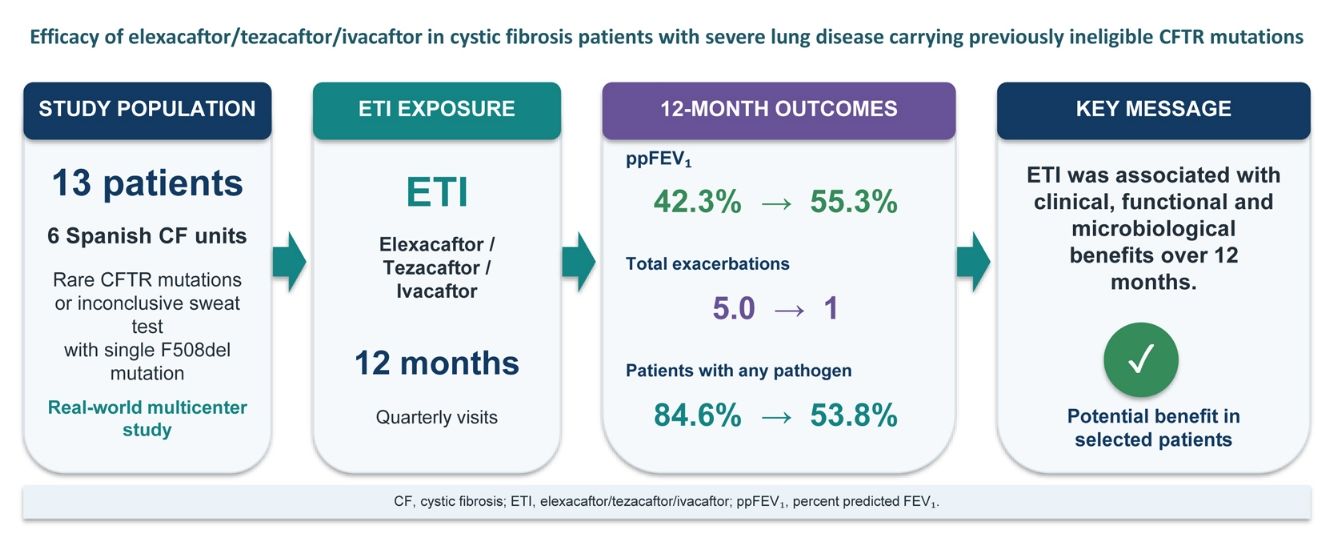
Cystic fibrosis transmembrane conductance regulator (CFTR) modulators have transformed cystic fibrosis (CF) treatment. Elexacaftor/tezacaftor/ivacaftor (ETI) is approved for patients with F508del, but individuals with rare mutations or uncharacterized genotypes often lack therapeutic options. We evaluated ETI efficacy over 12 months in this population at a time when CFTR modulator therapy was not approved for use in these mutations, although some variants have since been included in updated clinical indications.
Material and methodsProspective multicenter real-world study including 13 patients from 6 Spanish CF units treated under a compassionate use program. Inclusion criteria were age ≥12 years, rare CFTR mutations or inconclusive sweat test with single F508del mutation, and advanced lung disease. ETI was administered at standard doses with quarterly follow-up over 12 months. Outcomes included percent predicted forced expiratory volume in 1s (ppFEV1), sweat chloride (SWCl), exacerbations, sputum microbiology, body mass index (BMI), and concomitant therapies.
ResultsMean age was 34 years; 53.8% were female; baseline ppFEV1 was 42.3% and SWCl 92.5mmol/l; 61.5% had chronic Pseudomonas aeruginosa infection. After 12 months, SWCl decreased in most patients except those carrying N1303K. ppFEV1 improved by 13% (95% CI, 5.5–32), with fewer exacerbations and hospitalizations. Pathogen prevalence decreased from 84.6% to 53.8%. Antibiotic and inhaled therapy use decreased, while BMI increased and respiratory symptoms improved.
ConclusionETI therapy in CF patients with rare mutations showed clinical, functional, and microbiological benefits. These findings support the potential benefit of ETI in selected patients with severe disease carrying previously ineligible CFTR variants. The safety profile was consistent with that previously described for ETI.
Los moduladores de cystic fibrosis transmembrane conductance regulator (CFTR) han transformado el tratamiento de la fibrosis quística (FQ). Elexacaftor/tezacaftor/ivacaftor (ETI) está aprobado para pacientes con FQ portadores de F508del, sin embargo, las personas con mutaciones raras o genotipos no caracterizados a menudo carecen de alternativas terapéuticas. En el momento del estudio, no existía indicación aprobada para el uso de moduladores de CFTR en estas mutaciones, aunque algunas han sido posteriormente incluidas en indicaciones clínicas actualizadas. El objetivo fue evaluar la eficacia de ETI durante 12 meses en esta población.
Material y métodosEstudio prospectivo multicéntrico en vida real que incluyó a 13 pacientes de seis unidades españolas de FQ tratados mediante uso compasivo. Los criterios de inclusión fueron edad ≥12 años, mutaciones raras de CFTR o test del sudor inconcluso con una única mutación F508del, y enfermedad pulmonar avanzada. ETI se administró a dosis estándar con seguimiento trimestral durante 12 meses. Las variables evaluadas incluyeron ppFEV1, cloro en sudor, exacerbaciones, microbiología del esputo, índice de masa corporal (IMC) y tratamientos concomitantes.
ResultadosLa edad media fue de 34 años, el 53,8% eran mujeres, el ppFEV1 basal fue 42,3% y el cloro en sudor 92,5 mmol/L, el 61,5% presentaba infección crónica por Pseudomonas aeruginosa. A los 12 meses, el cloro en sudor disminuyó en la mayoría de los pacientes excepto en aquellos portadores de N1303K. El ppFEV1 mejoró un 13% (IC 95% −5,5 a 32), con menos exacerbaciones y hospitalizaciones. La prevalencia de patógenos disminuyó del 84,6% al 53,8%. También se redujo el uso de antibióticos y terapias inhaladas, junto con un aumento del IMC y mejoría de los síntomas respiratorios.
ConclusiónEl tratamiento con ETI en pacientes con FQ con mutaciones raras mostró beneficios clínicos, funcionales y microbiológicos. En el momento del estudio no existía indicación aprobada para el uso de moduladores de CFTR en estas mutaciones. El perfil de seguridad fue consistente con el previamente descrito para ETI.

Cystic fibrosis (CF) is an autosomal recessive genetic disease caused by mutations in the CF transmembrane conductance regulator (CFTR) gene that affects over 85,000 people worldwide. The paradigm of this disease has undergone a significant transformation with the introduction of novel CFTR modulators (CFTRm) drugs. Four CFTRm (ivacaftor, lumacaftor, tezacaftor, and elexacaftor) are currently available. The combination elexacaftor/tezacaftor/ivacaftor (ETI) was approved by the Food and Drug Administration (FDA) in 2019 and by the European Medicines Agency (EMA) in August 2020. ETI is indicated for treating CF in patients aged ≥6 years with at least 1 F508del mutation in CFTR1 and the EMA has approved ETI for all patients >2 years old, except homozygotes for class I.
On the basis of accumulating in vitro evidence, in December 2020 the FDA expanded the indications for ivacaftor, tezacaftor/ivacaftor and ETI to include more than 180 additional rare CFTR mutations. This substantially increased the number of patients potentially eligible for CFTR modulator therapy. However, many patients carrying very rare or uncharacterized variants remained without approved therapeutic options.2 At the time this study began, ETI was not approved in Europe for the variants included in this cohort. Nevertheless, several of these variants have subsequently been incorporated into expanded indications following emerging in vitro and clinical evidence. This expansion increases the number of patients who may benefit from these novel CFTR modulator therapies. Nevertheless, patients with less common mutations that make them unsuitable for participation in clinical trials still exist. To address rare mutations like N1303K, tools such as cellular models known as theratyping have been developed.3 Additionally, there is a subgroup of patients who, despite having an F508del on one allele, have not had another variant identified on the other allele because complete genetic sequencing is not feasible. According to the 2021 Spanish CF Registry, the allelic frequency of the mutations of F508del mutation is 50.5%, N1303K is 2.68%, R334W is 2.3%, 1811+1.6kbA→G is 1%, and 0.55% is R347P.4 ETI efficacy has been tested in rare class II mutations such as N1303K, using nasal epithelial cell cultures, demonstrating the restoration of protein function post-drug administration.5 These results suggest a clinical response comparable to that observed in Phe508del mutations.6 Despite limited clinical experience, reports on the use of ETI as a treatment for people with CF (pwCF) with rare mutations have been published.7,8
This study aimed to evaluate the clinical, functional and microbiological outcomes of ETI after 12 months of treatment in pwCF with severe lung disease carrying rare or previously ineligible CFTR variants, or the F508del variant with a second unidentified CFTR variant, treated under compassionate use conditions. We report the experience of Spanish CF units involved in the treatment of CF that are striving to find a therapeutic response for the greatest number of their patients.
Material and methodsWe conducted a prospective, multicenter, real-world study involving 13 individuals attended in 6 Spanish CF units. Inclusion criteria comprised individuals aged ≥12 years with a confirmed diagnosis of CF carrying selected CFTR variants (N1303K, P205S, 1811+1.6KbA>G, R334W, R347P, G542X, W1089X, G628R, L1065P, Q1313X, D1152H, L365P, and R1066C). A subgroup of individuals with a clinical phenotype highly suggestive of CF was also included. These individuals had bronchiectasis documented by high-resolution computed tomography, chronic bronchial infection, and frequent pulmonary exacerbations, carried a single identified F508del variant with no second CFTR variant identified, and had negative or inconclusive sweat chloride (SWCl) tests.
All patients received a daily dose of 200mg elexacaftor, 100mg tezacaftor every 24h, and ivacaftor 150mg every 12h. Patients were followed up every 3 months during the 12-month treatment period. Patients received ETI as part of routine clinical care under a compassionate use program. The study was observational, and no treatment decisions were determined by the study protocol.
The medication was requested on a compassionate use basis, because the patients had advanced lung disease, defined as having a percent predicted forced expiratory volume (ppFEV1) <40% and/or being under evaluation for lung transplantation, rapidly deteriorating lung function, and/or recurrent severe hemoptysis despite embolization. Prior to compassionate use drug application, patients were informed of the therapeutic option. Before administration, they signed the informed consent form and underwent various tests: spirometry before or after bronchodilator, pregnancy test for women of childbearing age, liver function tests (including alanine transaminase, aspartate transaminase and total bilirubin), and review of concomitant medications. At the time of treatment initiation, no approved CFTR modulator indication was available for these genotypes.
General clinical variables were also collected, including age at treatment initiation, sex, mutation type, exocrine pancreatic insufficiency, cystic fibrosis-related diabetes and glucose intolerance, liver disease, history of hemoptysis, pneumothorax and atelectasis, and chronic bronchial infection with potentially pathogenic microorganisms, including non-tuberculous mycobacteria. Additional data included previous treatment use (nebulized antibiotic therapy, azithromycin by mouth 3 times a week, nebulized hypertonic saline, use of nebulized dornase alfa), oxygen therapy and non-invasive ventilation, assessment by lung transplant unit, inclusion in an active list for lung transplantation, and spirometry values such as forced vital capacity (FVC), forced expiratory volume in the first second (FEV1), body mass index (BMI), SWCl, and the CF Questionnaire-Revised (CFQ-R) quality of life tool.9
Patients were followed for up to 12 months, with visits at 3, 6 and 12 months. Chronic bronchial infection was analyzed at baseline, 3, 6 and 12 months after treatment based on sputum production. In addition, we analyzed the number of respiratory exacerbations during the year before and after the start CFTRm recorded in the patient's medical history, differentiating between oral and intravenous antibiotic courses. Additionally, changes in drug therapies were recorded, comparing pre- and post-ETI treatment. Pulmonary function measured in ppFEV1, SWCL and the CFQ-R questionnaire were measured at 3, 6 and 12 months.
Patient and public involvement subsectionAll patients were informed about the study by the investigators. They were told that they would be administered ETI on a compassionate use basis, they were given an explanation of the tests required before receiving ETI, and they then signed the informed consent form. Patients did not participate in the design of study.
Statistical analysisA preliminary descriptive analysis of patient characteristics was conducted by computing measures of central tendency and dispersion for quantitative variables and counts and percentages for qualitative variables. The normality and homoscedasticity of continuous variables were assessed using the Shapiro–Wilk and Levene's test, respectively. Parametric tests (ANOVA or t-test) were employed when data distributions were both normal and homoscedastic, while non-parametric tests (Kruskal–Wallis, Mann–Whitney U test) were used when these assumptions were not met. For qualitative variables, comparisons of proportions were assessed using either the χ2 test or Fisher's exact test, as appropriate. The difference in specific variable values between time points was assessed using median differences with a 95% confidence interval. A significance level of 0.05 was employed for all analyses. Data management, statistical computations, and graphical representations were carried out using R statistical software.
Ethical aspectsThis study was conducted in accordance with the ethical principles underlying the latest version of the Declaration of Helsinki accepted by local authorities and in line with Good Clinical Practice guidelines and the requirements of current Spanish regulations. To safeguard confidentiality, patient data were collected in a coded format, in strict accordance with prevailing legislation. The registry refrained from storing personally identifiable information that could lead to the identification of an individual patient. Access to the information or database was restricted solely to the researchers actively participating in the study. This study involves human participants and was approved by an Ethics Committee(s) or Institutional Board(s), the provincial CEIm of Seville, under number ID FIS-KAF-2023-03. Written informed consent was obtained from all patients prior to their participation in the study.
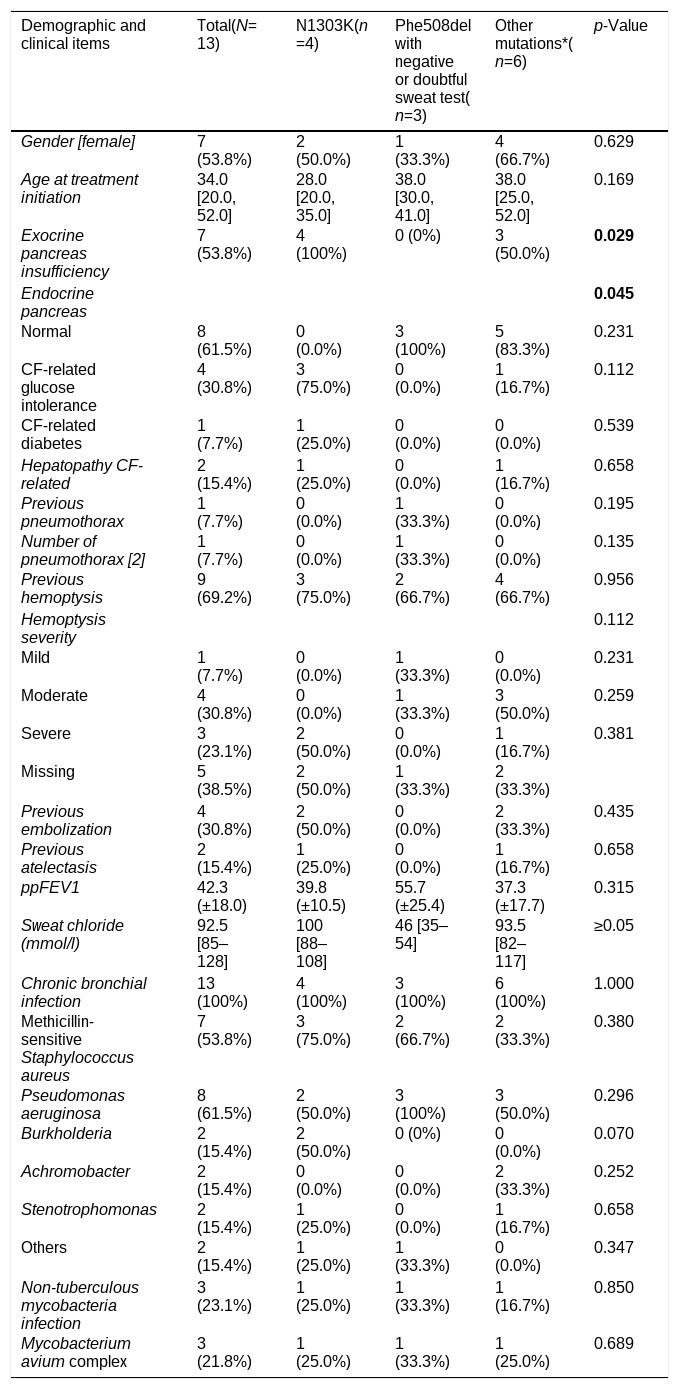
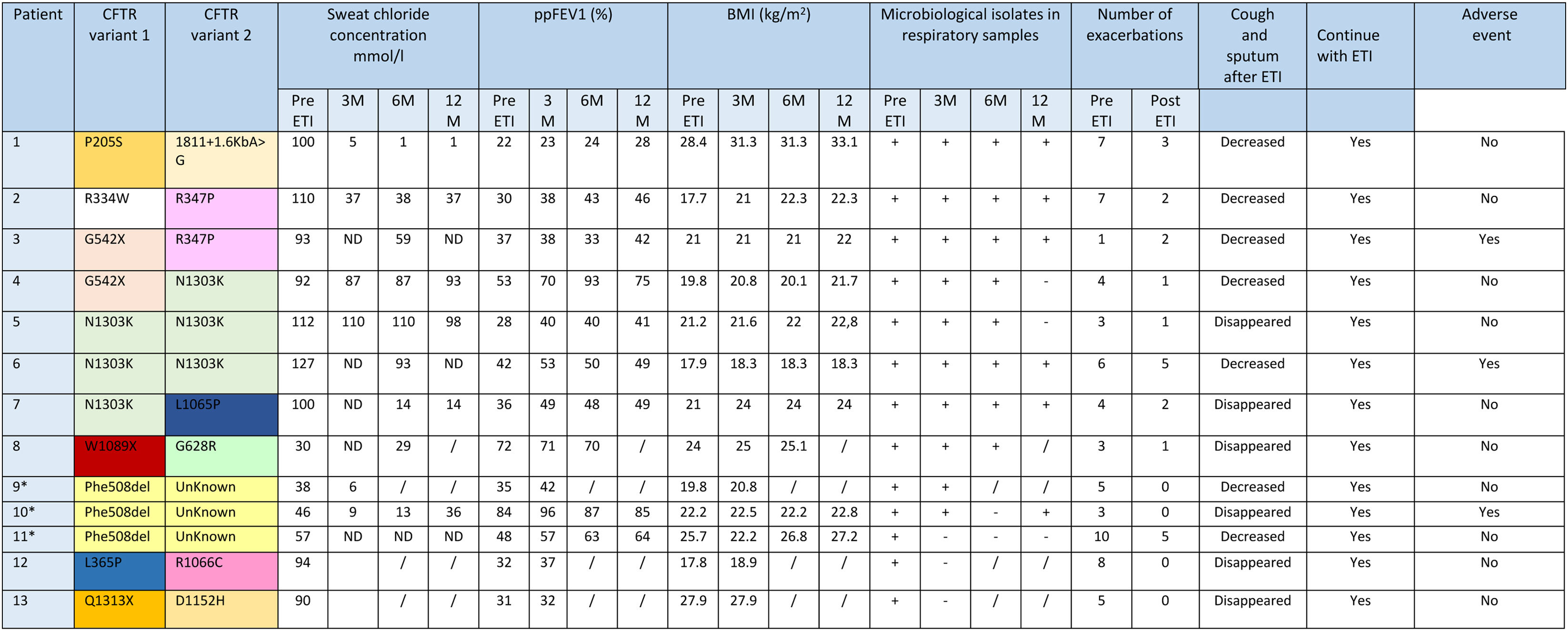
ResultsThe sociodemographic and clinical characteristics of the 13 patients participating in the study were analyzed according to 3 subgroups: patients carrying the N1303K variant (n=4), patients with a negative or inconclusive sweat test and a single Phe508del mutation (n=3), and patients carrying other CFTR variants (n=6). The mean age at ETI treatment initiation was 34 years (Tables 1 and 2). After 12 months of treatment with ETI, cough and sputum volume production had decreased in 53.84% of pwCF and disappeared in 46.15%. The number of pulmonary exacerbations were significantly reduced. The safety profile of ETI in these 13 patients corresponded to expectations derived from the results of previous studies; no significant adverse effect leading to ETI discontinuation was reported. Analysis of the scores of the CFQ-R questionnaire related to quality of life and the indicators BMI, ppFEV1 and percent predicted FVC (ppFVC) revealed a sustained improvement in these parameters. Sustained improvements were also recorded throughout the study in the daily activity, digestion and emotional items. However, other items, such as physical activity, respiratory function, treatment and vitality, showed improvement up to month 6, followed by a decreasing trend from month 12 onwards.
Demographic and clinical characteristics of patients with a confirmed diagnosis of cystic fibrosis and for each of the groups with mutations such as N1303K, Phe508del with negative or inconclusive sweat test and other mutations prior to treatment.
| Demographic and clinical items | Total(N=13) | N1303K(n=4) | Phe508del with negative or doubtful sweat test(n=3) | Other mutations*(n=6) | p-Value |
|---|---|---|---|---|---|
| Gender [female] | 7 (53.8%) | 2 (50.0%) | 1 (33.3%) | 4 (66.7%) | 0.629 |
| Age at treatment initiation | 34.0 [20.0, 52.0] | 28.0 [20.0, 35.0] | 38.0 [30.0, 41.0] | 38.0 [25.0, 52.0] | 0.169 |
| Exocrine pancreas insufficiency | 7 (53.8%) | 4 (100%) | 0 (0%) | 3 (50.0%) | 0.029 |
| Endocrine pancreas | 0.045 | ||||
| Normal | 8 (61.5%) | 0 (0.0%) | 3 (100%) | 5 (83.3%) | 0.231 |
| CF-related glucose intolerance | 4 (30.8%) | 3 (75.0%) | 0 (0.0%) | 1 (16.7%) | 0.112 |
| CF-related diabetes | 1 (7.7%) | 1 (25.0%) | 0 (0.0%) | 0 (0.0%) | 0.539 |
| Hepatopathy CF-related | 2 (15.4%) | 1 (25.0%) | 0 (0.0%) | 1 (16.7%) | 0.658 |
| Previous pneumothorax | 1 (7.7%) | 0 (0.0%) | 1 (33.3%) | 0 (0.0%) | 0.195 |
| Number of pneumothorax [2] | 1 (7.7%) | 0 (0.0%) | 1 (33.3%) | 0 (0.0%) | 0.135 |
| Previous hemoptysis | 9 (69.2%) | 3 (75.0%) | 2 (66.7%) | 4 (66.7%) | 0.956 |
| Hemoptysis severity | 0.112 | ||||
| Mild | 1 (7.7%) | 0 (0.0%) | 1 (33.3%) | 0 (0.0%) | 0.231 |
| Moderate | 4 (30.8%) | 0 (0.0%) | 1 (33.3%) | 3 (50.0%) | 0.259 |
| Severe | 3 (23.1%) | 2 (50.0%) | 0 (0.0%) | 1 (16.7%) | 0.381 |
| Missing | 5 (38.5%) | 2 (50.0%) | 1 (33.3%) | 2 (33.3%) | |
| Previous embolization | 4 (30.8%) | 2 (50.0%) | 0 (0.0%) | 2 (33.3%) | 0.435 |
| Previous atelectasis | 2 (15.4%) | 1 (25.0%) | 0 (0.0%) | 1 (16.7%) | 0.658 |
| ppFEV1 | 42.3 (±18.0) | 39.8 (±10.5) | 55.7 (±25.4) | 37.3 (±17.7) | 0.315 |
| Sweat chloride (mmol/l) | 92.5 [85–128] | 100 [88–108] | 46 [35–54] | 93.5 [82–117] | ≥0.05 |
| Chronic bronchial infection | 13 (100%) | 4 (100%) | 3 (100%) | 6 (100%) | 1.000 |
| Methicillin-sensitive Staphylococcus aureus | 7 (53.8%) | 3 (75.0%) | 2 (66.7%) | 2 (33.3%) | 0.380 |
| Pseudomonas aeruginosa | 8 (61.5%) | 2 (50.0%) | 3 (100%) | 3 (50.0%) | 0.296 |
| Burkholderia | 2 (15.4%) | 2 (50.0%) | 0 (0%) | 0 (0.0%) | 0.070 |
| Achromobacter | 2 (15.4%) | 0 (0.0%) | 0 (0.0%) | 2 (33.3%) | 0.252 |
| Stenotrophomonas | 2 (15.4%) | 1 (25.0%) | 0 (0.0%) | 1 (16.7%) | 0.658 |
| Others | 2 (15.4%) | 1 (25.0%) | 1 (33.3%) | 0 (0.0%) | 0.347 |
| Non-tuberculous mycobacteria infection | 3 (23.1%) | 1 (25.0%) | 1 (33.3%) | 1 (16.7%) | 0.850 |
| Mycobacterium avium complex | 3 (21.8%) | 1 (25.0%) | 1 (33.3%) | 1 (25.0%) | 0.689 |
Data are shown as n (%). Significant comparisons (p<0.05) are marked in bold.
CF: cystic fibrosis.
Individual patient data with changes in recorded variables.

*Phe508del/unknown with negative or doubtful sweat test.
Pre-ETI: prior to ETI; 3M: 3 months post-ETI; 6M: months post ETI; 12M: 12 months post ETI; ND: not available;/: visit not completed; +: presence of potentially pathogenic microorganism in respiratory sample (sputum or pharyngeal swab); −: absence of potentially pathogenic microorganism in respiratory sample (sputum or pharyngeal swab).
A descriptive analysis of these results by patient subgroups according to genetic mutation found that the group with the N1303K mutation experienced a more pronounced improvement than the group with Phe508del/unknown with negative or doubtful SWCl and the group with other mutations. In the N1303K group, a sustained improvement was observed throughout the study for BMI, daily activity, digestion, physical activity, treatment and vitality, while the Phe508del/unknown group maintained improvements for BMI, ppFEV1 and ppFVC only, and the other mutations group maintained improvements for BMI, ppFEV1 and ppFVC only.
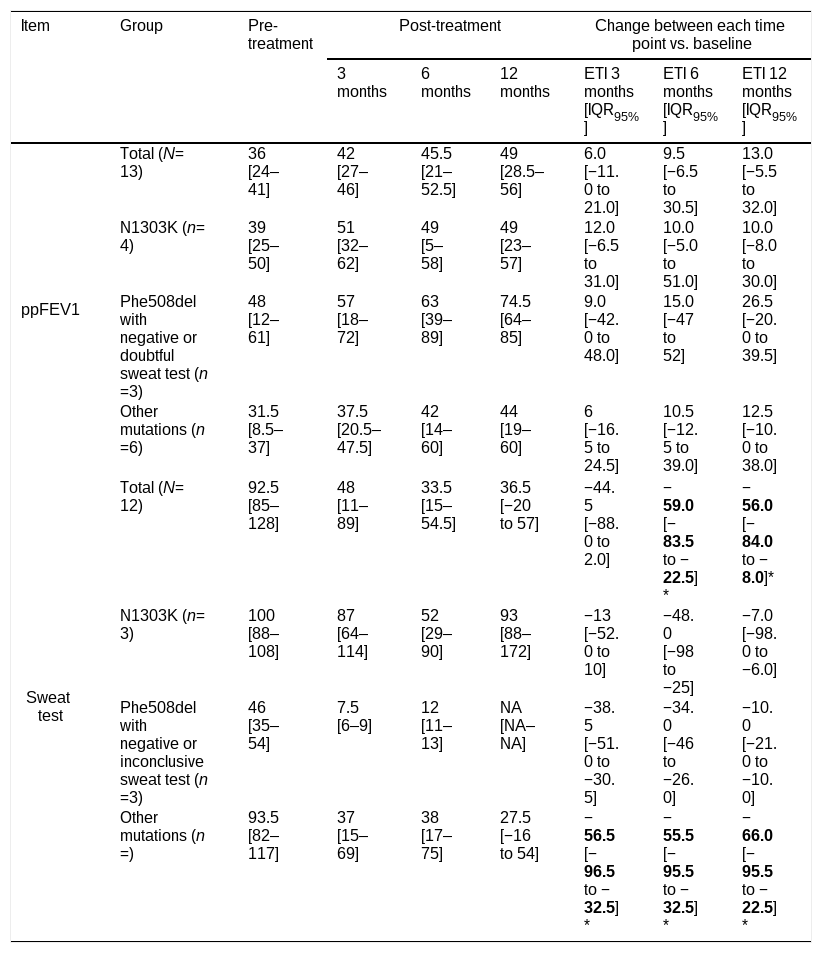
Regarding lung function, an improvement in ppFEV1 13% (13, 95% CI: −5.5 to 32) was observed after 12 months of combined treatment. Patients with the Phe508del and a negative or inconclusive sweat test showed the greatest improvement in ppFEV1, with 26.5% (95% CI: −20.0 to 39.5). As for the SWCl test results, a decrease in SWCl was observed, from 92mmol/l (95% CI: 85.0–120.0) to 36.5mmol/l (95% CI: −20 to 57), which was maintained over time, with a statistically significant change at each visit with respect to the value taken at baseline. A further decrease in sweat test values was found in the heterogeneous mutation group. The patients with patients with N1303K did not have a significant drop in SWCl (Table 3).
Median and confidence interval 95% of ppFEV1 and sweat test values for each genetic group at each time point of the study and change from baseline.
| Item | Group | Pre-treatment | Post-treatment | Change between each time point vs. baseline | ||||
|---|---|---|---|---|---|---|---|---|
| 3 months | 6 months | 12 months | ETI 3 months[IQR95%] | ETI 6 months[IQR95%] | ETI 12 months[IQR95%] | |||
| ppFEV1 | Total (N=13) | 36 [24–41] | 42 [27–46] | 45.5 [21–52.5] | 49 [28.5–56] | 6.0 [−11.0 to 21.0] | 9.5 [−6.5 to 30.5] | 13.0 [−5.5 to 32.0] |
| N1303K (n=4) | 39 [25–50] | 51 [32–62] | 49 [5–58] | 49 [23–57] | 12.0 [−6.5 to 31.0] | 10.0 [−5.0 to 51.0] | 10.0 [−8.0 to 30.0] | |
| Phe508del with negative or doubtful sweat test (n=3) | 48 [12–61] | 57 [18–72] | 63 [39–89] | 74.5 [64–85] | 9.0 [−42.0 to 48.0] | 15.0 [−47 to 52] | 26.5 [−20.0 to 39.5] | |
| Other mutations (n=6) | 31.5 [8.5–37] | 37.5 [20.5–47.5] | 42 [14–60] | 44 [19–60] | 6 [−16.5 to 24.5] | 10.5 [−12.5 to 39.0] | 12.5 [−10.0 to 38.0] | |
| Sweat test | Total (N=12) | 92.5 [85–128] | 48 [11–89] | 33.5 [15–54.5] | 36.5 [−20 to 57] | −44.5 [−88.0 to 2.0] | −59.0 [−83.5 to −22.5]* | −56.0 [−84.0 to −8.0]* |
| N1303K (n=3) | 100 [88–108] | 87 [64–114] | 52 [29–90] | 93 [88–172] | −13 [−52.0 to 10] | −48.0 [−98 to −25] | −7.0 [−98.0 to −6.0] | |
| Phe508del with negative or inconclusive sweat test (n=3) | 46 [35–54] | 7.5 [6–9] | 12 [11–13] | NA [NA–NA] | −38.5 [−51.0 to −30.5] | −34.0 [−46 to −26.0] | −10.0 [−21.0 to −10.0] | |
| Other mutations (n=) | 93.5 [82–117] | 37 [15–69] | 38 [17–75] | 27.5 [−16 to 54] | −56.5 [−96.5 to −32.5]* | −55.5 [−95.5 to −32.5]* | −66.0 [−95.5 to −22.5]* | |
Significant differences marked in bold (p<0.05).
ppFEV1: percent predicted forced expiratory volume in 1s.
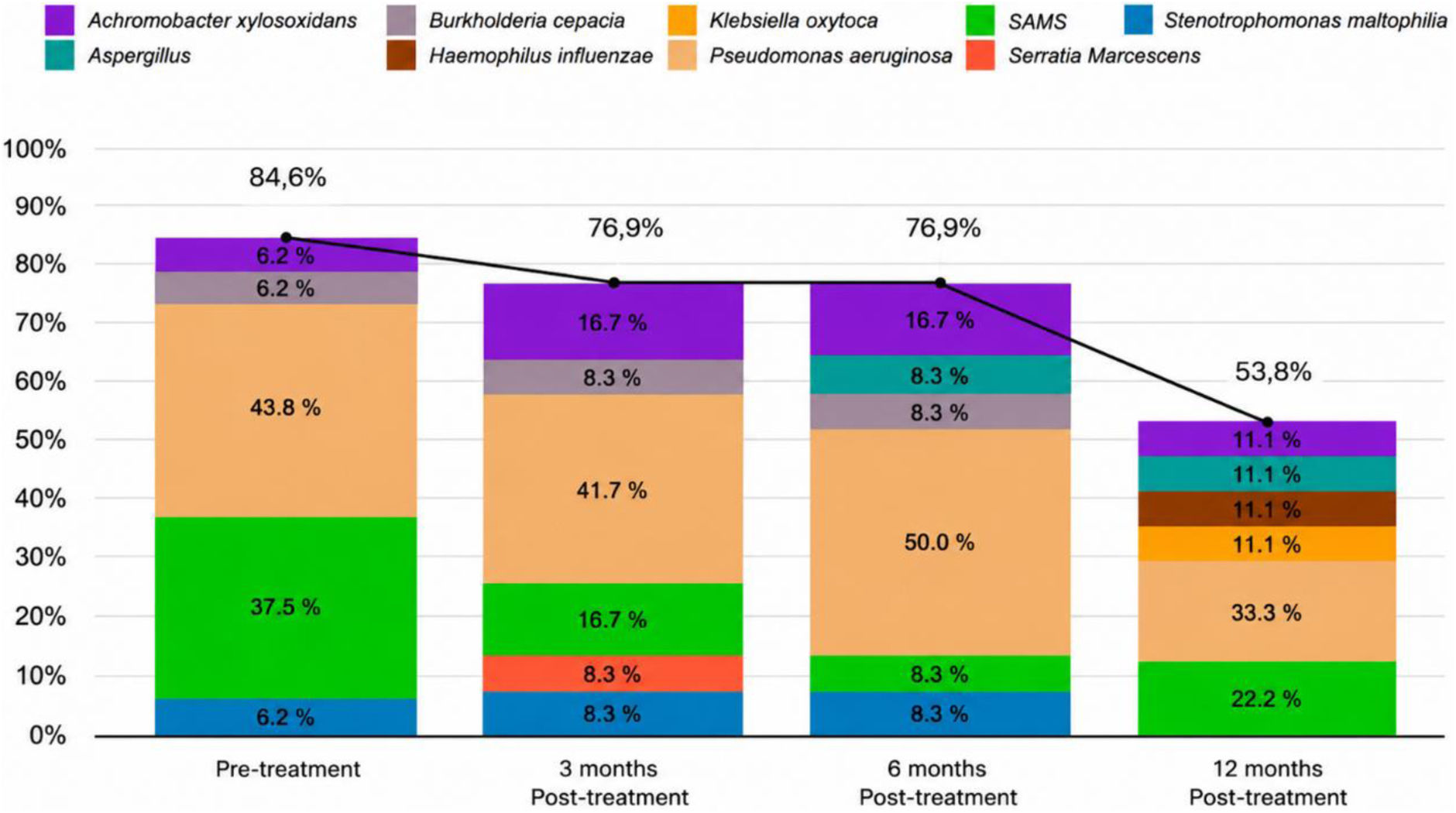
When analyzing sputum microbiology, we observed an overall decrease in the most frequent potentially pathogenic microorganisms, from 84.6% at baseline to 53.8% at 12 months after starting ETI. The greatest reduction was observed for methicillin-sensitive Staphylococcus aureus (MSSA), with a decrease of 15.3%, followed by Pseudomonas aeruginosa, with a decrease of 10.5%.
Differences were observed when the cohort was analyzed according to CFTR variant subgroup. In the N1303K subgroup, MSSA, Stenotrophomonas maltophilia and Burkholderia cepacia were no longer isolated during follow-up; however, P. aeruginosa isolates increased in this small subgroup. In the F508del subgroup with negative or inconclusive SWCl tests, a reduction in isolates was observed after 3 months of ETI treatment and maintained at 12 months. Notably, Aspergillus spp. were detected after 6 months of treatment. In the subgroup with other CFTR variants, the proportion of patients with isolated microorganisms fell from 66.7% to 50.0%, with P. aeruginosa showing the greatest reduction, from 60.0% to 20.0% after 12 months of treatment, while MSSA remained stable (Fig. 1).

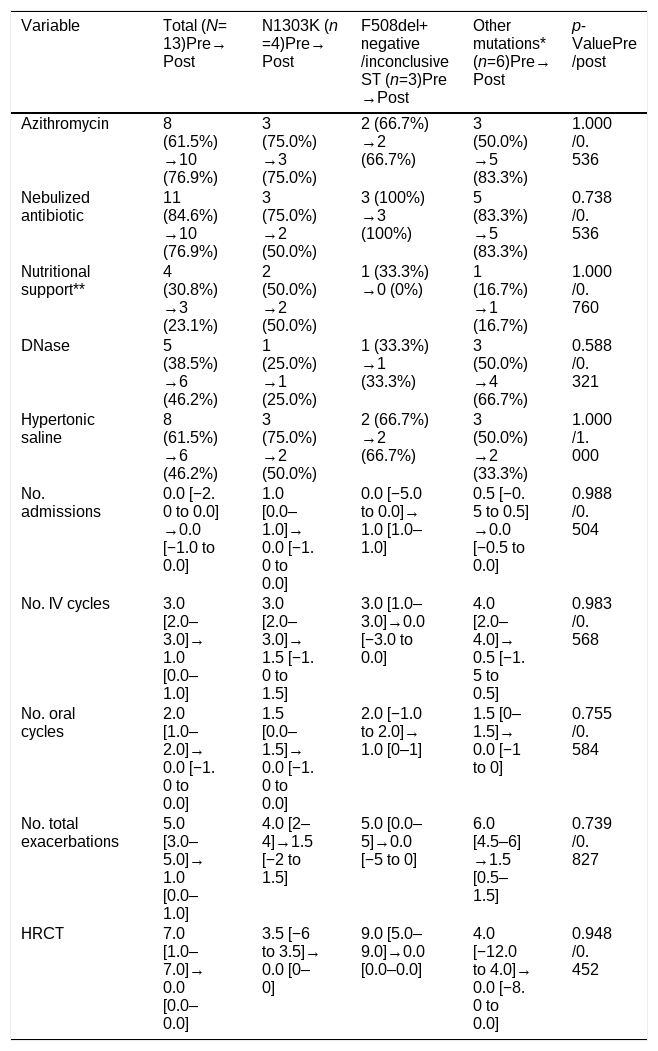
Analysis of therapies before and after treatment with ETI, both overall and between genetic groups, showed a statistically significant reduction in the use of nebulized antibiotic therapy (84.6% vs. 76.9%), nutritional support (30.8% vs. 23.1%), and nebulized hypertonic saline (61.5% vs. 46.2%). Hospital admissions and the number of intravenous and oral antibiotic treatments fell after 12 months of follow-up, with statistical significance in the latter two (Table 4).
Treatment usage and clinical outcomes pre- and post-treatment and for each of the CF patient groups.
| Variable | Total (N=13)Pre→Post | N1303K (n=4)Pre→Post | F508del+negative/inconclusive ST (n=3)Pre→Post | Other mutations* (n=6)Pre→Post | p-ValuePre/post |
|---|---|---|---|---|---|
| Azithromycin | 8 (61.5%)→10 (76.9%) | 3 (75.0%)→3 (75.0%) | 2 (66.7%)→2 (66.7%) | 3 (50.0%)→5 (83.3%) | 1.000/0.536 |
| Nebulized antibiotic | 11 (84.6%)→10 (76.9%) | 3 (75.0%)→2 (50.0%) | 3 (100%)→3 (100%) | 5 (83.3%)→5 (83.3%) | 0.738/0.536 |
| Nutritional support** | 4 (30.8%)→3 (23.1%) | 2 (50.0%)→2 (50.0%) | 1 (33.3%)→0 (0%) | 1 (16.7%)→1 (16.7%) | 1.000/0.760 |
| DNase | 5 (38.5%)→6 (46.2%) | 1 (25.0%)→1 (25.0%) | 1 (33.3%)→1 (33.3%) | 3 (50.0%)→4 (66.7%) | 0.588/0.321 |
| Hypertonic saline | 8 (61.5%)→6 (46.2%) | 3 (75.0%)→2 (50.0%) | 2 (66.7%)→2 (66.7%) | 3 (50.0%)→2 (33.3%) | 1.000/1.000 |
| No. admissions | 0.0 [−2.0 to 0.0]→0.0 [−1.0 to 0.0] | 1.0 [0.0–1.0]→0.0 [−1.0 to 0.0] | 0.0 [−5.0 to 0.0]→1.0 [1.0–1.0] | 0.5 [−0.5 to 0.5]→0.0 [−0.5 to 0.0] | 0.988/0.504 |
| No. IV cycles | 3.0 [2.0–3.0]→1.0 [0.0–1.0] | 3.0 [2.0–3.0]→1.5 [−1.0 to 1.5] | 3.0 [1.0–3.0]→0.0 [−3.0 to 0.0] | 4.0 [2.0–4.0]→0.5 [−1.5 to 0.5] | 0.983/0.568 |
| No. oral cycles | 2.0 [1.0–2.0]→0.0 [−1.0 to 0.0] | 1.5 [0.0–1.5]→0.0 [−1.0 to 0.0] | 2.0 [−1.0 to 2.0]→1.0 [0–1] | 1.5 [0–1.5]→0.0 [−1 to 0] | 0.755/0.584 |
| No. total exacerbations | 5.0 [3.0–5.0]→1.0 [0.0–1.0] | 4.0 [2–4]→1.5 [−2 to 1.5] | 5.0 [0.0–5]→0.0 [−5 to 0] | 6.0 [4.5–6]→1.5 [0.5–1.5] | 0.739/0.827 |
| HRCT | 7.0 [1.0–7.0]→0.0 [0.0–0.0] | 3.5 [−6 to 3.5]→0.0 [0–0] | 9.0 [5.0–9.0]→0.0 [0.0–0.0] | 4.0 [−12.0 to 4.0]→0.0 [−8.0 to 0.0] | 0.948/0.452 |
Data are shown as n (%) median±confidence interval 95%. Pre→Post indicates pre-treatment to post-treatment.
DNase: dornase alfa; HRCT: high-resolution computed tomography; IV: intravenous; ST: sweat test.
This study evaluates the efficacy of real-life ETI in cystic fibrosis patients with selected rare CFTR mutations that had no approved ETI indication in Europe at the time of starting treatment. ETI was obtained on a compassionate use basis because the most patients had advanced lung disease. Although several publications report the results of ETI in groups of patients with certain rare mutations, such as N1303K, Phe508del/unknown, D1152H o R1166C, evidence on some less frequent specific mutations is scant.10–13
In our study, we present the results of a 12-month treatment period in 13 patients who constituted a heterogeneous group of rare mutations, and in whom clinical benefits were observed. Our findings showed an increase in both ppFEV1 and BMI, in line with other publications on ETI in rare mutations. In terms of lung function, Burgel et al.14 found an improvement in the median of ppFEV1 +27.5 (IQR +20.7 to +41.2), and Sadras et al. reported a median of 18.4% in ppFEV1 and 0.79±0.33kg/m2 in BMI after treatment.15 Similar results were also reported in patients with Phe508del/minimal function genotype treated with ETI during a phase III trial.16 The SWCl test is the main biomarker of efficacy in terms of drug-induced enhancement of CFTR protein expression/function.17,18 In our cohort, we observed a sustained reduction in SWCl test values over time, although this effect was not observed in patients with the N1303K mutation. These findings are consistent with previous studies that have shown changes in lung function based on mutation type and baseline ppFEV1.14
An important feature of this cohort is that ETI treatment was initiated before regulatory approval for these rare genotypes. Since then, increasing in vitro evidence, theratyping strategies and real-world clinical experience have contributed to the expansion of CFTR modulator indications for several rare variants. Our findings support the potential clinical benefit of extending access to highly selected patients with severe disease and previously ineligible mutations.
In terms of quality of life, we found an improvement in the CFQ-R questionnaire scores in the first weeks of treatment that subsequently declined, similarly to the series reported by Vito Terlizzi.10
Although no case series have been published for certain specific mutations (e.g., P205S, 1811+1.6KbA>G, R334W, R347P, G542X, W1089X, G628R, L1065P, L365P, R1066C, Q1313X, and D1152H), isolated reports have explored the clinical efficacy of ETI in patients with rare CFTR mutations.19 For example, Burgel et al. and Dreano et al. reported individual responses to ETI, and functional evidence has been demonstrated in cell culture studies for mutations such as H609R and I1023_V1024del. In addition, Conti et al. used intestinal organoids to evaluate the effect of ETI on mutations including L383S, I507del, L1065P, and R1066H. Despite the diversity of these mutations, a common finding emerges: ETI shows potential clinical benefit across a range of rare or uncharacterized genotypes.11,20,21
Not all studies have assessed microbiological evolution. Gonçalves Martynychen Canan et al.13 observed the disappearance of P. aeruginosa in 2 patients and the persistence of B. cepacia and Achromobacter xylosoxidans after 3 months of ETI treatment. As the authors indicated, these findings should be interpreted with caution due to the small number of patients and the short follow-up period. The reduced number of positive isolates of potentially pathogenic microorganisms in respiratory samples from our patients is a positive finding. However, an increase in P. aeruginosa was observed in the N1303K subgroup. Given the very small number of patients in this subgroup and the descriptive nature of the microbiological analysis, this finding should be interpreted with caution and may reflect individual variability in chronic airway infection rather than a treatment-related effect. Similar reductions in airway pathogen burden have been described in patients treated with ETI carrying at least one F508del variant.22,23 These findings suggest that ETI may improve mucociliary clearance and reduce airway pathogen burden even in patients carrying previously ineligible CFTR variants.
With respect to the number of exacerbations and the number of cycles of oral and intravenous antibiotic therapy, a decrease in the number of exacerbations was observed after treatment with ETI. These findings are consistent with those reported in a previous study of pwCF with advanced lung disease carrying at least one F508del variant.16 Due to the low proportion of rare mutations, clinical trials on these types of mutations are not cost-effective, so other studies, such as cell lines, should be proposed to test the efficacy of treatments and their subsequent use in patients.24In vitro studies and real-life studies are other approaches to accelerate the approval of these indications and achieve clinical improvement in patients with rare mutations that, in fact, are not so rare.25 Despite the small number of patients, this is the first study to evaluate the evolution of the microbiology of respiratory samples after 12 months of follow-up, showing real-life results. This study has several limitations, including the small sample size, the heterogeneity of CFTR variants, and the observational design. However, given the rarity of these mutations and the historical lack of approved therapeutic options, real-world multicenter experiences remain clinically valuable.
ConclusionIn this real-world multicenter cohort, ETI treatment was associated with clinical, functional and microbiological improvement in pwCF with severe lung disease carrying rare or previously ineligible CFTR variants. These descriptive findings suggest a potential benefit of ETI in selected patients treated under compassionate use conditions. The safety profile was consistent with reports from previous ETI studies. Given the small sample size and the heterogeneity of CFTR variants, these findings should be interpreted with caution and warrant confirmation in a larger cohort.
Ethical considerationsThis multicentre retrospective observational study was conducted in accordance with the ethical principles of the Declaration of Helsinki and applicable national regulations. The study protocol was approved by the Provincial Research Ethics Committee of Seville (CEIm Provincial de Sevilla) (approval number: FIS-KAF-2023-03).
Artificial intelligence involvementArtificial intelligence tools were used solely for English language editing and proofreading. No scientific content, data analysis, interpretation of results, or conclusions were generated using artificial intelligence.
Informed consentWritten informed consent was obtained from all patients prior to their participation in the study.
FundingThis research did not receive any specific grant from funding agencies in the public, commercial, or not-for-profit sectors.
Authors’ contributionsThe contribution of each author for the completion of the manuscript is described below:
- •
Study design: Laura Carrasco Hernández and Casilda Olveira.
- •
Care for patients with cystic fibrosis and data collection: Casilda Olveira, Rosa Mª Girón Moreno, Amparo Solé, Cristina Ramos Hernández, Laura Carrasco Hernández, Gabriel Olveira, Concepción Prados Sánchez, Ester Zamarrón and Esther Quintana Gallego.
- •
Database: Laura Carrasco Hernández, Rosa Mar Gómez Punter, María José Selma Ferrer, Amparo Solé, Mª Victoria Girón-Fernández, Cristina Ramos Hernández, Concepción Prados Sánchez.
- •
Statistical analysis: Laura Carrasco Hernández and Casilda Olveira.
- •
Manuscript writing: Laura Carrasco Hernández, Casilda Olveira and Esther Quintana Gallego.
- •
Tables and figures design: Laura Carrasco Hernández, Casilda Olveira and Esther Quintana Gallego.
- •
Manuscript review: Laura Carrasco Hernández, Rosa Mª Girón Moreno, Amparo Sole, Cristina Ramos Hernández, María Victoria Girón, Rosa Mar Gómez Punter, María José Selma Ferrer, Gabriel Olveira, Esther Quintana Gallego, Casilda Olveira, Ester Zamarrón and Concepción Prados Sánchez.
The authors declare not to have any conflicts of interest that may be considered to influence directly or indirectly the content of the manuscript.
The authors would like to express their sincere gratitude to Adrián Peláez for his valuable contribution to this work, particularly for his expert guidance and support in the statistical analysis.