


Peripheral nerve blockade (PNB) is a common treatment in adults with headache. Although there is little evidence in pediatrics, its simplicity, safety and efficacy make it an option that can be extrapolated to our practice. Therefore, we conducted a study in which we evaluated the usefulness of anesthetic blockade of the NOM (greater occipital nerve) as a treatment for migraine in the pediatric population.
MethodsProspective cohort study in children and adolescents with migraine. We collected demographic and clinical data (pain intensity using the verbal numeric scale) and data related to quality of life (PedMidas and PedsQL questionnaire) at baseline and after performing NOM block with 2.5 ml of 0.5% bupivacaine.
ResultsWe included 28 patients (89.3% women) with a mean age of 13.9 years. Mean frequency of 22.8 episodes/month and intensity of 7.7/10 on the verbal-numerical scale (VNS). Post-treatment: significant reduction (P < .01) in frequency to 6.1 episodes/month and intensity: 3.9 points (30 minutes), 4.2 points (1 week), 3.9 points (15 days), 4.4 points (1 month) and 5.4 points (3 months). 100% had an effect on their quality of life, both on the PedMidas and PedsQL scales, the greater the effect, the better the response. Only 2 had adverse effects (syncope and local pain).
ConclusionsNOM blockade is a safe, effective and useful procedure for the acute and preventive treatment of migraine in pediatric age. It relieves the burden associated with headache and is associated with an improvement in the quality of life of patients.
El bloqueo de nervios periféricos (BNP) es un tratamiento habitual en adultos con cefalea. Aunque existe poca evidencia en pediatría, su sencillez, seguridad y eficacia lo sitúan como una opción extrapolable a nuestra práctica. Por ello realizamos un estudio en el evaluamos la utilidad del bloqueo anestésico del NOM (nervio occipital mayor) como tratamiento de la migraña en la población pediátrica.
Material y métodoEstudio de cohorte prospectivo en niños y adolescentes con migraña. Recogimos datos demográficos, clínicos (intensidad del dolor a través de la escala verbal numérica) y relacionados con calidad de vida (cuestionario PedMidas y PedsQL) en situación basal y tras realización de bloqueo del NOM con 2,5 ml de bupivacaína al 0,5%.
ResultadosIncluimos 28 pacientes (89,3% mujeres) con edad media de 13,9 años. Frecuencia media de 22,8 episodios/mes e intensidad de 7,7/10 en la escala verbal numérica (EVN). Postratamiento: reducción significativa (P < ,01) de la frecuencia a 6,1 episodios/mes e intensidad: 3,9 puntos (30 minutos), 4,2 puntos (1 semana), 3,9 puntos (15 días), 4,4 puntos (1 mes) y 5,4 puntos (3 meses). El 100% tenía afectación en su calidad de vida, tanto en la escala PedMidas como PedsQL, cuanto mayor afectación de ésta, mejor respuesta. Solo 2 tuvieron efectos adversos (síncope y dolor local).
ConclusionesEl bloqueo NOM es una procedimiento seguro, eficaz y útil para el tratamiento agudo y preventivo de la migraña en edad pediátrica. Alivia la carga asociada a la cefalea y se asocia con una mejoría en la calidad de vida de los pacientes.
Headache is one of the most frequent neurological symptoms in paediatrics departments; over 90% of school-age children have at some point experienced headache.1–3 Headache is the second most frequent reason for consultation with the paediatric neurology department, after paroxysmal disorders.4 Approximately 2%-5% of children with headache may develop chronic headache over time.5 In these cases, headache significantly interferes with the child’s activities, with a negative impact on school performance and social relationships.6–8
Despite its high prevalence and its impact on the quality of life of both patients and their families, the management of headache in children and adolescents has historically been based on data extrapolated from adult studies, expert opinions, and small open-label retrospective studies.9–12 Paediatric headache is frequently managed using a combination of general measures addressing lifestyle habits, abortive treatment, and preventive treatment, with some patients requiring all 3 approaches. However, the difficulty inherent to classifying headache type in childhood,13 the poor efficacy of some treatments (approximately 30%),14 adverse drug reactions, and the placebo effect make the treatment of headache a challenge for paediatric neurologists.
Treatment aims to achieve fast resolution of headache with the fewest possible secondary effects and recurrences, allowing the child to regain their normal level of activity and quality of life.
Peripheral nerve block is frequently prescribed for the acute and preventive treatment of different types of headache and craniofacial neuralgias in adults.15 Due to the increasing evidence supporting the modulatory role of the occipital nerves on nociceptive afferents conveyed by the trigeminal nerve, the most widely used technique is greater occipital nerve (GON) block. However, selection of the anaesthetic agent is more arbitrary, with researchers infiltrating lidocaine at 1% and 2%, mepivacaine at 2%, or bupivacaine at 0.25% or 0.5%. In the case of migraine, peripheral nerve block has been shown to be useful both as a preventive treatment (reducing the number, duration, and/or intensity of attacks in the weeks or months following infiltration) and as a rescue therapy during attacks.15 Although little evidence is available on the use of peripheral nerve block for headache treatment and prevention in the paediatric population, its ease of use, effectiveness, and low rate of adverse reactions make it an interesting option to be considered in clinical practice.
The purpose of this study is to evaluate the usefulness of anaesthetic block of the GON for the acute (improvement in pain) and preventive treatment (reduction in number of headache days) of migraine in paediatric patients. We also analysed the associated improvement in patient quality of life after the procedure.
Materials and methodsWe conducted a prospective cohort study to evaluate the usefulness of anaesthetic block of the GON in children and adolescents with a diagnosis of migraine according to the diagnostic criteria of the third edition of the International Classification of Headache Disorders (ICHD-3),13 who did not respond to conventional treatment. All patients were recruited at the paediatric neurology consultation of a tertiary hospital in the region of Madrid.
Inclusion criteria:
- •
Age ≥ 7 years and <18 years- Age ≥ 7 years and < 18 years
- •
Weight > 25 kg
- •
Diagnosis of migraine according to ICHD-3 criteria
- •
Indication of preventive treatment by paediatric neurologist
- •
A history of preventive treatment, with poor effectiveness
- •
Written informed consent from the patient’s legal guardian, and patient’s willingness to participate
Exclusion criteria:
- •
Known allergies to local anaesthetic drugs
- •
Skin lesion in the area of infiltration
- •
Cranial defects in any location
- •
Confirmed or suspected coagulopathy
- •
Anticoagulant or antiplatelet treatment
- •
Suspected secondary headache
- •
Onset of oral preventive treatment for headache one month prior to study onset
- •
Severe adverse event following injection or any other procedure requiring local anaesthesia
- •
Parents or carers who, in the opinion of the researcher, may be unwilling or unable to complete the questionnaires
We recruited patients referred from general paediatrics to the paediatric neurology department. During the initial consultation with paediatric neurology, demographic data (age, sex) were gathered, and patients were provided with a headache calendar to record headache days until the follow-up visit. Also during this visit, the PedMIDAS and PedsQL Child-Self Report questionnaires were administered to assess the impact of headache on their quality of life. Parents/carers also completed a quality of life scale (PedsQL Parent-Proxy Report). All patients meeting the inclusion criteria were scheduled for another consultation a month later (visit 2) to undergo GON block.
During visit 2, data were gathered from patients’ headache calendars, and the verbal numerical rating scale (vNRS) was administered to evaluate pain intensity before the procedure. Subsequently, GON block was performed. During the procedure, patients remained in a seated position with the neck slightly flexed. The most sensitive spot of the GON region (where the GON pierces the trapezius aponeurosis) was identified by palpation, at the lateral edge of the trapezius, approximately one-fifth of the distance between the inion and the mastoid process. After this spot was located, a 3-mL syringe with a 30-gauge needle was used to bilaterally inject 2.5 mL of 0.5% bupivacaine, following a fan-shaped pattern, as described in the available clinical guidelines for pericranial nerve block.15 Patients were kept under observation for 30 minutes following the procedure, and the vNRS was administered once more.
Patients attended 4 additional consultations: during visits 3, 4, and 5, which took place at 7, 15, and 30 days after the procedure, respectively, they were assessed with the vNRS; during visit 6, at 3 months after the procedure, the PedMIDAS, PedsQL, and vNRS tools were administered, and the previous month’s headache calendar was evaluated.
Patients were asked about adverse reactions or concurrent events at each visit.
To evaluate the effectiveness of the procedure, the following tools were used:
- a
Pain intensity: verbal numerical rating scale (vNRS), in which patients are asked to express the intensity of their headache pain on a scale from 0 (no pain) to 10 (worst imaginable pain). This scale was administered both immediately before the procedure (visit 2), and after the procedure (at 30 minutes [visit 2] and at 7 days, 15 days, 30 days, 3 months [visits 3-6]).
- b
Episode frequency: data from the previous month’s headache calendar were gathered at visits 2 and 6.
- c
Quality of life: this parameter was assessed at visits 1 and 6. The PedMIDAS scale (a tool specifically designed for headache and validated in the paediatric population) is a quantitative measure of migraine impact. The final score is the sum of all responses, classifying headache disability as very mild (0-10), mild (11-30), moderate (31-50), or severe (> 50). The PedsQL is a questionnaire containing 23 items divided into 4 scales: a) physical functioning (8 items); b) emotional functioning (5 items); c) social functioning (5 items); and d) school functioning (5 items). The questionnaire is available in different formats, to be completed by children (PedsQL Child-Self Report) or their parents (Parent-Proxy Report), and for specific age ranges (5-7, 8-12, or 13-18 years). PedsQL items are scored on a 5-point Likert-type scale, and are reverse-scored and linearly transformed to a 0-100 scale (0 = 100, 1 = 75, 2 = 50, 3 = 25, 4 = 0), with higher scores indicating greater quality of life.
The statistical analysis describes the general characteristics of our sample. Categorical variables are expressed as percentages with 95% confidence intervals (CI), and quantitative variables as means and standard deviations (SD), for normally distributed variables, or medians and interquartile ranges (IQR), for non–normally distributed variables. The decrease in the number of attacks before and after treatment, pain intensity according to the vNRS, and improvement in quality of life according to the PedMIDAS and PedsQL scales were studied with the paired samples t test, when the changes observed in these variables were found to be normally distributed, and with the Wilcoxon test for the remaining cases. The change in pain intensity according to the vNRS was evaluated with the Friedman test, and the significant change point for pain intensity was estimated with the Wilcoxon test at different measurement times with respect to baseline vNRS values.
The Wilcoxon test was also used to compare pain intensity values (vNRS) and quality of life (PedMIDAS) before and after the procedure. Statistical analysis was conducted using STATA version 17. P-values < .05 were considered statistically significant.
Ethical considerationsThe study was approved by the hospital’s ethics committee. Participants’ parents or guardians gave written informed consent, and children older than 12 years expressed their willingness to participate in the study. Data were entered into a database complying with current data protection legislation. Data confidentiality was guaranteed at all times.
ResultsThe sample included a total of 28 patients, 89.3% of whom were girls, with a mean (SD) age of 13.9 (2.1) years. All participants were receiving preventive treatment, and all presented pain at the time of the procedure.
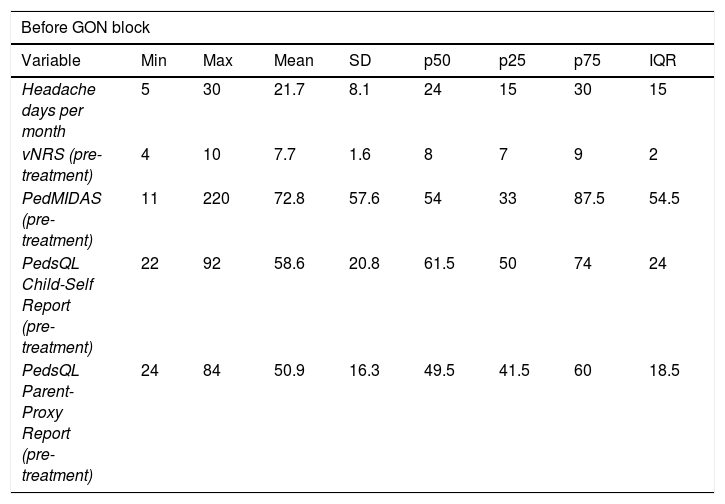
The variables studied in the statistical analysis are summarised in Table 1.
Characteristics of the study variables before and after anaesthetic block of the greater occipital nerve.
| Before GON block | ||||||||
|---|---|---|---|---|---|---|---|---|
| Variable | Min | Max | Mean | SD | p50 | p25 | p75 | IQR |
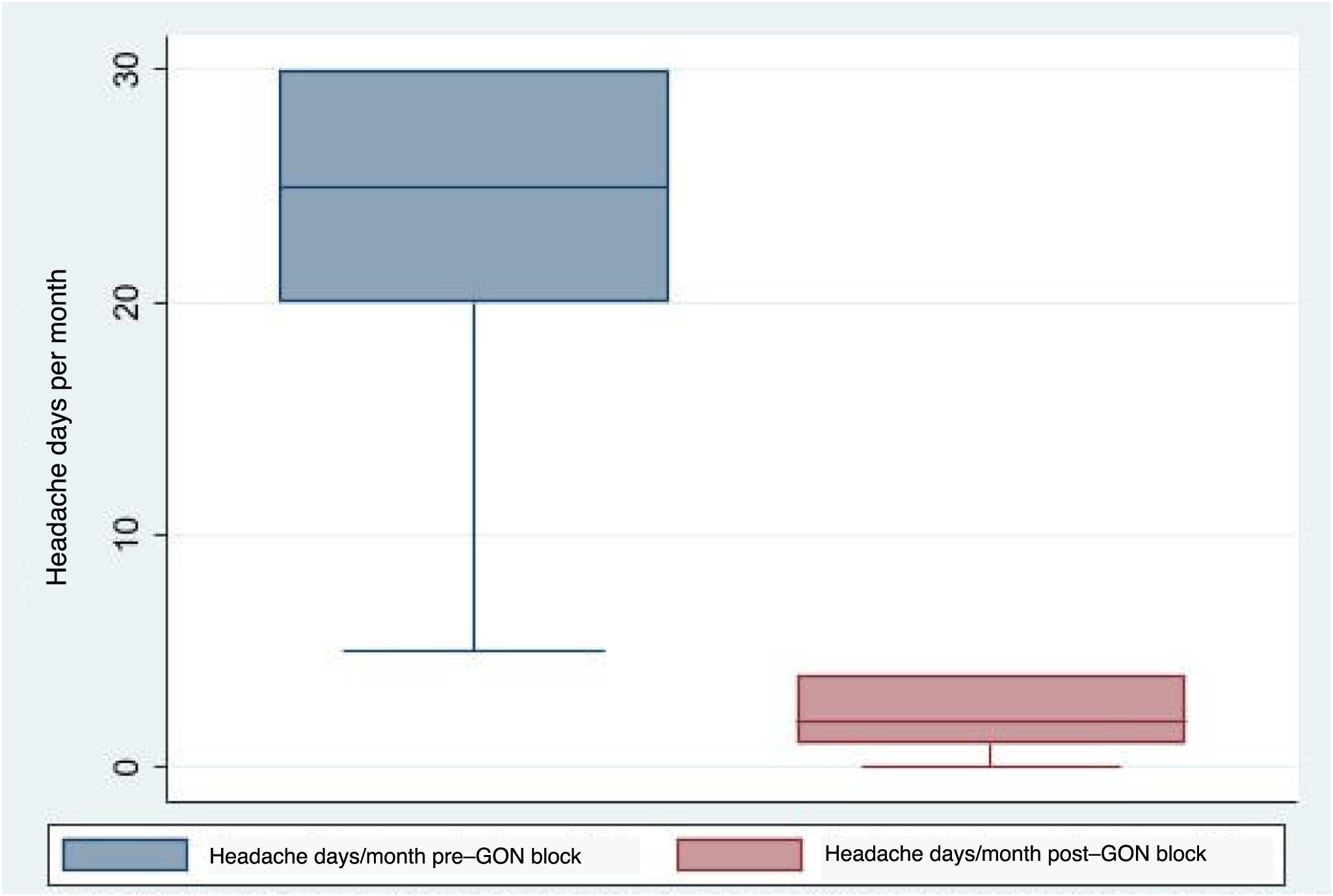
| Headache days per month | 5 | 30 | 21.7 | 8.1 | 24 | 15 | 30 | 15 |
| vNRS (pre-treatment) | 4 | 10 | 7.7 | 1.6 | 8 | 7 | 9 | 2 |
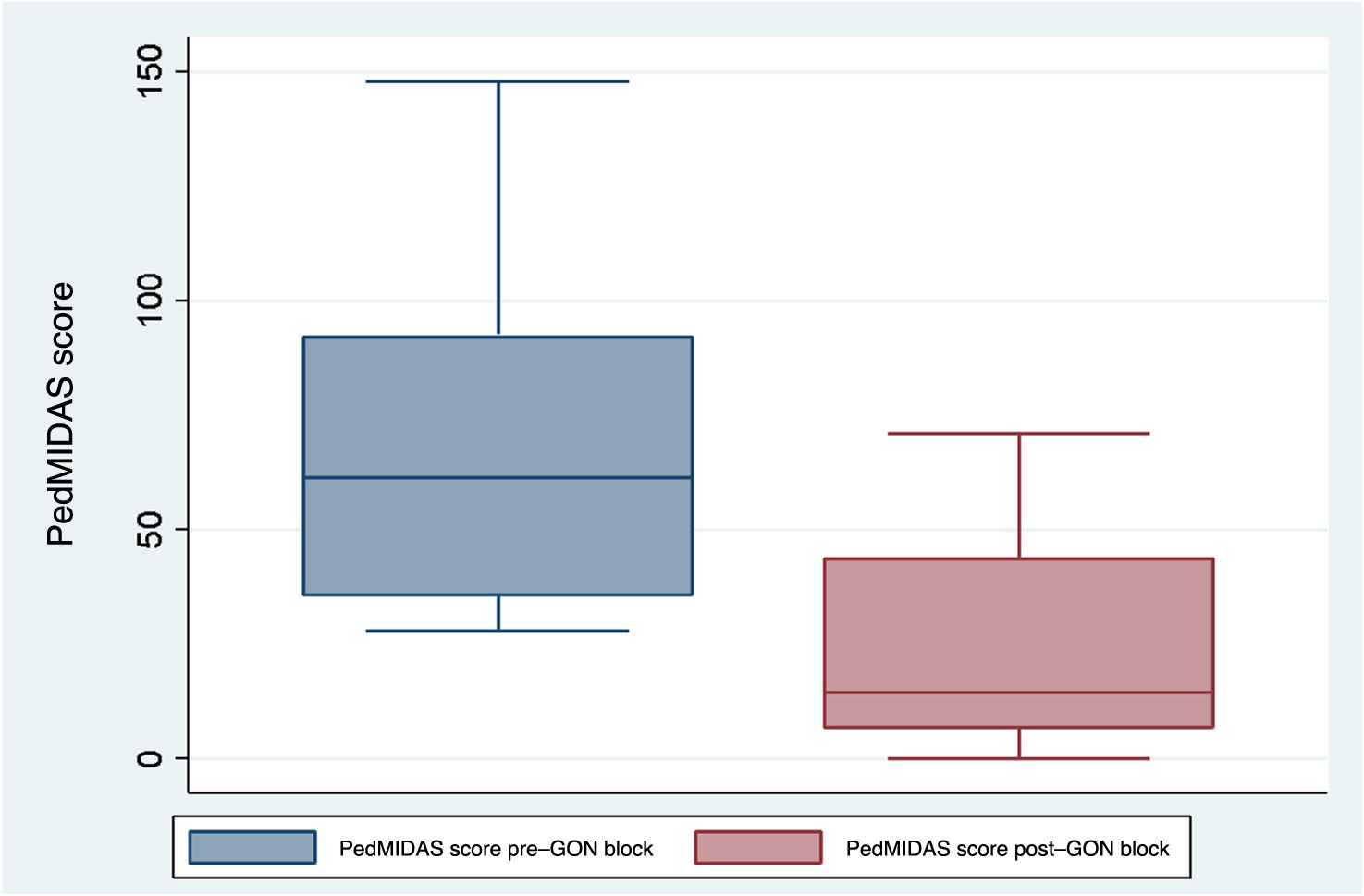
| PedMIDAS (pre-treatment) | 11 | 220 | 72.8 | 57.6 | 54 | 33 | 87.5 | 54.5 |
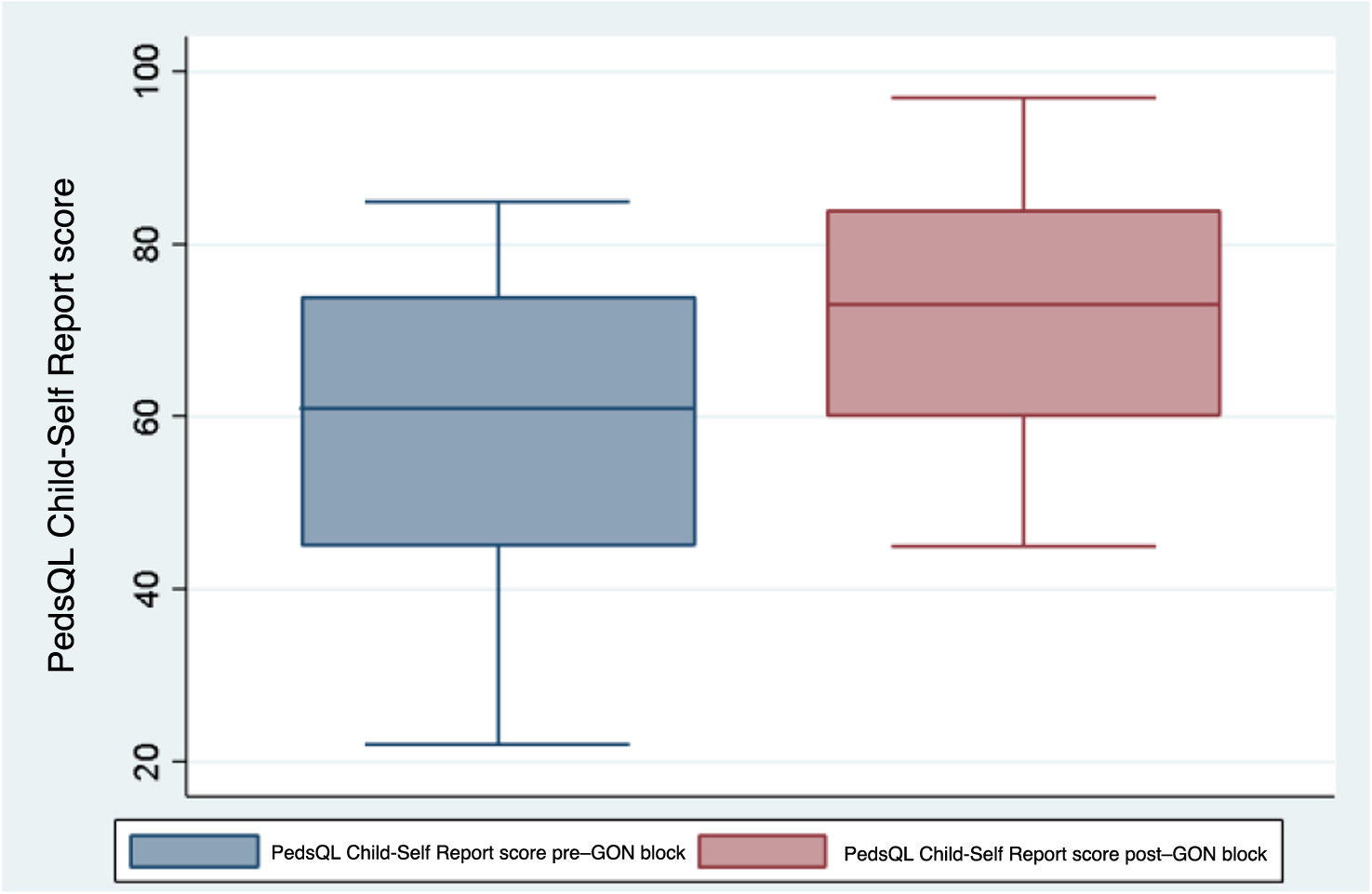
| PedsQL Child-Self Report (pre-treatment) | 22 | 92 | 58.6 | 20.8 | 61.5 | 50 | 74 | 24 |
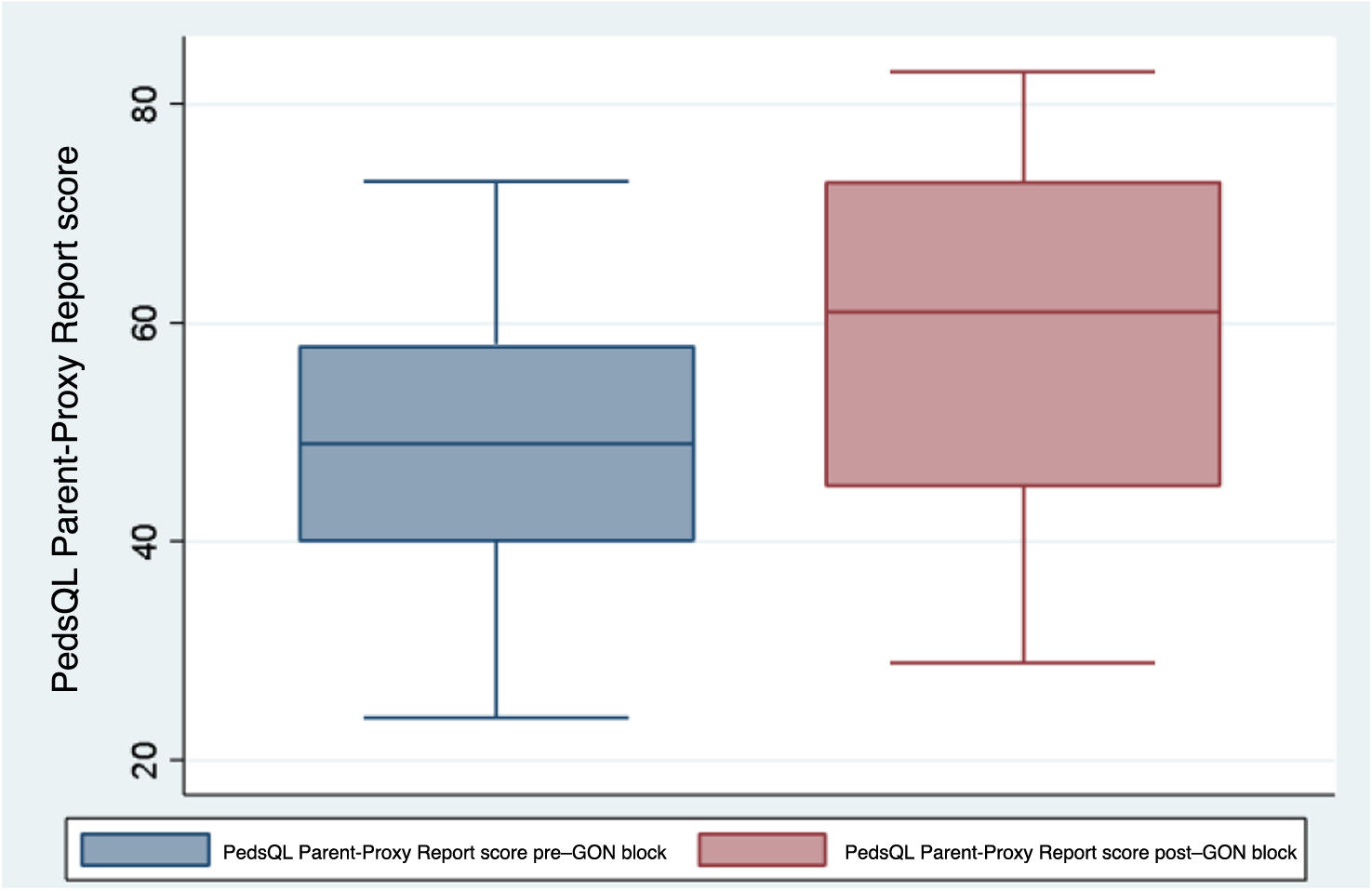
| PedsQL Parent-Proxy Report (pre-treatment) | 24 | 84 | 50.9 | 16.3 | 49.5 | 41.5 | 60 | 18.5 |
| After GON block | ||||||||
|---|---|---|---|---|---|---|---|---|
| Variable | Min | Max | Mean | SD | p50 | p25 | p75 | IQR |
| Headache days per month | 0 | 30 | 6.1 | 9 | 2 | 1 | 4 | 3 |
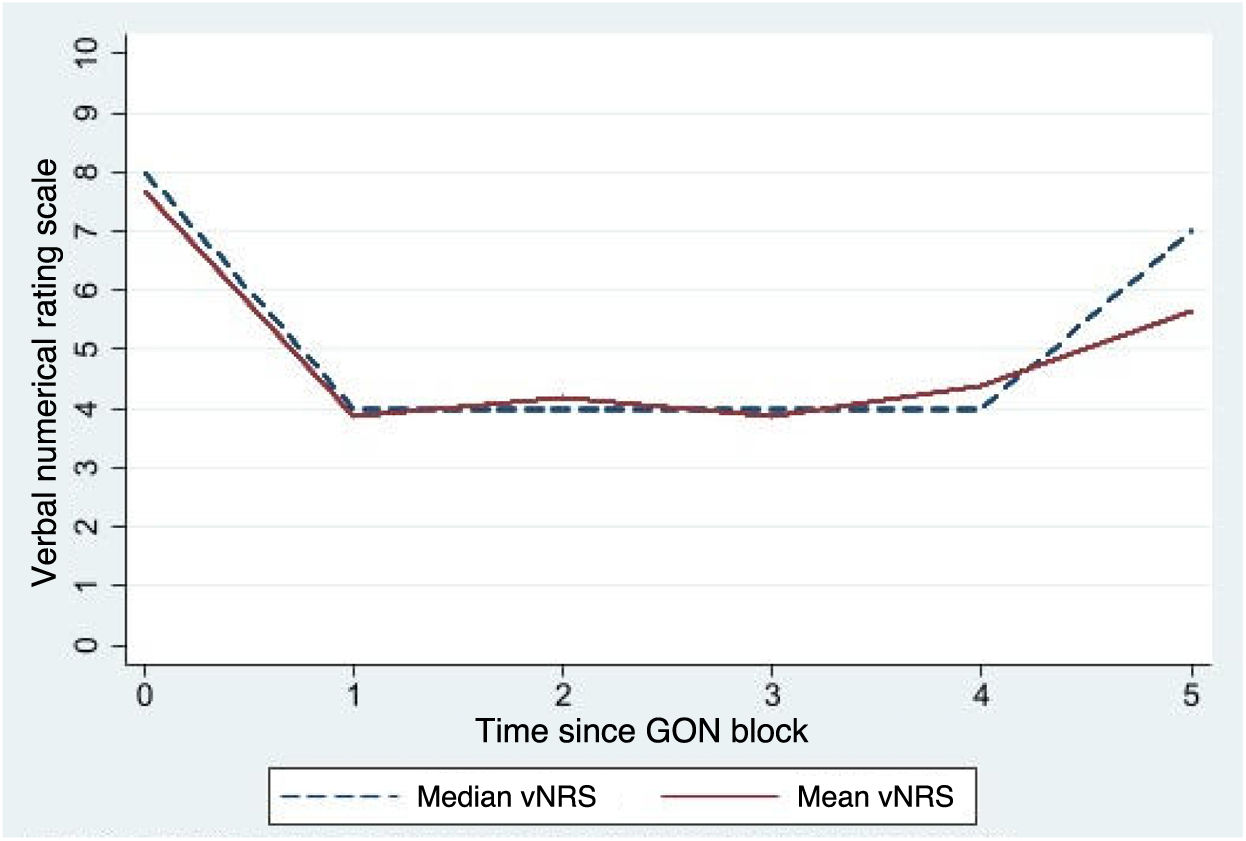
| vNRS (at 30 min) | 1 | 9 | 3.9 | 2.6 | 4 | 2 | 5 | 3 |
| vNRS (at 7 days) | 1 | 9 | 4.2 | 2.9 | 4 | 1 | 7 | 6 |
| vNRS (at 15 days) | 1 | 9 | 3.9 | 2.7 | 4 | 1 | 6 | 5 |
| vNRS (at 30 days) | 1 | 9 | 4.4 | 2.8 | 4 | 1 | 7 | 6 |
| vNRS (at 3 months) | 1 | 9 | 5.7 | 2.6 | 7 | 3 | 7 | 4 |
| PedMIDAS (post-treatment) | 0 | 71 | 23.6 | 22 | 14.5 | 6.5 | 44 | 37.5 |
| PedsQL Child-Self Report (post-treatment) | 34 | 97 | 69.6 | 17.2 | 72 | 59.5 | 83.5 | 24 |
| PedsQL Parent-Proxy Report (post-treatment) | 29 | 87 | 62.5 | 17 | 63 | 49.5 | 74.5 | 25 |
Before GON block, our sample presented a mean of 22.8 (7.4) headache days per month, which decreased to 6.1 (9) headache days per month after the procedure; this represents a clinically significant reduction of 16.7 days per month (95% CI, –21.4 to –12.1; P < .01), as shown in Fig. 1. Data from headache calendars revealed that 32.1% of patients experienced a reduction of at least 50% in the number of headache days per month.

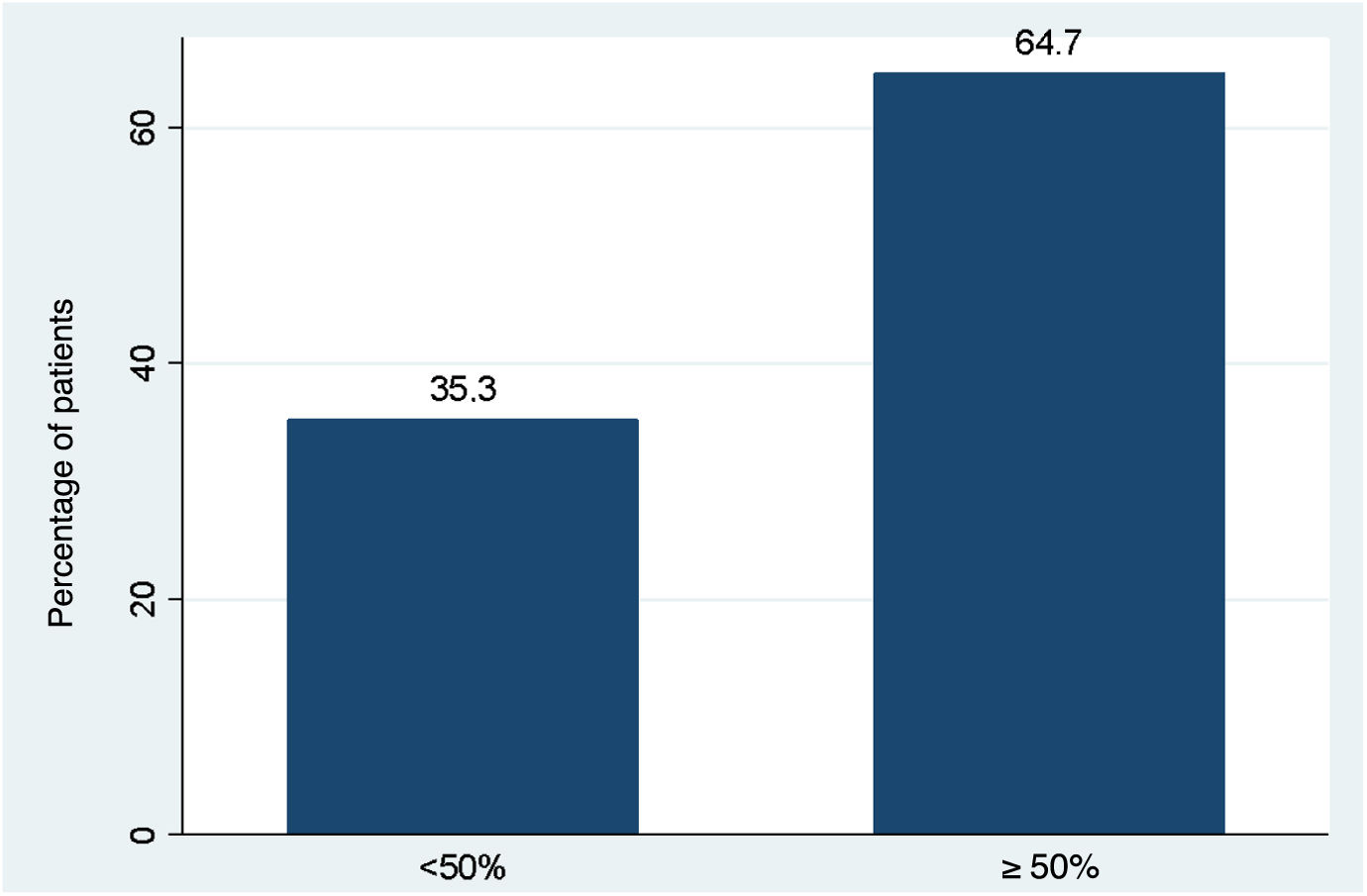
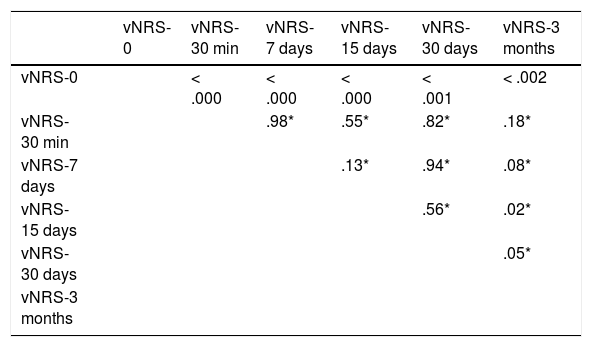
Regarding pain intensity as measured with the vNRS, the Friedman test revealed significant decreases (P < .05). This significant change was observed 30 minutes after the procedure (95% CI for the median, –5.5 to –2.5; P = .003 after Bonferroni correction), as shown in Table 2 and Fig. 2. Fig. 2 also presents the mean vNRS values to highlight the difference from the median, as the data were close to being normally distributed. Regarding the magnitude of the pain intensity reduction observed with this scale, Fig. 3 shows that nearly two-thirds of the sample experienced a reduction of at least 50% after the procedure.
Assessment of pain intensity according to verbal numerical rating scale scores at different time points.
| vNRS-0 | vNRS-30 min | vNRS-7 days | vNRS-15 days | vNRS-30 days | vNRS-3 months | |
|---|---|---|---|---|---|---|
| vNRS-0 | < .000 | < .000 | < .000 | < .001 | < .002 | |
| vNRS-30 min | .98* | .55* | .82* | .18* | ||
| vNRS-7 days | .13* | .94* | .08* | |||
| vNRS-15 days | .56* | .02* | ||||
| vNRS-30 days | .05* | |||||
| vNRS-3 months |
vNRS: verbal numerical rating scale.
vNRS-0: before the procedure; vNRS-30 min: 30 minutes after the procedure; vNRS-7 days: 7 days after the procedure; vNRS-15 days: 15 days after the procedure; vNRS-30 days: 30 days after the procedure; vNRS-3 months: 3 months after the procedure.


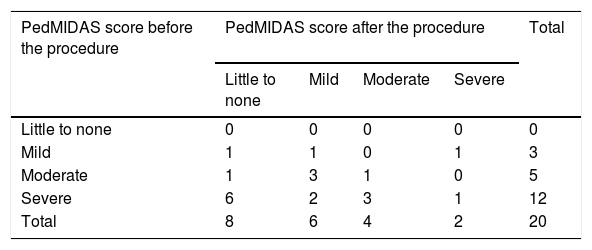
In terms of quality of life, we observed a significant quantitative improvement in PedMIDAS scores 3 months after the procedure compared to baseline values (–54 points; 95% CI for the median, –71.7 to –16.8) (Fig. 4). A subgroup analysis of PedMIDAS results (Table 3) reveals a trend towards lower headache severity after the procedure, in contrast with the opposite trend before GON block. This change observed between subgroups, which indicates lower headache severity after the procedure, was statistically significant (P < .01).

Impact of migraine on patients before and after anaesthetic block of the greater occipital nerve, by disability grade.
| PedMIDAS score before the procedure | PedMIDAS score after the procedure | Total | |||
|---|---|---|---|---|---|
| Little to none | Mild | Moderate | Severe | ||
| Little to none | 0 | 0 | 0 | 0 | 0 |
| Mild | 1 | 1 | 0 | 1 | 3 |
| Moderate | 1 | 3 | 1 | 0 | 5 |
| Severe | 6 | 2 | 3 | 1 | 12 |
| Total | 8 | 6 | 4 | 2 | 20 |
Significant differences were also observed at 3 months in the PedsQL Child-Self Report and PedsQL Parent-Proxy Report scores as compared to baseline (P < .05; PedsQL Child-Self Report, 95% CI for the median, 5.5-20.5; PedsQL Parent-Proxy Report, 95% CI for the median, 0.4-22.6) (Fig. 5 and Fig. 6).


During the study period, only 2 patients presented adverse reactions. One presented vasovagal syncope following infiltration, recovering without further complications, whereas the other reported a piercing sensation at the infiltration site 2 months after the procedure, which was self-limited.
DiscussionHeadache is a very frequent symptom, with a greater incidence of primary forms, including migraine. The prevalence of migraine ranges from 3% to 20% in children and tends to increase in adolescence.6
Extensive research has been conducted in the field of headache treatment in adults, but very few studies have been conducted in paediatric populations; therefore, medical treatment of headache in these patients is frequently based on recommendations made for adult patients.
GON block using local anaesthetics, with or without corticosteroids, is a well-established preventive treatment in adults16 and has recently been found to achieve excellent results in children.17
GON block has been shown to achieve a rapid, sustained response,18 while minimising the risk of the most frequent secondary effects of oral preventive drugs for migraine.
According to our results, approximately 90% of patients experienced improvements in pain intensity as measured with the vNRS immediately after the procedure, which persisted for up to 3 months; these results are similar to those reported by Dubrovsky et al.19 According to Szperka et al.,20 response is considered to be satisfactory when vNRS results decrease by at least 50%; in our study, vNRS scores decreased by up to 64%, a similar rate to that reported by Seeger et al.21 on a group of patients with post-traumatic headache. Furthermore, we observed a statistically and clinically significant decrease in headache frequency after GON block.20 Finally, our patients also reported improvements in their quality of life.
We may conclude that treatment response was rapid and sustained. Although our results were not compared with the benefits of standard oral preventive drugs, they are positive in themselves, particularly considering that GON block is performed in a single intervention.
Similarly to other results reported in the literature, treatment was generally well tolerated, with only 2 patients reporting secondary effects after the procedure.22
This study has several limitations. The patient sample was small, and both the assessment and the intervention followed an observational approach. Furthermore, the small size of our sample prevented us from including a control group; as a result, we cannot rule out confounding effects on GON block.
One of the strengths of our study is the representativeness of our sample, which reflects routine clinical practice. Comparing our results with those from similar studies is not straightforward due to differences in the techniques used and the fact that other studies include patients with secondary headaches (eg, post-traumatic headache) as their target population, whereas our objective was to gather a broad sample representative of the population typically attended at paediatric neurology consultations.
ConclusionAnaesthetic block of the GON is a safe, effective, and useful technique for migraine prevention and treatment in children. It relieves the burden associated with headache and is associated with improvements in patient quality of life. Given the fast response and its usefulness as a long-term preventive treatment, GON block may be considered a first-line therapy pending the appearance of other prophylactic options.
Given the great clinical variability of this population and the different approaches to GON block,20,21,23 consensus should be established to standardise the procedure and its indications, and controlled trials should be conducted in different population groups.
None.


