


University–industry collaborations (UICs) are pivotal for sustainable transformation; however, they often stall due to paradoxical tensions between academic and commercial logics. Adopting a paradox theory perspective integrated with institutional logics, this conceptual study develops a multi-level typology of UIC paradoxes—identity, performance, and organizing paradoxes. It maps them to solidify knowledge management and innovation mechanisms across the collaboration lifecycle (initiation, formation, operation). We demonstrate how bottleneck paradoxes can be synthesized rather than minimized through knowledge management mechanisms (e.g., sensemaking of interdependencies, shared vocabularies and data/knowledge architectures, and absorptive and dynamic capabilities) and innovation mechanisms (e.g., co-creation, open and collaborative innovation, ambidexterity, and meta-routines for iterative learning). We contribute to the literature with a multi-level, lifecycle-aware toolkit that reframes UIC governance from conflict mitigation to paradox orchestration, specifying how knowledge management and innovation mechanisms convert persistent tensions into complementary drivers of sustainable digitalization. Finally, we outline implications for capability-building, data/knowledge governance, and stakeholder engagement.
In an era defined by pressing sustainability challenges and rapid digitalization, university–industry collaborations (UICs) have become critical arenas for mobilizing knowledge, fostering innovation, and delivering transformative solutions. These collaborations are expected to generate breakthroughs that simultaneously advance digital transformation and address environmental and social goals. Yet, despite decades of investment and policy support, UICs frequently underperform because of persistent paradoxical tensions between academic and commercial logics ranging from divergent motivations and incentive systems to conflicting approaches to knowledge-sharing, time horizons, and governance structures (Bartunek & Rynes, 2014; Hewitt-Dundas et al., 2019; Perkmann et al., 2019). Such tensions impede the effective deployment of knowledge management and innovation mechanisms and risk stalling the broader contribution of UICs to sustainable transformation—the systemic and long-term reorientation of industrial, technological, and institutional systems toward environmental integrity, social inclusion, and economic resilience (Köhler et al., 2019).
Traditional responses to these challenges have primarily focused on removing or mitigating tensions through clearer contracts, intellectual property (IP) frameworks, science parks, or intermediary roles (Ankrah & Omar, 2015). However, the real-world problem persists: the more we institutionalize UICs, the more we encounter paradoxical demands that resist easy resolutions. For example, how can collaborators simultaneously promote open science and protect proprietary knowledge? How can projects embrace long-term knowledge development while delivering short-term innovation for commercial outcomes?
We argue that UICs are not dysfunctional because of tensions; they are inherently paradoxical. To unlock their potential, UICs must be understood not simply as vehicles for conflict mitigation or technology transfer but as paradoxical systems in which contradictory yet interdependent demands can be leveraged to fuel innovation, enhance absorptive and dynamic capabilities, and create pathways toward resilient, sustainability-oriented digitalization.
In this study, we treat digitalization and sustainability as distinct but deeply intertwined transformation pressures shaping contemporary UICs. Digitalization introduces demands for openness, data-driven innovation, speed, and modular knowledge architectures (Yoo et al., 2012), while sustainability requires long-term orientation, social inclusion, environmental responsibility, and systems-level coordination (Howard-Grenville et al., 2019). Their intersection produces a heightened set of paradoxical tensions: digital technologies enable new forms of collaboration and knowledge integration; yet, they also magnify tensions between openness and protection, exploration and exploitation, and short- versus long-term value creation. Accordingly, our use of the term “sustainable transformation” refers not to digitalization itself but to the broader societal shift toward environmental integrity, social inclusion, and economic resilience, within which digitalization must be orchestrated responsibly. Therefore, UICs operate at the nexus of these two imperatives, and paradox orchestration becomes essential for navigating the contradictory yet interdependent demands of sustainability-oriented digitalization.
While the paradox theory (Smith & Lewis, 2011) has gained prominence in organizational and innovation studies (Clegg et al., 2022; Jin & Shao, 2022; Schad et al., 2016), its systematic application to UICs remains limited. Existing UIC research tends to treat tensions as isolated conflicts (e.g., Ankrah & Omar, 2015; Bruneel et al., 2010; Cao et al., 2026) or governance challenges to be mitigated through structural mechanisms such as contracts, intermediaries, or IP frameworks (Perkmann et al., 2013; Sarpong et al., 2025; Vick & Robertson, 2018). Few studies have explored how these tensions evolve across collaboration lifecycles or how paradoxical forces manifest at multiple levels as follows: institutional (policy and legitimacy), organizational (routines and incentives), and interpersonal (trust and identity) (Berti & Simpson, 2021; Huq et al., 2017; Jarzabkowski et al., 2013; Verreynne et al., 2025). This gap limits our ability to explain why some collaborations collapse under conflicting logics, while others transform tensions into drivers of learning and innovation.
This study addresses that gap by developing a typology of paradoxes in UICs that integrates insights from institutional logics and paradox theory. We propose a typology as the most appropriate approach to address this question because it enables us to classify and compare different paradoxes systematically, highlight their interdependencies, and identify patterns in how they unfold during collaboration. Typologies are especially useful in theory-building when phenomena are complex, multi-dimensional, and under-theorized (Doty & Glick, 1994), as is the case with paradoxes in UICs. By offering a structured synthesis, our typology clarifies where and how specific tensions arise, why they persist, and how they might be constructively addressed, particularly within policy-mediated environments.
Unpacking this black box is important from both theoretical and practical perspectives. As environments become more interconnected and open to external knowledge (Torres de Oliveira et al., 2022), and as grand challenges and wicked problems necessitate more collaborative and interdisciplinary approaches (Fiedler et al., 2026; Sharma et al., 2022), understanding these tensions becomes critical (Gentile-Ludecke et al., 2020) to meet shorter innovation timelines (George et al., 2016).
We make the following three contributions. First, we advance the paradox theory in the context of UICs by showing that collaborations should not be viewed merely as mechanisms for reducing tensions or transferring technology, but as paradoxical systems where contradictions in identity, performance, and organizing logics are both obstacles and enablers. We extend the application of the paradox theory to knowledge-intensive, sustainability-driven collaborations by positioning UIC tensions as paradoxes to be leveraged rather than resolved and showing how sustainability pressures intensify and render these paradoxes more persistent and consequential. Second, we develop a multi-level, lifecycle typology that identifies paradoxes across institutional, organizational, and individual levels and links them to the initiation, formation, and operation stages of UICs. This lifecycle-based approach advances existing paradox frameworks by demonstrating that paradoxes vary systematically in salience and form across collaboration phases instead of remaining static or uniformly persistent. This theorization specifies how paradoxes evolve and how their synthesis requires distinct knowledge management and innovation mechanisms. Consequently, we connect the paradox theory to the capability-based literature on digitalization and sustainability transitions, highlighting how absorptive capacity, shared vocabularies, and co-creation routines enable the orchestration of paradoxes under long-term sustainability and legitimacy pressures.
Third, we contribute to the literature on sustainable transformation and collaborative governance by proposing a synthesis of strategies that move beyond separation or mitigation. By articulating how knowledge governance, innovation routines, and institutional steering can be combined to transform bottleneck paradoxes into drivers of innovation, we highlight paradox management as a foundational capability for UICs to support both digitalization and sustainability goals. This reconceptualizes collaboration success not as the absence of conflict but as the ability to orchestrate paradoxes productively over time.
By unpacking the paradoxical dynamics of UICs in a structured manner, this study contributes to a more nuanced and actionable understanding of collaboration, specifically regarding knowledge exchange and innovation mechanisms for sustainable transformation. It also highlights the important but underexplored role of institutional and policy interventions in shaping the conditions for UICs and the nature of the paradoxes that they must contend with. Ultimately, we show that resolving tensions is no longer sufficient. If UICs are to contribute meaningfully to business innovation, digital transformation, and sustainability, they must be managed as paradoxical systems that thrive not by avoiding tensions but by navigating and integrating them. Consequently, we invite scholars and practitioners to rethink UIC governance not as a series of technical fixes but as a complex act of paradoxical orchestration.
University-industry collaborationsTensions and synergies of collaborationsResearch on inter-organizational collaboration has provided insightful findings regarding tensions and synergies (Gray, 1985; Kumar & van Dissel, 1996; Majchrzak et al., 2015; Oliver, 1990). These tensions can also relate to power relations, coopetition, and between-party differences, such as values, practices, goals, and cultures, which can cause tensions (Majchrzak et al., 2015). They can also stem from a power imbalance, significantly influencing collaborative outcomes because parties with more power may exploit collaborative vehicles to control weaker parties for their organizational agenda (Phillips et al., 2000). Another critical tension—coopetition—arises when partners simultaneously cooperate and compete during collaborations and also brings hostility and resistance to cooperative relationships (Bengtsson & Kock, 2000).
In addition to tensions, synergies in collaboration may include access to specific resources or markets, economies of scale, resource pooling, risk spreading, complementary resources, learning, collective lobbying, and blocking competition (Barringer & Harrison, 2000). Although synergies seem promising, these tensions, if not adequately eliminated, may result in a lack of initiation of the collaboration, the potential loss of IP, decision autonomy, and flexibility (Barringer & Harrison, 2000). Strategies to resolve these tensions may be changing the collaboration structure by adding new roles and processes to facilitate collaborative workflow, increasing reliance on the top management team to resolve conflicts, and emphasizing transactional elements (Etzkowitz & Zhou, 2017; Majchrzak et al., 2015) and a well-defined scope of work between the parties.
However, recent scholarship has shifted the lens from eliminating conflict to embracing paradox. Instead of framing tensions as temporary hurdles, the paradox theory positions them as contradictory yet interdependent forces that persist over time and, if navigated well, can fuel long-term value creation (Das & Teng, 2000; Smith & Lewis, 2011). For example, Lado et al. (2008) demonstrate how trust and opportunism can coexist in exchange relationships, with their interplay ultimately generating high performance. Managing such paradoxes often relies on strategies such as integrative communication, reflexivity, and incentive systems that encourage cooperation while preserving necessary safeguards (Lado et al., 2008).
In this regard, knowledge management and innovation mechanisms emerge as central levers for harnessing paradoxical tensions productively. Knowledge management practices, including shared vocabulary, absorptive capacity, and data governance, help organizations transform contradictory demands into actionable knowledge flows that sustain collaboration. Similarly, innovation mechanisms such as ambidexterity, open innovation, and co-creation routines enable collaborators to reconcile short-term and long-term orientations, balance exploration with exploitation, and align sustainability goals with digital transformation imperatives (Dudkowski, 2021). These mechanisms are not neutral: they shape and are shaped by paradoxical demands, underscoring the importance of treating paradoxes as intrinsic to the collaborative process rather than anomalies to be removed.
Finally, as contemporary collaborations increasingly face the task of advancing sustainable transformation, the paradox perspective becomes even more critical. Digital technologies such as artificial intelligence (AI), big data analytics, and Internet of Things (IoT) promise efficiency and transparency, while sustainability imperatives demand inclusion, long-term resilience, and environmental responsibility. Therefore, collaborations must learn to orchestrate paradoxes between openness and protection, flexibility and stability, efficiency and resilience. By positioning paradoxes at the center of the analysis, we can better understand how collaborations evolve, how knowledge management and innovation mechanisms enable or constrain them, and how they ultimately contribute to societal and economic transformation.
University-industry collaborations: importance, role, and typesUIC is a unique form of inter-organizational collaboration. Collaboration between organizations differs from markets, which are governed by the price and contractual mechanism, and hierarchical relations, governed by control and authority (Aiken & Hage, 1968; Gray, 1985). The governance mechanisms for inter-organizational collaborations (e.g., strategic alliances or UICs), instead, involve a broad range of negotiated alternatives around roles and responsibilities, problems to be resolved, and problem-solving practices with minimum hierarchical control and heavy reliance on focal institutional logics (Phillips et al., 2000).
UICs have become central to contemporary innovation systems, serving as key vehicles for translating research into economic and societal value. They enable the mutual exchange of knowledge, capabilities, and resources that neither universities nor firms could generate independently (Etzkowitz & Zhou, 2017; Hewitt-Dundas et al., 2019). Beyond traditional technology transfer, UICs are increasingly recognized as mechanisms for addressing grand societal challenges, fostering regional resilience, and advancing sustainability transitions (George et al., 2016). As global competition intensifies and digitalization accelerates, UICs are helping organizations enhance absorptive capacity, promote cross-sector learning, and integrate diverse logics of value creation (Cao et al., 2026).
UICs manifest in diverse types and forms, reflecting the range of objectives, governance modes, and degrees of engagement between partners. Broadly, they can be classified into contractual, relational, and institutionalized forms (Mascarenhas et al., 2018; Perkmann & Walsh, 2007). Contractual forms include commissioned research, consultancy, and testing services; relational forms involve co-publications, joint projects, and innovation networks grounded in trust and reciprocity; institutionalized forms comprise research centers, consortia, and innovation hubs characterized by long-term strategic alignments and shared infrastructure (Østergaard & Drejer, 2022). In practice, these forms often coexist and evolve along the collaboration lifecycle, from initiation, where objectives are negotiated, through formation and operation, where learning and governance routines become embedded (Verreynne et al., 2025). Yet, their potential is often constrained by the paradoxical tensions embedded within these relationships, such as those between openness and control, short-term performance and long-term learning, or scientific and commercial imperatives. Therefore, understanding these tensions is crucial to designing collaboration mechanisms that unlock both innovation and social impact.
University-industry collaborations: approaches and tensionsUICs serve as a unique form of inter-organizational collaboration in the following three ways: 1) non-competing partners—different from most strategic partners for competitive business advantage who often face coopetition—trust-opportunism, and value creation-appropriation tensions; 2) apparently equal relationships, different from inter-organizational relationships with frequent power asymmetry; and 3) resource and skill complementarity known ex-ante, different from many innovative strategic alliances, which are often emergent, dynamic, and evolving (Deken et al., 2018). Thus, conflicts arising from power relations and coopetition may not be salient in UICs. Instead, the fundamental conflicts stem from significantly diverse motivations, objectives, and local institutional conditions (Cao et al., 2026; Verreynne et al., 2021).
Moreover, although complementary synergies exist (Barringer & Harrison, 2000), conflicts often occur during the collaborative processes as plural, competing institutional rules and logics come into play (Das & Teng, 2000; Hardy & Phillips, 1998). Therefore, successful collaboration depends on navigating tensions while achieving synergies through negotiations. Research on UICs has discussed various tensions that hinder effective collaboration. Universities follow an academic logic through which basic and applied research driven by curiosity is conducted with personal autonomy for scientific publication and public dissemination (Sauermann & Stephan, 2013).
Conversely, industry partners (assuming they are not nonprofits or government partners) follow a commercial logic where profits drive applied science, which is conducted (very often confidentially) and hierarchically coordinated for organizational recognition (Perkmann et al., 2019). Indeed, these significant differences between parties lead to multiple and persistent conflicts in UICs (Bartunek & Rynes, 2014; Sjöö & Hellström, 2019). These tensions are visible across the many types of UICs, including research partnerships, research services, academic entrepreneurship, human resource transfer, commercialization of property rights, and scientific publications (Cohen et al., 2002; Perkmann & Walsh, 2007; Verreynne et al., 2021).
Given the significant between-party differences, research on UICs has mainly focused on identifying and mitigating or separating tensions (see reviews: Mascarenhas et al., 2018; Perkmann et al., 2013; Sjöö & Hellström, 2019; Vick & Robertson, 2018). Accordingly, strategies that have been identified to mitigate such tensions include providing resources (funding, materials, and human capital), improving policies such as IP rights, enhancing organizational capabilities such as commitment and culture, improving individual capabilities, easing collaboration processes, and orchestrating political support such as legislations and regulations (Ankrah & Omar, 2015; Barbolla & Corredera, 2009; Fontana et al., 2006; Perkmann et al., 2013). As these two parties follow contradictory institutional logics, scholars suggest separating them through spatial (Perkmann et al., 2019) or sequential approaches (Jarzabkowski et al., 2013).
Specifically, spatial methods suggest that collaborators can separate conflicting demands through blended hybrids where different logics are present across collaborative projects, whereas sequential approaches, such as splitting, argue for attending to one demand at a time to achieve temporary relief from tensions (Jarzabkowski et al., 2013). However, while such approaches have attracted many followers, their focus on contradictions between parties means that the suggested responses are primarily defensive, resulting in performance improvements that are primarily short-term.
Consequently, some scholars began to recognize the necessity of embracing both competing forces to achieve better performance. Bartunek and Rynes (2014) explicitly point out the paradoxical nature of academic-practitioner relationships by recognizing competing and mutually enabling elements, calling for more research on non-separation strategies to appreciate unresolvable paradoxes. Recognizing the potential synergy between university and industry, de Man et al. (2022) propose reducing the paradox’s contradictory elements by aligning different diffusion curves.
Although insightful, these early paradox studies on UICs face criticisms of limited explanatory power for conflicting findings about compatibility, such as tensions leading to better knowledge creation (Rynes et al., 2001), and incompatibility, such as problematic communications between academics and practitioners (Siegel et al., 2003a). Thus, UICs provide a unique and particularly important context for studying how competing forces embedded in vastly different institutional logics work in high complementarity to achieve better collaborative outcomes.
Paradoxical nature of tensions in university-industry collaborations: understanding contradictory yet interdependent forcesAs digitalization and sustainability become explicit policy and industry priorities, the UIC paradoxes intensify. Digital platforms, AI, and big data promise openness and efficiency; nonetheless, sustainability requires inclusiveness, resilience, and long-term orientation. These contradictions place knowledge management and innovation mechanisms at the center of paradox orchestration. Knowledge flows and data governance determine what is shared and protected, while innovation routines, such as co-creation and ambidexterity, determine whether the dual objectives of digital transformation and sustainability can be pursued simultaneously. Without such mechanisms, paradoxes risk becoming barriers; with them, they become catalysts for transformation.
Thus, as tensions in UICs are inherently paradoxical (Bartunek & Rynes, 2014), the paradox theory offers a way to explicitly explore the contradictory yet complementary relationships between academic and practitioner institutional logics. We follow Smith and Lewis’ (2011) definition of paradox in this study, “as contradictory yet interrelated elements that exist simultaneously and persist over time” (p. 386). Therefore, these elements are logical and consistent when considered separately but become contradictory and inconsistent when considered together. Although opposing, synergistic and mutually enabling relationships exist when considered within a more extensive system (Quinn & Cameron, 1988). To navigate paradoxes collectively, the paradox theory suggests there are, in general, seven ways as follows: acceptance, spatial separation, temporal separation, integration, synthesis/transcendence/duality, differentiation and integration, and oscillating (Clegg et al., 2022; Poole & Van de Ven, 1989; Schad et al., 2016). While acceptance contends no action, the other approaches focus on resolution. At the individual level, paradoxes can be addressed through defensiveness, paradoxical thinking, reflexivity, behavioral complexity, humor, rhetorical skills, and responses informed by national culture (Schad et al., 2016).
Paradoxes arise when organizations must simultaneously embrace conflicting yet interdependent demands. Unlike simple trade-offs, where one choice excludes another, paradoxes require stakeholders to navigate tensions that persist over time, demanding a dynamic decision-making approach. These paradoxes are inherent in complex environments and emerge in areas such as knowledge production, resource allocation, institutional priorities, and governance structures.
One of the most widely discussed paradoxes in UICs is the exploration-exploitation dilemma (March, 1991). Academic institutions focus on exploration through fundamental research, while industry partners emphasize exploitation by applying research outcomes for commercial gain. Balancing these competing priorities is crucial for fostering productive collaboration while addressing the inherent tensions between long-term knowledge creation and short-term practical applications.
Another critical paradox in UICs is the short-term versus long-term performance tension. Universities often prioritize long-term knowledge generation and societal impact, whereas industry partners focus on immediate returns and market applications. Managing this paradox requires adaptive governance mechanisms that align incentives and ensure mutually beneficial collaboration over time. UICs also exemplify the competition–cooperation (coopetition) paradox, where universities and industries collaborate to advance scientific knowledge and technological development while simultaneously protecting proprietary research and IP. This paradox necessitates strategic management of knowledge-sharing practices to balance openness with institutional and commercial interests.
Paradoxes challenge conventional problem-solving approaches that seek clear-cut solutions. Instead, UIC stakeholders must adopt paradoxical thinking, recognizing that tensions should not be eliminated but rather leveraged for creative and strategic advantages. By embracing paradoxes, UICs can enhance innovation, foster interdisciplinary knowledge exchange, and sustain long-term partnerships in an increasingly complex and knowledge-driven economy.
Insights from paradox in general collaboration research provide limited explanatory power in collaborations where differences and complementarities are extreme. UICs call for new strategies to capitalize on these complex paradoxes. Indeed, instead of avoiding, adopting a paradox mindset to move beyond mitigating tensions to paradox appreciation may be a fundamental driver for successful UICs (Bartunek & Rynes, 2014). Consequently, we introduce a paradox lens (Berti & Simpson, 2021; Schad et al., 2016; Smith & Lewis, 2011) first to unpack and categorize the complex paradoxes embedded in UICs to highlight the breadth and depth of tensions across different levels. Subsequently, we propose strategies for synthesizing different paradoxes at various stages of the collaboration lifecycle.
Embedded competing institutional logicsThe diverse differences in values, goals, and rules within UICs are heavily influenced by institutional conditions, making the institutional logics literature highly relevant to our study (Perkmann et al., 2019). Institutional logics offer general prescriptions on “how to interpret organizational reality, what constitutes appropriate behavior, and how to succeed” (Thornton, 2004: 70). Scholars suggest that competing or multiple institutional logics create tensions when organizations with different belief systems and cultures collaborate, as they interpret and respond to situations differently (Greenwood et al., 2011). These tensions often arise between universities, which follow education and research logics, and industry partners, which follow an economic rationality logic (Lounsbury & Pollack, 2001; Tayar & Jack, 2016; Taylor & Kahlke, 2017).
To address such incompatible expectations, organizations need to create alternative behaviors, beliefs, and practices (McPherson & Sauder, 2013; Smets et al., 2015). The literature suggests several strategies for responding to competing institutional logics, including the following: deletion of some logics (Pratt & Foreman, 2000), selective coupling of certain elements (Pache & Santos, 2013), decoupling of implemented and endorsed logics (Friedland & Alford, 1991), compartmentalization of units (Pratt & Foreman, 2000), compromising and establishing a hierarchy of logics (Pratt & Foreman, 2000), modification to different contexts (Thornton et al., 2012), and developing a new belief to make competing institutional logics compatible (Pratt & Foreman, 2000). Competing logics can enrich collaborations when co-existing and when partners can mitigate them (Hinings, 2012; Reay & Hinings, 2009; Thornton et al., 2012) by using agreements, shared objectives, knowledge transfer, and understanding each other’s KPIs (Bjerregaard, 2010).
The institutional logics theory recognizes the competing and incompatible nature of logics in UICs, suggesting approaches to manage institutional complexity around legitimacy and resource access (Greenwood et al., 2011). However, getting to the root of the problem inhibiting UICs requires not only understanding the opposing forces within plural institutional logics but also acknowledging and exploring the complementary, mutually enabling nature of shared outcomes. While the institutional logics theory has addressed synthesizing strategies (Kraatz & Block, 2008; Pratt & Foreman, 2000), its focus remains on incompatibility. In this sense, the notion of paradox becomes prominent in fully comprehending the competing yet interdependent logics required to achieve shared goals during UICs.
MethodologyThis study adopts a conceptual and integrative research design, aimed at theory development rather than empirical testing. Conceptual studies are vital in advancing the understanding of complex, under-theorized phenomena by synthesizing dispersed insights, identifying conceptual gaps, and proposing new theoretical frameworks (Jaakkola, 2020). Here, we develop a multi-level typology of paradoxes in UICs through a structured synthesis of two bodies of literature: the institutional logics and the paradox theories. Our theorizing followed an iterative abductive approach, combining bottom-up and top-down logics. First, a bottom-up review of the UIC literature identified recurring tensions relating to identity, goals, and governance (e.g., Bartunek & Rynes, 2014; Bruneel et al., 2010; Sauermann & Stephan, 2013). This is similar to axial coding in qualitative research methods, a process through which a manageable number of general categories/themes are identified by finding relationships and patterns among open codes (Strauss, 1987). The themes that we coded using this bottom-up approach were identity, objective, operation, mistrust, nature of work, and incentive. Second, a top-down approach was leveraged by reading paradox typology studies, focusing on the types of paradoxes classified in existing studies (Schad et al., 2016). In total, the paradox theory explores four categories of paradox as follows: learning, belonging, organizing, and performing (Smith & Lewis, 2011). Subsequently, we merged the two approaches to arrive at a typology of three main paradox types in UICs—identity, performance, and organizing—which we describe in the next section.
Contextualization identified conceptual anchoring in knowledge- and innovation-driven UICs embedded in digitalization and sustainability transitions—areas where the need to balance exploration and exploitation, openness and protection, and short- and long-term goals was most evident. This contextual focus aligns with national and global priorities calling for mission-oriented innovation to address grand challenges (George et al., 2016). By situating the typology within this context, the study elucidates how paradoxical tensions in UICs are magnified under sustainability-oriented transformation pressures.
This approach allowed us to offer a replicable framework for theorizing paradoxes in UICs. By specifying levels of analysis (institutional, organizational, and interpersonal) and stages of collaboration (initiation, formation, operation), the typology provides a scaffold for future empirical work, including longitudinal case studies, comparative analyses, or quantitative operationalization of paradox-synthesis mechanisms.
Toward a paradox typology for UICsThe identity paradox, similar to the belonging paradox, emerged as a recurring theme as we encountered multiple tensions driven by differences in identity, including skepticism, mistrust, stereotypes, uncertainty, a divide between pure and applied science, and a mutual lack of understanding of values and expectations. The performance paradox became a core category as different objectives, incentives, and orientations were often mentioned as key barriers to effective collaboration, leading to complexity in reaching agreements. The organizing paradox emerged as a key theme through the grouping elements such as a mismatch in time focus, bureaucracy, fast-to-market versus long periods of alone time, IP conflicts, and differences in organizational structure and management. Notably, although these three typologies have unique characteristics, they are, nonetheless, interrelated and may overlap in some situations. Therefore, the three-fold typology framework should be considered a useful analytical tool to facilitate discussion and strategy formation.
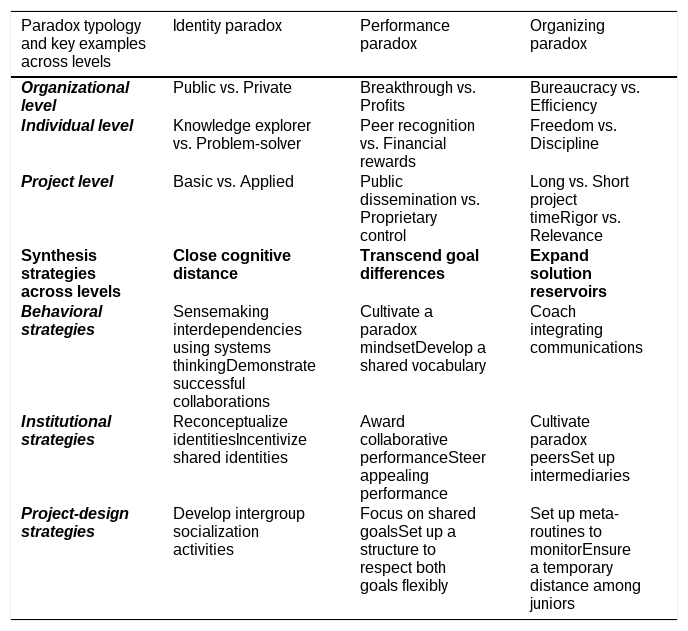
Understanding the paradoxical nature of tensions in UICs helps clarify barriers in light of the interrelations between universities and industries, thereby facilitating better management of collaborations for collective benefits. Compared with other inter-organizational collaborations, UICs present diverse and explicit differences and complementarities across a wide range of areas, suggesting the need for a multi-dimensional and multi-level understanding of the paradoxes. Drawing on different aspects of the institutional logics and the paradox theories, we group UIC paradoxes into three categories: identity, performance, and organizing. Each occurs on three levels, notably organizational, individual, and project levels, and micro-level paradoxes are embedded in macro-level ones. This framework provides a holistic picture of the complexity and breadth of the paradoxes embedded in UICs (see Table 1). Next, we elaborate on the approach that we used to identify and distinguish these different paradoxes, followed by a description of each paradox.
Paradox typology and synthesis strategies for the university-industry collaboration.
Source: Own elaboration.
The identity paradox in UICs arises from competing yet interrelated identities. Academic identities focus on public interests, basic science, and knowledge exploration, while industry identities emphasize private interests, applied science, and real-world problem-solving. These identity tensions intensify in sustainability contexts, where collaborators must align scientific, commercial, and societal identities to pursue shared missions. Despite their differences, combining these identities can foster innovative collaborations with impactful outcomes.
Academic identities, rooted in Mertonian science (Merton, 1973), emphasize “communalism, universalism, disinterestedness, and organized skepticism” (Bruneel et al., 2010: 859). Universities, supported by the public purse, focus on basic research and reliable knowledge creation through open debates, knowledge transfer, and co-creation to solve fundamental challenges facing society. Researchers identify as knowledge explorers driven by curiosity and societal responsibilities (Siegel et al., 2003a). Conversely, industry-related identities are market-driven, focusing on applied research for profit and practical problem-solving. Industry sees itself as an effective problem-solver (Ankrah & Omar, 2015) and may be motivated by extrinsic rewards such as high salaries and corporate perks (Sauermann & Stephan, 2013) and the economic value of its unique resources to sustain competitive advantages (Teece, 1986).
Collaborative projects face identity tensions, particularly between basic and applied research. These tensions can cause conflicts and offer synergies. Identity-driven conflicts may lead to mutual judgment and communication barriers, while recognizing synergies can enhance collaboration benefits (Pratt & Foreman, 2000). Thus, while identity-driven conflicts may trigger mutual judgment about good or bad and worthy or unworthy, leading to a lack of mutual understanding and appreciation between universities and industries (Ashforth & Mael, 1989), they may also enhance the benefits of collaboration and achieve a win-win situation if both parties can also see the synergies. Such benefits include mutual identification, reputation enhancement (Siegel et al., 2003b), adaptability, appealing to multiple interests, and collective lobbying (Barringer & Harrison, 2000). Collaborating universities can enhance their reputation when they are perceived as “contributing to the regional or national economy” and providing “service to the industrial community/society” (Ankrah & Omar, 2015: 392). Industry partners can be viewed as “more socially responsible business,” obtaining the “much needed legitimacy for industry products” (Ankrah & Omar, 2015: 398).
A similar logic applies to the individual-level identity paradox, where the reputations of scholars and practitioners can be enhanced, and the ability to address the needs of multiple stakeholders flexibly can be improved (Hoelter, 1985). These identity synergies tend to be higher when the parties involved have high interdependencies, which characterize university–industry relationships (Pratt & Foreman, 2000).
Initiation stageWhile initiating UIC projects, both parties must analyze and embrace the necessity of collaboration for a common goal. This process involves several factors to consider, such as required resources (skills and finance) and the complexity and duration of the projects. It is through open discussions in forums such as working groups, where two parties gather to discuss the project idea, identify members, and invite them. Awareness of complementary skills and appreciation of each other’s contributions are essential to identify problems and find partners successfully. This critical bottleneck often prevents initial conversations between universities and industry partners. A lack of frequent exposure to the competing world means that individuals lack experiential knowledge of collaboration and the vocabulary to appreciate the other side, let alone welcome complementary competencies or initiate communication. Limited experience with effective collaboration also means that each party tends to be firmly grounded in its identity and associated values (Ashforth & Mael, 1989).
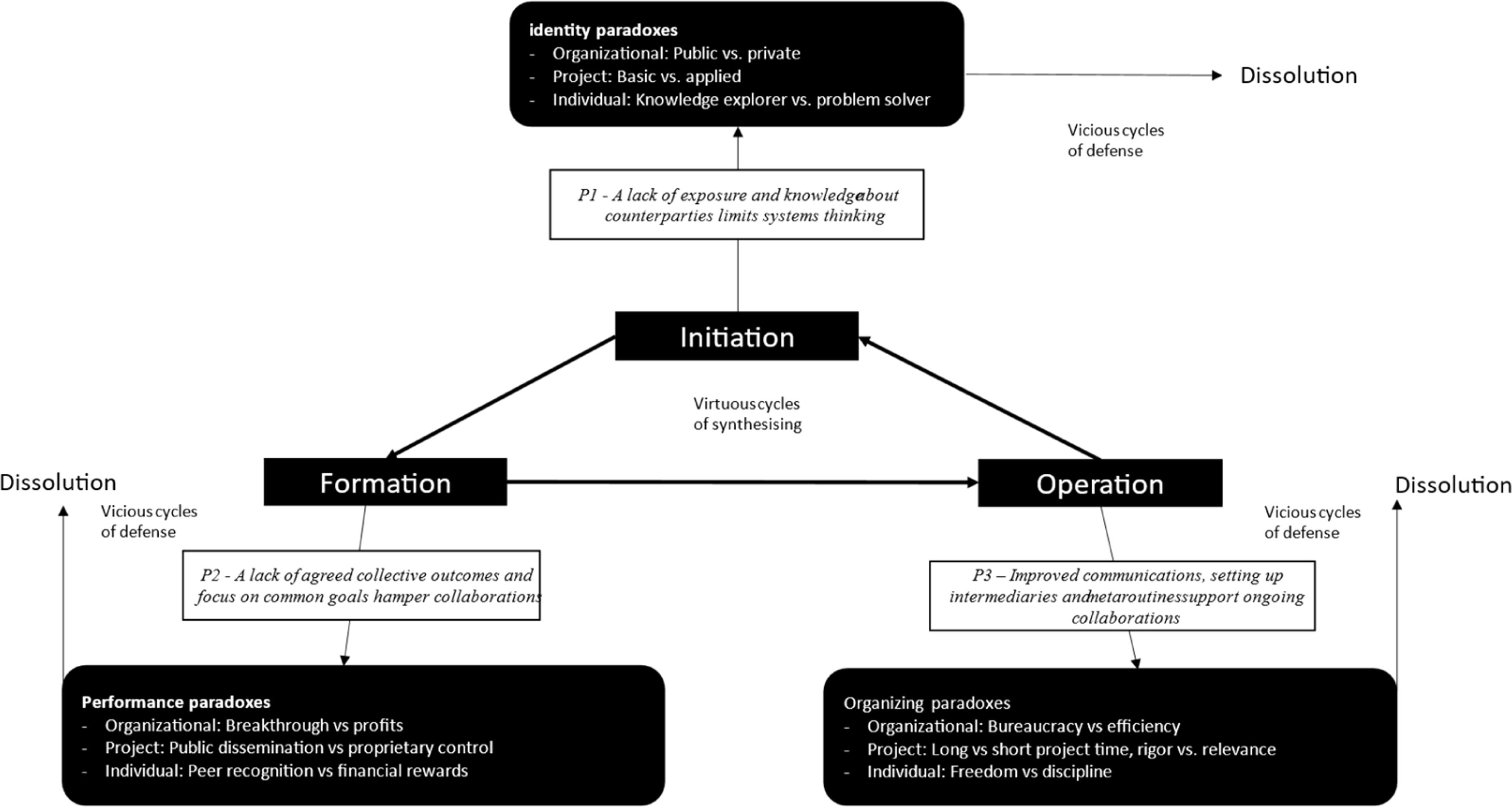
Even for experienced collaborators, there are uncertainties around the benefits of the other side and collaborations (Verreynne et al., 2021). The uncertainties can often turn into negative perceptions formed by historical tensions (Nichols et al., 2013). Although these competing identities lead to opposition between the two parties, they signal the unique skills and competencies that each party brings to the table for joint collaborative goals. Consequently, collaborative parties face salient paradoxical tensions related to identity at the initiation stage of UICs. Proposition 1: The identity paradox is the most salient paradox during the initiation stage of the university-industry collaboration lifecycle because a lack of exposure and knowledge about counterparties and uncertainties of benefits results in identity-related judgment and appreciation deficiency.
To initiate UICs, both parties must attempt to appreciate each other’s identities. A lack of exposure and frequent interactions creates a cognitive distance that prevents mutual understanding during initial encounters, suggesting that the identity paradox can be addressed by broadening cognitive representations. Drawing on insights from the institutional logic and the paradox theories, we identify behavioral, institutional, and project-design strategies to reduce cognitive distance and, thus, help synthesize identity paradoxes at the initiation stage (de Wit-de Vries et al., 2019; Dooley & Gubbins, 2019; Hewitt-Dundas et al., 2019; Muscio & Pozzali, 2013; Xu & Shenkar, 2002).
Individual levelBehavioral strategies involve activities that aim at changing behaviors, including sensemaking interdependencies and demonstrating successful collaborations (Schad et al., 2016). Cognitive distance can be reduced by sensemaking interdependencies using systems thinking (Schad & Bansal, 2018). Confronted with dissonant perceptions, both parties exhibit strong resistance to initiating interactions. Initiating such a process relies on rhetorical skills and boundary work through which sensemaking of interdependencies can be developed to counter resistance to barriers. Specifically, interdependencies and the need for collaboration can be communicated by emphasizing the hidden embeddedness and interrelations within an extensive system through social events or personal relationships. Systems thinking can be leveraged to broaden the analytical scale across levels and time and to reveal important complementarities between universities and industries for value co-creation. This can also foster mutual understanding by replacing superiority with empathy.
In addition to sensemaking interdependencies, demonstrating successful collaborations reduces cognitive distance. One key barrier to UICs is the lack of understanding of the value of collaborative engagements (Verreynne et al., 2021). Demonstrating successful collaborations through vehicles such as conferences, facilitators, exemplary poster exhibitions, awareness-raising campaigns, and speeches by successful collaborators can help both parties understand the benefits they can gain from collaboration, thereby reducing uncertainty and encouraging them to focus more on value creation than on differences (Dowling, 2015). Demonstration field activities can also serve as communities of practice to support the exchange of tacit knowledge and spillovers among experienced and potential collaborators (Brown & Duguid, 1991). Furthermore, sharing personal experiences in these demonstration activities can foster mutual trust and joint sensemaking, and a common knowledge base can be developed to reduce the cognitive distance (Nonaka, 1994; Rynes et al., 2001). Proposition 1a: The identity paradox in university-industry collaborations can be synthesized through behavioral strategies, including sensemaking interdependencies using systems thinking and demonstrating successful collaborations.
Institutional strategies involve activities that alter institutional settings to synthesize identity paradoxes in UICs (Lawrence, 1999). Cognitive institutional change can reduce cognitive distance—reconceptualizing identities for both sides (Pratt & Foreman, 2000). As the identities of the two parties have been chiefly defined with little or no overlap, collaborative parties find it difficult to obtain a sense of meaning or belonging. Socially constructing a broadened meaning or identity that incorporates elements from both sides can facilitate reducing the cognitive distance between universities and industries. An example of an identity proposed by the academic side is that of engaged scholars, who argue for greater public and political engagement by academics to address the relevance crisis (Hoffman, 2021). Expanding the conceptualization of identity to accommodate dual needs, rather than ignoring or separating them, allows both parties to find acceptance, courage, and understanding as they step into in-between areas (Empson, 2013). Moreover, institutional strategies to reduce cognitive distance can involve establishing institutional assemblages that incentivize shared identities. For example, journals, grants, and other funding institutions can be set up to appeal to both and encourage them to work together toward shared goals. These institutional actions influence incentive structures and processes and define what is legitimate, desirable, and worthy, thus affecting power and resource distribution to lean more toward dual identities and collaborative work (Lawrence, 1999). These new institutions that transcend the identity dichotomy can be further strengthened by more successful UICs (Lawrence et al., 2002). Proposition 1b: The identity paradox in university-industry collaborations can be synthesized through institutional strategies, including reconceptualizing and incentivizing shared identities.
To reduce cognitive distance, project-design strategies focus on softening the solidified in-group identity by developing intergroup socialization activities. Social identification develops in-group and out-group identities, leading to support for one’s institutions and stereotypical judgment of out-group members (Ashforth & Mael, 1989). Solidified identities for the university and industry are critical barriers to initiating collaborations. This judgment that comes with identities eliminates empathy and opportunities for mutual understanding, which are required to appreciate and orchestrate resources initially. Face-to-face interactions largely enable empathy and mutual understanding with each other during intergroup socialization activities or fields (Nonaka, 1994). To reduce cognitive distance caused by solidified identities on both sides, project design can prioritize and necessitate intergroup socialization activities to help reduce stereotypes and judgments and enhance the motivation to learn from one another. Proposition 1c: The identity paradox in university-industry collaborations can be synthesized through project-design strategies, such as developing intergroup socialization activities.
Collectively, these behavioral, institutional, and project-design strategies reduce cognitive distance and create virtuous cycles that embrace the identity paradox during the initiation stage, pushing toward the launch of new collaborations. This decision to focus on the identity paradox early in the collaboration cycle is critical because negative perceptions or stereotypes, if not synthesized early, may set off vicious cycles of negativity that lead to collaboration dissolution or significant resistance in subsequent stages.
Performance paradoxThe performance paradox arises from competing yet interdependent goals and incentives. Universities focus on public interests, scientific novelty, and workforce cultivation, with key performance indicators such as academic reputation and citations (Cohen et al., 2002). These indicators drive their focus and recognition by peers and managers (Bruneel et al., 2010). Conversely, industry emphasizes financial gain, problem-solving, and market share. Thus, staff are measured and rewarded based on indicators such as sales, customer satisfaction, and teamwork capabilities (Kathuria & Lucianetti, 2024).
Collaborative projects face tensions between the need for public dissemination and the desire for proprietary control. Universities strive for open science and academic rigor, which is signaled by specialization instead of generalization (Hoffman, 2021). Industry focuses on commercialization and competitive advantages (Chesbrough, 2003; Teece, 1986). Moreover, speed, flexibility, and “time to market” are emphasized as determinants of success, especially in entrepreneurial firms (Siegel et al., 2003a: 31). Despite these differences, both performance goals are interdependent and essential for successful collaborations. While there are forms of open collaboration among industry organizations, compared to the scientific community, the aim is less about public dissemination and more about competitive reasons, such as reducing manufacturing costs and strategic sharing of complementary assets (Chesbrough, 2003).
The paradoxical relationship between these performance goals is that they are inseparable and make sense only when considered together. This dual relationship enables successful collaborations. Basic research by universities can enhance industry firms’ ability to absorb external knowledge and lead to commercial applications (Sauermann & Stephan, 2013). Applied research by industry provides universities with real-world challenges and resources (Dowling, 2015: 2). Without university-driven innovations, industry may focus excessively on short-term profits, thereby inhibiting its long-term potential. Conversely, without industry-driven practical applications, universities may lack scholarly impact (Haley et al., 2022; Vermeulen, 2007).
When both performance goals are leveraged, collaborations benefit from public funding, university resources, industry insights, and fast prototyping (Rynes et al., 2001). Individual researchers also benefit from cross-sector collaboration, enhancing their experiments and sparking new ideas (Ankrah & Omar, 2015; Siegel et al., 2003b). Collaboration networks become even more critical for innovative performances when knowledge is widely distributed across collaborative parties because they provide timely access to resources and knowledge that are otherwise unreachable. Nevertheless, they also simultaneously challenge learning capabilities and internal expertise (Powell et al., 1996: 119).
In addition to project-level synergy, differences in performance goals signal that universities and industry partners are at different stages of supplying different resources and helping add value in complementary ways within the integrated system in which they are embedded. In talent systems, universities contribute to training and education that cultivate talent for industry partners, and the latter contribute to curriculum development and provide students with contexts to solve practical problems (Ankrah & Omar, 2015). In knowledge systems, universities contribute to basic research and generalizable theories, which industry partners can leverage for economic profit and management, and industry partners contribute to applied research and best practices, which academic scholars can use to categorize new phenomena and form novel theories (de Man et al., 2022). In the regional/national economic system, universities contribute to economic development by enhancing human capital and productivity through research. Industry partners, however, drive economic growth through hiring, investment, and taxes, thereby increasing the region’s or nation’s appeal for more opportunities for both.
Formation stageAfter initiation, UIC projects enter the formation stage, where associated parties must determine the common goals and related performance indicators through collaborative discussions. They have to consider the organizational- and individual-level expectations and goals, define individual roles, assign individual performance indicators, define and allocate project tasks, and acquire and set up resources. As shared outcomes must account for both parties’ competing goals, this process involves ongoing negotiations and refinements. After establishing a mutual appreciation of each other’s work and competencies at the initiation stage via virtuous cycles of identity paradox synthesis, both parties at the formation stage shift to learning about each other’s performance outcomes to ensure effective goal specification, task allocation, and role definition. While universities are incentivized by breakthrough innovations, scientific and educational outputs, and peer recognition, industries follow customer-driven innovations and proprietary control for financial rewards. If not properly synthesized with synergies, these goal differences serve as significant barriers at the formation stage of UICs. Perkmann et al. (2019), who studied university–industry centers, found that “university researchers - and by implication, their universities - were unwilling to create centers if the latter did not allow the researchers to continue operating according to some nonnegotiable aspects of the academic logic” (p. 306‒307). Therefore, we suggest that salient performance paradoxes pose the main bottleneck to effective collaboration at the formation stage. Proposition 2: The performance paradox is the most salient paradox during the formation stage of the university-industry collaboration lifecycle because shared outcomes need to be discussed and agreed upon by negotiating competing performance goals.
Effectively delivering shared performance outcomes that embrace both goals becomes essential for successful collaboration formation. Drawing on insights from the institutional logics and the paradox theories, the performance paradox can be synthesized by transcending goal differences through behavior, institutional, and project-design strategies.
Individual levelBehavioral strategies involve cultivating a paradox mindset and developing common vocabularies (Rothenberg, 1979; Schad et al., 2016). Paradox researchers find that cultivating a paradox mindset, “the extent to which one is accepting of and energized by tensions,” can improve job performance and innovation (Miron-Spektor et al., 2018: 26). It is related to cognitive flexibility, defined as “the ability to cognitively control and shift between divergent mental sets” (Schad et al., 2016: 40). Specifically, adopting a paradox mindset is pivotal during the UIC formation stage, as it involves discussing and finalizing common goals that may conflict with each party’s typically assumed goals.
A paradox mindset emphasizes the ability to appreciate and accept tensions using both/and logic (Lewis, 2000). Instead of an either/or approach that views tensions as dilemmas and threats, a both/and approach suggests that actors embrace tensions, feel comfortable with differences, and actively seek new, effective ways for continuous synthesis (Smith & Lewis, 2011). In the context of UIC, adopting a paradox mindset can help both parties shift their focus from a conflict-oriented to an acceptance-oriented approach, proactively seeking areas of common ground.
Innovation in the design of common goals can also be boosted by adopting a paradox mindset, which enhances awareness of complexity and encourages actors to expand their attentional focus, incorporating diverse perspectives and engaging in well-balanced deliberation (Rothman & Melwani, 2017: 13). The other behavior strategy involves developing a shared vocabulary (Huq et al., 2017). A common vocabulary is helpful for transcending goal differences across UICs, as it can facilitate mutual understanding and promote effective discussions in performance measurement. Incorporating specific terms from both worlds allows both parties to feel empathy during collective decision-making, facilitates knowledge exchange and trust, supports the joint interpretation of problems, and nurtures a sense of community.
This shared vocabulary can also serve as the foundation for both parties to understand the interdependency and complementarity within the integrated system in which they are embedded. This can further support the drafting of innovative goals and potential future collaborations. For example, by delineating and defining terms used differently for different parties, talents can be trained effectively with a curriculum designed to incorporate common vocabulary, and knowledge can be circulated efficiently between novel phenomena in practice and theoretical insights in academia. Furthermore, common vocabulary facilitates knowledge dissemination between academics and practitioners, especially when practitioners find academic jargon challenging to read (Rynes et al., 2001). Proposition 2a: The performance paradox in university-industry collaborations can be synthesized through behavioral strategies, including cultivating a paradox mindset and developing a common vocabulary.
Institutional strategies focus on developing new institutional support and structures to transcend goal differences in UICs (Lawrence, 1999; Lawrence & Suddaby, 2006), including awarding and steering in the formation stage. Awarding refers to activities that focus on awarding collaborative projects that can incorporate goals from both sides for win-win outcomes, such as setting up awards and fellowships to appraise both collaborators. Through awarding, new status hierarchies are created, reputation and status are built, and formal accreditation processes, standards, and certifications are developed to signal appealing behaviors. Additionally, steering by key institutional actors is pivotal in transcending goal differences, including top-tier journal editors, research funding bodies, professional associations, governments, communities of practice, universities, and industry partners (Van de Ven & Johnson, 2006). For example, Rynes et al. (2001) suggest that editors can influence the direction of research by shaping editorial policies, selecting editorial board members, organizing special research forums, and providing authors with specific guidance in decision letters on how to enhance their work. Governmental bodies have also initiated research quality assessment initiatives that measure the impact of scholarly research on practice, such as the Research Excellence Framework in the UK. Collectively, the awarding and steering institutional strategies provide the structural support through which performance paradoxes can be synthesized in working toward collective goals. Proposition 2b: The performance paradox in university-industry collaborations can be synthesized through institutional strategies, including awarding and steering.
In addition to behavioral and institutional strategies, performance paradoxes can be synthesized through project-design strategies that transcend goal differences. This includes focusing on common goals and establishing a structure that respects both sets of goals in a flexible manner. Given the significant differences in objectives between UICs, incorporating common goals in project design is essential for successful collaborations. These goals should be explicitly specified in writing and consistently reinforced throughout the collaboration (López-Martínez et al., 1994). Grounding the collaboration in common goals helps avoid ambiguity, guides collective efforts, and transforms conflicts into constructive opportunities for co-creating desired outcomes. When conflicts or discontent arise during goal negotiations, reorienting common goals can help treat differences as constructive opportunities to achieve collective outcomes. When both parties share a common vision and identify themselves as part of the solution, they can develop mutually agreed directions that motivate persistent collective efforts (Phillips et al., 2000).
In addition to common goals, project design must establish a structure to respect both goals flexibly (Huq et al., 2017). Differences can cause conflict, but they can also offer opportunities for complementarity, making it crucial to ensure that both sides’ needs and goals are communicated and respected in an equal and welcoming atmosphere. Both objectives should be incorporated into decision-making, as successful collaborations require both to perform better. When conflicts arise, such as between commercial confidentiality and open publishing, projects should be open to flexibly redesigning output expectations to satisfy both sides. For example, industry partners can leverage open publishing for long-term benefits, such as developing specialized talent (Perkmann et al., 2019). Similarly, balancing academia’s pursuit of groundbreaking research with industry’s focus on tangible outcomes can be achieved by selecting exploratory projects that might otherwise struggle to secure internal funding (Bjerregaard, 2010).
Other adjustments may include identifying confidential elements in advance so that academics can avoid them and adjusting the publication date of the paper to ensure the success of the patent application. The structure that allows respect and flexible adjustment is vital to synthesizing performance paradox for successful transcendence of goal differences. Proposition 2c: The performance paradox in university-industry collaborations can be synthesized through project-design strategies, including focusing on common goals and establishing a flexible structure that respects both goals.
Collectively, these behavioral, institutional, and project-design strategies transcend goal differences and elicit virtuous cycles of embracing the performance paradox in the formation stage, pushing toward successfully forming collaborative teams. These performance paradoxes are addressed at the formation stage, which is critical because subsequent project operation depends on successfully agreeing on collective goals, without which vicious cycles of confusion and conflicts may override the benefits of the virtuous cycles to be fostered and lead to project dissolution (Østergaard & Drejer, 2022).
Organizing paradoxThe organizing paradox involves competing yet co-existing work coordination and processes embedded in UICs for shared outcomes. Recognizing these contradictions can lead to more equitable outcomes that enhance society and foster economic growth. Sustainable transformation also places pressure on organizing routines, requiring operational practices that are simultaneously efficient, adaptive, and resource-conscious. The organizing theme stands out as a standalone type because of its emphasis on logistics and operations, rather than a sense of meaning or incentive measures.
Universities, funded publicly, focus on public interests, such as enhancing research and education quality. They design structures to foster independent knowledge exploration and personal curiosity but often have rigid bureaucracies that delay processes (Ankrah & Omar, 2015). This bureaucratic nature often becomes more salient when government agencies are involved in projects such as those receiving public funding. Embedded in universities, researchers value the freedom to choose a research topic and research method and organize their work to allow time for creativity and innovation (Sauermann & Stephan, 2013). They are comfortable with uncertainty, long periods of rigorous contemplation guided by research ethics, and view disagreements as part of ongoing dialogues.
Conversely, for-profit organizations aim to deliver high-quality value efficiently, coordinating hierarchically to meet customer needs. They emphasize discipline, routines, and rapid adaptation to changes. Collaborative projects face tensions around project time and scope, needing to balance academic rigor with industry efficiency (Bjerregaard, 2010; Gulati, 2007). Academics working with practitioners are caught between the conflicting time demands of practice, which require quick responses and sudden changes, and research, which demands extended periods of focused reflection (Bansal et al., 2012).
Owing to these co-existing organizing-related tensions, we observe that interactions among parties in collaborative projects are distant and unsatisfying, with a notable lack of shared language. Practitioners often “wished that academics would refrain from jargon and the complex terminology that is usually present in the methods chapter of research articles” (Ancira et al., 2022: 47). Paradoxically, these competing organizing logics fuel collaboration success, and together they form an integrated whole (Schad et al., 2016). Without freedom, long-term contemplation, or rigorous exploration, research projects may suffer from a lack of creativity and rigor. Simultaneously, research projects may be poorly executed, lacking efficiency, discipline, or relevance.
Challenges in collaborative projects demand academic freedom and industry efficiency. Without both, projects may lack creativity, rigor, execution, and relevance. Industry partners provide feedback on research ideas, while universities offer opportunities for unexpected innovations with long-term benefits (Ankrah & Omar, 2015). This complementarity yields innovative outcomes that neither party could achieve independently.
Operational stageEntering the operation stage of UICs means that real collaboration projects have started. Activities that take place in this stage primarily involve communication and coordinating activities. The goal is to produce shared outcomes effectively as a basis for future collaborations. The operation stage involves the most intense interactions between universities and firms, as the knowledge creation process is interactive with trials and errors (Bjerregaard, 2010). Working together on projects frequently exposes both parties to each other’s organizing logic through formal and informal communications, knowledge spillovers, and observations. Moving beyond differences in identity and goals, collaborators will find increasingly noticeable differences in working styles. For example, academics prefer extended periods of contemplation, whereas practitioners need to respond quickly to practical problems.
Differences in other areas, such as how organizations are operated and project tasks are managed, also become striking. The decision-making tree within organizations introduces additional complexity to the operational paradox. As it is typically the managerial level that initiates collaborations, team members within each party have limited exposure to counterparties until the operation stage. This limited interaction between team members—for example, Ph.D. researchers and industry staff—leads to their unfamiliarity with the high-level strategy and, thus, calls for additional managerial efforts to navigate the organizing paradox. Consequently, the organizing paradox becomes most salient during the operation stage. Proposition 3: The organizing paradox is the most salient paradox during the operational stage of the university-industry collaboration lifecycle because intense interactions expose each other’s organizing logic.
The organizing paradox derives from differences in organizing styles and leads to conflicts and misunderstandings that cripple operations. They can be synthesized by expanding solution reservoirs through behavioral, institutional, and project-design strategies.
Individual levelBehavioral strategies to synthesize organizing paradoxes involve coaching and integrating communications. Borrowing insights from conflict management literature, we suggest coaching and integrating communications instead of obliging, dominating, and avoiding approaches to ensure effective day-to-day operations (Rahim, 1983). To be sustainable and productive, successful collaborative projects must incorporate the needs and working styles of both parties.
Therefore, being concerned only for oneself (dominating), being concerned only for others (obliging), and not being concerned for either (avoiding) are not conducive to effective communication during conflict navigation. Instead, an integrating communication approach can help synthesize the organizing paradox because involving concerns for self and others can enable “attempts to satisfy both sides’ needs and wants to the highest degree possible” (Song et al., 2006: 345). Specifically, the integrating approach entails an open exchange of information in which participants bring issues to light, explore them in depth, foster the expression of thoughts and feelings, and use the insights gained to maximize benefits for both parties.
Expanding communication styles to include integrative communication can help prevent misunderstandings and conflicts during the operational stage. Effective knowledge creation relies on mobilizing tacit knowledge (Rynes et al., 2001). Integrative communication facilitates the tacit-to-tacit knowledge creation process between academics and practitioners, requiring empathy and the acceptance of others’ feelings and beliefs (Rynes et al., 2001). Face-to-face integrative communication allows tacit assumptions to surface, fostering alternative thinking and breakthrough innovations. Proposition 3a: The organizing paradox in university-industry collaborations can be synthesized through behavioral strategies, such as coaching and integrating communications.
Institutional strategies to synthesize the organizing paradox include cultivating paradoxical peers and establishing intermediaries. Paradox researchers find that paradox peers—“ongoing, cooperative connections with individuals facing similar paradoxes outside the organization”—provide vital relational resources to help individuals navigate paradoxes (Pamphile, 2022: 1285). Similar experiences with organizational paradoxes from outsiders provide individuals with opportunities to form authentic relationships and learn from one another about effective approaches. Accordingly, paradox peers enhance paradox synthesis through the following three mechanisms: 1) facilitating tension relief and, thus, decreasing anxiety, 2) supporting paradox through peer pressure, and 3) encouraging effective, collaborative brainstorming approaches. Consequently, a community of paradox peers can be actively promoted and established to support organizing paradox synthesis in UICs.
Additionally, the institutional setting can be expanded by setting up intermediaries. Intermediaries assume a boundary-spanning role between parties to facilitate communications (Bansal et al., 2012). In the UIC setting, intermediaries can assist in resolving the conflicting and competing priorities of researchers and practitioners while overcoming the inherent paradoxes to enhance research and practice simultaneously through practice-based research and research-based practice (Bansal et al., 2012: 89). Although intermediaries can help with the initiation and formation stages, they are essential in the operational stage, where conflicts are most frequent. Intermediaries typically comprise staff who speak languages from both worlds and specialize in supporting roles for the knowledge production cycle. They serve as paradox synthesizers to help build a safe, collaborative atmosphere and sustain ongoing dialogues. Proposition 3b: The organizing paradox in university-industry collaborations can be synthesized through institutional strategies, including cultivating paradoxical peers and establishing intermediaries.
Project-design strategies to synthesize organizing paradox involve setting up meta-routines and ensuring temporary distance among peers. Paradox research shows that meta-routines, as standardized procedures for changing existing routines, exist as a way for creating new ones (Adler et al., 1999: 50) and, therefore, serve as a tradeoff-shifting tool to synthesize the paradox of efficiency and flexibility. As operational paradoxes, such as rigor versus relevance and freedom versus discipline, naturally emerge during the operation stage of UICs, setting up standardized meta-routines to reflect regularly on potential improvements in regular operations can help synthesize paradoxes promptly and routinely. This can also serve as a structured procedure to ensure misunderstandings are addressed promptly and prevent participants from drifting into a conflict-oriented mindset that inhibits collaboration.
Additionally, given junior team members’ unfamiliarity with counterparties and the managerial strategy, project structures should be in place to ensure a certain distance for junior members from both parties before strategic intent and a paradox mindset are cultivated among members (Perkmann et al., 2019). This temporary distance can ensure that operational style can be protected among team members for each side’s performance goals, and managers can take on dual roles to think systematically across all collaborations with industry partners using systems thinking. Proposition 3c: The organizing paradox in university-industry collaborations can be synthesized through project-design strategies, including the establishment of meta-routines and ensuring temporary distance among junior researchers.
Collectively, these behavioral, institutional, and project-design strategies expand the solution reservoirs when encountering conflicts and elicit virtuous cycles of embracing the organizing paradox in the operational stage, which then drives toward effective collaborative efforts. Furthermore, successful practices can be embedded in routines and norms for recurring and persistent collaborations and restarting the collaboration lifecycle (Østergaard & Drejer, 2022). When the organizing paradox is not synthesized effectively at this stage, potential conflicts or misunderstandings that arise from different organizing logics may lead to vicious cycles of defense and, if severe, project dissolution.
While behavioral and institutional strategies primarily target individual- and organizational-level paradoxes, project-design strategies apply to project-level paradoxes. More effort may be needed at higher levels, given that complexity increases as levels rise, but greater impact may be achieved if higher levels change. For example, as Rynes et al. (2001) mentioned, “without system support at higher institutional levels, individual researchers will continue to be risk-averse about broadening their research paradigms…” (p. 349). Interdependencies between levels also mean that bottom-up changes can happen when lower-level changes reach a specific critical mass.
In summary and to represent our outlined multi-dimensional and multi-level paradoxes embedded in UICs and using transcendence, a concept similar to the paradox theory—instead of viewing university and industry as contradictory and opposing, they can be complementary and mutually reinforcing in a more extensive system—we synthesize the strategies for associated paradoxes (see Fig. 1).
ImplicationsTheoretical implicationsIn this article, we have argued that in collaborations characterized by extreme differences and complementarity, such as UICs, the multi-dimensional, multi-level, and multi-phase paradox approach is key to achieving better and more impactful collaboration outcomes. Contrary to the much-discussed liability of unmitigated-conflict logic (e.g., Das & Teng, 2000), we suggest that there is a liability of the unsynthesized-paradox hypothesis in UICs. Instead of temporarily eliminating tensions, collaborators should opt for thinking that enables tensions by embracing paradoxes, understanding duality relationships, and leveraging behavioral, institutional, and project-design strategies throughout the collaboration lifecycle. Consequently, we move paradox research beyond static classifications of tensions by explicitly theorizing how paradoxes emerge, shift, and reconfigure across distinct collaboration phases. Importantly, sustainability pressures intensify these tensions by introducing longer time horizons, broader stakeholder accountability, and heightened legitimacy demands, increasing the persistence and salience of paradoxes in UICs.
Moreover, our investigation of UIC highlights three key points as follows: 1) collaborations should not be viewed as either conflict-mitigation or synergy-generation vehicles, 2) nor should they be viewed within one level or dimension, such as organization-level identity tensions, and 3) nor should they be viewed as a series of one-off transactions. Collaborations are awash with paradoxes across levels, dimensions, and time. When faced with these, collaborators should learn to embrace, not deny them, using multi-dimensional and multi-level synthesis strategies while considering the virtuous cycles embedded in path dependency. This temporal emphasis advances existing paradox frameworks, which have largely treated paradoxes as persistent but undifferentiated tensions, by showing that the nature, salience, and consequences of paradoxes vary systematically across collaboration lifecycles. Under sustainability-oriented collaboration, these virtuous cycles become particularly consequential, as early decisions about knowledge openness, problem framing, and partner inclusion can lock collaborations into trajectories that either enable or constrain long-term societal impact.
Our analysis shows that sustainability-oriented digitalization cannot be achieved through linear coordination or technical fixes. It requires organizational systems that can simultaneously balance creativity and execution. Sustainability pressures shift these paradoxes from episodic trade-offs to enduring tensions that must be continuously navigated instead of resolved. Therefore, paradox orchestration emerges as a foundational capability for advancing sustainability goals. By embedding paradoxes within a lifecycle logic, we show why orchestration strategies effective at one phase (e.g., identity alignment at initiation) may be ineffective, or even counterproductive, at later phases (e.g., coordination and discipline during operation). By cultivating shared identities, aligning dual performance metrics, and developing reflexive organizing routines, UICs can transform persistent tensions into generative resources for responsible innovation.
Thus, we extend the paradox theory in the context of UICs by reframing collaborations not as vehicles for either conflict mitigation or synergy generation but as paradoxical systems in which contradictions (e.g., openness vs. protection; exploration vs. exploitation; short- vs. long- term orientation) are persistent, interdependent, and potentially generative of value. Accordingly, we articulate a liability of the unsynthesized paradox in the following steps: 1) absent purposeful orchestration, 2) tensions harden into defensive routines that stall knowledge flows, 3) slow innovation, and 4) reduced collaborative impact. This risk is amplified under sustainability imperatives, where failure to synthesize paradoxes can undermine legitimacy, delay systemic change, and erode trust among diverse stakeholders. Our lifecycle-based typology advances the paradox theory by specifying when paradoxes become constraining rather than generative and by identifying phase-contingent mechanisms through which synthesis can be achieved.
Our contribution specifies the mechanisms that turn tensions into drivers as follows: (a) knowledge management practices (shared vocabularies, data/knowledge architectures and governance, absorptive capacity) that reduce cognitive distance and enable reliable knowledge circulation across institutional boundaries and (b) innovation mechanisms (co-creation, ambidexterity, open innovation, meta-routines for iterative learning) that align problem framing, experimentation, and implementation under dual value logics. In short, we advance paradox research in UICs from diagnosis (identifying tensions) to design (specifying levers that synthesize tensions) in contexts where sustainability requires balancing immediate innovation outputs with cumulative, systems-level transformation. Nevertheless, this paradoxical approach to collaboration does not guarantee success. Future research can further explore this topic to deepen the understanding of the boundary conditions and the strategies employed by successful collaborators, as well as by unsuccessful ones.
Second, this paradoxical understanding of UIC can serve as the core and the starting point for enhancing the innovation ecosystems in which these dyadic relationships operate. Innovation ecosystems comprise multiple dyads and plural collaborations through which participant-level benefits and systems-level outputs are achieved. We theorize a multi-level typology of identity, performance, and organizing paradoxes—mapped to the initiation, formation, and operation stages of UICs—and show how each bottleneck requires distinct knowledge management and innovation capabilities. At initiation, identity paradoxes (academic vs. commercial selves, basic vs. applied orientations) are best synthesized through sensemaking of interdependencies, intergroup socialization, exemplars of successful UICs, and institutions that incentivize shared identities, all underpinned by knowledge management devices, such as shared glossaries and repositories that render value legible across logics. At formation, performance paradoxes (public dissemination vs. proprietary control, scholarly impact vs. market relevance) are addressed by co-specifying dual outcomes, designing flexible IP/publishing pathways, and steering via awards/standards that legitimate dual value, supported by absorptive capacity and dynamic capabilities that integrate external knowledge with rapid prototyping.
Under sustainability-oriented collaboration, these performance paradoxes increasingly require sequencing and temporal ambidexterity rather than static compromises. At operation, organizing paradoxes (freedom vs. discipline, rigor vs. responsiveness) benefit from integrative communication, boundary-spanning intermediaries, paradox-peer communities, and meta-routines that institutionalize iterative learning without sacrificing speed (Adler et al., 1999; Bansal et al., 2012; Pamphile, 2022). By specifying these phase-contingent mechanisms, our framework clarifies how paradox management capabilities must evolve over time rather than accumulate linearly. This lifecycle-capability view connects the paradox theory to the literature on institutional logics, knowledge management, and innovation capabilities, clarifying who does what, when, and with which artifacts to advance sustainable digitalization.
Finally, we contribute to collaborative governance by showing that paradox synthesis scales when institutional steering (journals, funders, standards bodies, governments) and intermediaries jointly reconfigure incentives, evaluation, and infrastructure around dual value (scholarly and commercial/social). Concretely, award/steer levers (editorial policies, impact standards, funding criteria) can normalize co-created outputs, flexible disclosure sequences (e.g., publish after IP milestones), and data/knowledge governance that balances openness with appropriation. Sustainability-oriented governance further requires mechanisms that reward long-term learning, resilience, and cumulative impact rather than short-term performance alone.
At the ecosystem level, this implies investing in shared digital infrastructures (trusted data spaces, inter-organizational repositories), capability-building (knowledge management for upskilling, boundary-spanning roles), and evaluation regimes that privilege path-dependent learning and longitudinal outcomes over one-off transactions. By foregrounding temporal sequencing and phase-specific orchestration, this contribution advances the paradox theory from a primarily synchronic lens to a dynamic, process-oriented understanding of collaboration. By shifting governance from conflict reduction to paradox orchestration, UICs are positioned to deliver sustainable transformation—where digital tools (AI, analytics, IoT) and sustainability goals (long-term resilience, environmental and social value) are pursued simultaneously instead of sequentially.
Practical implicationsPractically, our approach encourages universities, firms, and policymakers to shift from transactional arrangements toward dynamic capabilities that enable the synthesis of tensions over time. For university leaders, this study underscores that the effectiveness of UICs depends on formal structures (e.g., contracts, technology transfer offices, or funding schemes) and the cognitive and relational conditions under which collaborations are initiated and sustained. University managers play a critical role in shaping these conditions, for example, by paying close attention to how incentives, performance metrics, and governance arrangements interact with collaboration stages. Early-stage collaborations benefit from flexibility, trust-building, and legitimacy work, whereas later stages require more precise coordination mechanisms without prematurely constraining learning. Therefore, university managers should resist one-size-fits-all engagement models and instead support differentiated collaboration designs aligned with lifecycle stages and partner expectations. Moreover, the study highlights the importance of institutional signaling. How universities frame the purpose of collaboration—whether primarily as commercialization, impact generation, or knowledge co-creation—shapes academics’ sensemaking and behavior. Leaders who articulate collaboration as a legitimate scholarly activity, rather than an add-on or a risk, can reduce defensive responses and enable more productive engagement with industry partners.
For managers and CEOs in firms collaborating with universities or research centers, this study clarifies why many UICs struggle despite a strong technical or commercial fit. The analysis suggests that breakdowns often arise not from misaligned objectives per se but from unmanaged paradoxes, such as tensions between short-term commercial timelines and longer-term research trajectories or between openness for learning and protection for appropriation. Therefore, business leaders should approach UICs as strategic learning relationships, not merely transactional arrangements. This involves allocating managerial attention to boundary-spanning roles, encouraging tolerance for ambiguity in the early collaboration phases, and recognizing that productive outcomes may emerge unevenly over time. CEOs and senior managers can also play a crucial role in legitimizing collaboration internally, ensuring that research engagement is not undermined by short-term performance pressures imposed on project teams.
The study further highlights several areas that require active and ongoing management to mitigate risks and avoid collaboration failure. First, actors should monitor how tensions evolve over time instead of assuming that early alignment guarantees long-term success. Tensions often shift in nature as collaborations move from initiation to operation, and failure to recalibrate governance or expectations can lead to frustration or disengagement. Second, attention should be paid to multi-level dynamics. Institutional pressures (e.g., funding rules and IP regimes), organizational routines (e.g., reporting requirements and incentive systems), and interpersonal relationships (e.g., trust, identity, and legitimacy) interact in ways that amplify or dampen collaboration challenges. Effective collaborators recognize that problems experienced at the project level may originate from misalignments at higher institutional levels. Third, university and industry actors should invest in capabilities for sensemaking and reflexivity, including structured reflection points, boundary-spanning roles, and forums for surfacing assumptions. These practices help transform tensions from sources of conflict into opportunities for learning and adaptation.
For policymakers, the study suggests that UICs cannot be strengthened solely through funding instruments. While financial incentives remain important, policy tools should also address the institutional conditions that shape how collaborations are enacted. For example, evaluation frameworks that privilege short-term outputs may unintentionally discourage the exploratory learning required for effective collaboration. Policies that support longer collaboration horizons, enable experimentation, and recognize diverse forms of impact, including learning, capability-building, and relational outcomes, are more likely to foster resilient UICs. Additionally, policymakers can play a role in legitimizing hybrid academic–industry careers, supporting intermediaries that facilitate cross-sector sensemaking, and encouraging cross-sector mobility. Such interventions help reduce the structural and cognitive barriers that often undermine collaboration effectiveness.
From a sustainable development perspective, this study highlights that UICs are critical infrastructures for addressing complex societal challenges. Yet, their transformative potential depends on how tensions are managed rather than eliminated. Sustainability-oriented collaborations often intensify paradoxes between economic viability and social purpose or between speed and responsibility. By framing UICs as sites of paradox orchestration, the study suggests that sustainable development outcomes are more likely when collaborations cultivate capacities for long-term thinking, inclusivity, and adaptive learning. This has implications not only for how collaborations are governed but also for how success is defined. Sustainable impact may emerge through cumulative learning and capability-building rather than immediate, measurable outputs. Recognizing and supporting these pathways is essential for UICs to contribute meaningfully to sustainable transformation.
Future researchBuilding on our theoretical framework, future research should further explore the paradoxes embedded in UICs and their implications for collaboration success. While this study presents a typology of paradoxes and proposes strategies for synthesizing bottleneck paradoxes throughout the collaboration lifecycle, several key areas warrant further investigation. First, empirical studies are necessary to validate and refine the typology of paradoxes across different contexts and industries. While we argue that paradoxes manifest at multiple levels—individual, organizational, and institutional—future research should examine how these paradoxes interact and evolve in real-world UIC settings. Longitudinal studies that track collaborations over time would be particularly valuable in understanding how paradoxes shift as partnerships progress and as external conditions change.
Second, future research should explore the role of organizational capabilities and leadership in managing paradoxes in UICs. Prior research has primarily focused on structural and policy-based interventions to mitigate tensions. Nevertheless, less attention has been paid to the micro-foundations of paradox management, such as leadership behaviors, cognitive framing, and relational strategies. Investigating how academic and industry leaders navigate and synthesize paradoxes could yield actionable insights for fostering more resilient, sustainable collaborations.
Third, there is a need to further integrate the paradox theory with institutional logics to examine how UICs navigate conflicting demands while maintaining legitimacy in their respective domains. Future research should explore how institutional actors, such as governments, funding agencies, and intermediaries, shape the paradoxical nature of UICs and whether policy interventions can enhance paradox synthesis instead of merely reducing conflict. Comparative studies across different national and institutional contexts could offer valuable insights into how regulatory environments shape paradox resolution in UICs.
Finally, given the increasing complexity and speed of innovation, future research should investigate how digital transformation and emerging technologies influence paradoxes in UICs. Digital platforms, AI, and virtual collaboration tools reshape knowledge exchange and innovation dynamics, potentially amplifying or altering existing tensions. Exploring how technology-enabled collaborations shape paradox management strategies can contribute to theory and practice in the evolving landscape of UICs. By addressing these future research directions, scholars can advance the understanding of paradoxical tensions in UICs, offering insights that refine theoretical perspectives and provide practical implications for academics, industry practitioners, and policymakers seeking to enhance collaboration outcomes in an increasingly interconnected world.
ConclusionUICs are inherently paradoxical systems in which contradictory logics—academic and commercial, exploratory and exploitative, and open and proprietary—coexist and coevolve. This study argues that instead of eliminating these tensions, effective collaborations toward sustainable transformation depend on the capacity to synthesize them through knowledge management and innovation mechanisms that operate across the collaboration lifecycle. By developing a multi-level typology of identity, performance, and organizing paradoxes mapped to initiation, formation, and operation stages, we demonstrate that each phase demands distinct but complementary strategies—individual, institutional, and project-based—to transform friction into generative learning and innovation. Recognizing and orchestrating paradoxes reframes collaboration success as the productive integration of competing demands instead of the absence of conflict. Ultimately, the capacity to manage paradoxes dynamically is foundational for achieving sustainable transformation, where knowledge creation, commercial application, and societal impact advance together through continual, reflexive collaboration between universities and industry.
CRediT authorship contribution statementZhe (Selina) Cao: Writing – original draft, Conceptualization. Martie-Louise Verreynne: Writing – review & editing, Supervision, Project administration, Conceptualization. Rui Torres de Oliveira: Writing – review & editing, Supervision, Conceptualization.

