




In the context of artificial intelligence (AI) reshaping the global entrepreneurial ecosystem, fostering students' technology adoption intention in entrepreneurship has become a critical issue in higher education. Traditional technology acceptance models are limited in their theoretical applicability and research methodologies. Therefore, this study adopts a two-stage prediction-configuration analysis framework, integrating machine learning and fuzzy-set qualitative comparative analysis (fsQCA) to identify key predictors and configurational pathways of technology adoption intention in entrepreneurship. This research is based on a sample of 4,665 university students in China. First, XGBoost-SHAP identified entrepreneurship courses, digital entrepreneurship self-efficacy, and entrepreneurship faculty as three core predictive variables. Second, fsQCA revealed three differentiated but equivalent paths to high technology adoption intention in entrepreneurship. Theoretically, integrating predictive analytics and configurational perspectives effectively overcomes the limitations of linear assumptions and net effect analysis. Moreover, a micro-meso-macro multilevel analysis framework extends the technology acceptance model (TAM) into a tripartite symbiotic system of learner-technology-educational ecosystem, thereby enhancing the model's contextual explanatory power. The findings discuss both the generalizability of technology adoption and the specificity of the Chinese higher education context. Practically, the results provide actionable recommendations for educators and policymakers. For instance, this framework supports the design of entrepreneurship courses tailored to students' entrepreneurial self-efficacy or prior experience. Such initiatives are crucial for stimulating students' innovative potential and fostering their technology adoption intention in entrepreneurship.
Technology adoption intention in entrepreneurship
Digital entrepreneurship self-efficacy
Digital entrepreneurship experience
Entrepreneurship course
Entrepreneurship faculty
Fundamental infrastructure
University entrepreneurship policies
Technology Acceptance Model
eXtreme Gradient Boosting
Shapley Additive exPlanations
fuzzy-set qualitative comparative analysis
Artificial Intelligence
The widespread application of artificial intelligence (AI) is profoundly transforming entrepreneurship (Kraus et al., 2023), shifting entrepreneurial models from traditional resource identification and integration to human-machine collaborative value co-creation (Murtinu & De Massis, 2025). Under this new paradigm, AI influences the entire entrepreneurial process by creating business opportunities, optimizing decision-making systems, and improving entrepreneurial performance (Ribeiro-Navarrete et al., 2023; Szukits & Móricz, 2024; Uriarte et al., 2025). This disruptive transformation presents unprecedented challenges to higher education institutions (HEIs). How can entrepreneurship education (EE) cultivate students’ technology adoption intention in entrepreneurship (TAIE) to fully leverage the advantages of AI (Chen et al., 2024)? This study defines TAIE as students' intent to proactively use technology to identify opportunities and enhance entrepreneurial performance in current or future entrepreneurial activities.
However, existing research reveals limitations in the technology acceptance model (TAM) with respect to explanatory power, research methods, and contextual applicability. First, the model's simplified structure constrains its explanatory power. Although TAM has been widely used to explain technology adoption intention in the entrepreneurial contexts (Wibowo et al., 2024), it primarily focuses on perceived ease of use and perceived usefulness, while overlooking the complexity, nonlinearity, and context dependence of adoption intention. Granić (2022) pointed out that the predictors of technology adoption intention remain underexplored. Moreover, the complexity of TAM requires more sophisticated analytical tools. Previous TAM studies have predominantly relied on traditional regression analysis or structural equation modeling, both of which assume an optimal linear path while neglecting equifinality and substitutability of outcomes.
Most studies on technology adoption and digital entrepreneurship are heavily concentrated in Western developed countries, limiting the contextual explanatory power of TAM. For instance, significant contributions to digital entrepreneurship, defined as creating, developing, and growing new businesses through digital technologies and business models, primarily come from scholars in the United States (14.46%), the United Kingdom (9.98%), Italy (7.69%), and Germany (7.15%; Lungu et al., 2024). However, individual technology adoption in developing countries differs substantially from that in industrialized nations like North America and Western Europe, underscoring the need for research in developing countries (Baker et al., 2010). As an emerging economy, China leads in technological innovation (Zhou et al., 2021) and actively integrates digital technology into higher education teaching (Huang et al., 2020). At the policy level, China has adopted a top-down approach to investing in and supporting entrepreneurship education (Huang et al., 2024a; Huang et al., 2024b). Therefore, the Chinese higher education context, characterized by cutting-edge technological innovation and strong policy support, provides a valuable setting for examining cross-cultural differences in technology adoption intention. It also enriches the efforts of higher education institutions worldwide to cultivate students' TAIE across diverse institutional and cultural environments.
Accordingly, based on a sample of 4,665 university students in China, this study aims to address current research limitations through theoretical expansion, methodological integration, and cross-cultural validation. Theoretically, the study constructs an extended multilevel TAM framework covering micro-level individual characteristics (digital entrepreneurship self-efficacy DES, digital entrepreneurship experience DEE), meso-level educational environment (entrepreneurship courses ECOU, entrepreneurship faculty EF), and macro-level external environment (university entrepreneurship policies UEPO, fundamental infrastructure FR). This framework expands TAM from a binary technology-user interaction structure to a learner-technology-educational ecosystem tripartite symbiotic system, thereby significantly enhancing the model's contextual explanatory power and theoretical inclusiveness.
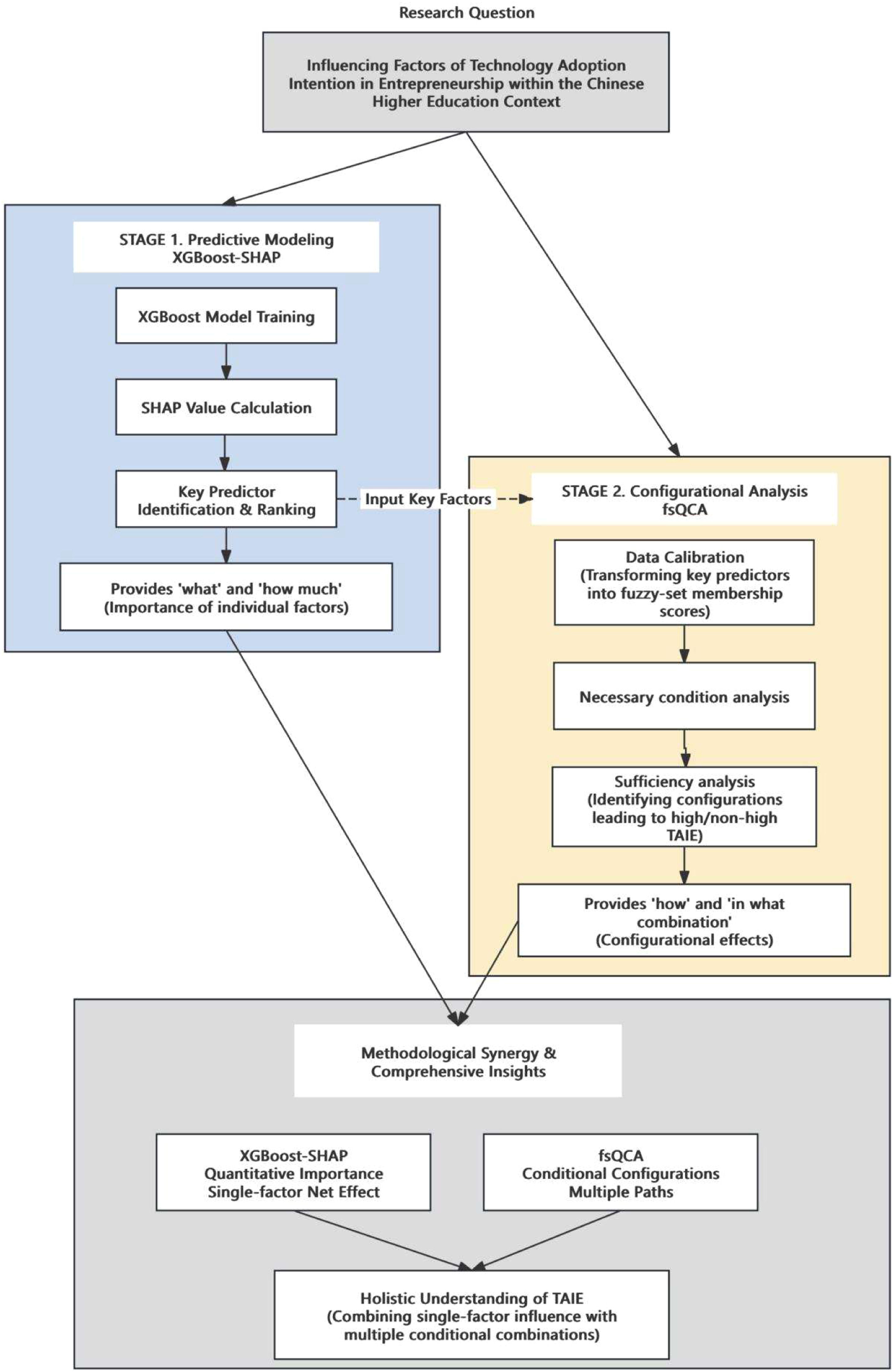
Methodologically, this study combines the predictive capabilities of machine learning with the configurational perspective of fsQCA to validate a two-stage prediction-configuration analysis framework. In the first stage, XGBoost-SHAP is used to predict and filter influencing factors, identify key variables and address potential bias in theoretical variable selection, answering the question of which factors are most important. In the second stage, the identified factors are used as input conditions for fsQCA to reveal the configurational paths leading to high TAIE, answering how these factors combine effectively. Empirically, based on a large-scale student sample in China, the cross-cultural validation tests the applicability and predictive validity of the extended TAM framework in an emerging-economy context, while systematically comparing the generalizability of technology adoption with the specific mechanisms of the Chinese higher education context. The study therefore provides differentiated theoretical guidance and practical insights for global higher education institutions to cultivate students' TAIE in different institutional and cultural environments. Based on the research design, this study addresses two key research questions.
RQ1. What is the ranking of predictive power among the factors influencing students' technology adoption intention in entrepreneurship? (XGBoost-SHAP for prediction)
RQ2. How can these influencing factors be combined to form effective pathways to high technology adoption intention in entrepreneurship? (fsQCA for configurational paths)
The remainder of the paper is organized as follows. Section 2 reviews the literature and develops the theoretical framework and research hypotheses. Section 3 describes the research methods, including XGBoost-SHAP and fsQCA, sample selection and variable measurement. Section 4 and 5 present the analytical procedures and results from the machine learning and fsQCA, respectively. Section 6 discusses the theoretical and practical contributions of the findings, and also outlines limitations and future research directions. Finally, section 7 concludes by summarizing the study's key findings.
Literature review and theoretical backgroundTechnology acceptance model and technology adoption intention in entrepreneurshipThe technology acceptance model, originally proposed by Davis (1989), is a foundational framework for explaining and predicting users’ acceptance of information technology. Its core constructs, including perceived usefulness (PU), perceived ease of use (PEOU), use attitude and behavioral intention (BI), collectively form the basic explanatory pathway for understanding technology adoption (Davis, 1989; Granić & Marangunić, 2019; Liu et al., 2024). TAM’s theoretical robustness and predictive power make it widely applicable in technology adoption research across various domains (Granić & Marangunić, 2019; Liu et al., 2024).
With the growing integration of AI into higher education and entrepreneurial practice, it is particularly important to understand the students’ technology adoption intention in entrepreneurship (TAIE). Drawing on Granić (2024) and Vecchiarini and Somia (2023), TAIE is defined as the willingness of university students, either those with entrepreneurial intentions or those already engaged in entrepreneurial activities, to proactively integrate and apply technology throughout the entrepreneurial process. This definition extends the application of TAM to the critical domain of entrepreneurship education in higher education institutions.
However, the traditional TAM framework exhibits significant theoretical limitations when directly applied to the complex context of entrepreneurship education, as it tends to overlook the combined influence of institutional, social, and individual control factors. Several efforts have therefore sought to improve its contextual applicability. TAM3 model, developed by Venkatesh and Bala (2008), integrated individual differences, system characteristics, social influence, and facilitating conditions, thereby attempting to move beyond the original model's excessive focus on individual cognitive perceptions. Al-Nuaimi and Al-Emran (2021) systematically reviewed the structural compatibility of personal and environmental factors within the TAM framework. Granić (2022) examined the factors influencing educational technology adoption intention through a meta-analysis, and highlighted that many predictive factors remain underexplored. Together, these studies extend TAM to a broader organizational and social context. However, because of the additive assumptions inherent in linear analytical methods and systematic literature reviews, TAM still struggles to capture the nonlinear synergies and complex interactions among cross-level factors and remains largely confined to a static, linear causal framework. For instance, can individual self-efficacy compensate for a lack of educational resources? Under what conditions can a curriculum effectively translate into technology adoption intention?
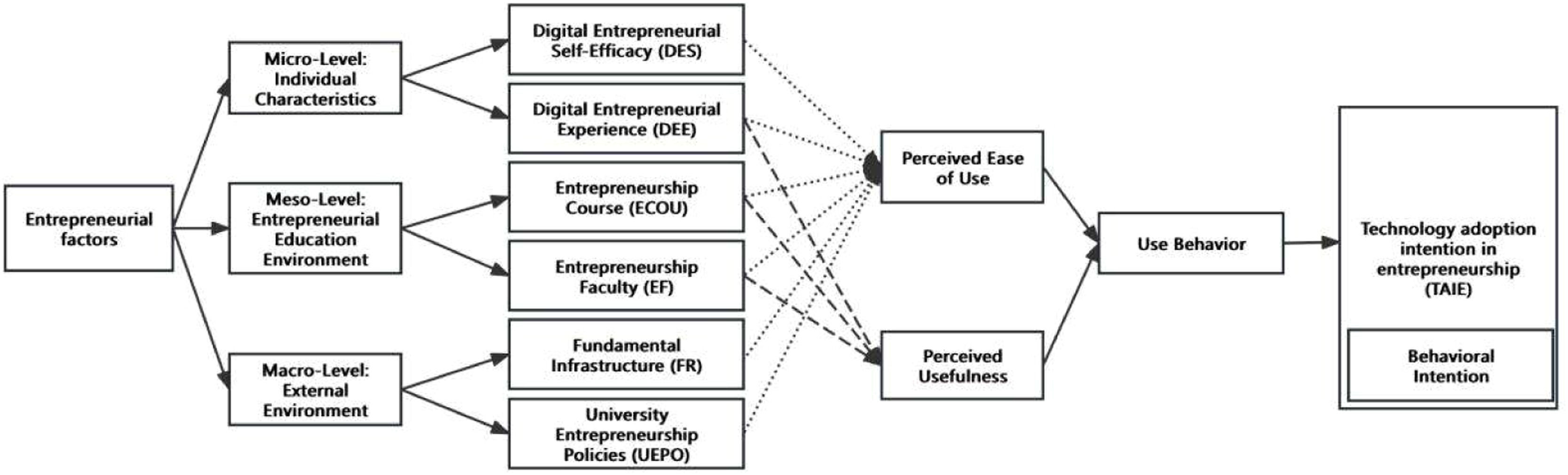
To address these limitations, this study integrates machine learning with a configurational perspective. First, this integration shifts the analytical lens from linear causality to configuration, making it possible to identify substitutability (e.g., individual capabilities can partially substitute for resource support), complementarity (e.g., the synergistic enhancement of course quality and facility support), and synergy (e.g., the micro-meso-macro-level systemic coupling). This responds to Al-Nuaimi and Al-Emran's (2021) theoretical advocacy for complex interactions among factors. Second, the transition from a static model to a dynamic adaptation perspective allows for differentiated intervention strategies tailored to distinct groups with different characteristics, such as students with high versus low self-efficacy and those with abundant versus limited resources. On this basis, the study proposes a multilevel extended TAM framework suitable for entrepreneurship education in universities, including key variables at the micro-level (digital entrepreneurial self-efficacy and digital entrepreneurial experience), meso-level (entrepreneurship courses and entrepreneurship faculty), and macro-level (university entrepreneurship policies and fundamental infrastructure). The research framework is shown in Fig. 1.
Introduction of external variablesMicro-level: individual characteristicsSelf-efficacy refers to an individual's belief in their capability to organize and execute the actions required to achieve specific goals (Bandura, 1988). In the entrepreneurial domain, entrepreneurial self-efficacy (ESE) refers to an individual's belief in their ability to successfully launch and manage a new venture, and to mobilize resources and take effective action (Mozahem & Adlouni, 2021). In the context of digital entrepreneurship (Piñeiro-Chousa et al., 2020), digital entrepreneurship self-efficacy (DES) is defined as students’ confidence in their ability to effectively use digital technologies to complete entrepreneurial tasks and achieve entrepreneurial goals (Malodia et al., 2023). Previous studies have explored the relationship between self-efficacy and technology adoption intention. Within TAM, self-efficacy is regarded as an important antecedent of perceived ease of use, suggesting that higher self-efficacy can reduce the perceived difficulty of technology use (Hanham et al., 2021). Although Agarwal and Karahanna (2000) noted that self-efficacy might not significantly influence perceived usefulness, its role in reducing psychological barriers to technology use is well established (Granić, 2022). Accordingly, the following hypothesis is proposed:
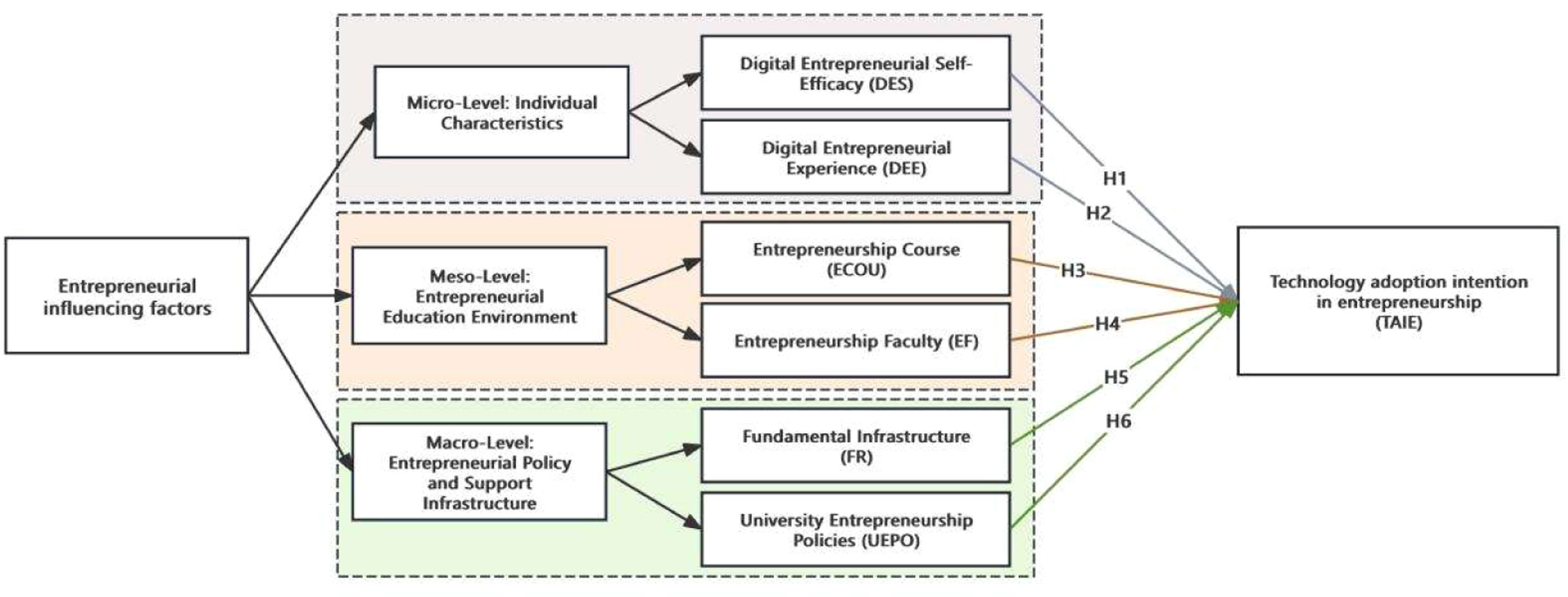
H1 Digital entrepreneurship self-efficacy has a significant positive influence on university students’ TAIE.
Following Adeel et al. (2023), digital entrepreneurship experience (DEE) is defined as the theoretical knowledge and practical experience accumulated by students through entrepreneurial activities involving digital technologies. This experience is closely linked to the development of an entrepreneurial mindset and success in digital entrepreneurship (Daspit et al., 2023; Zaheer et al., 2019). Similar to digital entrepreneurship self-efficacy, prior technology use experience enables individuals to assess usability and complexity more effectively, thereby reducing technology-related anxiety (Venkatesh & Bala, 2008). Accordingly, the following hypothesis is proposed:
H2 Digital entrepreneurship experience has a significant positive influence on university students’ TAIE.
The literature reveals a significant gap in understanding how digital technologies are adopted in entrepreneurship and how educational interventions can address this gap (Sitaridis & Kitsios, 2024; Sreenivasan & Suresh, 2023). Therefore, this study examines the influence of two educational interventions, entrepreneurship courses and entrepreneurship faculty, on students’ TAIE.
Many entrepreneurs benefit from systematic and formal entrepreneurship education provided by universities (Gupta, 2024), which is crucial for success in digital ventures (Zaheer et al., 2019). Entrepreneurship courses (ECOU) are designed to impart entrepreneurial knowledge and develop students' entrepreneurial skills (Parker et al., 2025). In China, such courses are predominantly theoretical and often include business plan writing and management subjects (Lyu et al., 2021). When course content incorporates knowledge and skills related to technology usage, it enhances students' technology absorption capacity (Schultheiss & Backes-Gellner, 2024) and improves their adaptability to technology (Beaudry & Pinsonneault, 2005). Therefore, the following hypothesis is proposed:
H3 Entrepreneurship courses have a significant positive influence on university students’ TAIE.
Similarly, entrepreneurship faculty (EF) play a pivotal role in guiding students' technology adoption through their technology application behaviors and teaching strategies. As artificial intelligence becomes more prevalent in education (Ratten, 2023), educators should integrate technological tools and adapt teaching methods to improve educational effectiveness (Chen et al., 2020). When educators explain the benefits of technology adoption (Tarhini et al., 2017), they can enhance students' understanding and practical application of technology, encouraging a more proactive attitude towards technology use in both learning and entrepreneurial activities (Wang et al., 2024). For instance, project-based learning can simulate real entrepreneurial scenarios and guide students to use technological tools to solve complex problems, thereby reducing perceived technology uncertainty (Garcia, 2020). A recent structural equation modeling study based on a sample of Chinese university teachers (Ma & Lei, 2024) confirmed that key TAM constructs, such as perceived ease of use, perceived usefulness, and behavioral intention, positively influence perceived technology usefulness. Therefore, the following hypothesis is proposed:
H4 Entrepreneurship faculty has a significant positive influence on university students’ TAIE.
Organizational support, as a key source of external control perception, influences perceived usefulness and perceived ease of use and reduces technology use anxiety by providing formal or informal support, including necessary infrastructure and dedicated technical services (Venkatesh & Bala, 2008). Within the context of entrepreneurship in higher education institutions, organizational support is primarily reflected in the institutional policies and resource provisions offered by universities. Therefore, this study considers fundamental infrastructure (FR) and university entrepreneurship policies (UEPO) as external environmental variables affecting students' TAIE.
External factors, particularly accessible and relevant infrastructure, significantly shape individuals' technology adoption, especially for resource-constrained entrepreneurs (Neumeyer et al., 2020). Entrepreneurial infrastructure such as incubators, accelerators, and venture capital networks can improve the success rate of entrepreneurial ventures (Bliemel et al., 2018). Management interventions, such as sponsorship, resource provision, or incentives, can also enhance users' technology acceptance (Jasperson et al., 2005). For example, establishing an entrepreneurship information sharing platform strengthened by electronic word of mouth (Verma et al., 2023) can reduce perceived risks and costs associated with technology entrepreneurship, thereby enhancing entrepreneurs' confidence and adoption intentions. Therefore, the following hypothesis is proposed:
H5 Fundamental infrastructure has a significant positive influence on university students’ TAIE.
University entrepreneurship policies aim to motivate students to start businesses by providing opportunities and necessary skills (Li et al., 2023; Yi, 2021). Artificial intelligence, being both capital and knowledge-intensive, often requires substantial resources (Neumeyer et al., 2020), which are typically scarce among student entrepreneurs. Through institutional incentives and external support, these policies influence students' attitudes toward technology and their adoption intention. Venkatesh & Bala (2008) argued that motivational measures and extrinsic rewards can reduce technology use anxiety, shape subjective norms, and enhance technology acceptance. Therefore, the following hypothesis is proposed:
H6 University entrepreneurship policies have a significant positive influence on university students’ TAIE.
Based on the literature review, the hypothesized relationships are shown in Fig. 2. This structured approach provides a comprehensive perspective for understanding the factors influencing technology adoption intention in Chinese higher education entrepreneurship.
Research design and sample collectionResearch design: a synergistic XGBoost-SHAP and fsQCA approachThis study employs a two-stage analytical strategy to comprehensively investigate the factors influencing university students’ TAIE. In the first stage, a machine learning approach, specifically the eXtreme Gradient Boosting (XGBoost) model, is used to identify and rank the key predictors of TAIE. XGBoost is a robust and efficient tree-based ensemble learning algorithm known for its high efficiency, accuracy, and interpretability (Asselman et al., 2021). To enhance the interpretability of the XGBoost model’s predictions, SHAP (Shapley Additive exPlanations) values are subsequently calculated. Grounded in cooperative game theory, SHAP quantifies each feature’s contribution to model predictions by assigning an importance value to each feature (Li, 2022; Lundberg & Lee, 2017).
Following the identification of key predictive factors via XGBoost-SHAP, the second stage employs fuzzy-set qualitative comparative analysis (fsQCA). As a set-theoretic configurational method, fsQCA is designed to analyze causal complexity by identifying different combinations of conditions that are sufficient to produce a given outcome, in this case, high TAIE (Ragin, 2008). Combining these two methods highlights the complementarity between single-factor effects and multiple conditional combinations. Specifically, XGBoost-SHAP quantifies the relative predictive importance of variables, whereas fsQCA captures the combinations of conditions associated with the outcome. The research design is shown in Fig. 3.
Data collection and sampleThis study draws on data from a large-scale survey project designed to systematically evaluate university students’ technology use in entrepreneurship across China.
To align the target samples with the research objectives, this study employed purposive stratified sampling (McNemar, 1940). The sample covered six provinces in China known for strong regional innovation capabilities, digital economy vitality, and mature entrepreneurial ecosystems, including Beijing, Shanghai, Jiangsu, Zhejiang, Guangdong, and Fujian provinces (Bai, 2011; Wang et al., 2015). The final sample consisted of 4,665 targeted sub-samples from 18 diverse higher educational institutions. The sampling design was intended to ensure that participants were exposed to both technology use and entrepreneurship education. The selected regions host dense clusters of entrepreneurship and technological innovation and offer rich entrepreneurship education resources, thereby providing a robust setting for testing the triadic interaction mechanism among learner-technology-educational ecosystem.
However, it should be acknowledged that focusing on regions with dense innovation resources might lead to an overrepresentation of high-resource environments. To mitigate this risk, the sampling design ensured diversity in region, institution type, and academic discipline so as to enhance the internal heterogeneity. For instance, the functional roles of the selected regions differ substantially, with Beijing and Shanghai serving as political and financial centers, respectively (Chiu, 2012). This regional diversity helps capture both commonalities and differences in technology adoption patterns across varied innovation contexts. In addition, the sample institutions were stratified by educational orientation (research-oriented and applied universities) and type (comprehensive, science and technology, and normal universities). This design ensured that the sample reflected diverse resource endowments and educational priorities within the same region, helping identify the boundaries of how educational resource differences affect technology adoption intention. Finally, disciplinary diversity further enhanced sample representativeness. Notably, engineering and management students are groups with a high frequency of technology use and exposure to entrepreneurship education (Alam et al., 2020; Solesvik, 2013). The internal heterogeneity and this diversity across region, institution, and discipline can reduce the risk of potential bias stemming from overrepresentation of any single subgroup. We acknowledge that caution is needed when generalizing the findings to regions with fewer innovation resources, and this remains an important direction for future research.
To fully describe the sample characteristics, participants’ demographic variables included gender, educational level, primary entrepreneurial motivations, discipline, institution region, and prior AI exposure (see Appendix A.). The sample was generally representative and balanced.
Specifically, the gender distribution was balanced (53.55% male, 46.45% female), and the sample consisted primarily of undergraduate students (68.51%) and master's students (25.51%), aligning with the general composition of students in Chinese universities. Regarding the degree of AI technology exposure, respondents covered a wide range from low (15.82%) to high frequency contact (84.18%).
Variable measurementAll measurement tools used in this study were based on validated scales and were appropriately adapted to China's unique sociocultural context. All constructs were measured using a 5-point Likert scale ranging from 1 (strongly disagree) to 5 (strongly agree). To ensure cross-cultural appropriateness, all scales followed a standard translation and back-translation procedure. Detailed measurement items are provided in Appendix B.
The outcome variable, technology adoption intention in entrepreneurship (TAIE), was measured with five items to assess students' willingness to apply AI technology in entrepreneurial activities. An example item is that I believe that AI is very helpful in enhancing the competitiveness and success rate of start-ups.
The antecedent variables included digital entrepreneurial self-efficacy (DES), digital entrepreneurial experience (DEE), entrepreneurship courses (ECOU), entrepreneurship faculty (EF), fundamental infrastructure (FR), and university entrepreneurship policies (UEPO).
DES was measured with five items to assess students' confidence in their ability to use digital technologies (including AI) for entrepreneurial activities. An example item is that understanding and applying AI helps me more actively identify and seize new entrepreneurial opportunities.
DEE was assessed with four items evaluating students' past involvement in digital or AI-related entrepreneurial activities. An example item is that when conceiving or drafting a business plan, I actively consider or use AI-related analytical tools or technologies.
ECOU was measured with three items evaluating the quality of entrepreneurship courses in which students participated and the extent to which those courses inspired AI applications. An example item is that the content of the university’s entrepreneurship courses is closely aligned with contemporary technological and business trends, including AI.
EF was assessed with three items evaluating the level of support provided by entrepreneurship mentors or instructors. An example item is that the teaching methods of our university’s entrepreneurship instructors are diverse, and they effectively integrate AI-related case analysis or tool introduction into their teaching.
FR was measured with four items assessing the hardware and technological facilities provided by the HEIs. An example item is that I can conveniently access AI software tools or cloud platform resources for entrepreneurial projects through university channels.
UEPO was measured with four items assessing the policy support provided by the HEIs, including entrepreneurial funding or subsidies. An example item is that the university provides entrepreneurial subsidies or dedicated entrepreneurship funds.
Given that all variables were derived from self-reported surveys, several procedural steps were taken to reduce bias risks. For example, during questionnaire design, all items were phrased neutrally, clearly and unambiguously to avoid leading respondents. During data collection, participant anonymity was ensured to reduce social desirability bias.
Data analysisIn this study, a multilevel TAM was constructed to reveal both the importance ranking of the factors affecting technology adoption intention in entrepreneurship (TAIE) and the multiple pathways leading to high TAIE. The two-stage prediction-configuration analytical framework was implemented using XGBoost-SHAP and fsQCA. This section first presents the descriptive statistics of the sample to provide a foundation for the subsequent analyses. Subsequently, the reliability and validity of the measurement model were tested to ensure the robustness and replicability of the analytical results.
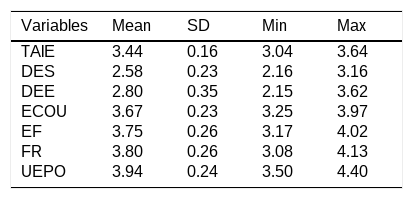
Descriptive statisticsDescriptive statistics are presented in Table 1. Although students perceived strong ecosystem support (e.g., UEPO, ECOU; mean scores > 3.50), their self-assessed capabilities, such as DES and DEE, were comparatively lower (mean scores < 3.50). This potential gap between external provision and internal confidence coexisted with a moderately high overall adoption intention (TAIE; M = 3.44). The relatively low standard deviations (0.16–0.35) and the absence of outliers indicate good data quality and provide a solid basis for the subsequent XGBoost and fsQCA analyses.
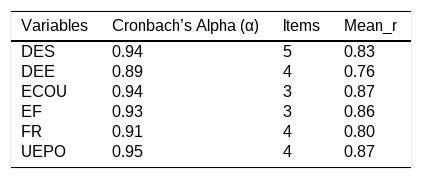
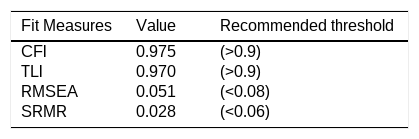
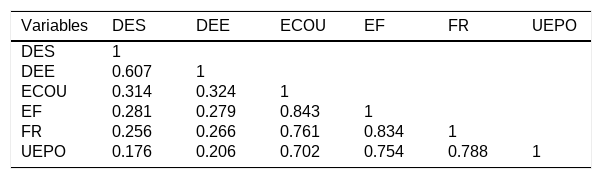
Reliability and validity analysisThe measurement instruments demonstrated strong reliability and validity. All constructs showed high internal consistency (Cronbach’s α > 0.70; Table 2). The proposed measurement model also demonstrated strong convergent validity, as reflected in the confirmatory factor analysis (CFA) fit indices reported in Table 3. Discriminant validity was also satisfactory, with all heterotrait-monotrait (HTMT) ratios below the 0.850 threshold (Table 4). These results provide a solid psychometric foundation for the subsequent analyses.
To identify the key factors influencing students' TAIE and the effective pathways to high TAIE, this section presents the empirical procedures and results of the two-stage prediction-configuration analytical framework. The first stage predicts and identifies key antecedent variables using XGBoost-SHAP to quantify the relative importance and nonlinear effects of these variables. The second stage uses fsQCA to reveal multiple equivalent pathways to high TAIE.
RQ1 results: XGBoost model and SHAP value analysisTo address RQ1 concerning the key predictors of TAIE among university students, an XGBoost model was developed and evaluated. The model included six predictor variables encompassing individual traits (digital entrepreneurial self-efficacy and digital entrepreneurial experience), educational environment factors (entrepreneurship courses and entrepreneurship faculty), and institutional support (fundamental infrastructure and university entrepreneurship policies). To ensure robustness and assess the model’s ability to generalize to unseen data, the dataset was split into training and testing sets in 80/20 ratio.
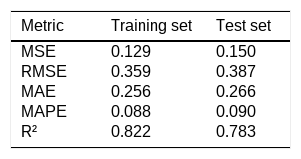
XGBoost modelThe predictive accuracy of the trained XGBoost model was assessed using multiple standard evaluation metrics. Table 5 presents the performance metrics for both the training and testing datasets. These metrics indicate that the XGBoost model demonstrates strong predictive validity and effectively captures the relationships between the predictors and TAIE.
Specifically, the R2 value of 0.783 in the test set indicates that the model explains 78.3% of the variance in TAIE. Referring to Nguyen et al. (2022), the relatively high R2 value, combined with the slight reduction from 0.822 in the training set to 0.783 in the test set, suggests minimal overfitting and supports the model's high predictive validity. This provides educators and policymakers with robust evidence for designing more effective intervention strategies.
In addition, the other evaluation metrics such as mean squared error (MSE=0.150), root mean squared error (RMSE=0.387), mean absolute error (MAE=0.266), and mean absolute percentage error (MAPE=0.090) are all relatively low, further confirming the model's precision and stability.
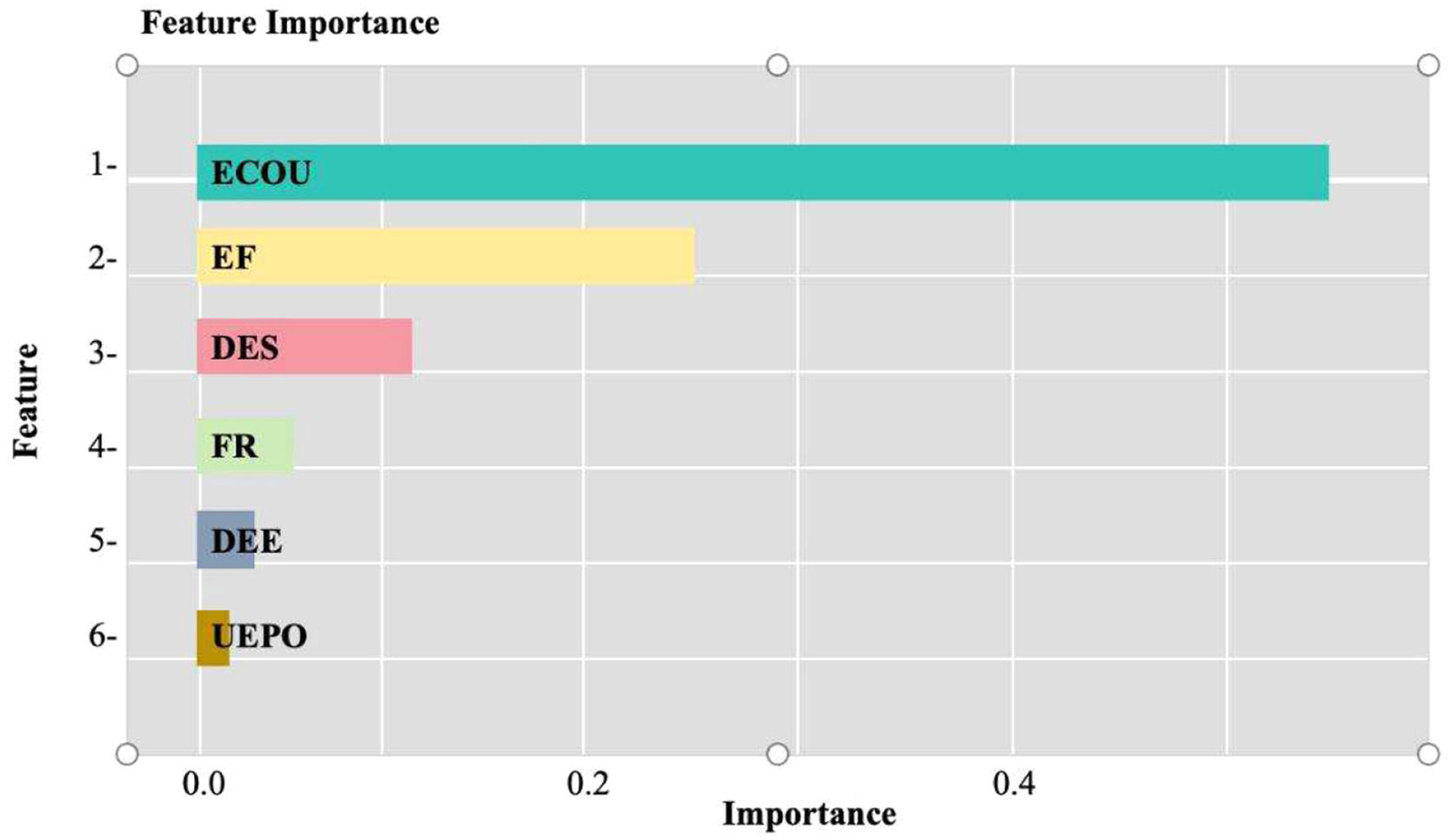
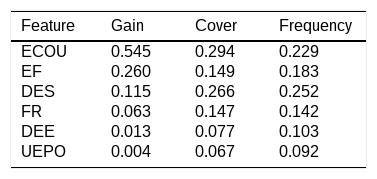
After confirming the model's predictive power, three XGBoost feature importance metrics were used to assess feature importance (see Table 6 and Fig. 4), such as Gain (the average contribution of a feature to the model’s predictive accuracy), Cover (the average coverage of splits using a given feature), and Frequency (the percentage of times a feature is used in trees).
Gain reflects each variable's contribution to the model. A higher Gain value indicates a stronger impact on this model. Based on Gain, the contributions of the variables to TAIE rank as follows: ECOU > EF > DES > FR > DEE > UEPO.
However, although Gain provides a ranking of overall contributions, it has limitations. Primarily, Gain captures average marginal contributions, which may be affected by the structure of decision trees and interaction effects, potentially overlooking nonlinear dynamics among variables (Chen & Guestrin, 2016). Additionally, Gain struggles to explain whether certain factors affect TAIE, whether their effects are promotive or inhibitive, how strong those effects are, and whether they follow complex patterns such as diminishing marginal utility. To address these limitations, SHAP (Shapley Additive exPlanations) is introduced to provide a more nuanced understanding of feature effects, including nonlinearities and interactions.
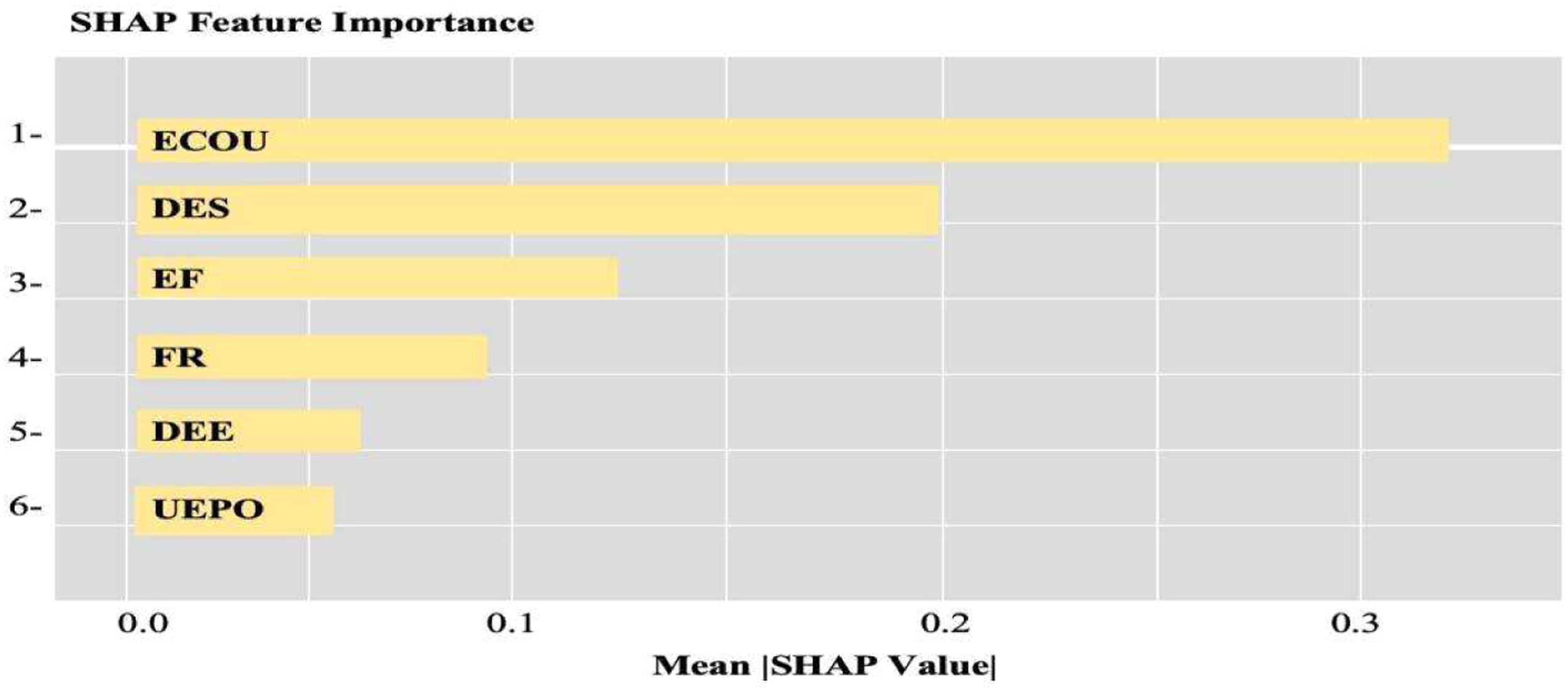
SHAP value analysisSHAP values were then calculated for each variable. The first step was to examine the SHAP feature importance values, which quantify the contribution of each variable to the model's predictions. A larger absolute SHAP value indicates a greater influence of that feature on TAIE. The contributions ranking derived from SHAP is shown in Fig. 5.
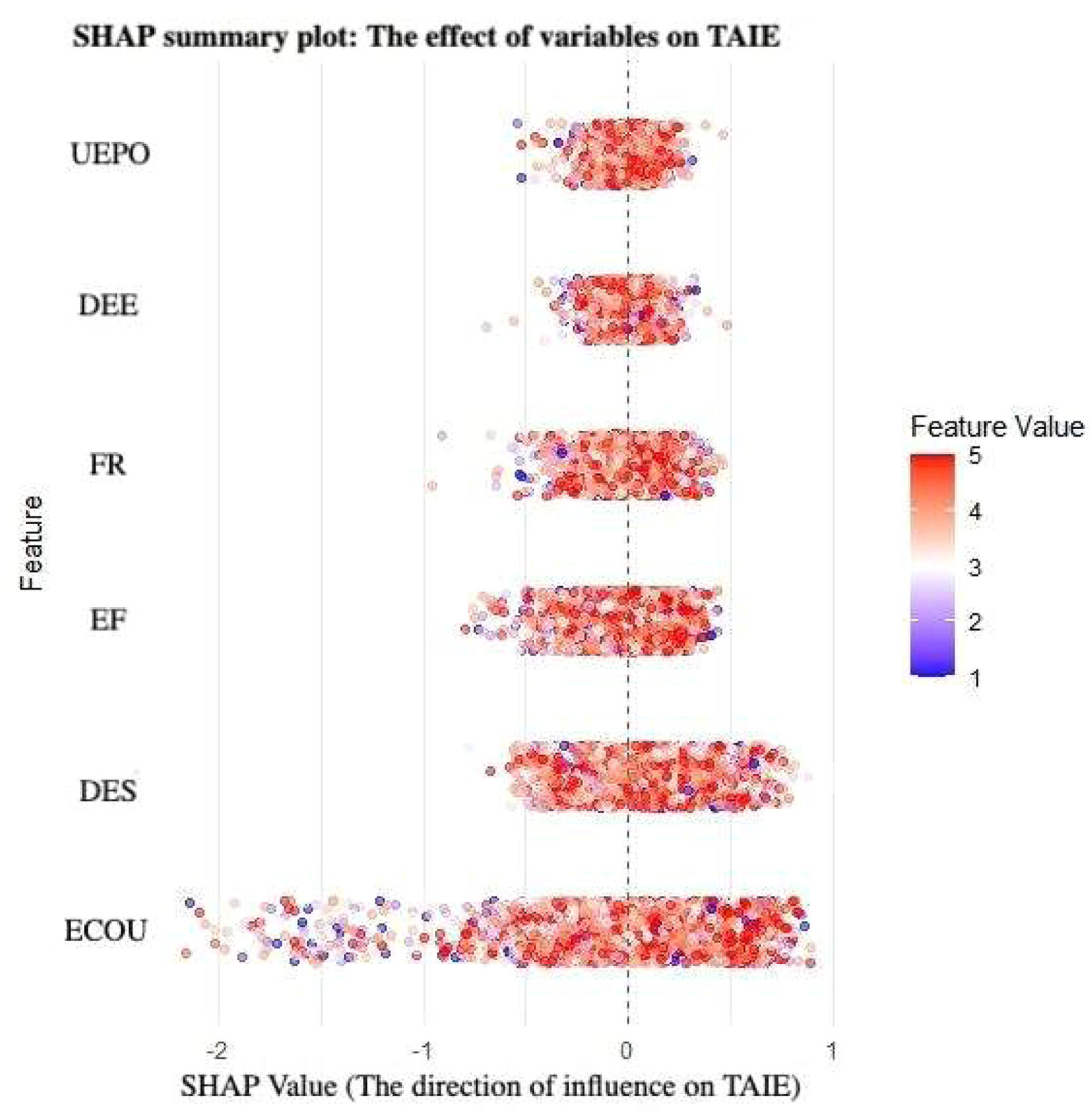
The SHAP summary plot (see Fig. 6) illustrates the positive and negative effects of the variables on TAIE. The SHAP values on the x-axis indicate the direction and magnitude of the effect on the predicted outcome, with values to the right (positive) suggesting a promotive effect on TAIE, and values to the left (negative) indicating a suppressive effect. The color of the points reflects the magnitude of the feature value, with red indicating high values and blue indicating low values.
For instance, the SHAP values for ECOU are predominantly shifted to the right, with high-value samples (red) clustered in the positive region, indicating that entrepreneurship courses significantly enhance students' technology adoption intention. Both DES and EF also show a stable distribution of positive SHAP values. When DES and EF are high, the rightward shift in SHAP values becomes more pronounced, suggesting that strong personal efficacy with educational support can jointly accelerate positive technology adoption decisions.
The positive effect of FR is moderate. Although its high-value samples are less concentrated than those of ECOU and DES, the negative effects are largely offset by high economic support, thereby suggesting that financial security can mitigate the adverse impacts of risk perception.
The effects of DEE and UEPO are comparatively more complex. High DEE values tend to cluster in positive regions, suggesting that prior digital entrepreneurship experience enhances technology adoption intention. By contrast, the distribution of UEPO is more scattered, indicating that the effectiveness of university entrepreneurship policies varies across different contexts and depends strongly on how such policies combine with other conditions. Overall, the SHAP analysis confirms the directional effects of the variables and also reveals potential interactions among them. For example, economic support, when combined with high entrepreneurial efficacy or digital skills, can significantly enhance TAIE. Conversely, a combination of low economic support and low risk tolerance can significantly reduce adoption intention. This interpretation of feature value distributions and interaction patterns provides targeted strategies for subsequent policy and educational interventions.
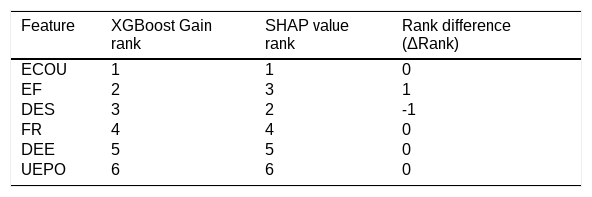
Comparison of importance rankings between XGBoost and SHAP valuesThe analysis revealed a discrepancy in the importance rankings of EF and DES when comparing XGBoost and SHAP results (Table 7). This difference arises from the distinct metrics used by the two methods. Specifically, the Gain metric in XGBoost assesses the average contribution of features during model training and their roles in optimizing model fit (Chen & Guestrin, 2016). However, this metric may be influenced by bias inherent in the decision tree structure, such as overestimating variables (e.g., EF) while underrepresenting nonlinear interactions and conditional dependencies among variables. By contrast, SHAP, based on the game-theoretical Shapley value framework, measures the average absolute marginal effect of each feature on the model's predictions and captures directionality, nonlinear effects, and multifeature interactions (Lundberg & Lee, 2017).
Given SHAP's strong theoretical foundation and its empirical advantages in accounting for nonlinear relationships and feature collinearity, SHAP may better reflect the substantive influence of predictors (Ji et al., 2022). This aligns well with the study’s aim of identifying key drivers of high TAIE beyond linear causality. According to the SHAP ranking, the contributions of the variables to TAIE are as follows: ECOU > DES > EF > FR > DEE > UEPO. The relative rankings of the other variables remain consistent across the two methods, supporting the stability of their effects.
In entrepreneurship education, the effect of EF may depend more strongly on contextual conditions and may therefore be more vulnerable to tree structure biases. Conversely, DES, as an intrinsic psychological characteristic, may independently drive behavioral intention and generate a more durable predictive effect. These findings suggest that interventions aimed at enhancing self-efficacy may, in some cases, outperform external resource inputs in increasing technology adoption intention.
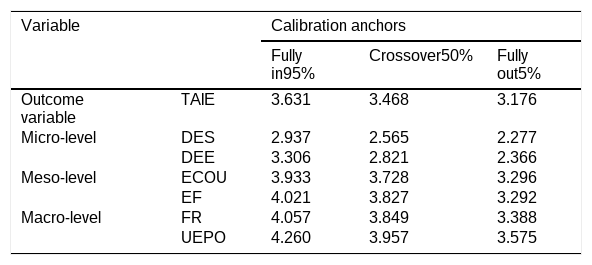
RQ2 Results: fsQCA configuration analysisCalibrationIn fsQCA, calibration refers to the process of assigning cases to fuzzy-set membership scores ranging from 0 to 1, where 0 indicates full non-membership, and 1 indicates full membership (Ragin, 2008). Calibration methods mainly include direct and indirect calibration, with direct calibration being widely used because of its transparency and verifiability (Pappas & Woodside, 2021). Consistent with prior studies (e.g., Huang et al., 2023; Wang et al., 2025), this study used thresholds of 0.95, 0.50, and 0.05 for direct calibration. Specifically, 0.95 indicates full membership, capturing cases with very high values; 0.50 is the crossover point, typically representing the median or mean; and 0.05 indicates full non-membership, capturing cases with very low values.
The selection of these thresholds was based on the distributional characteristics of the sample. For instance, a high frequency of technology use (84.18%) corresponds to high membership, whereas a low exposure rate (15.82%) corresponds to low membership. This distribution allows the high (0.95) and low (0.05) thresholds to capture extreme cases, while the crossover point (0.50) captures moderate levels. The calibration anchors can be seen in Table 8.
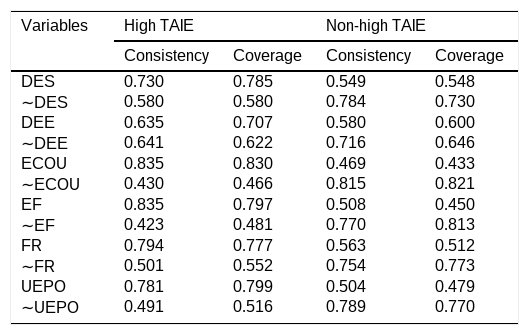
Necessary condition analysisThe fsQCA was used to test for necessary conditions. Following Fiss (2011), a consistency threshold of 0.9 was used to assess necessity. Table 9 shows that the consistency of each individual condition is below 0.9, indicating that no single condition is necessary for either high or non-high TAIE. Therefore, high TAIE does not depend on any single condition alone.
Necessity test for a single condition.
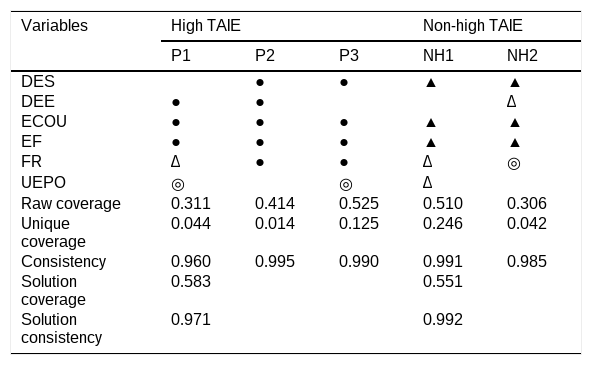
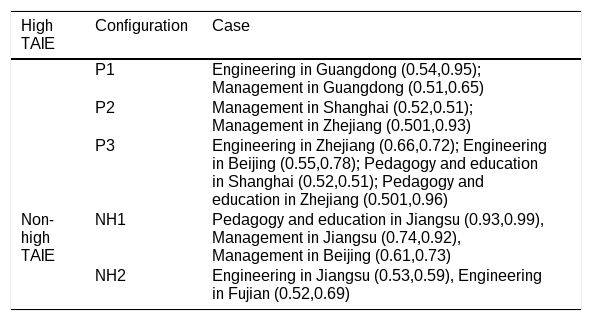
Moving beyond individual feature effects, fsQCA was used to examine the combinatorial effects of antecedent conditions leading to high TAIE. fsQCA is particularly suitable for identifying multiple equifinal pathways (e.g., distinct configurations of conditions) that consistently produce the same outcome (Ragin, 2008). Following Fiss (2011), a consistency threshold of 0.8 and a case frequency threshold of 1 were applied. The intermediate solution was prioritized, while the parsimonious solution was also considered to identify core and peripheral conditions. Conditions appearing in both the intermediate and parsimonious solutions were classified as core conditions, whereas those appearing only in the intermediate solution were treated as peripheral conditions. This procedure identified three distinct configurations (paths) leading to high TAIE and two paths leading to non-high TAIE (Table 10), with representative cases shown in Table 11.
Configurations for high TAIE and non-high TAIE.
Notes: Core condition presence ●; Peripheral condition presence ◎; Core condition absence ▲; Peripheral condition absence ∆
Case with membership scores greater than 0.50 in the solution and outcome.
The three high TAIE pathways are interpreted as follows. Each pathway has a consistency value well above the acceptable threshold of 0.80, indicating that each is sufficient for high TAIE. The overall solution consistency is 0.971 and the solution coverage is 0.583, demonstrating strong explanatory power. In addition, raw coverage and unique coverage can be used to clarify the relative importance of each pathway. Raw coverage indicates the proportion of cases explained by a pathway. The three pathways explain more than 30%, 40%, and 50% of cases, respectively. Unique coverage indicates the proportion of cases explained exclusively by a given pathway and helps distinguish core from overlapping pathways. Pathways P1 (0.044) and P3 (0.125) have relatively higher unique coverage, suggesting that they are more distinctive pathways to high TAIE. By contrast, P2 has a unique coverage of only 0.014, indicating considerable overlap with P1 and P3. However, low unique coverage should not be interpreted as a weak influence. Rather, P2 plays a confirmatory and supplementary role, offering a viable alternative when the core conditions in P1 or P3 are costly or difficult to realize.
Path 1 is a behavior-driven, education-reinforced, and policy-assisted route (DEE * ECOU * EF * ∼FR * UEPO). This configuration suggests that for students who already possess practical DEE, a combination of strong ECOU, supportive EF, and favorable UEPO is sufficient to foster high TAIE, even under conditions of limited infrastructure or resource support (denoted by ∼FR). Engineering students in Guangdong may exemplify this pathway, where a strong regional entrepreneurial ecosystem and university-led educational initiatives (courses, policies) leverage students’ existing practical engagement and compensate for limited infrastructure, thereby stimulating technology adoption intention.
Path 2 is a self-driven and resource-empowered route (DES * DEE * ECOU * EF * FR). This pathway also underscores the core roles of DEE, ECOU, and EF. However, unlike P1, DES emerges as a core driving condition in path 2, complemented by FR, while UEPO is absent. This suggests that students with high DES and prior DEE, when supported by strong educational courses (ECOU), effective EF, and accessible FR, can achieve high TAIE even without explicit policy support. Management students in Shanghai might reflect this profile, as they may rely more on self-belief and tangible resource accessibility than on institutional policy frameworks.
Path 3 is a comprehensive support and elite-driven route (DES * ECOU * EF * FR * UEPO). This configuration represents the most holistically supportive environment and can be viewed as an elite pathway to high TAIE. It requires students to have high DES while also benefiting from comprehensive institutional support, including strong ECOU, high-quality EF, sufficient FR, and entrepreneurial policies (UEPO). Compared with path 1 and 2, this pathway places greater demands on both individual student attributes (DES) and institutional support. Engineering students in Zhejiang may exemplify this path, possibly reflecting universities that make extensive and coordinated investments in entrepreneurship education and cultivate students with high self-efficacy.
Notably, ECOU and EF appear as core conditions across all three high TAIE pathways, which is highly consistent with the XGBoost-SHAP findings and further validates the decisive role of educational content and instructional support in shaping TAIE. Meanwhile, the fsQCA results reveal the causal complexity that XGBoost cannot capture, especially the combinational effects among conditions and their applicability in specific contexts.
By contrast, the non-high TAIE pathways, namely NH1 and NH2 (solution coverage 0.551, solution consistency 0.992) offer insights into the mechanisms inhibiting technology adoption (see Table 10). Both non-high pathways are characterized by the core absence of DES, ECOU, and EF, which also aligns with the XGBoost-SHAP ranking (ECOU > DES > EF > FR > DEE > UEPO).
Pathway NH1 indicates that technology adoption intention is strongly inhibited when there is a simultaneous lack of individual psychological capital and environmental support. This appears to be a common failure mode, covering more than half of the non-high TAIE cases (raw coverage 0.510). Pathway NH2 shows that the absence of DES, ECOU, and EF also prevents students from converting available technological infrastructure resources into technology adoption intention. This resource mismatch reflects an imbalance between material inputs and psychological readiness, cognitive ability, and environmental support. In other words, the value of resources depends not only on their availability but also on individuals' capacity to mobilize them. When students lack confidence in using technological tools and do not receive sufficient knowledge and guidance, even abundant external resources may remain underutilized or may even produce resistance due to frustration or perceived difficulty.
The differences between high TAIE and non-high TAIE pathways reveal two important asymmetries. First, the compensatory logic is asymmetric. The high TAIE pathways are compensatory in nature. For example, when DEE and ECOU are strong, P1 can generate high TAIE without DES, whereas non-high pathways follow non-compensatory logic, as the absence of DES, ECOU, and EF cannot be offset by the presence of FR. This underscores the importance of individual self-efficacy and the entrepreneurship education environment in fostering technology adoption intention. Second, the causal patterns are asymmetric. High TAIE follows a logic of equifinality, meaning that multiple different pathways (P1, P2, P3) can produce the same positive outcome, whereas non-high TAIE mainly results from the common absence of DES, ECOU, and EF.
Robustness checksCommon robustness checks in fsQCA include adjusting calibration anchors, modifying consistency thresholds, and adding or removing cases (Huang et al., 2024a). In this study, when the consistency threshold was changed from 0.80 to 0.75, the configuration results remained stable, thereby confirming the robustness of the findings.
DiscussionTAM has been widely applied in entrepreneurial research (Rahimi & Oh, 2025) and studies of technology acceptance intention (Al-Emran et al., 2020). The XGBoost-SHAP analysis identified ECOU as the most significant predictor of TAIE, supporting the view that a positive and supportive entrepreneurial culture through targeted education stimulates technology adoption intention (Upadhyay et al., 2023). Specialized courses that integrate AI into areas such as marketing or business analytics can enhance both perceived usefulness and perceived ease of use, thereby strengthening students’ readiness to use AI tools in entrepreneurial contexts (VanDerSchaaf et al., 2021). This finding underscores the pivotal role of course design. Entrepreneurship courses that effectively translate artificial intelligence knowledge into practical entrepreneurial skills are essential, especially given the potential of generative AI to personalize learning experiences by tailoring content to individual learner needs. Following ECOU, DES, and EF emerged as the next most important predictors. Building on prior studies identifying entrepreneurial self-efficacy as a robust predictor of entrepreneurial intention (Mozahem & Adlouni, 2021), the present findings extend this understanding to the AI-specific context by showing a strong relationship between DES and TAIE. This also supports previous work indicating that self-efficacy significantly influences perceived usefulness and perceived ease of use (Granić, 2022; Yu, 2020). In addition, the findings reinforce the idea that student engagement is a prerequisite for effective teaching (Divjak et al., 2022). The importance of EF further underscores the need for innovative pedagogical approaches in entrepreneurship education, echoing findings that appropriate teaching methods and tools positively shape entrepreneurial outcomes (Secundo et al., 2021). The integration of AI into entrepreneurial processes may indeed foster distinctive entrepreneurial outcomes (Shepherd & Majchrzak, 2022).
Comparing the XGBoost-SHAP analyses, the results suggest that the association between DES and TAIE may be slightly stronger than that of some external educational factors, indicating the critical importance of individual cognitive patterns in shaping TAIE (Kuratko et al., 2021). This is an important insight for designing personalized learning interventions using generative AI tools. By contrast, FR, UEPO and DEE showed comparatively lower predictive importance. Although infrastructure and supportive policies are beneficial, their roles appear supplementary rather than primary when compared with educational utility and self-efficacy. For instance, university initiatives such as AI and entrepreneurship information-sharing platforms (Verma et al., 2023) may be particularly effective for students who already possess strong entrepreneurial intention and foundational AI literacy. This may also indicate a gap in students’ perceived relevance of available resources (Jansen et al., 2015), suggesting that generative AI systems could bridge this gap by delivering targeted information adaptively. In addition, the limited effect of DEE suggests that the quality and context of prior experiences matter more than their mere presence (Hahn et al., 2020), highlighting the value of personalized learning pathways that take heterogeneous learner backgrounds into account. In sum, the XGBoost-SHAP analyses extend Granić’s (2022) work by identifying and ranking a broader set of factors influencing technology adoption intention in the dynamic context of AI and entrepreneurship education.
To address RQ2, fsQCA was used to identify necessary conditions and sufficient configurational pathways leading to both high and non-high TAIE. The necessity analysis showed that no single condition (ECOU, DES, EF, FR, UEPO, or DEE) was universally required, as all consistency scores fell below the 0.90 threshold. This underscores the complexity and heterogeneity of TAIE and supports the use of a configurational approach to capture multiple pathways to technology adoption intention (Ragin, 2008). Integrating individual characteristics, educational context, and perceived policy environment, the sufficiency analysis identified three equifinal pathways (P1, P2, P3) leading to high TAIE, each representing a distinct combination of conditions. Across all pathways, ECOU and EF emerged as core conditions, affirming their indispensable role in fostering adoption intention and aligning with previous entrepreneurship education research (Hahn et al., 2020). These core conditions, combined with varying peripheral conditions (DES, FR, UEPO, DEE), indicate that while a strong educational foundation is essential, its effects are amplified by different combinations of individual beliefs, resource availability, and policy support. Drawing on Wang et al. (2024), who emphasized the interplay among inputs, environment, and outcomes in learning processes, our findings suggest that student inputs (such as personal characteristics and prior experience) shape their engagement with new knowledge and ideas. The external environment includes both formal entrepreneurship education, such as curriculum design and teaching methods (Zhu et al., 2021), and informal entrepreneurial activities, including appropriate guidance and mentoring.
Theoretical implicationsThe first theoretical contribution of this study is the construction of a dual framework of priority-context adaptation, thereby integrating variable-oriented and case-oriented research paradigms. By combining machine learning with fsQCA, the study establishes a comprehensive explanatory chain from factor importance to configurational effectiveness, offering a stronger framework for analyzing students’ technology adoption intention in entrepreneurship. Specifically, XGBoost-SHAP reveals the ranking of variable importance (ECOU > DES > EF > FR > DEE > UEPO), thereby clarifying the predictive contribution of each factor and its priority in resource allocation. Conversely, fsQCA reveals how multiple conditions combine effectively to stimulate adoption intention. Traditional variable-oriented analyses usually assume that factors operate independently and additively, thereby overlooking the interactions, substitutions, and complementarities that occur in real-world settings (Fiss, 2011; Ragin, 2008). The fsQCA, by emphasizing equifinality, asymmetry, and causal complexity, addresses these theoretical limitations. The three high TAIE pathways demonstrate that different combinations of conditions can produce the same outcome, challenging the conventional assumption of a single optimal route. Unlike the symmetry implied in linear regression models, fsQCA highlights that the causes of high and non-high TAIE are not simply mirror images of one another but depend on distinct situational structures and student profiles.
Moreover, fsQCA provides a hierarchical structure for explaining complex causal mechanisms and differentiated effects (Fiss, 2011) by distinguishing between core and peripheral conditions. The analysis shows that ECOU and EF are core conditions in all high TAIE pathways, confirming the centrality and stability of high-quality course content and teaching support. By contrast, FR and UEPO, as peripheral conditions, play substitutive or complementary roles in different pathways and reflect the situational dependency and pathway diversity of technology adoption intention. This hierarchical structure suggests a threshold-pathway model, where core conditions form the threshold for stimulating adoption intention, while peripheral conditions offer multiple sufficiency combinations in different contexts.
In addition, the differences between the XGBoost-SHAP and fsQCA results provide important methodological and substantive insights. FR and UEPO have relatively lower overall predictive importance in the XGBoost-SHAP analysis, yet they play significant roles as core or important peripheral conditions in specific fsQCA pathways. This discrepancy can be explained by methodological logic and by group-level heterogeneity. First, XGBoost-SHAP focuses on average predictive effects and estimates the marginal contribution of each feature across all students. By contrast, fsQCA identifies combinations of conditions sufficient for a specific outcome. Thus, even if FR and UEPO contribute relatively little at the aggregate level, they may still become crucial within specific pathways, reflecting the situational and heterogeneous nature of technology adoption. In addition, individuals' perceptions of organizational support influence their technology acceptance (Venkatesh & Bala, 2008). As signals of available support and feasibility assurance, FR and UEPO may have heterogeneous effects on different student groups. For example, P2 indicates that students with high self-efficacy or rich prior entrepreneurial experience are particularly responsive to resource support. This phenomenon, where variables with relatively low overall predictive importance emerge as core conditions in specific pathways, further underscores the value of complementary methodologies.
Building on Kumar et al.'s (2025) framework of organizational readiness for AI adoption, including technological infrastructure, talent reserves, and technological cognition, this study extends that organizational perspective to the higher education sector to understand and cultivate students' TAIE. Specifically, this study enhances the explanatory power of TAM in the context of entrepreneurship education by shifting the perspective from individual cognition to ecosystem-level interaction. Traditional TAM has often been criticized for focusing narrowly on individual cognitive variables (e.g., perceived usefulness and perceived ease of use) while neglecting the shaping role of organizational contexts and social environments (Venkatesh & Bala, 2008).
In response to this limitation, the study constructs a micro-meso-macro expanded TAM framework that integrates multilevel factors, including individual characteristics (DES and DEE), educational environment (ECOU and EF), and external support (FR and UEPO). DES and DEE represent learners' internal confidence and experiential foundations in the technology adoption process. ECOU and EF clarify how direct educational interventions through curriculum and instructional approaches shape students' technology adoption intentions. In contrast to these direct educational experiences at the meso-level, the more distal enabling environment for technology adoption, represented by supportive infrastructure (such as FR) and policy guidance (such as UEPO), reduces external barriers, strengthens institutional legitimacy, and increases technological resource accessibility. In this way, the framework successfully extends TAM from a binary user-technology interaction model to a learner-technology-educational ecosystem symbiotic system, significantly strengthening its contextual explanatory power.
Finally, based on the enduring importance of national culture and its variations in entrepreneurship research (López-Cabarcos et al., 2021), this study also expands TAM in terms of sample and context. Specifically, it extends the empirical scope of technology adoption research to university students in the Chinese higher education context, thereby providing an important cross-cultural complement to studies based predominantly on Western samples (Belas et al., 2025; Granić, 2022). Unlike prior studies focused on specific groups such as family businesses (Upadhyay et al., 2023), this study centers on cultivating technology adoption intention among university students engaged in entrepreneurial activities. This shift in sample and context requires careful consideration of the relationship between theoretical generalizability and contextual specificity.
On the one hand, the findings reveal an educational ecosystem-individual belief driving logic that appears to have strong cross-cultural and cross-institutional transferability. A supportive entrepreneurial education ecosystem (such as targeted entrepreneurship courses) and positive individual psychological beliefs (such as digital entrepreneurship self-efficacy) are confirmed as important drivers of technology adoption intention. This structure of external ecosystem support and internal self-driven motivation is consistent with the core principles of learning and technology-related decision-making. When students are embedded in environments that encourage innovation and technology use and also possess confidence in their own capabilities, their intention to adopt technology is enhanced (Granić, 2022; Tarhini et al., 2017). As an expanded form of TAM, this framework therefore has potential applicability across global higher education systems.
On the other hand, the findings also suggest meaningful context specificity. Prior research has reached mixed conclusions about whether technology adoption is moderated by cultural and institutional context. For example, while McCoy et al. (2005) argued that national culture has no significant effect on individual technology adoption, Tarhini et al. (2017) found that key technology acceptance variables, such as subjective norms and behavioral intention, are significantly moderated by institutional and cultural differences, including individualism versus collectivism and power distance. Based on the study’s findings, the positive role of UEPO in some pathways supports the findings of Dinev et al. (2009) and Tarhini et al. (2017). In collectivist contexts such as China and Korea, subjective norms may serve as stronger predictors of behavioral intention, whereas their effects are weaker or nonsignificant in individualistic settings such as the United States (Dinev et al., 2009; Srite & Karahanna, 2006). Given the context specificity, the boundary conditions of the study’s conclusions should be clearly recognized. Overall, this study confirms the applicability of TAM and its expanded framework in the Chinese higher education context while also clarifying the conditions under which cross-context generalization is appropriate. Research on technology adoption should therefore balance common structural mechanisms (such as the stable role of educational ecosystems and psychological beliefs) with differential mechanisms (such as the contextual effects of policy and cultural factors).
Practical implicationsThis study uses a dual analytical approach, combining machine learning (XGBoost-SHAP) for importance ranking and fsQCA for configurational analysis, to propose differentiated intervention strategies for promoting technology adoption intention in university entrepreneurship education. These recommendations consider both students and educators as key stakeholders and aim to foster a synergistic technology adoption ecosystem.
Pathway P1 emphasizes a behavior-driven, education-reinforced, policy-assisted route. For students with prior digital entrepreneurship experience, course structures should be redesigned to focus less on basic awareness and more on systematic enhancement of existing experiences. Project-based courses should help students integrate fragmented practical experiences into more coherent technology entrepreneurship. For instance, courses based on real technology entrepreneurship cases can guide students in consolidating and reflecting on their experiences. In addition, where resources are limited, administrators should invest more strategically in soft infrastructure, such as recruiting industry mentors, developing high-quality case libraries, and ensuring that policy information, such as entrepreneurship subsidies, is clearly communicated and easily accessible.
Pathway P2, the self-driven, resource-empowered route, applies to students with high digital entrepreneurship self-efficacy and prior experience. For this group, the provision of tangible financial and technological resources is crucial for activating technology adoption intention, whereas university entrepreneurship policy support appears relatively less central. Universities should therefore establish one-stop, accessible resource support platform, including AI development environments (e.g., GPU clusters and cloud computing accounts), open datasets, flexible seed funding and entrepreneurship credits. An empowerment-oriented teaching model may be especially suitable for these students, allowing them greater entrepreneurial autonomy. Activities such as technology entrepreneurship hackathons and open innovation projects can enable them to use institutional resources to solve real problems independently, thereby further strengthening their self-efficacy. In this pathway, educators should shift from being knowledge providers to resource connectors and strategic mentors. Peer learning networks should also be strengthened through project sharing and peer feedback mechanisms.
Pathway P3, the comprehensive support and elite-driven route, represents a high-investment development model that requires both high DES and a coordinated university support system. This pathway is particularly relevant for resource-rich institutions or specialized technology entrepreneurship programs. Universities can implement systematic interventions, such as embedding self-efficacy training modules into entrepreneurship courses (e.g., simulated investor pitches and resilience training). By using machine learning to establish dynamic monitoring and optimization systems, universities can continuously evaluate the effectiveness of different interventions and allocate resources more strategically, ensuring that hardware investment, policy incentives, and education support reinforce one another.
Furthermore, the development and empowerment of entrepreneurship faculty are indispensable. Although this study focuses on students, the success of all the strategies above depends heavily on educators. Therefore, any comprehensive strategy to promote technology adoption should also include targeted initiatives to strengthen educators’ technological capabilities and willingness to adopt technology. Entrepreneurship faculty and mentors should receive systematic training in both technical knowledge and application skills, including how technology can be used for business model development and opportunity identification. It is equally important to address teachers' anxiety about technology adoption. Many educators may feel unfamiliar with emerging technologies or fear being replaced by them. Universities should therefore build supportive professional communities, provide continuous technical support, and emphasize that technology is intended to augment rather than replace teaching. Positive incentives, such as awards for innovation in technology, may further encourage active adoption. In short, promoting technology adoption intention in entrepreneurship requires a collaborative ecosystem involving both students and educators. On the one hand, differentiated intervention pathways should be developed to match diverse student characteristics and university resources. On the other hand, educators' willingness to adopt technology should also be strengthened. Such a dual approach not only enhances students’ technology adoption intention but also creates an educational environment conducive to cultivating future entrepreneurs.
Limitations and future researchThis study has several limitations related to contextual generalizability, self-reporting bias, and model scope. First, because the sample was drawn from the Chinese higher education context, the findings are shaped by a specific educational system and cultural environment. Compared with more individualistic cultures, technology adoption intention in Chinese universities may display different characteristics due to collectivist orientations and government-led entrepreneurship policies. Accordingly, the findings should be generalized with caution and adapted to local institutional and cultural settings.
Second, the cross-sectional survey design and reliance on self-reported data may introduce common method bias (CMB) and social desirability bias. For instance, DES was measured through students' subjective perceptions rather than objective behavioral performance, and these may not always align. Moreover, the cross-sectional design captures only a static snapshot of adoption intention and cannot track the dynamic transformation from intention to actual behavior, thereby limiting a fuller understanding of technology adoption over the entrepreneurial process.
Third, although the study constructs a three-level analytical framework based on six variables (DES, DEE, ECOU, EF, FR, UEPO), this model does not capture all possible factors influencing technology adoption intention. For example, peer influence among university students may create demonstration effects or peer pressure. In addition, industry-specific demands (e.g., differences in AI use across fintech and smart manufacturing), macroeconomic conditions (e.g., economic cycles shaping entrepreneurial opportunity perception), and national industrial policy orientation may also influence technology adoption intention but are not fully incorporated into the current framework.
To address these limitations, three directions for future research are proposed. First, future studies should conduct cross-contextual replication and comparative analyses to test the universality of the extended model, for example, across collectivist and individualist cultures or across research-oriented and applied university systems. Such comparisons could contribute to the development of a more context-sensitive theory of technology adoption. Second, future work could adopt mixed-methods designs that combine quantitative surveys with qualitative interviews, such as in-depth interviews or focus groups, in order to capture students' actual technology use experiences and contextualized cognitive processes, including moments of frustration or breakthrough that are difficult to identify through survey data alone. Experimental approaches could also be introduced to manipulate key factors, such as different levels of institutional support, in order to estimate causal effects on both adoption intention and behavior more precisely. Third, future studies could expand the model by including additional variables at the micro level (e.g., risk preference), meso level (e.g., peer influence), and macro level (e.g., national industrial policy orientation and industry-specific demand), thereby constructing a more inclusive framework for analyzing technology adoption intention.
ConclusionThis study systematically extends TAM in terms of theoretical models, methodology, and research context. Using empirical data from 4,665 Chinese university students, the two-stage prediction-configuration analytical framework reveals the complexity, nonlinearity, and context dependency of technology adoption intention in university entrepreneurship education. In the first stage, a machine learning approach (XGBoost-SHAP) was used to predict and rank the importance of antecedent variables. In the second stage, fsQCA was used to identify effective combinations of conditions leading to high TAIE. In addition, the proposed micro-meso-macro framework, covering individual characteristics (DES and DEE), educational environment elements (ECOU and EF), and external support (FR and UEPO), enhances the explanatory power of TAM in the entrepreneurship education context. The findings balance the generalizability of an educational ecosystem-individual belief logic with the context-specificity arising from differentiated cultural and institutional influences on TAM-related constructs. Finally, to foster a collaborative teacher-student technology adoption ecosystem, the study proposes three differentiated intervention strategies based on the identified high TAIE pathways, matching diverse student characteristics with university entrepreneurial resources while also strengthening educators' technology adoption intention and capabilities.
FundingThis work was funded by the Ministry of Education's Major Project for Research in Philosophy and Social Sciences on "Research on Comprehensively Improving the Quality of Talent Cultivation under New Circumstances" [grant number 23JZD045]."
CRediT authorship contribution statementYue Yuan: Writing – original draft. Yajing Bu: Writing – review & editing. Xiaochang Hong: Writing – review & editing. Lei Zhao: Writing – review & editing. Yangjie Huang: Writing – review & editing, Writing – original draft, Project administration, Methodology, Investigation, Funding acquisition, Conceptualization.
The authors declare that the research was conducted in the absence of any commercial or financial relationships that could be construed as a potential conflict of interest.
We would like to thank the editor and reviewers whose suggestions and comments greatly helped to improve and clarify the manuscript.


