





In the era of digital economy, digital transformation (DT) is inevitable for firms seeking competitive advantage. However, achievement of high firm performance through DT is challenging—both for academia and industry. Existing studies predominantly focus on the net effects of single factors. In contrast, this study posits that high performance is driven by the interaction of three conditions: environmental uncertainty, DT strategy, and digital resources, not from any single condition. First, we establish a theoretical framework by applying the grounded theory approach, and thereafter, adopt the Fuzzy-set Qualitative Comparative Analysis method to empirically investigate 38 firms undergoing DT. The research findings show that: (1) DT strategy is a necessary condition for high performance; (2) There are two types of high innovation performance configurations: “strategy-driven” and “technology-driven,” and two types of high customer performance configurations: “culture-driven” and “technology-driven.” These insights elucidate how DT leads to high performance and offer practical implications for managers.
The world has transitioned into the era of the digital economy, driven by rapid advances in digital technologies such as artificial intelligence (AI), blockchain, cloud computing, and big data (Duarte & Carvalho, 2024). Facing a global digital economy valued at $32.6 trillion— accounting for 43.7% of global GDP in 2020 — nearly all traditional firms worldwide are compelled to undergo digital transformation (DT). DT refers to the application of digital technologies alongside other critical resources and capabilities to drive organizational change, with the aim of enhancing performance and strengthening core competencies (Gong & Ribiere, 2021). However, significant challenges persist; the failure rate is approximately 80% and merely 48% of all projects exceed performance expectations. Therefore, it is urgent, as well as valuable, to investigate the conditions that lead DT to produce a good outcome (firm performance).
Over the years, a vast body of literature on DT has emerged, and one intriguing research question has been the performance of DT initiatives. Does DT deliver its promises on firm performance improvement? Overall, the results of DT are mixed. Some scholars suggest that DT is conducive to improving firm performance (Tomás et al., 2025); others argue that DT harms performance (Guo et al., 2023). In this situation, it is thought-provoking how firms undergoing DT can improve their performance. And what factors might explain DT’s successes and failures?
Since DT alone cannot fully explain its impact on organizational performance (Alsufyani & Gill, 2022), studies have begun exploring its antecedents to uncover the underlying mechanisms. For example, Butt et al. (2024) highlighted the importance of DT strategy, focusing on its implementation. Gupta and Bose (2022) highlighted the operating environment as a core driver of DT, noting that entrepreneurial firms can boost performance by incorporating environmental scanning into their transformation process. Current research provides useful but incomplete guidance. It focuses on single factors and prevents a comprehensive picture of why DT often fails to meet performance expectations. DT is a highly complex issue affected by every aspect of a firm (Dal Mas et al., 2023). Therefore, focusing on a single condition prevents a comprehensive explanation of DT’s failure to meet performance expectations. In practice, for instance, firms adopting the same DT strategy may result in different organizational performance.
Accordingly, this research addresses the question: What configuration can achieve high performance for firms undergoing DT? This study focuses on the combined effects of key conditions. By analyzing their interaction as configurations, we reveal how they jointly form causal paths that lead to different DT performance outcomes. To address the limitations of fragmented existing research, this study first develops a theoretical framework based on the grounded theory. This qualitative method, which generates theory from empirical data (Makri & Neely, 2021), effectively integrates new observations with prior knowledge, thereby providing a robust basis for the configurational analysis that follows. Second, this study applies fuzzy-set Qualitative Comparative Analysis (fsQCA) to analyze the complex causality between DT antecedents and performance. Since DT involves multifaceted changes, its outcomes cannot be attributed to any single factor (Ly et al., 2026). The QCA method is, thus, appropriate, as it is designed to uncover the causal efficacy of different configurations of conditions (Shang et al., 2024).
This study finds that a DT strategy is a necessary condition for high performance, reaffirming the emphasis placed on its importance by existing research (Butt et al., 2024). More importantly, through a mixed-methods approach combining the grounded theory and QCA, this research further reveals a long-overlooked mechanism of how such a strategy operates: the effectiveness of a DT strategy is not universal but is highly contingent on external environmental uncertainty and the firm’s internal digital resources. This finding suggests that the success of strategy implementation is essentially an outcome of contextual alignment, rather than the mere replication of a single strategic model.
Literature reviewDTIn recent years, DT has transformed into an important phenomenon in strategic information systems research (Davison et al., 2023). Accordingly, scholars have provided different definitions of DT. For example, Verhoef et al. (2021) define DT as a change in how a firm employs digital technologies to develop a new digital business model that helps to create and appropriate more value for the firm. According to Vial (2019), DT is a process that aims to improve an entity by triggering significant changes to its properties through combinations of information, computing, communication, and connectivity technologies. In summary, DT is generally defined according to three core principles: (1) it constitutes a fundamental organizational change process; (2) it is initiated by digital technologies and enacted through the strategic orchestration of key resources and capabilities; and (3) its ultimate objective is to enable greater value creation for the firm. Correspondingly, this study defines DT as the application of digital technologies alongside other critical resources and capabilities to drive organizational change, with the aim of enhancing performance and strengthening core competencies.
Some scholars consider DT to be an evolution of the IT-enabled transformation (Vial, 2019). Compared with IT-enabled transformation that supports the existing value proposition and enhances the existing organizational identity, DT (re)defines an organization’s value proposition and involves a new one (Wessel et al., 2021). In other words, IT-enabled transformation is essentially a traditional type of organizational transformation. DT is different from traditional organizational transformation because digital technologies accelerate change, leading to more environmental variability, complexity, and uncertainty (Bharadwaj et al., 2013). DT literature highlights the strategic changes induced by digital technologies and the infrastructure work that supports these changes (Scott & Orlikowski, 2022).
The performance of firms undergoing DTPerformance is a key outcome of DT (Ferreira et al., 2019). Scholars generally suggest that DT is conducive to improving performance (Paolucci et al., 2021; Wessel et al., 2021; Zhu et al., 2006). Firms can employ digital technology to reduce costs, improve efficiency, and ultimately improve the organization’s internal performance (Cannas, 2023). Additionally, DT promotes the improvement of supply chain processes and improves external performance (Paolucci et al., 2021). However, some scholars have argued that DT adversely impacts performance, leading to short-term performance decline (Holmström, 2022). Over-exploitation of the monitoring capabilities brought about by DT can decrease performance (Kretschmer & Khashabi, 2020). Furthermore, DT can increase the risk of supply chain opportunism (Faruquee et al., 2021), which may hinder performance improvements (Paolucci et al., 2021). Studies have also explored the mediating variables of DT and its performance, such as innovative capability (Ferreira et al., 2019), firms’ internal processes (Kretschmer & Khashabi, 2020), information transparency (Zekhnini et al., 2022), etc.
These studies have mainly considered organizational performance in terms of financial performance dimensions—for example, sales growth, market share, profitability, operational capability, and cost efficiency (Jean et al., 2020; Matt et al., 2016; Paolucci et al., 2021). Nevertheless, insufficient attention has been paid to other pivotal dimensions (Ardito et al., 2021), including innovation and customer performance. First, DT essentially implies an organizational change that provides firms with new disruptive market opportunities (Ferreira et al., 2019) and drives innovation (Tan et al., 2020; Zhuo & Chen, 2023). So, innovation performance is a key output of DT. Second, DT has fundamentally transformed how firms and customers interact and exchange value (Kretschmer & Khashabi, 2020), enabling firms to enhance customer experience and customer satisfaction (Westerman & Bonnet, 2015). Thus, customer performance is also a key output of DT (Wielgos et al., 2021). In this context, this study examines performance from two dimensions: innovation performance and customer performance.
Conditions that affect DTDT itself cannot optimally explain the complex mechanism underlying its impact on organizational performance (Alsufyani & Gill, 2022). To address this question, existing studies attempt to explore the conditions that affect DT, mainly including the external environment, DT strategy, and digital resources. These conditions can affect the implementation of DT and thus affect organizational performance (Gupta & Bose, 2022; Hanelt et al., 2017; Matt et al., 2016).
External environment. DT is not a solo practice but the result of the co-evolution of firm and environment (Chen & Tian, 2022; Gupta & Bose, 2022). Uncertainty, complexity, and dynamics were identified as the core dimensions of the environment that drove DT of firms (Gupta & Bose, 2022). Environmental uncertainty refers to changes and unpredictability in the external environment—for example, the emergence of new technologies, market demand fluctuations, and competitive pressure changes (Latan et al., 2018). Elevated environmental uncertainty will drive firms to transform their core business model through DT (Gupta & Bose, 2022). DT enables firms to effectively navigate the changes stemming from environmental uncertainty. Moreover, environmental complexity can be viewed as the uncertainty on the supply (competition) side and environmental dynamics as the uncertainty on the demand (consumer) side (Xue et al., 2011). Environmental complexity creates opportunities for DT, through which firms can transform to meet changing needs and match market trends to remain competitive (Chen & Tian, 2022). The environmental dynamics is the driving force behind the demand for DT, which renders DT imperative (Gupta & Bose, 2022; Magistretti et al., 2021).
DT strategy. DT strategy is an organizational strategy that integrates information system strategy and business strategy and can create differentiated value for the firm (Chanias et al., 2019). It includes strategy formulation and implementation, and determines the goals and actions of the transformation (Correani et al., 2020), effectively driving DT and improving the decision-making process of top management (AlNuaimi et al., 2022). Owing to the complexity of the DT process, firms need to formulate a detailed DT strategy (AlNuaimi et al., 2022). The formulation of DT strategy is the main factor affecting the success of DT (Porfírio et al., 2021). In the strategy formulation process, firms should identify the strategic objectives, the scope of DT, and the elements of the business model that need to be modified according to the strategy (Correani et al., 2020). Strategy implementation refers to how firms translate the DT strategy into a concrete plan and set of actions (Correani et al., 2020)—inappropriate execution renders the strategy ineffective (AlNuaimi et al., 2022). Ensuring alignment between strategy formulation and implementation is a significant challenge affecting DT project performance, and it is the leading cause of DT project failure (Correani et al., 2020).
Digital resources. Existing research fully affirms the importance of digital resources in DT and employs a range of theoretical lenses, such as the resource-based view (Liu et al., 2011), resource orchestration (Cui et al., 2021), and resource dependence (Steininger, 2019), to identify and analyze the role of digital resources in DT. Based on previous studies, this paper describes digital resources as a set of IT-enabled resources that are highly related to DT (Tsou & Hsu, 2015; Vassilakopoulou & Hustad, 2023). It comprises digital technical resources (e.g., big data and IT infrastructure) and digitized traditional resources (e.g., digital talent and digital culture) that firms adapt for DT (Gupta et al., 2020; Weritz et al., 2020). Big data resources enable faster decision-making and organizational responsiveness (Gupta et al., 2020), contributing to successful DT (Chen & Tian, 2022). To realize this potential, big data must be integrated with complementary IT assets to develop digital capabilities, redesign business processes, and create customer value (Chen & Tian, 2022; Verhoef et al., 2021). In this process, IT infrastructure serves as a critical enabler, providing a centralized, secure, and unified data foundation that supports and accelerates DT (Al Barazanchi & Rasheed, 2024).
In summary, existing literature has meticulously examined the performance of firms undergoing DT and the conditions that affect DT. However, these studies have mainly focused on financial performance, ignoring other performance dimensions (Ardito et al., 2021). Additionally, studies on the antecedents of DT are limited to the net effect of a single factor without considering dependencies and combined effects between different antecedents. To address this gap, this study attempts to holistically explore the mechanisms that influence the performance of firms undergoing DT, and explain the performance from two dimensions: innovation and customer performance.
MethodologyResearch methodThe study adopted a mixed-method synthesis combining the grounded theory and fsQCA. Specifically, fsQCA aims to identify complex solutions and combinations of different conditions (Pappas & Woodside, 2021), which is suitable for our research question: What configuration can achieve high performance for firms undergoing DT? It is necessary to select conditions to establish a theoretical model before applying the fsQCA approach. Rihoux and Ragin (2008) suggest two approaches to constructing the theoretical model: 1) the deductive method, which is based on prior theory (e.g., van de Weerd et al., 2016); and 2) the inductive method, which is grounded in practical observations (e.g., Xie & Wang, 2020), This study employed the grounded theory—a typical inductive method—for the following reasons. First, this theory helps to illustrate DT practices, and researchers may discover new conditions, relationships, or patterns (Strauss, 1987). Second, it suits complex situations (Bryant & Charmaz, 2007), such as DT. Therefore, the grounded theory enables us to establish a comprehensive theoretical model, including all conditions that have a significant impact on DT and its performance.
Currently, there are numerous studies in the field of DT (Hafeez et al., 2025); however, they predominantly comprise quantitative studies focusing on the impact of a single antecedent or a few antecedents of DT. Given the variances between each study, it is impossible to establish a comprehensive theoretical model relying on a literature review. The grounded theory, as a qualitative research method, aims to establish a theory based on empirical data, which is beneficial for constructing theoretical models in QCA research (Makri & Neely, 2021). This theory utilizes text data to integrate new observations with existing theories, enhancing our ability to more effectively explain existing phenomena, explore underlying theories, and establish links between antecedents and DT (Sithambaram et al., 2021).
The QCA method, developed by Charles Ragin, involves data analysis based on Boolean algebra and logical reasoning (Ragin, 2008). This method aims to identify the necessary and sufficient conditions that lead to complex phenomena and determine how different conditions interact. QCA can: (1) account for the complex relationships between multiple conditions; (2) reasonably infer conclusions based on causal mechanisms; and (3) be utilized for small sample data analysis without significant deviation (Fainshmidt et al., 2020). Compared with crisp-set QCA, which would need cases to be either in or out of a given condition, fsQCA allows cases to be partial members of the conditions (Jacqueminet & Durand, 2020). In other words, fsQCA pays attention to both: whether the condition exists, and to what degree. Therefore, this study adopts a fsQCA approach.
This hybrid method is designed to identify key conditions influencing DT through qualitative coding, thereby generating theoretically grounded and practically applicable variables for configurional analysis (Makri & Neely, 2021). This approach resonates with the growing recognition in Information Systems research that causality is often multidimensional and non-linear (Mugisha et al., 2025). By integrating qualitative depth with analytical rigor, the study addresses the limited generalizability of purely qualitative work while also overcoming the tendency of conventional quantitative methods to oversimplify causal relationships. Consequently, it provides a more nuanced and adaptable methodological paradigm for research in Information Systems.
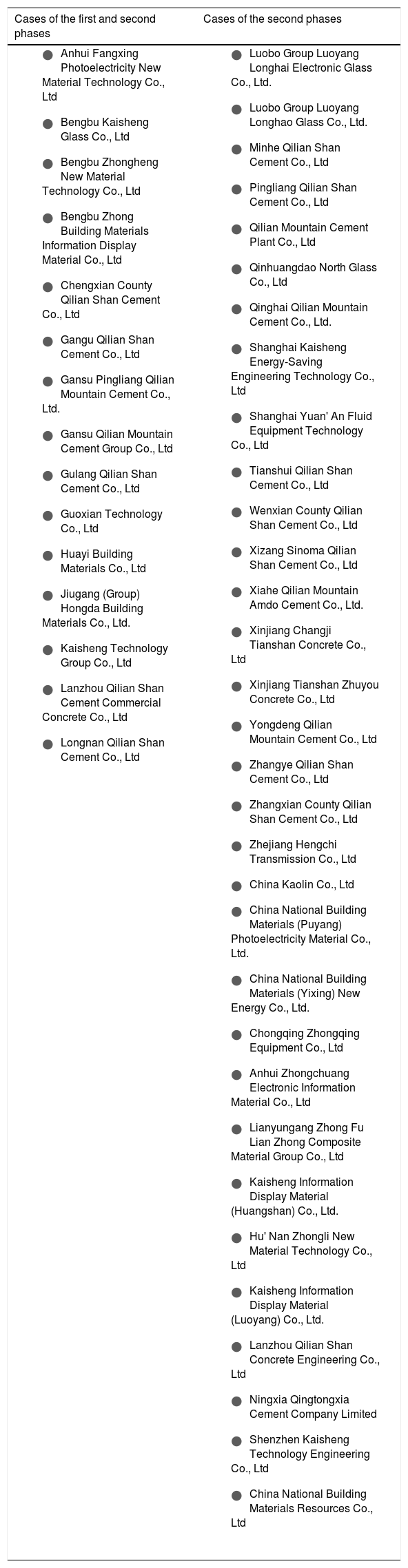
Data collectionTo collect the data, we cooperated with the China Business Executives Academy, Dalian,1 which offers executive management training courses open only to business managers. In the first phase, we contacted 15 managers from different firms in the building materials industry (see Appendix A). Our research team conducted 1–2 interviews with each of the 15 firms, each lasting 30 mins. We randomly selected 10 cases for coding and framework construction, and the remaining five cases were used for the theoretical saturation test. The reasons for choosing the building materials industry are as follows. First, DT practices are prevalent in China's building materials industry, so the selected samples suit our research question. The output of various products in China's building materials industry ranks first in the world, such as cement, glass, ceramics, glass fiber, etc. With the continuous improvement of production capacity, the building materials industry faces increasing resource and environmental constraints. It is urgent to utilize digital technologies such as big data, cloud computing, and AI to transform the traditional building materials industry. Second, the DT results of China's building materials industry are spotty (some firms create high performance, and some firms create low performance), which can provide both “negative” and “positive” results for this study (Rihoux & Ragin, 2008). Specifically, the Chinese building materials industry has experienced notable advancements by introducing the “Action Plan for Digital Transformation of Intelligent Manufacturing in Building Materials Industry (2021–2023)” and other associated documents. Some of the building materials firms have recognized DT's significance and started proactively implementing DT strategies. However, challenges such as the lack of standardization, lengthy delivery cycles, limited information infrastructure, and inadequate digital resources have hindered the overall progress of DT in the industry, leading to varying degrees of digitalization among different firms.
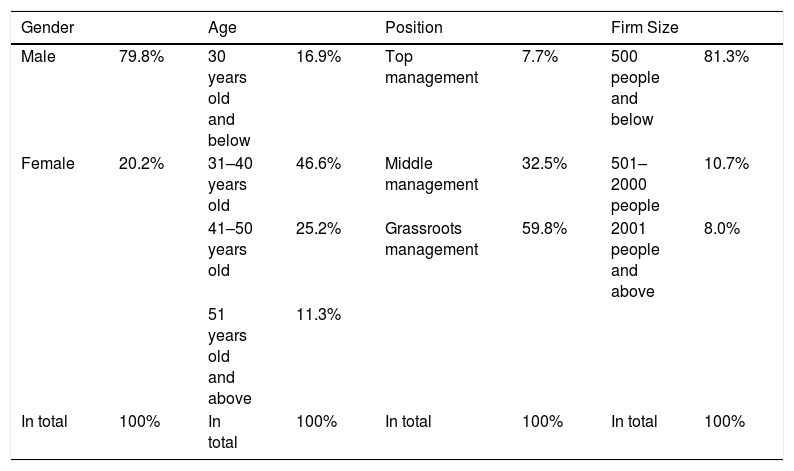
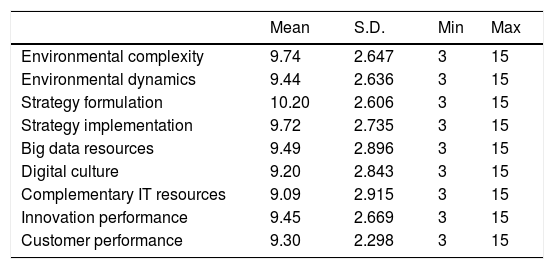
In the second phase, we contacted 47 managers from different firms in the building materials industry (including the 15 managers in the first phase; see Appendix A). We first sent them the online questionnaire via WeChat,2 and then commissioned them to forward it to other managers in their firm so that we could obtain an accurate picture of the firm's DT. Compared with employees, managers are more familiar with the digital development of firms. Therefore, we only distributed questionnaires to managers. A total of 397 surveys were returned from 47 building materials firms. Next, we excluded invalid questionnaires that were incomplete and had logical errors. Additionally, considering that managers in different positions may have different perceptions of the company’s DT, we ensured that the sample size of each firm was not less than three; otherwise, the questionnaires of this firm would be deleted to ensure the objectivity of the survey results. Finally, a final usable sample of 326 questionnaires from 38 firms was obtained. Descriptive statistics (Appendix B and Appendix C) and data analysis are presented for this reduced sample.
ResultsGrounded theory analysisTo ensure the objectivity of coding and the reliability and validity of theoretical construction, the two researchers conducted independent coding and subsequently cross-verified their results. Any coding inconsistencies were resolved via discussion among the research team. Thereafter, the outcomes of these discussions were emailed to the interviewees for review, ultimately leading to the final coding.
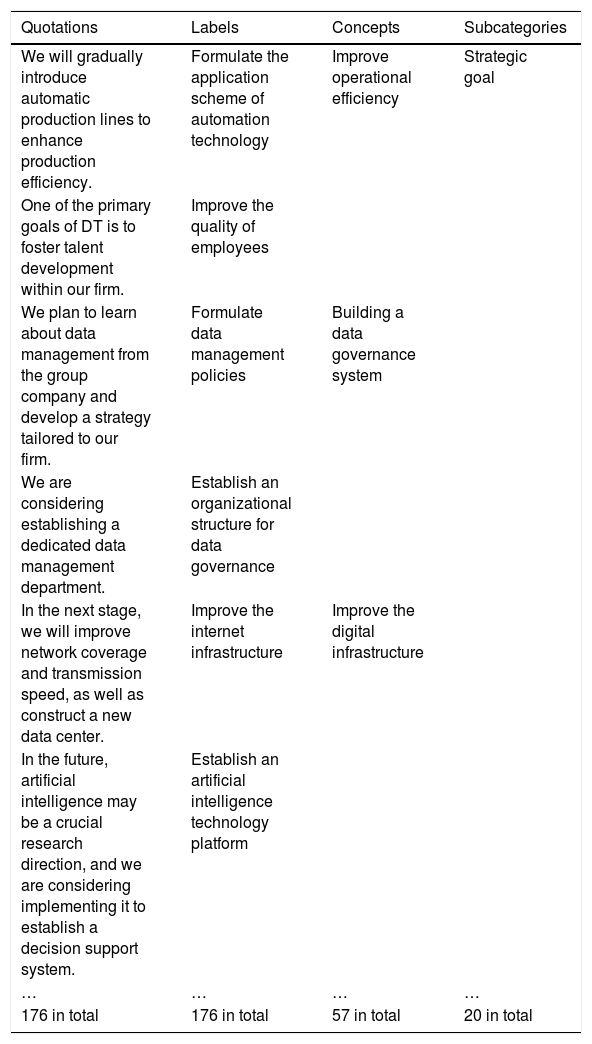
Open codingOpen coding is a completely open process without theoretical presupposition, which gradually labels, conceptualizes, and categorizes qualitative data (Gurca et al., 2021). First, try to keep the original intention in the process of labeling, without subjective prejudice and presupposition. Second, eliminate the content that is less related to DT and appears less than three times, and merge the duplicate content. Third, compare all the labels and extract the concept that can reflect the label combination. Finally, summarize all the concepts and extract the subcategories that can reflect the concept combination (see Table 1). Open coding yielded 176 labels and 57 concepts; the concepts were condensed to obtain 20 subcategories.
Open coding (partial).
Axial coding aims to identify categories that most accurately reflect and align with the data obtained through open coding and make connections between the categories and subcategories (Gurca et al., 2021). Concepts that emerge from open coding are initially discrete. To develop a systematic analysis, we established logical connections among these concepts and integrated the scattered elements into coherent, abstract categories with explanatory power. Guided by the “external environment → internal resources/actions → results” framework, we consolidated the 20 initial subcategories derived from open coding into nine core categories (Table 2).
Axial coding.
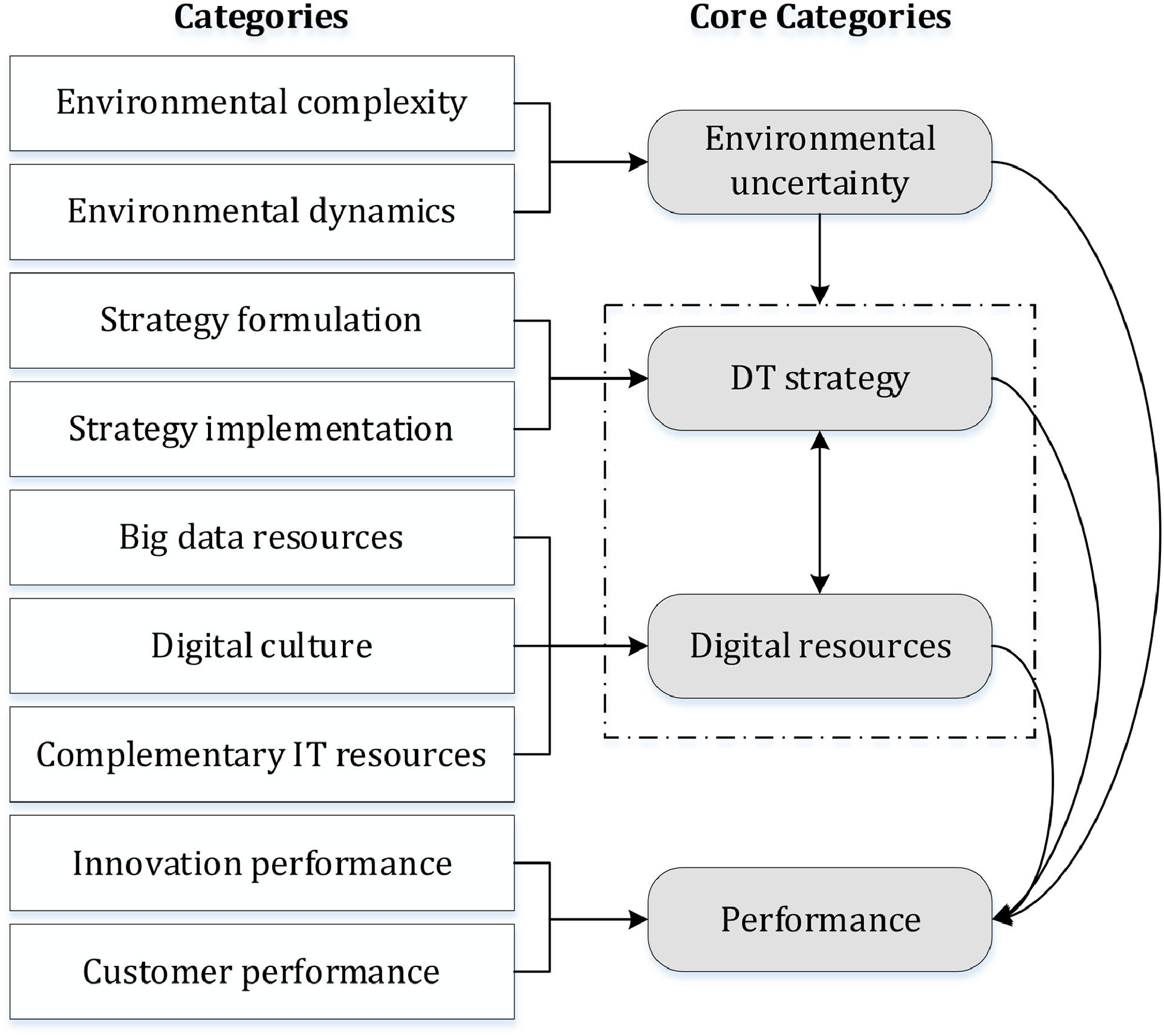
Selective coding focuses on how to condense all of the data into a single theme, which entails reorganizing the categories established during axial coding and classifying them into four core categories (Gurca et al., 2021) (see Fig. 1). After selective coding, a “storyline” can be developed, that is, a core phenomenon can be extracted from the categories and relationships developed by open coding and axial coding, and verified by data.

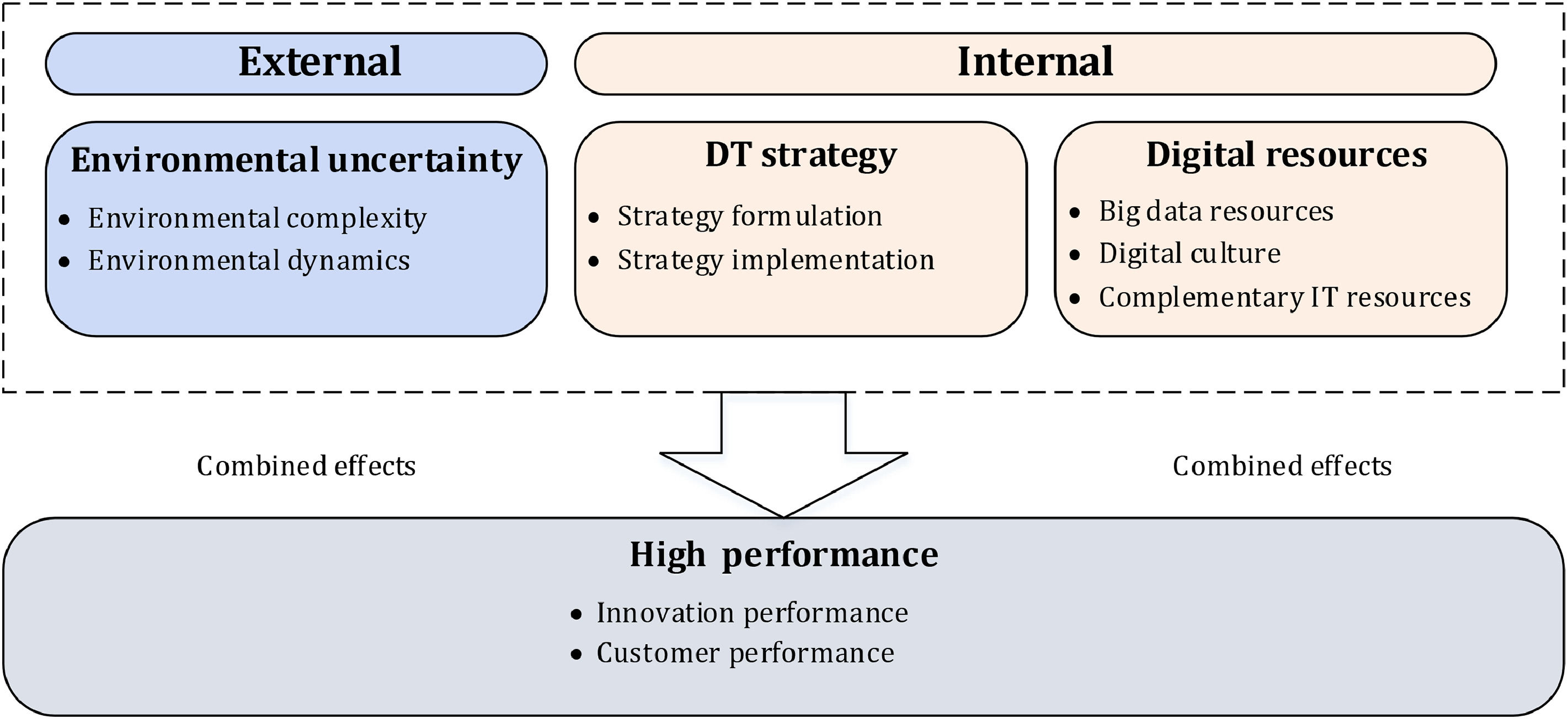
Around the core categories, the storyline of this study is formed: with the rise of the digital age, firms are experiencing ever-increasing uncertainty in their external environments, and DT has emerged as a “panacea” for ensuring the sustainable development of firms. To achieve high DT performance, firms need to formulate and implement appropriate DT strategies according to their environment. Moreover, digital resources are the fundamental resource endowment for implementing DT strategy. Therefore, environmental uncertainty, DT strategy, and digital resources comprehensively provide a valuable research framework for analyzing how to improve the performance of firms undergoing DT (see Fig. 2).
Theoretical saturation test
During the research process, the research team collected qualitative data and coded them until no new category appeared when adding new data—this is known as theoretical saturation. To test theoretical saturation, the researchers conducted coding on the remaining five cases. After the open coding, no new subcategories appeared. Further analysis revealed that the categories and relationship structure remained unchanged, indicating theoretical saturation.
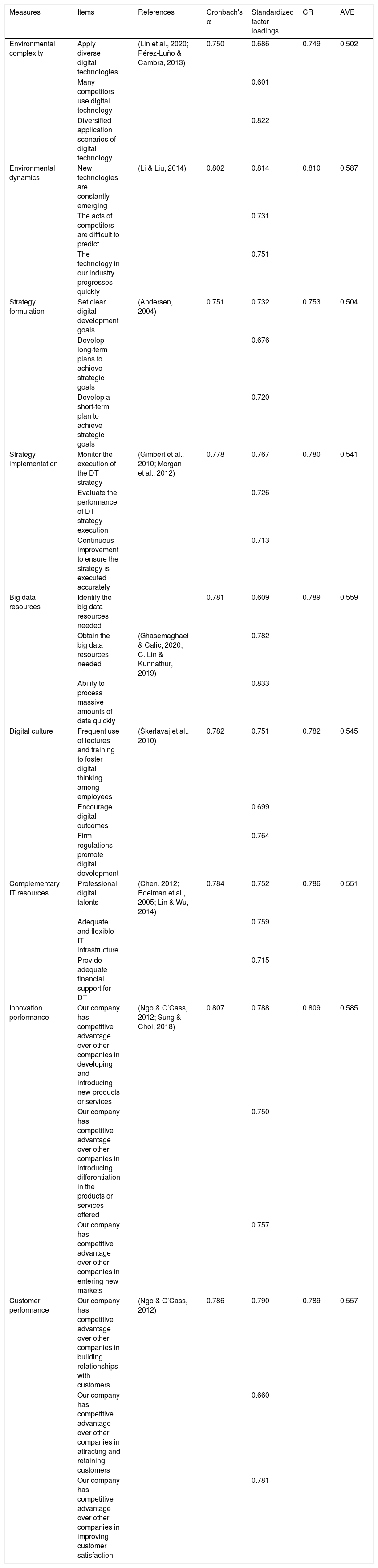
Configuration analysis of fsQCAMeasuresMeasures of constructs were gathered from the literature and suitably adapted to our digital context. A total of 27 survey items (see Appendix D) were applied to measure conditions and outcomes in this study. All the items were measured on a 5-point Likert-type scales (1 = strongly disagree; 5 = strongly agree). Normality tests were performed on the data. The results indicated that all variables had skewness and kurtosis values within the range of –1.00 to 1.00, satisfying the normality requirement.
Confirmatory factor analysis results showed that the standardized factor loadings ranged from 0.601 to 0.833, indicating that all the items can be retained. The average variance extracted for all the measures was greater than 0.5 (range 0.502–0.587), and the composite reliability (CR) for all the measures was greater than 0.7 (range 0.749–0.810), thus confirming convergent validity. The reliability of the measures was determined by calculating the Cronbach’s alpha (α) value for each measure. The alpha values were all above 0.7, indicating good reliability.
CalibrationFsQCA requires calibration of the measured conditions and outcomes. Calibration involves transforming variables into set membership, ranging from full non-membership that equals 0 to full membership that equals 1; 0.5 is the cutoff point and indicates maximum ambiguity (Ragin, 2008). We first averaged the multiple questionnaires of each case to obtain the value of each item in each case, then obtained the final value of each variable by averaging. For a 5-point Likert scale, we followed the suggestion of previous studies and set the values of 4, 3, and 2 as thresholds for full membership, cutoff point, and full non-membership, respectively (Pappas & Woodside, 2021). Following Ragin (2008) and common practice in FsQCA studies, we avoided exact 0.5 membership scores because such cases are typically dropped by the software because of the indeterminacy in fuzzy-set intersection. Accordingly, after initial calibration, we added a constant of 0.001 to any membership score that exactly equaled 0.5, changing it to 0.501. This minimal adjustment ensures the retention of all cases while having no substantive impact on the analysis.
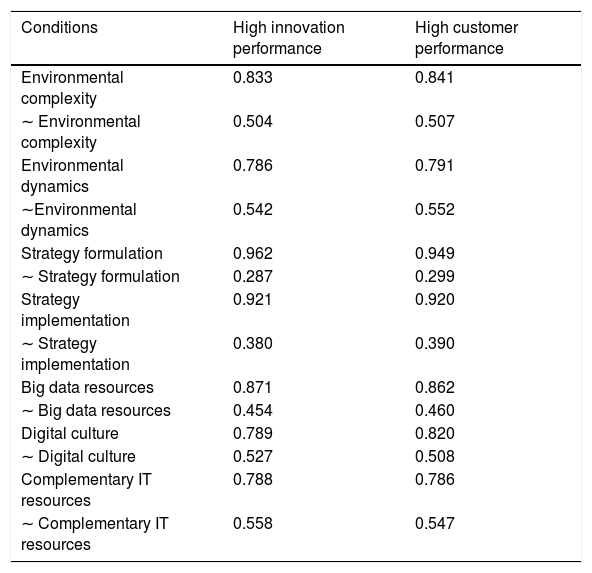
Necessity conditions analysisBefore analyzing the configurations, we first examined whether any single condition is necessary for high performance; Table 3 presents the results. If the consistency coefficient is higher than 0.9, the antecedent condition can generally be regarded as a necessary condition for the result. In achieving high innovation performance, the consistency coefficients of strategy formulation and strategy implementation are above 0.9. This suggests that strategy formulation and implementation are necessary conditions for high innovation performance. Similarly, in the context of high customer performance, the consistency coefficients of strategy formulation and strategy implementation are above 0.9, which shows that strategy formulation and strategy implementation are necessary conditions for attaining high customer performance.
Necessity analysis of single conditions (Consistency).
Note: "∼" indicates "non-".
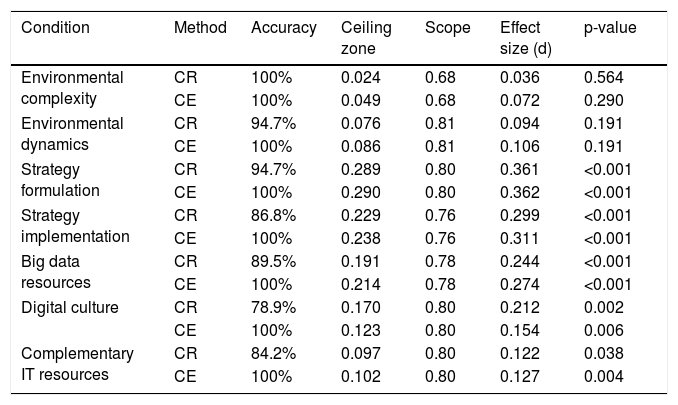
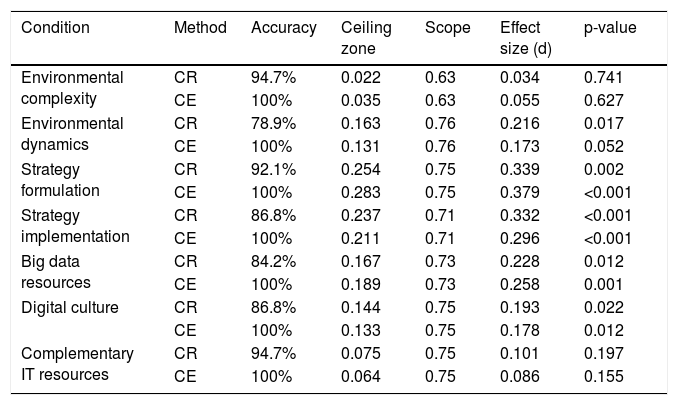
Based on these findings, this study further validated the results using Necessity Condition Analysis (NCA; see Appendix E for detailed output). For innovation performance, the effect sizes (d) of strategy formulation were 0.361 (CR) and 0.362 (CE), whereas strategy implementation showed effect sizes of 0.299 (CR) and 0.311 (CE). All effect sizes exceeded the recommended threshold of 0.1 and were statistically significant (p < 0.05), indicating that both strategy formulation and strategy implementation constitute necessary conditions for innovation performance. Turning to customer performance, strategy formulation yielded effect sizes of 0.339 (CR) and 0.379 (CE), and strategy implementation produced effect sizes of 0.332 (CR) and 0.296 (CE). Again, all effect sizes surpassed 0.1 with p < 0.05. Hence, strategy formulation and strategy implementation are also necessary conditions for customer performance.3
Sufficient solutionsThis study utilized the fsQCA 4.1 software for analysis. First, we ran the fsQCA algorithm to produce the truth table. Second, we conducted a sufficiency analysis by using a minimum case frequency benchmark ≥1, raw consistency benchmark ≥0.8, and PRI consistency benchmark ≥0.65 (Chen & Tian, 2022; Greckhamer et al., 2018; Pappas & Woodside, 2021). Third, we needed to decide whether each combination (i.e., line of the truth table) explains the outcome. If the combination met the consistency threshold, we inserted the value of 1 in the column with the outcome, otherwise 0. Finally, we could proceed to obtain solution sets through the standard analyses.
FsQCA computes three solutions: complex solution, parsimonious solution, and intermediate solution. The conditions that appear in the parsimonious solution are the “core conditions.” The conditions that are eliminated in the parsimonious solution and appear only in the intermediate solution are called “peripheral conditions” (Ragin, 2008). Tables 4 and 5 present the results, where each column represents a possible configuration.
(1) Antecedent configurations of high innovation performance
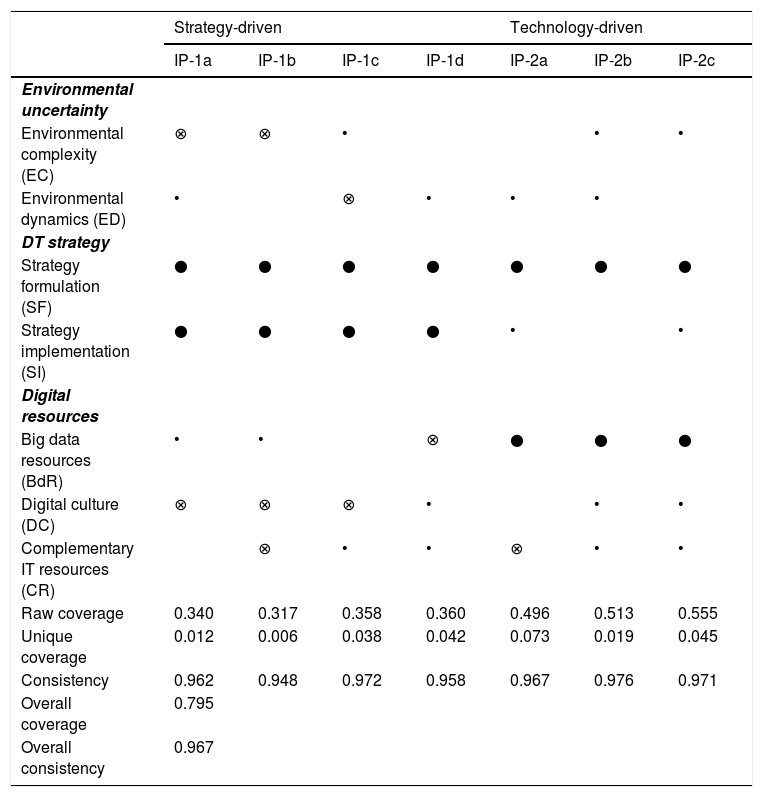
Antecedent configurations of high innovation performance (IP).
Note: this table presents seven antecedent configurations leading to high innovation performance through DT. Each column corresponds to one distinct configuration. ● represents the presence of a core condition; • represents the presence of a peripheral condition; ⊗ represents the absence of a core condition; ⊗ represents the absence of a peripheral condition.
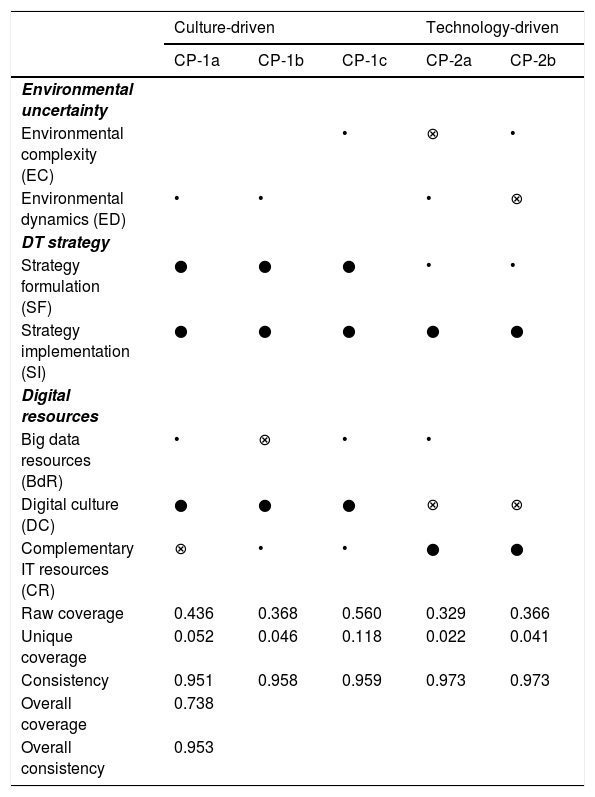
Antecedent configurations of high customer performance (CP).
Note: this table presents five antecedent configurations leading to high customer performance through DT. Each column corresponds to one distinct configuration. • represents the presence of a core condition; ● represents the presence of a peripheral condition; ⊗ represents the absence of a core condition; ⊗ represents the absence of a peripheral condition.
The findings of this study first affirm that environmental uncertainty, DT strategy, and digital resources collectively constitute fundamental prerequisites for achieving high innovation performance through DT. Subsequently, we delve into a configurational analysis to explore how these factors combine differentially, thereby demonstrating that no single condition suffices and that multiple distinct pathways—namely, strategy- and technology-driven configurations—can lead to high innovation outcomes. As Table 4 shows, the seven configurations, each represented by a column, are categorized and labeled based on their core conditions (Fiss, 2011).
The first combination of core conditions includes strategy formulation and strategy implementation (IP-1a, IP-1b, IP-1c, and IP-1d). Therefore, we have labeled these four paths as “strategy-driven.” The strategy-driven configurations illustrate that the formulation and implementation of a DT strategy can drive the DT process, ultimately creating an environment conducive to innovation and achieving high innovation performance. The second combination of core conditions includes strategy formulation and big data resources (IP-2a, IP-2b, and IP-2c). We have labeled them as “technology-driven.” The technology-driven configurations indicate that as a valuable technological resource, big data empowers DT and collaboratively enhances innovation performance alongside DT strategy. The following subsections explicate the main configurations.
Strategy-driven configurations. This type of innovation performance includes four paths (configurations IP-1a, IP-1b, IP-1c, and IP-1d), and the sum of the coverage is 0.098. Configuration IP-1a is ∼EC*ED*SF*SI*BdR*∼DC.4 In the context of low environmental complexity, high environmental dynamics, and low digital culture, firms can effectively achieve a high innovation performance if they optimally apply the DT strategy (SF and SI) and big data resources. Configuration IP-1b is ∼EC*SF*SI*BdR*∼DC*∼CR. In the absence of environmental complexity, digital culture, and complementary IT resources, firms can achieve a high innovation performance if they focus on DT strategy (SF and SI) and big data resources. Configuration IP-1c is EC*∼ED*SF*SI*∼DC*CR. In the context of high environmental complexity, low environmental dynamics, and low digital culture, firms can achieve a high innovation performance if they focus on DT strategy (SF and SI) and complementary IT resources. Configuration IP-1d is ED*SF*SI*∼BdR*DC*CR. In the context of high environmental dynamics and low big data resources, firms can achieve a high innovation performance if they focus on DT strategy (SF and SI) and digital resources (DC and CR).
Technology-driven configurations. This type of innovation performance includes three paths (IP-2a, IP-2b, and IP-2c). The sum of the coverage is 0.137, which is significantly higher than the other type, indicating that this type has good universality. Configuration IP-2a is ED*SF*SI*BdR*∼CR. In the context of high environmental dynamics and low complementary IT resources, the DT strategy (SF and SI) can be combined with big data resources, resulting in high innovation performance. Configuration IP-2b is EC*ED*SF*BdR*DC*CR. In the context of high environmental uncertainty (EC and ED), firms can achieve a high innovation performance if they optimally leverage strategy formulation and digital resources (BdR, DC, and CR). Configuration IP-2c is EC*SF*SI*BdR*DC*CR. In the context of high environmental complexity, firms can also achieve a high innovation performance if they focus on the DT strategy (SF and SI) and digital resources (BdR, DC, and CR).
(2) Antecedent configurations of high customer performance
Following this, we extend the configurational examination from innovation to customer performance. The analysis reveals that the antecedent conditions for high customer performance are not simply a replication of those for innovation; they combine into unique configurations—including a distinct culture-driven path. This illustrates the varied and specialized routes through which firms can achieve superior customer-centric outcomes. As shown in Table 5, the five configurations, each represented by a column, are categorized and labeled based on their core conditions (Fiss, 2011).
Across all five configurations, the core conditions are situated in two dimensions: DT strategy and digital resources. Digital resources provide robust support for firms undergoing DT, promoting DT strategies and providing customers with personalized products and services, thereby facilitating customer performance enhancement. In this context, we labeled the configurations CP-1a, CP-1b, and CP-1c as “culture-driven” because their core conditions include digital culture. We marked the configurations CP-2a and CP-2b as “technology-driven” because their core conditions include complementary IT resources. The following subsections explicate the main configurations.
Culture-driven configurations. This type of customer performance includes three paths, configurations CP-1a, CP-1b, and CP-1c. The sum of the coverage is 0.216. Configuration CP-1a is ED*SF*SI*BdR*DC*∼CR. In the context of high environmental dynamics and low complementary IT resources, firms could effectively achieve high customer performance if they optimally apply the DT strategy (SF and SI) and digital resources (BdR and DC). Configuration CP-1b is ED*SF*SI*∼BdR*DC*CR. In the context of high environmental dynamics and low big data resources, firms could effectively achieve high customer performance if they optimally apply the DT strategy (SF and SI) and digital resources (DC and CR). Configuration CP-1c is EC*SF*SI*BdR*DC*CR. In the context of high environmental complexity, firms could effectively achieve high customer performance if they optimally utilize the DT strategy (SF and SI) and digital resources (BdR, DC, and CR).
Technology-driven configurations. This type of customer performance includes two paths, configurations CP-2a and CP-2b. The sum of the coverage is 0.063. Configuration CP-2a is ∼EC*ED*SF*SI*BdR*∼DC*CR. In the context of low environmental complexity, high environmental dynamics, and low digital culture, DT strategy (SF and SI) and digital resources (BdR and CR) can lead firms to achieve high customer performance. Configuration CP-2b is EC*∼ED*SF*SI*∼DC*CR. In the context of high environmental complexity, low environmental dynamics, and low digital culture, the DT strategy (SF and SI) can be combined with complementary IT resources, resulting in a high customer performance.
(3) Comparison between different configurations
To elucidate high-performance pathways, we compared configurations for high innovation performance and high customer performance. First, strategy formulation exists as a core condition in all the configurations for high innovation performance. An unambiguous and effective strategy provides a clear direction for the firm, acting as a catalyst for innovation. By formulating a strategy, the firm can define its development objectives, providing guidance and support for innovation endeavors. It shows that strategy formulation has a key role in innovation performance, consistent with previous research (Ardito et al., 2021). Similarly, strategy implementation exists as a core condition in all the configurations for high customer performance, indicating that effective strategy implementation positively impacts customer performance in the traditional (Zhao et al., 2017) and digital context. Without effective implementation, even an excellent strategy fails to generate customer value. Strategy implementation acts as the conduit for translating strategic objectives into tangible products and services that customers can perceive, ultimately resulting in increased customer satisfaction and improved customer performance.
Second, among the configurations of high innovation performance, configuration IP-2c has the highest raw coverage (0.555), which explains 55.5% of high innovation performance cases. Among the configurations of high customer performance, configuration CP-1c has the highest raw coverage (0.560), which explains 56% of high customer performance cases.
Third, configuration IP-1d and configuration CP-1b contain the same conditions—that is, ED*SF*SI*∼BdR*DC*CR. This shows that in the context of high environmental dynamics and low big data resources, firms could effectively achieve high innovation performance and high customer performance if they optimally utilize the DT strategy (SF and SI) and digital resources (DC and CR). Similarly, configuration IP-2c and configuration CP-1c contain the same conditions—that is, EC*SF*SI*BdR*DC*CR. Configuration IP-1c and configuration CP-2b contain the same conditions—that is, EC*∼ED*SF*SI*∼DC*CR.
Robustness checksThe robustness analysis methods of the QCA results include adjusting the calibration threshold, changing the consistency threshold, adding or removing conditions, changing the case frequency threshold, and adding or removing cases (Chen & Tian, 2022; Greckhamer et al., 2018). Referring to the above method, first, we increased the consistency threshold from 0.8 to 0.9 and found that these nine configurations were still supported. Second, two cases were randomly selected and deleted, and the obtained analysis results remained similar, indicating that the research results were robust.
Case analysis of configurationsTo elucidate how various combinations of conditions contribute to achieving high levels of innovation performance and customer performance, we will illustrate each configuration through a specific case (see Table 6).
Case analysis of configurations.
In the era of digital economy, DT is inevitable for firms seeking competitive advantage. However, existing research lacks in-depth exploration of the core conditions that promote the performance of firms undergoing DT, resulting in a delay in solving the problem of poor performance in practice (Holmström, 2022). Therefore, we establish a configurational framework of environmental uncertainty, DT strategy, and digital resources and explore pathways to improve performance through a mixed research method.
First, necessity conditions analysis shows that strategy formulation and implementation are necessary conditions for attaining high innovation/customer performance. Furthermore, strategy formulation exists as a core condition in all the configurations for high innovation performance, and strategy implementation exists as a core condition in all the configurations for high customer performance. The results indicate that DT strategy is the primary driver of DT. Second, we observe synergies among environmental uncertainty, DT strategy, and digital resources. For example, in the configuration IP-2b, environmental uncertainty (EC and ED), DT strategy (SF), and digital resources (BdR, DC, and CR) combine to enhance firms’ innovation performance. Third, we identify two types of high innovation performance configurations: “strategy-driven” and “technology-driven,” and two types of high customer performance configurations: “culture-driven” and “technology-driven.”
Critically, while this study employs cross-sectional data to identify static configurations associated with high performance, its findings, nonetheless, offer meaningful insights into the dynamic process of DT. The distinct high-performance configurations—such as “strategy-driven” and “technology-driven”—represent alternative pathways through which firms may initiate and advance their DT journeys. This suggests that no universal “best practice” exists; rather, organizations follow distinct change trajectories shaped by their initial conditions, such as their endowment of digital resources. For example, a technology-driven trajectory likely builds upon a robust existing digital resource base, focusing its change efforts on technology integration, scaling, and diffusion. In contrast, a strategy-driven trajectory may emerge from an unambiguous strategic vision, prioritizing the realignment of organizational resources and culture to realize that vision. Thus, the configurations identified here can be understood as snapshots of critical junctures within these differing transformational pathways. Future research could extend this work by tracing longitudinally how such configurations form, evolve, and stabilize throughout the DT process.
Theoretical contributionsFirst, this study applies configurational analysis to clarify the intricate causal mechanisms that impact the performance of firms undergoing DT. Existing research has mainly examined single antecedents of DT (e.g., Dremel et al., 2017; Morton et al., 2020), relying on conventional statistical methods to test their net effects (e.g., Ferreira et al., 2019; Wielgos et al., 2021). Such approaches are limited in their ability to analyze the causal mechanisms influencing DT from a holistic perspective. To better capture the complexity of DT in practice (Matt et al., 2016), this study develops and tests a theoretical framework from a configurational viewpoint, identifying multiple distinct pathways that lead to high performance. Our configurational analysis helps reconcile conflicting perspectives in prior research regarding the primary drivers of DT. While some scholars identify DT strategy as the central force behind transformation (Chanias et al., 2019; Kane et al., 2015), others emphasize the operating environment as the core driver, arguing that it substantially shapes the DT strategy (Gupta & Bose, 2022). Our findings suggest that firm performance is driven not by any single antecedent, but by the interaction among environmental uncertainty, DT strategy, and digital resources. Specifically, DT strategy encompasses the deliberate actions firms take to achieve their transformation objectives; digital resources supply the essential inputs required to enact that strategy; and environmental uncertainty simultaneously presents both opportunities and threats that influence strategic choice and implementation.
This study integrates the grounded theory with fsQCA to derive a more contextually explanatory system of conditions from enterprise practices (Makri & Neely, 2021), thereby transcending the reliance on predetermined theoretical dimensions (e.g., TOE) prevalent in existing research (e.g., Jia et al., 2024; Shang et al., 2024). In selecting the research sample, we deliberately avoided focusing exclusively on single aspects while neglecting other influencing factors, thus overcoming the issue in earlier QCA-based DT literature that overlooked key factors such as digital culture (Chen & Tian, 2022; Shang et al., 2024). Furthermore, configurational analysis demonstrates that a systematic DT strategy constitutes an indispensable necessary condition across all high-performance pathways, rather than merely one sufficient condition among many. These findings, supported by a practice-grounded condition system and configurational analysis, reveal the pivotal role of culture and the foundational status of strategy in DT, offering a more nuanced and explanatory theoretical lens for understanding its complex causal mechanisms.
Second, moving beyond the conventional focus on financial metrics in DT research (e.g., Jean et al., 2020; Wang et al., 2023), this study adopts a configurational approach to examine how DT jointly shapes innovation performance and customer performance. This dual-lens framework explicitly responds to the call for a more balanced assessment of DT outcomes, shifting attention from short-term financial gains to long-term strategic performance goals. By conceptualizing innovation performance as the depth of DT—reflecting internal process renewal and disruptive opportunity capture (Ferreira et al., 2019)—and customer performance as the breadth of DT—capturing external value co-creation and interaction redesign (Kretschmer & Khashabi, 2020)—this research advances the DT–performance research paradigm in two key ways. Theoretically, it demonstrates that DT’s impact is multidimensional and non-substitutable, challenging the assumption that financial performance alone suffices to evaluate DT success. Methodologically, the configurational perspective reveals that different pathways of performance enhancement may coexist, depending on how firms align organizational elements. Thus, this study contributes to the literature by proposing a more integrated and dynamic performance framework for DT, urging scholars and practitioners to recognize the necessity of accepting short-term trade-offs in pursuit of sustainable (Holmström, 2022), dual-focused transformation outcomes.
Third, this study extends the DT strategy discourse from confirming its importance to revealing its contingent mechanisms. While prior research recognizes strategy as a central DT driver (Chanias et al., 2019; Verhoef et al., 2021), strategy is often omitted from theoretical frameworks (e.g., Chen & Tian, 2022). To address this gap, this study incorporates DT strategy into a configurational framework. The findings reveal that strategy alone is insufficient; it must synergistically interact with digital resources and adapt to environmental uncertainty to drive high performance. This is evidenced in several configurations (e.g., IP-2a, IP-2b, CP-1a, CP-1b). Thus, this study contributes a contingent and systemic understanding to the DT knowledge base: DT success does not result from implementing a “best-practice” strategy in isolation, but from the precise calibration of strategic elements with internal and external organizational conditions. This perspective encourages scholars and practitioners to transcend generic strategic checklists and design adaptive and dynamic strategy-organization systems that are contextually aligned to achieve transformation objectives.
Practical implicationsThis study also provides practical management implications for firms. First, it offers managers a portfolio of actionable pathways—seven for innovation performance and five for customer performance—enabling firms to systematically harness the transformative potential of DT. Companies can select and adapt a pathway suited to their specific environmental context and resource endowment. For instance, under conditions of high environmental complexity, managers may rely on a well-defined DT strategy (encompassing both strategy formulation and implementation) supported by key digital resources—big data resources (BdR), a DC, and CR—to achieve high innovation performance, as demonstrated in configuration IP-2c. This underscores the importance of diagnosing the firm’s internal and external context before committing to a strategic configuration.
Second, managers should treat the formulation and implementation of a coherent DT strategy not as an option, but as a foundational necessity. Since DT represents an organization-wide transformation that creates numerous innovation opportunities, establishing an explicit, forward-looking strategy aligned with long-term objectives is critical. Our findings show that a robust DT strategy is indispensable for high innovation performance (as reflected in all seven innovation configurations: IP-1a to IP-2c). Furthermore, strategy must be actively monitored and iteratively adjusted during implementation. Effective execution ensures that strategic intentions translate into operational reality, which is equally vital for achieving high customer performance (evident in all customer configurations: CP-1a to CP-2b). Therefore, leaders are advised to institute formal review mechanisms and dynamic resource reallocation processes to keep strategy implementation aligned with evolving internal capabilities and external uncertainties.
Finally, this study provides practical enlightenment for DT in the building materials industry. Many firms in the building materials industry are in the early stages of DT and lack a clear strategy. Managers of these firms should pursue “strategy-driven pathways” by prioritizing effective DT strategies (configurations IP-1a, IP-1b, IP-1c, IP-1d). The inadequacy of digital resources, such as a lack of digital talents, insufficient IT infrastructure, and a deficient digital culture, is another significant factor contributing to the subpar performance of DT in many building materials firms. These resource limitations can impede the successful implementation of DT strategies and hinder progress in DT initiatives. Managers can pursue “technology-driven pathways” by prioritizing the expansion of their IT resources (configurations IP-2a, IP-2b, IP-2c, CP-2a and CP-2b), or they can pursue “culture-driven pathways” by fostering a digital culture within the firm (configurations CP-1a, CP-1b, and CP-1c).
Limitations and future researchFirst, the number of cases in this paper is limited, and they are all from China. As the country is the second-largest digital economy in the world, the DT of firms in China has the characteristics of large overall scale, high industry coverage, and large gap between different industries/firms.5 Therefore, the samples from Chinese firms can provide a reference for firms with different levels of digital maturity. Nevertheless, future research can further choose samples from developed countries or adopt large-scale statistical analysis methods to enrich our findings. Second, this study reveals performance improvement pathways from two important dimensions: innovation and customer performance. Future research may consider other dimensions, such as new product development performance, supply chain performance, etc. Third, this study is based on static data. Considering that DT is a dynamic process, future research can further explore the dynamic performance of DT. Finally, although qualitative comparative analysis can better explain the mechanisms affecting the performance of firms undergoing DT than regression analysis, it cannot explicate the “why” and “how” questions in the same detail as case studies. Future research can employ the case study method to explore the dynamic mechanisms that affect the performance of firms undergoing DT.
CRediT authorship contribution statementXin Li: Methodology, Data curation, Conceptualization. Wanling Li: Writing – original draft, Resources, Data curation.
The authors declare that they have no known competing financial interests or personal relationships that could have appeared to influence the work reported in this paper.
| Measures | Items | References | Cronbach's α | Standardized factor loadings | CR | AVE |
|---|---|---|---|---|---|---|
| Environmental complexity | Apply diverse digital technologies | (Lin et al., 2020; Pérez-Luño & Cambra, 2013) | 0.750 | 0.686 | 0.749 | 0.502 |
| Many competitors use digital technology | 0.601 | |||||
| Diversified application scenarios of digital technology | 0.822 | |||||
| Environmental dynamics | New technologies are constantly emerging | (Li & Liu, 2014) | 0.802 | 0.814 | 0.810 | 0.587 |
| The acts of competitors are difficult to predict | 0.731 | |||||
| The technology in our industry progresses quickly | 0.751 | |||||
| Strategy formulation | Set clear digital development goals | (Andersen, 2004) | 0.751 | 0.732 | 0.753 | 0.504 |
| Develop long-term plans to achieve strategic goals | 0.676 | |||||
| Develop a short-term plan to achieve strategic goals | 0.720 | |||||
| Strategy implementation | Monitor the execution of the DT strategy | (Gimbert et al., 2010; Morgan et al., 2012) | 0.778 | 0.767 | 0.780 | 0.541 |
| Evaluate the performance of DT strategy execution | 0.726 | |||||
| Continuous improvement to ensure the strategy is executed accurately | 0.713 | |||||
| Big data resources | Identify the big data resources needed | 0.781 | 0.609 | 0.789 | 0.559 | |
| Obtain the big data resources needed | (Ghasemaghaei & Calic, 2020; C. Lin & Kunnathur, 2019) | 0.782 | ||||
| Ability to process massive amounts of data quickly | 0.833 | |||||
| Digital culture | Frequent use of lectures and training to foster digital thinking among employees | (Škerlavaj et al., 2010) | 0.782 | 0.751 | 0.782 | 0.545 |
| Encourage digital outcomes | 0.699 | |||||
| Firm regulations promote digital development | 0.764 | |||||
| Complementary IT resources | Professional digital talents | (Chen, 2012; Edelman et al., 2005; Lin & Wu, 2014) | 0.784 | 0.752 | 0.786 | 0.551 |
| Adequate and flexible IT infrastructure | 0.759 | |||||
| Provide adequate financial support for DT | 0.715 | |||||
| Innovation performance | Our company has competitive advantage over other companies in developing and introducing new products or services | (Ngo & O’Cass, 2012; Sung & Choi, 2018) | 0.807 | 0.788 | 0.809 | 0.585 |
| Our company has competitive advantage over other companies in introducing differentiation in the products or services offered | 0.750 | |||||
| Our company has competitive advantage over other companies in entering new markets | 0.757 | |||||
| Customer performance | Our company has competitive advantage over other companies in building relationships with customers | (Ngo & O’Cass, 2012) | 0.786 | 0.790 | 0.789 | 0.557 |
| Our company has competitive advantage over other companies in attracting and retaining customers | 0.660 | |||||
| Our company has competitive advantage over other companies in improving customer satisfaction | 0.781 |
Necessary condition analysis for the outcome of innovation performance
Notes: 0.1≤d < 0.3: medium effect; 0.3≤d < 0.5: large effect.
Necessary condition analysis for the outcome of customer performance
Notes: 0.1≤d < 0.3: medium effect; 0.3≤d < 0.5: large effect.
“China Business Executives Academy, Dalian,” established by the State Council of China, is a professional training academy for senior management personnel of firms.
WeChat is an instant messaging software for smart terminals launched by Tencent.
As expected, the NCA software identifies more necessary conditions than fsQCA. This difference stems from their distinct underlying principles for testing necessary conditions. Specifically, NCA employs a ceiling line as the reference for assessing necessity, whereas fsQCA uses the bisectional diagonal through the theoretical scope as its reference line. When a substantial number of data-points lie above the reference line, NCA moves the ceiling line upward, possibly with rotation, while the fsQCA reference line remains unchanged (the diagonal). Consequently, NCA typically uncovers more single necessary conditions than fsQCA.

articles
