




In the context of supply chain digitalization and the circular economy, generative artificial intelligence (GenAI) may help firms overcome persistent challenges in knowledge integration and rapid innovation iteration within circular supply chains. Drawing on the dynamic capability view (DCV) and the knowledge-based view (KBV), this study develops a theoretical model to examine the impact of GenAI on circular supply chain practices. The study focuses on the mediating roles of generative capability and iterative innovation, as well as the moderating role of circular innovation orientation. This addresses the core question of how digital technology drives value regeneration in the circular economy. Using partial least squares structural equation modeling (PLS-SEM) and survey data from 371 Chinese firms, we find that GenAI has a positive effect on circular supply chain practices, both directly and indirectly. Generative capability and iterative innovation each mediate the GenAI–circular supply chain practices relationship, and they jointly form a serial mediation pathway. Moreover, circular innovation orientation strengthens the positive effect of generative capability on iterative innovation. By conceptualizing generative capability as a higher-order dynamic capability rooted in knowledge acquisition, inheritance, and updating, this study clarifies how GenAI converts cross-generational knowledge reconfiguration into actionable circular practices. The findings extend DCV and KBV explanations of technology-enabled circular transformation, offering guidance for managers seeking to deploy GenAI for value regeneration.
Amid the global shift toward a circular economy, firms are under pressure to redesign supply chains for closed-loop flows of materials and value. Circular supply chains support the production–consumption–regeneration loop by utilizing recyclable and remanufacturable product systems (Agyabeng-Mensah et al., 2024). Yet successful implementation often hinges on two challenging problems: integrating heterogeneous knowledge across partners and product generations, and sustaining continuous iterative innovation (Amir et al., 2023). Meanwhile, the rapid development of generative artificial intelligence (GenAI) is reshaping enterprises’ innovation processes and operational logics (Fosso Wamba et al., 2025; Singh et al., 2024). Managers and scholars therefore face a practical and theoretical question: how can firms embed GenAI into circular supply chains and translate its technical potential into value-regenerating practices?
GenAI is redefining the boundaries of enterprise innovation through its powerful capabilities in data generation, pattern recognition, and knowledge reconstruction (Fosso Wamba et al., 2025). Compared with conventional digital tools (Mannuru et al., 2025), GenAI can accelerate knowledge acquisition and combination, potentially fostering a higher-order capability, namely generative capability (Sun & Zou, 2019). This second-order dynamic capability comprises knowledge acquisition, inheritance, and updating (Guo et al., 2022). Prior research has established the enabling role of digital technology in supply chains (Kurrahmana et al., 2025). However, evidence on how GenAI operates in circular supply chain settings—and through which capability mechanisms—remains limited.
First, research on AI in supply chain management has primarily focused on efficiency gains, including process automation and intelligent forecasting (Rainer et al., 2025; Richey et al., 2023). Much less is known about how GenAI can support transformation toward closed-loop operations and value regeneration, or how it can do so by elevating dispersed knowledge into higher-order capability mechanisms.
Second, GenAI is widely recognized for its potential to expand the boundaries of innovation (Fosso Wamba et al., 2025). Its main distinction from traditional tools is its advanced generative capability, which provides key support for iterative innovation in circular supply chains, such as modular design and detachable structures (Shore et al., 2024; Zardo et al., 2025). However, existing work has primarily examined GenAI’s direct applications for creative generation or process optimization (Roberts & Candi, 2024). Few studies examine how GenAI systematically enables core practices in circular supply chains, such as a closed-loop design, resource tracing, and value regeneration, through its generative capability and iterative innovation. Although the drivers of iterative innovation (e.g., organizational resources and knowledge management) have been discussed extensively (Jiang et al., 2022; Tian & Yang, 2024), the mechanisms through which GenAI activates iterative innovation and enables it to serve as a mediator remain unclear in the context of digital and intelligent supply chain transformation. Drawing on the dynamic capability view (DCV) and knowledge-based view (KBV), we argue that GenAI can lay the foundation for iterative innovation in circular supply chains by accelerating knowledge acquisition, inheritance, and updating (Guo et al., 2022; Zardo et al., 2025). Simultaneously, through the processes of rapid trial-and-error and continuous improvement, iterative innovation then converts generative capability into specific circular supply chain practices.
Finally, circular innovation orientation refers to a firm’s strategic commitment to integrating circular economy concepts into its innovation processes. Circular innovation orientation may shape how effectively generative capability and iterative innovation translate GenAI’s potential into circular supply chain practices by influencing motivation for knowledge integration and cross-functional collaboration (Agyabeng-Mensah et al., 2024). However, this boundary role remains insufficiently explored. According to the DCV, organizational strategic orientation, as a key contextual factor, can moderate the effectiveness of dynamic capabilities by transforming specific organizational processes such as iterative innovation. Therefore, examining circular innovation orientation as a moderator is essential for understanding the mechanism and boundary conditions of GenAI-enabled circular supply chains.
Building on these gaps, this study addresses three key research questions. First, how does GenAI influence circular supply chain practices? Second, what roles do generative capability and iterative innovation play in mediating GenAI’s influence on circular supply chain practices, and do they jointly form a chain-mediating effect? Third, what boundary role does the circular innovation orientation play in the relationship between generative capability and iterative innovation? To answer these questions, we collected corporate questionnaire data and used partial least squares structural equation modeling (PLS-SEM) to test the theoretical hypotheses. First, PLS-SEM is appropriate for exploratory research, especially for theoretical validation of the chain-mediating mechanism in this study: GenAI → generative capability → iterative innovation → circular supply chain practices. Second, PLS-SEM can handle mixed measurement models that include both formative (e.g., GenAI) and reflective (e.g., generative capability) constructs, whereas the covariance-based structural equation model has technical limitations. Finally, PLS-SEM avoids global model unidentifiability by using segmented parameter estimation, which makes it suitable for this study’s multivariable, multilevel mediation and moderation integration model.
This study makes three main contributions. First, it introduces generative capability into circular supply chain research and specifies how GenAI can influence circular supply chain practices through higher-order knowledge mechanisms (knowledge acquisition, inheritance, and updating). This approach allows for a more precise theoretical mapping of the meaning of dynamic capabilities in cross-cycle scenarios within circular supply chains. Moreover, it addresses the theoretical gap in how GenAI dynamically adapts to support circular supply chains. Second, it constructs and validates the chain mechanism of GenAI → generative capability → iterative innovation → circular supply chain practices. This mechanism explains how the technical characteristics of GenAI translate into concrete practices through the effects of capability construction and innovation iteration. This framework also offers a generalizable approach for understanding the integration of digital technologies with the circular economy. Furthermore, the findings provide new evidence for the knowledge–competence–performance transmission chain in the digital-intelligent era, as described by the KBV. Finally, it identifies circular innovation orientation as a key boundary condition, revealing how a firm’s strategic commitment strengthens the capability-to-innovation transformation from a contingency perspective. This finding addresses the core challenge of circular economy transformation, specifically how technical empowerment adapts to organizational contexts.
The remainder of the paper is structured as follows. Section 2 reviews the literature and develops the hypotheses. Section 3 describes the methodology. Section 4 reports the empirical results. Section 5 discusses the findings and implications. Section 6 summarizes the study, outlining theoretical contributions, practical implications, research limitations, and future directions.
Literature reviewTheoretical foundationsThis study draws on the DCV and KBV as its theoretical foundations. Both perspectives share a core premise in organizational theory, focusing on how enterprises gain and maintain competitive advantages. However, this study argues that the two perspectives offer unique and complementary analytical approaches for explaining GenAI-driven knowledge reconstruction and innovation in circular supply chains.
The DCV provides a higher-order capability and a dynamic adaptation framework. It emphasizes that enterprises can adapt to external changes and maintain a competitive advantage in dynamic environments by using higher-order organizational capabilities, such as the ability to perceive opportunities and threats, seize opportunities, and reconfigure resources (Khan et al., 2020; Teece, 2018). Generative capability is a conceptual extension of dynamic capability within the circular economy. As a second-order structure for knowledge acquisition, inheritance, and updating, it can dynamically integrate internal and external knowledge resources, enabling knowledge reconstruction and re-bundling across product generations (Guo et al., 2022). This capability aligns with the core concept of dynamic capabilities, which involves reconfiguring the resource base to respond to environmental changes (Khan et al., 2020), and meets the cross-cycle knowledge mobility requirements specific to circular supply chains (Agyabeng-Mensah et al., 2024). For example, practices such as material traceability throughout the product lifecycle, iterative design of detachable structures, and optimization of reverse logistics depend on an enterprise’s ability to update and expand its knowledge base continuously. The DCV also provides theoretical support for understanding the linkage between generative capability and iterative innovation. As a higher-order process of knowledge management (Guo et al., 2022), generative capability supplies essential inputs and capability guarantees for iterative innovation by rebuilding the knowledge resource base. Iterative innovation is the core mechanism that transforms the rebuilt knowledge resource base into specific circular supply chain practices.
The KBV offers a micro-foundation and efficiency perspective for knowledge resource management. It states that an enterprise’s competitive advantage results from the efficient creation, transfer, and application of knowledge resources (Mele et al., 2024), emphasizing knowledge as a key strategic resource and its management processes. The microstructure of generative capability in this study (knowledge acquisition, inheritance, and updating) directly derives from the KBV (Guo et al., 2022), providing a focused framework for understanding how GenAI influences different aspects of knowledge management processes. Under the KBV, GenAI is a technological tool and key enabler for enterprises to build a closed loop of knowledge management (Helfat & Peteraf, 2003). Through automated and intelligent knowledge-processing procedures, GenAI significantly reduces knowledge stickiness, supporting the integration and flow of cross-domain and cross-functional knowledge required by circular supply chains (Mele et al., 2024). Consequently, it provides continuous, high-quality knowledge inputs for iterative innovation. The KBV complements the DCV by explaining the specific knowledge-management mechanisms and efficiency foundations on which generative capability is formed and operates.
Overall, the KBV examines the micro-processes of GenAI-driven knowledge flow, including knowledge acquisition, inheritance, and updating, and provides theoretical support for the knowledge foundation of generative capability. By contrast, the DCV addresses the meso‑level dynamic mechanism by which generative capability is transformed into circular supply chain practices via iterative innovation. Together, these perspectives form the complete logical chain in this study.
Generative artificial intelligenceGenAI is a leading approach in AI that utilizes deep learning models to identify latent patterns in large datasets and independently generate complex content, such as original texts, images, codes, and product designs (Mannuru et al., 2025). Unlike traditional analytical AI, which focuses on data classification, prediction, or rule optimization, GenAI’s main advancement is its ability to create original content and reconstruct knowledge across domains (Guo et al., 2022). In management research, three main areas are emphasized. First, GenAI enhances innovation by reducing barriers to creative generation and accelerating concept prototyping, thereby increasing organizational innovation efficiency (Al-Khatib et al., 2024; Zhang et al., 2025). Second, studies analyze the disruptive effects of GenAI on knowledge-intensive processes (Leoni et al., 2024), advancing human–machine collaboration through semantic understanding and contextual generation. Third, GenAI simulates complex scenarios and generates decision alternatives to help managers address uncertainty (Leoni et al., 2024).
However, the literature has several significant limitations. Most studies focus on GenAI’s direct outputs in individual tasks, such as automatic report generation and visual design, but overlook its potential to restructure organizational capability systems through deep knowledge integration (Modgil et al., 2025). In supply chain management, research on GenAI primarily focuses on operational optimization, including demand forecasting and logistics document processing (Rainer et al., 2025; Richey et al., 2023). Its higher-level value in promoting knowledge inheritance and dynamic innovation within closed-loop systems has received little attention. More broadly, the literature increasingly calls for circular supply chain research to move beyond static structural optimization toward dynamic capability development. This shift can show how emerging digital technologies (e.g., GenAI) address core challenges by changing knowledge management approaches. Key areas include improving cross-cycle knowledge integration efficiency, accelerating closed-loop innovation iteration, and enhancing the ability to respond to uncertainty (Al-Khatib & Ramayah, 2025; Guo et al., 2022). Theoretically, the DCV has been widely applied to explain how firms adapt and build circular resilience (Shore et al., 2024), while the KBV emphasizes how knowledge creation and sharing across the supply chain supports closed-loop collaboration. However, these frameworks have not been effectively combined to analyze how GenAI-driven knowledge dynamic capabilities drive circular supply chain innovation. In circular supply chains—complex systems involving multiple stakeholders and cross-cycle knowledge flow (Amir et al., 2023; Zardo et al., 2025)—GenAI’s enabling mechanisms for resource closed-loop design and value regeneration remain theoretically unclear. Consequently, it is essential to identify the pathways and boundary conditions through which GenAI drives iterative innovation by restructuring knowledge.
Generative artificial intelligence and circular supply chain practicesFrom a design optimization perspective, the generative model of GenAI can analyze historical data related to the product life cycle, including material recycling rates and remanufacturing feasibility (Shore et al., 2024). It can also identify bottlenecks and wasteful steps in resource flow. This process can generate design solutions that align with circular economy principles, providing decision support for resource allocation (Fosso Wamba et al., 2025). For example, GenAI can generate modular design prototypes using product disassembly logs and material compatibility data, which improves the separability and standardization of parts and components and lowers disassembly costs during recycling (Kurrahmana et al., 2025). By training a predictive model between material properties and environmental performance indicators, GenAI can quickly generate alternatives to biobased or degradable materials and predict their performance in various supply chain scenarios, thereby accelerating the commercialization of green materials (Kurrahmana et al., 2025).
From a process automation perspective, the main challenge in circular supply chains is the complexity of reverse logistics networks and information asymmetry in resource tracing. GenAI can enhance process automation by improving the efficiency of reverse logistics and resource tracing (Rainer et al., 2025; Richey et al., 2023). For example, it can generate dynamic routing schemes using data such as consumer return patterns, distribution of recycling points, and transportation costs. It can then adjust recycling vehicle routes in real-time to maximize the efficiency of used product collection, achieving path optimization in reverse logistics (Dubey et al., 2024). Furthermore, GenAI can provide real-time monitoring and data analysis across various stages of the supply chain, helping to predict potential risks and issues and generate response strategies in advance, thereby strengthening circular supply chain resilience (Shore et al., 2024).
From the perspective of closed-loop collaboration, circular supply chains require close collaboration among enterprises, suppliers, recyclers, and consumers (Agyabeng-Mensah et al., 2024). GenAI helps break organizational boundaries to build shared knowledge bases and collaborative decision-making frameworks (Shore et al., 2024), which support knowledge sharing and decision alignment across the value chain (Kurrahmana et al., 2025). For example, GenAI can integrate heterogeneous data from different parties, automatically generate a circular knowledge map, identify key nodes for resource reuse, and facilitate knowledge sharing between upstream and downstream partners. When conflicts arise between circular goals and commercial interests, GenAI can simulate multi-stakeholder interactions and provide Pareto improvement solutions, supporting the development of a sustainable consensus. Accordingly, we propose:
H1 GenAI has a significant positive effect on circular supply chain practices.
From a KBV perspective, generative capability can be viewed as a higher-order capability grounded in organizational routines (Pentland et al., 2012). Such routines enable iterative reconfiguration of knowledge across product generations by rapidly integrating internal and external expertise to support subsequent product development (Guo et al., 2022).
In terms of knowledge acquisition, GenAI can quickly collect and analyze large amounts of internal and external data (Leoni et al., 2024; Shore et al., 2024), such as consumer preferences, expectations for eco-friendly products (Foroughi et al., 2025), and regional differences in waste regulations, using natural language processing and pattern recognition techniques. These extensive knowledge sources and real-time processing capabilities allow enterprises to acquire knowledge related to circular supply chains more comprehensively, accurately, and quickly (Guo et al., 2022).
In terms of knowledge inheritance, GenAI can encode historical product data using pre-trained models (Leoni et al., 2024), which helps identify transferable design principles and prevents knowledge forgetting caused by personnel turnover or organizational change (Guo et al., 2022). GenAI can also analyze and summarize past successful circular supply chain cases through simulation-based analysis (Shore et al., 2024), providing templates and heuristics that support organizational learning and strengthen knowledge inheritance.
In terms of knowledge updating, GenAI’s generative reasoning capability (Shore et al., 2024), such as simulation optimization using reinforcement learning, supports the creation of new ideas and solutions, thereby enabling firms to update and refine their knowledge base (Zhang et al., 2025). For example, in material substitution scenarios, GenAI can simulate performance decay curves of various bio-based materials under extreme environments and generate risk–benefit trade-off reports. This can potentially shorten validation cycles by accelerating screening and experimentation (Guo et al., 2022). Additionally, GenAI’s real-time monitoring enables organizations to identify new knowledge quickly and integrate it into their knowledge systems (Modgil et al., 2025).
The core of circular supply chain practices is to achieve a closed-loop of resources (Amir et al., 2023). Its success depends on the systematic management of technical knowledge, such as the characteristics of recyclable materials, the design of the reverse logistics network, and the parameters of the remanufacturing process. It also depends on governance-related knowledge, including rules for cross-principle collaboration and the benefit distribution mechanism under the circular business model (Agyabeng-Mensah et al., 2024; Alkaraan et al., 2024). Generative capability enables enterprises to recombine fragmented knowledge, such as material recovery data from suppliers and consumer return behavior logs, into executable design rules (Guo et al., 2022). Accordingly, enterprises can generate more innovative and sustainable product design solutions (Zhang et al., 2025), making products easier to recycle, reuse, and disassemble throughout their life cycle. Consequently, this supports the optimization of circular supply chain practices at the product source. Furthermore, generative capability enables firms to improve and innovate circular supply chain processes (Alkaraan et al., 2024; Guo et al., 2022). For example, enterprises can acquire knowledge about advanced logistics and distribution, inventory management, and production planning methods. They can then combine this knowledge with their existing practices and updates to develop supply chain process improvement programs suited to their specific needs (Ersoy et al., 2022).
In summary, GenAI can enhance enterprises’ generative capability by supporting knowledge acquisition, inheritance, and updating. This ability converts decentralized knowledge resources into systematic rules and dynamic decision-making frameworks needed for circular supply chain practices. Accordingly, we propose:
H2 Generative capability plays a mediating role in GenAI’s influence on circular supply chain practices.
Iterative innovation is an approach that drives innovation through continuous improvement, rapid experimentation, and feedback loops (Jiang et al., 2022; Tian & Yang, 2024). In circular supply chains, iterative innovation serves as a tool for technology or product improvement and is a core strategy to achieve resource circularity and sustainable development.
GenAI can reshape traditional innovation process through rapid simulation and feedback learning (Roberts & Candi, 2024; Shore et al., 2024), enabling enterprises to iterate closed-loop solutions more frequently and with lower perceived risk (Al-Khatib & Ramayah, 2025). First, GenAI can shorten the design iteration cycle by automatically generating diverse circular design prototypes based on historical data and constraints, then selecting optimal solutions using a lightweight evaluation model (Roberts & Candi, 2024). Second, GenAI can build digital twin environments to test the feasibility of innovative solutions through virtual simulations (Shore et al., 2024). It can substantially shorten the innovation cycle, allowing organizations to iterate on innovation more quickly than traditional trial-and-error methods (Singh et al., 2024). GenAI also strengthens learning capabilities, supporting the continuous improvement of innovative solutions (Bargoni et al., 2024; Richey et al., 2023). For example, in reverse logistics network design, GenAI can update routing and allocation decisions based on real-time recycling data, supporting adaptive iteration of logistics solutions in response to environmental changes (Shore et al., 2024).
From a DCV perspective, innovation is a key vehicle through which dynamic capabilities are enacted and translated into operational outcomes. GenAI enables organizations to address the complex demands of circular supply chain practices responsively and iteratively through technological support (Gama & Magistretti, 2025). First, iterative innovation drives product design to gradually include circularity features (Ul-Durar et al., 2023). For instance, rapid iteration with GenAI enables companies to enhance the environmental friendliness, recyclability, and upgradability of their products across successive generations, thereby helping to achieve the circularity goal (Jiang et al., 2024). Second, iterative innovation enables enterprises to regularly review all aspects of the circular supply chain, improving product design, production planning, logistics, and distribution, as well as recycling (Ye et al., 2024), thereby streamlining the circular supply chain process. Finally, iterative innovation reduces the exploration risk of circular business models and increases the adaptive capacity of enterprises (Bargoni et al., 2024; Shore et al., 2024). Enterprises use iterative innovation to adjust and improve their operating models and strategies. This approach enables them to respond effectively to changes in market demand, technological advancements, and policy or regulatory adjustments, thereby maintaining competitiveness within circular supply chains (Berkhout et al., 2010).
In summary, GenAI offers significant motivation and support for iterative innovation, enabling enterprises to improve their circular solutions through incremental and rapid adjustments continually. Iterative innovation converts these technology-driven improvements into scalable circular supply chain practices. Accordingly, we propose:
H3 Iterative innovation plays a mediating role in GenAI’s influence on circular supply chain practices.
According to the DCV, generative capability can be conceptualized as a second-order dynamic capability comprising knowledge acquisition, inheritance, and updating, through which firms manage and renew their knowledge resources (Guo et al., 2022). Iterative innovation is an enacted manifestation of dynamic capabilities, directly applied to improving products, processes, and business models.
GenAI can strengthen enterprise knowledge management by providing technological support and serving as a key enabler of generative capability (Guo et al., 2022). First, GenAI can analyze real-time, multi-source data to help codify relevant knowledge into structured knowledge repositories, thereby supporting intelligent knowledge acquisition (Modgil et al., 2025). Second, GenAI utilizes pre-trained models to extract transferable knowledge from historical product generations, thereby reducing knowledge loss and facilitating systematic knowledge inheritance. Finally, GenAI features such as generative simulation support rapid knowledge iteration, enabling agile knowledge updates (Stohr et al., 2024).
As a higher-order capability for enterprises to manage knowledge resources in dynamic environments, generative capability provides foundational support for iterative innovation by enabling knowledge acquisition, inheritance, and updating and translating dispersed knowledge into actionable insights and routines (Guo et al., 2022). First, according to the KBV, knowledge diversity drives innovation. Generative capability supports iterative innovation by supplying diverse knowledge inputs through efficient knowledge acquisition mechanisms (Bargoni et al., 2024; Guo et al., 2022). Second, generative capability reduces redundant inputs in iterative innovation, prevents repeated exploration, and shortens the innovation cycle through systematic knowledge inheritance (Guo et al., 2022; Ul-Durar et al., 2023). Third, generative capability can help keep iterative innovation aligned with up-to-date information via agile knowledge updating (Guo et al., 2022), enabling firms to adjust their innovation strategies to address environmental uncertainties. Moreover, generative capability focuses on the dynamic reorganization and re-bundling of fragmented knowledge, providing a structured framework for iterative innovation by transforming discrete knowledge into actionable innovation instructions (Guo et al., 2022).
Iterative innovation can convert knowledge potential into actionable and circular solutions, turning actions into results (Mills et al., 2020). As iterative innovation advances in products, enterprises can support disassembly, recycling, and reuse through ongoing design optimization (Amir et al., 2023). In production processes, enterprises can reduce energy consumption and waste by continuously improving processes. In supply chain coordinated optimization, enterprises can increase resource recycling efficiency by optimizing logistics, distribution, inventory management, and related activities (Agyabeng-Mensah et al., 2024).
In summary, generative capability and iterative innovation form a closely connected, sequential relationship in the process by which GenAI promotes circular supply chain practices. GenAI’s influence unfolds sequentially from technological enablement to enhanced knowledge management, then to innovation action, and finally to practical outcomes, via this chain-mediating pathway. Accordingly, we propose:
H4 Generative capability and iterative innovation play a chain-mediated role in GenAI’s influence on circular supply chain practices.
As an organizational-level strategic orientation, circular innovation orientation reflects a firm’s long-term commitment to the goals of the circular economy (Agyabeng-Mensah et al., 2024). This orientation enhances the efficiency of the capability-to-innovation transformation by directing organizational attention to the development and application of generative capability in circular supply chain scenarios (Agyabeng-Mensah et al., 2023).
First, the circular innovation orientation drives the transformation of generative capability into iterative innovation by influencing knowledge screening and targeted application (Ul-Durar et al., 2023). According to the DCV, strategic orientation helps ensure that dynamic capabilities address specific goals by defining the problem domain for the application of capabilities (Agyabeng-Mensah et al., 2023). Firms with a strong circular innovation orientation embed circular economy objectives into the knowledge management process, prioritizing knowledge related to circularity (Guo et al., 2022). Firms with a strong circular innovation orientation can increase organizational members’ awareness of circularity-related knowledge through measures such as vision statements and management decision preferences (Ul-Durar et al., 2023). Moreover, the circular innovation orientation can guide the knowledge reconfiguration of generative capability through strategic intent (Guo et al., 2022), prompting enterprises to develop iterative design solutions aligned with circular economy principles (Ye et al., 2024), rather than focusing only on traditional performance improvements. Firms with high circular innovation orientation are more likely to interpret generative capability as a source of circular innovation opportunities rather than merely as a conventional improvement tool (Agyabeng-Mensah et al., 2024). For example, when selecting material substitutes, these firms tend to prioritize environmentally friendly materials over cost-saving traditional materials.
Second, circular innovation orientation can promote iterative innovation by shaping the cultural atmosphere and establishing institutional guarantees (Kiefer et al., 2024). Enterprises with a strong circular innovation orientation can encourage employees to recognize the strategic value of circular innovation through internal publicity, training, and incentive mechanisms (Agyabeng-Mensah et al., 2024). Fostering organizational consensus on circular values enhances the acceptance and accelerates the iterative application of knowledge generated by generative capability (Shore et al., 2024). Additionally, by signaling long-termism, the circular innovation orientation provides a fault-tolerance mechanism for circular innovation and encourages exploratory iterations supported by generative capability. Firms with a strong circular innovation orientation can also support generative capability transformation through institutionalized design, such as creating circular innovation labs and cross-functional collaboration groups, which improve the efficiency of innovation transformation. Accordingly, we propose:
H5 Circular innovation orientation positively moderates the promoting effect of generative capability on iterative innovation.
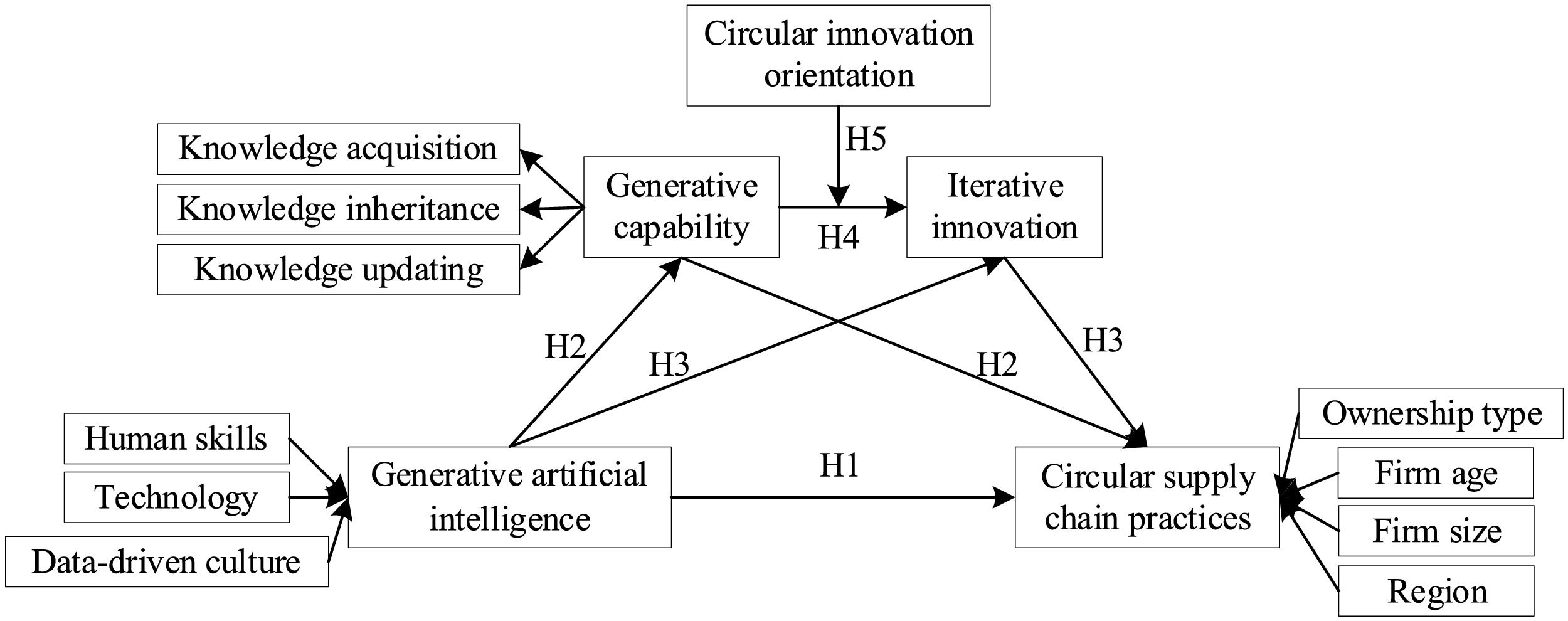
The research framework used in this study is depicted in Fig. 1.
MethodologySample and dataWe collected research data using a questionnaire survey administered to middle and senior managers of enterprises engaged in the recycling business. Before conducting the main study, we conducted a pre-survey with 50 Master of Business Administration (MBA) students. We adjusted the questionnaire based on their feedback to ensure accuracy, clarity, and ease of understanding. The formal research took place from December 2024 to February 2025. The research team administered 450 questionnaires and recovered 371 valid responses through field visits to relevant enterprises, distribution to MBA and Executive Master of Business Administration students, and online platforms. The valid response rate was 82.44 %. Among valid questionnaires, 3.78 % were from enterprises with fewer than 100 employees, 40.43 % from those with 100–500 employees, 39.62 % from those with 501–1000 employees, and 16.17 % from those with >1000 employees. State-owned enterprises, foreign investments, joint ventures, and private enterprises represented 33.96 %, 7.28 %, 12.67 %, and 46.09 %, respectively. Enterprises established for fewer than 10 years accounted for 16.44 %, those with 10–20 years for 42.59 %, those with 21–30 years for 33.77 %, and those with >30 years for 6.20 %. Enterprises in the eastern, central, western, and northeastern regions accounted for 28.84 %, 23.45 %, 16.44 %, and 31.27 %, respectively.
Measurement of variablesThe scales used in this study were mature scales measured on a five-point Likert scale.
Generative artificial intelligenceGenAI was operationalized as a formative second-order construct with 22 items across three dimensions (human skills, technology, and data-driven culture), adapted from Shore et al. (2024). Sample items included: “We provide IT staff with the training they need to handle GenAI applications” and “We invest in distributed and parallel computing for GenAI data processing.”
Generative capabilityGenerative capability was measured as a reflective second-order construct with 14 items across three dimensions (knowledge acquisition, inheritance, and updating), adapted from Guo et al. (2022). Sample items included: “We reconfigure the knowledge accumulated in previous generations of product development and apply it to the development of the next generation of products” and “During the product development process, we often set up metrics to see if the product development process can be improved.”
Iterative innovationIterative innovation was measured using eight items adapted from Dou et al. (2017) and Baum and Bird (2010), such as “Your company has a short iteration cycle to respond to changes in customer needs” and “Your company frequently iterates beyond the existing design, development, and technology tracks.”
Circular supply chain practicesFour items from the study by Agyabeng-Mensah et al. (2024) were adapted to measure circular supply chain practices. Sample items included: “Our product design takes into account maintenance, recycling, reduction, and reuse” and “Our manufacturing processes take into account maintenance, reuse, recycling, and reduction.”
Circular innovation orientationCircular innovation orientation was measured with four items adapted from Agyabeng-Mensah et al. (2024), such as “Our company invests financial resources in circular initiatives” and “Our company rewards employees for circular innovation ideas.”
Additionally, consistent with prior research, we included firm ownership type, firm age, firm size, and region as control variables to exclude the influence of other possible factors on the study results.
Non-response bias testTo avoid non-response bias in the findings, we conducted a non-response bias test on the sample data by comparing early and late respondents to identify any systematic differences (Armstrong & Overton, 1977). We used an independent samples t-test to compare the first and last 25 % of the sample data for each variable. The results showed that the t-statistics for GenAI (t = 0.429, p = 0.668), generative capability (t = 0.430, p = 0.668), iterative innovation (t = –0.084, p = 0.933), circular supply chain practices (t = –0.114, p = 0.909), and circular innovation orientation (t = 0.445, p = 0.657) were not statistically significant (p > 0.05). These findings suggest that the non-response bias is insufficient to affect the findings.
ResultsThe PLS-SEM analysis followed a two-step procedure, comprising assessment of the measurement model and the structural model. The measurement model evaluated the relationship between constructs and observed indicators. In this study, reflective constructs were assessed for internal consistency reliability, convergent validity, and discriminant validity; while formative constructs were assessed for the significance of outer weights and potential multicollinearity. The structural model tested the causal hypotheses between the latent variables, examined the coefficients using bootstrapping (with 5000 samples), and analyzed the direct, mediating, and moderating effects.
Measurement model evaluationCommon method biasFirst, we used AMOS to run a single-factor confirmatory factor analysis (CFA) to assess potential common method bias. The single-factor model showed a poorer fit (χ2/df = 4.015, CFI = 0.764, GFI = 0.527, AGFI = 0.489, NFI = 0.710, and RMSEA = 0.090) than the original measurement model (χ2/df = 1.465, CFI = 0.964, GFI = 0.838, AGFI = 0.823, NFI = 0.895, and RMSEA = 0.035). Second, after adding a common method factor, the changes in key fit indices were small (∆RMSEA = 0.005 < 0.05; ∆CFI = 0.012 and ∆TLI = 0.011 < 0.10). These results suggest that common method bias is unlikely to be a serious concern in this study.
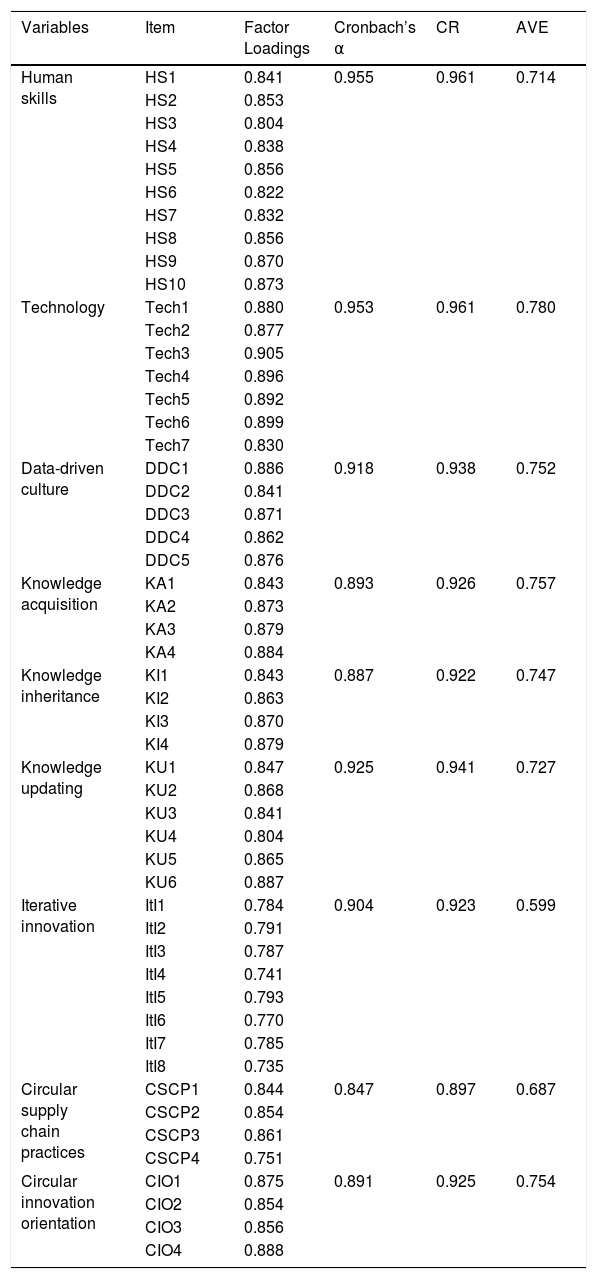
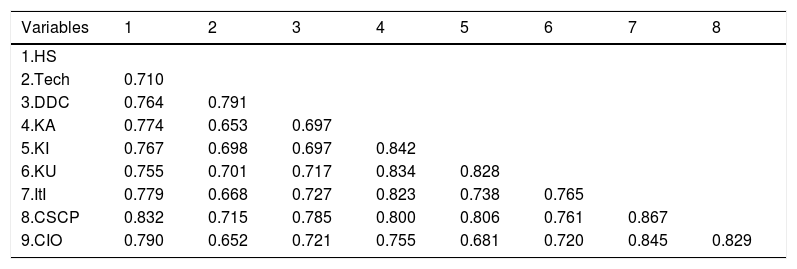
Reliability and validityReliability and validity were assessed using SmartPLS 4. As shown in Table 1, Cronbach’s α and composite reliability (CR) for each first-order reflective construct exceeded 0.80, indicating good reliability of the data. The average variance extracted (AVE) values were above 0.50, indicating good convergent validity. The heterotrait-monotrait ratio (HTMT) values between each first-order construct were all below 0.90, indicating good discriminant validity (Table 2).
Reliability and validity.
Note: CR - composite reliability; AVE - average variance extracted.
HTMT test.
Note: HS - human skills; Tech - technology; DDC - data-driven culture; KA - knowledge acquisition; KI - knowledge inheritance; KU - knowledge updating; ItI - iterative innovation; CSCP - circular supply chain practices; CIO - circular innovation orientation; HTMT - heterotrait-monotrait ratio.
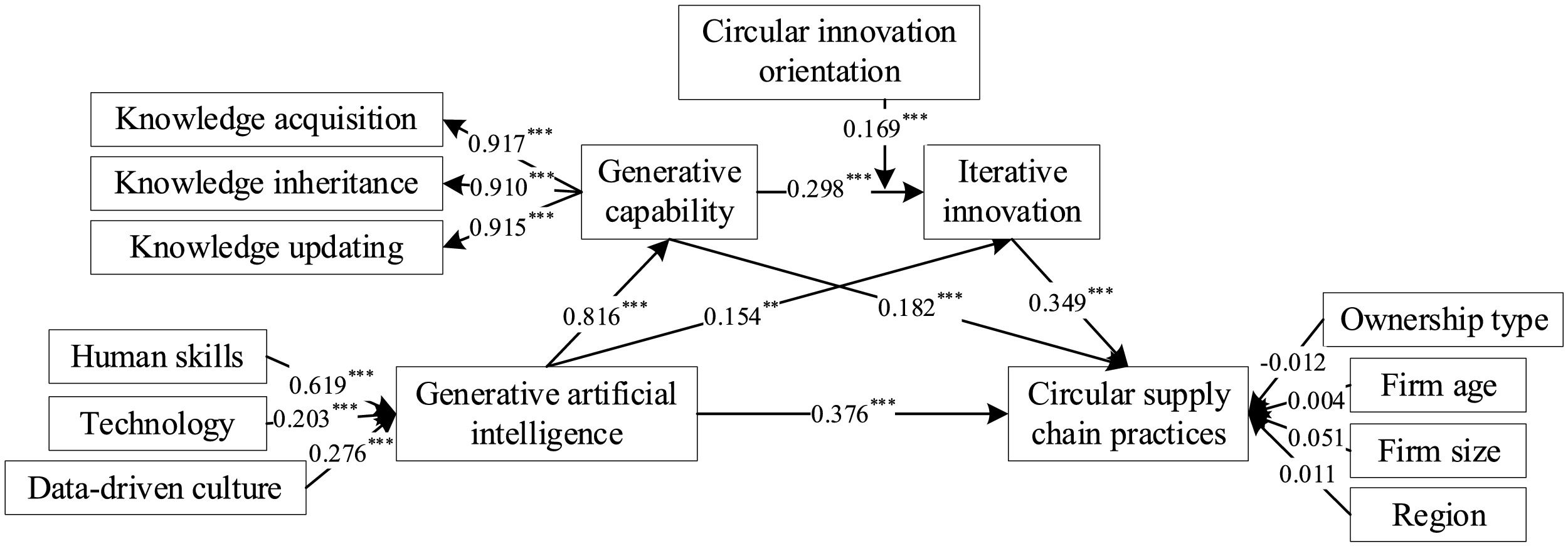
For the second-order formative construct GenAI, the outer weights of its three first-order reflective dimensions were 0.619, 0.203, and 0.276 (all p < 0.01), with variance inflation factor (VIF) values below 3, indicating no problematic multicollinearity among dimensions. For the second-order reflective construct generative capability, the loadings of its three first-order dimensions were 0.917, 0.910, and 0.915 (all p < 0.01), with VIF values below 3, confirming good reliability and validity of the reflective measurement model (see Fig. 2).
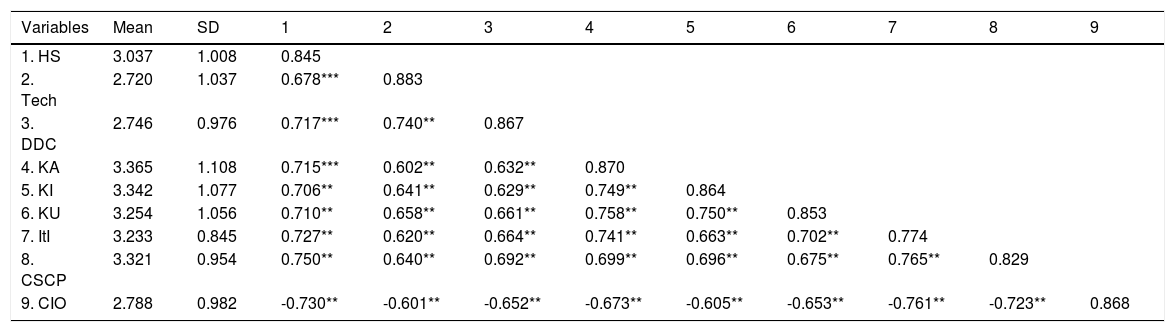
Descriptive statistics and correlation analysisTable 3 presents the descriptive statistics and correlations among the first-order constructs based on the 371 questionnaires. All correlation coefficients were significant, providing preliminary evidence consistent with the hypothesized relationships. All absolute correlation coefficients were below 0.8, indicating no serious multicollinearity issue and suitability for subsequent path analysis. Additionally, the square root of the AVE for each first-order construct exceeded the absolute value of its correlation coefficients with other constructs, further demonstrating good discriminant validity (Table 3).
Mean, standard deviation, and correlation coefficient.
Note: *** denotes p < 0.01, ** denotes p < 0.05, * denotes p < 0.1 (two-tailed test), and the diagonal shows the square root of the average variance extracted (AVE) for each variable. HS - human skills; Tech - technology; DDC - data-driven culture; KA - knowledge acquisition; KI - knowledge inheritance; KU - knowledge updating; ItI - iterative innovation; CSCP - circular supply chain practices; CIO - circular innovation orientation; SD - standard deviation.
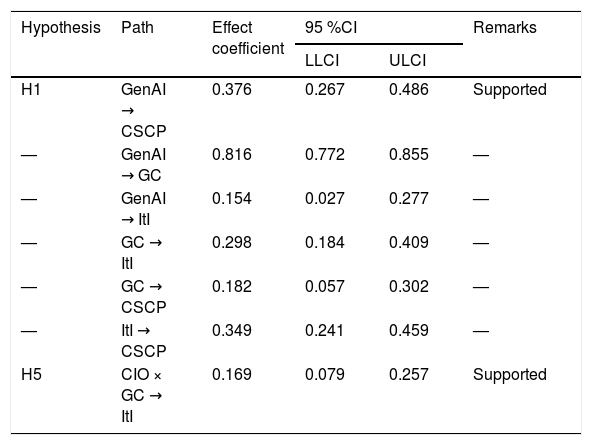
We conducted hypothesis testing using PLS-SEM in SmartPLS 4. The standardized root mean square residual was 0.047 (< 0.08), indicating acceptable model fit. We then performed path analysis of the structural equation model using the bootstrapping procedure with 5000 resamples in SmartPLS 4. Table 4 presents the direct effects, including path coefficients and 95 % confidence intervals (CIs). The path from GenAI to circular supply chain practices was positive and significant (β = 0.376, p < 0.001; 95 % CI [0.267, 0.486]), supporting H1. This finding aligns with the technology enablement perspective, suggesting that GenAI’s intelligent optimization capabilities can directly support circular supply chain practices.
Path analysis results.
Note: ItI - iterative innovation; CSCP - circular supply chain practices; CIO - circular innovation orientation; CI - confidence interval; LLCI - lower limit of the confidence interval; ULCI - upper limit of the confidence interval; GenAI - generative artificial intelligence; GC - generative capability.
(1) Mediating role of generative capability
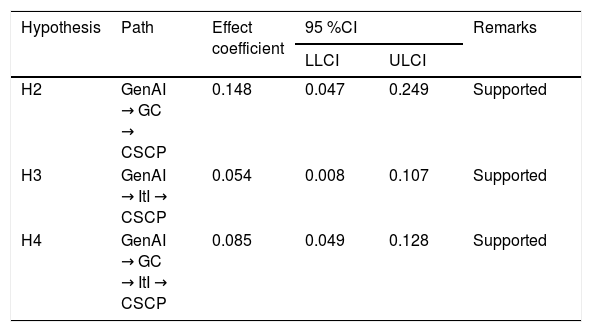
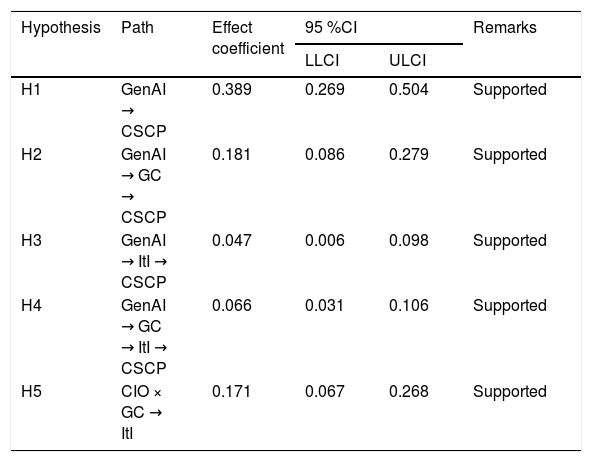
As shown in Table 4, GenAI had a significant positive effect on generative capability (β = 0.816, p < 0.001), and generative capability had a significant positive effect on circular supply chain practices (β = 0.182, p < 0.01). Table 5 presents the results for the indirect paths, with each column displaying the hypothesis, the indirect path, the effect coefficient, the confidence interval, and whether the hypothesis is supported. As shown in Table 5, the indirect effect via generative capability (GenAI → generative capability → circular supply chain practices) was significant (β = 0.148; 95 % CI [0.047, 0.249]), supporting H2. This result confirms that technology affects practice through the transformation of capabilities. Specifically, GenAI improves enterprises’ generative capability by supporting knowledge acquisition, inheritance, and updating, and generative capability then transforms dynamic capabilities into greater and higher-quality circular supply chain practices.
(2) Mediating role of iterative innovation
Analysis of indirect effects.
Note: ItI - iterative innovation; CSCP - circular supply chain practices; CI - confidence interval; LLCI - lower limit of the confidence interval; ULCI - upper limit of the confidence interval; GenAI - generative artificial intelligence; GC - generative capability.
Table 4 shows that GenAI had a significant positive effect on iterative innovation (β = 0.154, p < 0.05), and iterative innovation had a significant positive effect on circular supply chain practices (β = 0.349, p < 0.001). As shown in Table 5, the indirect effect via iterative innovation (GenAI → iterative innovation → circular supply chain practices) was significant (β = 0.054; 95 % CI [0.008, 0.107]), supporting H3. This result indicates that GenAI can promote circular supply chain practices by accelerating experimentation and learning cycles that underpin iterative innovation.
(3) Chain mediation of generative capability and iterative innovation
As shown in Table 4, generative capability had a significant positive effect on iterative innovation (β = 0.298, p < 0.001). The serial indirect effect (GenAI → generative capability → iterative innovation → circular supply chain practices) was also significant (β = 0.085; 95 % CI [0.049, 0.128]), supporting H4 (Table 5). These results indicate that GenAI positively influences circular supply chain practices through the chain mediation of generative capability and iterative innovation. GenAI supports enterprise knowledge acquisition, inheritance, and updating through technological empowerment, forming the key enabler of generative capability. As a dynamic capability in enterprise knowledge management, generative capability provides a strong foundation for iterative innovation, which translates knowledge into actionable routines and insights. Iterative innovation then converts these actions into results by establishing implementable circular solutions.
Moderating effectAs shown in Table 4 and Fig. 2, the interaction term (circular innovation orientation × generative capability) had a significant positive effect on iterative innovation (β = 0.169, p < 0.001; 95 % CI [0.079, 0.257]). This result indicates that circular innovation orientation positively moderates the effect of generative capability on iterative innovation, supporting H5. The circular innovation orientation reflects a company’s strategic commitment to integrating circular economy concepts into its innovation processes. This commitment increases the efficiency of transforming capabilities into innovation by directing organizational attention to ensure that the development and application of generative capability focus on circular supply chain scenarios.
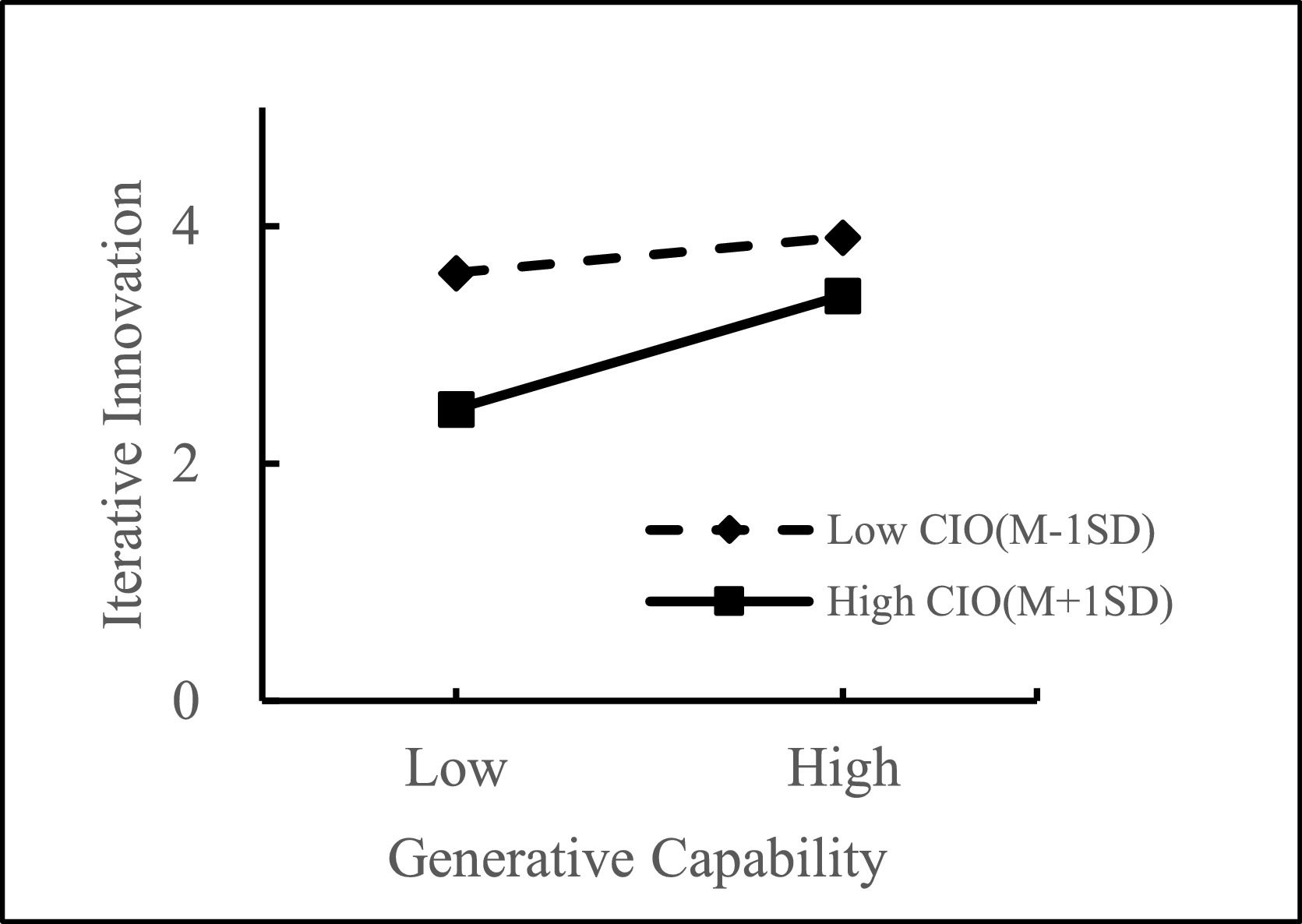
A simple slope analysis further explained the moderating effect. When circular innovation orientation moderated the relationship between generative capability and iterative innovation, R2 = 0.708, F = 296.287, p < 0.001, and the interaction term effect was 0.170 (95 % CI [0.107, 0.232]). When circular innovation orientation was low, the positive effect of generative capability on iterative innovation was weak (β = 0.152, p < 0.01); when circular innovation orientation was high, the positive effect was strong (β = 0.485, p < 0.001). These results confirm the moderating effect of circular innovation orientation and support H5. Fig. 3 presents the moderating effect.
Endogeneity and robustness testsWe conducted endogeneity tests to address potential endogenous effects. The Gaussian copula method, which does not rely on instrumental variables, has been the preferred and mainstream approach for endogeneity testing in PLS-SEM studies (Vaithilingam et al., 2024). Following Hult et al. (2018), we created three models to test for possible independent endogeneity in GenAI (Model 1), generative capability (Model 2), and iterative innovation (Model 3). We created four models to account for multiple endogenous variables, including all possible combinations: GenAI and generative capability (Model 4), GenAI and iterative innovation (Model 5), generative capability and iterative innovation (Model 6), and GenAI, generative capability, and iterative innovation (Model 7). CGenAI, CGC, and CItI represent the Gaussian copula estimates for GenAI, generative capability, and iterative innovation, respectively. As reported in Table 6, the Gaussian copula estimates in all seven models were not significant, suggesting that no serious endogeneity problem affects the results.
Endogeneity test.
Note: ItI - iterative innovation; GenAI - generative artificial intelligence; GC - generative capability.
We used a random sampling method and selected approximately 80 % (n = 301) of the 371 samples for the robustness test. Table 7 presents the robustness test results after random sampling. The empirical results for the sub-sample were highly consistent with those from the full sample, and all hypotheses were confirmed, indicating that the research results were robust.
Robustness test.
Note: ItI - iterative innovation; CSCP - circular supply chain practices; CI - confidence interval; LLCI - lower limit of the confidence interval; ULCI - upper limit of the confidence interval; GenAI - generative artificial intelligence; GC - generative capability; CIO - circular innovation orientation.
This study reveals the complex mechanism of GenAI-enabled circular supply chain practices, supports the core hypotheses, and develops important insights for both theory and practice. Theoretically, it challenges the traditional view of technology as a tool by showing how GenAI empowers circular supply chains through the reconfiguration of the organizational capability system (Fosso Wamba et al., 2025; Modgil et al., 2025). Existing studies have primarily considered GenAI as an efficiency- enhancing tool, emphasizing its direct use in process automation or demand forecasting (Fontoura et al., 2025). However, our findings suggest that GenAI’s generative features enable it to extend beyond tool use of traditional technologies and strengthen organizational dynamic capabilities in circular economy contexts. This finding supports Teece’s statement that digitalization reconfigures dynamic capabilities (Teece, 2018). It also indicates that GenAI can cultivate unique generative capability in circular economy scenarios through the combined effects of knowledge acquisition, inheritance, and updating, rather than merely strengthening existing capabilities (Guo et al., 2022; Teece, 2018). This mechanism helps explain why some enterprises have not achieved supply chain circularity despite adopting AI technology. They overlook the integration of technology with higher-order knowledge management mechanisms, which is a critical addition to applying the DCV in the era of digital intelligence (Dubey et al., 2024; Singh et al., 2024).
Regarding the mediating role of iterative innovation, this study challenges the traditional assumption that one-time innovation can achieve the circular goal (Govindan & Hasanagic, 2018), aligning more closely with the dynamic adjustment process observed in corporate practice. The empirical results support the role of iterative innovation as a mediating variable, as proposed in H3. Unlike linear innovation, incorporating iterative innovation demonstrates the spiral nature of circular supply chain practices, emphasizing repeated cycles of optimization in recycling, testing, and remanufacturing (Govindan & Hasanagic, 2018). The rapid trial-and-error capability of GenAI directly addresses this need (Bargoni et al., 2024; Jiang et al., 2024). This result aligns with the core logic of the KBV, which states that the efficiency of knowledge application determines competitive advantage (Grant, 1996). At the same time, it also clarifies the two-phase process of knowledge transformation in a circular scenario. Specifically, enterprises need to develop generative capability to address the question of where knowledge originates, and employ iterative innovation to tackle the challenge of how knowledge adapts to dynamic demand (Guo et al., 2022; Jiang et al., 2024). Together, these elements constitute a technology-enabled mechanism for circular supply chain transformation. Research on circular transformation has traditionally distinguished between knowledge reconstruction and innovation transformation (Guo et al., 2022; Jiang et al., 2024). This empirical study shows that these two components form an inseparable knowledge–action spiral. Generative capability addresses the problem of knowledge disconnection, and iterative innovation addresses the problem of application delay. The chain-mediating effect between the two clarifies the mechanism by which technology empowers circular supply chains, addressing a gap in existing research regarding the analysis of intermediate processes.
Regarding the moderating role of circular innovation orientation, this study advances research on the interaction between strategic orientation and technological innovation (Teece et al., 1997). It shows that an organization’s innovation selection preference is crucial for realizing technology value, rather than technological sophistication alone. While most studies emphasize the influence of technological sophistication on innovation (Teece et al., 1997), this study finds that the circular innovation orientation, as a strategic anchor, determines the priority of activating circular-related knowledge in generative capability by shaping how attention is allocated (Ocasio, 1997). This suggests that technological value is released not by the technology itself, but through the alignment between strategic orientation and technological capabilities. When an enterprise adopts a strategic focus on the circular economy, environmental knowledge in generative capability is prioritized to support targeted innovation (Agyabeng-Mensah et al., 2024). This finding extends organizational attention theory to circular supply chains and provides new empirical evidence for understanding the boundary conditions of technology–strategy synergy.
At the practical level, this study’s insights have clear operational value. First, enterprises should move beyond viewing technology as the sole solution and recognize the importance of GenAI in reconstructing knowledge management systems. Enterprises need to improve the coordination of knowledge acquisition, inheritance, and updating of generative capability by building a cross-sectoral knowledge-sharing platform. Second, when transforming the circular supply chain, organizations should establish a mechanism for rapid experimentation, feedback, and iteration to turn generative capability into innovative practices for ongoing improvement, rather than seeking one-time perfect solutions. Third, managers must clarify the circular innovation orientation’s strategic leadership role and ensure alignment between technological inputs and strategic direction. They can achieve this by including circular economy goals in performance appraisals and establishing cross-departmental circular innovation groups. For policymakers, this study offers guidance on promoting the integration of digital technology with the circular economy, including subsidizing enterprises that utilize GenAI and establishing circular innovation-oriented benchmark enterprises to reduce the trial-and-error costs associated with enterprise transformation.
ConclusionsBased on the DCV and KBV, this study examines the mediating mechanism and boundary effects of GenAI’s influence on circular supply chain practices. The main conclusions are as follows. First, GenAI empowers circular supply chain practices through several paths. GenAI can directly improve resource allocation and reengineer supply chain processes via its data processing and innovation generation strengths, providing technical support for circular supply chain practices (Shore et al., 2024). Moreover, GenAI supports knowledge acquisition, inheritance, and updating by improving generative capability (Guo et al., 2022). This forms the knowledge base for modular design and resource regeneration in circular supply chains (Ul-Durar et al., 2023; Zhang et al., 2025), which is then translated into concrete circular supply chain practices (Ul-Durar et al., 2023). Additionally, GenAI’s technical features, such as generative diversity, rapid simulation, and feedback learning, allow enterprises to iterate on circular solutions more frequently and with lower risk (Roberts & Candi, 2024). This supports iterative innovation and helps convert GenAI’s technological potential into practical and scalable circular supply chain practices.
Second, generative capability and iterative innovation serve as chain mediators in the process by which GenAI affects the circular supply chain. As a higher-order knowledge management mechanism (Guo et al., 2022), generative capability converts GenAI’s technical potential into structured knowledge resources. As the externalization path of generative capability, iterative innovation turns knowledge restructuring into practical circular solutions. This chain relationship shows the progression from technological advantage to capability accumulation, followed by the implementation of innovation and practice (Ul-Durar et al., 2023). This process aligns with the core logic of sense–seize–reconfigure in the DCV (Teece, 2018).
Third, circular innovation orientation positively moderates the effect of generative capability on iterative innovation. Companies with a stronger circular innovation orientation are more likely to direct their generative capability toward innovation goals related to the circular supply chain (Agyabeng-Mensah et al., 2024; Ul-Durar et al., 2023). The circular innovation orientation also accelerates the conversion of knowledge reserves into circular innovation behaviors by setting organizational strategic priorities, cultivating culture, and constructing institutions (Ul-Durar et al., 2023).
Theoretical contributionsBuilding on these findings, the study offers three theoretical contributions. First, this study extends the DCV. Traditional DCV examines firms’ ability to sense, seize, and reconfigure opportunities (Teece et al., 1997). This study incorporates generative capability into dynamic capability analysis (Guo et al., 2022), which differs from the general discussion of resource reconfiguration in traditional DCV (Teece, 2018). The new framework addresses the specific knowledge mobility needs of the circular economy, focusing on how enterprises achieve closed-loop operations by acquiring, inheriting, and updating knowledge throughout the product lifecycle. The study demonstrates how GenAI facilitates organizational innovation through knowledge acquisition, inheritance, and updating, thereby broadening the scope of DCV in the digital and circular economy era (Shore et al., 2024). It also offers a more targeted micro-mechanism for understanding the relationship between technological empowerment and organizational capabilities.
Second, the study extends the KBV by articulating a progressive influence pathway from GenAI to circular supply chain practices via generative capability and iterative innovation. While the traditional KBV emphasizes the stock of knowledge as a source of competitive advantage (Grant, 1996), this study demonstrates that the efficiency of knowledge flow, enabled by GenAI’s data processing and generative reasoning capabilities, may be more critical in circular transformations than static knowledge accumulation alone. GenAI can support the codification of diverse knowledge into reusable design principles by automating data extraction and integration. The KBV states that knowledge is an enterprise’s core resource, but it does not fully address how AI technology changes the knowledge flow mechanism across generations (Pereira & Bamel, 2021). By integrating the DCV and KBV, this study shows that GenAI in the circular supply chain restructures the enterprise knowledge base through a closed loop of knowledge acquisition, inheritance, and updating (Guo et al., 2022). Moreover, it transforms knowledge potential into actionable circular supply chain practices through iterative innovation (Mills et al., 2020), providing a theoretical foundation for cross-domain knowledge integration in the circular economy.
Third, the study highlights the boundary effects of strategic orientation on technological transformation and introduces circular innovation orientation as a moderating variable at the strategic level (Agyabeng-Mensah et al., 2024). The findings demonstrate that a corporate circular economy strategy accelerates the transformation of technological capabilities into practical outcomes by facilitating knowledge screening, setting innovation priorities, and shaping the organizational context. These results strengthen the theoretical framework for the interaction between strategic orientation and technological innovation, providing a basis for understanding how organizational strategies enhance the effects of technological empowerment.
Managerial implicationsFirst, regarding technology deployment, enterprises should focus on circular supply chain scenarios and strategically deploy GenAI technology. Enterprises should integrate GenAI technology throughout the knowledge management process and develop a GenAI-enabled circular knowledge ecosystem (Guo et al., 2022). For example, by building a GenAI analysis platform for cross-generational product data, enterprises can refine reusable design rules and reduce knowledge gaps across product generations. Simultaneously, enterprises should improve data governance to ensure high-quality training for GenAI models. For instance, establishing a digital material passport to record product lifecycle data can support the reconstruction of generative capability knowledge.
Second, regarding capability building, enterprises should systematically develop generative capability to create a knowledge engine for the circular economy (Guo et al., 2022). Enterprises can establish a cross-departmental knowledge-sharing platform and utilize GenAI to automate the integration of internal and external knowledge, thereby forming a regularly updated circular supply chain knowledge base. Companies can also organize historical product generation data and refine transferable rules with GenAI to enhance knowledge inheritance efficiency. Additionally, enterprises can increase employees’ awareness of real-time knowledge updates driven by GenAI through training and incentives, thereby reducing capability obsolescence.
Third, regarding innovation drive, enterprises should use iterative innovation to develop a continuous improvement cycle for circular supply chains. Enterprises can utilize GenAI to monitor key indicators of the circular supply chain in real-time (Shore et al., 2024). If indicators do not meet expectations, the system can trigger alerts and generate iterative solutions to support the continuous improvement of circular supply chain processes. Enterprises can also add the results of each iterative innovation cycle to the knowledge inheritance system of generative capability. This approach builds a more mature knowledge base for future product design, thereby reducing the need for repeated trial and error.
Finally, enterprises should institutionalize circular innovation orientation by embedding circular economy objectives into strategy, routines, and governance systems (Agyabeng-Mensah et al., 2024). They can incorporate circular economy indicators, such as carbon reduction potential and material recycling rate, into their core strategic objectives. They should then establish a circular innovation-oriented assessment system to guide generative capability and iterative innovation toward these objectives. Additionally, enterprises should design cross-functional collaboration mechanisms to promote the joint development of iterative programs by different functional teams, thereby facilitating circular innovation. Training and incentives can further cultivate a shared circular mindset and supportive organizational culture.
Limitations and future researchThis study has several limitations that open avenues for future research. First, this study used cross-sectional data for model validation, which limits its ability to capture the dynamic and synergistic development of GenAI, generative capability, iterative innovation, and circular supply chain practices. Future research could utilize panel data or case-tracking methods to investigate how GenAI applications impact firms’ generative capability and iterative innovation over time. Second, the variable measurements obtained through the questionnaire method rely on managers’ subjective evaluations, which may affect the objectivity of the findings. Future research could combine objective data such as patent data, supply chain operation data, and AI technology logs, or develop cross-subject, multidimensional measurement tools to improve variable validity. Third, the variables selected in this study are limited to the organizational level and do not consider the interactive effects of consumers, suppliers, and other stakeholders in GenAI applications. Future research could introduce variables such as consumer participation, supplier collaboration, and regulator interaction to build a model of the circular innovation ecosystem co-created by enterprises and stakeholders. This approach can reveal how multi-actor interactions enhance the realization of technological value.
FundingThe research was supported by the National Social Science Fund of China (20FGLB039).
Ethical considerationEthics and privacy are not involved in this paper.
CRediT authorship contribution statementYutian Liu: Writing – review & editing, Writing – original draft, Software, Methodology, Formal analysis, Data curation. Hong Tian: Writing – review & editing, Validation, Supervision, Project administration, Funding acquisition, Conceptualization.
The author(s) declared no potential conflicts of interest with respect to the research, authorship, and/or publication of this article.

