







Promoting green and low-carbon innovation (GCI) with digitalization is important to achieve carbon peaking and neutrality goals and would accelerate low-carbon transformation. Digital technology embeddedness (DTE) disrupts traditional business innovation patterns, but its ability to steer innovation toward low-carbon-biased technologies is debated. Based on enterprises’ innovation motivation from passive response to active change, this study explores the impact mechanism and network spillover effect of DTE on GCI by combining data of green and low-carbon patent and technical knowledge complexity in China. The study finds that (1) DTE positively impacts GCI and increases its technical knowledge complexity. This effect is particularly evident in enterprises with weak technology accumulation, large-scale, better ESG performance and heavily polluted enterprises. (2) Through the moderating effect of passive response channels, DTE forces enterprises to choose GCI under external environmental pressure from government environmental regulation, public environmental awareness and market innovation transformation ability. (3) Active innovation mechanisms show DTE stimulates enterprises to seek low-carbon-biased technologies by improving their market information acquisition, knowledge-sharing and absorption, and collaborative innovation abilities, thus improving GCI. (4) Peer spillover and supply chain spillovers strengthen the positive impact of DTE on GCI, resulting in green and low-carbon transformation via improved GCI scale and quality within the industry and supply chain. Hence, a novel governance pattern could be established by using digital technology as a core strategy, with participation of multiple agents (government, enterprises and the public) and creation of a green and intelligent innovative supply chain system.
Amidst the global energy crisis and the exacerbation of climate and environmental challenges, the transition toward green and low-carbon solutions has garnered substantial international attention. Since the 1990s, both theoretical and empirical investigations into the application of clean technologies to the mitigation of climate and environmental issues have intensified in numerous nations. This progressively led to the recognition of green and low-carbon innovation (GCI) as being pivotal for effectively addressing such challenges (Xie & Wang, 2025a). As the largest developing nation, China actively endorses global climate initiatives, and underscores accelerating the green transformation of its development models to achieve carbon peaking and carbon neutrality objectives. Consequently, in alignment with the scientific and technological revolution and industrial transformation within the dual-carbon framework, China aspires to attain net-zero carbon dioxide emissions by 2050. To realize this ambition, industrial enterprises, as primary agents of social innovation and greenhouse gas emissions, must substantially invest in low-carbon technologies and energy efficiency measures to facilitate a green and low-carbon transition (Haas et al., 2025; Yin et al., 2020).
During the 31st session of the Committee on Development and Intellectual Property (CDIP), the China National Intellectual Property Administration (CNIPA) released the Report on Statistical Analysis of Green and Low-carbon Patents Worldwide (2023), defining GCI as novel technologies or products that effectively reduce energy consumption, decrease greenhouse gas emissions, and mitigate climate warming. GCI encompasses five primary fields of technology: carbon reduction of traditional fossil energy; energy saving, recycling, and utilization; clean energy; energy storage; and greenhouse gas capture, utilization, and storage. Many studies have predominantly focused on green innovation using the international green patent classification system such as the IPC Green Inventory (Afum et al., 2023; Du & Li, 2019). GCI represents a departure from this trend by emphasizing key core technologies in carbon reduction, thus establishing a source-process-end carbon reduction technology innovation system. This system is crucial for enterprises to optimize the deployment of low-carbon frontier technologies. However, enterprise-level GCI efforts encounter multiple uncertainties, and the pressure to undergo a low-carbon transition in various contexts presents considerable challenges. Specifically, GCI is a strategic imperative that necessitates not only a conducive market environment (Fowlie et al., 2016) but also tax incentives (Groote & Verboven, 2019) and industrial and technological policy support (Xu et al., 2023). In practice, GCI, unlike ordinary innovation, requires substantial investment and entails extended cycles and high risk, leading to challenges such as a lack of proactive innovation motivation and difficulties integrating GCI into enterprise operations (Lian et al., 2022). External constraints such as environmental regulations can compel enterprises to invest in GCI (Zhang et al., 2024a), yet government regulation may suppress the spirit of innovation and exacerbate speculative tendencies in the innovation process, thereby increasing the instability of enterprise GCI development and hindering the expansion of knowledge boundaries and innovation motivation (Lian et al., 2022; Haas et al., 2025). Consequently, exploring core motivations for GCI and its driving mechanisms is imperative, while continuously invigorating enterprises’ innovation vitality (Dong et al., 2023; Gu, 2025).
In recent years, the advent of a new generation of digital technologies including big data, cloud computing, and artificial intelligence has led to the profound integration of the digital economy into all facets of economic and social development. This integration has emerged as a pivotal force in reorganizing global factor resources, reshaping the global economic structure, and altering the global competition pattern. The advancement of the digital economy is contingent upon the deep integration of digital technology with the real economy (Xiong et al., 2025). At the enterprise level, digital technology has not only transformed the traditional production and operational modes of industrial enterprises but has also revolutionized the creation process of new product and process research and development (R&D), resulting in a convergence of economic and environmental benefits (Wang et al., 2025b; Yin & Zhao, 2024). As a characteristic feature and developmental trend of digital–real integration, digital technology embeddedness (DTE) in enterprise production and business models has garnered considerable attention from academia and governmental bodies. The extant literature presents the impacts of digital technology applications from the perspectives of artificial intelligence (Acemoglu & Restrepo, 2018), big data technology (Ghasemaghaei & Calic, 2020), and enterprise digital transformation (Fang & Liu, 2024), affirming the contributions of digital technologies to business model innovation (Wu et al., 2023), production performance, and sustainable development (Wang et al., 2025b). However, given the complexity of the embedding mechanisms of digital technologies and the diversity of measurements, their impact on green innovation and performance remains contentious, and there exists a paucity of research that focuses specifically on key core technologies in the domain of carbon reduction. Some scholars posit that digital technology positively contributes to green innovation. Such scholars discuss mechanisms related to human capital, knowledge sharing, and other factor resource inputs. Nonetheless, research on the importance of knowledge boundaries and innovation spillovers in this specific framework is notably lacking (Huang et al., 2023; Sun, 2024). Other scholars contend that this positive benefit is applicable only to large enterprises. In the initial stages, enterprises with high management and operational costs do not benefit from it and continue to face the dual challenges of high innovation costs and limited capacity (Ghasemaghaei & Calic, 2020; Xiong et al., 2025). Additionally, drawing upon stakeholder theory and signaling theory, the willingness of enterprises to invest in GCI may be influenced by various stakeholder constraints (Zhang et al., 2024b). Nevertheless, under the combined effect of the external environment and digital technology, whether micro-enterprises can truly benefit from the digital economy and realize the motivational shift from passive response to the active pursuit of innovative change drivers is uncertain. This issue has not been adequately addressed in existing research. Therefore, in the context of the booming digital economy, exploring how enterprises can foster positive motivation to innovate and facilitate the transformation and application of scientific and technological achievements is crucial. Such an exploration offers theoretical and practical insights for promoting the dual synergistic transformation of digitization and decarbonization.
To address these gaps, this study empirically analyzes the impact and network spillover effect of DTE on GCI via passive response and active innovation mechanisms using the data of A-share industrial enterprises in China for the period 2010–2021. The study makes three primary contributions. First, it categorizes DTE into six dimensions: digital strategy leadership, digital technology drive, digital organization empowerment, digital environment support, digital technology achievement, and digital technology application. It then examines low-carbon technologies and their knowledge complexity in the dual-carbon context with a focus on the field of carbon emission reduction rather than on green innovation generally. Specifically, GCI achieves low-carbon transformation in energy and industry through carbon reduction at source, carbon control in the process, and carbon removal at the end (Gu, 2025; Wang et al., 2024). Whereas existing research focuses primarily on the impact of digital transformation on green innovation (Luo et al., 2024), comprehensive studies on the impact of DTE on GCI in carbon reduction are lacking, and this paper addresses this research gap. Second, the study proposes an evolutionary mechanism for enterprises transitioning from passive response to active pursuit of innovative change, with the aim of deepening understanding of the role of DTE in empowering GCI. On one hand, for passive response channels, the study draws upon stakeholder theory to incorporate external environmental pressures into the research framework, exploring the impact of DTE on GCI among enterprises that are under pressures from government, public, and market sources. On the other hand, as a disruptive technology, DTE reshapes traditional enterprises’ innovation process and breaks through the subject boundary of GCI (Xue & Wang, 2025). Therefore, drawing upon the resource-based view (RBV) and dynamic capabilities theory, this study explores how DTE can lead enterprises to actively improve GCI R&D willingness from three aspects: the demand-side market information acquisition ability, the supply-side knowledge-sharing and absorption ability, and the multi-subject collaborative innovation ability. Finally, the study addresses the overlooked network spillover effects of DTE (Luo et al., 2024; Zhao & Qian, 2024), particularly knowledge spillovers to peer and supply chain firms. By analyzing the network spillover effects of DTE, the research broadens the field of digital technology application and development from the perspective of a supply chain network and provides empirical evidence that may be useful to enterprises engaging in collective innovation decision-making and to policymakers formulating collaborative emission reduction policies.
Literature reviewGCIThe concept of GCI derives from the broader definition of green innovation. Within the frameworks of innovation theory and environmental economics, green innovation is recognized as an internally motivated and externally responsive concept that encompasses all pertinent innovations in the development of new technologies, production processes, consumption patterns, and waste recycling (Yin et al., 2020). Green innovation prioritizes sustainable development with the aim of achieving environmentally friendly objectives through pollution control, energy conservation, and emission reduction (Lian et al., 2022). Unlike green innovation, GCI specifically concentrates on mitigating the emission of greenhouse gases, including carbon dioxide, methane, nitrous oxide, and hydrofluorocarbons. Thus, GCI aligns with the urgent demands of current emission reduction policies and advances the existing research. Given the limited studies on GCI, this section will focus on the literature and theoretical foundations related to green innovation.
The existing literature encompasses predominantly studies that have investigated the level of green innovation in regions or enterprises by examining green innovation capacity and efficiency alongside patent achievements, with the simultaneous exploration the core driving forces influencing green innovation (Mubarak et al., 2021; Yu & Chen, 2023; Zhao & Li, 2025). Several scholars have utilized the input-output analysis framework to assess green innovation capability using methods such as data envelopment analysis, the entropy method, principal component analysis, and questionnaire surveys (Bai & Lin, 2024; Chang et al., 2023; Xie & Wang, 2025a). Bai and Lin (2024)) analyzed the spatial network of green innovation efficiency in China from a regional perspective using the dynamic network SBM model and highlighted the pivotal role of cluster efficiency. Yin et al. (2021) proposed an analytical framework and evaluation system for the efficacy of multi-subjective cooperation and investigated the dynamic synergistic evolution mechanism of the green innovation system among manufacturing enterprises using an evolutionary model.Meanwhile, indicators related to green patents are frequently employed to characterize green innovation at the enterprise level (Conti et al., 2018). Patents represent the embodiment of new technologies and products within enterprises. Patent text data contains rich innovation and knowledge information and thus offer reliable and stable advantages for measuring innovation levels among enterprises (Gu, 2025). The mainstream literature discusses enterprises’ green innovation level across different patent categories based on green lists according to patent classifications established by the World Intellectual Property Organization (WIPO), the European Patent Office (EPO), and other organizations (Conti et al., 2018; Huang et al., 2023). Studies have applied institutional and market theories to the analysis of the concurrent impacts of external institutions, social environments, and internal organizational elements on green innovation (Cheng et al., 2024; Fowlie et al., 2016; Lian et al., 2022), yet the conclusions have not reached a consensus. For instance, Xie and Wang (2025b) have reported that green subsidies to focal firms negatively impact green innovation among their peers from an attention-allocation perspective. Regrettably, the mainstream literature continues to reflect researchers’ utilization of indicators related to green patents to analyze low-carbon fields such as carbon footprints and carbon emission reductions. Some literature reflects the progressive adoption of novel metrics to measure renewable energy innovation or low-carbon innovation at the macro level, but it overlooks the fact that low-carbon innovation within firms still lacks a scientific and standardized basis for categorization (Conti et al., 2018; Gu, 2025; Han et al., 2023).
DTE and GCIThe extant literature can be categorized into three primary areas based on an integration of measurement methods for digital technology application. In the first category, the real-world application scenarios of key technologies are examined, and artificial intelligence is used to assess the extent of digital technology application, with a focus on its impacts on carbon emission reduction performance (Li et al., 2023), green innovation (Xue & Wang, 2025), and green economic growth (Chang et al., 2023). Specifically, in the context of enterprise production and product manufacturing enhancement, artificial intelligence, through data mining, algorithm design, and deep learning, not only shortens the product development cycle (Tian et al., 2023) but also reduces energy consumption during the production process (Zhao & Li, 2025). This facilitates sustainable enterprise development while enhancing the propensity to innovate green products (Bouschery et al., 2023; Wang et al., 2025b; Xue & Wang, 2025). However, the current artificial intelligence technology is insufficiently mature, resulting in an inconspicuous positive impact of its adoption by enterprises on green technological progress (Tian et al., 2023). In the second category, textual analysis of annual reports prepared by listed companies is employed to construct an enterprise digital transformation index to investigate the impact of digital technology on product innovation (Fang & Liu, 2024) and sustainable energy innovation (Gu, 2025), with a focus on the specific information exchange pathways (Sun, 2024). In the third category, the transformation capability of digital technology achievements is assessed through the number of digital patents and academic papers, which serve as indicators of digital innovation activity, and the impact of digital technology on regional energy efficiency is analyzed (Xiao et al., 2025). However, issues such as calculation errors and technical delays in patent classification persist, leading to research outcomes that may deviate from reality (Aghion et al., 2019; Brynjolfsson & Hitt, 2000). Additionally, based on the theory of planned behavior (TPB) and dynamic equilibrium theory, Zhang et al., (2024b) have affirmed the contribution of synergies between digital technology and environmental regulation to the promotion of urban green development. However, there exists a relative paucity of studies that incorporate these elements into a unified micro-analytical framework to elucidate how firms contribute to the GCI after deeply embedding digital technology.
In conclusion, the theoretical frameworks and literature pertaining to DTE and GCI form the foundational basis for this study. However, numerous research gaps persist, warranting further exploration. Consequently, this paper concentrates on the influence of DTE on innovation in the domain of carbon emission reduction and also develops DTE indicators. These focuses align with the pressing demands of the dual-carbon objective while advancing the frontier of knowledge. Additionally, drawing upon stakeholder theory and the RBV, we construct a mechanism illustrating the transition of enterprises from passive compliance to proactive innovation. We also investigate the underlying motivations driving enterprises’ willingness to enhance GCI. Finally, considering the capacity of digital technology to transcend innovation boundaries, we analyze the peer and supply chain spillover effects of DTE from a network spillover perspective, with the aim of comprehensively depicting the impact of DTE on GCI and offering policy recommendations for achieving multi-party synergy.
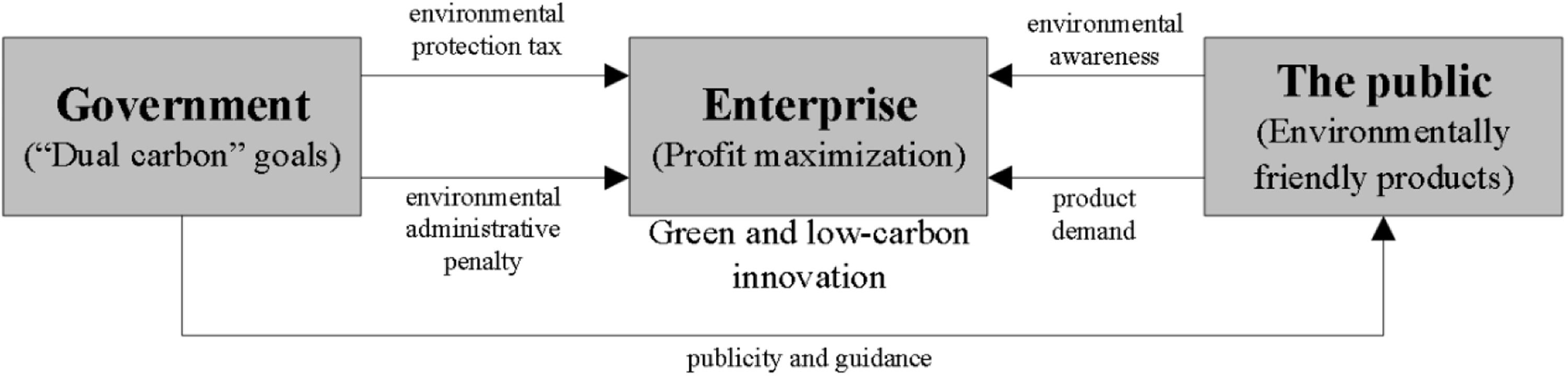
Theoretical analysis and research hypothesisTheoretical foundations and research frameworkStakeholder theory suggests that an enterprise’s decision to adopt GCI is influenced not solely by its own interests and strategic objectives but also by the collective interests of stakeholders, including the government and the public (Chen et al., 2022). Given that enterprise is the primary entity in GCI, related behavior and decision-making processes of innovation are driven by the rational pursuit of maximizing the interests of the enterprise while being subject to the pressures of external environmental oversight. When determining a strategic course of action regarding GCI, enterprises should consider not only the imperative to maximize their interests but also the environmental regulatory policies set by the government (Pan et al., 2021), the environmental awareness and consumption preferences of the public (Khan et al., 2021), and the extent to which the market has adopted and applied innovative products. Fig. 1 illustrates the distinct interests of the government, enterprises, and the public under the influence of external environmental monitoring.

The embedding of digital technologies into the production, management, and operation of enterprises enhances the innovation process and facilitates widespread access to carbon reduction technological knowledge (Cheng et al., 2024). Theoretically, DTE not only enables supply-demand matching and data sharing but also strengthens the relationships among stakeholders, including the government, enterprises, and the public, by enhancing the capacity of enterprises to acquire information, knowledge, and resources. This, in turn, serves as a core driving force for achieving low-carbon technology-biased innovation (Jiao et al., 2022; Xie & Wang, 2025a). With the deep application of digital technology in enterprises, DTE has become a breakthrough for enhancing sectoral cooperation and enterprise linkage, facilitating in-depth collaborative innovation aimed at pollution and carbon reduction (Quttainah & Ayadi, 2024).
We present a comprehensive theoretical framework to examine how DTE incentivizes companies to engage in GCI in response to external environmental pressures (Fig. 2). Initially, this study assesses the DTE of enterprises in six dimensions: digital strategy leadership, digital technology drive, digital organization empowerment, digital environment support, digital technology achievement, and digital technology application. It identifies two types of GCI, namely independent application quantity and technical knowledge complexity, that is, the scale (quantity) and quality, respectively, of independent innovation among enterprises. Specifically, this paper posits that DTE not only expands the scale of GCI but also enhances its technical knowledge complexity, facilitating the green and low-carbon transformation of innovation (H1). Furthermore, we posits that passive coping mechanisms under external environmental pressure are the primary drivers that compel enterprises to adopt GCI (Chen et al., 2022). Therefore, we investigate the channel effect (H2) of external environmental pressure on the relationship between DTE and GCI at three levels: government environmental regulation (H2a), public environmental awareness (H2b), and market innovation transformation ability (H2c). Finally, based on the RBV and dynamic capabilities theory, we assert that DTE reshapes the innovation process of traditional enterprises and breaks through the subject boundary of GCI. Therefore, from the perspective of an active innovation incentive mechanism (H3), DTE, as an active enabling mechanism, can motivate enterprises to proactively pursue innovative green and low-carbon changes by enhancing their market information acquisition ability (H3a), knowledge-sharing and absorption (H3b), and collaborative innovation abilities (H3c), thereby improving GCI capabilities.
Relationship between DTE and GCI
Schumpeter’s innovation theory posits that the core of innovation lies in the reconfiguration of production input factors to generate new value, whereas GCI associates this value creation process with emission reduction benefits. Innovative activity that simultaneously generates new value and reduces carbon emissions, is termed GCI (Han et al., 2023). The developmental momentum that GCI engenders aligns with the principles of green production and facilitates the decoupling of economic growth from resource and environmental constraints (Cheng & Yao, 2021). In a competitive market environment, the profit-driven nature of capital incentivizes enterprises to pursue technological innovations that enhance profitability (Krass et al., 2013). Although GCI theoretically accommodates both economic and environmental advantages, a paradox exists in practice concerning the decoupling of supply and demand. Compared with mainstream innovation, GCI exhibits greater behavioral uncertainty, characterized by high costs, elevated risks, and low returns (Gu, 2025; Lian et al., 2022). According to information-processing theory, firms confronted with highly uncertain innovation choices must enhance their information collection, processing, and analytical capabilities to navigate various risk challenges (Galbraith, 1974; Xue & Wang, 2025). DTE leverages the multifaceted benefits of the development of the digital economy to offer opportunities to enterprises to adopt GCI and mitigate uncertainty risks. From a motivational perspective, as digital technology matures and industrialization accelerates, enterprises can utilize platform economies and big data technologies to obtain and accurately discern consumer preferences in real time, thereby reducing information acquisition costs and facilitating market environment analysis and demand research. This provides data support and technological assurance for formulating GCI strategies (Li et al., 2023; Xie & Wang, 2025a). From a process assurance perspective, the transition from identifying green product demand information to formally determining an innovation plan is complex and involves numerous simulation calculations and the high costs associated with traditional communication methods. The advent of industrial Internet platforms enhances the aggregation and sharing of knowledge and information, reduces organizational communication costs, and establishes a collaborative and efficient innovation practice platform in the green product production and research process (Zhao et al., 2023a). More importantly, DTE can accommodate extensive data simulation operations and storage, shorten the product innovation cycle in product and process design and in commercial production (Yu & Chen, 2023), and ultimately enhance the quality and advancement of GCI capabilities. Therefore, the following hypothesis is formulated:
H1a: DTE positively impacts the amount of enterprises’ GCI.
H1b: DTE positively impacts the technical knowledge complexity of GCI in enterprises.
Passive response channels (moderating effect)Stakeholder analysis suggests that the motivation of DTE-driven enterprises to adopt GCI is closely linked to external environmental constraints. This implies that the relationship between DTE and GCI is influenced by government environmental regulations, public environmental awareness and the market innovation transformation ability, which compel enterprises to opt for GCI.
In a highly competitive environment, the profit-driven behavior of capital and technological path dependence may result in diminished demand motivation among enterprises to select GCI. Consequently, the transition from innovation to a low-carbon direction can not be effectively facilitated solely through internal enterprise mechanisms (Bergek & Mignon, 2017). At this juncture, incentives for GCI supply are often lacking. The Porter hypothesis posits that appropriate environmental regulation can stimulate enterprises to innovate in clean technology, thereby enhancing their competitiveness through innovation compensation and the first-mover advantage (Porter, 1991). Therefore, passive innovation, driven by regulatory pressure, is considered the primary catalyst of enterprise innovation toward a low-carbon trajectory (Shao et al., 2020). Government environmental regulation and public environmental concern are crucial tools that various market actors use to engage deeply in environmental governance, thus contributing to environmental improvement in both current and past contexts (Dong et al., 2024; Tan, 2014).
Implementation experiences of corporate environmental information disclosure systems in Europe, the United States, and China regarding the environmental regulation practices of these countries have demonstrated that stringent environmental enforcement has curtailed speculative opportunities for enterprises in environmental protection, compelling polluting enterprises to choose GCI (Fabrizi et al., 2018). The advancement of digital technology has enhanced enterprises’ degree of environmental information disclosure and their ability to meet market demand (Quttainah & Ayadi, 2024). On one hand, when enterprises disclose high-quality environmental information, government environmental regulatory tools can be more effectively employed to regulate emissions and oversee pollution (Tan, 2014). Specifically, laws, regulations, administrative penalties, and other measures compel enterprises to engage in GCI, effectively reducing greenhouse gas emissions (Dong et al., 2024). On the other hand, from the perspective of the public, the deep integration of digital technology into social production and life, coupled with heightened public awareness of environmental protection (Cheng et al., 2024), enables enhanced perception and intervention in enterprise pollution emissions. This is conducive to increasing public environmental concern and reducing information asymmetry between the public and enterprises (Popp et al., 2011). As the public gains access to relevant pollution information, consumer demand for green products is communicated to enterprises in the form of data (Dong et al., 2024), prompting enterprises to favor GCI over traditional innovation.
According to technology market theory, considering innovation cost and success probability of different enterprises, the technology market transaction environment can affect the innovation mode selection of enterprises. Correspondingly, independent innovation and technology introduction, as distinct channels through which market participants can acquire new technology (Hu et al., 2024), are also a part of the process by which enterprises obtain GCI technology. According to China Science and Technology Statistical Yearbook data on technology acquisition and technological transformation among enterprises, and in conjunction with the Porter hypothesis, when the cost of innovation exceeds that of pollution control, enterprises may opt to purchase existing low-carbon technologies through the technology trading market, in addition to engaging in low-carbon-biased innovation using relevant knowledge. In this context, the market transformation capability of technology R&D achievements becomes an external constraint on enterprises regarding the selection of GCI (Sun et al., 2025). From the perspective of the pushback effect, the robust information acquisition capability embedded in digital technology helps enterprises determine whether they can introduce suitable low-carbon technologies promptly. If the market innovation transformation capability is strong, enterprises are more likely to introduce applicable low-carbon technologies, thereby reducing their compulsion to undertake GCI. From the spillover effect perspective, DTE facilitates enterprises’ acquisition of advanced technical knowledge of existing GCI from technology market transactions, thus promoting the transformation of low-carbon technology from breadth to depth and subsequently expanding the complexity of technical knowledge in GCI. Therefore, the following hypotheses are formulated:
H2: By strengthening external environmental constraints, DTE forces enterprises to innovate in the direction of low-carbon technologies, which, in turn, promotes GCI.
H2a: Government environmental regulation plays a moderating role in the relationship between DTE and GCI.
H2b: Public environmental awareness has a moderating effect on the relationship between DTE and GCI.
H2c: Market innovation transformation ability has a moderating effect on the relationship between DTE and GCI.
Active innovation mechanismsThe active innovation incentive mechanism provides a rational impetus for enterprises to adopt GCI in alignment with their profit maximization objectives. The RBV suggests that a firm’s resources and capabilities can assist with its maintenance of a competitive advantage in innovation (Wu et al., 2023). Digital technology, as a disruptive technology, strengthens firms’ dynamic ability to continuously integrate internal and external subjects and key resources of the innovation value chain to adapt to changes and form new competitive advantages (Xue & Wang, 2025). Consequently, this study draws upon the RBV and dynamic capabilities theory to explore how DTE can lead enterprises to actively improve GCI R&D willingness from three aspects: the demand-side market information acquisition ability, the supply-side knowledge-sharing and absorption ability, and the multi-subject collaborative innovation ability.
From the demand-side perspective, DTE facilitates enterprises’ acquisition and identification of market preference information at reduced costs, thereby incentivizing them to raise their GCI level from the demand side (Bhatti et al., 2021; Sun, 2024). Porter and Heppelmann (2014) have suggested that cost control and differentiated information are the main strategies that firms use to gain competitiveness. Therefore, firms are motivated to actively pursue GCI through two sources: cost leadership and green product information acquisition. On one hand, the rapid emergence of the platform economy, exemplified by business-to-business and business-to-consumer models, alongside the swift penetration of digital technology in production and daily life, has transformed enterprise business models. The comprehensive integration of digital technology into the entire production process––encompassing design, procurement, production, sales, and management––has facilitated the transition of business operations from a purely offline mode to a hybrid “offline + online” model. This transition has expanded market channels, enabling enterprises to increase revenue sources and reduce operating costs (Gu, 2025; Liu et al., 2021). On the other hand, according to dynamic capabilities theory, enterprises can use digital technology to access timely information about consumers preference for green products, thus improving the information acquisition and identification ability of enterprises (Xue & Wang, 2025). In the digital era, digital technology allows market consumers to participate invisibly in the enterprise innovation process. Through the pathway of market information acquisition–potentially advantageous product information identification–development of new low-carbon-biased technology, enterprises can expand the scale of GCI output while transforming green information into marketable products (Lenka et al., 2017; Sun, 2024). Regarding market information acquisition, target consumers may lack specialized knowledge and need not be actively involved since their online behaviors alone generate substantial consumption preference information. Enterprises can collect and process this information using digital technology or by purchasing services from digital platforms (Lobschat et al., 2021). As DTE continues to deepen, the range of target consumers within the perception scope is continually expanding, thereby enhancing enterprises’ ability to obtain market information (Lenka et al., 2017). Enterprises utilize data mining and other technologies to identify potentially advantageous product information and accurately obtain target customers’ green preference information from the product marketing market at a lower cost (Kiel et al., 2017). Enterprises subsequently tract valuable information based on the low-carbon preference orientation. They use this information to improve the success rate of their GCI in competition.
If DTE incentivizes enterprises to actively select GCI on the demand side, it substantially enhances the knowledge integration capabilities of enterprises on the supply side (Tian et al., 2023). According to the knowledge-based view, a firm is a knowledge-processing system that captures and integrates knowledge to meet the needs of GCI (Tian et al., 2023). Unlike conventional innovation, GCI not only necessitates the integration of factor inputs and production information from various segments within the enterprise but also requires the incorporation of relevant knowledge from diverse low-carbon technology fields external to the enterprise (Mubarak et al., 2021; Sahoo et al., 2023). From the knowledge perspective, GCI is essentially an interdisciplinary innovation activity; it relies heavily on heterogeneous knowledge resources and multi-level R&D investment, thus challenging enterprises’ knowledge acquisition and integration abilities (Yu & Chen, 2023). DTE can enhance the knowledge integration effect in enterprises’ internal production processes and facilitate a knowledge-sharing (diffusion) effect that extends beyond individual enterprises, thereby advancing the overall industrial innovation chain toward low-carbon technology transformation. Specifically, enterprises can utilize big data to comprehensively analyze the energy consumption of various products and their peak and valley electricity usage, enabling the improvement of production flexibility through technical process enhancements and rational load distribution (Khan et al., 2020). Concurrently, cloud platform technologies, which underpin digital platforms such as the industrial Internet, enable interdisciplinary knowledge-sharing and integration (Biondi et al., 2002). Accompanied by a positive knowledge-sharing effect, DTE fosters the unconscious diffusion and penetration of knowledge among enterprises (Yu & Chen, 2023). Not only does this allow knowledge-receiving enterprises to acquire heterogeneous information resources, but it also incentivizes knowledge-holding enterprises to invest in new R&D cycles and in knowledge innovation, further augmenting GCI.
From the acquisition and identification of information on the demand side to the sharing of knowledge on the supply side, these processes are outcomes of the influence of DTE on enterprises’ independent innovation capabilities. Unlike traditional enabling elements, DTE can transcend the subjective innovation boundaries of GCI and enhance collaborative innovation capabilities (Xie & Wang, 2025a). In contrast to traditional innovation, GCI exhibits distinct double externality characteristics, particularly in heavily polluting sectors, where free-rider behavior is more prevalent, leading to a lack of incentives for enterprises to proactively adopt low-carbon-biased technologies (Dong et al., 2024; Gu, 2025). Consequently, seeking external cooperation opportunities has emerged as a strategic approach for enterprises to reduce R&D costs and bolster active innovation. However, unlike interdepartmental cooperation, corporate cooperation applications for GCI are constrained by various factors such as search, contract, and trust costs (Hong et al., 2019). DTE can mitigate these costs and dismantle cooperation barriers imposed by geographical distance, thus facilitating cross-regional and even cross-border collaboration. For example, Goldfarb and Tucker (2019) have shown that interconnection technologies can enhance the efficiency of information sharing among user enterprises, increase supply chain collaboration, and render low-carbon innovation more adaptable and less restricted by physical space. Further, leveraging digital technologies such as blockchain and cloud platforms can render the information-sharing and interaction mechanisms of R&D entities more transparent and convenient, enabling the sharing of encrypted data resources with innovation organizations and ultimately enhancing the cooperative innovation capacity of enterprise GCI (Xie & Wang, 2025a; Yu & Chen, 2023). In summary, based on the comprehensive process and outcomes of the impact of DTE on enterprise GCI, the following assumptions are proposed:
H3: digital technology embeddedness can increase GCI by improving active innovation incentives for enterprises to seek out low-carbon-biased technologies.
H3a: DTE can indirectly affect GCI by improving enterprises’ market information acquisition ability from the demand side.
H3b: DTE can indirectly affect GCI by increasing enterprises’ knowledge-sharing and absorption ability from the supply side.
H3c: DTE can break down traditional innovation boundaries, thereby promoting GCI by increasing enterprises’ collaborative innovation ability.
Research methodology and dataSample and data sourcesThis study uses A-shares of listed industrial companies in China from 2010 to 2021 as research samples for empirical analysis. Data collection excluded companies categorized as ST or PT, companies that ceased or suspended listing, and those with less than one year of continuous observation, based on information provided by the China Economic and Financial Research Database (CSMAR). Further, considering that the division of labor within enterprises is determined by the specialized knowledge, resources, and capabilities of individual companies, a firm’s position in the supply chain is relatively stable. Consequently, when collecting datasets of upstream and downstream enterprises in the supply chain and determining whether a core enterprise corresponds to multiple suppliers and customers over several years (Chu et al., 2019), a supplier (or customer) is considered an upstream (downstream) enterprise if it maintains at least one supply chain linkage with the core enterprise. This approach facilitates the exploration of the supply chain spillover effect of DTE.
The data utilized in this study are sourced primarily from the CSMAR, CNIPA, and EPS data platforms. Regarding enterprise data, Chinese patent details are obtained from CNIPA, and other enterprise-level raw data are sourced from the CSMAR. Among these, DTE-related indicators originate from the enterprise digital transformation sub-library, jointly developed by the CSMAR and East China Normal University. At the macro data level, the EPS database is employed to collect relevant indicators from statistical sources such as the China Statistical Yearbook, the China Urban Statistical Yearbook, and provincial statistical yearbooks of corresponding years. Some data were extracted by the author using Python software from related corporate websites.
MeasurementExplained variable: GCIWith reference to the definition of GCI and the classification numbers recorded in the Patent Classification System of Green and Low Carbon Technology, this study manually compiled from CNIPA the green and low-carbon patent application data of five technological branches including fossil energy carbon reduction technologies in China from 2010 to 2022. Fig. 3 illustrates the green low-carbon patent application data, which are categorized by application subject and technical characteristics. Regarding absolute numbers, the volume of green low-carbon patent applications submitted by enterprises has surged, with these applications constituting approximately 80 % of all such patents applications (including independent and joint applications submitted by enterprises). Hence, these represent the core of GCI applications in China. The proportion of applications from universities has increased steadily, resulting in higher education institutions becoming a significant component of the innovation landscape. Regarding patent types, the proportion of applications for fossil energy carbon reduction and greenhouse gas capture, utilization, and storage technologies has remained low, whereas that for energy-saving, energy-recycling, and clean energy technologies has exceeded 60 % and shows a trend toward further expansion in the future.

The preceding analysis underscores the significance of examining GCI with enterprises as the primary focus. To represent the scale and quality of enterprise-level GCI, we employ the number of patent applications and their technical knowledge complexity across five technological domains, such as fossil energy carbon reduction technologies. Regarding the number of independent green low-carbon patent applications (GCI_amount), we follow the work of Xie and Wang (2025b) and extract the number of GCI-related patents that enterprises applied for independently in a given year using the enterprise application identification code as the criterion based on green low-carbon patent application data collected from China. Additionally, to obtain the collaborative innovation capability index, we determine the number of green low-carbon patents that enterprises applied for jointly (coll_amount) by examining applicant details. Further, we use the list of universities and research institutes in China to identify industry-university-research collaborative patents in joint innovation subjects through keyword recognition. This yields the number of green low-carbon patents industry-university-research collaborations applied for jointly (icap_amount). Green low-carbon patents that were co-developed by enterprises and universities or by enterprises and research institutions are classified as industry-university-research collaborative innovations.1
To obtain the technical knowledge complexity indicator of GCI (GCI_border), we employ the distribution of patented technology fields to assess the quality of GCI using the types of subdivided patent classification numbers as the identification criterion. The more diverse the patent classification numbers of an enterprise, the more complex the knowledge content, indicating higher technical content of enterprise GCI and an enhanced ability to develop new technologies. The formula is as follows:
where amountijt denotes the number of green low-carbon patents under major group j (IPC classification) filed by enterprise i in year t, and amountit denotes the number of low-carbon patents under all major groups filed by enterprise i in year t. Upon acquiring the technical knowledge complexity of a green low-carbon patent, we use the annual average method to aggregate the technical knowledge complexity data of each patent at the enterprise level. We then use Eq. (1) to compute the technical knowledge complexity of GCI in patents jointly applied for by enterprises (coll_border) and in industry-university-research collaborative innovation (icap_border) to represent the quality of collaborative innovation within enterprises.Explanatory variable: DTE
Differentiating between DTE and enterprise digital transformation is imperative. Digital technology encompasses a suite of technologies, including big data, cloud computing, artificial intelligence, blockchain, and the Internet, which collectively facilitate the generation of digital resources, the construction of modern information networks, and the enhancement of production efficiency and organizational structure optimization (Fang & Liu, 2024; Yuan & Pan, 2023). At the enterprise level, DTE is embodied as digital technology environment, output, and application and is thus embedded in the production process encompassing design, procurement, production, sales, and management. In contrast to the traditional digital transformation of enterprises, DTE encompasses areas such as management structure, production processes and product processes, which are challenging to evaluate using a single, common term frequency indicator of digital transformation.
Consequently, we use CSMAR data related to the digital development of enterprises to categorize DTE (digtech) into six dimensions: digital strategy leadership, digital technology drive, digital organization empowerment, digital environment support, digital technology achievement, and digital technology application. As Table 1 shows, the digital strategy leadership dimension refers to the enterprise’s digital innovation-oriented strategy at the management level, which entails assessing strategic thinking and leadership in digitalization (Zhang et al., 2023). The digital technology drive dimension evaluates the emphasis and importance that an enterprise places on annual reports on four key digital technologies: artificial intelligence, blockchain, cloud computing, and big data (Yuan & Pan, 2023). Digital organizational empowerment assesses whether a company possesses the infrastructure and data-processing and analysis capabilities necessary for digital technology development (Xie & Wang, 2025a). This study, therefore, measures enterprises’ digital organizational capability from the perspectives of digital talent, capital investment, and digital infrastructure construction. Digital environment support refers to the external innovation environment that enhances enterprises’ DTE capabilities (Ding et al., 2023). We assess enterprises’ digital environment support capabilities based on their overall digital input and innovation output in their industries and cities. Finally, to evaluate enterprises’ digital technology application and achievement transformation capabilities, we examine their digital innovation output and their application of and transformation in technological, process, and business innovation from the perspectives of digital technology achievements and applications (Xiao et al., 2025).
Measurement of explanatory variables (DTE).
Notes: Detailed calculation procedures are shown in Appendix A.
To address the estimation bias arising from the issue of missing variables in the empirical model, this research draws upon Lian et al. (2022) and Luo et al. (2024) and selects as control variables nine pertinent indicators related to enterprises and regions.
Enterprise control variables. First, business performance and financial constraints form the foundation of enterprises’ innovation investment. This study selects the net profit margin on total assets (roa) and firm operating profitability (profit) as indicators of corporate profitability (Luo et al., 2024). Specifically, roa is quantified as the net profit relative to total assets, whereas profit is taken as the ratio of operating profit to the difference between operating revenues and operating costs. The gearing ratio (lev) and the fixed asset ratio (fixed) are employed to assess the financial constraints on firms (Zhao et al., 2023b). lev is expressed as the ratio of total liabilities to total assets, reflecting the strength of a firm’s long-term solvency. The fixed asset ratio is the proportion of fixed assets in total assets; a high level may lead to illiquidity and increase the need for innovative financing. Second, regarding the organizational structure of a firm, the shareholding structure influences firms’ innovation strategies and motivations. Power checks and balances distributed among different shareholders can enhance regulatory quality and drive investment in innovation, although they may also dampen the appetite for innovation risk (Han & Jiang, 2025). Additionally, institutional investors can, on the basis of varying regulatory motives and governance capabilities, deter firms from engaging in short-sighted innovative behaviors to enhance the long-term returns of low-carbon technologies (Zhao et al., 2023b). Consequently, the degree of equity balance (balance) is expressed as the proportion of the difference between the shareholding ratio of the largest and smallest shareholders to the sum of their shareholding ratios. The proportion of shares held by institutional investors (inst) is expressed as institutional investor shareholding as a percentage of total share capital. Finally, regarding firm age, Laforet (2013) has reported that younger firms are more inclined to adopt radical and innovative products to penetrate new markets; for this reason, they demonstrate greater innovativeness than older firms. Therefore, this study uses the logarithm of firm age (firmage) as a control variable.
Urban control variables. Wang et al. (2023) have posited that industrial upgrading signifies the transformation of industrial structures toward high value-added and knowledge-intensive activities, considerably influencing the achievement of green and low-carbon industrial development. Consequently, this study employs the ratio of the value added by the tertiary industry to that added by the secondary industry as a proxy variable for industrial structure (structure). Further, the productivity of the productive service industry has a pronounced effect on promoting technological innovation and upgrading the manufacturing process (Xie & Guo, 2024). This study uses the ratio of employment in the productive service industry to industrial employment to represent the development level of the productive service industry (service) in urban areas. To mitigate the influence of extreme values on model estimation, we apply a winsorization technique at the 1 % and 99 % levels. The descriptive statistics of the variables of interest are presented in Table 2.
Descriptive statistics.
According to the RBV theory, DTE facilitates the integration of various factor resources and fosters innovation toward achieving green and low-carbon objectives. To evaluate the impact of DTE on GCI, the benchmark estimation equation is formulated as follows (Cheng et al., 2024):
where subscripts i and t denote firms and years, respectively, and j denotes cities. The explained variable is GCI, which denotes the number of independently filed green and low-carbon patents (GCI_amount) and their technological knowledge complexity (GCI_border). The explanatory variable is DTE (digtech). β1 indicates the semi-elasticity of the impact of DTE on GCI. X1 refers to firm-level control variables and X2 refers to city-level control variables. μi is the firm fixed effect, δt is the year fixed effect, and εit is the random error term.Moderated effects model
In accordance with stakeholder theory, this study theoretically analyzes the moderating effect of external environmental constraints on the relationship between DTE and GCI in three dimensions: government environmental regulation, public environmental awareness, and market innovation transformation ability. To substantiate this passive response channel, this study introduces, with reference to Wang et al. (2025a), a moderating effect model as follows:

where modit represents the moderating variables of government environmental regulation, public environmental awareness, and the market innovation transformation ability, respectively, and digtechit×moditdenotes the interaction term between DTE and the moderator variable, with a focus on the coefficients of the interaction term β5. Other variables retain the same meaning as in the benchmark regression model.
Mechanism effects modelAccording to the RBV and dynamic capabilities theory, DTE transforms the low-carbon innovation process, enabling firms to integrate market demand for green products with heterogeneous knowledge resources on the supply side. This integration allows firms to transcend traditional innovation boundaries and actively engage in GCI. To verify the effect of the active innovation mechanism that operates between DTE and GCI, we introduce an intermediate effect model for testing (Wu et al., 2023). The basic formula is as follows:
where mechit denotes the active innovation channel variable, measured in terms of market information acquisition, knowledge-sharing and absorption, and collaborative innovation abilities. Additionally, regarding the market information acquisition ability, we further introduce interaction terms for channel role analysis to ensure the reliability of the findings.ResultsBenchmark regression results
The results of the benchmark regressions are presented in Table 3. Columns (1) and (2) show estimation results obtained without incorporating control variables, and Columns (3) and (4) present results obtained with the inclusion of firm and city control variables, respectively. Columns (5) and (6) show results obtained from incorporating province and industry fixed effects, respectively, in addition to the control variables. Columns (1)–(4) show minor fluctuations in the estimated coefficients of DTE (digtech). However, the absolute values of the number of patents (GCI_amount) and the technological knowledge complexity of GCI (GCI_border) remain stable at approximately 0.4 and 0.13, respectively, and are significantly positive at the 1 % level at least. Regarding economic significance, for each standard deviation increase in DTE on average, GCI_amount and GCI_border increase by 5.516 % (0.470×0.098/0.835) and 6.860 % (0.126×0.098/0.180), respectively, relative to the sample mean. These results indicate that the positive effect of DTE on GCI is significant in terms of both patent scale and technology quality. Hence, H1a and H1b are supported by our sample. Unlike the scale effect alone, DTE significantly enhances the technological knowledge complexity of GCI, facilitating enterprises’ acceleration of green transformation through low-carbon technological change.
Benchmark regression results.
Note: ***, **, and * represent significant at the 1 %, 5 %, and 10 % significance levels, respectively. Heteroskedasticity robust standard errors are in parentheses, as in the table below.
In the context of industrial firms, our analysis does not reveal a significant bidirectional causality issue in the relationship between DTE and GCI. Nevertheless, beyond the bidirectional causality concern, the empirical model may also be subject to endogeneity issues, such as omitted variable bias. Consequently, we use two constructed instrumental variables in two-stage least squares (2SLS) to estimate the net effect of DTE on GCI. Given that Lewbel (1997) introduced a method for constructing valid internal instrumental variables without relying on external factors, we build on the concept of constructing a high-dimensional variable and employ as an instrumental variable (IV1) the third power of the difference between DTE and the mean value of DTE, categorized by broad industry code and province. The estimates derived from this construct exhibit a high correlation with the values of the explanatory variables but remain uncorrelated with other residual terms. We subsequently construct a second instrumental variable using the share shift method. In accordance with Goldsmith-Pinkham et al. (2020), we use the Bartik instrumental variable as the second instrumental variable (IV2) for DTE. The calculation is as follows:

where ω denotes the initial share, using 2004 as the base period to obtain the national share of computer use in the city’s second-quartile industry, and int_growth is the national growth rate of Internet access. The Bartik instrumental variable is constructed by utilizing the initial weight (i.e., exogenous share) composition of the unit of analysis in conjunction with the national growth rate to generate annual estimates. Consequently, the instrumental variables derived through this methodology effectively satisfy the correlation and exclusion criteria (Borusyak et al., 2022). We subsequently evaluate the exogeneity of these instrumental variables via a semi-simplified regression. The resulting estimates are presented in Table 4.
Instrumental variable regression results.
In columns (1) and (2), the instrumental variables IV1 and IV2 are incorporated into Eq. (2). The results indicate that these instrumental variables significantly impact neither the number of patents nor the complexity of technical knowledge in GCI. These findings suggest that the instrumental variables do not directly influence the explained variables; hence, the exclusivity constraint of the instrumental variables is upheld. The subsequently obtained first-stage regression results of the 2SLS method reveal that IV1 and IV2 significantly affect DTE, confirming the correlation of the instrumental variables. Further, columns (3) and (4) present the second-stage regression results, which show that the F-value, KP-LM statistic, and KP-F statistic of the instrumental variables significantly pass the tests, indicating the absence of over-identification and weak identification issues within the model. Having addressed endogeneity, we find that DTE continues to significantly enhance both the scale and quality of GCI.
Replacing the explanatory variableIn conjunction with the recognition of the advancement of digital technology among various international organizations and in pertinent Chinese policy documents, a global consensus has been reached on the status of four technologies—artificial intelligence (A), blockchain (B), cloud computing (C), and big data (D)—as emblematic of digital technologies. We employ Tian and Li’s (2022) text mining methodology and use terms associated with these four core (ABCD) technologies and terms representative of digital technology at the enterprise level in Python to extract comprehensive index keywords from the annual reports of A-share listed companies in China. The keyword frequency synthesis index serves as the proxy index for DTE. The regression results are presented in column (1) of Table 5. The estimated coefficient of the impact of DTE (digtech_MDA) on GCI remains significant at the 1 % level, indicating that the baseline estimate is robust and reliable.
Regression results of robustness tests.
Note: The results of the robustness test with GCI’s technical knowledge complexity (GCI_border) as the explanatory variable are presented in Appendix B.
Various patent types exhibit marked differences in inventiveness, R&D cycles, and application and authorization processes. This study uses the number of green and low-carbon inventions (greena) and utility models (greenb) for which enterprises independently apply as the explained variable for re-regression analysis. The number of green low-carbon patents for which enterprises apply independently (GCI_grant) concurrently serves as an alternative indicator for the explained variable in testing. The test results are presented in columns (2)–(4). Upon altering the explained variable, we observe that DTE continues to significantly enhance GCI. Notably, the positive influence of DTE is evident in the increased number of utility model patents rather than in invention patents, which entail greater R&D challenges.
Replacing the estimation methodThe prevalence of zeros in the explained variables indicates that certain enterprises do not secure green and low-carbon patents in some years, potentially leading to biased estimates when using ordinary least squares. Modifying the estimation method to assess methodological robustness is therefore imperative. We employ Tobit regression for re-estimation and present the results in column (5). We also conduct a Poisson pseudo maximum likelihood (PPML) regression re-estimation, which provides unbiased and consistent estimators even in the presence of numerous zeros in the sample. The results are displayed in column (6). The regression results obtained from altering the estimation method indicate that the estimated coefficient of DTE remains significantly positive, suggesting that the presence of zeros does not substantially affect the estimation outcomes.
Additional robustness testsGiven the potential correlation between regions and enterprises, standard errors are clustered at the regional (city/province) level for testing purposes. Further, despite the incorporation of firm- and regional-level control variables, there exists the possibility of the omission of relevant influencing variables of GCI. To mitigate estimation bias arising from dynamic factors such as region and industry, city (province)-year interaction fixed effects and industry-year interaction fixed effects are controlled. The estimation results are presented in columns (7)–(9). These results indicate that changing the clustering level and incorporating high-dimensional fixed effects and interaction fixed effects do not alter the core finding that DTE exerts a significant positive effect on GCI. In conclusion, a series of robustness tests confirm the reliability of the previous benchmark regression results.
Discussion of underlying mechanismsChannels of passive response (moderating effect)According to theoretical analysis, DTE and external environmental constraints can be integrated into a multi-agent cooperative system through the collaboration and complementarity of the government, the public, the market, and enterprises (Zhang et al., 2024b). Within this framework, government environmental regulation, public environmental awareness, and market innovation transformation capacity illustrate the iterative interaction process between DTE and stakeholders. This section empirically investigates the moderating effects of the passive response channel on GCI, based on the respective interaction terms of each effect with DTE.
Government environmental regulation is the initial force that drives enterprises to innovate toward low carbon among the passive response channels through which external environmental pressure compels enterprises to adopt GCI (Shao et al., 2020). Given the marked variations in the effects of heterogeneous environmental regulation on firms’ innovation behavior, as documented in existing literature (Lian et al., 2022), the present study examines this moderating mechanism using two environmental regulation tools: command-type and incentive-type. The measurements are as follows. First, regarding the enforcement efforts of local environmental protection, data on the number of environmental protection penalty cases in each locality are sourced from the Judicial Cases database of PKULAW (https://www.pkulaw.com/). These data are logarithmically transformed into a proxy variable for command-type environmental regulation (er1). We then construct an interaction term between DTE and command-type environmental regulation is constructed (digtech × er1). According to Pigouvian tax theory, imposing taxes on polluters can align the private and social costs of business production and motivate businesses to implement innovative pollution-reducing initiatives. Therefore, with reference to Shao et al. (2020), we use green tax as a proxy for incentive-type environmental regulation (er2), represented by the ratio of environmental protection tax to business revenue. We construct an interaction term between DTE and incentive-type environmental regulation (digtech × er2). Table 6 (Panel A) presents the moderating effect of government environmental regulation on the relationship between DTE and GCI. The interaction terms of DTE with command-type environmental regulation (digtech × er1, β =0.056⁎⁎) and incentive-type environmental regulation (digtech × er2, β =1.187⁎⁎⁎) significantly contribute to the number of patents in GCI, indicating that both government regulatory tools enhance the scale effect of DTE on GCI. Further, regression results with the technical knowledge complexity of GCI as the dependent variable reveal that the interaction term (digtech × er1, β =0.003) between DTE and command-type environmental regulation is positive but not significant, whereas the interaction term (digtech × er2, β =0.195*) between DTE and incentive-type environmental regulation is significantly positive. Unlike command-type environmental regulation, incentive-type environmental regulation exerts a significant positive moderating effect on the relationship between DTE and the technical knowledge complexity of GCI. This finding suggests that DTE not only compels enterprises to adopt GCI but also enhances the technical knowledge content of enterprise innovation, thereby contributing to the overall quality of GCI. Thus, H2a is supported by our sample. Our results indicate that the integration of digital technology and environmental regulation fosters strategic innovation behavior at the enterprise level, which supports existing conclusions (Lian et al., 2022; Zhang et al., 2024b). In addition, we observe that command-type environmental regulation does not enhance the knowledge breadth of GCI. This finding underscores the need for governments to introduce more market-based regulatory tools when formulating regulatory policies.
Passive response channel test results.
Second, environmental concern is a useful indicator of public environmental awareness. Ren and Ren (2024) have contended that public environmental concern reflects public willingness and behavior to protect the environment and thus is a measure of public environmental awareness. Consequently, we use the search function of the Baidu Index online platform, the search indexes for the keywords “environmental pollution” and “carbon dioxide” in the keyword search function of the Baidu Index online platform to characterize public environmental concern (focus). We manually organize the overall daily average values of the Baidu Index from 2011 to 2021 and construct an interaction term between DTE and public environmental concern (digtech × focus). Table 6 (Panel B) reports the moderating effect of public environmental awareness on the relationship between DTE and GCI. The interaction term (digtech × focus, β =0.005*) between DTE and public environmental awareness significantly positively affects the number of patents in GCI but (digtech × focus, β =0.001) insignificantly positively affects the complexity of technical knowledge in GCI. The economies of scale associated with DTE for GCI increase significantly with rising public environmental awareness. However, reconciling the relationship between the technical knowledge complexity of DTE with GCI remains challenging. Although this finding diverges from those of existing studies, it is not inherently contradictory. Theoretical analysis indicates that as digital technology becomes more deeply integrated into enterprises, both the degree of environmental information disclosure and the capacity to meet green product demand are progressively enhanced (Dong et al., 2024). Increasing public concern regarding environmental pollution has compelled enterprises, particularly those in heavily polluting industries, to respond to public pressure by augmenting the use of DTE in GCI (Zhao & Li, 2025), thereby fostering a conscientious interaction between the public and enterprises. Nevertheless, firms that invest in low-carbon-biased technologies while aligning with public environmental preferences do not necessarily make strategic choices that maximize benefits, potentially leading to resource expansion and subsequent efficiency declines (Cheng et al., 2024; Zhao & Li, 2025). Enhancing GCI quality is contingent upon additional knowledge resources and capital investment, which prompt enterprises to pursue strategic innovation behavior rather than improving innovation quality to satisfy market demand and establish an environmental image. Thus, H2b is supported in our sample.
Finally, we examine the moderating influence of market innovation transformation ability. Technology diffusion is an important driver affecting GCI (Yin et al., 2021). The technology trading market provides an intellectual property trading platform for technology transactions, facilitating technology transfer and the transformation of results. Therefore, the extent of development within the technology trading market dictates the ease with which enterprises can acquire necessary low-carbon technologies from this market. Among them, the output of technology contracts, given that these contracts are an important means of promoting and applying relevant technological achievements in the market, reflects the degree of technological activity in the market in which the enterprise is located. The ability of enterprises to obtain relevant low-carbon technologies at a reasonable cost determines their GCI choices. Consequently, this study utilizes the ratio of technology contract output to the number of invention and utility model patents in an enterprise’s location as a measure of the market innovation transformation ability (transform). A lower ratio indicates that new increased patents have not been promptly transformed and applied. Table 6 (Panel C) presents results on the moderating effect of the market innovation transformation ability on the relationship between DTE and GCI. The interaction term (digtech × transform, β =0.145) between DTE and market innovation transformation ability insignificantly positively affects the number of patents in GCI but (digtech × transform, β =0.098⁎⁎⁎) significantly positively affects the complexity of technical knowledge in GCI. These results indicate a minimal influence of the market innovation transformation ability on enterprises’ adoption of GCI. This limited impact may be attributed to the relatively small proportion of green and low-carbon technologies in China’s technology market. Nevertheless, as the market innovation transformation ability improves, DTE can substantially enhance the technical knowledge complexity of GCI by assimilating advanced technical knowledge, thereby facilitating a profound green and low-carbon transformation of enterprise innovation. Thus, H2c is supported by our sample.
Overall, by reinforcing external environmental constraints such as governmental environmental regulations, public environmental awareness, and market innovation transformation ability, DTE compels enterprises to innovate toward low-carbon technologies, thereby promoting GCI. Consequently, the passive response channels (H2) are assumed to be valid within the study sample.
Active innovation mechanismsInitially, we examine the market information acquisition ability within active innovation mechanisms. Theoretical analysis suggests that GCI requires enterprises to integrate information regarding internal resource consumption and various stages of product manufacturing to enhance their overall management capabilities. Additionally, it challenges enterprises’ market information acquisition and identification ability (Sahoo et al., 2023). In the context of the digital economy, enterprises can leverage digital technology to acquire information about target customers’ preferences from product marketing at a reduced cost, and they can use that information to determine the technological direction of product innovation and ultimately enhance their core competitiveness (Wu et al., 2023). On one hand, DTE enables enterprises to acquire more market information, which facilitates market expansion. Column (1) of Table 7 presents the regression results with main business income (income) as the explained variable. These results reveal that DTE significantly positively impacts enterprises’ sales scale. Further, DTE helps enterprises acquire and identify market information while effectively reducing external transaction and internal management costs. Column (2) displays regression results with the sales expense ratio (sale_cost) as the explanatory variable. These results indicate that DTE significantly reduces enterprises’ external transaction costs. With the widespread adoption of digital technology, knowledge resources are predominantly disseminated as data. Data elements can transcend temporal and spatial limitations, reduce information asymmetry between enterprises and markets, and lower coordination and sharing costs between enterprises and suppliers (customers), manifesting in reduced external transaction costs and decreased costs for enterprises in terms of acquiring knowledge across broad domains.
Results of the mechanistic test of market information transmission.
Columns (3) and (4) present estimation results with administrative expense ratio (admin_cost) and financial expense ratio (fin_cost) as the explained variables. These results indicate that the digitalization process significantly reduces internal management costs and enhances cash flow efficiency. However, enterprises’ preference for low-carbon technology innovation is closely linked to the market’s green demand (Sun, 2024). In markets with a higher prevalence of green products, DTE is more conducive to enterprises’ quest to comprehend changes in market demand from the active green product market and swiftly capitalize on business opportunities following further analysis, thereby accelerating the development of products that meet environmental standards. To assess the demand trend for green products in the market, we manually compile data from China Environmental Label certified2 enterprises, published by the China Environmental United Certification Center (CEC). We use these data to determine the annual number of certified enterprises in the region.3 The interaction term (digtech × lnproduct) between DTE and the green product trend significantly positively affects the number of patents (β =0.035⁎⁎) and the complexity of technical knowledge (β =0.018⁎⁎⁎) in GCI, indicating that DT strengthens the perception of green product demand, thereby encouraging firms to actively choose GCI over conventional innovation strategies to gain market share. With the pervasive integration of digital technology into enterprises, organizations can more effectively identify and analyze market demand information. This capability facilitates the discovery and identification of market opportunities and enhances the influence of demand-side factors in guiding enterprises toward selecting GCI. This study, therefore, examines the role of market information acquisition and identification capabilities, with a focus on market size and internal and external costs, supporting those of Wu et al. (2023). H3a is supported by our sample.
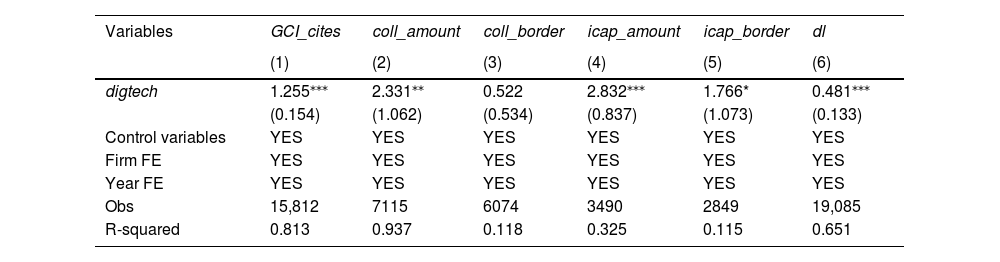
Then, the study considers the effects of knowledge-sharing and absorption in active innovation mechanisms. Theoretical analysis suggests that GCI exhibits notable dual externalities, fostering knowledge-sharing and absorption both within and outside enterprises and thus providing diverse knowledge resources for enterprises to select GCI. Kim and Steensma (2017) have posited that patent citations can characterize these knowledge-sharing and absorption effects. Other enterprises’ citation of a patent indicates that the knowledge and information in the patent have been acquired and assimilated by these entities. Consequently, the enhancement of DTE in promoting enterprise knowledge-sharing and spillover is regarded as a knowledge-sharing and absorption effect. Hence, the frequency at which green low-carbon patents are cited by other enterprises (GCI_cites) is the explained variable for the regression analysis. The estimated results, presented in column (1) of Table 8, show that DTE significantly enhances the knowledge spillover effect, facilitating the sharing and diffusion of data resources among enterprises. This supports the integration of heterogeneous knowledge resources, enabling enterprises to actively engage in GCI activities. H3b is validated within our sample.
Results of the mechanistic test of knowledge-sharing and collaborative innovation capabilities.
Finally, we examine the role of collaborative innovation capability in active innovation mechanisms. In the context of the influence of DTE on enterprise-wide innovation, the acquisition and identification of market information underscore enterprises’ independent innovation capacity, whereas the organizational structure emphasizes collaborative innovation to transcend traditional innovation paradigms. Initially, we perform regression analysis on the number of green low-carbon patents for which enterprises jointly apply (coll_amount) and their technical knowledge complexity (coll_border) as explained variables. The estimation results are presented in columns (2) and (3) of Table 8. These results indicate that DTE significantly enhances the number of green and low-carbon patents for which enterprises jointly apply; however, the complexity of technical knowledge in cooperative patents is not significant. This raises the question of whether the positive impact of DTE on collaborative low-carbon innovation is primarily quantitative with limited influence on breakthrough innovation (innovation quality) in collaborative low-carbon technologies. To further investigate this issue, we incorporate into the regression model the number of green low-carbon patents (icap_amount) for which industry-university-research collaborations apply jointly and the index of technical knowledge complexity (icap_border) in industry-university-research collaborative innovation. The results in columns (4) and (5) show that DTE not only significantly fosters industry-university-research collaborative innovation but also enhances the degree of GCI within these collaborations. Consequently, H3c is supported in our sample. Our findings suggest that in the current domain of collaborative innovation, particularly in the critical area of carbon emission reduction, strengthening the deep integration of industry-university-research, led by enterprises, is necessary to transcend traditional innovation boundaries. Worthy of further exploration is whether DTE has a more pronounced effect on enhancing GCI in enterprises’ independent innovation than on their collaborative innovation capabilities. We follow Li et al.’s (2023) methodology and use the ratio of the number of green low-carbon patents for which enterprises apply independently (GCI_amount) to the number of green low-carbon patents for which enterprises apply jointly (coll_border) as the explained variable (dl), with the logarithm also included. The regression result is presented in column (6), which reveals that DTE more effectively enhances the independent GCI capability than it does collaborative innovation. This provides further reflection on existing conclusions.
In summary, DTE can stimulate enterprises to actively pursue low-carbon biased technologies by enhancing their market information acquisition, knowledge-sharing and absorption, and collaborative innovation abilities, thereby improving GCI. Therefore, the active innovation mechanisms (H3) are assumed to hold true within the study sample.
Heterogeneity analysisHeterogeneity of technology accumulation within enterprisesAmong enterprises that possess a robust foundation in technological innovation, DTE may significantly enhance their propensity to adopt low-carbon technologies and improve their capacity to integrate diverse knowledge (Wang et al., 2022). This is because the extent of technological accumulation is crucial for enterprises’ innovation decisions and for the application of digital technology. Consequently, we utilize the sum of enterprises’ invention and utility model patents from the three years preceding a firm’s inclusion in the study sample as a proxy variable (skill) for enterprise technology accumulation. We then divide the study sample into two subsamples based on the median, with the subsample above or below the median representing stronger and weaker technological accumulation, respectively. The estimation results are presented in columns (1) and (2) of Table 9. Our findings are contrary to general findings. We observe that both the magnitude and quality effects of DTE on GCI are more pronounced for firms with weaker technological accumulation in terms of both the amount of GCI and the complexity of technological knowledge. However, for enterprises with strong technological accumulation, the positive effect of DTE is insignificant. This may be because to the fact that enterprises with strong technological accumulation are often in industries characterized by rapid technological turnover and change. This is particularly applicable to those that provide digital technology in cases where their original technological innovation frontiers are still being explored. These enterprises must concentrate on exploring and deepening existing technological fields, resulting in insufficient motivation for spontaneous innovation and change, which makes achieving new breakthroughs in low-carbon technology with the assistance of DTE challenging. Conversely, enterprises with weak technological accumulation attempt to compensate for their disadvantages stemming from a lack of technological accumulation and are thus more capable of leveraging new technological fields to expand their knowledge base as DTE deepens. Consequently, they become more proactive about their GCI activities.
Regression results from heterogeneity analysis.
Note: “1″ indicates high sample set, “0” indicates low sample set.
Several studies have indicated that wealth exhibits distinct preferences for low-carbon technology selection, characterized by self-reinforcing effects (Nguyen et al., 2020). This study investigates whether the positive impact of DTE is amplified for larger enterprises. Firm wealth is quantified by total asset size (scale), and heterogeneity in this context is examined. The wealth effect is assessed by categorizing the study sample into two groups based on the median. The estimated results, presented in columns (3) and (4), reveal that as DTE improves, wealthier enterprises are more likely to increase patent quantity and the complexity of technical knowledge related to GCI. Further, these enterprises demonstrate a greater propensity to actively select GCI. This study substantiates the significant preference for green technology at the enterprise level, thereby extending the existing literature.
Heterogeneity of ESG performanceEnvironmental, Social, and Governance (ESG) considerations not only influence the external reputation of enterprises but also comprise a critical reference for investor decision-making (Gallucci et al., 2022). ESG emphasizes an enterprise’s capacity for carbon emission reduction and sustainable development in environmental terms. This can compel enterprises to opt for GCI. Numerous ESG rating agencies exist; however, this study utilizes CSI ESG ratings (scores) as a representation of external ESG performance because of their extensive temporal coverage. The study sample is categorized into two subsamples, namely firms with strong ESG performance and those with poor ESG performance, based on the median. The estimation results are presented in columns (5) and (6). Firms with superior ESG performance are more likely to convey positive social responsibility signals externally, thereby facilitating their access to external support including but not limited to tax benefits, subsidies, and financing in the pursuit of GCI activities. Consequently, the stronger a company’s ESG performance, the more pronounced the positive impact of DTE on GCI, which subsequently drives companies toward both quantitative growth and the qualitative enhancement of GCI.
Heterogeneity of heavily polluted enterprisesThe Ministry of Ecology and Environment implemented the Provisions on the Management of Key Emission Units List in 2017 to enhance the oversight and management of environmental protection for enterprises with concerning pollution levels. Consequently, the study sample is categorized into two subsamples based on whether enterprises are heavily polluting (key). The estimation results are presented in columns (7) and (8). GCI patent growth indicates that heavily polluted enterprises may encounter more stringent environmental constraints than other enterprises, resulting in a substantial reduction in their speculative capacity for environmental protection and making the scale effect of DTE more pronounced. This observation aligns with existing research conclusions (Tian et al., 2023). However, regarding the technical knowledge complexity of GCI, the conclusion that DTE serves as a greater facilitator for non-heavy polluters is not inconsistent with the real situation. A plausible explanation is that enterprises in heavily polluted sectors are more inclined to select GCI involving lower technical knowledge to reduce costs given the high-pressure external environment. Contrastingly, other enterprises are motivated to choose GCI spontaneously to pursue breakthrough technology in the low-carbon field and enhance and upgrade GCI.
Further analysis: spillover effectsThe preceding analysis confirms the beneficial impact of DTE on GCI and elucidates its underlying mechanism. Nonetheless, the extant research predominantly focuses on the influence of DTE on individual enterprises while often neglecting the inter-enterprise spillover effects (Luo et al., 2024; Zhao & Qian, 2024). Digital technology disrupts the innovation process, breaks through geographic and industry constraints, enables enterprises to cross traditional innovation boundaries, and promotes network overflow of enterprise innovation (Wang et al., 2023). This study further investigates the network spillover effect of DTE from the peer and supply chain spillover perspectives. This approach aims to furnish a more comprehensive and detailed scientific foundation to help enterprises achieve collective innovation decision-making across upstream and downstream processes and to support the development of collaborative emission reduction policies.
Analysis of the peer spillover effectClassical theory posits that social learning, competitive imitation, and normative pressures in industry groups can lead to similar innovation management decision-making tendencies among enterprises––a phenomenon known as the peer effect (Seo, 2021). Leary and Roberts (2014) has termed enterprises in the same industry “peer enterprises.” This study takes the average number of green low-carbon patents (amountpeer) and the technical knowledge complexity (borderpeer) applied independently by other enterprises in the same industry as the core enterprise as GCI measurement indicators for peer enterprises. Columns (1) and (3) of Table 10 present regression results using the average number of green and low-carbon patents and the technical knowledge complexity of peer enterprises as explanatory variables. These results indicate that peer enterprises positively influence both the scale and quality of GCI, demonstrating a significant peer effect. Columns (2) and (4) present results obtained after incorporating interaction terms of DTE with the GCI of peer enterprises. The interaction terms between DTE and the low-carbon patent mean (digtech × amountpeer) and technical knowledge complexity (digtech × borderpeer) of peer enterprises exert positive effects, indicating that DTE affects the core demands and information judgments of the innovation decisions of enterprises in the same industry, strengthening the peer spillover effect of GCI. Notably, the extensive application of digital technology results in a positive peer effect on GCI. Enterprises may be motivated to maximize profits based on the competitive status of their peers. However, if the degree of internal monopoly in an industry is relatively high, does this incentive effect diminish? To address this question, we divide the sample into two subsamples based on the median of industry competition intensity (competition). Regression results are presented in (5)–(8). These results indicate that as industry competition intensifies, the peer spillover effect becomes more pronounced, enhancing the positive impact of DTE on GCI. DTE can generally enable enterprises to improve GCI through the peer spillover effect, and this effect is amplified under intense industry competition.
Test results of peer spillover effect.
Note: “1″ indicates high sample set, “0” indicates low sample set. The corresponding explanatory variables (digtech) and adjusting variables (amountpeer/boderpeer) are included in the regression as control variables.
In the context of supply chain relationships, upstream suppliers and downstream customers establish a network structure among enterprises that is predicated on supply and marketing relationships and business capital transactions. Enterprises in these cooperative supply chain relationships are inclined toward follower behavior and imitation decisions, exhibit significant interest linkages, and are more susceptible to generating supply chain network spillover effects (Freeman, 2025; Solaimani & Veen, 2022). Given that enterprises are the primary agents of the supply chain spillover effect, their low-carbon technology preferences are influenced by the spillover effects of the behaviors of other enterprises in the associated group. To further investigate the supply chain spillover effect, this study identifies the upstream suppliers and downstream customers of the supply chain by examining the supply chain network structure (Freeman, 2025). This is achieved by constructing a core enterprise-supplier (customer)-yearly dataset (specific steps are described in the data note), wherein the customer group is identified as the downstream enterprise of the core enterprise, and the supplier is identified as the upstream enterprise of the core enterprise. The number of green low-carbon patents (chain_amount) generated by the customer and supplier groups is then matched. Additionally, the annual average technical knowledge complexity (chain_border) of the enterprises is calculated.
Table 11 presents regression results concerning the spillover effects within supply chains. The total sample estimation results, as shown in columns (1) and (4), reveal that the DTE of core enterprises not only significantly enhances the number of green and low-carbon patents among supply chain enterprises but also contributes to the technological knowledge complexity of these enterprises. This finding suggests that DTE exerts a substantial supply chain spillover effect that facilitates the green and low-carbon transformation of corporate innovation by enhancing both the scale and quality effects of overall GCI in the supply chain in which the core enterprises operate. Further subsample regression results, categorized by upstream and downstream enterprises, are detailed in columns (2)–(3) and (5)–(6). From the perspective of scale spillover effects, the DTE of core enterprises significantly increases the number of green and low-carbon patents among downstream customers, indicating that the scale effect of DTE has a supply chain transmission effect, primarily generating a supply chain network spillover effect through downstream customers and thus augmenting the overall patent scale of GCI. However, regarding the quality spillover effect, the differentiation between upstream and downstream enterprises does not significantly impact the technical knowledge complexity of GCI. This finding aligns with empirical observations. According to CSMAR data on the top five supplier and customer companies among Chinese listed companies, the customer concentration of core companies averages over 35 %. Consequently, with the advancement of digital technology, demand-oriented product innovation has become pivotal in enhancing the core competitiveness of enterprises. Specifically, customers’ green preferences and needs dictate the direction of enterprises’ low-carbon innovation strategies. DTE exhibits a linkage effect with downstream customers to the relative exclusion of upstream suppliers, enabling strategic interaction between core and downstream enterprises and thus improving the overall GCI level of the supply chain.
Test results of supply chain spillover effect.
Achieving substantial emission reduction in traditional industries and facilitating a transition to sustainable energy are among the foremost priorities for emerging markets. GCI not only enhances efficient energy conversion and storage but also achieves near-zero emissions both at the source and at the conclusion of the process. In this regard, GCI is a fundamental element for industrial enterprises aiming to attain the double-carbon objective and bolster core competitiveness. However, the propensity of enterprises to adopt GCI is influenced by innovation costs and economic benefits (Wu et al., 2023). Externalities associated with low-carbon technologies and information asymmetry in knowledge acquisition contribute to enterprises’ limited willingness to actively pursue GCI. The results of our analysis underscore the urgent need for enterprises to integrate digital technologies deeply to enhance their GCI willingness.
Initially, the study demonstrates the positive role of DTE in promoting GCI. This finding aligns with those reported in the existing literature on green innovation, which suggests that DTE is a central driving force for the green and low-carbon transformation of enterprises (Tian et al., 2023; Wang et al., 2023; Zhao & Qian, 2024). Most extant studies consider innovation to be a unidimensional variable and neglect the knowledge content embedded in GCI (Huang et al., 2023; Sun, 2024). This study introduces the complexity of technical knowledge in GCI and further reveals that the qualitative effect of DTE is more significant than mere scale innovation activity. Hence, this study broadens the research dimension of the existing literature. Additionally, traditional research posits that technology accumulation is foundational for enterprises to develop new products and processes and enhance their GCI (Wang et al., 2022). However, the results of our heterogeneity analysis indicate that enterprises with limited technology accumulation are more inclined to increase GCI in R&D following the deep integration of digital technology. This finding not only highlights the importance of DTE but also suggests that digital technology may be pivotal for weaker firms and less-developed economies to overcome technological monopolies, bridge technological gaps, and expedite the achievement of carbon peaking and carbon neutrality.
Second, to investigate the mechanism of the impact of DTE on GCI and analyze the motivational differences between the two GCI behaviors, this study integrates stakeholder theory, the RBV, dynamic capabilities theory and incorporates environmental pressure and the innovation process into the theoretical framework of the influence of DTE on GCI. This approach facilitates an in-depth analysis of enterprises’ innovation motivation and their transition from passive response to active change. On one hand, there remain gaps in the impact pathway of DTE on GCI due to insufficient research on GCI. Existing studies on the impact of DTE on green innovation or development suggest that DTE and environmental regulation have interactive and coordinated effects (Zhang et al., 2024b). From the passive response perspective, it is evident that the combination of external environmental constraints and DTE demonstrates an evident significant advantage, supporting this view. The distinction of our study lies in its analysis of the moderating effects of government environmental regulation, public environmental awareness, and the capacity of the market to transform innovations. This has led to some intriguing conclusions. Specifically, some studies have posited that government environmental regulation enhances strategic and aggressive green innovation behavior (Lian et al., 2022; Xue & Wang, 2025). Our research further dissects environmental regulation tools and reveals that with the deep integration of digital technologies within firms, incentive-type environmental regulation and the market innovation transformation ability are more conducive to compelling enterprises to enhance GCI quality. This suggests that government market tools and a fair technology trading environment are crucial factors for stimulating enterprises’ motivation for independent innovation. However, the incentive effect of command-type environmental regulation and public environmental awareness on enterprises’ endogenous innovation drive requires further strengthening. These findings supplement the boundary conditions of the likelihood of DTE to enhance GCI and provide empirical evidence for establishing a market-dominated external innovation environment that is supervised by the government and the public, thereby stimulating enterprises’ passive innovation motivation.
Conversely, extant research investigating the mechanisms through which artificial intelligence and enterprise digital transformation influence green innovation with a focus on innovation resources, digital elasticity, and information interaction has yielded inconsistent conclusions (Ghasemaghaei & Calic, 2020; Luo et al., 2024; Xiong et al., 2025; Xue & Wang, 2025). This study uses precise measurements of the DTE index to underscore the demand-side guidance and supply-side acquisition capabilities of enterprises and examine the intermediary role of active innovation mechanisms between DTE and GCI. We initially observe that DTE enhances enterprises’ capacity to acquire and assimilate market information, reduces external transaction and internal management costs by mitigating information asymmetry between enterprises and various market entities, strengthens the ability to perceive demand for green products, and facilitates the positive influence of the demand side regarding steering enterprises toward GCI. Knowledge-sharing and absorption subsequently emerge as critical variables (Kim & Steensma, 2017). DTE augments enterprises’ adaptability to the introduction and assimilation of new technologies by facilitating the leveraging of leveraging of low-carbon technology patents from other enterprises, thereby aiding in the acquisition of heterogeneous knowledge resources on the supply side. This study reconciles conflicting findings in the existing literature and empirically examines from the demand and supply perspectives the mechanism by which DTE promotes GCI rather than general innovation (Wu et al., 2023). Additionally, DTE not only transcends traditional innovation paradigms and enhances the collaborative innovation capacity of enterprise GCI but also bolsters the enterprise-led collaborative innovation capacity of industry-university-research partnerships, thereby driving enterprises to actively pursue GCI. Our findings suggest that in the current domain of collaborative innovation, particularly in the critical area of carbon emission reduction, the in-depth integration of industry-university-research led by enterprises should be intensified to transcend traditional innovation boundaries.
Finally, considering the network spillover effects of DTE, we emphasize the peer and supply chain spillover effects of innovation and provide empirical support for their synergistic development (Freeman, 2025; Leary & Roberts, 2014). Regarding the spillover effect of green innovation, most existing studies have addressed it from the perspective of regional or urban agglomeration spillovers (Gu, 2025; Wang et al., 2023). This study concentrates on the enterprise level, thereby advancing the knowledge frontier in related fields. Our results indicate that the stronger the peer spillover effect, the more pronounced the positive impact of DTE on GCI amidst intense industry competition. Additionally, DTE exhibits a significant supply chain spillover effect, facilitating the green and low-carbon transformation of enterprise innovation by enhancing the scale and quality effect of overall GCI in the supply chain in which the core enterprise is situated. Hence, this study expands existing research. Further, the conclusions highlight the customer-driven network spillover effect and thus provide a more comprehensive and detailed scientific basis for enterprises to realize upstream and downstream collective innovation decisions and formulate collaborative emission reduction policies.
ConclusionIn alignment with the objectives of achieving carbon peak and carbon neutrality, the integration of digitalization with green and low-carbon development has emerged as a pivotal catalyst for expediting the transformation of enterprises toward sustainability. Presently, ecological and environmental challenges exhibit both common and regional characteristics while the innovation and industrial chains of green low-carbon technology remain relatively intricate. Collaborative innovation among multiple stakeholders, facilitated by digital technology, has become essential for advancing low-carbon innovation and enhancing quality. This study uses data from A-share listed industrial enterprises in China spanning 2010–2021 to construct DTE indicators across various dimensions. The research incorporates green low-carbon patent data from micro-enterprises to empirically investigate the evolution mechanism and spillover effects as enterprises transition from passive response to active innovation in their selection of GCI activities. Corroborated by a series of endogeneity and robustness tests, the findings indicate that DTE exerts a significant positive influence on GCI activities. Heterogeneity analysis reveals that the positive effects of DTE are more pronounced among firms with weak technology accumulation, larger firms, those with superior ESG performance, and firms with heavy pollution levels. The moderating effect of passive response suggests that DTE amplifies external constraints such as government environmental regulations, public environmental awareness, and market innovation transformation capabilities, compelling enterprises to address external environmental pressures through GCI. However, these external constraints do not substantially enhance the technical knowledge complexity of GCI, nor do they improve its quality and efficiency. The incentive mechanism of active innovation demonstrates that DTE facilitates knowledge absorption and diffusion on the supply side while augmenting enterprises’ market information acquisition capabilities on the demand side, thereby enhancing the collaborative innovation capacity of industry-university-research partnerships led by enterprises and ultimately boosting the R&D propensity for GCI. Spillover analysis indicates that both peer and supply chain spillovers significantly reinforce the positive relationship between DTE and GCI, thereby achieving the green and low-carbon transformation of enterprise innovation by elevating the scale and quality of GCI across the industry and the entire supply chain.
Practical significanceThese findings provide novel insights and guidance for stakeholders. Firstly, enhancing the governance policy framework through diversified participation and effective collaboration between the government, enterprises, and the public is imperative. Our results suggest that combining DTE with external environmental constraints can significantly promote GCI when firms lack sufficient willingness to innovate. From the perspective of the governmental environmental protection department, maintaining a stringent environmental law enforcement atmosphere is essential to minimize opportunities for enterprises to engage in speculative environmental practices. This can be achieved by extensively gathering information on environmental violations and publicizing exemplary cases of environmental law enforcement via the Internet and social media to establish rigorous constraints on enterprise environmental protection activities at minimal cost. Regarding refining the environmental law enforcement system, both the enforcement costs and environmental benefits must be considered to avoid a singular focus on revenue from fines. Further, to enhance incentive-type environmental regulation, pollutants of contemporary concern, such as carbon dioxide and soil pollutants, should be incorporated into the secondary tax categories of the environmental protection tax, and the taxation scope should be expanded gradually. From the perspective of enhancing public environmental awareness, there exists the potential for increased speculative behavior among listed companies during the disclosure of environmental information. Stock exchanges should collaborate with environmental protection departments to conduct information exchanges and random field verifications to prevent false corporate environmental information disclosures and thus promote public environmental awareness in an open, transparent atmosphere. From the perspective of market-driven innovation, focusing on the industrialization and application of patents is important while actively engaging in GCI activities. Digital technology should be utilized to emphasize application-oriented practical assistance efforts, and enterprises should be encouraged to adopt more rational approaches to acquiring diverse low-carbon technologies in the technology trading market or through technological transformation, thereby gradually enhancing the quality of GCI.
Second, regarding the role of DTE in guiding businesses toward actively selecting GCI, the government should spearhead initiatives on digital platforms such as the industrial Internet. This involves collaboratively establishing intelligent cloud platforms that attract diverse enterprises and dismantle regional access barriers. The digitization and networking of small and medium-sized enterprises (SMEs) at the forefront of the industrial supply chain should be expedited. On one hand, efforts have been made to cultivate a potential consumer market for green products by comprehensively disseminating promotional information to associations, enterprises, and the public using digital technology. The parallel establishment of a public intellectual property service system that is accessible to the populace is crucial. Digital technology should serve as a vital medium to extensively popularize intellectual property services at various levels, expand knowledge-sharing channels for GCI, ensure technology accessibility for enterprises with limited technological resources, stimulate potential innovative behaviors, and reduce unnecessary duplication of R&D investments. On the other hand, further promoting the deep integration of enterprise-led industry-university-research collaborations is essential to continuously reinforce the central role of enterprise innovation. In the context of strengthening industry-university-research cooperation through digital technology, scientific research talent from innovative enterprises, universities, and research institutes should be encouraged to move fluidly between different units to dismantle the information silos of innovation. Simultaneously, enterprises should use digital technology to continuously integrate domestic technology trading platform resources in low-carbon fields, establish cooperative networks for technology transactions, and harness the innovation potential of academic institutions and research institutes.
Finally, for peer enterprises, the promotion of the industrial Internet should be prioritized, with financial subsidies and tax incentives implemented as supplementary measures. This approach aims to enhance the transmission channels within the same industry and expedite the dissemination of low-carbon technology information among enterprises. For supply chain enterprises, the application of digital technology by chain-owner enterprises should take precedence to create a low-carbon, intelligent, and innovative production supply chain system. Specifically, thoroughly exploring the common demands of the upstream and downstream segments of the supply chain, vigorously implementing new energy-saving technologies, products, and equipment with key commonalities, and eliminating outdated production capacities from the supply chain are crucial to enhance overall green and low-carbon development efficiency.
Limitations and research prospectsGiven the nascency of research on the relationship between DTE and GCI, this study has some limitations. First, DTE indicator data constraints confined our research sample to listed companies. Consequently, the impact of DTE on other entities such as unicorns and small to medium-sized enterprises may have been overlooked. Our findings and those of related studies demonstrate that digital technology can significantly reduce global carbon emissions through resource integration, process control, and decision optimization, resulting in mutually beneficial economic and environmental outcomes. Future research could develop DTE indicators from the perspectives of data element and asset embedding and investigate the effect of DTE on micro-enterprises by integrating industrial and commercial enterprise registration data with tax survey data. Second, this study assesses the GCI level of enterprises based on the number of patents and the complexity of technical knowledge as derived from patent information data; however, it does not address the transformation and application of GCI achievements. With access to more detailed enterprise data, other researchers could further evaluate GCI through elements such as technology transfer and low-carbon product revenue to overcome the limitations of the existing research. Finally, the micro-level spillover effect is not only a focal point of this study but also a worthwhile direction for future research. This study addresses it from the supply chain perspective, but network spillovers among peers could also be examined based on the basis of input-output relationships. Future research could explore the spillover impact and its internal mechanisms from diverse perspectives to fill the gaps in the current literature.
CRediT authorship contribution statementNanxu Chen: Writing – review & editing, Supervision, Project administration, Funding acquisition, Formal analysis, Conceptualization. Yuling Hu: Writing – review & editing, Writing – original draft, Visualization, Software, Methodology, Investigation, Funding acquisition, Data curation, Conceptualization. Lintao Wang: Writing – review & editing, Visualization, Formal analysis, Conceptualization.
No conflict of interest was reported by the authors.
Measurement method of digital technology embeddedness
Measuring DTE is a multidimensional and complex process involving multiple aspects such as an enterprise’s digital strategy, digital environment, and application scenarios. Therefore, combined with the above analysis, entropy method is adopted to measure DTE index. Firstly, dimensionless treatment is carried out on single index data. Then, the weight of each evaluation index is calculated according to the information entropy, and finally the weight is substituted into the enterprise evaluation index value to obtain the DTE of China listed industrial enterprises from 2010 to 2021. The specific calculation steps are as follows:
(1) Data dimensionless processing.
Considering the dimensional difference of each evaluation index, the range method is adopted for standardization:
where Eq. (A2) applies when a is a positive indicator. Conversely, Eq. (A3) is used.

(2) Calculate the weight of each indicatorgijt.

(3) Calculate the information entropy as the weight of each dimension index.

(4) Finally, the DTE index score is calculated as follows:

Robustness test results.
The identification keywords of “industry” are “company/firm/enterprise” and “factory.” The identification keywords of “university” are “university/college/school.” The identification keywords of “research institution” comprise mainly 18 keywords, including “research institute/room/institute,” “laboratory/station,” “R&D/research/innovation/testing/development/experimental center,” “design institute,” and “testing institute.”
The China environmental label is an official certification mark signifying that the products bearing this label not only meet quality standards, but also adhere to environmental protection requirements during their process of production, usage, and disposal. Compared with similar products, those with this certification mark exhibit environmental advantages such as low carbon, absence of pollution, and resource conservation. This certification mark enables consumers to easily identify products that are environmentally beneficial and pose no harm to their health, thereby facilitating informed green purchasing decisions.
The 2011–2017 data are sourced from the CNRDS database, and the 2018–2021 data have been manually collected and organized from the CEC website (http://www.meecec.cn/).