


This study investigates the relationship between Green Knowledge Management, Innovation-Oriented Culture, and Green Financial Resource Availability and Circular Business Model adoption mediated by Sustainable Innovation and moderated by Top Management Commitment to Circularity. The transition to circular business model has become company’s strategic focus that aim to improve environmental sustainability and competitive edge, especially in the new economies like China. Data were collected using quantitative survey involving 322 Chinese companies working in sustainability-intensive sectors using a structured online questionnaire. Smart-PLS was used to analyze measurement and structural model. The findings indicate there are three internal enablers positively affect Sustainable Innovation and influence the adoption of the circular business practices. In addition, top-management commitment positively affects the process of circular adoption and influence the transformation of sustainable innovation programs into real circular conditions. This study contributes theoretically to the capabilities-based innovation processes and strategic leadership dynamics within the context of the circular transformation. Practically, the results suggest that companies should enhance the knowledge base, advance innovation-driven principles, plan for financial resources, and engage in proactive management behavior to speed up their transition to circularity. These findings are valuable for administrators and policymakers who plan to promote sustainability-based development in the industrial context.
Sustainable development has become the key concern for governments and business entities responding to growing environmental issues, rising resource inadequacy, and the alarming problem of global warming. This concern forms a foundation of policy interventions and corporate strategies that aim at balancing ecological stewardship with economic performance. As one of the active manufacturing economies, China is pressured to decrease industrial pollution while maintaining continuous development and competitive position in the global economy (Gao et al., 2024; Sun et al., 2023). As China aims to embrace the ecological modernization development model and achieve a circular use of resources, it has adopted a new development paradigm, which puts much emphasis on ecological efficiency and circular utilization of resources over the decade. National policy tools such as the Circular Economy Promotion Law and series of Five-Year Plans reflect China’s commitment to redesigning industrial production according to sustainable limits, in parallel empowering its presence in the global supply chains (Castro-Lopez et al., 2023; Hu et al., 2021). Therefore, in this study, the circular business model is taken as a strategy for more resource-efficient operation that allows the firms to redefine the idea of value creation through the process of reduce, reuse and recycle (Antikainen & Valkokari, 2016; Geissdoerfer et al., 2023). However, such transformation process is limited among the Chinese manufacturing enterprises due to internal strengths and organizational preparedness (Santa‐Maria et al., 2025; Santa-Maria et al., 2022).
Sustainable innovation is crucial in helping companies move towards a circular situation as it aims to lower environmental impact and boost operational results (Abbas et al., 2020; Afeltra et al., 2023). By integrating the principles of sustainability in innovation processes, companies can restructure supply chains, increase the lifecycle of products, and replace damaging materials, thus allowing a shift to circular operations (Rantala et al., 2018).
To address this challenge, this study include the green knowledge management in the research framework. Green knowledge management has gained significant interest among the organizational processes that facilitate sustainable innovation, it is regarded as the ability of a firm to obtain, retain, share and utilize environmental knowledge in business activities (Yu et al., 2022). Companies that have well-developed knowledge management systems have better chances of developing pertinent green ideas, passing on useful knowledge, and enforcing green practice routines that lead to innovation and performance (Shahzad et al., 2020; Ul-Durar et al., 2023). According to previous findings, green knowledge serves as an important source of differentiation, especially in the industries experiencing rapid regulatory actions of the environment and technological unpredictability (Abbas & Sağsan, 2019; Wang et al., 2022). As sustainable innovation requires constant learning, organizational dedication, and investments made towards the creation and application of greener technologies and solutions, knowledge-based capabilities in supporting sustainable innovation is vitally critical in the study on organizational sustainability. In particular, reen knowledge management is defined as organizational activities that allow companies to acquire, share, and use environmental knowledge systematically to facilitate sustainable innovation efforts.
Likewise, the organizational culture establishes the behavioral basis of innovation. Many scholars posit that a culture that is based on innovation promotes creativity, risk-taking and proactive experimentation, where employees seek unusual solutions to environmental issues (Tian et al., 2018; Xu et al., 2023). These cultural values encourage openness to change and facilitate cross-functional cooperation, which are essential to the process of adoption of new technologies and sustainable operating practices (Katimertzopoulos et al., 2023; Kwarteng et al., 2022). However, cultural enabler alone are not sufficient to ensure implementation, especially in resource-intensive sustainability transformations.
Access to green financial resources is equally an important factor, where a shift towards cleaner production and a circular business model often requires a lot of capital investment, longer payback time, and increased risk perception (Khan et al., 2021; Li et al., 2020). Proper financing enables SMEs to invest in modern equipment, use environmental management systems, and apply renewable resource technologies (Agrawal et al., 2024; Marín-Vinuesa et al., 2020). However, SMEs in China continue to face a severe lack of funds, which explains the necessity of examining how the availability of resources impacts innovation potential and enables the circular transformation (Ghisetti & Montresor, 2020; Saarinen & Aarikka-Stenroos, 2022).
Leadership commitment has a conclusive impact on organizational transitions of sustainability. Top-management commitment influences strategic vision, makes employees feel engaged in environmental efforts, and makes certain that there is a prudent use of money and management (Kareem & Kummitha, 2025; Koistinen et al., 2022). In circular economy, the leadership support will accelerate product-service systems, remanufacturing solutions, reverse logistics, and digital tracking systems that form the basis of closed-loop value generation (Al Rawashdeh et al., 2025; Santa‐Maria et al., 2025). When the top managers are more focused on sustainability, companies will have a clearer strategy line and greater incentives to implement innovative ideas into practical circular policies (Al Halbusi et al., 2024). In this study, top management commitment to circularity is the strategic commitment of top management to support the circular practices and resource allocation that enable sustainable innovation and adoption of circular business models.
However, there is a significant gap in explaining how the combination of internal organizational forces leads to the adoption of the circular business model due to sustainable innovation. Most studies have viewed circular economy practices either through a macro-policy prism or an environmental-performance prism, and others have remained restricted to examining antecedent of innovation, but not the resultant outcomes as a whole model of business-model transformation (Assmann et al., 2023; Marrucci et al., 2022). There are limited literature that simultaneously organize green knowledge management, an innovation-based organizational culture, and the presence of green financial resources in a single explanatory model of a circular transformation in SMEs. Moreover, the possible mediating role of the top-management commitment as a boundary condition, which intensifies the relationship between sustainable innovation and the adoption of the circular business model, has not been given enough consideration, especially in developing countries where both resource constraints and institutional restrictions co-exist. Theoretically, an integrative insight into the combination of knowledge-based capabilities, organizational culture, and financial resources can explain how these elements combine to support sustainable innovation, which provides a holistic explanation of circular business model adoption in the resource-based view discourse.
This study proposes a moderated form of mediation that examines the contribution of green knowledge management, an innovation-driven organizational culture, and the presence of green financial resources to the adoption of circular business models. This model assumes that the relationships are mediated by sustainable innovation, and moderated by the commitment of top management. This study focused on the manufacturing SMEs in the Chinese region of the Yangtze River Delta. This study contributes to theoretical knowledge in the context of the internal enablers of the transition to the circular economy and provides practical managerial advice to speed up the process of sustainable industrialization by locating the analysis within this significant industrial context. Therefore, this study is expected to advance the academic literature by integrating knowledge-based capabilities, organizational culture, and availability of financial resources as one empirical system, while explaining how internal organizational processes support the adoption of a circular business model by sustainable innovation.
Development on these arguments, the academic relevance of this study lies in repositioning of circular business model adoption not as gradual or isolated sustainability outcome, but as capability-driven transformation process embedded within firm-level strategic decision making. Rather than treating sustainability elements as independent antecedents, this study conceptualizes them as inter-linked system of organizational enablers. These enablers that would collectively shape firm’s dynamic ability for innovating and restructuring their business models under environmental and institutional pressures (Teece et al., 1997; Geissdoerfer et al., 2023).
From a practical perspective, this combination is strategically relevant as SMEs in China operate under simultaneous pressures of regulatory tightening, resource constraints and global competitiveness requirements (Gao et al., 2024; Sun et al., 2023). Moreover, green knowledge management, innovation-oriented culture, and green financial resource availability are not treated as standalone factors but as strategic assets whose combined shapes firm’s sustainable innovation capacity. Sustainable innovation, function as dynamic capability that would enables firm to continuously adapt, reconfigure and align their operations with circular economy principles (Afeltra et al., 2023; Abbas et al., 2020).
Furthermore, this study suggests that circular transformation is not purely resource-or innovation driven but it also strategically guided by top management commitment, that determines the extent to which sustainability priorities that are being embedded into organizational direction and decisions of investment (Kareem & Kummitha, 2025; Koistinen et al., 2022).
By positioning leadership as a crucial boundary condition, this study highlights that managerial perception and strategic intent shape whether sustainability-oriented innovations are effectively translated to circular business model adoption. Thus, in sum, this research provides a more strategic and integrated explanation of circular transformation by combining organizational capabilities, innovation processes and leadership orientation within a unified analytical framework.
Literature reviewGreen knowledge management, sustainable innovation, and circular business model adoptionKnowledge-based view (KBV) suggests that the knowledge resources are conceptualized as strategic assets that help to create innovative capabilities and allow firms to respond to the challenges in the environment effectively. In practice, strategically, organizational knowledge is the most important resource that enhances innovation, competitiveness, and long-term benefit (Abbas & Sağsan, 2019). Therefore, Green Knowledge Management plays a critical role in the systematic acquisition, storage, sharing, and application of knowledge relevant to environmental practices, which helps to continuously learn and adjust to sustainability requirements (Yu et al., 2022). Furthermore, companies with strong green knowledge processes in place are more likely to notice environmental opportunities, reduce environmental risks, and come up with environmental-efficient solutions (Polas et al., 2023; Ul-Durar et al., 2023). Resultantly, the knowledge sharing and retrieval solutions empower the employees to use their experience with technological skills, hence, accelerate the development of ecologically friendly products (Rahim et al., 2023; Shahzad et al., 2020).
Sustainable innovation (SI) is a multidimensional ability which requires product, process, and administrative changes to reduce environmental harm and enhance organizational performance simultaneously (Abbas et al., 2020; Afeltra et al., 2023). Previous research has established that knowledge integration is the input stage towards the development of sustainability-based innovation (Lin & Chen, 2017; Nazarian et al., 2024). Based on the Knowledge-Based View (KBV), GKM acts as a source of SI, allowing employees to consider ecological factors during the design, production, and managerial processes (Sun et al., 2025; Weina & Yanling, 2022).Sustainable innovation also promotes the reconfiguration of business logic into a more circular value-creation systems supporting the Circular Business Model Adoption (CBMA) (Awan & Sroufe, 2022; Guldmann & Huulgaard, 2020). Specifically, Green Knowledge Management could extend beyond environmental information processing, such as in this study, and focus on the manufacturing environments where firms would increasingly depend on their ability for arrange knowledge resources across operational, technological, and sustainability domains for responding towards regulatory pressures and circular economy requirements. Therefore, this study does not view GKM as merely technical knowledge-sharing mechanism, but as organizational capability that would enables firms to continuously sense sustainability opportunities. This would integrate environmental learning into innovation processes and support long-term circular transformation (Teece et al., 1997; Yu et al., 2022).
In short, GKM fosters a circular transformation indirectly through developing innovation potentials that translate knowledge into new circular solutions (Antikainen & Valkokari, 2016; Santa-Maria et al., 2022). Combining with the Knowledge-Based View (KBV), companies that develop and appropriately manage green knowledge in a more organized way are expected to experience better innovation performance and enable smoother circular transitions. Therefore, the following hypothesis is synthesized.
H1 Green Knowledge Management has a positive effect on Sustainable Innovation.
Organizational culture is critical in influencing the behaviors, practices, and receptiveness of employees as a means of ensuring sustainability-oriented change. The Resource-Based View (RBV) explains the role of innovation-oriented culture (IOC) as a good internal resource which is difficult to imitate and copy. IOC Additionally, many scholars view IOC as the core of competitive advantage (Roach et al., 2014; Xu et al., 2023). Moreover, under the IOC, a culture that promotes creativity, experimentation, and risk-taking, encourages employees to share ideas and seek new solutions to sustainability issues (Katimertzopoulos et al., 2023). This culture leads to the development of proactivity in the reaction to environmental rules and the demands of the market (Castro-Lopez et al., 2023; Tian et al., 2018).
Empirically, conducive environment is needed to encourage innovation towards sustainability-related technological advancements, eco-friendly products, and efficiency in operations (Melane-Lavado & Álvarez-Herranz, 2020; Osei & Asare, 2025). When managers embrace an innovation-focused strategy, the teams are more likely to develop greener solutions and incorporate them in working practices, which accelerates the realization of sustainability (Bağış et al., 2026). Further, the literature supports the idea that sustainability efforts represent a central channel through which circular business-model adaptation can be facilitated because innovative activities allow companies to explore resource-looping processes including remanufacturing and reuse (Geissdoerfer et al., 2023; Huynh, 2021).
Strategically, an innovation-oriented culture contributes towards circular transformation by creating organizational conditions that would support capability renewal and adaptive change. In short, IOC facilitates experimentation, cross-functional collaboration, and organizational flexibility that are significant for firms attempting to transition from traditional linear production systems towards circular business configurations under certain market and environmental conditions (Katimertzopoulos et al., 2023; Xu et al., 2023).
Therefore, the following hypothesis is synthesized. following hypothesis:
H2 Innovation-Oriented Culture has a positive impact on Sustainable Innovation.
According to the Resource-Based View (RBV), financial capacity is one of the essential tangible resources that support innovation and performance transformation (Majid et al., 2025). Circular processes development requires new technological investments, whereas, redesign of production functions require significant financial capital and long-term investment (Ghisetti & Montresor, 2020). Empirical research show that Green Financial Resource Availability (GFRA) improves the accessibility of the firms to clean technologies, waste-management solutions, and pollution-control systems (Khan et al., 2021; Li et al., 2020). Financial resources allow companies to overcome uncertainty and reduce sustainability-related risks restructuring (Marín-Vinuesa et al., 2020).
Financial readiness is necessary for technology acquisition and enable the firms to operationalize sustainability-oriented innovation capabilities. This resource is specifically relevant for SMEs operating in emerging markets where resource limitations often restrict the implementation of circular transformation initiatives (Ghisetti & Montresor, 2020; Li et al., 2020).
Moreover, the internal and external financial resources creation spurs green innovation performance and creates competitive advantages in emerging circular markets (Agrawal et al., 2024; Islam et al. 2024). Inevitably, without sufficient funding, SMEs cannot afford to invest in circular infrastructure and this limit their progress to the development of sustainable business models (Saarinen & Aarikka-Stenroos, 2022). Based on this, GFRA improves SI outputs and prepares the ground to implement CBMA (Dubey et al., 2019; Ooi & Memon, 2025). Therefore, the following hypothesis is formulated.
H3 Green Financial Resource Availability has a positive effect on Sustainable Innovation.
Dynamic Capabilities Theory (DCT) describes how organizations integrate, build, and reorganize internal capabilities to achieve strategic renewal in the changing environmental conditions (Vial, 2021). Sustainable Innovation (SI) can be viewed as a dynamic ability because it enables reorganization of organizational resources and processes to adapt to new environmental and market conditions (Jesus & Jugend, 2023). As the sustainability pressure increases, SI becomes essential to allow companies to replace traditional paradigms of take-make-dispose with closed-loop circularity (Ersoy et al., 2022; Marrucci et al., 2022). Empirical evidence suggests that SI enhances operational resiliency and allows capturing new streams of value, which is based on resource circularity, product longevity, and reduction of waste (Gyimah et al., 2025; Hu et al., 2021). As such, sustainable innovation should be viewed as strategic transformation capability rather than merely an outcome of innovation. By acquiring the sustainable innovation capability, firms can reconfigure internal resources, redesign operational processes, and align business activities with circular economy objectives under changing environmental and conditions of market (Teece et al., 1997; Jesus & Jugend, 2023).
Therefore, SI is posited as a major determinant of CBMA, the transformation mechanism that connects capabilities with business model reconfiguration in emerging markets (Castro-Lopez et al., 2023; Sehnem et al., 2019). Therefore, the following hypothesis is synthesized.
H4 Sustainable Innovation has a positive effect on Circular Business Model Adoption.
The Upper Echelon Theory (UET) states that organizational performance depends on values, beliefs, and cognitive orientations of executives (Koistinen et al., 2022). Top Management commitment to Circularity (TMC) has effects on goal setting, performance orientation, resource allocation and institutionalization of environmental strategies (Kareem & Kummitha, 2025). The leadership commitment helps to reduce internal resistance and forms the organizational willingness to implement new circular initiatives like industrial symbiosis and service-based propositions (Al Rawashdeh et al., 2025; Hofmann & Jaeger‐Erben, 2020).
Therefore, leadership commitment is relevant and significant in transformation of sustainability because circular business implementation often needs long-term strategic orientation, organizational restructuring and resource prioritization. Firms with stronger managerial commitment are more likely transform sustainability-oriented innovations into operational circular business practices (Hambrick & Mason, 1984; Koistinen et al., 2022). When the managers are actively promoting the concept of sustainability, the employees are more motivated to turn innovation into real circular benefits (Al Halbusi et al., 2024).
As such, this study contends that the TMC (Top Management Commitment to Circularity) implementation should enhance the SI to CBMA relationship, as the leadership approval and interest increase the likelihood of innovations being operationalized and scaled (Castro-Lopez et al., 2023). Hence, the following hypotheses are formulated:
H5 Top Management Commitment has a positive effect on Circular Business Model Adoption.
H6 Top Management Commitment positively moderates the relationship between Sustainable Innovation and Circular Business Model Adoption.
Sustainable innovation plays a critical mediating role in translating organizational capabilities into circular business model outcomes. This study assumes that firms possessing green knowledge management systems, innovation-oriented cultures, and access to financial resources are more likely to develop sustainability-focused innovations. These innovations subsequently enable firms to redesign products, processes, and value creation mechanisms in ways that support circular business practices. Therefore, sustainable innovation serves as the mechanism through which internal organizational capabilities are transformed into circular business model adoption. Therefore, the following hypotheses are developed.
H7 Sustainable Innovation mediates the relationship between Green Knowledge Management and Circular Business Model Adoption.
H8 Sustainable innovation plays the role of mediator between an innovation-oriented culture and the implementation of circular business models.
H9 Sustainable Innovation mediates the relationship between Green Financial Resource Availability and Circular Business Model Adoption.
In sum, the proposed hypotheses suggest that circular business model adoption is not driven by isolated organizational factors, but from interaction of organizational knowledge capabilities, innovation-oriented culture, financial readiness, sustainable innovation processes and leadership commitment. This study posits that the proposed integrated approach provides better and clear understanding of how firms strategically coordinate internally with capabilities to support circular transformation within emerging-market manufacturing environments.
Research gap summaryThere are limited literature on how internal organizational resources, knowledge systems and leadership alignment drive circular transformation, despite growing research interests in circular business model. Previous studies typically viewed all these dimensions in isolation. For example, many scholars and researchers separately focus on knowledge management, organizational culture, financial readiness and influence of leadership without consolidating them into unified capability-based framework. Moreover, sustainable innovation has often been conceptualized as an outcome rather than dynamic capability that actively enables business model reconfiguration and circular transition. More importantly, the strategic role of top management in shaping circular transformation remains underexplored, specifically in emerging economy contexts where institutional pressures, resource constraints, and sustainability transitions coexist in complex ways (Hambrick & Mason, 1984; Geissdoerfer et al., 2023). Therefore, this fragmented literature limits a holistic view on how internal organizational capabilities collectively translate circular business model adoption.
To address this gap, this study hence proposed an integrated moderated-mediation framework grounded in Resource-Based View (RBV), Knowledge-Based View (KBV), Dynamic Capabilities Theory (DCT), and Upper Echelons Theory (UET). These theories taken together, provide a more holistic and clear explanation of how organizational knowledge resources, financial preparedness, innovation-oriented culture, and leadership commitment are interacting and enable sustainable innovation and ultimately drive circular business model adoption in Chinese SMEs. This combined approach advances literature by moving beyond isolated determinants towards coordinated capability system that explains circular transformation more comprehensively.
Theoretical frameworkThe conceptual model in this study aims to combine various theoretical approaches and explain how the internal organizational strengths contribute to the translation of the circular business models in Chinese manufacturing SMEs. Resource-Based View is the anchor theory in this study with Knowledge-Based View, Dynamic Capabilities Theory, and the Upper-Echelon Theory present a complementary perspective on explaining knowledge development, the change in capabilities, and the role of leadership in sustainability transitions.
Conceptual framework in this study is developed to explain how these capabilities encourage circular business model transformation under the sustainability and resource constraints faced by manufacturing SMEs in China. By viewing circular transformation as outcome of isolated organizational factors, this study conceptualizes its strategic capability-building process from which firms would integrate knowledge-resources, innovation-oriented culture, financial readiness, and leadership commitment for achieving sustainable innovation and circular transition. This study answers to the growing need for more integrated capabilities for adapting to increase environmental pressures, regulatory demands, and sustainability-oriented industrial restructuring (Geissdoerfer et al., 2023; Sun et al., 2023). Within this context, Sustainable Innovation is being conceptualized as dynamic organizational capability that enables firms for coordinating and reconfigure internal resources towards circular transformation (Teece et al., 1997). Moreover, commitment of top management to circularity functioned as a mechanism that would strengthens implementation of innovation-driven circular practices from managerial direction, resource prioritization and long-term sustainability orientation (Hambrick & Mason, 1984; Koistinen et al., 2022).
The model is mainly based on the Resource-Based View (RBV), which assumes that the green knowledge management, an innovation-based culture, and the presence of green financial resources are highly valuable and non-replicable resources. These capabilities support the firm to innovate on a sustainable level and advance towards the idea of circularity (Li et al., 2020; Roach et al., 2014; Xu et al., 2023). In addition, the Knowledge-Based View (KBV) attributes a central role to green knowledge, which allows establishing environmentally oriented innovations that will provide a competitive advantage in markets (Abbas & Sağsan, 2019; Yu et al., 2022). Further, to determine the key transformation mechanism, this study integrates the Dynamic Capabilities Theory (DCT) involving the sustainable innovation as a dynamic capability that reconfigures the organizational routines and enables the transition between linear product logic and closed-loop circular business models (Jesus & Jugend, 2023; Marrucci et al., 2022).
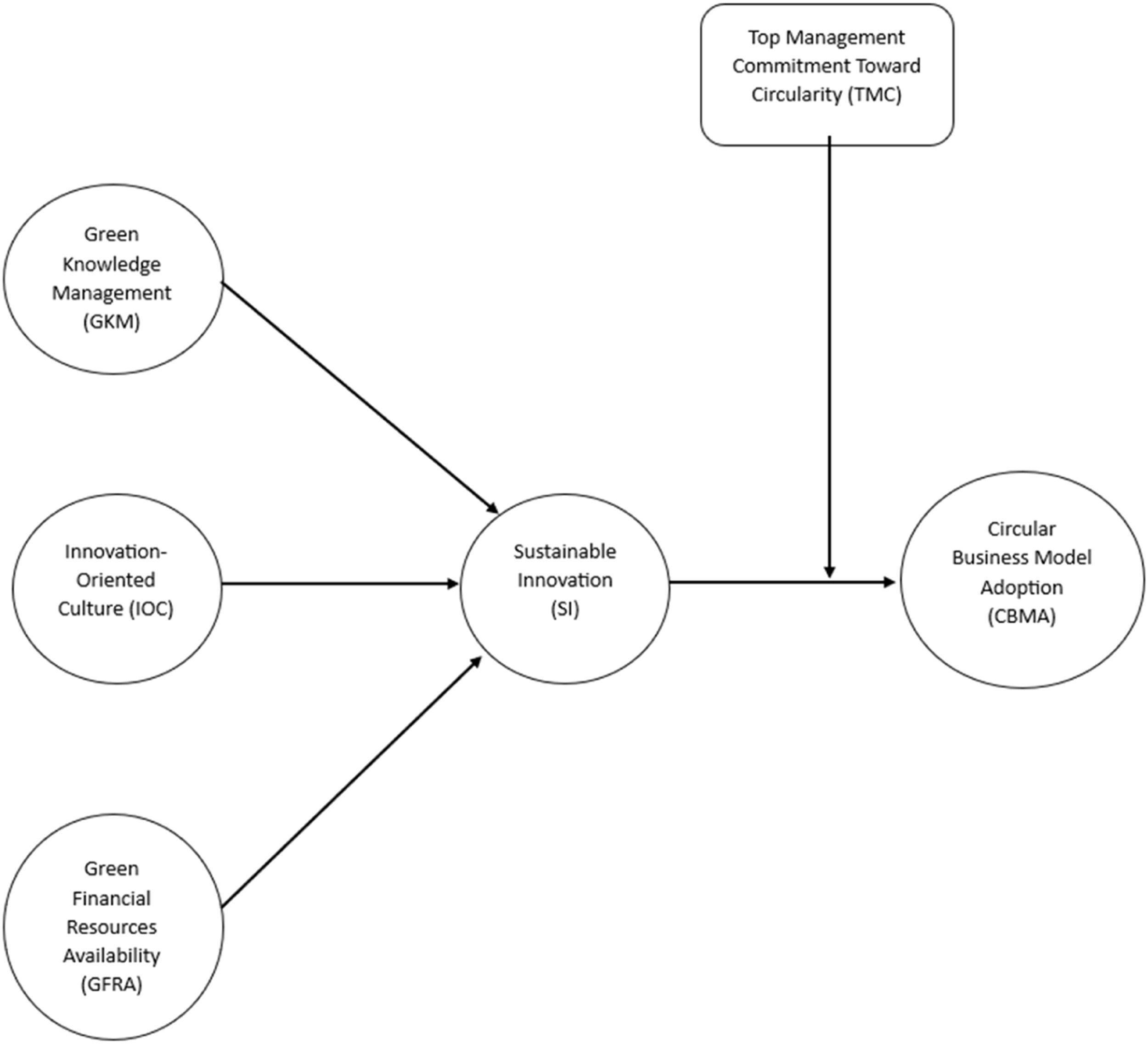
Moreover, this study acknowledges leadership central role in the process of translating innovative capabilities to strategic renewal. Thus, Upper-Echelon Theory (UET) was adopted to research the top-management commitment in moderating the environmental vision, the supply of resources, and organizational motivation, which strengthens the process of transforming sustainable innovation into circular outcomes (Al Rawashdeh et al., 2025; Koistinen et al., 2022). Collectively, these theories explain the moderating mediation framework postulated in this study. This combined theoretical position supports the hypothesis development and shapes the representation of the model shown in Fig. 1.
Data and methodologyThis study employed quantitative cross-sectional research to test the hypothesized moderated mediation model, based on the Resource-Based View, the Knowledge-Based View, the Dynamic Capabilities Theory, and the Upper Echelon Theory. China was chosen as the contextual background due to its position as the largest manufacturing economy globally and its active, policy-oriented shift to circular business and environmental sustainability (Geissdoerfer et al., 2023; Hu et al., 2021). Compared to other emerging economies where sustainability transformation remains mostly voluntary, Chinese SMEs are facing escalated environmental compliance costs and industrial upgrading requirements with strong institutional and regulatory structures (Ghisetti & Montresor, 2020; Sun et al., 2023). Therefore, China is suitably relevant for exploring the organizational capacities that enable the implementation of circular business models. Manufacturing SMEs located in the economic circles of the Yangtze River Delta of Jiangsu and Zhejiang were chosen due to the industrial symbiosis, green industrial parks, and resource-looping projects are actively encouraged in these provinces (Castro-Lopez et al., 2023; Gyimah et al., 2025).
Non-probability sampling was used in this study with the combing convenience sampling technique. This method is commonly being employed in firm-level sustainability and organizational research where access for managerial respondents is often being restricted. Convenience sampling enabled researchers to initially approach SME managers who are accessible from industrial directories, professional networks, and SME development centres. In addition, snowball sampling allowed existing respondents to recommend additional qualified managers involved in sustainability-related strategic decision-making. Two approaches were combined to improve the quality of knowledgeable respondents with relevant organizational experience and enhanced diversity of participating firms across manufacturing subsectors. This methodological approach is considered appropriate in the studies of strategic and sustainability practices within SMEs, where comprehensive sampling frames are mostly unavailable. To minimize the possibility of non-response bias, an independent sample t-test was performed by comparing early and late responses following recommendation of Armstrong & Overton (1977). The results showed no statistically significant differences between two groups across principal study constructs, suggesting that non-response bias was unlikely to affect the validity of results.
The online questionnaire was structured with Google Forms sent to the SME managers who were the decision makers in adopting innovations, and ensuring environmental compliance (Dillman et al., 2014). Invitation emails were sent to 1,000 targeted SMEs who were identified using the regional industrial directories and through the local SME development centers. There were 322 complete and valid responses resulting in a response rate of 32.2 percent. This response rate is sufficient and consistent with the previous firm-level sustainability research in China (Abbas et al., 2020; Nazarian et al., 2024). Before data analysis, the dataset was screened for mistakes and errors. Those who had not filled out the questionnaires completely or a large percentage of missing data were excluded. Moreover, to ensure the reliability and accuracy of data, possible outliers and inconsistencies of responses were excluded.
Prior to the full-scale data collection, survey instruments were reviewed for content validity, clarity and contextual relevance by two academic experts specializing in sustainability and organizational innovation research. Moreover, pilot test of 30 SME managers was carried out and . The results showed satisfactory internal consistency, with Cronbach’s alpha values exceeding recommended threshold of 0.70 for constructs, confirming the reliability of the instrument for the main study. All indicators and constructs were adapted from previously validated scales reported in peer-reviewed studies and all items were measured using 5 Likert scale ranging from 1 (“strongly disagree”) to 5 (“strongly agree”). A detailed list of survey items and their corresponding sources are presented in Appendix A. All participation in this survey was were voluntary and anonymous, and respondents were required to possess at least three years of professional experience within their current organization.
The purpose of the demographic data was to describe the participating firms and ensure the sample diversity. Most companies (47 %) had a workforce of between 50 and 150 people, 38 percent of them had been in business over a decade, and 56 percent of the respondents occupied mid-to-top management roles, which made them appropriate informants in the study of organizational capability and strategic change (Kareem & Kummitha, 2025; Koistinen et al., 2022). The industry distribution showed that it was represented by electronics, machinery, chemical, textile subsectors, and related manufacturing. These distributions strengthened the generalizability of the overall SME landscape. Partial Least Squares Structural Equation Modelling (PLS-SEM) was used to analyze the data in Smart PLS. This method was chosen based on its strength in testing complex multivariate models with both mediation and moderation, especially when the sample sizes are sufficiently large (Hair & Alamer, 2022; Henseler et al., 2009). In this study, a sample size of 322 is considered adequate to perform Partial Least Squares Structural Equation Modeling (PLS-SEM) because it exceeds the minimum requirements outlined by Hair & Alamer (2022). PLS-SEM is particularly appropriate for the study of non-normal data distributions and predictive-focused research designs.
Results and discussionThere were 322 valid responses obtained among manufacturing SMEs in Jiangsu and Zhejiang Provinces of China. The sample population is representative of the population diversity and industrial usefulness of the regions. These companies were well-balanced subsectors that encompassed electronics, machinery, chemicals, textiles, and related manufacturing segments. Approximately 47 percent of the firms had 50 to 150 workers, suggesting a presence of mostly medium sized enterprises, and 38 percent had been in business over a decade, which revealed stable business maturity, with well-established internal structures that are amenable to innovation. A reasonable understanding of sustainability-related practices and strategic decision-making were found among the respondents with most participants (56 %) were in the middle and senior management positions validating their responses as informed organizational views. The targeted regional and firm characteristics further enhance the study’s contextualization as there are many government-supported green transition initiatives in the Yangtze River Delta. These areas possess the ecosystem that are able to support the implementation of the circular economy. Based on these facts, the demographics findings indicate that the sample is suitable, plausible and relevant to the research objectives of this study.
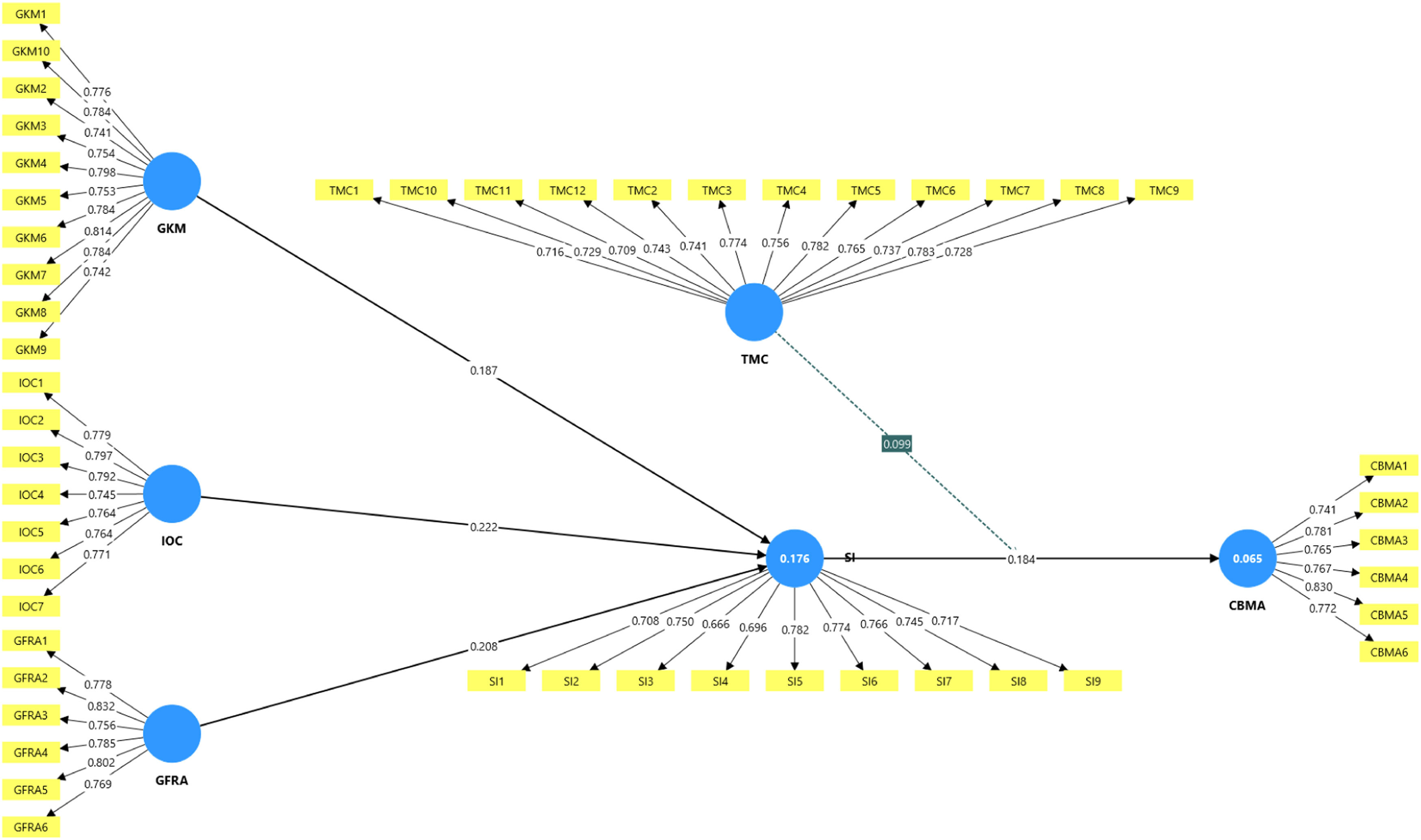
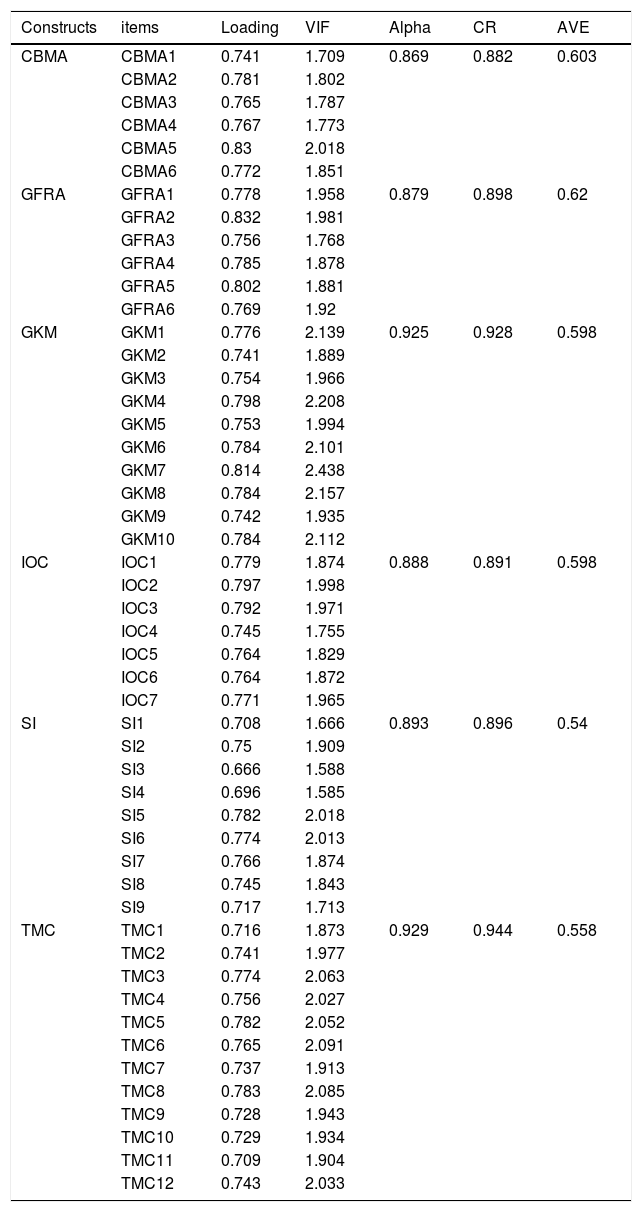
The convergent validity results suggest that the measurement properties of all constructs in the model have satisfactory scores. In specific, all the indicators have a standardized factor loading that is above the recommended standard of 0.65, hence confirming all items are reflecting their latent constructs. Further, the internal consistency reliability is also supported by Cronbach’s alpha and composite reliability (CR) values which are far beyond the 0.70 threshold. These results imply that the items used to measure CBMA, GFRA, GKM, IOC, SI, and TMC are reliable and internally consistent. In addition, all constructs have AVE values exceeding 0.50, confirming a sufficient convergent validity. These also suggest that over half of the variance in the indicators are accounted by the corresponding constructs. Moreover, the VIF values are within reasonable limits, which implies that there is no severe multicollinearity issue among the measurement items. These findings confirm that the measurement model has strong psychometric properties, and that the constructs are conceptually and statistically sound for use in the subsequent structural model assessment (see Table 1).
Convergent validity test.
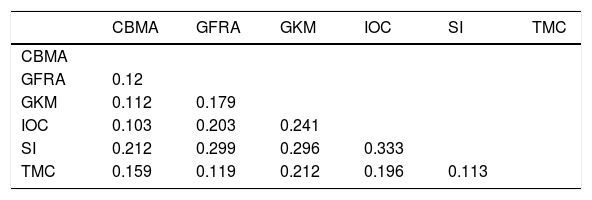
The discriminant validity results achieved through the Heterotrait-Monotrait ratio (HTMT), prove that the constructs have empirical separateness. The HTMT coefficients are significantly lower than the conservative value of 0.85, thus proving the lack of extensive overlap between the constructs, these confirm that they represent different domains of theory. For example, the correlations between Sustainable Innovation (SI) and Green Financial Resources Availability (GFRA; HTMT=0.299) and Green Knowledge Management (GKM; HTMT=0.296) are within reasonable ranges, despite the relatively high correlations. These results, indicate that the related theoretical similarity without redundancy. Similarly, Top Management Commitment to Circularity (TMC) demonstrates moderate and satisfactory relationships with SI (HTMT = 0.113) and CBMA (HTMT = 0.159), confirming the conceptual soundness of the framework proposed. Overall, the HTMT findings evidently prove that the discriminant validity has been met (see Table 2).
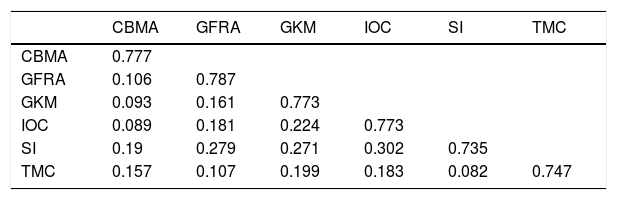
Fornell Larcker criterion results further support the discriminant validity between all constructs. The square root of the average variance (extracted) (AVE) values, which are shown on the diagonal, are greater than the inter-construct correlations of each row and column. The pattern shows that every construct has a higher percentage of commonality between construct and measurement items as compared to items in other constructs in the model. For example, the diagonal is higher than Sustainable Innovation (SI = 0.735) and correlates with the associated variables of Green Knowledge Management (GKM = 0.271) and Green Financial Resources Availability (GFRA = 0.279). Likewise, Circular Business Model Adoption (CBMA) and Top Management Commitment Circularity (TMC) have greater diagonal values compared to any inter-construct relationship. These findings conclude that the constructs attain accepted discriminant validity and subsequent structural relationships can be interpreted validly (see Table 3).
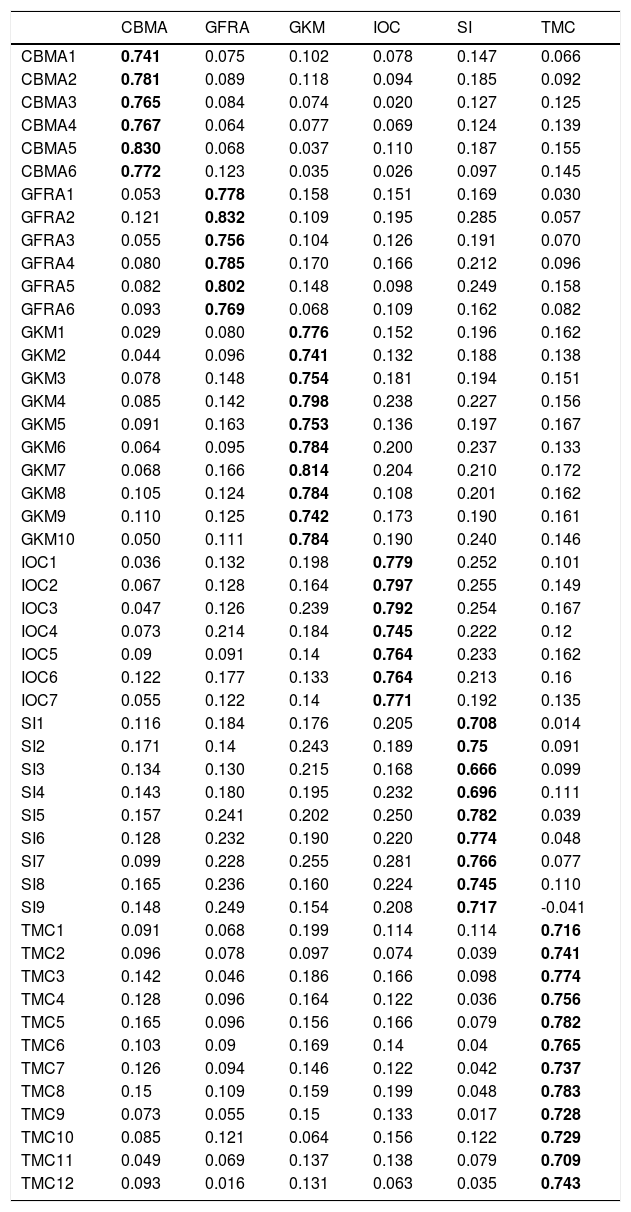
The cross-loadings support the discriminant validity of the measurement model as each indicator has the highest loading on the intended construct when compared with all the other constructs. For example, the loadings of Circular Business Model Adoption (CBMA1 - CBMA6) are significantly better on CBMA than on other constructs. Similarly, the measurement items that apply to GFRA Green Financial Resources Availability also show higher loadings to GFRA more than to Green Knowledge Management (GKM), Innovation-Oriented Culture (IOC), Sustainable Innovation (SI), or Top Management Commitment to Circularity (TMC). The derived items of GKM, IOC, SI and TMC all bear the expected loadings patterns, and each indicator is maximally loaded on its parent’s construct. The moderate cross-loadings between closely related constructs, including SI and GKM and GFRA, indicate possible relationships, but are separated enough to avoid construct redundancy. Comprehensively, the cross-loadings validate the indicators used are conceptually as well as empirically suitable to represent their respective constructs. Therefore, the results support the reliability and validity of the measurement structure before moving to the structural model evaluation (see Table 4).
Cross loadings.
Fig. 2 shows the measurement model. The results reveal that all latent constructs are accurately and reliably measured by their respective observed indicators. The significant and strong factors loadings suggest that the items have a meaningful contribution to their respective construct. These results also support the internal consistency and the appropriateness of the measurement scales adopted. In addition, the convergent validity is supported by the well-organized grouping of observed variables around their constructs. The discriminant validity is also supported by the HTMT, Fornell Larcker, and cross-loadings assessments provided. Consequently, the measurement model offers a valid empirical basis allowing structural model analysis to be conducted.
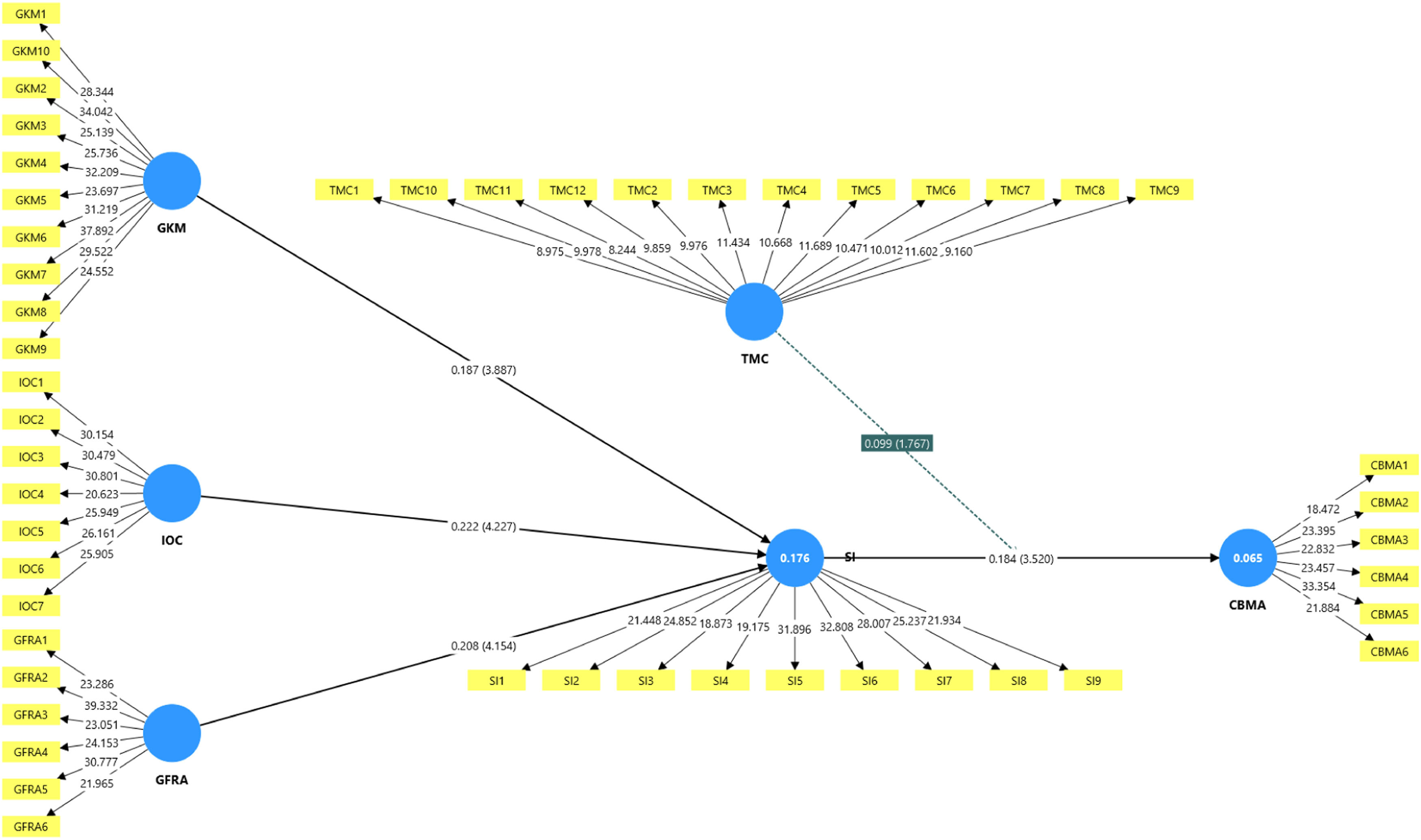
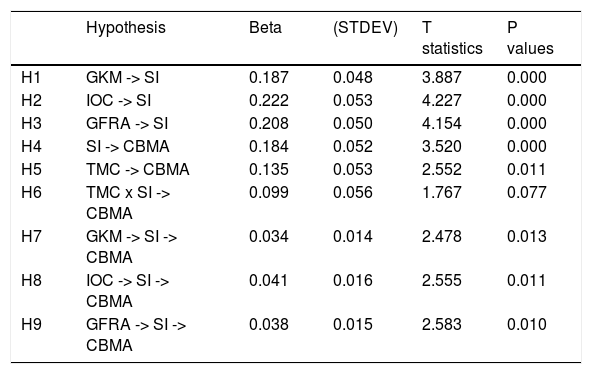
Table 5 shows the path analysis results proving that all hypothesized direct relationships of the model are positive and statistically significant. Green Knowledge Management (GKM), Innovation-Oriented Culture (IOC), and Green Financial Resources Availability (GFRA) are the strongest predictors of Sustainable Innovation (SI) with the values of b = 0.187, t = 3.887, b = 0.222, t = 4.227, and b = 0.208, t = 4.154. These findings suggest that organizational knowledge systems, cultural orientations and financial capabilities are all crucial in promoting sustainability-oriented innovation among Chinese companies. SI positively influences Circular Business Model Adoption (CBMA) (b = 0.184, t = 3.520) indicating that it is a strategic mechanism that allows companies to shift to circular practice. There is also a statistically significant direct effect of TMC on CBMA (b = 0.135, t = 2.552), indicating that leadership involvement is a mission-critical factor in structural adjustments towards circularity. Hence, the findings support all direct effect hypotheses (H1–H5) and highlight the significance of internal resources and managerial commitment in sustainable paths to transition.
Path analysis.
The mediating and moderating mechanisms used in this study have also been found to have significant effect in the analysis. The indirect effects affirm that SI plays a significant mediating role between GKM and CBMA (b = 0.034, t = 2.478), IOC and CBMA (b = 0.041, t = 2.555), and GFRA and CBMA (b = 0.038, t = 2.583). These findings validate mediation hypotheses H7, H8, and H9, and suggest that internal organizational enablers affect circular adoption via the improvement of sustainable innovation capabilities. The moderation indicates that TMC enhances the effect of SI to CBMA (b = 0.099, t = 1.767, p = 0.077), supporting H6, and providing a visualization of how a high level of leadership commitment reinforces the transformation of innovative efforts into the practices of a circular business model.
The moderating effect of Management Commitment to Circularity TMCbetween SI and CBMA was statistically weaker compared to other structural paths (β = 0.099, p = 0.077). However, the relationship does not satisfy conventional 5 percent significance threshold (p < 0.05), that remains acceptable at 10 percent significance level adopted in several explanatory and behavioral PLS-SEM studies, specifically when determining the effects of interactions that are more typical and difficult to detect. Therefore, H6 could be interpreted as providing marginal and meaningful empirical support for strengthening leadership role in circular transformation. Moreover, bootstrapping analysis reveal that confidence intervals direct and indirect relationships did not include zero, further confirming the robustness and statistically reliability of estimated path coefficients. Explanatory power of structural model was also supported through R² values of the endogenous constructs. This moderating relationship indicates that the higher top management’s commitment of being circular, the stronger the positive influence of sustainable innovation on adopting circular business models. However, in a situation where there is a weak leadership commitment, the capability of sustainable innovation to be converted into a circular business practice decline. This implies that the supporting role of the leadership is a strategic catalyst and it enhances the effectiveness of innovation initiatives to facilitate circular transformation. Overall, the structural model has the statistical support and high level of consistency showing that there is combined influence of sustainability-based knowledge, culture, resources, and managerial support in circular transformation within the Chinese enterprises.
As such, these findings indicate that sustainable innovation works as a critical channel that transforms internal organizational resources into circular business activities. In particular, the concept of green knowledge management, innovation-driven culture, and the presence of financial resources do not contribute to the emergence of a circular transformation directly. These constructs are relevant only if they stimulate the firm’s ability to produce innovations that are sustainability-oriented. This highlights the key contribution of sustainable innovation as an operating bridge between organizational capacity and circular business model deliverables.
Fig. 3 presents the structural model with theorized relationships between the constructs and the standardized path coefficients. Sustainable Innovation (SI) is one of the key means by which internal drivers can affect Circular Business Model Adoption (CBMA). The graphical evidence confirms that Green Knowledge Management (GKM), Innovation-Oriented Culture (IOC), and Green Financial Resources Availability (GFRA) have a powerful and positive impact on SI. The findings are consistent with the theoretical results of the studies that knowledge assets, organizational culture, and access to financial resources positively influence innovation results based on sustainability. The relationship between SI and CBMA is positive besides being statistically significant, meaning that firms that have undertaken sustainability-driven innovation have greater chances of transitioning to circular models. The direct impact of Top Management Commitment to Circularity (TMC) on CBMA are evident and apparent highlighting the central role of leadership engagement and strategic prioritization in promoting circular change in organizations.
Moreover, the influence of Management Commitment to Circularity (TMC) as a moderator of the SI-CBMA relationship is also graphically emphasized. As shown in Fig. 3, the interaction effect is strong, meaning that the greater the senior management is committed to the concept of circularity, the stronger the translation of innovation outcomes into circular programs will be. This implies that leadership support is an enabling factor, which transforms sustainability-based innovations into practical, strategically balanced circular programs. Generally, Fig. 3 supports an empirically confirmed model of internal resource and capabilities driven by sustainability that becomes more effective when supported by top-level strategic stewardship.
DiscussionThe findings suggest strong empirical data to substantiate the main hypothesis that the internal organizational enablers have a significant positive impact on Sustainable Innovation (SI), which subsequently facilitates Circular Business Model Adoption (CBMA) in Chinese companies. Based on these findings, a few implications can be discussed. First, the findings support that Green Knowledge Management (GKM) has the greatest impact on SI, which is positive (H1 supported). This shows the position of environmental knowledge acquisition, sharing, and application as a key to innovation in accordance with sustainability priorities. These results align with previous research that holds that knowledge-based learning potential is the basis of green innovation and competitiveness (Abbas et al., 2020; Lin & Chen, 2017; Ulhaq et al., 2024). Similarly, the finding that Innovation-Oriented Culture (IOC) positively affects SI (H2 supported) is an additional evidence that risk-taking and creativity-oriented organizational norms foster proactive innovation behaviors (Fuad et al., 2020; Tian et al., 2018; Xu et al., 2023). Also, the strong correlation between Green Financial Resources Availability (GFRA) and SI (H3 supported) shows that the level of financial resources is a factor that defines whether a firm is able to invest in more advanced sustainable technologies and upgrades in their processes, a fact that has been well documented in the literature of sustainability (Agyapong & Tweneboah, 2023; Hu et al., 2021; Li et al., 2020).
The empirical results also support the fact that sustainable innovation (SI) has a strong impact on the adoption of circular business model adaptation (CBMA) (H4 affirmed), which confirms the previous studies that innovation is a required antecedent of firms moving towards circularity (Afeltra et al., 2023; Marrucci et al., 2022; Osei & Asare, 2025). Furthermore, top-management commitment to circularity (TMC) positively affects CBMA itself (H5 supported), which highlights leadership as a decisive strategy in the circular transformation process (Al Rawashdeh et al., 2025; Koistinen et al., 2022). The mediation analysis indicates that SI is an important process that connects green knowledge management (GKM), innovative organizational culture (IOC), and Green Financial Resources Availability and adaptation (GFRA) to CBMA (supported by H7–H9), which is consistent with the literature on sustainable innovation connecting firm resources with circular outcomes (Jabbour et al., 2020; Nazarian et al., 2024; Polas et al., 2023). Lastly, Management Commitment to Circularity TMC has a notable moderating impact, which implies that managerial support enhances the correlation between SI and CBMA (H6 supported), which proves that the role of leadership in translating innovative practices into a circular business strategy is multiplied (Santa-Maria et al., 2022; Ul-Durar et al., 2023).
Upon confirming hypothesized relationships, the outcomes also provide deeper theoretical insights into how organizational capabilities would accelerate circular transformation in emerging economies. From perspective of Resource-Based View (RBV), Green Knowledge Management (GKM), Innovation-Oriented Culture (IOC), and Green Financial Resource Availability (GFRA) could be considered valuable strategic resources that would enable firms to achieve sustainability-oriented competitive advantage from innovation capabilities (Barney, 1991). Furthermore, being aligned with Knowledge-Based View (KBV), the outcomes further indicate that environmental knowledge acquisition, integration, and distribution enhance the capabilities of firms for generating innovative and sustainability-driven solutions necessary for circular business transformation (Grant, 1996 ). Mediating role of Sustainable Innovation (SI) strongly supports assumptions of Dynamic Capability Theory (DCT) that would suggests that firms should continuously reconFig. internal competencies, resources, and operational processes for adapting to change environmental and sustainability demands (Teece et al., 1997). Importance of moderating role of Top Management Commitment to Circularity (TMC) is also aligned with Upper Echelons Theory (UET), focusing that strategic organizational outcomes are significantly impacted by managerial understanding, leadership values, and executive commitment towards sustainability-oriented transformation (Hambrick & Mason, 1984). Thus, research extends existing circular economy and sustainable innovation literature by showing that Circular Business Model Adoption (CBMA) which is not being driven by isolated organizational resources alone, but rather than strategic interaction among knowledge capabilities, financial preparedness, innovation-oriented culture, dynamic innovation processes, and leadership commitment.
Furthermore, the empirical findings have strong implications in the adoption of digital technologies and artificial intelligence in the process of circular transformation. AI-based knowledge systems, predictive analytics, and digital monitoring systems can help an organization increase its ability to gain environmental knowledge, optimize resource use, and support preventive maintenance and material tracking throughout supply chains. Such technological opportunities will further facilitate sustainable innovation and accelerate the adoption of the circular business models in industry ecosystems.
Theoretically, the findings support resource-based and knowledge-based views, which assume that internal organizational resources and knowledge capabilities are the key drivers of innovation-based competitive advantage. The study provides empirical data that sustainability-oriented innovation is a dynamic capability, facilitating firms to realign the resources towards creating circular values by showing how sustainable innovation mediates the relationship between organizational capabilities and the adoption of circular business models.
This work is relevant to the theoretical and empirical literature in the sense that it provides a demonstration that a synergy between the knowledge systems that are sustainability-oriented, financial stability, cultural innovation, and leadership determination is essential in accelerating the transition to a circular economy in emerging market settings as it has been in the case of China.
ConclusionThis study has determined that how organizational enablers, namely Green Knowledge Management, Innovation-Oriented Culture, and Green Financial Resource Availability, impact Sustainable Innovation and then adoption of Circular Business Models between Chinese manufacturing SMEs. The findings suggest that firms that possess a stronger environmental knowledge system, innovation-supportive cultural values, and sufficient sustainability-focused financial resources are better positioned for achieving sustainable innovation outcomes. The findings further confirm Sustainable Innovation as basic strategic mechanism linking organizational capabilities with circular business transformation.
Furthermore, Top Management Support of Circularity emerged not only as direct driver of Circular Business Model implementation, but also as a moderating factor that would strengthens the relationship between Sustainable Innovation and circular transformation. These results focused on China’s for circular economy transitions in their organizational knowledge, cultural orientation, financial readiness, and leadership commitment.
From theoretical perspective, this research contributes towards growing literature on circular economy transition, sustainable innovation, and organizational capability frameworks. This study proposed an integrated moderated mediation model combining knowledge-based, resource-based, and leadership-oriented perspectives for explaining how firms convert internal sustainability preparedness in circular business model transformation. With positioning of Sustainable Innovation as mediating mechanism, the study extends previous research by clarifying process of organizational enablers generate measurable circular outcomes. Moreover, moderating role of Top Management Support highlights the circular transformation which is not sole capability-driven but also strategically guided from leadership commitment and organizational direction.
From practical perspective, the findings provide significant implications for managers, business leaders and policy-makers. Organizations always seek to accelerate circular transformation that would prioritize the development of environmental knowledge capabilities, fostering cultures, and allocation of dedicated financial resources towards sustainability initiatives. Senior management should actively communicate long-term circular objectives, that provide strategic guidance, and reduce organizational barriers that would hinder implementation. Policy-makers, highlight the significance of strengthening sustainability-oriented financing mechanisms, institutional support systems, development of leadership program that would encourage circular thinking and sustainable industrial practices.
There are a few limitations in this study. First, the survey merely focused on Chinese manufacturing SMEs that would limit the generalizability of outcomes of other industries and institutional contexts. Second, the cross-sectional research restricts the ability for establishing casual relationships and is not able to capture evolving nature of circular transformation over time. It is proposed that future studies should focus on longitudinal and cross-country approaches to provide broader comparative insights into circular business model adoption. In addition, organizational and environmental factors such as regulatory pressure, digital transformation readiness, eco-system collaboration, and artificial intelligence integration should also be incorporated for further explanations of sustainable innovation and circular business transformation across different industrial contexts.
FundingThis funding was supported by the Guangxi Science & Technology Normal University Young Scientific Research Innovation Team (Grant No.GXKS2025QNTD02).
CRediT authorship contribution statementLingli Qing: Validation, Resources, Methodology, Investigation, Formal analysis, Data curation, Conceptualization, Writing – original draft. Yulong Cheng: Writing – review & editing, Writing – original draft, Visualization, Validation, Supervision, Software, Project administration, Investigation.

