Shared decision-making (SDM) is a core component of patient-centred care, with proven benefits for decision quality and satisfaction. However, its implementation in hospital settings remains limited. This study aimed to describe the development of a SDM model and to evaluate its feasibility, acceptability, and preliminary effects through two pilot implementation studies.
MethodsWe used a mixed-methods design including the co-creation of an SDM implementation model and two comparative pilot evaluations. Development involved a multidisciplinary team. Pilot implementation was tested with patients with class 3 obesity (n=50) and advanced chronic kidney disease (ACKD; n=38) recruited from outpatient services. The SDM model is a six-step framework comprising clinical decision prioritisation, co-creation of patient decision aids, healthcare professional training, and staged implementation following the three-talk model. Outcomes included feasibility (recruitment and ≥80% process completion), intervention acceptability, and preliminary decision quality indicators (knowledge, satisfaction, decisional conflict) and SDM process measures (SDM-Q-9, CollaboRATE).
ResultsFeasibility thresholds were achieved in both pathways, with high adherence. In obesity, SDM participants reported greater knowledge (80.0% vs 48.8%; p<0.001) and higher decision satisfaction (28.0 vs 24.2; p=0.022). In ACKD, SDM participants also showed significantly higher knowledge (91.1% vs 37.1%; p<0.001), while satisfaction and process outcomes were similar between groups.
ConclusionOur SDM model is a feasible and acceptable framework for the integration of SDM into hospital workflows. Its pilot implementation improved patient knowledge and engagement, supporting its scalability and further evaluation of long-term impact and sustainability.
La toma de decisiones compartidas (TDC) es un componente central de la atención centrada en el paciente, con beneficios demostrados en la calidad de la decisión y en la satisfacción. Sin embargo, su implementación en hospitales sigue siendo limitada. El objetivo de este estudio fue describir el desarrollo un modelo de TDC y evaluar su factibilidad, aceptabilidad y resultados preliminares a través de dos estudios piloto de implementación.
Pacientes y métodosSe utilizó un diseño mixto que incluyó la co-creación de un modelo de implementación de TDC y dos evaluaciones piloto. El desarrollo involucró a un equipo multidisciplinar. La implementación piloto se realizó con pacientes con obesidad grado3 (n=50) y enfermedad renal crónica avanzada (ERCA; n=38), reclutados en consultas externas. El modelo de TDC desarrollado es un marco de seis pasos que comprende la priorización de decisiones clínicas, la co-creación de herramientas de ayuda a la decisión, la formación de profesionales sanitarios y una implementación escalonada basada en el modelo de las tres conversaciones. Las variables incluyeron factibilidad (reclutamiento y ≥80% de finalización del proceso), aceptabilidad de la intervención e indicadores preliminares de calidad de la decisión (conocimiento, satisfacción, conflicto decisional) y medidas del proceso de TDC (SDM-Q-9, CollaboRATE).
ResultadosSe alcanzaron los umbrales de factibilidad en ambos procesos, con alta adherencia. En obesidad, los participantes en TDC mostraron mayor conocimiento (80,0% vs 48,8%; p<0,001) y mayor satisfacción con la decisión (28,0 vs 24,2; p=0,022). En ERCA, los participantes en TDC también mostraron mayor conocimiento (91,1% vs 37,1%; p<0,001), mientras que la satisfacción y otros resultados del proceso fueron similares entre grupos.
ConclusionesEl modelo de TDC evaluado es un marco factible y aceptable para integrar la decisión compartida en los flujos asistenciales hospitalarios. Su implementación piloto mejoró el conocimiento y la implicación de los pacientes, lo que respalda su escalabilidad y la necesidad de evaluar su impacto y su sostenibilidad a largo plazo.
Shared decision-making (SDM) is a crucial component of evidence-based medicine and high-quality patient-centred care, enabling patients to actively participate in critical health decisions.1,2 This approach tailors care to patients’ unique characteristics while aligning with their values and preferences.3 SDM requires presenting the best available evidence, balancing benefits and risks, and incorporating patient perspectives into the final decision.4,5
Patient decision aids (PDAs) are key tools that structure information and facilitate SDM between patients and healthcare professionals (HCPs). They help patients understand treatment options, evaluate risks and benefits, and make choices aligned with personal values.6 By fostering informed choices and autonomy, PDAs are widely recognised as effective instruments to improve decision quality.
Evidence consistently shows SDM improves satisfaction, adherence, quality of life, and sometimes clinical outcomes, while also supporting health equity and reducing costs.4,7,8 Despite these advantages, implementation of SDM and PDAs in hospitals remains limited. Barriers include time constraints, limited training, hierarchical structures, and resistance to change. Facilitators include institutional commitment and motivation of professionals who experience the benefits of SDM.9
To address this gap, we developed a SDM model, designed to be rigorous, sustainable, and pragmatic. We aimed to provide an equitable and consistent SDM implementation model across the hospital, avoiding fragmented initiatives.10,11 The aim of this paper is to describe the development of the SDM model, outline its six-step implementation process, and present feasibility and preliminary effectiveness results from two pilot randomised evaluations.
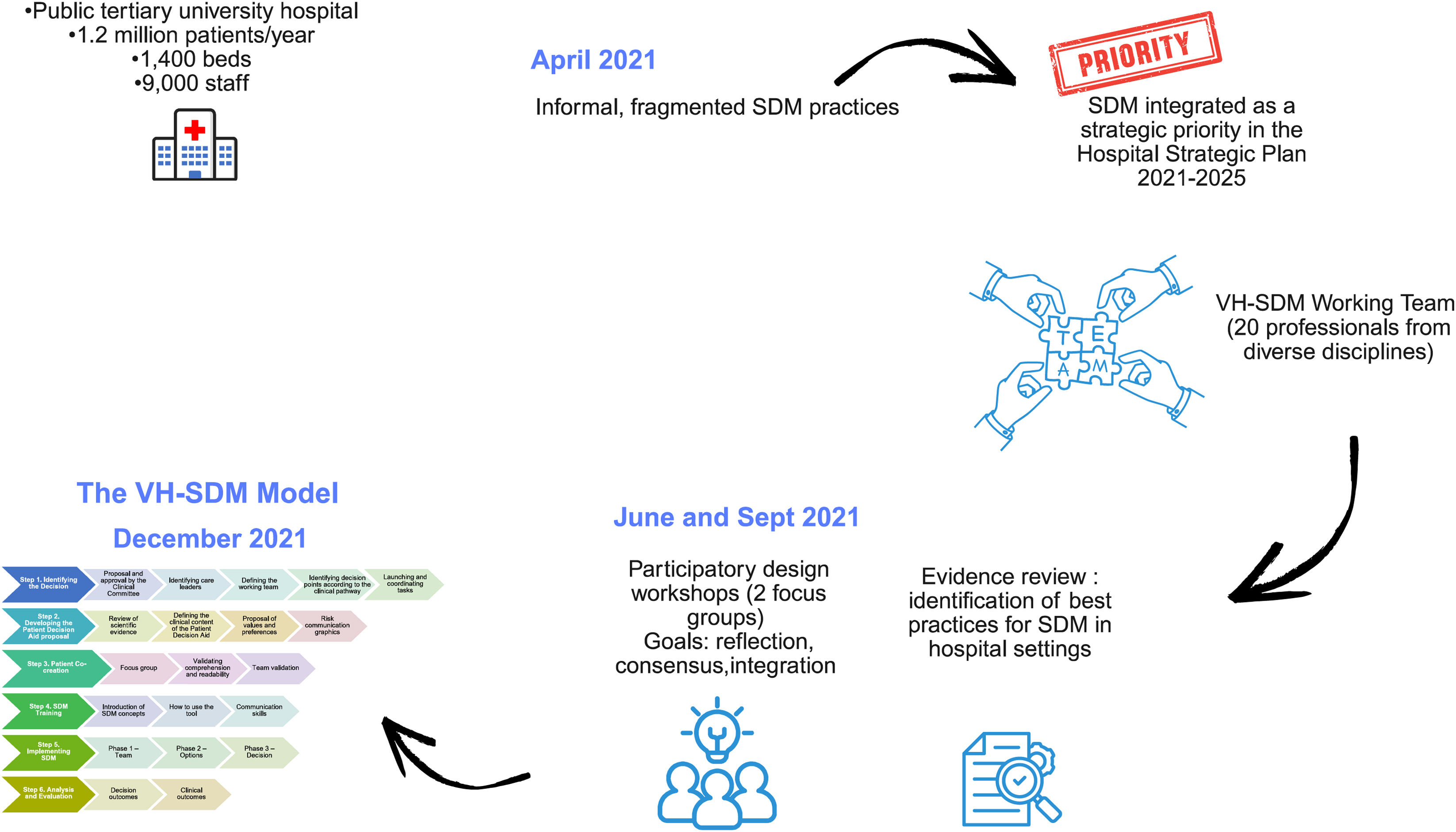
MethodsDevelopment of the SDM modelThis implementation study was conducted in a tertiary public university hospital in Barcelona, Spain, that serves approximately 1.2 million patients annually, with 1400 hospital beds and 9000 professionals. Until 2021, the hospital lacked a cohesive framework for SDM. Although some components were informally integrated, practices were unstructured and inconsistent. In response to this gap, the Department of Patient Care and Citizen Participation, together with the Clinical Assistance Directorate and the Quality Unit, launched development of a formal SDM model. SDM became a strategic priority in the 2021–2025 Hospital Strategic Plan.
The development process followed a structured, participatory approach inspired by design thinking and co-design principles, combining evidence review with stakeholder engagement through iterative cycles of exploration, ideation, prototyping, and refinement (Fig. 1). Model development was informed by three complementary sources: (1) a pragmatic review of the scientific literature and international best practices in SDM implementation; (2) analysis of institutional policies, clinical pathways, and quality indicators related to patient-centred care; and (3) experiential knowledge from frontline professionals and patient participation experts. Evidence from the literature review was synthesised by the Quality Unit and presented to the working group to support structured discussion.

In April 2021, a multidisciplinary working group of 20 professionals, including physicians, nurses, social workers, mental health professionals, and experts in patient participation and quality improvement, was convened. Two structured focus groups (June and September 2021) were conducted and facilitated by the Quality Unit. Sessions addressed identification of gaps in SDM practice, mapping of decision-making processes, generation of model components, and refinement of a preliminary framework. Proposals were iteratively reviewed between sessions, and consensus was defined as ≥80% agreement. This co-design process, integrating empirical evidence and stakeholder input, resulted in the final SDM model.
Organisational implementation strategySDM was formally recognised as a strategic priority in the Hospital Strategic Plan 2021–2025, embedding SDM within the institution's quality improvement and patient-centred care agenda. The implementation was conceived as a hospital-wide initiative aligned with annual strategic objectives, establishing the goal that each clinical area of knowledge would progressively develop and implement at least one SDM tool within a prioritised clinical condition.
Pilot studies: design and settingA protocol was registered (ClinicalTrials.gov NCT05424809) to evaluate feasibility and preliminary effectiveness of the model. Two pathways were selected: class 3 obesity and advanced chronic kidney disease (ACKD). Both pilots used a single-centre, parallel-group randomised controlled trial (RCT) design. Participants were allocated 1:1 to the SDM model or standard care. Ethical approval was obtained, and written informed consent was provided by all patients. The study adhered to the CONSORT 2010 guidelines for the reporting of RCTs12 and Standards for Reporting Implementation Studies (Appendix A).13
Participants and eligibilityObesity pilotPatients with class 3 obesity14 defined as having body mass index (BMI) ≥40kg/m2, or ≥35kg/m2 with comorbidities eligible for either bariatric surgery or non-surgical management.
ACKD pilotPatients with 4–5 stage CKD (estimated glomerular filtration rate (eGFR) <30mL/min/1.73m2) considering peritoneal dialysis, haemodialysis, kidney transplantation, or conservative (non-dialysis) management.15
Sample size and feasibility criteriaAs this was a pilot study, the sample size was determined based on the precision of the feasibility estimate rather than statistical power. Assuming an expected completion rate of 80% in the intervention group, a sample of 30 participants allows estimation of this proportion with a 95% confidence interval and a precision of approximately ±14%, which was considered adequate to assess whether the predefined feasibility criterion was achieved.16
To assess feasibility, we measured the proportion of participants in the intervention group who agreed to participate in the SDM process and completed all model steps, including completion of study questionnaires. A feasibility threshold of ≥80% completion was pre-specified to indicate successful implementation.
OutcomesWe assessed decision quality and SDM process outcomes:
- •
Knowledge of options and outcomes: We assessed participants’ knowledge using multiple-choice questions developed by the research team, tailored to each clinical scenario. We compared the number of correct responses between groups.
- •
Satisfaction with the decision: We measured satisfaction using the validated Spanish version of the 6-item satisfaction with decision (SWD) scale, rated on a 5-point Likert scale.17
- •
Perceived SDM process: We evaluated patients’ perceptions using the validated Spanish version of the Shared Decision-Making Questionnaire (SDM-Q-9), which includes 9 items rated on a 6-point Likert scale.18
- •
Decisional conflict: We measured uncertainty and contributing factors using the Spanish version of the 16-item Decisional Conflict Scale (DCS), rated on a 5-point Likert scale.19
- •
Perceived participation: We assessed perceived involvement using the Spanish version of the CollaboRATE Scale, a brief 3-item instrument rated on a 10-point scale.20
All analyses were conducted using standard statistical software.
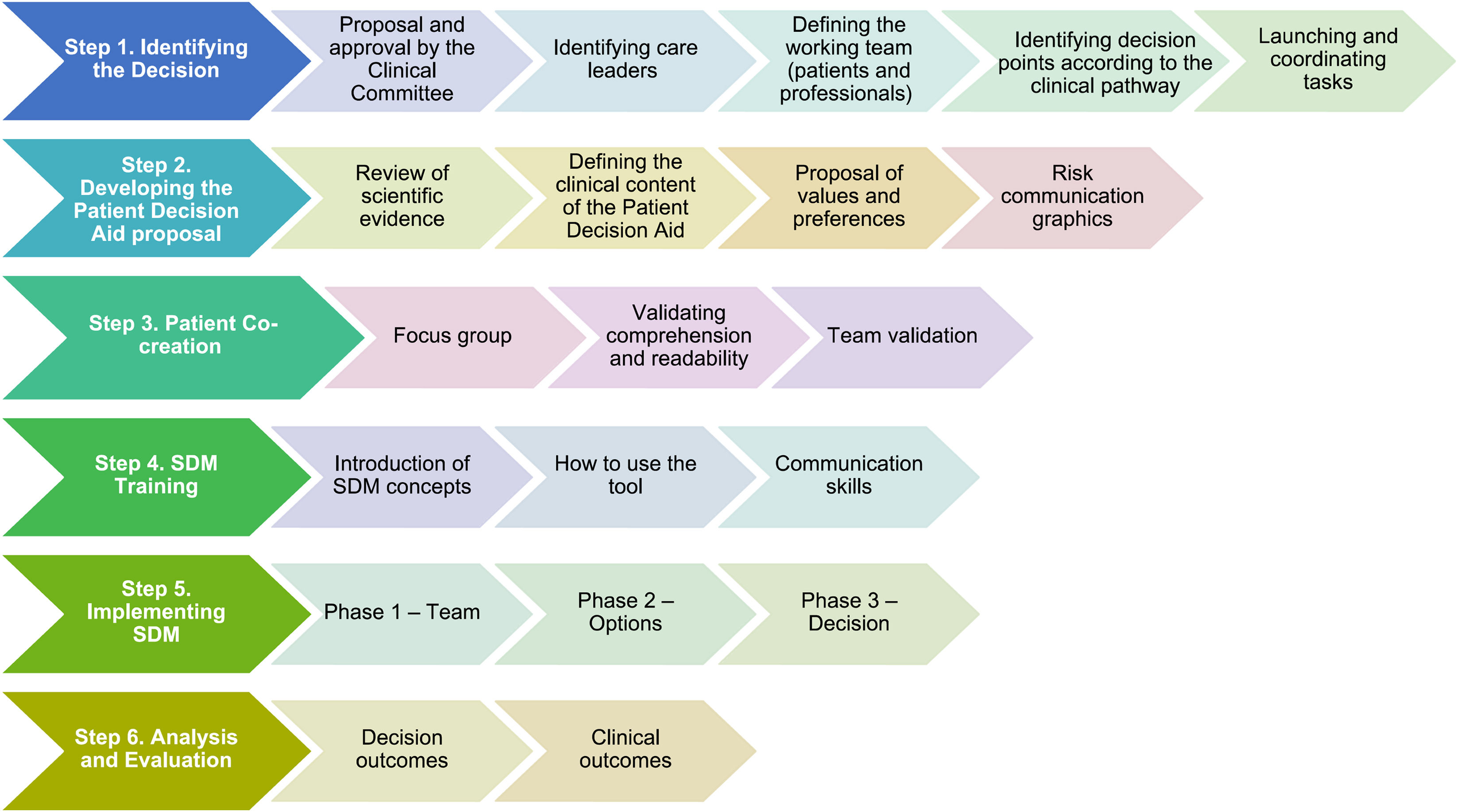
ResultsEvidence-based framework: the VH-SDM modelTo guide the development of our implementation model, we drew on key resources from the Patient Decision Aids Group at the Ottawa Hospital Research Institute (Ontario, Canada), particularly their Implementation Toolkit21 (https://decisionaid.ohri.ca/implement.html), which is grounded in the Knowledge-to-Action Framework and the Ottawa Model of Research Use.22 This toolkit provides a structured five-stage process for integrating PDAs into clinical practice. It was refined to a six-step process (Fig. 2).
Step 1. Identifying the decisionProposal of the clinical decision and approval by the Clinical Committee
To prioritise a clinical process, we assess its suitability and relevance according to the Hospital Strategic Plan. A process qualifies when it involves at least two treatment options with a close balance of effects, when evidence is uncertain, or when patient values may influence choice.23 Clinical impact is judged by prevalence, and prioritisation is confirmed by the clinical team. We include only interventions already integrated in routine practice, excluding those limited to informed choice,24 purely research, or rarely indicated.
Identifying care leadersThe Department of Patient Care and Citizen Participation designates clinical leaders (physicians, nurses) who act as mentors for peers and commit to completing implementation within three months.
Defining the working teamThe multidisciplinary team includes:
- •
HCPs with clinical experience and leadership
- •
Quality Unit representatives, with skills in implementation research, systematic reviews, and PDA methodology.
- •
Patient Care and Citizen Participation Unit, ensuring the patient perspective and coordinating activities.
- •
Patients and public involvement: with direct experience of the clinical pathway, to ensure alignment with patient expectations.
Clinical pathways are mapped from diagnosis to treatment, identifying key decision points where evidence and patient preferences intersect.
Launching and coordinating tasksOnce the team is defined, tasks, timelines, and meetings are scheduled to guide the process.
Step 2. Developing the patient decision aid proposalWe use a shared template to ensure consistency. The PDA is designed for paper format, practical in consultations.
Review of scientific evidenceThe Quality Unit conducts literature searches (PubMed, Cochrane, Ontario database) addressing PICO elements. Sources include existing PDAs, systematic reviews, guidelines, and primary studies, prioritising RCTs.
Defining the clinical content of the patient decision aidThe PDA summarises the condition, compares benefits and risks of each option in side-by-side format, and emphasises clarity.
We follow the International Patient Decision Aid Standards (IPDAS)24 ensuring accuracy, balance, patient involvement, clarity of risk–benefit communication, and decision-support effectiveness. Our PDAs fulfil the seven criteria required for classification and the nine aimed at minimising bias.
Proposal of values and preferencesBased on evidence and HCP consultation, we include general statements for patients to rate on a Likert scale, later validated with target patients (Appendix B).
Risks communication graphicsUp to five key outcomes are displayed using absolute numbers (e.g., per 100 or 1000). Evidence comes from RCTs, meta-analyses, or other high-level studies. Results are presented with consistent denominators and timeframes.
Step 3. Patients co-creationFocus groupPatients review all PDA components (descriptions, data, values, and graphics) and propose modifications. Feedback is thematically analysed, evaluated against evidence and decision-support criteria, and incorporated into revised PDAs.
Validating comprehension and readabilityPatients suggest simplifications to remove jargon and complex language. Text is presented in short, clear sections to improve accessibility.
Team validationFinal PDAs are approved by all team members, ensuring clarity, clinical validity, and patient-centredness.
Step 4. SDM trainingInsufficient training and misconceptions are barriers to SDM. Many HCPs believe they already practice SDM or fear it prolongs consultations, often confusing it with informed decision-making.
Introduction to SDM conceptsA foundational session for all HCPs covers principles of SDM, ethical and clinical rationale, benefits, and standards such as IPDAS. It also introduces decision psychology and decisional conflict, with pre/post assessments to evaluate learning.
How to use the PDAsClinicians receive case-based training and role-play to learn when and how to introduce PDAs, guide patients through options, and communicate risks using absolute numbers, natural frequencies, and consistent time horizons. Bias mitigation techniques are included.
Communication skillsTraining reinforces active listening, empathy, and open-ended questioning to foster dialogue.
Step 5. Implementing SDMThis phase focuses on applying SDM in clinical practice through the “Three-talk model” proposed by Elwyn et al.,4 structuring the SDM process into three stages:
Team talkAt first visit, HCPs explain SDM and introduce the PDA, which patients review at home.
Option talkOn return, HCPs address patient questions, review benefits/risks, and elicit values.
Decision talkPatient and HCP choose the option aligned with values and preferences. In many cases, these three talks are condensed into two visits, with Talk 2 and Talk 3 combined once the patient feels ready to proceed.
Step 6. Analysis and evaluationDecision outcomesWe evaluate options, knowledge, and decisional conflict in at least 20 patients after consultation.
Clinical outcomesA two-year observational follow-up will explore adherence, condition-specific indicators, and healthcare utilisation. The primary aim is to assess decision quality, though clinical implications may emerge. At the time of writing, this phase is under development.
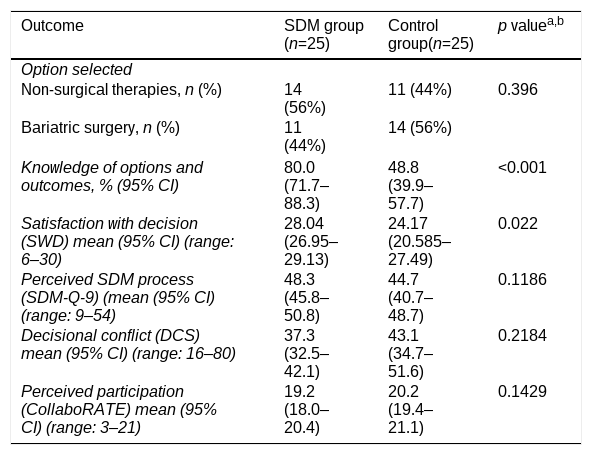
Pilot studiesClass 3 obesityA total of 50 participants (25 per group) were included, mean age 44.8 years (SD 8.9); 72% women. Baseline characteristics (e.g., diabetes, education, employment) were comparable. A slightly higher proportion of participants in the SDM group chose non-surgical therapy (56% vs 44%), though not significant (p=0.396). SDM participants showed greater knowledge of treatment options and outcomes (80.0% vs 48.8%, p<0.001). They also reported higher satisfaction with their decision (mean SWD: 28.0 vs 24.2, p=0.022). No significant differences were observed for SDM-Q-9, DCS or CollaboRATE (Table 1).
Preliminary effectiveness outcomes in the class 3 Obesity pilot study.
| Outcome | SDM group(n=25) | Control group(n=25) | p valuea,b |
|---|---|---|---|
| Option selected | |||
| Non-surgical therapies, n (%) | 14 (56%) | 11 (44%) | 0.396 |
| Bariatric surgery, n (%) | 11 (44%) | 14 (56%) | |
| Knowledge of options and outcomes, % (95% CI) | 80.0 (71.7–88.3) | 48.8 (39.9–57.7) | <0.001 |
| Satisfaction with decision (SWD) mean (95% CI) (range: 6–30) | 28.04 (26.95–29.13) | 24.17 (20.585–27.49) | 0.022 |
| Perceived SDM process (SDM-Q-9) (mean (95% CI) (range: 9–54) | 48.3 (45.8–50.8) | 44.7 (40.7–48.7) | 0.1186 |
| Decisional conflict (DCS) mean (95% CI) (range: 16–80) | 37.3 (32.5–42.1) | 43.1 (34.7–51.6) | 0.2184 |
| Perceived participation (CollaboRATE) mean (95% CI) (range: 3–21) | 19.2 (18.0–20.4) | 20.2 (19.4–21.1) | 0.1429 |
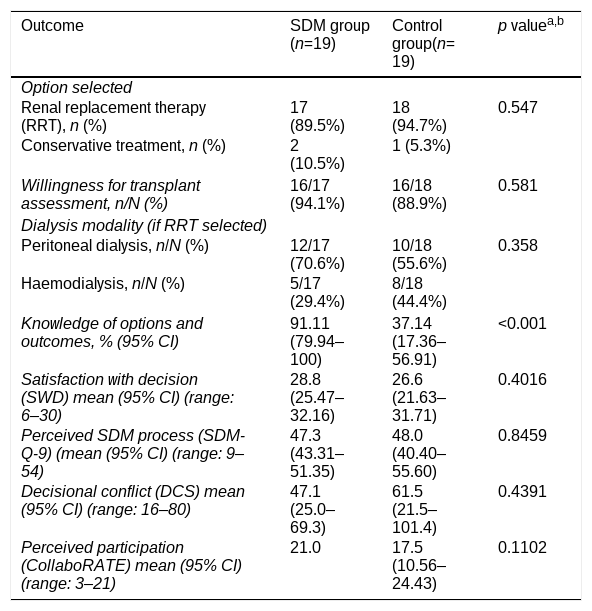
Thirty-eight participants (19 per arm) were included; mean age 66.5 years (95% CI 62.0–71.0), 33% women. Groups were similar at baseline. Most participants in both groups chose renal replacement therapy (89.5% vs 94.7%); willingness for transplant assessment was high and similar (94.1% vs 88.9%). Among those selecting renal replacement therapy, more SDM participants chose peritoneal dialysis (70.6% vs 55.6%), not significant. SDM participants showed higher knowledge of treatment options and outcomes (91.1% vs 37.1%, p<0.001). Satisfaction (SWD 28.8 vs 26.6) and process outcomes (SDM-Q-9, DCS, CollaboRATE) did not differ significantly (Table 2).
Preliminary effectiveness outcomes in the ACKD pilot study.
| Outcome | SDM group(n=19) | Control group(n=19) | p valuea,b |
|---|---|---|---|
| Option selected | |||
| Renal replacement therapy (RRT), n (%) | 17 (89.5%) | 18 (94.7%) | 0.547 |
| Conservative treatment, n (%) | 2 (10.5%) | 1 (5.3%) | |
| Willingness for transplant assessment, n/N (%) | 16/17 (94.1%) | 16/18 (88.9%) | 0.581 |
| Dialysis modality (if RRT selected) | |||
| Peritoneal dialysis, n/N (%) | 12/17 (70.6%) | 10/18 (55.6%) | 0.358 |
| Haemodialysis, n/N (%) | 5/17 (29.4%) | 8/18 (44.4%) | |
| Knowledge of options and outcomes, % (95% CI) | 91.11 (79.94–100) | 37.14 (17.36–56.91) | <0.001 |
| Satisfaction with decision (SWD) mean (95% CI) (range: 6–30) | 28.8 (25.47–32.16) | 26.6 (21.63–31.71) | 0.4016 |
| Perceived SDM process (SDM-Q-9) (mean (95% CI) (range: 9–54) | 47.3 (43.31–51.35) | 48.0 (40.40–55.60) | 0.8459 |
| Decisional conflict (DCS) mean (95% CI) (range: 16–80) | 47.1 (25.0–69.3) | 61.5 (21.5–101.4) | 0.4391 |
| Perceived participation (CollaboRATE) mean (95% CI) (range: 3–21) | 21.0 | 17.5 (10.56–24.43) | 0.1102 |
Both pilots reached feasibility thresholds, with >80% of intervention participants completing all SDM steps and questionnaires. Adherence to the intervention was high, supporting acceptability of the model in two distinct care pathways.
DiscussionMain findingsWe developed and tested a structured and feasible model to implement SDM into routine clinical practice of a tertiary hospital setting. The VH-SDM model comprises six clearly defined steps that were successfully applied across two clinical pathways. The model demonstrated significant initial effectiveness in improving patient decision-related outcomes, such as enhanced knowledge, reduced decisional conflict, and increased satisfaction with the decision-making process.
We observed differences in the magnitude of the model's impact across the two pilot clinical scenarios. This variation may be explained by differences in pre-existing practices in the hospital. Usual care in ACKD already incorporated elements of SDM through a long-standing program, which may have limited the observable effect of the new model. In contrast, the obesity care pathway was previously characterized by a more traditional informed consent approach, lacking structured dialogue between HCPs and patients as well as explicit elicitation of patient values and preferences. This baseline gap likely contributed to the greater observed impact of the intervention in the obesity setting.
Comparison with previous models and studiesOur results are consistent with the extensive literature demonstrating that SDM improves patient knowledge, satisfaction, and alignment of care with personal values.4,7 In the obesity pathway, the model showed stronger effects because standard practice had been limited to informed consent; introducing SDM created a clear shift towards more informed and value-sensitive decision-making. These findings resonate with the ACTION and ACTION-IO studies25,26 which documented major gaps in communication and reliance on unstructured online information in obesity management. The VH-SDM model helps to bridge these gaps by offering structured decision aids and systematic patient involvement.
In ACKD, the impact was more modest because usual care already incorporated elements of SDM. This aligns with previous research showing that traditional nephrology care often underestimates patient participation, leaving patients less informed and disengaged.27,28 Our findings confirm that structured SDM interventions improve patient knowledge, but additional strategies may be required to influence decisional conflict or satisfaction when elements of SDM are already partially in place.
When compared with implementation frameworks, our model complements but differs from the Consolidated Framework for Implementation Research (CFIR)29 and the Knowledge-to-Action (KTA) cycle.22 Both are valuable for identifying barriers and guiding translation of evidence into practice but do not provide specific operational steps for embedding SDM. In contrast, the VH-SDM model delivers a sequential, pragmatic roadmap – from identifying decisions and co-creating patient decision aids (PDAs), to training professionals and evaluating outcomes – making it directly applicable in hospital practice.
Our approach also follows international standards for PDA development. All tools were designed according to the IPDAS,24 ensuring accuracy, balanced presentation of benefits and harms, and alignment with patient communication needs. This rigorous process strengthens the validity of our tools and ensures comparability with other high-quality PDAs internationally.
Compared to large-scale programmes like Share to Care in Germany,30 our model is more resource-efficient. While Share to Care scaled broadly but required major investment and structured training with psychologist feedback and digital PDA integration, the VH-SDM model proved feasible in a public hospital with limited resources by relying mainly on institutional commitment and interprofessional collaboration. Future improvements could include digital PDAs and systematic training feedback.
Strengths and limitationsThe study's main strengths are its multidisciplinary design, strong institutional alignment, and patient-centred methodology. Patients were actively involved in co-creating PDAs, ensuring tools reflected real needs and communication preferences. The model was developed iteratively through reflection groups that helped align it with the hospital's organisational culture, a key factor for sustainability. Methodological rigour was ensured through randomisation, trial registration, and ethics approval.
Limitations include its pilot nature, small sample sizes, and short follow-up, which restrict the generalisability of findings and preclude firm conclusions on long-term outcomes such as adherence, health improvements, and cost-effectiveness. A two-year follow-up is ongoing and will provide additional evidence. Another limitation is potential selection bias, as participating healthcare professionals may have been more motivated or predisposed towards SDM. The full details of these pilot studies, as well as the extended follow-up, will be reported in two separate manuscripts currently under preparation.
Implications for practice and researchThe VH-SDM model contributes to the literature by offering a resource-efficient, evidence-based, and pragmatic framework for integrating SDM into hospital practice. It addresses key barriers previously identified in SDM implementation, including lack of standardised tools, insufficient training, and fragmented efforts.6,9 By embedding SDM into the hospital's Strategic Plan and involving multidisciplinary teams, the model demonstrates how institutional strategies can enhance sustainability and equity in decision-making.
Beyond its structural components, the implementation of the VH-SDM model has contributed to a broader organisational shift in our hospital. SDM has evolved from being perceived as an individual clinician-driven initiative to becoming an institutional standard of care. As a result of this work, six SDM implementation projects across different clinical areas of our hospital are currently underway, aiming to integrate decision aids and SDM practices into routine care. This cultural transformation has increased professionals’ willingness to engage in SDM initiatives, improved the integration of decision aids into daily clinical practice, and strengthened awareness of the patient's role as an active participant in healthcare decisions. The experience gained from these ongoing projects will also help refine the VH-SDM model to better address the needs of patients and healthcare professionals, while supporting the consolidation of SDM as a core component of patient-centred care in our institution.
Future research should focus on scaling the model to additional clinical pathways, integrating digital PDAs to increase accessibility and engagement, and evaluating long-term clinical and economic outcomes. Particular attention should be given to addressing health literacy, which influences patients’ ability to engage in SDM. Structured patient training adapted to different literacy levels (functional, interactive, and critical)31 will be necessary to ensure equitable access. Additionally, strategies to overcome provider resistance and to integrate SDM training into medical education and continuous professional development are crucial for large-scale adoption.
ConclusionsBy offering a detailed roadmap, the VH-SDM model balances evidence-based standards with pragmatic considerations and enhances the feasibility of integrating SDM into routine care, potentially leading to improved patient engagement and satisfaction. The implementation of the VH-SDM model has shown promising initial results; however, further studies with extended follow-up will be required.
Authors’ contributionsKarla Salas-Gama and Ana Martí Delgado made substantial contributions to the conception and design of the study. Andreaa Ciudin, Karla Salas-Gama, Georgina Martínez Fernández, Efraín Pantoja and Néstor Toapanta collected the data related to the studies. Karla Salas-Gama, Ana Martí Delgado, Ena Niño-de-Guzmán, Andreaa Ciudin and Efraín Pantoja discussed and interpreted the results. Karla Salas-Gama and Ena Niño-de-Guzmán drafted the first version of the manuscript. All authors critically reviewed the manuscript for important intellectual content and approved the final version submitted.
Ethics approval and consent to participateThe study protocol (PR(AG)148/2022), entitled “Feasibility and preliminary effectiveness of a shared decision-making process in a tertiary university hospital: protocol of a pilot study”, was approved on 10 June 2022 by the Research Ethics Committee with Medicines (CEIm) of Vall d’Hebron University Hospital. The CEIm complies with Good Clinical Practice (ICH-GCP) and Spanish regulations (Royal Decree 1090/2015). All participants provided written informed consent prior to enrolment in the study.
Consent for publicationParticipants were informed that the results would be published in scientific journals, and consent for publication was obtained as part of the informed consent process.
Declaration of generative AI and AI-assisted technologies in the writing processArtificial intelligence tools (e.g., ChatGPT) were used to assist with language editing and formatting during manuscript preparation. The authors take full responsibility for the accuracy and integrity of the content.
FundingNo funding was received for this study.
Conflict of interestNo competing interests were disclosed.
The authors would like to thank the patients who voluntarily participated in the pilot studies, as well as María José Soler, Soledad Romea, María José Abadias, the Advanced Chronic Kidney Disease nursing team, and the Comprehensive Obesity Management team for their valuable contributions and continuous support in the development and implementation of the Vall d’Hebron shared decision-making model.