
This study examines sexting patterns, moving beyond traditional unidimensional approaches. Using a person-centered framework, a Two-Step Cluster Analysis was conducted on a sample of 460 Italian university students (age range: 18–45 years-old, M = 23.32, SD = 4.27, 76.3% women). Sexting experiences were operationalized through five indicators distinguishing between consensual or coerced, partner or third-party-mediated exchanges, while anxiety, depression, and stress were assessed as dependent variables. The analysis identified four distinct clusters: Low-Engagement Sexting (60.4%), Sexting with Third Parties (14.4%), Sexting with Partner(s) (13.8%), and High-Engagement and Exposure in Sexting (11.3%). Results from ANCOVAs, controlling for gender and sexual orientation, revealed that the high-engagement and exposure in sexting cluster, characterized by pervasive engagement across all indicators, reported significantly higher levels of anxiety and depression compared to other groups. Furthermore, individuals experiencing unsolicited and third-part-mediated exposure exhibited elevated stress levels. While gender-diverse and sexual minority participants reported overall higher psychological distress, no significant interaction effects were found between cluster membership and sociodemographic factors. These findings highlight that psychological outcomes are contingent upon the configuration of consent, agency, and relational context rather than the frequency of sexting alone. The study underscores the need for targeted interventions and comprehensive digital sexuality education that addresses the nuances of online consensual and non-consensual interactions.
Sexting, defined as a set of digitally mediated behaviors involving the creation, transmission, receipt, or distribution of sexually explicit or sexually suggestive messages, images, or videos, has become a normative aspect of intimacy among young adults in Western contexts (Drouin & Landgraff, 2012; Kemp, 2024; Klettke et al., 2014; Van Ouytsel et al., 2020). Meta-analytic and survey evidence including those in the Italian context indicates that sexting is a widespread practice among emerging adults, with approximately one-third of participants reporting the consensual exchange of intimate content (Brighi et al., 2023; CENSIS, 2025; Englander & McCoy, 2018; Madigan et al., 2018; Mori et al., 2020). Far from being an isolated or deviant behavior, contemporary research frames these digital exchanges as routine expressions of intimacy, flirtation, and sexual exploration, particularly among sexually active individuals in committed relationships and those highly engaged with digital media (Drouin, 2015; Drouin et al., 2017; Galovan et al., 2018; Morelli et al., 2025a; Stasko & Geller, 2015; Van Ouytsel et al., 2020). Consequently, sexting is increasingly situated within contemporary trajectories of sexual development and digital socialization, representing an integrated component of modern interpersonal communication in late adolescence and young adulthood (Mori et al., 2020; Van Ouytsel et al., 2017a).
At the same time, the normalization of sexting occurs within a sociocultural and legal context that has become increasingly attentive to the risks associated with non-consensual circulation of intimate images. In Europe, and specifically in Italy, recent legal interventions targeting non-consensual image sharing and sextortion reflect growing public concern about privacy violations and technology-facilitated abuse, even as consensual sexting remains a common and often desired aspect of young adults’ intimate lives (Caletti, 2021). In light of this ambivalent scenario, where sexting is simultaneously normalized and problematized, the present study seeks to clarify when and how sexting relates to psychological distress, identifying qualitatively distinct patterns of sexting experiences, integrating consensual, coerced, unsolicited, and third-party-mediated exchanges, and comparing these profiles in terms of stress, anxiety, and depressive symptoms, while also considering gender and sexual orientation.
Beyond risk-opportunity dichotomies in sexting behaviorsHistorically, particularly between 2005 and 2015, scholarly discourse was characterized by a “risk-centric” narrative that frequently pathologized sexting, framing it primarily as a deviant or dangerous behavior associated with sexual victimization, poor mental health, and broader patterns of delinquency (Döring, 2014). However, more recent studies shift away from the earlier demonization of the practice, presenting a more nuanced view, positioning sexting not only as a potential risk factor but also as a benign, or even positive, tool for sexual exploration and relational maintenance within normative developmental trajectories (Drouin, 2015; Klettke et al., 2014).
This dichotomy is well explained by literature. On one side, systematic reviews and meta-analyses indicate that sexting in adolescence and emerging adulthood is associated with higher likelihood of engaging in sexual intercourse, having multiple sexual partners, using substances, and reporting elevated internalizing symptoms, although effect sizes tend to be small to moderate and often decrease with age (Kosenko et al., 2017; Madigan et al., 2018; Mori et al., 2019). Sexting is also linked with experiences of cyberbullying, online victimization, and non-consensual intimate image diffusion, particularly when content is shared beyond the original dyad or under coercive circumstances (Gamez-Guadix et al., 2015; Thulin et al., 2023; Wachs et al., 2021). On the other side, a growing body of research underscores that sexting is not uniformly associated with harm. Several studies show that consensual sexting within established relationships may be associated with sexual satisfaction and perceived intimacy, and is often unrelated to poorer mental health or relationship dissatisfaction once other risk factors are controlled (Galovan et al., 2018; McDaniel & Drouin, 2015; Parker et al., 2013; Stasko & Geller, 2015; Van Dijck et al., 2025). Moreover, qualitative and quantitative work suggests that sexting can offer adolescents and young adults a space for sexual exploration and identity expression, particularly when exchanges are negotiated, reciprocal, and embedded in trusting relationships (Kerstens & Stol, 2014; Naezer & Ringrose, 2018; Van Ouytsel et al., 2020). These heterogeneous findings suggest that sexting cannot be adequately understood through a simple “risk versus benefit” framework; rather, psychological outcomes appear contingent on the relational context, perceived agency, and degree of control over content circulation (Morelli et al., 2016; Van Ouytsel et al., 2017a).
A key insight emerging from recent studies is that the meaning and impact of sexting depend on several factors, including the context in which the sexting occurs, consent between the parties, and the exposure of sexually explicit messages, photos, or videos. Research differentiating consensual, pressured, and non-consensual sexting shows that consensual exchanges within relationships are often benign or even positively evaluated, whereas sexting under pressure or non-consensual dissemination is more strongly associated with depressive symptoms, anxiety, and relationship conflict (Drouin & Landgraff, 2012; Gamez-Guadix et al., 2022; Stanley et al., 2018). Similarly, unsolicited sexts from non-partners and third-party forwarding of sexual content have been linked to feelings of violation, shame, and social vulnerability, even among recipients who did not initiate the exchange (Brighi et al., 2023; Morelli et al., 2016). Gender and sexual orientation further influence how sexting is practiced and experienced (Brighi et al., 2023; Dir et al., 2013; Garcia et al., 2016; Mori et al., 2022; Wysocki & Childers, 2011).
Gender differences in sexting engagement and victimization reflect wider patterns of gendered power and social control in digital sexual contexts (Budde et al., 2022; Fernández et al., 2025; Gámez-Guadix et al., 2023; Gassò et al., 2020, 2021; Katzman, 2010; Villa-Henao et al., 2025). Indeed, women are more likely to experience coercion into sexting as a result of relational pressure or partner expectations, and their images are disproportionately used as weapon in non-consensual diffusion, often with more challenging reputational and psychological consequences than those faced by men (Katzman, 2010; Van Ouytsel et al., 2017b, 2019). At the same time, men also report significant, albeit qualitatively different, pressures and involvement in digital sexual exchanges (Gassó et al., 2020; Van Ouytsel et al., 2017b).
Regarding sexual minority individuals, the elevated rates of sexting and non-consensual image sharing observed in this group may be partly understood through the lens of minority stress theory (Amadori & Brighi, 2025; Meyer, 2003; Mussap et al., 2023). Sexual minority youth and young adults navigate environments characterized by stigma, discrimination, and social rejection, which can improve vulnerability to coercive sexual dynamics online and limit access to protective social resources (Meyer et al., 2021; Toomey et al., 2018). At the same time digital sexual communication may serve as a space for identity affirmation and community building, introducing a dual-edged dynamic in which the same behaviors carry both adaptive and risk-related functions (Grov et al., 2014; Mori et al., 2022; Vanden Abeele et al., 2014; Wysocki & Childers, 2011). In this perspective, not all sexting experiences are equivalent, and understanding their psychological correlates requires attention to consent, relational context, and patterns of exposure, as well as to structural factors such as gender and sexual minority status.
Capturing heterogeneity through cluster analysisTraditional research on sexting has predominantly employed variable-centered approaches, examining linear associations between single sexting indicators (e.g., sending frequency) and outcomes such as depression, anxiety, or sexual risk behaviors (Kosesnko et al., 2017; Mori et al., 2019). While informative, this strategy implicitly treats sexting as a unitary construct and assumes that any given level of a behavior has similar implications across individuals, thereby obscuring heterogeneity in how different sexting practices cluster within persons. Moreover, variable-centered studies often focus on one dimension of sexting at a time (typically consensual sending) without differentiating contextual dynamics based on these characteristics, despite evidence that these forms may follow distinct developmental pathways and carry different psychosocial meanings (Brighi et al., 2023; Morelli et al., 2016; Van Ouytsel et al., 2017b).
In response, a growing body of work has turned to person-centered methods, such as latent class analysis and latent profile analysis (Morin et al., 2018; Muthén & Muthén, 2000; Woo et al., 2018, 2024). These methods focus on individuals as the units of classification and identify relatively homogeneous subgroups based on distinct patterns of sexting and related digital behaviors (Ambrosini et al., 2025; Currin & Garos, 2025; Dolev-Cohen & Shaul, 2025; Galovan et al., 2018; Kokkinos et al., 2024; Wright & Vangeel, 2019). For instance, a study used latent profile analysis in nationally representative samples of adults in committed relationships to identify non-sexters, word-only sexters, frequent sexters, and hyper sexters, and then compared these groups on individual well-being, relationship quality, and technology-related behaviors (Galovan et al., 2018). Other studies have applied cluster-analytic and latent class techniques among adolescents and university students, documenting profiles ranging from “uninvolved” or “low sexting” groups to “high-involvement” or “risk-taking” groups that combine frequent consensual sexting with non-consensual dissemination, pressured sexting, or other online and offline risk behaviors (Frankel et al., 2018; Holfeld et al., 2024). These person-centered approaches highlight that sexting-related risks are concentrated in specific subgroups rather than being evenly distributed across all individuals who engage in sexting.
However, existing person-centered studies on sexting present several limitations that the present work addresses. First, many analyses have focused primarily on consensual sending and receiving and have not systematically incorporated coerced, unsolicited, and third-party forwarding experiences as distinct indicators within the same model, despite growing interest in differentiating consensual and non-consensual sexting (Brighi et al., 2023; Gamez-Guadix et al., 2022; Stanley et al., 2018). Second, prior research has more often examined sexual risk behaviors, relationship outcomes, or personality correlates, leaving a gap regarding how specific dimensions of psychological distress such as stress, anxiety, and depression are uniquely distributed across distinct sexting clusters (Galovan et al., 2018; Morelli et al., 2025b). Third, while some person-centered studies consider gender differences, fewer explicitly integrate sexual orientation as a structural factor, despite consistent evidence that sexual minority youth and adults report both higher sexting involvement and greater vulnerability to digital victimization and minority stress–related distress (Garcia et al., 2016; Mitchell et al., 2025, 2026; Mori et al., 2022; Wysocki & Childers, 2011). The present study advances this literature by applying a cluster-analytic person-centered framework to a multidimensional operationalization of sexting that distinguishes consensual sexting with partners, coerced sexting by partners, unsolicited sexting from non-partners, and third-party forwarding of sexual content.
Importantly, the association between sexting and psychological distress may depend less on sexting involvement per se than on the specific characteristics and contexts in which sexting occurs. Consensual, relationship-centered sexting may not necessarily be associated with poorer psychological well-being, whereas experiences involving coercion, unsolicited sexual content, or third-party dissemination may entail greater threats to privacy and agency. From a stress and coping perspective, the accumulation of digital sexual stressors, such as pressure to produce intimate content or exposure to unwanted sexual material, may place demands on individuals’ coping resources and contribute to psychological strain Bianchi et al. (2023); Lazarus and Folkman (1984). In addition, violations of consent and control over intimate self-presentation may undermine individuals’ sense of agency and safety, increasing vulnerability to shame, embarrassment, fear of social judgment, and diminished self-esteem, which may in turn contribute to anxiety and depressive symptoms (Brighi et al., 2023; Thulin et al., 2023; Van Ouytsel et al., 2017a; Wachs et al., 2021). These processes suggest that psychological distress may be particularly pronounced when multiple problematic forms of sexting co-occur, rather than being a uniform consequence of sexting involvement.
The present studyBuilding on the emerging literature on sexting using person-centered approaches (e.g., Ambrosini et al., 2025; Currin & Garos, 2025; Kokkinos et al., 2024; Wright & Vangeel, 2019), the present research advances prior work studying sexting experiences operationalized through multiple dimensions of sending and receiving sexually explicit content, explicitly distinguishing between consensual, coerced, unsolicited, and partner- or third-party-mediated forms of sexting.
We hypothesized that: (1) at least three sexting clusters would emerge, reflecting varying degrees and configurations of involvement, ranging from minimal or no engagement to multifaceted and pervasive sexting experiences; (2) clusters characterized by higher and more complex involvement, particularly those encompassing coerced, unsolicited, and third-party-mediated sexting, would report higher levels of stress, anxiety, and depressive symptoms compared to clusters defined by limited, passive, or relationship-centered sexting experiences; and (3) significant differences in psychological outcomes would be observed across clusters at the level of mean comparisons.
In addition, drawing on prior evidence of gendered and minority stress processes in digital and sexual contexts (Brighi et al., 2023; Dir et al., 2013; Garcia et al., 2016; Mori et al., 2022; Wysocki & Childers, 2011), we explored whether the associations between sexting clusters and psychological well-being would be moderated by gender and sexual orientation. Specifically, we hypothesized that (4) cluster membership might interact with gender and sexual orientation, such that the psychological correlates of sexting clusters differs among genders and sexual minority individuals. Alongside cluster membership, gender and sexual orientation were examined as potential moderators of the association between sexting patterns and psychological distress.
MethodParticipants and procedureA total of 460 participant between 18 and 45 years-old (M = 23.32, SD = 4.27) were recruited for this study. Ten participants who did not complete the section on sexting were excluded from the data analysis. Participants were recruited by sharing a link to the questionnaire with university students via email. Participants provided informed consent prior to beginning the online survey. Participation was voluntary, and participants could withdrawal at any time. The study employed a convenience sampling method, and participation was entirely free. All participants gave their informed consent to participate. Participants reported their gender identity by selecting one of three options: Male, Female, or Other. The sample was primarily composed of women participants (76.3%), while participants who selected “Other” (1.3%, n = 6) were categorized as gender-diverse for analytical purposes. Further, participants reported their sexual orientation by selecting one of the following options: heterosexual, homosexual, bisexual/pansexual, asexual, queer, or other. Based on valid responses, the majority of the sample identified as heterosexual (83.8%). Smaller proportions of participants identified as bisexual or pansexual (7.6%), homosexual (2.2%), asexual (0.9%), or queer (5.5%). Given the small size of several sexual orientation groups, sexual orientation was recoded to ensure adequate statistical power and model stability. Participants who identified as heterosexual were categorized as belonging to the heterosexual group, whereas participants identifying as homosexual, bisexual/pansexual, asexual, or queer were grouped under the sexual minority category. This recoding approach was adopted for analytical purposes only and does not imply homogeneity within sexual minority identities, which remain diverse and distinct.
Regerding ethnicity, sample is mainly composed by Italian people (82.8%), with smaller proportions of Austrian and German (7.9%) and from other world region (9.4%). The research adhered to the guidelines outlined in the Declaration of Helsinki, and the Ethics Committee of the first, third and last authors University approved the study protocol. Participants completed a battery of questionnaires individually through Qualtrics platform.
MeasuresExperiences of Sending and Receiving Sexual Images (ESRSI, Stanley et al., 2018). This measure assesses different forms of sexting experiences, including sending and receiving sexually explicit messages or images across relational contexts and levels of consent. The scale consists of five items (Table 1), each rated on a 4-point Likert-type scale (1 = Never; 4 = Often). Rather than treating sexting as a unidimensional construct or relying solely on consensual sending frequency these five indicators were selected because they capture key theoretical axes of digital sexual communication (voluntary/consensual exchanges; pressured/coerced; unsolicited behaviors), while also differentiating dyadic partner interactions from non-partner contacts and third-party content dissemination (Brighi et al., 2023; Morelli et al., 2016; Stanley et al., 2018). Incorporating these five distinct indicators as separate input variables in the person-centered analysis allowed us to empirically identify ecologically valid clusters reflecting real-world configurations of agency, consent, and privacy violations. Because the items were not intended to form a unidimensional scale and no aggregate sexting score was computed, internal consistency indices (e.g., Cronbach’s alpha) were not calculated.
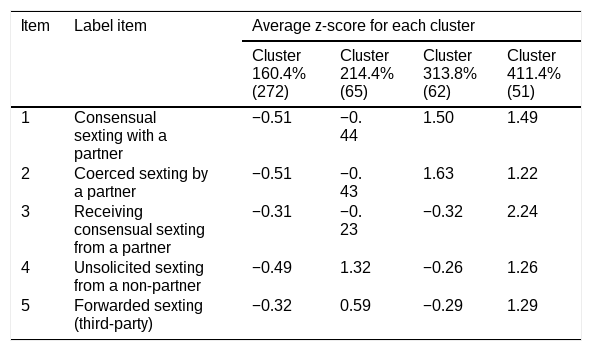
Cluster composition.
Note. a) Cluster 1 = Low-engagement sexting; Cluster 2 = Sexting with third parties; Cluster 3 = Sexting with partner(s); Cluster 4 = High-engagement and exposure in sexting. b) Item 1 = Have you ever sent sexual messages or images that portrayed you to one or more of your partners, during a relationship or after its end? Item 2 = Have you ever sent your partner a sexually explicit image of yourself because he/she had asked you insistently to do so, even if you didn’t want to? Item 3 = Has it happened to you that a partner (current or past) has sent you sexually explicit messages or images depicting him/her? Item 4 = Has it happened to you that someone who was not your partner sent you messages or images with sexual content that portrayed him or her, without you having requested it? Item 5 = Have you received sexual messages or images from people you know or may know, forwarded by someone else?.
Depression, Anxiety, Stress Scale (DASS-21, Bottesi et al., 2015; Lovibond & Lovibond, 1995). This measure assesses dimensions of depression (i.e., “I felt discouraged and depressed”), anxiety (i.e., “I had a tendency to overreact to situations”), and stress (i.e., “I felt stressed”). The scale consists of seven items for each dimension, each rated on a 4-point Likert-type scale (1 = It never happened to me; 4 = It has happened to me almost always). Depression (α = .89), anxiety (α = .85) and stress (α = .89) have shown optimal reliability.
Data analysesA Two-Step Cluster Analysis (Bacher et al., 2004; Norusis, 2011) was conducted to identify the subgroups that best describe the heterogeneity within the current sample regarding sexting, using the five indicators from the ESRSI. First, z-scores were calculated for each indicator. Clusters solutions were calculated from 2 to 15 clusters, and the log-likelihood distance measure was used to determine dissimilarity among cases. The optimal solution was automatically individuated by the algorithm based on the lowest value on Schwarz’s Bayesian Information Criterion (BIC, Schwarz, 1978). Last, the quality of the cluster solution was evaluated using the BIC score, the ratio of distance measures, and the average silhouette measure of cohesion and separation (Rousseeuw, 1987), considering that a coefficient between 0.2 and 0.5 is considered acceptable, while above 0.5 optimal. Finally, we used the cluster membership variable to test the relation between sexting behavior and distress, considering gender and sexual orientation as covariates, using ANCOVA and Tukey post-hoc test. All analyses were performed using SPSS 30.
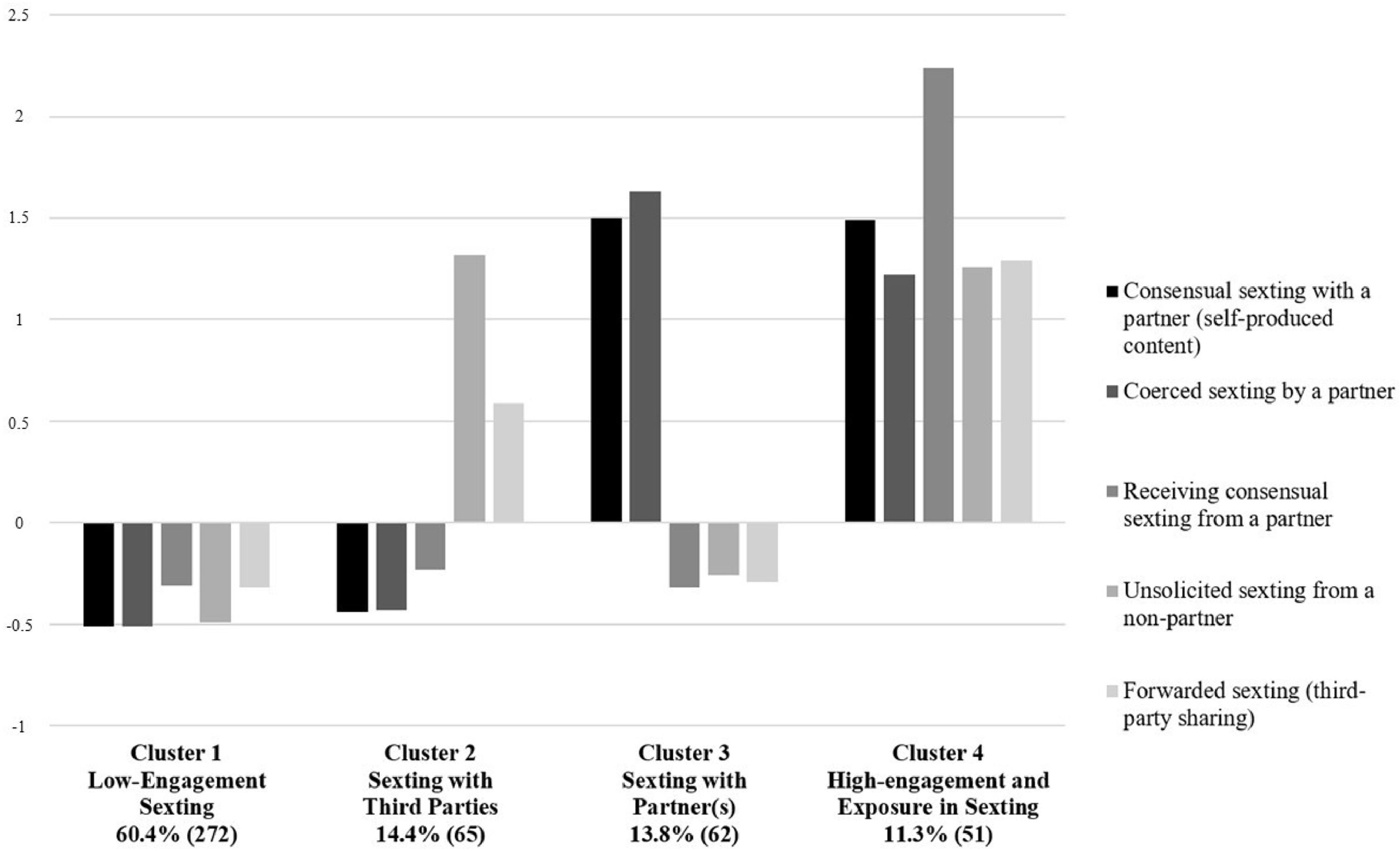
ResultsCluster identificationAs shown in Table 1 and Fig. 1 (see also Table 1S in supplementary materials for a full overview of the clustering procedure), the four-cluster solution was selected as optimal, as it combined a substantial decrease in BIC with a meaningful increase in the ratio of distance measures, indicating adequate separation and interpretability of the clusters, and the silhouette measure of cohesion and separation. The four-cluster solution showed the lowest BIC value, indicating optimal model fit, and was further supported by a high average silhouette coefficient (.70), suggesting good cluster separation and internal homogeneity. Overall, these indices indicated that the four-cluster solution provided a reliable and well-defined classification of sexting experience profiles.
Standardized mean scores of the five sexting indicators across the clusters.
The first cluster was named Low-Engagement Sexting (n = 272, 60.4%) and represents the largest group. It is characterized by consistently low scores across all sexting indicators. Individuals in this profile reported negative scores for both consensual sexting with a partner (z = −0.51) and coerced sexting by a partner (z = −0.51). Similarly, reduced levels were observed for receiving consensual sexting from a partner (z = −0.31), unsolicited sexting from a non-partner (z = −0.49), and forwarded sexting to third parties (z = −0.32). Individuals in this cluster reported minimal engagement in both sending and receiving sexually explicit content, regardless of relational context or consent. This profile indicates lower overall involvement across sexting practices than the other clusters.
The second cluster was named Sexting with Third Parties (n = 65, 14.4%). Participants in this cluster showed elevated scores on unsolicited sexting from a non-partner (z = 1.32) and forwarded sexting to third parties (z = 0.59). Conversely, they reported negative scores for consensual sexting with a partner (z = −0.44), coerced sexting by a partner (z = −0.43), and receiving consensual sexting from a partner (z = −0.23). Qualitatively, this profile represents individuals who are passively exposed to sexual content without actively seeking or initiating sexting interactions, often in contexts characterized by reduced personal control over the content received.
The third cluster was named Sexting with Partner(s) (n = 62, 13.8%). It is characterized by high levels of sexting directed toward romantic partners, including both consensual (z = 1.50) and coerced sexting by a partner (z = 1.63). In contrast, participants in this group reported low levels of receiving sexting from partners (z = −0.32) and minimal exposure to unsolicited (z = −0.26) or third-party sexting (z = −0.29). Overall, this profile reflects an active and relationship-centered pattern of sexting that appears asymmetric and marked by ambivalence regarding consent, rather than reciprocal or exclusively consensual exchanges.
The fourth cluster was named High-engagement and Exposure in Sexting (n = 51, 11.3%) and represents the smallest group. It is characterized by elevated scores across all sexting indicators. Individuals in this group reported high engagement across all domains, including consensual sexting with a partner (z = 1.49), coerced sexting by a partner (z = 1.22), receiving consensual sexting from a partner (z = 2.24), unsolicited sexting from a non-partner (z = 1.26), and forwarded sexting to third parties (z = 1.29). Qualitatively, this cluster reflects a pervasive and multifaceted involvement in sexting experiences, combining active personal engagement with high exposure to both consensual and non-consensual dynamics, and suggesting a complex digital sexual environment marked by high exposure and reduced boundaries.
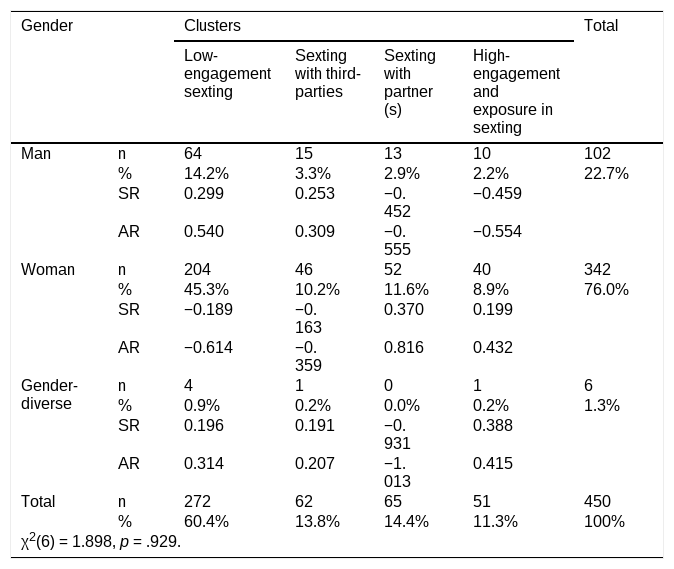
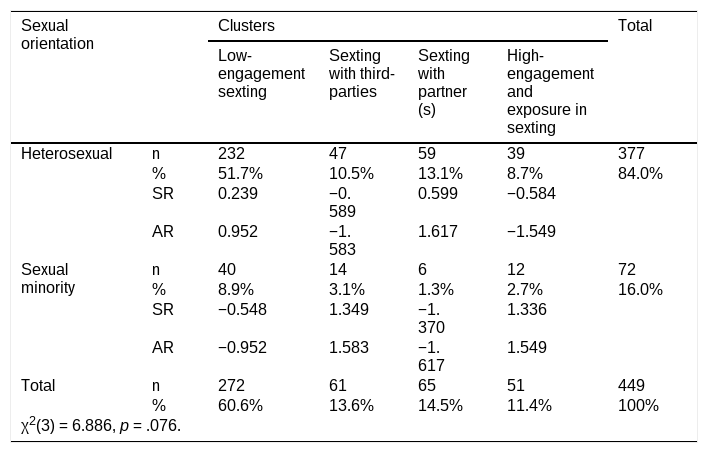
In Table 2 and Table 3 were shown contingency table for both gender and sexual orientation with clusters. Contingency table analyses revealed no statistically significant associations between cluster membership and either gender, χ2(6) = 1.90, p = .929, or sexual orientation, χ2(3) = 6.89, p = .076. Across all clusters, women participants constituted the majority, consistent with the overall sample distribution. Gender-diverse participants were few (n = 6) and were primarily concentrated in the Low-engagement sexting cluster (n = 4).
Frequencies for gender and clusters.
Note. a) % = Percentage of the total sample; SR = Standardized results; AR = Adjusted Results. b) Four cells have an expected count <5. The minimum expected count is 0.68.
Frequencies for sexual orientation and clusters.
Note. a) % = Percentage of the total sample; SR = Standardized results; AR = Adjusted Results. b) The minimum expected count is 8.18.
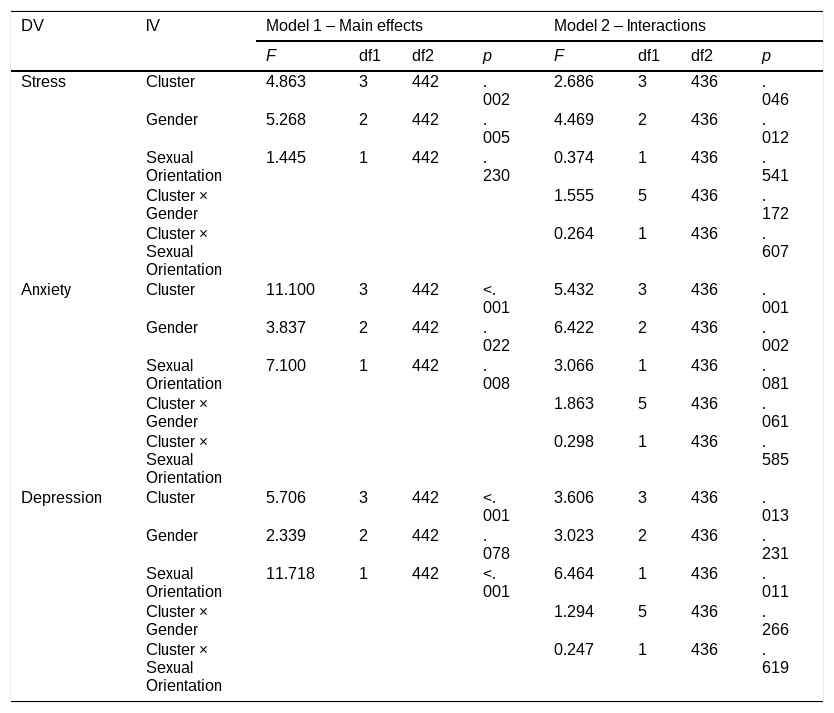
The relation between the four clusters and the distress dimensions were assessed through ANCOVAs. Significant effects of clusters for depression, and gender and sexual orientation on all distress dimensions were found. All ANCOVAs results are shown in Table 4, Tukey post-hoc tests are shown in Table 5, while estimated marginal means are shown in Table 6. Finally, we tested ANCOVAs considering the interaction between clusters and gender, and the interaction between clusters and sexual orientation. Interactions did not highlight significant differences in clusters and gender or clusters and sexual orientations in individuals (all p > .05).
ANCOVAs results.
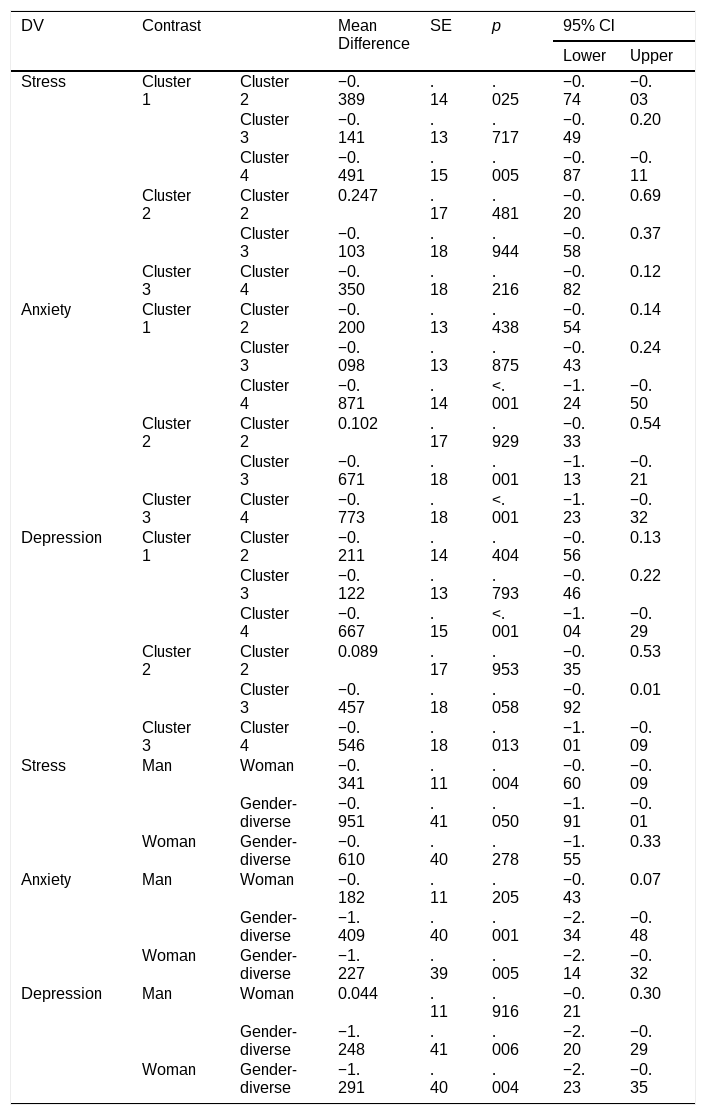
Tukey post-hoc tests.
Note. a) Above the line are shown post-hoc tests for clusters constrasts; below the line are shown post-hoc tests for gender contrasts. b) Cluster 1: Low-engagement sexting; Cluster 2: Sexting with third parties; Cluster 3: Sexting with partner(s); Cluster 4: High-engagement and exposure in sexting.
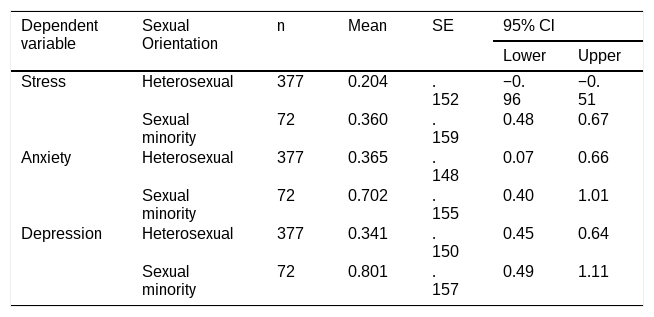
Estimated marginal means for sexual minority.
Pairwise comparisons provided further insight into the differences among the four sexting clusters, gender, and sexual orientation across indicators of psychological distress. Regarding depression, the high-engagement and exposure in sexting cluster reported significantly higher scores (M = 1.15, SE = .25) compared to the low-engagement sexting (M = 0.26, SE = .12), and sexting with partner(s) (M = 0.26, SE = .16), while the comparison between the high-engagement and exposure in sexting and sexting with third-parties clusters (M = 0.05, SE = .25) approached significance, suggesting a trend toward higher depression in the involved group, although it did not reach the conventional threshold for significance. No significant differences emerged among the low-engagement sexting, sexting with third-parties, and sexting with partner(s) clusters (all p > .05). Regarding anxiety, individuals in the high-engagement and exposure in sexting cluster (M = 1.12, SE = .25) reported substantially higher anxiety than those in the low-engagement sexting (M = 0.08, SE = .12), sexting with third-parties (M = 0.29, SE = .24), and sexting with partner(s) (M = 0.17, SE = .16). Furthermore, the comparison between the low-engagement sexting and sexting with third-parties clusters did not reach statistical significance, nor did the difference between the low-engagement sexting and sexting with partner(s) (all p > .05). For stress, the low-engagement sexting group (M = −0.05, SE = .13) reported significantly lower stress than the high-engagement and exposure in sexting (M = 0.68, SE = .26) and sexting with third-parties (M = 0.07, SE = .25) clusters. However, no significant differences were observed between the high-engagement and exposure in sexting, sexting with third-parties, and sexting with partner(s) clusters (all p > .05).
Regarding gender, several significant contrasts emerged. Individuals identifying as gender-diverse (M = 1.35, SE = .48) reported significantly higher depression than both men (M = 0.23, SE = .16) and women (M = 0.30, SE = .08). In the same way, individuals identifying as gender-diverse (M = 1.83, SE = .47) reported significantly higher anxiety than both men (M = −0.07, SE = .16) and women (M = 0.38, SE = .08). In terms of stress, men (M = −0.21, SE = .16) reported significantly lower levels than women (M = 0.30, SE = .09) and gender-diverse participants (M = 0.97, SE = .48).
Lastly, a significant main effect of sexual orientation was found across all distress dimensions, with no significant interaction effects observed. Estimated marginal means revealed that the sexual minority group reported significantly higher levels of distress across all dimensions compared to heterosexual participants. Specifically, significantly higher scores were observed in the sexual minority group for stress (M = 0.78, SE = .18), anxiety (M = 0.81, SE = .18), and depression (M = 0.42, SE = .19); in contrast, the heterosexual group reported lower mean levels for stress (M = −0.37, SE = .08), anxiety (M = −0.25, SE = .07), and depression (M = 0.04, SE = .08).
DiscussionThe present study sought to advance our understanding of the relationship between sexting experiences and psychological distress by moving beyond unidimensional conceptualizations of sexting and employing a person-centered, cluster-analytic approach. Drawing on data from a sample of young adults, we identified four distinct clusters of sexting involvement that differ qualitatively in terms of the configuration, context, and degree of consent characterizing participants’ digital sexual experiences. These profiles ranged from complete disengagement (low-engagement sexting) to multifaceted and pervasive involvement across consensual, coerced, unsolicited, and third-party-mediated forms of sexting (high-engagement and exposure in sexting), with two intermediate groups characterized either by passive exposure to third-party content (sexting with third-parties) or active, relationship-centered but partly coerced sending behaviors (sexting with partner(s).
Importantly, these clusters exhibited differential associations with stress, anxiety, and depressive symptoms, even after controlling for gender and sexual orientation, thereby supporting the hypothesis that the psychological correlates of sexting are contingent on the specific pattern and quality of involvement rather than on involvement per se.
Interpreting the four sexting clustersThe emergence of four distinct sexting profiles in our sample is consistent with prior person-centered research documenting heterogeneity in patterns of digital sexual behavior among adolescents and young adults (Galovan et al., 2018; Morelli et al., 2016; Wright & Vangeel, 2019). However, our study extends this literature by simultaneously incorporating multiple dimensions of sexting that vary along axes of consent, relationship context, and third-part-mediated, thereby capturing a more ecologically valid and theoretically grounded representation of young adults’ sexting experiences.
The largest cluster, low-engagement sexting, reflect individual differences in sexual attitudes, relationship status, privacy concerns, or cultural values discouraging digital sexual expression (Cervigón-Carrasco et al., 2025; Kosenko et al., 2017; Samimi & Alderson, 2014). It comprised approximately 60% of the sample and was characterized by minimal to no engagement across all sexting indicators, aligning with epidemiological data suggesting that a substantial proportion of young adults do not engage in sexting despite its normalization (see the meta-analysis of Mori et al., 2020). Specifically, this finding reflects substantial heterogeneity documented in the recent literature, where prevalence estimates of sexting behaviors among young adults range from 29% (Gesselman et al., 2023) to over 80% (Thorne et al., 2024). This heterogeneity can largely be attributed to the sampling strategy and specific behavioral nuances employed. Specifically, studies reporting the highest rates tend to rely on self-selected samples recruited specifically around sexting-related surveys (Thorne et al., 2024) or on broad definitions that capture any passive exposure to sexual content (Cervigón-Carrasco et al., 2025), while studies using general population samples and narrower behavioral criteria (more similar to our approach) report considerably lower engagement (29–34%; Brighi et al., 2023; Power et al., 2022). This pattern suggests that our lower involved group reflects common methodological factors rather than a deviation from them and underscores that sexting remains optional rather than universal (Brighi et al., 2023; Englander & McCoy, 2018; Morelli et al., 2023).
The second cluster, Sexting with third-parties, represented approximately 14% of the sample and was distinguished by elevated exposure to unsolicited sexts and forwarded content from non-partners, with low levels of active or relational sending. This profile maps onto passive or involuntary exposure pathways documented in the literature on technology-facilitated sexual victimization (Brighi et al., 2023; Thulin et al., 2023; Wachs et al., 2021), where individuals become targets of content circulated without their consent, an experience linked to discomfort, violation, and diminished control over one’s digital environment (Morelli et al., 2016).
The third cluster, sexting with partner(s), accounted for approximately 14% of participants and was characterized by high levels of both consensual and coerced sending to romantic partners, alongside low levels of receiving and third-party exposure. This asymmetric pattern may reflect imbalanced power dynamics, gendered expectations, or relational pressure to share sexual content (Drouin & Landgraff, 2012; Gamez-Guadix et al., 2022; Stanley et al., 2018), with the co-occurrence of consensual and coerced sending highlighting the complexity of digital consent negotiation in contexts that may constrain genuine agency (Naezer & Ringrose, 2018; Van Ouytsel et al., 2020).
The fourth and smallest cluster, high-engagement and exposure in sexting, represented approximately 11% of the sample and was distinguished by elevated scores across all five indicators, reflecting pervasive involvement in digital sexual practices marked by reduced control indicator, ambiguous consent, and non-consensual content circulation. This profile may characterize individuals embedded in high-risk environments with weak consent norms (Kosenko et al., 2017; Mori et al., 2019) or reflect dispositional factors such as sensation-seeking and involvement in peer networks where consent boundaries are routinely transgressed (Dolev-Cohen & Shaul, 2025; Kokkinos et al., 2024). This cluster exhibited the highest psychological distress across multiple indicators, suggesting that multidimensional sexting involvement carries the most pronounced mental health risks.
Regarding cluster composition, the descriptive distribution indicates that most of participants, regardless of gender, belonged to the non-sexting cluster, and chi-square analyses confirmed that cluster membership did not differ significantly by gender. This finding is noteworthy in light of previous literature emphasizing markedly gendered patterns of sexting engagement rooted in structures of power and social control (Naezer & Ringrose, 2018; Van Ouytsel et al., 2020): in the current sample of university students, active sexting engagement was neither more nor less common among women than among men or gender-diverse individuals, suggesting that the gender dynamics documented elsewhere may operate less through differential engagement rates than through other unmeasured dimensions of the sexting experience (e.g., perceived pressure, associated meaning, or consequences). A similar pattern emerged for sexual orientation, where most sexual minority participants, like their heterosexual counterparts, belonged to the non-sexting cluster, and the association between orientation and cluster membership did not reach significance. Given the limited size of the sexual minority subsample, this finding should be interpreted with caution and does not support strong conclusions about the identity-related processes underlying cluster membership.
Associations between sexting clusters and psychological distressOur second set of hypotheses concerned the differential associations between cluster membership and psychological distress outcomes. Consistent with our predictions, individuals in the high-engagement and exposure in sexting cluster reported significantly higher levels of anxiety compared to all other groups, and significantly higher depressive symptoms compared to the low-engagement sexting and sexting with partner(s) clusters. These findings align with a substantial body of research linking non-consensual, coerced, and high-frequency sexting to poorer mental health outcomes, including elevated internalizing symptoms (Gamez-Guadix et al., 2015; Madigan et al., 2018; Morelli et al., 2016).
The heightened distress observed in the high-engagement and exposure in sexting cluster may be understood through several complementary frameworks. First, from a stress and coping perspective, individuals in this cluster are exposed to multiple sources of digital sexual stress simultaneously, including pressure to produce content, unsolicited exposure to unwanted material, and awareness that one’s own intimate images may be circulated beyond the intended recipient. The accumulation of these stressors may overwhelm individuals’ coping resources and contribute to sustained physiological and psychological activation, manifesting as anxiety and depressive symptoms (Lazarus & Folkman, 1984). Second, from a privacy and autonomy perspective, the high-engagement and exposure in sexting cluster is characterized by repeated violations of consent and control over intimate self-presentation, which may undermine individuals’ sense of agency, safety, and dignity (Thulin et al., 2023; Wachs et al., 2021). Such violations have been shown to predict shame, embarrassment, fear of social judgment, and diminished self-esteem, all of which are proximal risk factors for depression and anxiety (Brighi et al., 2023; Van Ouytsel et al., 2017a). These contextual factors, rather than sexting per se, may be the primary drivers of psychological distress (Drouin, 2015; Klettke et al., 2014).
Interestingly, the sexting with third-parties cluster also exhibited significantly higher stress compared to the low-engagement sexting group, despite the largely passive and uninitiated nature of their sexting exposure. This finding underscores that even in the absence of active sending behaviors, unwanted and unsolicited exposure to sexual content can be distressing and may contribute to elevated stress levels. This is consistent with research on online sexual harassment and technology-facilitated abuse, which demonstrates that passive victimization can have significant mental health consequences, including hypervigilance, avoidance behaviors, and generalized anxiety about digital communication (Thulin et al., 2023; Wachs et al., 2021). Individuals in the sexting with third-parties cluster may experience stress related to the unpredictability and uncontrollability of receiving unwanted content, concerns about privacy and reputation, and the social awkwardness or discomfort of being exposed to sexual material in contexts where it is neither expected nor desired (Drouin et al., 2017; Englander & McCoy, 2018). These findings challenge simplistic narratives that frame sexting-related harm as limited to those who actively engage in sending behaviors, highlighting instead that passive exposure and non-consensual receipt are also meaningful sources of psychological distress.
Notably, the sexting with partner(s) cluster did not differ significantly from the low-engagement sexting group on any distress outcomes, despite members of this cluster reporting both consensual and coerced sending to romantic partners. This pattern suggests that relationship-centered sexting, even when partially coerced, may not be uniformly associated with psychological harm, at least not to the degree observed in the high-engagement and exposure in sexting cluster. Several interpretations are possible. First, coercion within romantic relationships may be experienced differently than coercion from non-partners or in contexts where intimate content is widely disseminated, particularly if individuals perceive their relationships as otherwise supportive or if they rationalize pressure as normative within romantic contexts (Drouin & Landgraff, 2012; Stanley et al., 2018). Second, individuals in the sexting with partner(s) cluster may have greater perceived control over the circulation of their images, as their content remains within a dyadic relationship rather than being forwarded to third parties. This perception of containment may mitigate some of the stress and anxiety associated with non-consensual dissemination (Van Ouytsel et al., 2017a). Third, it is possible that distress in this group is more closely tied to relationship quality, satisfaction, or other relational dynamics not measured in the present study, rather than to sexting behavior per se (Galovan et al., 2018; McDaniel & Drouin, 2015). Future research should explore these possibilities by examining relationship-level variables such as communication quality or power dynamics alongside sexting behaviors.
The pattern of findings for depression was partially consistent with our hypotheses, showing that the high-engagement and exposure in sexting cluster reported significantly higher depressive symptoms than the low-engagement sexting and sexting with partner(s) clusters. However, the comparison between the high-engagement and exposure in sexting and sexting with third-parties clusters only approached significance, suggesting a trend toward higher depression in the former group. This near-significant finding may reflect shared vulnerability to depressive symptoms among individuals who experience non-consensual or unwanted sexting, whether through active involvement or passive exposure. Both groups are characterized by reduced control over sexual content in their digital environments, which may contribute to feelings of helplessness, victimization, and negative self-evaluation, core features of depression (Campbell et al., 2022; Gassò et al., 2020; Wang et al., 2025). Alternatively, the smaller sample sizes of these clusters may have limited statistical power to detect group differences, a limitation we address further below.
The role of gender and sexual orientationGender and sexual orientation showed significant main effects across distress outcomes, aligning with extensive literature documenting gender disparities in internalizing symptoms and minority stress processes among sexual and gender minority populations (Brighi et al., 2023; Dir et al., 2013; Garcia et al., 2016; Meyer, 2003; Mori et al., 2022). Specifically, gender-diverse participants reported significantly higher levels of anxiety and depression compared to both men and women participants, whereas men reported significantly lower stress than women and gender-diverse individuals. The finding that men reported lower stress than other genders is consistent with research showing that men generally report lower levels of stress and anxiety in response to sexual situations, potentially reflecting gendered socialization processes and dominant sexual scripts(Crawford & Popp, 2003; Van Ouytsel et al., 2020). Within these scripts, men sexual initiative is generally more socially accepted and aligned with prevailing expectations of masculinity, whereas women or gender-diverse sexual behavior remains more often subject to social evaluation (Crawford & Popp, 2003). These differences in normative expectations may influence how sexual experiences are perceived, contributing to lower reported stress among men. The elevated levels of psychological distress observed among both gender-diverse and sexual minority participants are consistent with minority stress frameworks, which posit that chronic exposure to stigma, discrimination, social rejection, and identity-based victimization contributes to heightened vulnerability among marginalized groups (Hendricks & Testa, 2012; Meyer, 2003; Testa et al., 2017). In line with this perspective, individuals identifying as gender minorities and those belonging to sexual minority groups reported significantly higher stress, anxiety, and depression compared to their cisgender and heterosexual counterparts. These disparities likely reflect structural and interpersonal stressors that extend beyond the specific context of sexting and instead derive from broader systems of heteronormativity and social marginalization.
Digital environments may further reproduce such inequities. Prior research suggests that online spaces can perpetuate heteronormative norms and expose gender- and sexual-minority individuals to identity-targeted victimization (Gámez-Guadix & Incera, 2021; Keum et al., 2024). At the same time, digital sexual communication may function as both a resource and a risk context for sexual minority individuals. On the one hand, sexting can facilitate identity exploration and foster connection within affirming communities, particularly when offline opportunities are limited (Mori et al., 2022; Wysocki & Childers, 2011). On the other hand, sexual minority individuals are disproportionately exposed to online harms, including non-consensual image distribution and sextortion (Garcia et al., 2016; Thulin et al., 2023), which may compound pre-existing stress vulnerabilities rooted in minority stress processes.
Contrary to our moderation hypotheses, however, no significant interactions emerged between sexting cluster membership and either gender identity or sexual orientation. This absence of moderation indicates that the psychological associations of distinct sexting patterns operated similarly across identity groups within our sample. Although gender-diverse and sexual minority participants exhibited higher overall levels of distress, the relative increase associated with more complex or non-consensual sexting configurations did not differ significantly from that observed among cisgender and heterosexual participants. These findings therefore support an additive rather than multiplicative model: gender identity, sexual orientation, and sexting configurations each independently contributed to psychological distress, but their effects did not amplify one another. In this sense, sexting-related stressors, such as exposure to coercion, unsolicited content, or third-party dissemination, appear to function as contextual risk factors exerting comparable psychological impacts across identities, while baseline disparities remain attributable to broader minority stress processes.
These findings both contrast and align with existing literature, reflecting the ongoing debate regarding vulnerabilities in digital environments for minority groups. Regarding gender, our results diverge from studies indicating that girls (Wachs et al., 2021; Wright & Wachs, 2024) or, in specific contexts, boys (Klettke et al., 2014) are more susceptible to the negative psychological outcomes of pressured or unwanted sexting. Instead, they support evidence of non-significant gender differences in the impact of online sexual victimization (Gassó et al., 2020). Similarly, for sexual orientation, while some longitudinal data suggest a stronger link between non-consensual sexting and depression for sexual minorities (Wright & Wachs, 2024), our results are consistent with research showing that the association between sexting and mental health remains stable across sexual identity groups (Borgogna et al., 2023).
Several factors may account for this pattern in our sample. First, the relatively small proportion of gender-diverse and sexual minority participants likely limited statistical power to detect interaction effects, particularly within smaller high-involvement clusters. Second, sexting-related stressors (such as exposure to coercion, unsolicited content, or third-party dissemination) may represent contextual risk factors that exert comparable psychological impacts across identities. Finally, our operationalization of sexting focused on behavioral configurations of consent and relational context rather than on identity-based or discriminatory forms of digital victimization (e.g., Gámez-Guadix & Incera, 2021), which may constitute more proximal mechanisms linking minority status and online distress.
Limitations, future directions, and implicationsSeveral limitations must be acknowledged. The cross-sectional design precludes causal inference, making it unclear whether sexting patterns contribute to distress or whether pre-existing distress increases vulnerability to certain sexting experiences. Longitudinal research employing multiple waves and techniques such as cross-lagged panel models is essential to disentangle temporal relationships and examine developmental trajectories from adolescence through emerging adulthood. The sample was predominantly cisgender, heterosexual, and Italian, with limited representation of gender-diverse (1.3%) and sexual minority participants, restricting generalizability and statistical power for detecting moderation effects. Moreover, due to ethical and privacy restrictions, gender diversity was assessed using a single item with a broad “Other” category. Future research should utilize more comprehensive, multi-step measures of gender identity and recruit larger, non-binary, and transgender samples to better capture the nuances of their identity spectrum. Furthermore, the reliance on a convenience sample exclusively composed of university students represents a critical limitation, considering that may not be fully representative of the general population of young adults. Future research should include more heterogeneous samples to enhance ecological validity and ensure broader generalizability.
Another limitation regards our operationalization of sexting, based on five self-report indicators, did not assess content type, platform, frequency over time, or emotional context, and is subject to recall and social desirability biases. Future research should employ multimethod approaches including ecological momentary assessment, and qualitative interviews while carefully addressing privacy concerns. Important covariates such as relationship status, sexual experience, personality traits, and attachment styles, were not assessed, limiting our ability to isolate sexting’s unique contribution to distress (Dir et al., 2013; Jain et al., 2022; Kokkinos et al., 2024; Morelli et al., 2021). Future studies should include comprehensive covariate assessment and test mediational pathways via structural equation modeling. The Italian cultural and legal context may shape both sexting behaviors and their meanings in ways that limit generalizability; cross-cultural research is essential to identify cultural moderators and inform culturally tailored interventions.
These findings carry important implications for theory, research, and practice. Theoretically, our person-centered approach challenges unidimensional conceptualizations of sexting and demonstrates that psychological correlates depend on the specific configuration of involvement, consent, and relational context. By identifying distinct experiential profiles, we underscore the importance of heterogeneity and ecological embedding in theorizing about digital sexual behavior. For researchers, our study highlights the value of person-centered analytic techniques and the necessity of incorporating structural factors such as gender and sexual orientation not merely as controls but as theoretically meaningful dimensions. Moreover, empirically, rather than treating distress as a monolithic construct, our findings demonstrate that specific sexting clusters differ onto distinct clinical dimensions of internalizing symptoms (depression, anxiety, stress). This reveals qualitatively distinct risk patterns that provide a level of clinical specificity absent from prior research.
The present results call for more differentiated and non-stigmatizing approaches to sexting. By identifying distinct configurations of digital sexual experiences, our person-centered analysis suggests that sexting should not be treated as a uniform risk behavior. Psychological outcomes appear to depend primarily on consent, relational context, and exposure to coercion or third-party dissemination, rather than on engagement per se. In educational settings, this implies moving beyond generalized risk messages toward fostering critical reflection on digital consent, boundaries, and agency, while avoiding the pathologization of consensual sexual exploration. For clinicians, a nuanced assessment of sexting experiences (attending to coercion, perceived control, and relational meaning) may support more tailored interventions. At the structural level, policy and platform responses should strengthen protections against non-consensual image sharing without conflating consensual digital intimacy with abuse. Overall, rather than prescribing uniform solutions, our findings underscore the importance of recognizing heterogeneity in digital sexual experiences and avoiding stereotypical or one-size-fits-all prevention strategies. Broadly, our findings contribute to understanding how digital technology shapes young adults’ sexual and psychological development, demonstrating that consequences are not uniform but depend critically on quality, context, and consent. By foregrounding these dimensions, we move beyond simplistic risk-benefit dichotomies toward a more nuanced, ecologically grounded understanding of digital intimacy in contemporary emerging adulthood, laying groundwork for targeted prevention and intervention efforts that promote healthy digital sexual communication and support mental health and wellbeing.
Author contributionsE.S. and G.P. wrote the main manuscript text; E.S. performed the conceptualization, formal analysis, and visualization; A.A. and G.P. managed data curation; E.S., G.P., and A.A. conducted the investigation; E.S. and G.P. developed the methodology; A.B. provided resources, supervision, and project administration; A.A. performed validation; A.A. and A.B. contributed to the review and editing of the manuscript. All authors reviewed the manuscript.
Ethical approvalThe study was conducted according to the guidelines of the Declaration of Helsinki and approved by the Ethics Committee of the Faculty of Education Science, Free University of Bozen-Bolzano (n° protocol: UNIBZ_EDU_PROBEN_2025_14).
Consent to participateParticipants provided informed consent prior to beginning the online survey. Participation was voluntary, and participants could withdrawal at any time.
Clinical trial numberNot applicable
The authors declare that they have no known competing financial interests or personal relationships that could have appeared to influence the work reported in this paper.
Funding: PROBEN_0000004 - “Le quattro sfide per la promozione del benessere psico-fisico: un modello di intervento per il contrasto alla dipendenza da smartphone (4Ch4WB, Four Challenges for Well-Being)” – CUP I53C24001340001 was funded with the contribution of Ministry of Universities and Research (MUR), D.D. n. 1159 of 23 July 2023 – Bando PROBEN.