

metricas
covid
European Journal of Psychiatry Don't feel comfortable in your own skin? The relationship between body diss...
Journal Information
Vol. 39. Issue 3.
(July - September 2025)
Share
Download PDF
More article options
Vol. 39. Issue 3.
(July - September 2025)
Review article
Don't feel comfortable in your own skin? The relationship between body dissatisfaction and social media use – A meta-analytical approach
Thomas Vlasaka,1, Alfred Bartha, Christoph Augnerb,c,1,
Corresponding author
c.augner@salk.at

Corresponding author at: Department of Psychiatry, Psychotherapy & Psychosomatics, Christian-Doppler Medical Centre, Paracelsus Medical University, Salzburg, Austria.
a Institute for Psychology, Sigmund Freud University Linz, Austria
b Department of Psychiatry, Psychotherapy & Psychosomatics, Christian-Doppler Medical Centre, Paracelsus Medical University, Salzburg, Austria
c Institute for Human Resources Research in Health Care, University Clinics of the Paracelsus Medical University, Salzburg, Austria
Article information
Abstract
Full Text
Bibliography
Download PDF
Statistics
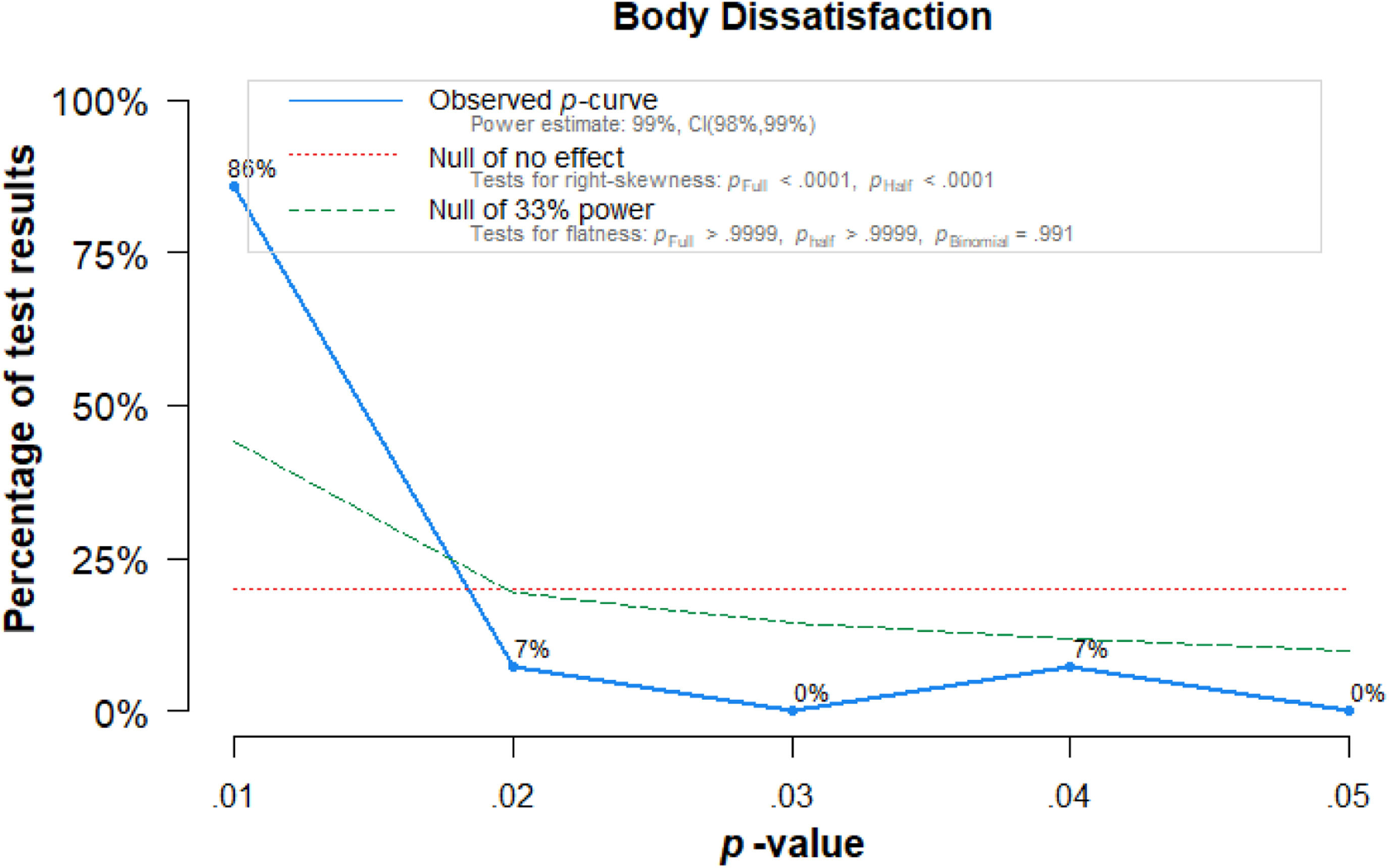
Figures (4)
Show moreShow less
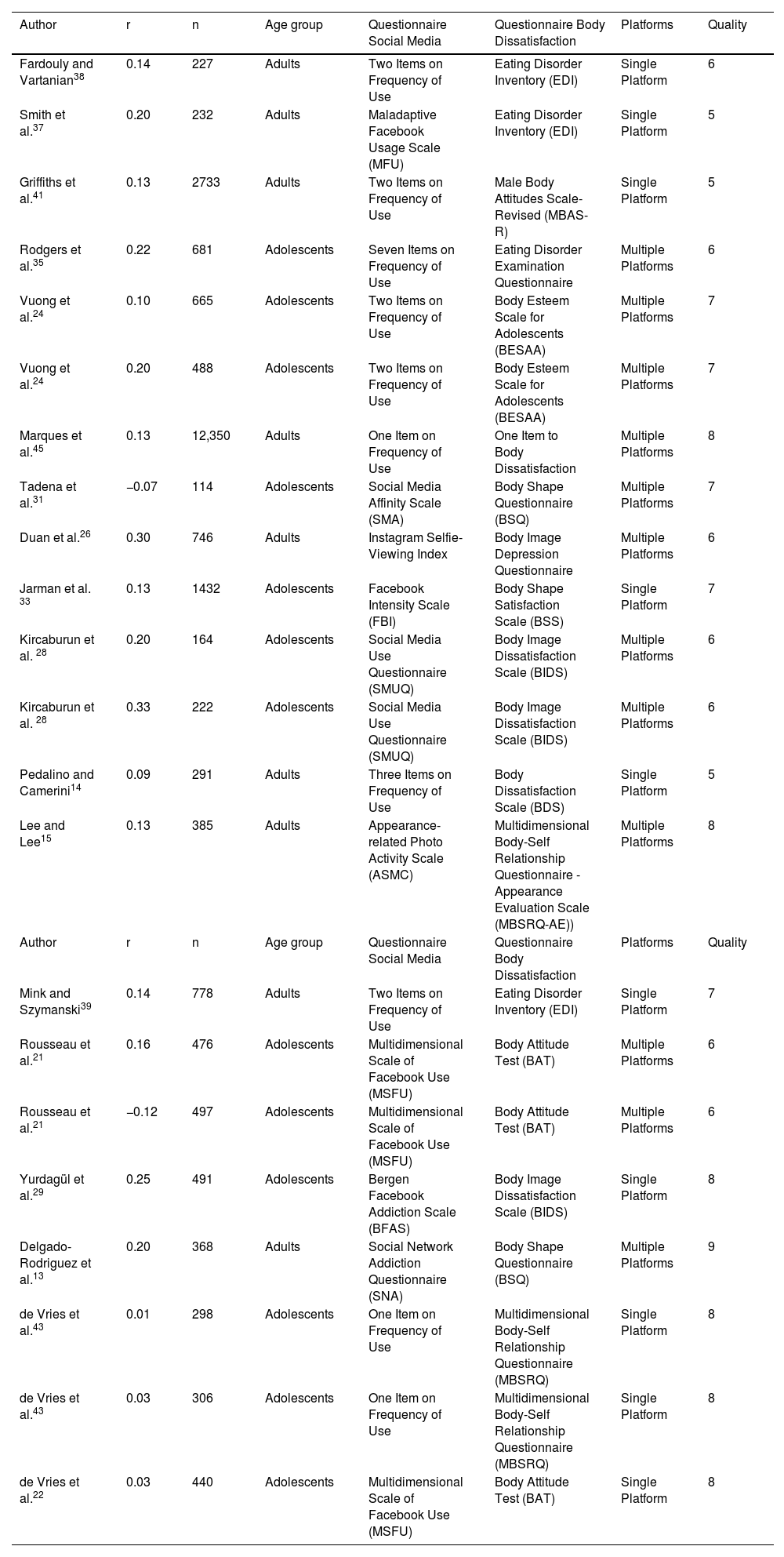
Tables (1)
Table 1. Study characteristics.
Tables
Abstract
Objective

This meta-analysis aims to clarify the relationship between body dissatisfaction (BD) and social media use.

Methods

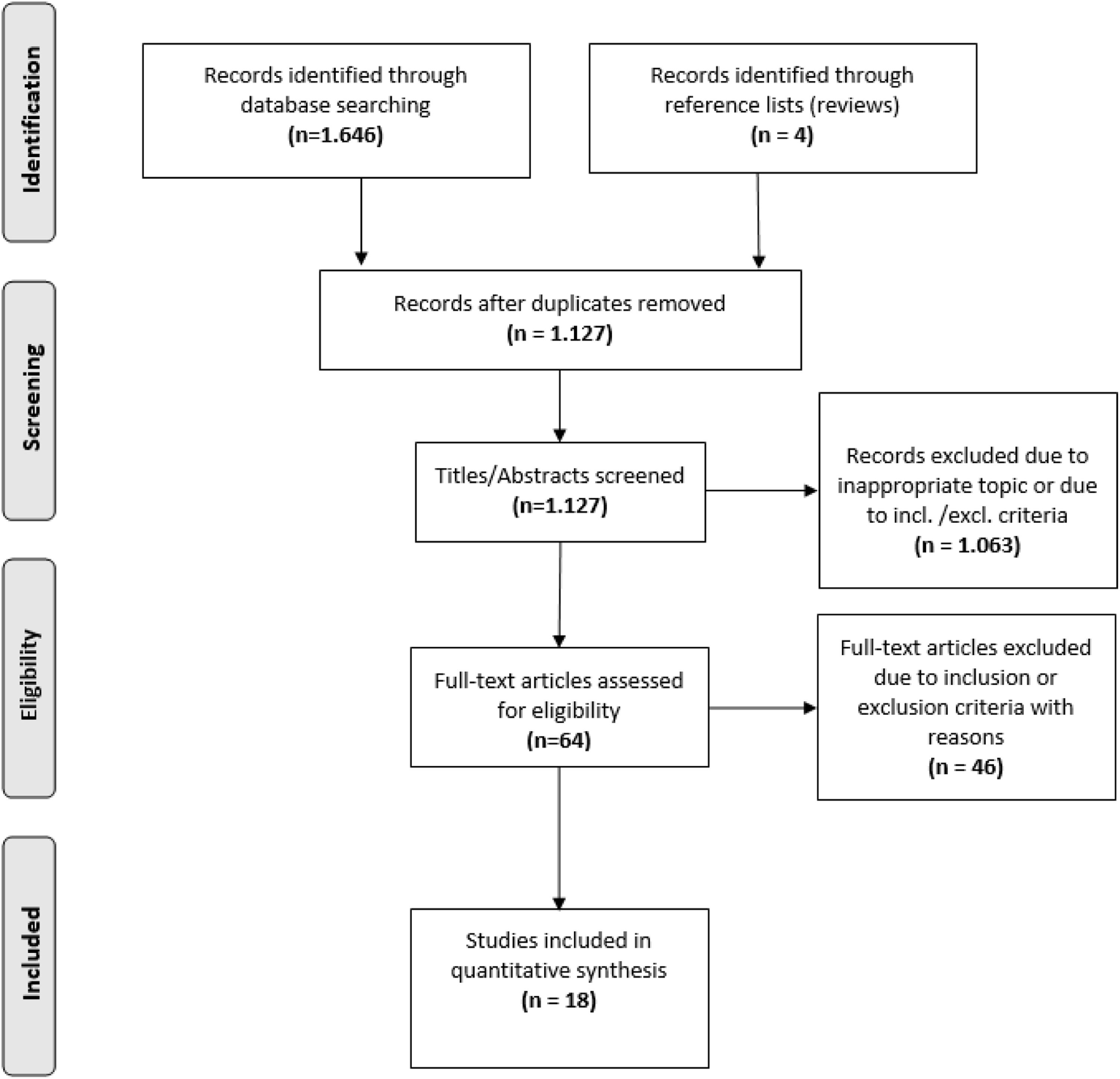
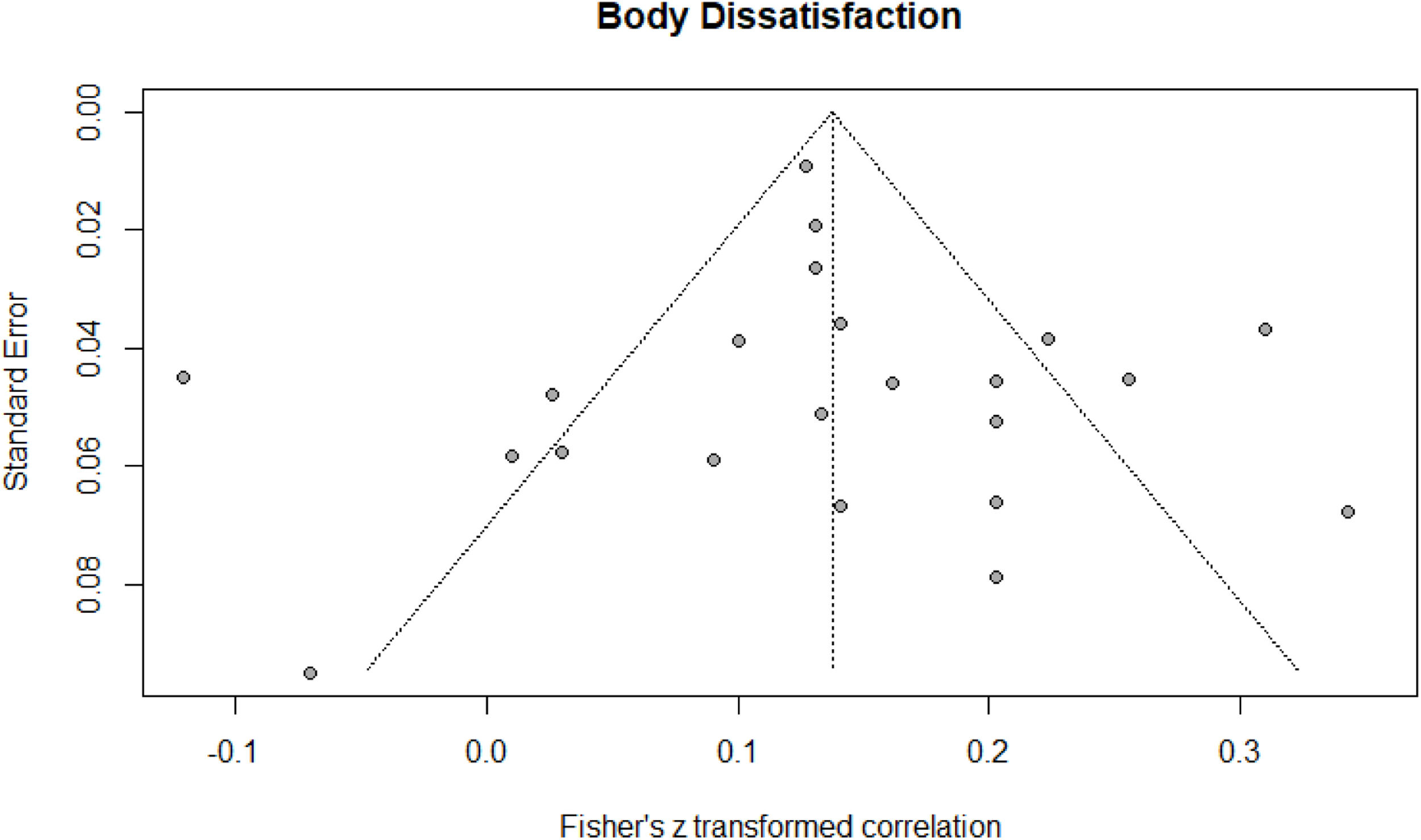
We searched for relevant original studies via multiple data bases (i.e. Web of Science, Scopus, PubMed, etc.) until October 2023. Based on the included studies, we carried out a meta-analysis examining moderating effects and subgroup differences while testing the robustness of the relationship between BD and social media use against publication bias and influential cases.

Results

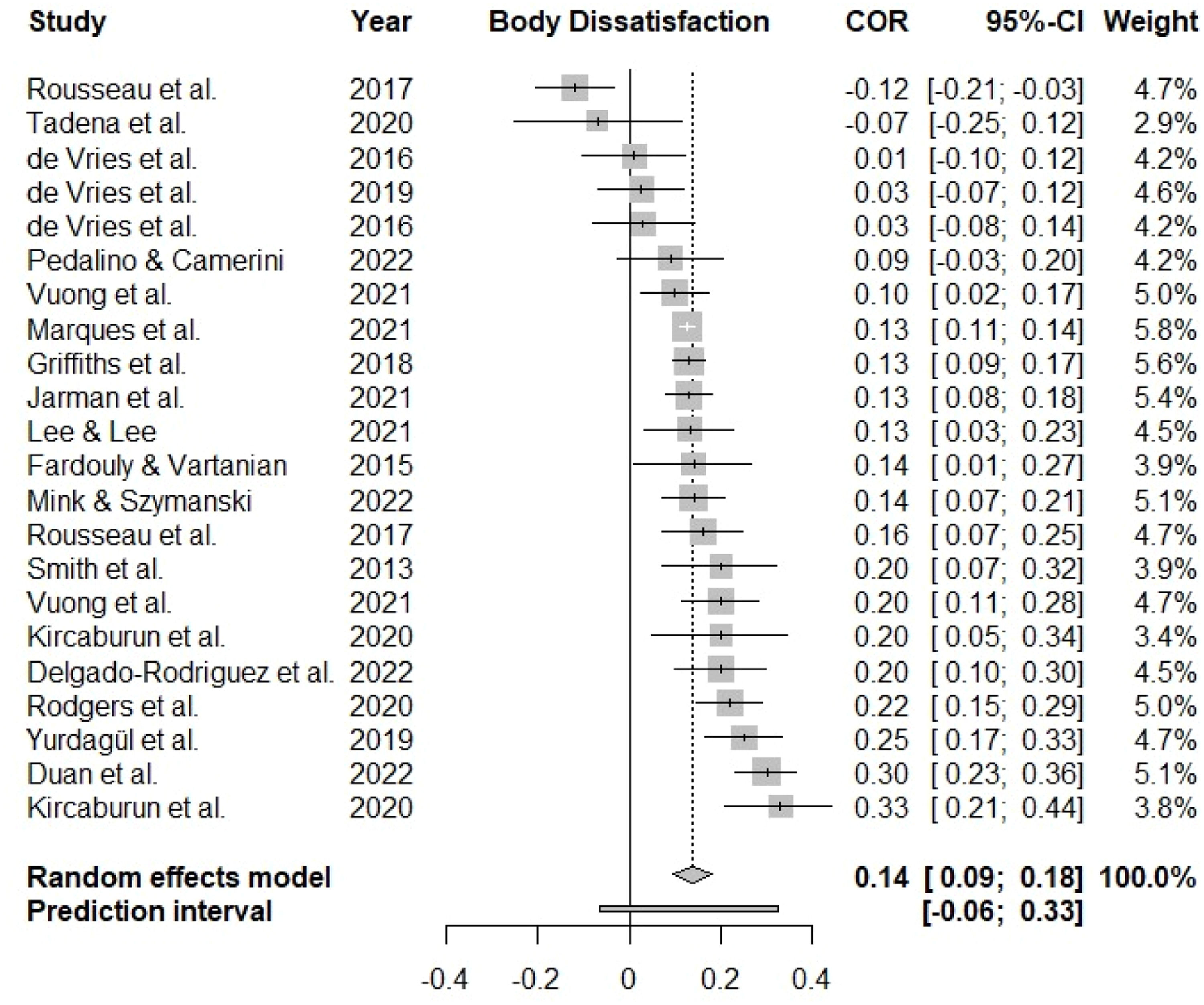
We included 18 studies with a total sample size of n = 24 384 participants with a mean age of 19.94 years (SD= 9.86) published from 2013 to 2022. Higher levels of social media use were significantly correlated with higher BD (r = 0.14 (95 % CI from 0.09 to 0.18, p < .001). The positive association between social media use and BD is robust against outlier exclusion and considering heterogeneity (r = 0.13 (95 % prediction interval from 0.04 to 0.23, p < .001).

Conclusion

Our results show that higher levels of social media use are significantly associated with higher BD. Key mechanisms behind the relationship are discussed.

Keywords:
Psychotherapy
Body image
Internet
Eating disorder

Article

These are the options to access the full texts of the publication European Journal of Psychiatry
Subscriber
Subscriber

If you already have your login data, please click here .

If you have forgotten your password you can you can recover it by clicking here and selecting the option “I have forgotten my password”
Purchase
Purchase article

Purchasing article the PDF version will be downloaded

Purchase now
Contact
Phone for subscriptions and reporting of errors
From Monday to Friday from 9 a.m. to 6 p.m. (GMT + 1) except for the months of July and August which will be from 9 a.m. to 3 p.m.
Calls from Spain
932 415 960
Calls from outside Spain
+34 932 415 960
E-mail
Article options
Tools