




Cluster headache (CH) and bipolar disorder (BD) are cyclic disorders with shared clinical aspects, e.g. disturbed sleep patterns, response to lithium and a tendency to use illicit drugs. We investigated comorbidity of BD in patients with CH, familial aggregation of BD, circadian aspects and use of illicit drugs.
Methods310 Patients from the Leiden University Cluster headache neuro-Analysis program (LUCA) were screened cross-sectionally for BD online, using the Mood Disturbance Questionnaire (MDQ-NL) and Altman Self Rating Scale (ASRM-NL) and, if indicated, further evaluated with the Mini international neuropsychiatric interview (MINI). Circadian aspects were analyzed using the Circadian Type Inventory (CTI) and the Munich Chronotype Questionnaire (MCTQ).
ResultsThe life-time prevalence of BD in patients suffering from CH was 6.5% (20/310; 95% CI: 4.0-9.8%). Patients with comorbid BD (CH+BD) were more likely to have family members with BD (standardized OR= 1.50, 95% CI=1.15;1.95, p=0.003) and were more likely to suffer from chronic CH (OR=3.05 95% CI=1.18;7.87, p=0.02) after adjustment for age and sex. They also more often used illicit drugs, compared to patients with only CH. Circadian type and chronotype did not differ between the two groups after adjustment for confounders.
ConclusionIt is important to screen for BD when treating patients with CH, because BD is more prevalent than expected in this population.
At first glance, cluster headache (CH) and bipolar disorder (BD) have very little in common. CH is a neurological condition in which people have excruciating unilateral headache or facial pain lasting 15 minutes to 3 hours, usually appearing in cluster episodes lasting weeks to months, or in case of the chronical subtype; almost daily attacks. The treatment of CH is often pharmacological, but highly concentrated oxygen can also relieve symptoms during an attack.1 BD is a psychiatric disorder in which patients suffer from episodes of depression and of (hypo)mania which can last weeks to months. CH is relatively rare with a prevalence of about 0.1% 2 with a higher prevalence in males, while BD has a prevalence of 1-2.4%3 and is equally prevalent in the sexes. However, a closer examination reveals important clinical similarities. A notable aspect of the overlap is that lithium can effectively stabilize both disorders, suggesting potential shared pathophysiological pathways.4,5
Further evidence for a possible shared pathophysiology of these conditions comes from research showing shared genetic components in CH patients and BD patients who were lithium-responsive. Specifically, several genes in lymphoblasts (RBM1, NR1D1 and TPH1) were similarly expressed in BD and CH, but differed in expression compared to healthy controls.6 These genes are related to core clock genes in the suprachiasmatic nucleus located in the hypothalamus, the central pacemaker of the circadian timing system. This shared genetic basis, specifically in lithium-responsive patients, suggest a mechanism of action through this circadian timing system.
Clinically, and in line with the findings of the abovementioned genetic study, there are signs of an altered circadian timing system in both CH and BD. First, both disorders are partially episodic, but individual episodic patterns can vary significantly. Second, both disorders can be of a more chronic nature in a minority of patients. Patients with chronic CH (15% prevalence) suffer from headache attacks throughout the year without attack-free periods; In BD, a ‘rapid cycling’ pattern is discerned in patients who suffer from more than four distinct mood episode in a year. Third, in the case of BD, mood episodes (both depression and manic episodes) are preceded by changes in the sleep wake pattern7, while sleep quality is substantially poorer during CH attacks as well as outside of attacks compared to healthy controls.8
A relatively easy way to assess circadian functioning is through questionnaires assessing chronotype and circadian type. The chronotype defines a person’s preferred timing of activities during the day, which is highly linked to the phase of the internal clock.9 The circadian type reflects the rigidity and languidity of sleeping patterns. Patients with BD10 as well as patients with CH11 have been found to have significantly different chronotypes using the Circadian Type Inventory (CTI) than healthy controls.
While both diseases display cyclic patterns, there are indications for overlap in other domains as well. Both diseases influence quality of life substantially and decrease participation in society.12,13 Clinical observations suggest that a higher proportion of patients with either CH or BD use illicit drugs compared to the general population.14-16 These observations suggest that patients with CH+BD might use illicit drugs more often than patients with only CH.
Clinical similarities and genetic overlap of CH and BD give rise to the hypothesis that there might be a shared pathophysiology. If so, this might be reflected in higher comorbidity between the two disorders. While the high prevalence of migraine in patients with BD has been well established17, only one previous study has investigated the prevalence of BD in a cohort of people suffering from several types of headache. In the 287 included patients with CH, a 6.6% prevalence of BD was found by reviewing charts and conducting clinical interviews.18 A more recent study concluded that two psychiatric symptoms, e.g. anxiety and depression, are more prominently present during CH episodes, suggesting that there could be an additive effect of comorbidity on symptom severity.19
In the present cross-sectional study in CH patients, we aimed to [1] asses the comorbidity rate of BD in CH patients, to [2] explore familial aggregation of BD by comparing the prevalence of BD among first-degree family members of patients with CH+BD and those with CH alone, to [3] explore circadian and chronotype in patients with CH compared to those with CH+BD and to [4] analyze (illicit) drug use in these CH patient groups.
Materials and methodsPatientsAdult patients from the Leiden University Cluster headache neuro-Analysis program (LUCA)20 with CH according to ICHD-3 criteria, participated during spring and early summer of 2022 in an one-time, cross-sectional, online questionnaire. The invitation for this questionnaire was sent to the email on record within the LUCA program. If there was no response, two reminder emails were sent four and eight weeks after the first invitation. The protocol was reviewed by the Medical Ethics committee of Leiden, the Hague and Delft (LDD) (N21.176).
AssessmentsThe diagnosis of cluster headache was established according to the ICHD-3 criteria, which are as follows: A. At least five attacks fulfilling criteria B-D. B. Severe or very severe unilateral orbital, supraorbital and/or temporal pain lasting 15-180 minutes when untreated. C. Either or both of the following: 1) at least one of the following symptoms or signs ipsilateral to the headache: conjunctival injection and/or lacrimation, nasal congestion and/or rhinorrhoea, eyelid oedema, forehead and facial sweating, miosis and/or ptosis; and/or 2. a sense of restlessness or agitation. D. Occurring with a frequency between ranging from one attack every other day to eight per day. E Not better accounted for by another ICHD-3 diagnosis.21
Cluster headache is often episodical in which periods (days or weeks) of headache attacks are alternated by attack free periods. Cluster headache is considered chronic when headache attacks are nearly daily. The distinction within the LUCA cohort was based on diagnosis of the treating clinician.
Patients were asked whether they had already been diagnosed with BD and, if not, screened for symptoms of BD using the validated screening questionnaire Mood Disorder Questionnaire in Dutch (MDQ-NL)22, and additionally the Altman Self Rating Mania Scale (ASRM)23, which measures the severity of possible symptoms of (hypo-)mania. A total score of ≥7 of the 13 symptom items on the MDQ-NL is considered a positive screen for bipolar spectrum disorder, provided that the additional criteria regarding symptom clustering and associated functional impairment are also met. For the ASRM the cut-off was at least six out of twenty points. Patients with a clinical diagnosis prior to this questionnaire, were not screened for BD symptoms.
The Mini-international neuropsychiatric interview (M.I.N.I.), subset mood disorders 24 was conducted in patients that scored above cut-off points for the MDQ-NL and/or ASRM and extended their informed consent for the follow-up interview. Experienced raters performed the MINI interview.
In addition to BD-related clinical questionnaires, patients completed circadian questionnaires, e.g. the Circadian Type Inventory (CTI) and the Munich Chronotype Questionnaire (MCTQ). The CTI25 is an 11-item scale testing two aspects of circadian type. The first aspect is the Languidity-Vigorousness (L-V) scale which indicates the (in)ability to overcome drowsiness. The second subscale is the Flexibility-Rigidity (F-R) Scale, which evaluates how adaptable a person’s sleep-wake patterns and daily routines are. Higher scores indicate more languidity and more flexibility respectively. The MCTQ is a validated 17-item questionnaire to assess chronotype.26 The outcome is the midpoint of sleep on free days, adjusted for sleep-debt accumulated during work days .27
All patients were requested to fill in a questionnaire about lifetime drug use15,28, smoking and alcohol.
The prevalence of CH and BD in family members of patients was assessed by structured questions. Patients were asked to provide an overview of their grandparents, parents, siblings, children and grandchildren, before asking whom, if any, of these family members had been diagnosed with BD and/or CH.
AnalysisData were extracted and analyzed using Statistical Package for the Social Sciences (SPSS 25.0, IBM Corporation). The prevalence of BD was estimated within the cohort of CH patients who participated in the study, using the exact binomial Clopper-Pearson method. The prevalence of BD among patients with CH was defined as the primary outcome. Comparisons of clinical characteristics and familial aggregation were considered secondary analyses, whereas analyses of circadian characteristics and lifetime use of individual substances were considered exploratory. To account for multiple comparisons within the exploratory substance-use analyses, p-values were adjusted using the Benjamini–Hochberg false discovery rate procedure. Prevalence in first-degree family members was calculated as a standardized familial load indicating the number of first-degree family members (parents, siblings and children) afflicted relative to the total number of first-degree family members. Logistic regression was used to calculate the odds ratio of having afflicted first-degree family members when comorbid BD was present next to CH, as well as the odds ratio for lifetime drug use, adjusted for age and sex. Comparisons between basic characteristics of patients with comorbid BD (CH+BD) and CH patients were made using t-tests for continuous variables and Pearson’s chi-squared test for categorical and dichotomous variables. CTI and MCTQ outcomes had approximately normal distributions and were analyzed using ANCOVA analyses, adjusting for age and sex. Lifetime drug use was scored and categorized dichotomously and analyzed using logistic regression comparing CH+BD patients to CH patients, taking age and sex into account as possible confounding factors
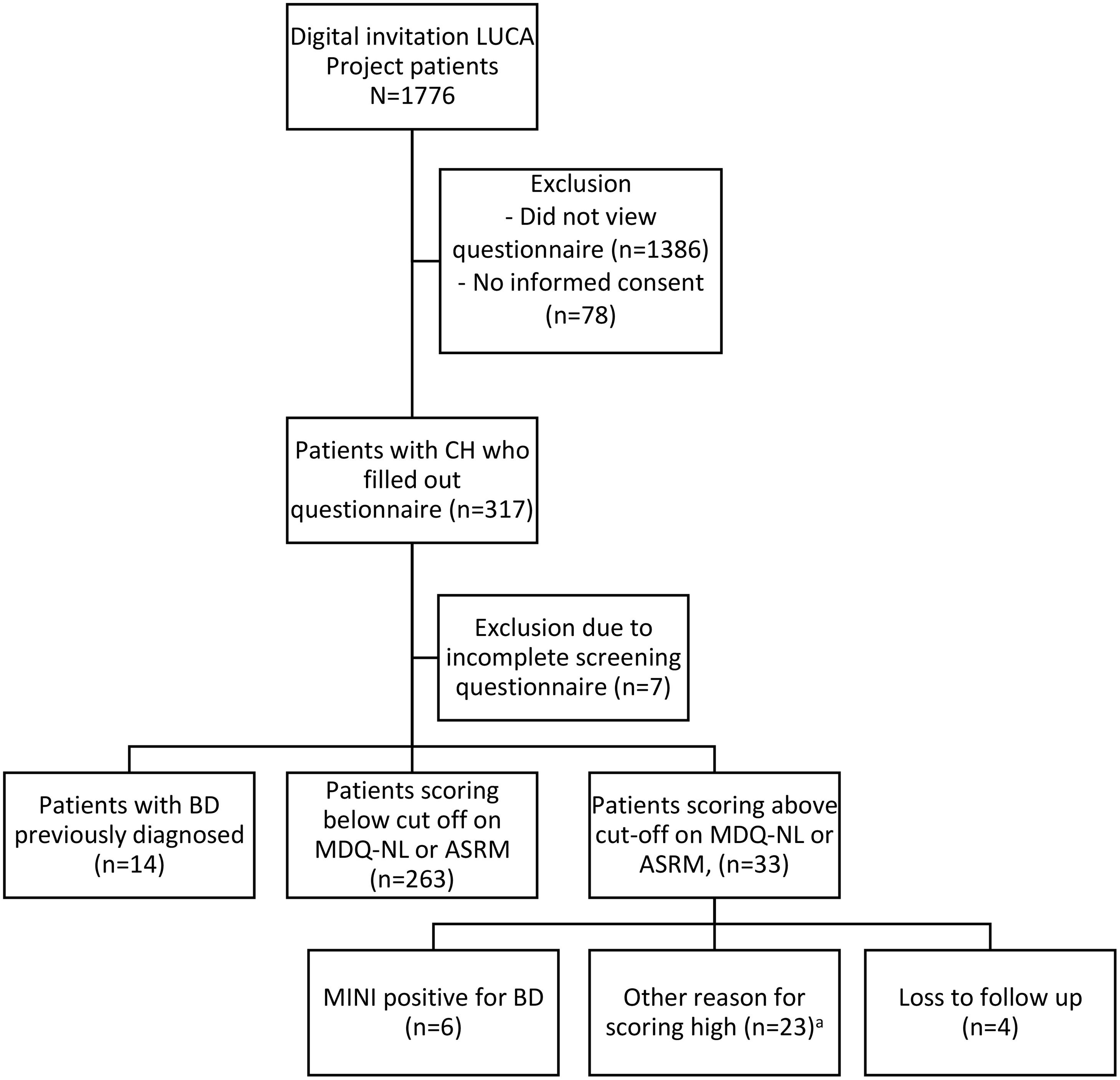
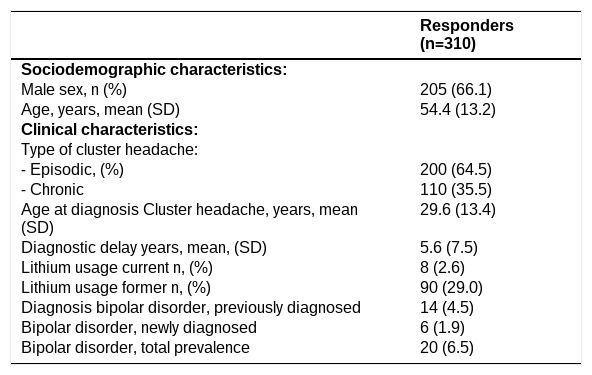
ResultsInvitations for the study were sent out to all the 1776 patients of the LUCA program. A total of 310 patients (17.5%) completed the screening questionnaires for BD (see flowchart 1). The basic characteristics of responders are described in Table 1. Basic characteristics of non-responders could not be obtained, though age, sex and type of CH of the participants in this study were similar to those of the respondents of previous LUCA studies15,20 (See supplemental table 1).
Baseline characteristics with prevalence of BD.
Of these 310 patients with known CH, 14 (4.5%) were already clinically diagnosed with co-morbid BD. A total of 33 patients who had not previously been diagnosed with BD scored above cut off values on the MDQ-NL and/or ASRM. The number of possible manic symptoms on the MDQ-NL was significantly higher in the comorbid group (CH+BD) (mean=9.0, SD=3.6) than the CH group (mean=2.21, SD=3.0, p < 0.001). Four patients could not be reached for follow-up interviews. Out of the 29 patients who were interviewed, six (1.9% of the total cohort) were diagnosed with BD type II disorder using the MINI, subsection mood disorders (Fig. 1). This total number of 20 patients with comorbid BD in the CH cohort, resulted in a prevalence of 6.5% (20/310; 95% CI: 4.0-9.8%).
Flowchart depicting patients participation in the study.
aThe 23 patients that scored high had, most commonly, previously been diagnosed with other comorbid disorders including Post traumatic Stress Disorder (PTSD) or Attention Deficit and Hyperactivity Disorder (ADHD) and Substance Abuse Disorders, or only scored high on the ASRM which looks at possible (hypo)manic symptoms in the past week and reported positive life events such as birth of a (grand)child, marriage or a change of job.
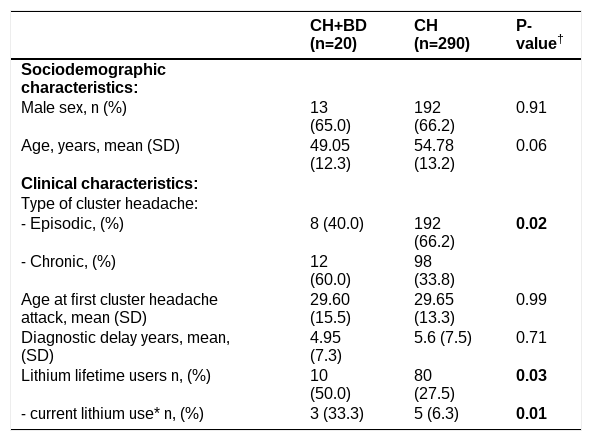
CH+BD patients did not significantly differ from patients with only CH in terms of age, age of onset of CH symptoms and diagnostic delay of CH.
CH+BD patients were more likely to suffer from chronic CH than CH patients (OR=3.05, 95% CI: 1.18;7.87, p=0.02) after adjustment for age and sex, and were more likely to be lifetime lithium users (OR=2.68, 95% CI: 1.04;6.58, p=0.04). Among the life-time lithium users a significantly larger proportion of CH+BD patients were currently using lithium compared to only CH patients (see Table 2).
Characteristics of CH+BD patients compared to CH patients in this study.
| CH+BD (n=20) | CH (n=290) | P-value† | |
|---|---|---|---|
| Sociodemographic characteristics: | |||
| Male sex, n (%) | 13 (65.0) | 192 (66.2) | 0.91 |
| Age, years, mean (SD) | 49.05 (12.3) | 54.78 (13.2) | 0.06 |
| Clinical characteristics: | |||
| Type of cluster headache: | |||
| - Episodic, (%) | 8 (40.0) | 192 (66.2) | 0.02 |
| - Chronic, (%) | 12 (60.0) | 98 (33.8) | |
| Age at first cluster headache attack, mean (SD) | 29.60 (15.5) | 29.65 (13.3) | 0.99 |
| Diagnostic delay years, mean, (SD) | 4.95 (7.3) | 5.6 (7.5) | 0.71 |
| Lithium lifetime users n, (%) | 10 (50.0) | 80 (27.5) | 0.03 |
| - current lithium use* n, (%) | 3 (33.3) | 5 (6.3) | 0.01 |
A total of 296 patients (95.5% of responders) completed the questionnaires on BD and CH in family members. Patients with CH+BD were more likely to have a first-degree family member afflicted with BD compared to CH patients. The standardized odds ratio for having a first-degree family member with BD was 1.50, 95% CI: 1.15;1.95, p = 0.003, while the odds ratio’s for having first-degree family members afflicted with CH did not differ.
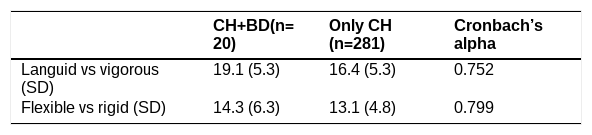
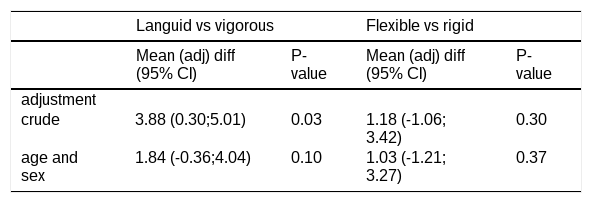
Exploratory analysesComparison of the outcomes of the CTI (Table 3A and Table 3B) and MCTQ revealed no differences in either flexibility of languidity after adjustment for age and sex, nor the presence of social jetlag. The overall midsleep time (outcome of the MCTQ) for the complete group was 3.8 hours, meaning 03:48 A.M. (95% CI: 3.7;3.9). Midsleep time did not differ between CH and CH+BD.
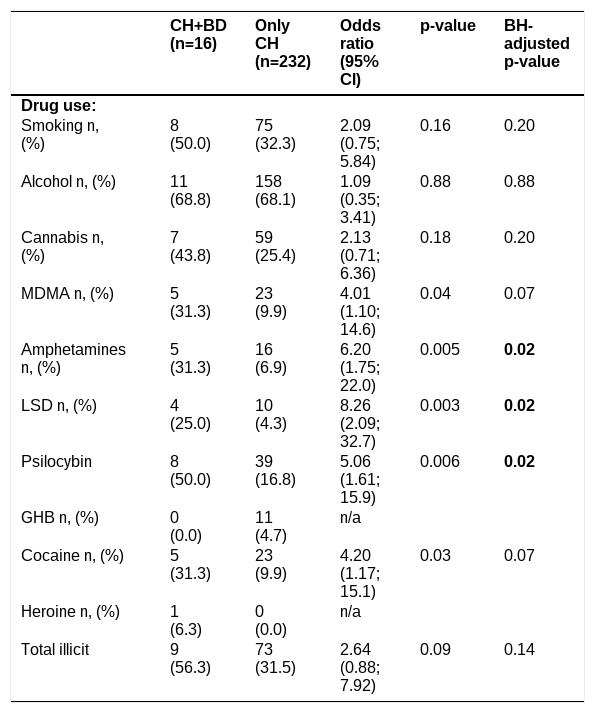
Exploratory analyses into drug use (see Table 4) showed that CH+BD patients had a higher odds ratio for life-time use for amphetamines (adj. p=0.02), LSD (adj. p=0.02) and psilocybin (adj. p=0.02) in CH+BD (n=16) as compared to CH (n=232) after adjustment for age and sex. There was neither difference in the usage of alcohol, smoking, nor cannabis.
Comparing circadian type of CH+BD versus CH patients.
Data are adjusted mean differences, with 95% CI, by ANCOVA.
Comparison of drug use in CH+BD patients versus CH patients.
Presented odds ratios are after adjustment for age and sex. n/a analysis not possible due to insufficient numbers.
We examined several demographic and clinical characteristics of the possible relation between CH and BD. We found an increased prevalence of BD in patients with CH. CH+BD patients were more likely to have BD afflicted first-degree family members and more often suffered from chronic cluster headache, but there was no difference in age, age of onset or diagnostic delay between CH+BD patients and CH patients. Neither was there a difference in circadian type and chronotype. CH+BD patients, however, had a higher lifetime use of psilocybin, LSD and amphetamines. Overall lifetime illicit drug was more common in CH patients than the general population.
We observed a prevalence of BD of 6.5% in this CH cohort, which is significantly higher than the prevalence of 1.9% in the general Dutch population 29 and the estimated worldwide prevalence of 1-2.4%.3 This finding is in line with the only previous study into psychiatric comorbidity in cluster headache patients 18, that reported a prevalence of comorbid BD of 6.6% in 287 patients with CH. Possible mechanisms of this higher prevalence, remain elusive. In addition, CH+BD patients had a higher odds ratio of having family members with BD and more often used illicit drugs than CH patients without BD. There were no differences in sex, current age or age of onset of CH between CH and CH+BD patients.
In patients with CH+BD, chronic CH was more prevalent compared to CH only. Possibly, patients with more severe CH are more likely to suffer from comorbid BD or, alternatively, comorbid BD leads to more severe and more chronic symptomatology of CH. Another explanation might lie in differences in pathophysiology between the two CH types. However, the only other study into the overlap of these disorders so far, did not find a difference in prevalence of BD between episodic and chronic CH patients (6.4% in episodic and 6.8% in chronic CH).18 We also found that CH+BD patients were more often lifetime lithium users than CH only patients. This could be due to the overrepresentation of chronic CH patients in the CH+BD group; patients with chronic CH are more often treated with lithium due to the prophylactic quality of lithium on episodes of CH.
In our study having a family member with BD influenced the odds ratio of being afflicted with both disorders, while having a first degree family members with CH did not significantly change the odds. The higher familial load of BD among patients with CH+BD is consistent with familial aggregation. However, the present study cannot determine whether this aggregation reflects genetic susceptibility, shared pathophysiology, shared environmental factors, diagnostic awareness within families, or chance.
The analysis of our circadian data suggest that CH+BD patients are more languid circadian types, however this result did not remain significant after adjustment for age and sex, which are important confounders.30 Languidity has previously been found to decrease with age 31, which could explain the difference in the crude model since our comorbid group was, though not significantly, younger (mean age CH 54.8 vs CH+BD 49.1 years, p=0.06). Future research with larger sample sizes and a control group might shed light on whether there is a difference in circadian types that our study was not able to detect. There were also no differences in chronotype or in social jetlag between CH and CH+BD patients.
In our sample, CH+BD patients had more often used LSD, amphetamines, and psilocybin, during their life than the CH patients. Lifetime drug use prevalence has previously been shown to be higher for each of the disorders compared to the general population, as is the case in the current study with the CH group scoring higher rates of smoking (32.3% vs 20.3%), amphetamines (CH 6.9% vs 5.3%), cocaine (9.9% vs 6.5%) and total illicit drug use (31.5% vs 26.3%) than the general population.28 An illicit drug use prevalence of 33.1% has previously been reported in CH patients of the LUCA cohort.15 For patients with BD, extensive meta-analyses have shown higher use and abuse of (illicit) drugs.14,16 CH+BD patients had significantly higher rates than the CH patients for several types of lifetime drug use, but the exact nature of correlations and possible interactions between CH, BD and drug use cannot be determined within the framework of the current cross-sectional study.
The most important clinical implication that can be derived from an elevated prevalence of BD in patients with CH, is that clinicians should be aware of this possible comorbidity. Since both CH and BD lead to disturbances of circadian rhythm and are often induced by a lack of good quality sleep, either one disorder being left unrecognized might greatly influence the prognosis and success of treatment. For instance, as comorbid migraine in BD is correlated to more severe mood episodes32, comorbid CH might disadvantageously influence symptoms of BD and vice versa. Clinicians should also be aware of the higher prevalence of illicit drugs in patients suffering from both disorders. Concomitant illicit drug use can influence symptoms, as well as adherence to therapy.
While the current study has considerable merits such as the MINI interviews to diagnose BD, there are also some limitations to consider. The most important limitation is a possible selection and response bias with regard to the respondents, which may limit the generalizability of the prevalence estimate. The basic characteristics of respondents, such as age, sex and type of cluster headache, however, did not differ significantly from respondents in previous studies within the LUCA cohort.33,34 A second limitation is the loss to follow up of 12.1% of the patients who scored high on screening questionnaires for BD. This loss to follow up may lead to an underestimation of the prevalence. This possible underestimation, however, strengthens our finding of a higher prevalence of BD in our cohort of CH patients. Also, previously diagnosed BD patients were not necessarily diagnosed using the MINI, possibly introducing heterogeneity in diagnostic ascertainment. An important limitation of the comparisons between the comorbid group to the CH group is the small number of comorbid patients in the study. Consequently, findings from these comparisons should be interpreted with caution. For our explorative analysis into BD prevalence in family members, a simple questionnaire was used. A future study using a complete pedigree with ages of all family members and including half-siblings for example might provide a more accurate estimation of the prevalence of BD. Possible relationships between circadian types could be an interesting focus for further research. The analysis into illicit drug use was also based on a simple questionnaire. One can, therefore, not distinguish recreational use from substance abuse disorders within this study. The questionnaire was, however, modelled on the questionnaire used by the Central Bureau for Statistics of the Netherlands (CBS), which is a state-funded statistical institute with the directive to independently monitor trends Dutch society.28
The higher prevalence of BD observed among patients with CH, together with the observed familial aggregation of BD, suggests that the relationship between these disorders warrants further investigation. Clinicians should be aware of the increased risk of a comorbid BD in patients with CH in order to optimize treatment and prognosis. Future research should be of a prospective nature and should include a larger cohort, more detailed assessment of the course, severity and possible interaction of symptoms and possible genetic factors.
Ethical considerationsThe protocol was reviewed by the Medical Ethics committee of Leiden, the Hague and Delft (LDD) (N21.176).
FundingNone.
Ethics declarationWritten informed consent to take part in the study and to publish the article has been obtained from all participants or their legal representatives. The privacy rights of participants have been observed.
This study was performed in compliance with relevant laws, regulatory frameworks and guidelines where the research took place. This study was approved by the Medical Ethics committee of Leiden, the Hague and Delft (LDD). (Approval No. N21.176).
All authors declare no conflict of interest.


