


metricas

European Journal of Psychiatry

Suggestions
European Journal of Psychiatry A collective case study of mental health systems’ response to COVID-19: Impact...
Journal Information
Visits
818
Vol. 39. Issue 1.
(January - March 2025)
Original article
Full text access

A collective case study of mental health systems’ response to COVID-19: Impact on patterns of care provision for depression and anxiety in two comparable regions of Southern Europe

Visits
818
G Castelpietraa,b,c,
Corresponding author
giulio.castelpietra@cnp.ch

Corresponding author at: Filiere Psychiatrie Communauutaire Department Adulte 2, Centre Neuchâtelois de Psychiatrie, site de Prefargier, 2013 Marin-Epagnier, Switzerland.
, T Niyonsengac, A Iruine, U Albertf,g, A Gabilondod,e, L Salvador-Carullac
a Department Adulte 2, Centre Neuchâtelois de Psychiatrie, Marin-Epagnier, Switzerland
b Mental Health Flagship, Division of Country Health Policies and Systems (CPS), WHO Regional Office for Europe, Copenhagen, Denmark
c Health Research Institute, Faculty of Health, University of Canberra, Bruce ACT Australia
d Basque Health Service (Osakidetza), Gipuzkoa Mental Health Network, Donostia-San Sebastián, Gipuzkoa, Spain
e Biodonostia Health Research Institute, Donostia-San Sebastián, Gipuzkoa, Spain
f Department of Medicine, Surgery and Health Sciences, University of Trieste
g UCO Clinica Psichiatrica, Mental Health Department, Giuliano Isontina Healthcare Agency, Trieste, Italy
This item has received
Article information
Abstract
Full Text
Bibliography
Download PDF
Statistics
Tables (2)
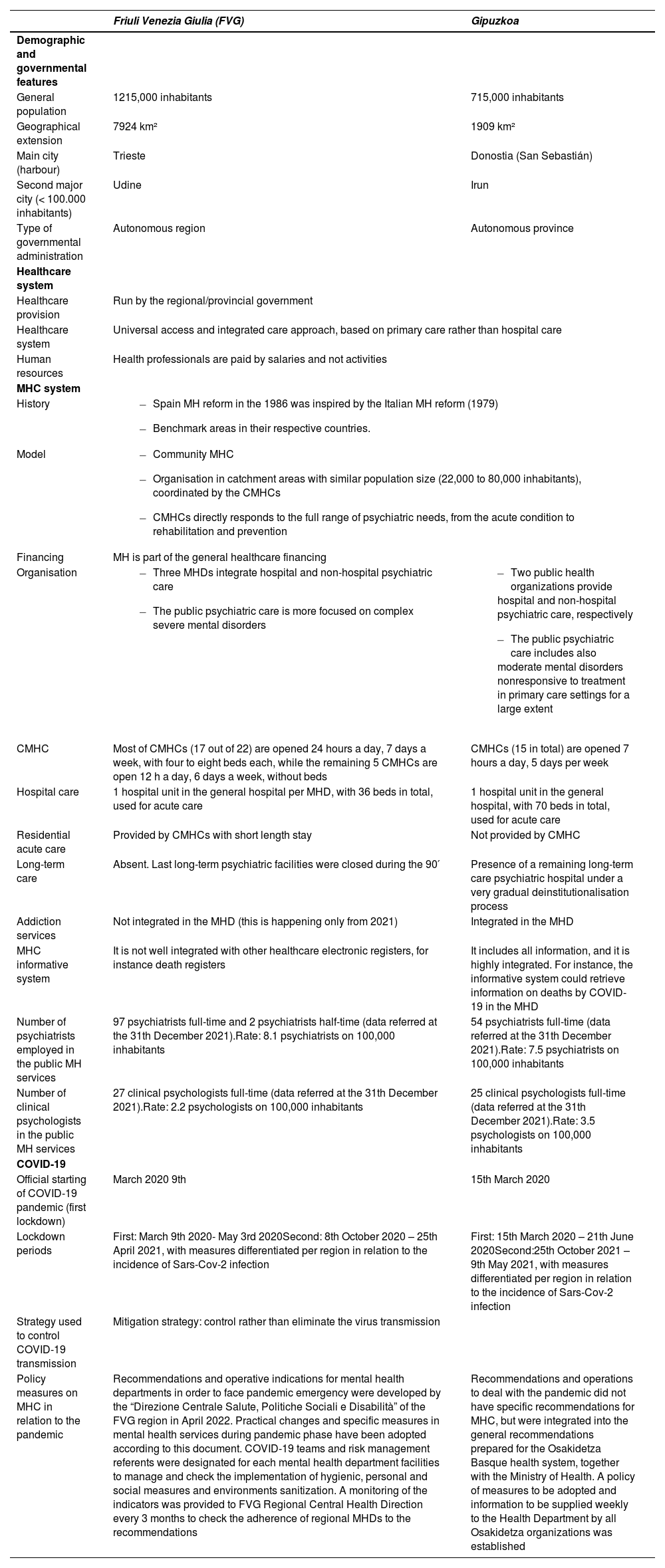
Table 1. Contextual features, with similarities and differences, in the two areas in Southern Western Europe: Friuli Venezia Giulia - FVG (Italy) and Gipuzkoa (Spain).
Tables
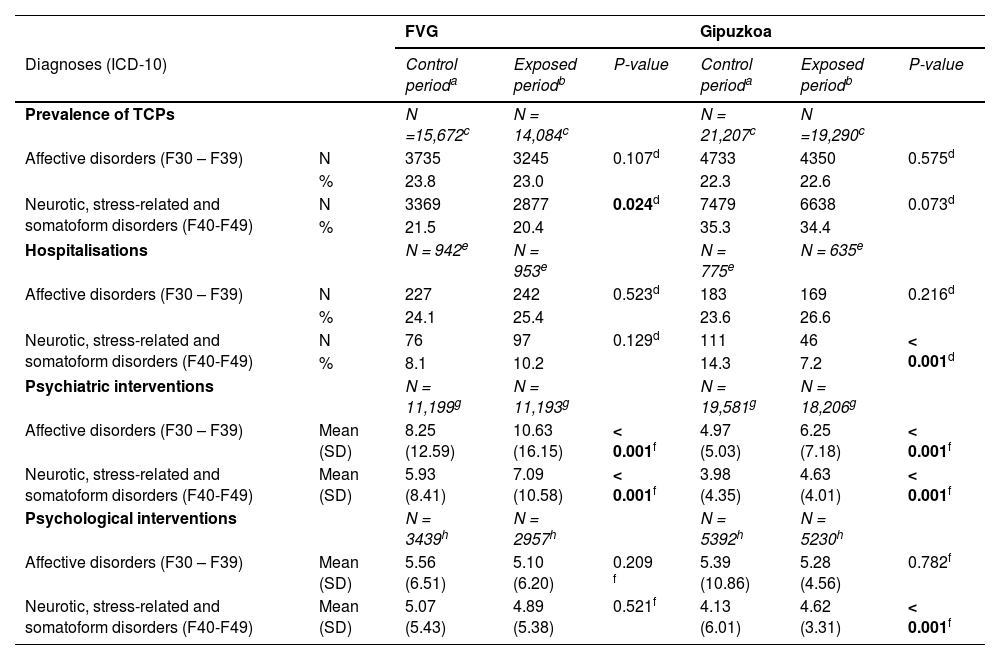
Table 2. Treatment clinical profiles (TCPs), hospitalisations and clinical visits in relation common mental disorders in Friuli Venezia Giulia (FVG), Italy and Gipuzkoa, Spain, in the control and exposed period. A P-value <0.05 was set as threshold of statistical significance. Significant P-values are highlighted in bolt.
Tables
Abstract
Background and Objectives

COVID-19 pandemic has affected the mental health system (MHS) globally, although significant geographical variation was found, particularly for depression and anxiety. The understanding of its impact at the regional level of the context of care is limited when compared to national evaluations.

Methods

Collective case study comparing the prior pattern of care with the first 11 months of COVID-19 in two sites: Gipuzkoa (Spain) and Friuli Venezia Giulia - FVG (Italy). Information from both sites derive from administrative data of MHS in the two regions harmonized for comparison. Data included prevalence of psychiatric diagnoses (ICD-10 F30-F39 and F40-F49 codes), number of hospitalisations, mean and range of psychiatric and psychological interventions. Significance of time-period and location difference was assessed using the Chi-square and the T-statistics for prevalence and count data, respectively.

Results

MHS is community-based in both sites. The prevalence of anxiety decreased in FVG, while a decrease in hospitalisations was found in Gipuzkoa. Both sites registered an increase in psychiatric visits for anxiety and depression. In both periods, FVG showed significant lower prevalence of diagnoses, but higher mean number of psychiatric interventions.

Conclusions

: The COVID-19 outbreak is a paradigmatic example of complex dynamic systems in public health and illustrates the importance of considering its local context and time dependency. The Standard mapping and coding of local MHS provision is essential to allow comparison and reduce ambiguity. This study highlights the importance of ecosystem research to better interpret epidemiological data and support the development of evidence-informed policymaking.

Keywords:
COVID-19
Spain
Italy
Common mental disorders
Mental health system
Expert-based collaborative analysis (EbCA)
Full Text
Introduction

The COVID-19 pandemic has deeply affected the mental health system globally.1,2 The reason of the increased incidence of mental disorders (MDs) is complex, with differences between common mental disorders such as depression and anxiety, and psychosis and cognitive impairment. While the first group may be mainly related to environmental stress caused by loneliness, reduced social interactions and economic instability,3 the increase in the non-affective mental disorders could be associated to the effect of SARS-CoV-2 in the brain.4 From the start of the pandemic there was an international concern that psychiatric patients might have a greater susceptibility to infection and worse disease outcomes,5 albeit findings from literature are various. A recent review on global data on depression and anxiety symptoms, for instance, reported an absence of significant changes before and during COVID-19 pandemic, although significant geographical variation has been found.6 In contrast, an exacerbation in treatment gaps on the care of depressive disorders have been observed.7 Little is known, however, on the different interventions to face the pandemic, and real data across countries to build models that can predict their effect have been claimed from the beginning of the pandemic.8 In general, countries pursuing an elimination strategy of the transmission of Sars-Cov-2 infection had better mental health outcomes than countries that pursued mitigation strategies, which aimed at controlling the infection with less stringent measures.9 Nonetheless, a lack of standards for measuring and reporting data across countries to compare healthcare policies has been highlighted.10 It appears crucial, thus, to contextualise findings to different healthcare systems that are highly heterogeneous.11 Context in the case of service delivery can be considered as the set of elements that can affect improvement efforts.12 For instance, the World Health Organisation (WHO) claimed for an exploration of the mental healthcare context through a systematic description of services and what they are doing, using the Mental health Gap Action Program.13 Significant local variation is expected and a good understanding of the context of care is needed to evaluate causal inferences.14 In particular, the model of reference is the so called “healthcare ecosystem research”, which is used for the implementation and analysis of complex interventions.15 Regarding mental health, this model focuses on important domains, such as the population features who can suffer by MDs, the workforce capacity, the organisation of healthcare and the integration with mental health services.16 Mental health ecosystem research comprises different disciplines to provide an analytic framework of the environment and context of mental health systems, in order to support decisions by policy makers. Since care delivery outcomes may change according to local context characteristics, the utilisation of this model in different geographical areas is a useful tool to implement efficient interventions.15,16 Therefore, a comparative analysis of patterns of care and impact across regions may shed light on complex questions, such as to which extent these patterns were implemented, and their delivery outcomes. In order to provide this, a broad approach using local administrative data, together with expert knowledge on local mental health systems has been suggested.17 Several studies previously analysed the differences in mental health provision in different local areas of Europe and at the global level.18-20 However, a description of the ecosystem related to mental healthcare (MHC) might be also useful to describe possible temporal changes in the patterns of care because of a major event, such as a change in legislation.21 The COVID-19 pandemic, thus, as a major health event, can be considered as a temporal break, which might have influenced the MHC provision in different ways. Furthermore, the ecosystem approach benefits by a collective case study design, which involves an in-depth exploration of multiple cases, within a specific context or setting.22 This design was used, for instance, to observe the patterns of use and the efficiency of the main types of care of mental health services in relation to the workforce capacity,23 or to explore specific aspects of rural health service or the healthcare provision in particular communities.24,25 In this study, thus, we performed an analysis of policy and administrative data related to common MDs, deriving from the public MHC system provision in two sites of Italy (Friuli Venezia Giulia - FVG) and Spain (Gipuzkoa). Our assumption is that their organisational characteristics may influence both the prevalence of treated clinical profiles (TCPs) for common MDs and the pattern of service use, rather than a major health episode, such as COVID-19 pandemic.

Our aim was investigating the impact of COVID-19 on the context of TCPs and service provision for common MDs, comparing the first 11 months of COVID-19 with the same period in the year before. Contextual similarities and differences between the two sites were also considered.

Methods

Collective case study following an ecological approach, comparing two different MHC systems of two different regions in Southern Europe: FVG and Gipuzkoa, in two periods:

  • Control period, before the COVID-19 pandemic: from the 1st of March 2019 to the 31st of January 2020

  • Exposed period, since the COVID-19 outbreak and the lockdown in Italy and Spain began in March 2020: from the 1st of March 2020 to the 31st of January 2021.

The collective case study design provides an analysis at the multiple individual cases or instances level, that shares common characteristics. These are examined collectively to provide a comprehensive understanding of the broader issue, exploring similarities, differences, and patterns of care provision to gain insights that can inform healthcare policies and quality improvement. This type of study is useful in the analysis of complex systems in specific context conditions.22

Public officers from both regions respective agencies were involved in the definition of the organization and provision of services, in the identification of similarities and differences, and in the interpretation of the data according to the context. The team included officers from the two regional public health agencies that revised and harmonised the available information to enable the comparison. This comprises also working on the two administrative databases used for data retrieving, in the attempt to make them interoperable. A deep comparison of MHC systems has been done, with the goal of harmonising the different data coding. The expert-based collaborative analysis (EbCA) approach was used for this purpose. This is a method to collect expert knowledge and to incorporate it into the different levels of the data processing: pre-processing, mid-processing and post processing. EbCA research methodology is used in public health and other fields that leverages the collective expertise of a group of specialists to analyse and solve complex problems. The approach combines the knowledge and skills of experts from various disciplines to provide comprehensive and well-rounded insights into the issue being studied. In this case, the difficulty was related to different datasets in the two catchment areas and different meaning of terms used in the two datasets, such as administrative or treated incidence and groupings of ICD-10 mental disorders.26

EbCA was used to reach consensus on the semantic mapping of key indicators and concepts to enable comparison, and to provide a synthesis of the prior knowledge base for pre-processing, namely the background information (grey and peer review publications, atlases and other policy documents). The terminological equivalence was tested and refined in a series of panel meetings including planners and researchers from both regions using digital conferencing. Seven plenary meetings were organised, with other peer to peer meetings for the agreement on specific issues. The last meeting was used to provide external validation of the results and to interpret them in the two contexts.

Description of the sites

FVG is in the Northeast of Italy. The current organization of MHC in FVG is based on the Community Mental Health Centres (CMHCs).27 The mental health system in FVG also comprises three general hospital psychiatric units, with a total amount of 32 beds.28 Gipuzkoa is at the eastern end of the Cantabrian Sea, being one of the three provinces that make up the autonomous community of the Basque Country, Spain. The current organization of MHC is based on two public health organizations:

The Mental Health network for outpatient devices (CMHCs and Day Structures);

The Donostia Integrated Health Organization for acute admission in the general hospital (70 adult beds).

The information on the characteristics of the MHSs is available at the Global and Local Observation and mapping of CAre Levels project repository (available at: https://www.canberra.edu.au/research/centres/hri/research-projects/glocal) as part of the Mental Health atlas series in Spain.29 Gipuzkoa is also involved in the application of new techniques of modelling and healthcare ecosystem research to health planning.30

Contextual factors

Contextual factors analysed are summarized in Table 1, and involve information provided by the working team using the EbCA approach. They regarded general demographic and governmental features of the two areas, general healthcare and MHC characteristics, as well as information on the COVID-19 pandemic (lockdown period, strategies for controlling virus transmission and policy measures taken). Information was used to compare the two areas, mainly in relation to the context of care and its modification due to the pandemic.

Table 1.

Contextual features, with similarities and differences, in the two areas in Southern Western Europe: Friuli Venezia Giulia - FVG (Italy) and Gipuzkoa (Spain).

  Friuli Venezia Giulia (FVG)  Gipuzkoa 
Demographic and governmental features     
General population  1215,000 inhabitants  715,000 inhabitants 
Geographical extension  7924 km²  1909 km² 
Main city (harbour)  Trieste  Donostia (San Sebastián) 
Second major city (< 100.000 inhabitants)  Udine  Irun 
Type of governmental administration  Autonomous region  Autonomous province 
Healthcare system     
Healthcare provision  Run by the regional/provincial government
Healthcare system  Universal access and integrated care approach, based on primary care rather than hospital care
Human resources  Health professionals are paid by salaries and not activities
MHC system 
History 
  • Spain MH reform in the 1986 was inspired by the Italian MH reform (1979)

  • Benchmark areas in their respective countries.

Model 
  • Community MHC

  • Organisation in catchment areas with similar population size (22,000 to 80,000 inhabitants), coordinated by the CMHCs

  • CMHCs directly responds to the full range of psychiatric needs, from the acute condition to rehabilitation and prevention

Financing  MH is part of the general healthcare financing
Organisation 
  • Three MHDs integrate hospital and non-hospital psychiatric care

  • The public psychiatric care is more focused on complex severe mental disorders

 
  • Two public health organizations provide hospital and non-hospital psychiatric care, respectively

  • The public psychiatric care includes also moderate mental disorders nonresponsive to treatment in primary care settings for a large extent

 
CMHC  Most of CMHCs (17 out of 22) are opened 24 hours a day, 7 days a week, with four to eight beds each, while the remaining 5 CMHCs are open 12 h a day, 6 days a week, without beds  CMHCs (15 in total) are opened 7 hours a day, 5 days per week 
Hospital care  1 hospital unit in the general hospital per MHD, with 36 beds in total, used for acute care  1 hospital unit in the general hospital, with 70 beds in total, used for acute care 
Residential acute care  Provided by CMHCs with short length stay  Not provided by CMHC 
Long-term care  Absent. Last long-term psychiatric facilities were closed during the 90′  Presence of a remaining long-term care psychiatric hospital under a very gradual deinstitutionalisation process 
Addiction services  Not integrated in the MHD (this is happening only from 2021)  Integrated in the MHD 
MHC informative system  It is not well integrated with other healthcare electronic registers, for instance death registers  It includes all information, and it is highly integrated. For instance, the informative system could retrieve information on deaths by COVID-19 in the MHD 
Number of psychiatrists employed in the public MH services  97 psychiatrists full-time and 2 psychiatrists half-time (data referred at the 31th December 2021).Rate: 8.1 psychiatrists on 100,000 inhabitants  54 psychiatrists full-time (data referred at the 31th December 2021).Rate: 7.5 psychiatrists on 100,000 inhabitants 
Number of clinical psychologists in the public MH services  27 clinical psychologists full-time (data referred at the 31th December 2021).Rate: 2.2 psychologists on 100,000 inhabitants  25 clinical psychologists full-time (data referred at the 31th December 2021).Rate: 3.5 psychologists on 100,000 inhabitants 
COVID-19     
Official starting of COVID-19 pandemic (first lockdown)  March 2020 9th  15th March 2020 
Lockdown periods  First: March 9th 2020- May 3rd 2020Second: 8th October 2020 – 25th April 2021, with measures differentiated per region in relation to the incidence of Sars-Cov-2 infection  First: 15th March 2020 – 21th June 2020Second:25th October 2021 – 9th May 2021, with measures differentiated per region in relation to the incidence of Sars-Cov-2 infection 
Strategy used to control COVID-19 transmission  Mitigation strategy: control rather than eliminate the virus transmission
Policy measures on MHC in relation to the pandemic  Recommendations and operative indications for mental health departments in order to face pandemic emergency were developed by the “Direzione Centrale Salute, Politiche Sociali e Disabilità” of the FVG region in April 2022. Practical changes and specific measures in mental health services during pandemic phase have been adopted according to this document. COVID-19 teams and risk management referents were designated for each mental health department facilities to manage and check the implementation of hygienic, personal and social measures and environments sanitization. A monitoring of the indicators was provided to FVG Regional Central Health Direction every 3 months to check the adherence of regional MHDs to the recommendations  Recommendations and operations to deal with the pandemic did not have specific recommendations for MHC, but were integrated into the general recommendations prepared for the Osakidetza Basque health system, together with the Ministry of Health. A policy of measures to be adopted and information to be supplied weekly to the Health Department by all Osakidetza organizations was established 

MH Mental health

MHC Mental Health Care

CMHCs Community Mental Health Centres

MHD Mental Health Department

Data collection

Information from both sites derive from administrative data of psychiatric services, as follows:

  • FVG Regional Social and Health Information System was used to retrieve data on mental health activities of FVG MHDs, using a unique anonymous key. This system links data from different regional databases (i.e. the Death Register, the Hospital Discharge Register, the Drug Prescription Register, etc.)28,31,32

  • Osakidetza Information System was used to retrieve the data on MHSs in Gipuzkoa contained in the electronic medical record (including data on deaths, hospital discharges, medication prescriptions, etc.), using a unique anonymous key33

Primary diagnoses were classified using the International Classification of Diseases- tenth version (ICD-10) and comprised, for the study purpose, only diagnoses of affective disorder (F30-F39 codes) and neurotic, stress-related and somatoform disorders, hereinafter called “anxiety” disorders (F40-F49 codes).

All data were divided per location (FVG and Gipuzkoa) and per time-period (control and exposed period) and included:

  • prevalence of the TCPs measured as the number of patients in charge of MHSs;

  • number of hospitalisations,

  • mean and range of psychiatric and psychological interventions.

Statistical analysis

The analysis included descriptive statistics compiled per location and time-period using proportions for prevalence data, and mean, median and standard deviation for numeric data. This included number of hospitalisations and treatment interventions (clinical visits by psychiatrists and by psychologists). Differences were assessed using either the Chi-square statistics and the T-statistics for prevalence and count data (assumed to be normally distributed given the large sample sizes) respectively.

ResultsSimilarities and differences of the two sites

As shown in Table 1, the two sites are comparable in relation to sociodemographic and administrative characteristics, and general healthcare provision. MHC is community-based, with CMHCs representing the core of the network. Restrictions due to COVID-19 pandemic have begun in the same period, and both regions pursued a mitigation strategy to control the infection. Differences regarded mainly the MHC system, which is more outpatient-based in FVG, albeit addiction disorders and common MDs are more integrated with public MHC system in Gipuzkoa. The least has also a more advanced informative system. The rate of psychiatrists is higher in FVG, while those of psychologists in Gipuzkoa.

Patterns of MHC provision

During the pandemic, the prevalence of anxiety TCPs decreased significantly in FVG, while a significant decrease in hospitalisations was found in Gipuzkoa. Both sites registered a significant increase in psychiatric visits in common MDs, while psychological visits only increased for anxiety disorders in Gipuzkoa (Table 2).

Table 2.

Treatment clinical profiles (TCPs), hospitalisations and clinical visits in relation common mental disorders in Friuli Venezia Giulia (FVG), Italy and Gipuzkoa, Spain, in the control and exposed period. A P-value <0.05 was set as threshold of statistical significance. Significant P-values are highlighted in bolt.

    FVGGipuzkoa
Diagnoses (ICD-10)    Control perioda  Exposed periodb  P-value  Control perioda  Exposed periodb  P-value 
Prevalence of TCPs    N =15,672c  N = 14,084c    N = 21,207c  N =19,290c   
Affective disorders (F30 – F39)3735  3245  0.107d4733  4350  0.575d
23.8  23.0  22.3  22.6 
Neurotic, stress-related and somatoform disorders (F40-F49)3369  2877  0.024d7479  6638  0.073d
21.5  20.4  35.3  34.4 
Hospitalisations    N = 942e  N = 953e    N = 775e  N = 635e   
Affective disorders (F30 – F39)227  242  0.523d183  169  0.216d
24.1  25.4  23.6  26.6 
Neurotic, stress-related and somatoform disorders (F40-F49)76  97  0.129d111  46  < 0.001d
8.1  10.2  14.3  7.2 
Psychiatric interventions    N = 11,199g  N = 11,193g    N = 19,581g  N = 18,206g   
Affective disorders (F30 – F39)  Mean (SD)  8.25 (12.59)  10.63 (16.15)  < 0.001f  4.97 (5.03)  6.25 (7.18)  < 0.001f 
Neurotic, stress-related and somatoform disorders (F40-F49)  Mean (SD)  5.93 (8.41)  7.09 (10.58)  < 0.001f  3.98 (4.35)  4.63 (4.01)  < 0.001f 
Psychological interventions    N = 3439h  N = 2957h    N = 5392h  N = 5230h   
Affective disorders (F30 – F39)  Mean (SD)  5.56 (6.51)  5.10 (6.20)  0.209 f  5.39 (10.86)  5.28 (4.56)  0.782f 
Neurotic, stress-related and somatoform disorders (F40-F49)  Mean (SD)  5.07 (5.43)  4.89 (5.38)  0.521f  4.13 (6.01)  4.62 (3.31)  < 0.001f 

N number

TCPs Treatment clinical profiles

a

from the 1st March 2019 to the 31st January 2020

b

from the 1st of March 2020 to the 31th of January 2021

c

total N of TCPs

d

χ2 test P-value

e

total N of hospitalisations

f

T-test P-value

g

total N of psychiatric interventions

h

total N of psychological interventions

Discussion

The FVG and Gipuzkoa were comparable in terms of population size, geographical characteristics, and healthcare organisation. The two sites are benchmark areas in the respective countries for community MHC.27,28,30 Nonetheless, the two systems presented also contextual differences, in terms of MHC organisation, workforce, and a different impact of the pandemic on mental health care. Moreover, substantial differences between the two regions were also found when administrative data during control and exposed periods were compared. Although starting from different mean numbers of interventions, a significant increase in psychiatric visits during the exposed period was registered in common MDs in both sites. However, hospitalisations decreased only in Gipuzkoa, while the prevalence of anxiety disorders seemed to decrease in FVG.

The ecosystem approach using a collective case study design, allowed comparing the two areas taking into account the contextual factors and the extent of healthcare data variation in relation to the pandemic. We observed a higher degree of patients followed for common MDs in Gipuzkoa in both periods, where the MHC includes, to a greater extent, MDs referred from the primary care. The number of psychiatric interventions was higher in FVG, in line with the higher rate of psychiatrists compared with Gipuzkoa. Both MHC systems are strongly community-based, which have shown a greater integration and adaptability compared to hospital-based MHC during COVID-19.1,28 This may explain the relative stability of TCPs and hospitalisations in the pre-pandemic and pandemic period, with the only exception of the decrease in hospitalisations for anxiety disorders in Gipuzkoa. A drop of common MDs presentations at the primary care level, requiring hospitalisations, during the first and the second wave of COVID-19, may explain the general decrease in hospitalisations in the Spanish region. This might also explain the increase in psychiatric interventions, which supplied a possible raise on care demand for less severe common MDs, directly addressed to specialised MHC, with a lower filter at the primary care level. The increase in psychological interventions for anxiety in Gipuzkoa, where the rate of psychologists is higher than FVG, is also in line with this.34

Though internationally claimed,3,5 the evidence of a raise in depression and anxiety due to COVID-19, is still not clear.6 A main shortcoming is that most of the studies did not consider the differences in healthcare systems and provision, which can deeply affect the results. In relation to major depressive disorders, for instance, treatment interventions during the pandemic, such as a prompt access to MHC or the clinical follow-up, remained unexplored.7 However, a major care event such as the COVID-19 pandemic is likely to have deeply affected the healthcare system.2 Events like this are important to test the capacity of the healthcare system to turn back to the “normal”.35 COVID-19 might be also a chance to reimaging MHC in a more integrated and multidisciplinary way.36 Our regional comparisons from healthcare ecosystem perspective is, thus, straightforward for understanding the characteristics of service provision and their impact on TCPs and pattern of services utilisation. This regional comparison is better than national, since it reduces the ecological bias.1 Moreover, the study shed a light on the increasing interest for international comparisons and ecosystem research with regard to COVID-19. This has originated a debate on the methodological challenges of international comparisons on the impact of COVID-19, particularly on mental healthcare. As stated by Kola et al37: “sharing examples of successful country mental health programmes is good. But it will amount to little, and certainly will not produce “transformation”, without a robust and independent mechanism to monitor and review progress in building mental health systems in countries”. Good practice examples should be replaced by standard comparisons that account for context characteristics, and differences both in service provision and in the TCPs. This is also in line with the claim of considering COVID-19 as a chance to reimaging MHC in a more integrated and multidisciplinary way.29

Limitations regarded the comparison based only on administrative prevalence, but not incidence, since the least was not available in FVG. We also included bipolar disorders in the analyses, to consider the full range of affective disorders. Nonetheless, bipolar disorders are usually more severe and future research could treat them separately. Additionally, the results may change with data covering longer period, for instance the all pandemic. The study was limited to the non-fully private system. However, private care, including services accesses out of pocket, without reimbursement or through fully private insurance, should be analysed separately from the public access to healthcare.38 In any other case, the characteristics of the service provision are difficult to interpret as private care has very different patterns in different countries and regions. Moreover, in the case of FVG, no private psychiatric facilities are available at the regional level.39

Conclusions

Our study highlights the need of interpreting complex data taking into account the context and its temporal change in relation to major events, such as the COVID-19 outbreak, since complex dynamic systems are context and time dependent.11 Standard mapping and coding of local MHC provision is essential to allow comparison and reduce ambiguity. Although this was developed in Gipuzkoa,30 was not in FVG. However, we demonstrated that organisational characteristics should be taken into account when analysing epidemiological data in different time periods. This first piece of information shed a light on the importance of ecosystem research in order to better interpret epidemiological data and support the development of evidence-informed policymaking with EbCA.26,30

Ethical issues

The work has been carried out in accordance with The Code of Ethics of the World Medical Association (Declaration of Helsinki). The present study has been carried using only aggregated and anonymous administrative data, and informed consent was thus not required. In any case, ethical committee was consulted in Friuli Venezia Giulia (Italy), and the study protocol was approved by the Ethical Commission (Comitato Etico di Ateneo) of the University of Trieste (Verbale n. 132 dell'adunanza del 28/06/2023, pg. 1). In Gipuzkoa, the protocol was approved by the Ethical Committee of the Basque Country (CEIm de Euskadi, código Interno: PI2023109).

Declaration of competing interest

None declared

Funding

This research did not receive any specific grant from funding agencies in the public, commercial, or not-for-profit sectors.

References
[1]
S Rosenberg, J Mendoza, H Tabatabaei-Jafari, L. Salvador-Carulla.
International experiences of the active period of COVID-19 - mental health care.
Health Policy Technol, (2020),
[2]
J Campion, A Javed, C Lund, N Sartorius, S Saxena, M Marmot, et al.
Public mental health: required actions to address implementation failure in the context of COVID-19.
Lancet Psychiatry, 9 (2022), pp. 169-182
[3]
DF Santomauro, AM Mantilla Herrera, J Shadid, P Zheng, C Ashbaugh, DM Pigott, et al.
Global prevalence and burden of depressive and anxiety disorders in 204 countries and territories in 2020 due to the COVID-19 pandemic.
Lancet, (2021),
[4]
M Taquet, R Sillett, L Zhu, J Mendel, I Camplisson, Q Dercon, et al.
Neurological and psychiatric risk trajectories after SARS-CoV-2 infection: an analysis of 2-year retrospective cohort studies including 1284437 patients.
Lancet Psychiatry, 9 (2022), pp. 815-827
[5]
Klaser K, Thompson EJ, Nguyen LH, Sudre CH, Antonelli M, Murray B, et al. Anxiety and depression symptoms after COVID-19 infection: results from the COVID Symptom Study app. 2021;92(12):1254–8.
[6]
Sun Y, Wu Y, Fan S, Dal Santo T, Li L, Jiang X, et al. Comparison of mental health symptoms before and during the covid-19 pandemic: evidence from a systematic review and meta-analysis of 134 cohorts. 2023;380:e074224.
[7]
Wong WLE, Sually D. The effects of COVID-19 on European healthcare provision for working-age adults with major depressive disorder. 2023;66(1):e39.
[8]
E. Gibney.
Whose coronavirus strategy worked best? Scientists hunt most effective policies.
[9]
LB Aknin, B Andretti, R Goldszmidt, JF Helliwell, A Petherick, J-E De Neve, et al.
Policy stringency and mental health during the COVID-19 pandemic: a longitudinal analysis of data from 15 countries.
Lancet Public Health, 7 (2022), pp. e417-ee26
[10]
C Riley, B Xie, A. Khurshid.
Challenges encountered in comparing international policy responses to COVID-19 and their effects.
Health Res Policy Syst, 19 (2021), pp. 134
[11]
L Salvador-Carulla, S Rosenberg, J Mendoza, H. Tabatabaei-Jafari.
Rapid response to crisis: health system lessons from the active period of COVID-19.
Health Policy Technol, (2020),
[12]
P Bate, G Robert, N Fulop, J Øvretviet, M. Dixon-Woods.
Perspectives on Context: A Collection of Essays Considering the Role of Context in Successful Quality Improvement.
Health Foundation, (2014),
[13]
World health Organization. WHO Mental Health Gap Action Programme (mhGAP). In: WHO, editor. Geneve 2010.
[14]
E Igelström, P Craig, J Lewsey, J Lynch, A Pearce, SV Katikireddi.
Causal inference and effect estimation using observational data.
J Epidemiol Community Health (1978), 76 (2022), pp. 960-966
[15]
MA Furst, C Gandré, C Romero López-Alberca, L Salvador-Carulla.
Healthcare ecosystems research in mental health: a scoping review of methods to describe the context of local care delivery.
BMC Health Serv Res, 19 (2019), pp. 173
[16]
MA Furst, N Bagheri, L. Salvador-CarullaBagher.
An ecosystems approach to mental health services research.
BJPsych Int, 18 (2021), pp. 23-25
[17]
L Salvador-Carulla, S Lukersmith, W. Sullivan.
From the EBM pyramid to the Greek temple: a new conceptual approach to Guidelines as implementation tools in mental health.
Epidemiol Psychiatr Sci, 26 (2017), pp. 105-114
[18]
Cetrano G, Salvador-Carulla L, Tedeschi F, Rabbi L, Gutierrez-Colosia MR. The balance of adult mental health care: provision of core health versus other types of care in eight European countries. 2018:1–10.
[19]
L Salvador-Carulla, G Tibaldi, S Johnson, E Scala, C Romero, C. Munizza.
Patterns of mental health service utilisation in Italy and Spain–an investigation using the European Service Mapping Schedule.
Soc Psychiatry Psychiatr Epidemiol, 40 (2005), pp. 149-159
[20]
JA Salinas-Perez, MR Gutierrez-Colosia, MA Furst, P Suontausta, J Bertrand, N Almeda, et al.
Patterns of Mental Health Care in Remote Areas: Kimberley (Australia), Nunavik (Canada), and Lapland (Finland): Modèles de soins de santé mentale dans les régions éloignées: Kimberley (Australie), Nunavik (Canada) et Laponie (Finlande).
Can J Psychiatry, 65 (2020), pp. 721-730
[21]
L Salvador-Carulla, MA Furst, J Gillespie, S Rosenberg, A Aryani, L Anthes, et al.
Regional evolution of psychosocial services in Australia before and after the implementation of the National Disability Insurance Scheme.
Aust N Z J Psychiatry, 57 (2023), pp. 875-883
[22]
S Paparini, J Green, C Papoutsi, J Murdoch, M Petticrew, T Greenhalgh, et al.
Case study research for better evaluations of complex interventions: rationale and challenges.
[23]
D Diaz-Milanes, N Almeda, MR Gutierrez-Colosia, CR Garcia-Alonso, M Sadeniemi, L Salvador-Carulla.
Impact of the workforce allocation on the technical performance of mental health services: the collective case of Helsinki-Uusimaa (Finland).
Health Res Policy Syst, 21 (2023), pp. 108
[24]
R Adams, A Jones, S Lefmann, L. Sheppard.
Utilising a collective case study system theory mixed methods approach: a rural health example.
BMC Med Res Methodol, 14 (2014), pp. 94
[25]
K Gwynne, B Rambaldini, V Christie, D Meharg, JD Gwynn, Y Dimitropoulos, et al.
Applying collective impact in Aboriginal health services and research: three case studies tell an important story.
Public Health Res Pract, 32 (2022),
[26]
K Gibert, C García-Alonso, L. Salvador-Carulla.
Integrating clinicians, knowledge and data: expert-based cooperative analysis in healthcare decision support.
Health Res Policy Syst, 8 (2010), pp. 28
[27]
R. Mezzina.
Forty years of the Law 180: the aspirations of a great reform, its successes and continuing need.
Epidemiol Psychiatr Sci, (2018), pp. 1-10
[28]
G Castelpietra, C Colli, D Tossut, M Furlan, M Balestrieri, F Starace, et al.
The impact of Covid-19 pandemic on community-oriented mental health services: the experience of Friuli Venezia Giulia region, Italy.
Health Policy Technol, (2020),
[29]
JA Salinas-Pérez, MR Gutiérrez-Colosia, C Romero López-Alberca, M Poole, ML Rodero-Cosano, CR García-Alonso, et al.
Todo está en el mapa: Atlas Integrales de Salud Mental para la planificación de servicios. Informe SESPAS 2020.
Gac Sanit, 34 (2020), pp. 11-19
[30]
MA Furst, JA Salinas-Perez, MR Gutiérrez-Colosía, J Mendoza, N Bagheri, L Anthes, et al.
Patterns of mental health care provision in urban areas: a comparative analysis for local policy in the ACT.
PLoS One, 18 (2023),
[31]
G Castelpietra, L Bortolussi, M Gobbato, L Arnoldo, M Balestrieri, B Wettermark.
Discontinuation of antidepressants in suicides findings from the Friuli Venezia Giulia Region, Italy, 2005-2014.
Basic Clin Pharmacol Toxicol, 124 (2019), pp. 312-320
[32]
G Castelpietra, M Gobbato, F Valent, M Bovenzi, F Barbone, E Clagnan, et al.
Somatic disorders and antidepressant use in suicides: a population-based study from the Friuli Venezia Giulia region, Italy, 2003–2013.
J Psychosom Res, 79 (2015), pp. 372-377
[33]
García-Alonso CR, Almeda N. Use of a decision support system for benchmarking analysis and organizational improvement of regional mental health care: Efficiency, stability and entropy assessment of the mental health ecosystem of Gipuzkoa (Basque Country, Spain). 2022;17(3):e0265669.
[34]
VP Taxiarchi, M Senior, DM Ashcroft, MJ Carr, H Hope, M Hotopf, et al.
Changes to healthcare utilisation and symptoms for common mental health problems over the first 21 months of the COVID-19 pandemic: parallel analyses of electronic health records and survey data in England. The Lancet regional health.
Europe, 32 (2023),
[35]
K Sutherland, J Chessman, J Zhao, G Sara, A Shetty, S Smith, et al.
Impact of COVID-19 on healthcare activity in NSW, Australia.
Public Health Res Pract, 30 (2020),
[36]
G Belkin, S Appleton, K. Langlois.
Reimagining mental health systems post COVID-19.
Lancet Planet Health, 5 (2021), pp. e181-e1e2
[37]
L Kola, M Kumar, BA Kohrt, T Fatodu, BA Olayemi, AO. Adefolarin.
Strengthening public mental health during and after the acute phase of the COVID-19 pandemic.
Lancet, 399 (2022), pp. 1851-1852
[38]
H Tabatabaei-Jafari, JA Salinas-Perez, MA Furst, N Bagheri, J Mendoza, D Burke, et al.
Patterns of service provision in older people's mental health care in Australia.
Int J Environ Res Public Health, 17 (2020), pp. 8516
[39]
Regione Friuli Venezia Giulia. Piano regionale salute mentale infanzia, adolescenza ed età adulta, anni 2018-2020. DGR 732/20182018.
Article options
Tools