
Due to its high incidence, urinary tract infection (UTI) is a common cause of health resources utilization and antibiotic prescription in both outpatient and inpatient settings. The OPENIN (“Optimización de procesos clínicos para el diagnóstico y tratamiento de infecciones”) Group is composed of Infectious Diseases specialists and Microbiologists and aims at generating recommendations that can contribute to improve the approach to processes with high impact on the health system based on a review of the best available evidence. The second Group meeting (held in October 2024) sought to answer the following questions: Can we optimize the syndromic and microbiological diagnosis of UTI? Is it possible to improve antibiotic treatment practices? And finally, are the different interventions (non-pharmacological measures, antibiotic prophylaxis, bacterial vaccines or probiotics, among others) effective in reducing the risk of recurrences? The present review summarizes the literature reviewed for that meeting and offers a series of expert recommendations.
Debido a su elevada incidencia, la infección de tracto urinario (ITU) ocasiona un importante consumo de recursos y de tratamiento antibiótico en pacientes ambulantes y hospitalizados. El Grupo OPENIN (“Optimización de procesos clínicos para el diagnóstico y tratamiento de infecciones”), formado por expertos en Enfermedades Infecciosas y Microbiología, pretende generar recomendaciones que contribuyan a mejorar el abordaje de procesos con elevado impacto sobre el sistema sanitario a partir de una revisión crítica de la evidencia disponible. La segunda reunión del Grupo (celebrada en octubre de 2024) trató de contestar las siguientes preguntas: ¿Podemos optimizar el diagnóstico sindrómico y etiológico de la ITU? ¿Es posible mejorar las prácticas de tratamiento antibiótico? Y, por último, ¿son eficaces las diferentes intervenciones (medidas no farmacológicas, profilaxis antibiótica, vacunas bacterianas o probióticos, entre otras) para reducir las recurrencias? Esta revisión sintetiza la literatura analizada en aquella ocasión y ofrece una serie de recomendaciones de expertos.
Urinary tract infection (UTI) is a highly prevalent reason for consultation in primary care (PC).1 It is also one of the most common forms of healthcare-associated infection, both in acute hospitals and in long-term care facilities (LTCF). In a recent VINCat (Vigilància de la infecció nosocomial als hospitals de Catalunya [Surveillance of nosocomial infection in hospitals in Catalonia]) study, prevalence figures for each of these areas were 1.6% and 3.6% respectively, with no change in trend over the period analysed (2013–2022).2 The annual incidence of UTI diagnosed in hospital accident and emergency departments (A&E) in Spain has been estimated at 24.7 cases per 1,000 population aged ≥65 years, with one third of patients requiring hospital admission.3 The average cost of each episode of hospitalisation has been estimated at ;2,160, and the average length of stay at four days.4 Several recent studies show that there is room for improvement in the management of UTI in our setting, in aspects such as the ordering of urine cultures,5 the management of asymptomatic bacteriuria (AB)6 or the guidelines for prescribing antibiotic treatment,7 particularly in settings with high healthcare pressure such as PC or A&E. Recurrence is a common problem, with a negative impact on quality of life8 and involving significant economic costs, both direct and in the form of lost work activity.9
The OPENIN (Optimización de procesos clínicos para el diagnóstico y tratamiento de infecciones [Optimization of clinical processes for the diagnosis and treatment of infections]) Group was set up to help improve the clinical approach to processes with a high impact on the Spanish healthcare system. It aims to be a forum for the exchange of opinions, discussion among experts and the generation of evidence-based recommendations. It is made up of specialists in infectious diseases and microbiology from various different centres. It held its first meeting in October 2023, dedicated exclusively to pneumonia.10
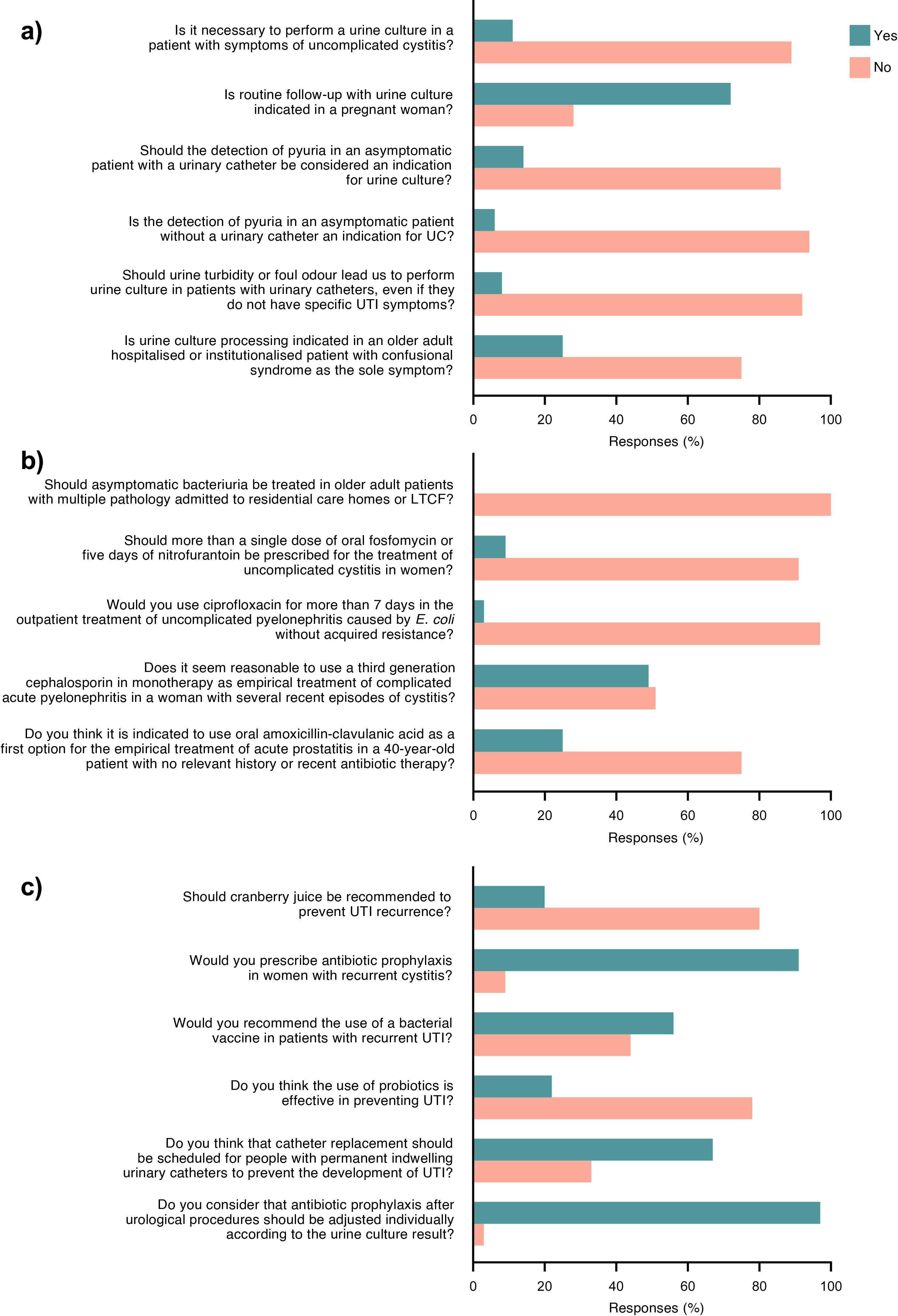
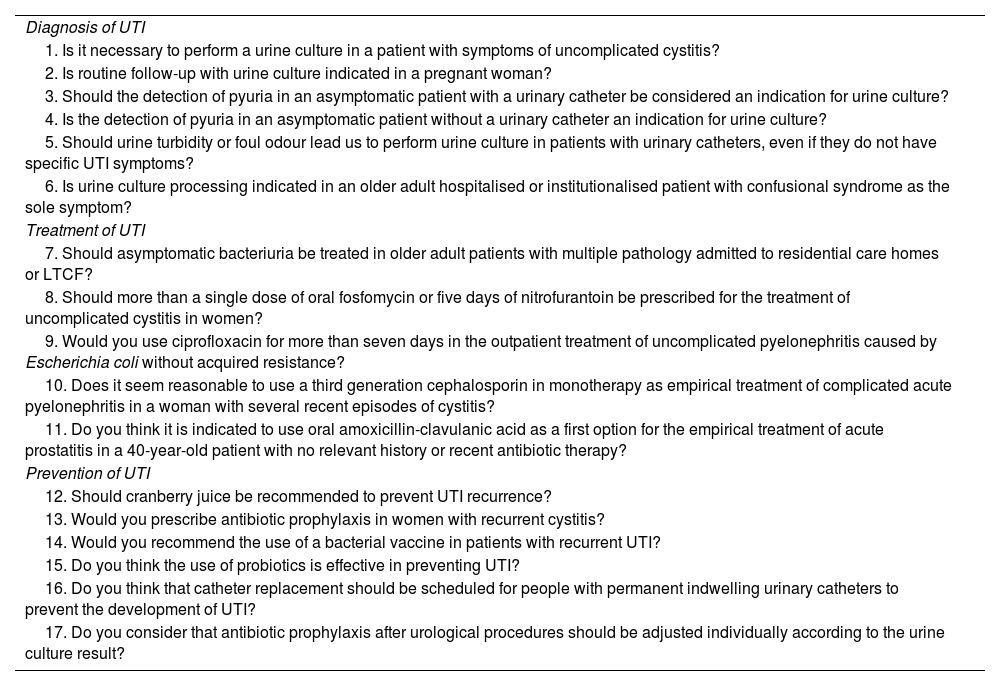
The Group's second meeting was on 29 October 2024 in Madrid. On that occasion, we addressed UTI, in view of the high incidence and associated resource consumption attached to these infections. The Executive Committee had previously agreed on a set of closed questions on the diagnosis, treatment and prevention of UTI (Table 1). This questionnaire was emailed to Group members and their responses were collected and tabulated prior to the event ("first round") (Fig. 1). The Committee selected three experts to carry out a narrative review of the literature (based on a literature search in PubMed without restrictions regarding publication date, type of article or language), and the conclusions were presented at the meeting. The voting process on the same questions was then repeated, this time in person by a vote in the chamber ("second round"). Questions on which a majority consensus was not reached (>80% agreement) in the second round were discussed by the speakers and experts attending the meeting. Following this process, the panellists and the Executive Committee drew up a series of recommendations which were submitted for consultation and review by the other participants. This document was finally submitted for the consideration of the Group as a whole before being sent for publication. The speakers selected in this second edition were three of the lead authors of the manuscript (R.S.J., M.M.M. and J.R.P.P), while the members of the Executive Committee hold the remaining authorships. In line with the deliberative nature of the OPENIN Group, this document does not contain a systematic review of the literature nor does it offer a formal grading of the recommendations issued.
Questions posed to the members of the OPENIN Group.
| Diagnosis of UTI |
| 1. Is it necessary to perform a urine culture in a patient with symptoms of uncomplicated cystitis? |
| 2. Is routine follow-up with urine culture indicated in a pregnant woman? |
| 3. Should the detection of pyuria in an asymptomatic patient with a urinary catheter be considered an indication for urine culture? |
| 4. Is the detection of pyuria in an asymptomatic patient without a urinary catheter an indication for urine culture? |
| 5. Should urine turbidity or foul odour lead us to perform urine culture in patients with urinary catheters, even if they do not have specific UTI symptoms? |
| 6. Is urine culture processing indicated in an older adult hospitalised or institutionalised patient with confusional syndrome as the sole symptom? |
| Treatment of UTI |
| 7. Should asymptomatic bacteriuria be treated in older adult patients with multiple pathology admitted to residential care homes or LTCF? |
| 8. Should more than a single dose of oral fosfomycin or five days of nitrofurantoin be prescribed for the treatment of uncomplicated cystitis in women? |
| 9. Would you use ciprofloxacin for more than seven days in the outpatient treatment of uncomplicated pyelonephritis caused by Escherichia coli without acquired resistance? |
| 10. Does it seem reasonable to use a third generation cephalosporin in monotherapy as empirical treatment of complicated acute pyelonephritis in a woman with several recent episodes of cystitis? |
| 11. Do you think it is indicated to use oral amoxicillin-clavulanic acid as a first option for the empirical treatment of acute prostatitis in a 40-year-old patient with no relevant history or recent antibiotic therapy? |
| Prevention of UTI |
| 12. Should cranberry juice be recommended to prevent UTI recurrence? |
| 13. Would you prescribe antibiotic prophylaxis in women with recurrent cystitis? |
| 14. Would you recommend the use of a bacterial vaccine in patients with recurrent UTI? |
| 15. Do you think the use of probiotics is effective in preventing UTI? |
| 16. Do you think that catheter replacement should be scheduled for people with permanent indwelling urinary catheters to prevent the development of UTI? |
| 17. Do you consider that antibiotic prophylaxis after urological procedures should be adjusted individually according to the urine culture result? |
AB: asymptomatic bacteriuria; LTCF: long-term care facility; UTI: urinary tract infection.
OPENIN Group members' responses to the questions posed in the "first round" (form sent by email and completed before the meeting) on issues related to (a) diagnosis, (b) treatment and (c) prevention of UTI. The percentage of valid responses out of the total number of votes cast is indicated (n = 36). LTCF: long-term care facility; UC: urine culture; UTI: urinary tract infection.
In recent years, the concept of diagnostic stewardship in the UTI care process has been consolidated in an attempt to optimise the ordering and processing of urine cultures.11,12 The implementation of clinical decision support systems for requesting doctors has been shown to be effective in reducing requests for urine culture and prescriptions for antibiotic therapy in cases of untreated AB.13 Microbiology laboratories are incorporating interventionist strategies which make the processing of urine cultures conditional on the presence of pyuria in the urine sample.14
Is it necessary to perform a urine culture in a patient with symptoms of uncomplicated cystitis?The available evidence suggests that clinical criteria alone provide adequate diagnostic accuracy (in terms of sensitivity and specificity) in acute uncomplicated cystitis.15 The availability of the urine culture result does not seem to influence the time to resolution of symptoms, as revealed in a clinical trial (CT) comparing different strategies to guide the introduction of antibiotic treatment in non-pregnant women (empirical administration, application of a voiding symptom scale, or conditional on the presence of nitrites or leucocytes in the test strip or on the urine culture result).16 As a result, current clinical practice guidelines, including those issued by the Sociedad Española de Enfermedades Infecciosas y Microbiología Clínica (SEIMC) [Spanish Society of Infectious Diseases and Clinical Microbiology], do not recommend urine culture in this scenario.17,18
Is routine follow-up with urine culture indicated in a pregnant woman?A meta-analysis of 15 studies (with over 2,000 pregnant women) concluded that antibiotic treatment of AB during pregnancy is associated with a reduction in the incidence of pyelonephritis (average risk ratio [RR]: 0.24; 95% confidence interval [95% CI]: 0.13−0.41) and preterm delivery (RR: 0.34; 95% CI: 0.13−0.88).19 For this reason, the SEIMC guidelines and those of the Infectious Diseases Society of America (IDSA) continue to recommend routine screening and treatment from the second trimester onwards.18,20 The evidence supporting this practice is largely limited to CT conducted in the 1960s and 1970s 21 and some later observational experiences.22,23 For example, a quasi-experimental study conducted in Spain from 1987 to 1992 showed significant differences in the annual incidence of pyelonephritis before and after the implementation of a screening and treatment programme for AB (1.8% to 0.6% respectively).22 However, we must point out the methodological limitations of these studies and the lack of recent confirmatory studies.21 A CT conducted in the Netherlands failed to confirm the association between AB diagnosis and preterm delivery. Although an association was found with the development of pyelonephritis (adjusted odds ratio (OR): 3.9; 95% CI: 1.4–11.4), the absolute incidence in pregnant women with untreated AB was very low (less than 2.5%). There was also no significant difference in the development of pyelonephritis between women who did or did not receive antibiotic treatment for AB.24
Should the detection of pyuria in an asymptomatic patient with a urinary catheter be considered an indication for urine culture?Patients with indwelling urinary catheters have a series of particular characteristics which determine the validity of pyuria in guiding the need for urine culture processing:
- a)
Low clinical expression of catheter-associated UTI (CA-UTI),25 which implies that diagnosis should be based primarily on microbiological criteria.
- b)
High prevalence of urine cultures with significant counts in catheterised patients.26
- c)
Frequent presence of pyuria in the urinary system irrespective of the demonstration of concurrent bacteriuria.26
Although there is a correlation between leucocyte count in urinalysis and colony-forming units (CFU) in urine culture (especially for Gram-negative bacilli), the application of the pyuria criterion as a predictor of CA-UTI has suboptimal sensitivity (less than 50%) and a specificity of 90% in short-term catheters,25 markedly reducing in long-term catheters.27 Therefore, the recommendation that the presence of pyuria should not be the sole criterion for requesting and processing urine culture in patients with urinary catheters still applies.28
Is the detection of pyuria in an asymptomatic patient without a urinary catheter an indication for urine culture?The presence of pyuria, defined by the detection of >10 leucocytes per mm3 of uncentrifuged urine or >5 leucocytes per field in a centrifuged urine sample examined with a 40x microscope (>10 leucocytes if the count is performed with a camera), has a high sensitivity and specificity for the diagnosis of UTI in women with signs and symptoms compatible with uncomplicated cystitis.29 Extrapolation of this performance to other groups of non-catheterised patients is inappropriate, in particular for the group of women over 65 years of age (due to the high prevalence of bacteriuria and pyuria regardless of symptoms).30,31 The introduction of new techniques for automated leucocyte counting has made it possible to reconsider the cut-off points for the diagnosis of pyuria, and this could improve their negative predictive value and avoid inappropriate rejection of urine culture in young women and men. Raising the cut-off point would improve the positive predictive power and the selection of cases that would benefit from urine culture processing.30,31
Should urine turbidity or foul odour lead us to perform urine culture in patients with urinary catheters, even if they do not have specific UTI symptoms?The patient's description of cloudy or foul-smelling urine has classically been associated with the presence of UTI, and empirical antibiotic treatment has been recommended for these findings. The current consensus, however, considers them to be non-specific signs which are not in themselves enough to make a diagnosis.18,28,32
Is urine culture processing indicated in an older adult hospitalised or institutionalised patient with confusional syndrome as the sole symptom?Acute altered mental status has been considered a non-specific clinical presentation of UTI in older adult patients. It is therefore included among the indications for urine culture in clinical guidelines.18,28,32 Although altered sensorium in some patients with sepsis may meet the diagnostic criteria for acute confusional syndrome,33 some experts have questioned whether the isolated presence of delirium can be taken as sufficiently indicative of UTI, because of the wide variety of causes that may explain it.34 The results of the few studies which have investigated the role of antibiotic therapy in older adults with acute confusional syndrome have been inconsistent.35,36 A meta-analysis based on four studies with 652 patients (mean age 84.6 years) failed to demonstrate that the administration of antibiotic therapy accelerated the resolution of delirium or improved the subsequent changes in cognitive functions (despite the presence of pyuria or bacteriuria as inclusion criteria in some cases). In fact, in two of these studies, the outcome of the confusional symptoms was worse in the group that received antibiotics.36
Can we improve antibiotic treatment practices for UTI?Rational use of antimicrobials in UTI is both a challenge and an opportunity to optimise prescribing habits in a highly prevalent condition. This approach involves selecting the right drug and administering it at the right dose and for the right duration.12 Excessive use of antibiotics, particularly in situations where there is no indication for treatment, such as AB, is a common practice in our setting. A 2013 survey revealed that only 13.2% of participating PC physicians would have refrained from prescribing treatment for a urine culture with >105 CFU/mL Escherichia coli in an asymptomatic 50-year-old woman.6 Other studies have reported rates of inappropriate antibiotic prescribing in uncomplicated UTI, either because of the agent selected or the duration of the regimen, of over 40%.37 This poor adherence to guideline recommendations not only contributes to the emergence and development of resistance, but also increases adverse effects and associated costs.
Should asymptomatic bacteriuria be treated in older adult patients with multiple pathology admitted to residential care homes or LTCF?The 2024 European Association of Urology (EAU) guidelines limit the screening and treatment of AB to certain scenarios, such as pregnant women or patients undergoing invasive urological procedures. The guidelines contain an explicit recommendation against the treatment of AB in institutionalised older adults and other groups.38 The recommendations in the IDSA guidelines are similar.39 In an observational study, antibiotic administration in institutionalised older adults with advanced cognitive impairment and suspected UTI was not associated with any benefit in terms of mortality rates.40 Moreover, unnecessary treatment of AB in this frail population increases the risk of Clostridioides difficile diarrhoea by up to eight times.41
Should more than a single dose of oral fosfomycin or five days of nitrofurantoin be prescribed for the treatment of uncomplicated cystitis in women?To assess a patient with UTI, we first have to distinguish between complicated conditions (where there are medical or anatomical factors that increase the likelihood of treatment failure, such as diabetes, neurogenic bladder or urinary tract obstruction) and uncomplicated conditions. For uncomplicated cystitis, guidelines prioritise fosfomycin trometamol (single dose) and nitrofurantoin (for 5–7 days), relegating fluoroquinolones and β-lactams to the status of alternative options due to their greater environmental impact and poorer safety profile.18,38 In our setting, susceptibility rates to fosfomycin and nitrofurantoin among uropathogens isolated from outpatients with uncomplicated UTI are above 90%, including strains resistant to third generation cephalosporins.42
A meta-analysis published in 2005 showed that three-day antibiotic treatment regimens in uncomplicated cystitis offer comparable efficacy to longer regimens in terms of clinical failure, either in the short (RR: 1.16; 95% CI: 0.96–1.41) or long term (RR: 1.17; 95% CI: 0.99–1.38). In addition, short regimens have a lower incidence of adverse events, although the authors found a higher rate of microbiological failure.43 It should be noted that none of the studies included in this review evaluated fosfomycin or nitrofurantoin-based regimens. The results of two meta-analyses published in 201044 and 202045 are therefore relevant, as they demonstrate non-inferiority in the likelihood of clinical and microbiological cure of a single dose of fosfomycin trometamol (3 g) compared to longer regimens, with the advantage of a lower associated incidence of adverse events, particularly in pregnant women. With regard to nitrofurantoin, clinical cure rates reported with 5–7 day regimens (ranging from 79% to 92%, depending on the study) are comparable to regimens with ciprofloxacin, amoxicillin or co-trimoxazole.46 Although in a recent meta-analysis the three-day regimen was comparable to the five-day regimen in terms of efficacy, the quality of evidence for this comparison was assessed as very low by the authors themselves.47 For this reason, administration of nitrofurantoin in a five-day regimen in women with uncomplicated cystitis should be considered preferable.
Would you use ciprofloxacin for more than seven days in the outpatient treatment of uncomplicated pyelonephritis caused by Escherichia coli without acquired resistance?In the case of uncomplicated acute pyelonephritis (diagnosis limited to non-pregnant women without urological abnormalities or comorbidities), second or third generation cephalosporins (such as cefuroxime or cefixime) are the preferred empirical options. For intravenous treatment in cases with severe clinical presentation (fever ≥39 °C, severe pain or vomiting), the use of ceftriaxone or cefotaxime is recommended.18,38,48 Regarding targeted therapy, a fluoroquinolone (such as ciprofloxacin or levofloxacin) or co-trimoxazole are possible options depending on urine culture and antibiogram results. Both SEIMC and EUA guidelines recommend fluoroquinolone for 5–7 days, while treatment with a cephalosporin or amoxicillin-clavulanic acid should be extended to 7–10 days.18,39 A meta-analysis revealed no difference between fluoroquinolone-based regimens for 5–7 days or longer duration (>7 days) in the risk of clinical (RR: 0.76; 95% CI: 0.49–1.17) or microbiological (RR: 0.94; 95% CI: 0.60–1.48) failure.49
Does it seem reasonable to use a third generation cephalosporin in monotherapy as empirical treatment of complicated acute pyelonephritis in a woman with several recent episodes of cystitis?In cases of complicated pyelonephritis, such as those associated with urinary tract disorders, pregnancy, diabetes mellitus, immunosuppression or nosocomial acquisition, patients should be admitted to hospital and started on empirical treatment with a second or third generation cephalosporin or amoxicillin, with the possibility of associating an aminoglycoside. In the presence of risk factors for infection with extended-spectrum β-lactamase (ESBL)-producing Enterobacteriaceae, a carbapenem or, alternatively, piperacillin-tazobactam is preferable.18,38,48 Empirical use of a fluoroquinolone in this situation is only justified if the local resistance rate is less than 10% and provided the patient has not been exposed to this class of antibiotic in the previous six months.38 In this regard, it should be noted that in Spain, among the most frequent uropathogens, resistance to ciprofloxacin exceeds 15%.42
Do you think it is indicated to use oral amoxicillin-clavulanic acid as a first option for the empirical treatment of acute prostatitis in a 40-year-old patient with no relevant history or recent antibiotic therapy?In uncomplicated acute prostatitis, EUA guidelines recommend parenteral administration of a bactericidal agent, such as a broad-spectrum penicillin, a third generation cephalosporin or a fluoroquinolone. Any of them can be combined during the first few days with an aminoglycoside. The regimen should be maintained for two to four weeks with sequential oral therapy.38 Some experts consider that 10–14 days of treatment may be sufficient in the absence of complications such as abscess or concomitant bacteraemia.50 While the initial inflammation of the prostate gland aids tissue penetration of most antibiotics, fluoroquinolones are the preferred choice for continuation therapy due to their better pharmacokinetic profile. As with other UTI, the choice of empirical treatment for acute prostatitis should take into account both the local epidemiology and the history of microbiological isolates and antibiotic exposure. In an observational study of 410 episodes of acute bacterial prostatitis diagnosed in an A&E in Barcelona, amoxicillin-clavulanic acid resistance rates in E. coli and Proteus spp. isolates exceeded 35%, and approached 14% in Klebsiella pneumoniae. The only predictor of recurrence was inadequate definitive antibiotic treatment (adjusted OR: 12.3; 95% CI: 3.5–43.1). Within the subgroup of patients with adequate definitive treatment, the lowest recurrence rates were observed with ciprofloxacin, and the highest with a β-lactam.51
Are the different interventions effective in preventing UTI recurrence?Recurrent UTI is defined by the development of ≥2 episodes over six months or ≥3 episodes within a year. A distinction must be made between recurrences (caused by the same uropathogen, often associated with anatomical abnormalities or foreign bodies in the urinary tract) and reinfections by different microorganisms, which are a particularly common problem in women. In a survey of women with a diagnosis of uncomplicated UTI in the previous 60 days, up to 43% reported recurrence criteria.9 Risk factors include the number of sexual partners, the use of spermicidal creams or, in the postmenopausal period, vaginal atrophy due to oestrogen deficiency or the presence of cystocele, urinary incontinence or post-voiding residual urine.38 In addition to antibiotic prophylaxis and the non-pharmacological measures discussed below, the importance of adequate fluid intake should not be forgotten. In an open-label study in premenopausal women with recurrent cystitis, the additional intake of 1.5 litres of water per day was associated with a significant reduction in the number of episodes over the 12 months of the intervention, as well as a reduced use of antibiotics.52
Should cranberry juice be recommended to prevent UTI recurrence?Cranberries contain flavonoids (type A proanthocyanidins) that appear to reduce the adhesion of E. coli fimbriae to the urinary epithelium and the expression of certain pathogenicity factors, as well as having diuretic and urinary acidification effects.53 It has therefore been postulated that regular consumption of this red fruit, either in juice or extract form, could reduce the risk of UTI. A meta-analysis of 50 studies (with 8,857 participants) demonstrated a beneficial effect in terms of incidence of symptomatic UTI (RR: 0.70; 95% CI: 0.58−0.84), particularly in women with recurrent cystitis and children. In contrast, no clear benefit was observed in older adults, pregnant women or adults with neurogenic bladder. The quality of this evidence is limited by the heterogeneity of the studies and the inconsistency of some of their results.54 United States and American Urological Association (AUA) guidelines make a weak recommendation in favour of the use of cranberry products to reduce the frequency of recurrent UTI episodes.38,55 The SEIMC guidelines are similar, although they point out that antibiotic prophylaxis is a more effective intervention.18 However, we have to acknowledge that there is no well established optimal pattern of intervention (dosage, type of preparation and duration).
Would you prescribe antibiotic prophylaxis in women with recurrent cystitis?Antibiotic prophylaxis in women with recurrent UTI can be administered in intermittent (postcoital) or continuous regimens. Nitrofurantoin, co-trimoxazole, a cephalosporin or fosfomycin trometamol are usually recommended.55 The SEIMC guidelines specifically advise against the use of a fluoroquinolone due to its environmental impact.18 A systematic review published 20 years ago concluded, based on meta-analysis of 19 studies with 1,120 non-pregnant women, that antibiotic prophylaxis reduces the risk of microbiological (RR: 0.21; 95% CI: 0.13−0.34) and clinical (RR: 0.15; 95% CI: 0.08−0.28) recurrence compared to placebo, at the cost of a higher incidence of generally mild adverse effects (gastrointestinal symptoms and oral and vaginal candidiasis). The number needed to treat (NNT) was estimated at 1.85. No significant differences were found in terms of efficacy of the intervention according to the antibiotic used.56 Based on this evidence, both the EUA and SEIMC guidelines include a strong recommendation for the use of continuous or postcoital prophylaxis to prevent recurrent cystitis once non-pharmacological measures have failed, with prior warning to the patient of possible toxicities.18,38
Would you recommend the use of a bacterial vaccine in patients with recurrent UTI?The theoretical basis for the use of bacterial vaccines as a form of active immunisation to prevent recurrent UTI involves antigenic stimulation of mucosa-associated lymphoid tissue (MALT) by whole bacteria or lysates, which can be obtained from the most prevalent circulating uropathogens or specifically from strains isolated in previous episodes of infection in the patient (autovaccines). This is intended to reduce adherence to the urothelium and bacterial colonisation.57 Within the circulating strain preparations, two commercial formulations are available: OM89 (Uro-Vaxom®), for oral administration and based on a lyophilised E. coli lysate, and MV140 (Uromune®), administered sublingually and composed of several complete bacterial strains (E. coli, K. pneumoniae, P. mirabilis and Enterococcus faecalis) inactivated by heat. Two meta-analyses based on a limited number of partially concordant randomised CT concluded that the OM89 vaccine was effective in reducing the number of recurrences, although the quality of the studies was low and they were limited by heterogeneity in the follow-up periods and definitions used.58,59 This protective effect was not in fact confirmed in a more recent meta-analysis (pooled RR: 1.94: 95% CI: 0.65–5.86).60 The most consistent evidence in favour of this vaccine strategy has been provided by a double-blind randomised CT which enrolled 240 adult women with ≥5 annual episodes of cystitis who were randomised to receive the MV140 vaccine for three or six months or placebo. A reduction in the development of UTI was found in both experimental groups versus the control group (medians of 0 and 3 episodes respectively), with an improvement in health-related quality of life and a good safety profile.57 In relation to autovaccination, a prospective non-randomised study compared the administration of antibiotic prophylaxis, MV140 polyvalent bacterial vaccine and autovaccination based on the patient's previous isolates. After six months, efficacy was greater with both vaccine formulations than with the antibiotic, with the commercial preparation being slightly superior.61
From this evidence the EUA makes a strong recommendation (over and above antibiotic prophylaxis) for the use of "immunoactive prophylaxis" to reduce recurrent UTI in all age groups,38 while the SEIMC indicates that only oral and intranasal vaccines may be moderately effective in this role (with specific reference to OM89).18 Remarkably, the AUA guidelines do not even mention this intervention.55
Do you think the use of probiotics is effective in preventing UTI?Probiotics help restore and maintain a healthy urogenital microbiota, which acts as a colonisation barrier to infection, and they stimulate the local immune response. Some preparations, such as those based on Lactobacillus spp. produce antimicrobial peptides (bacteriocins), which decrease bacterial adhesion.62 Based on these theoretical effects, several meta-analyses have tried to discern whether probiotic administration reduces the risk of UTI recurrence, with inconsistent and even contradictory results due to heterogeneity in the compound used, the strains included (L. rhamnosus GR-1, L. reuteri B-54 and RC-14, L. casei shirota and L. crispatus CTV-05), the route of administration (oral or vaginal), the dosage, the duration of the intervention and the populations analysed.63 The SEIMC guidelines therefore conclude that there is insufficient evidence to recommend the use of probiotics,18 while the EUA guidelines give only a weak recommendation in favour, provided that strains of proven efficacy are used.38 The results have recently been published of a double-blind CT in premenopausal women with recurrent UTI (≥3 episodes per year), who were randomised to receive oral probiotics (Lactobacillus spp. and bifidobacteria), vaginal probiotics (different Lactobacillus species) or placebo. The mean number of recurrences after four months was significantly lower in the vaginal-only or oral-vaginal probiotic groups compared to those treated with oral probiotics alone or placebo.62
Do you think that catheter replacement should be scheduled for people with permanent indwelling urinary catheters to prevent the development of UTI?Two factors are involved in the pathophysiology of CA-UTI: frequent bacterial colonisation (with an incidence of bacteriuria of 3–8% per day of catheterisation28); and the formation of a biofilm on the internal and external surface of the catheter which ultimately leads to its obstruction due to the development of encrustation. Routine device replacement would theoretically interrupt this process, although it is a procedure which can cause pain or anxiety for the patient and requires proper planning. Unfortunately, the information available for long-term bladder catheterisation is very limited. A CT published over 40 years ago evaluated the efficacy of monthly replacement in patients admitted to a LTCF with indwelling catheterisation. Although the incidence of CA-UTI was numerically lower in the intervention group compared to the control group, where the catheter was only replaced in case of documented obstruction or infection (30.0% vs 85.7%), the small sample size precludes drawing firm conclusions.64 Therefore, the IDSA clinical guidelines for the prevention and management of CA-UTI in adults indicate that there is insufficient evidence to establish a recommendation for routine catheter replacement, even in patients with early and repeated episodes of obstruction.28 The Centers for Disease Control and Prevention (CDC) formally discourages catheter or collection bag replacement at pre-specified intervals and recommends that it be done only in the case of obstruction or suspected infection.
Do you consider that antibiotic prophylaxis after urological procedures should be adjusted individually according to the urine culture result?Urothelial injury resulting from a urothelial procedure may facilitate the development of a UTI due to the adhesion and invasion of microorganisms present in the urine or introduced during the procedure itself. The guidelines for antibiotic prophylaxis in surgery developed by the SEIMC and the Asociación Española de Cirujanos (AEC) [Spanish Association of Surgeons] limit the administration of prophylaxis to certain procedures, such as transurethral resection (TUR) of the prostate or cystectomy. In cases of TUR of bladder tumours, simple cystoscopy or extracorporeal lithotripsy, prophylaxis is only indicated in the case of additional risk factors (such as advanced age, immunosuppression, malnutrition, anatomical alterations or colonisation of endogenous or exogenous material). In most of these situations, a single dose of fosfomycin trometamol, cefuroxime or amoxicillin-clavulanic acid is recommended. Targeted prophylaxis based on recent infections or previous catheter colonisation is reserved for patients undergoing ureteral stent insertion or removal, outpatient endourological surgery or lithotripsy.65 While the selection of the agent for prophylaxis on the basis of previous microbiological isolates seems an attractive option, in practice this can be challenging logistically, as it requires a urine culture to be ordered at least 5–7 days before the procedure and subsequent review and transmission of the results. However, the empirical use of fosfomycin provides coverage that is difficult to beat against the most common uropathogens in our environment.42
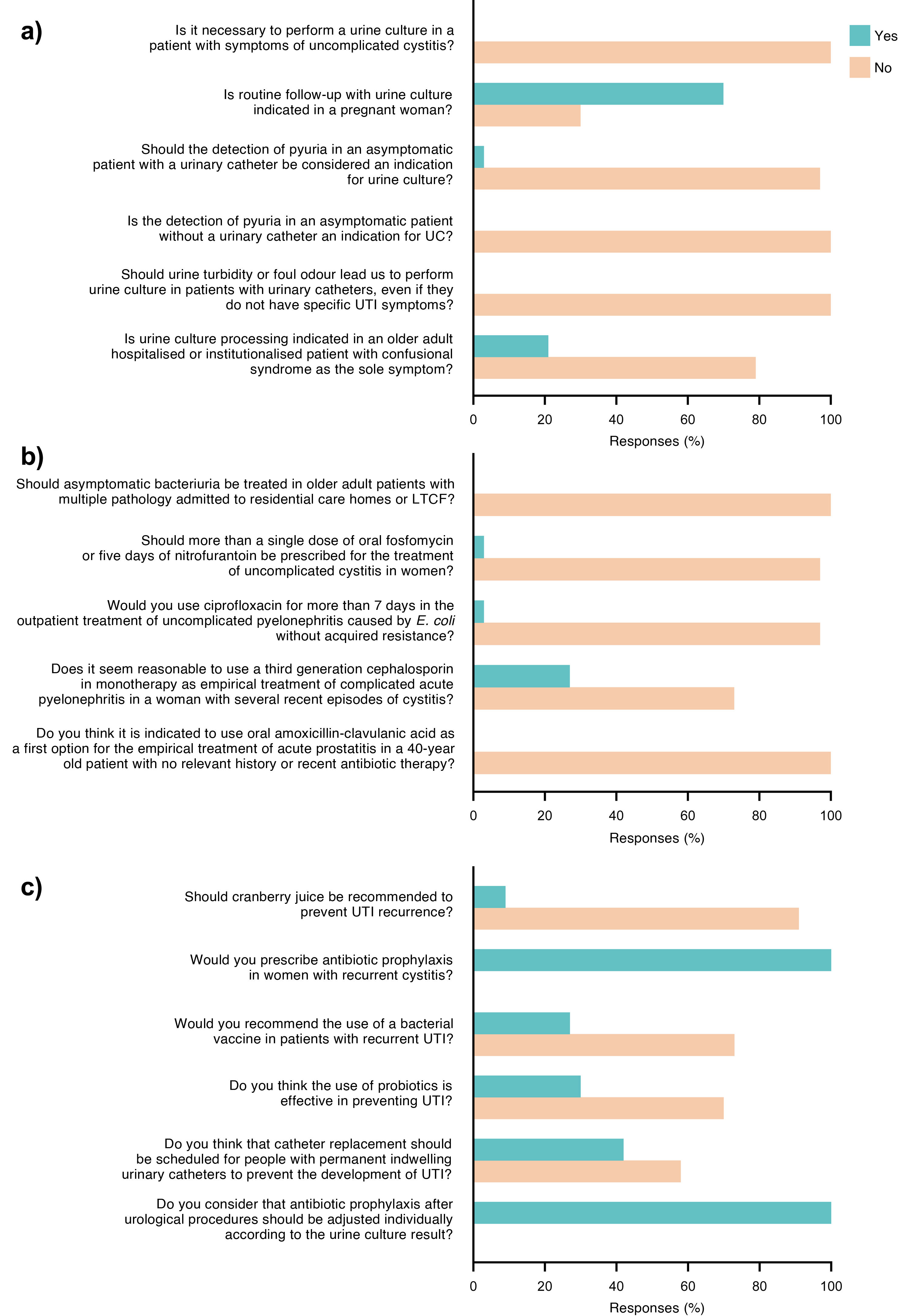
Recommendations from OPENIN Group expertsThese presentations were followed by a further round of voting on the issues raised, in which the meeting participants took part (Fig. 2). In this second round, a majority consensus (>80% agreement) was reached on 12 of the 16 questions. The remaining issues were again discussed between the presenters and the members of the Group. There was a relative lack of consensus (58%–79% of votes) on certain aspects for which the level of available evidence was limited or even contradictory, including the management of AB during pregnancy (question 2), the efficacy of non-pharmacological measures for the management of recurrent cystitis, such as bacterial vaccines (question 14) or probiotics (question 15), or the need for scheduled replacement of the indwelling catheter (question 16).
OPENIN Group members' responses to the questions raised in the "second round" (voting in the room during the face-to-face meeting and after the presentations) on issues related to (a) diagnosis, (b) treatment and (c) prevention. The percentage of valid responses out of the total number of votes cast is indicated (n = 33). LTCF: long-term care facility; UC: urine culture; UTI: urinary tract infection.
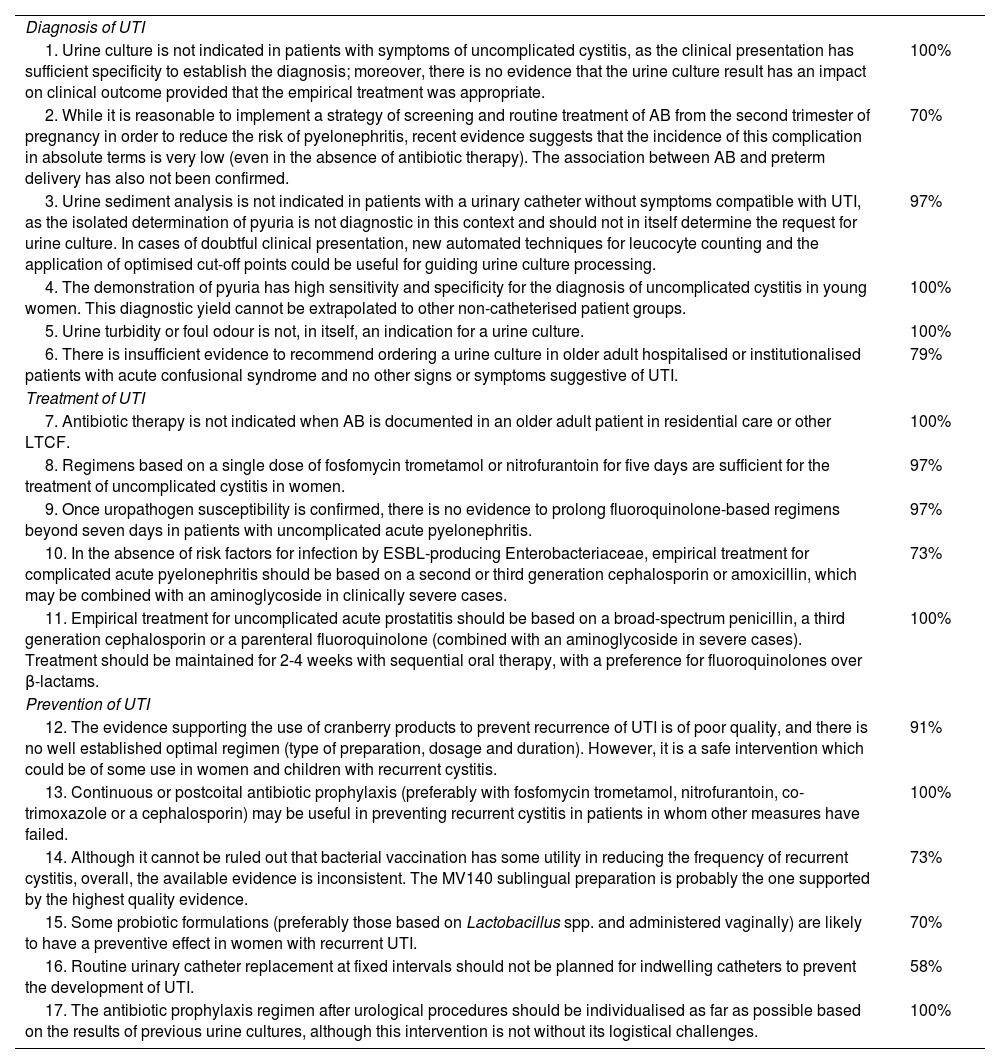
Following this deliberative process, the group developed a set of recommendations aligned with the initial questions raised on the diagnosis, treatment and prevention of UTI (Table 2). We believe that dissemination and application of these recommendations could contribute to promoting the rational use of both diagnostic resources and antimicrobials in such a highly prevalent disorder, both in the in-hospital setting and in PC and A&E. Initiatives such as those of the OPENIN Group, which combines the critical review of scientific evidence with structured discussion based on the opinion of experts in Infectious Diseases and Microbiology, can contribute to improving the management of UTI in our setting.
Recommendations from the OPENIN Group.
| Diagnosis of UTI | |
| 1. Urine culture is not indicated in patients with symptoms of uncomplicated cystitis, as the clinical presentation has sufficient specificity to establish the diagnosis; moreover, there is no evidence that the urine culture result has an impact on clinical outcome provided that the empirical treatment was appropriate. | 100% |
| 2. While it is reasonable to implement a strategy of screening and routine treatment of AB from the second trimester of pregnancy in order to reduce the risk of pyelonephritis, recent evidence suggests that the incidence of this complication in absolute terms is very low (even in the absence of antibiotic therapy). The association between AB and preterm delivery has also not been confirmed. | 70% |
| 3. Urine sediment analysis is not indicated in patients with a urinary catheter without symptoms compatible with UTI, as the isolated determination of pyuria is not diagnostic in this context and should not in itself determine the request for urine culture. In cases of doubtful clinical presentation, new automated techniques for leucocyte counting and the application of optimised cut-off points could be useful for guiding urine culture processing. | 97% |
| 4. The demonstration of pyuria has high sensitivity and specificity for the diagnosis of uncomplicated cystitis in young women. This diagnostic yield cannot be extrapolated to other non-catheterised patient groups. | 100% |
| 5. Urine turbidity or foul odour is not, in itself, an indication for a urine culture. | 100% |
| 6. There is insufficient evidence to recommend ordering a urine culture in older adult hospitalised or institutionalised patients with acute confusional syndrome and no other signs or symptoms suggestive of UTI. | 79% |
| Treatment of UTI | |
| 7. Antibiotic therapy is not indicated when AB is documented in an older adult patient in residential care or other LTCF. | 100% |
| 8. Regimens based on a single dose of fosfomycin trometamol or nitrofurantoin for five days are sufficient for the treatment of uncomplicated cystitis in women. | 97% |
| 9. Once uropathogen susceptibility is confirmed, there is no evidence to prolong fluoroquinolone-based regimens beyond seven days in patients with uncomplicated acute pyelonephritis. | 97% |
| 10. In the absence of risk factors for infection by ESBL-producing Enterobacteriaceae, empirical treatment for complicated acute pyelonephritis should be based on a second or third generation cephalosporin or amoxicillin, which may be combined with an aminoglycoside in clinically severe cases. | 73% |
| 11. Empirical treatment for uncomplicated acute prostatitis should be based on a broad-spectrum penicillin, a third generation cephalosporin or a parenteral fluoroquinolone (combined with an aminoglycoside in severe cases). Treatment should be maintained for 2-4 weeks with sequential oral therapy, with a preference for fluoroquinolones over β-lactams. | 100% |
| Prevention of UTI | |
| 12. The evidence supporting the use of cranberry products to prevent recurrence of UTI is of poor quality, and there is no well established optimal regimen (type of preparation, dosage and duration). However, it is a safe intervention which could be of some use in women and children with recurrent cystitis. | 91% |
| 13. Continuous or postcoital antibiotic prophylaxis (preferably with fosfomycin trometamol, nitrofurantoin, co-trimoxazole or a cephalosporin) may be useful in preventing recurrent cystitis in patients in whom other measures have failed. | 100% |
| 14. Although it cannot be ruled out that bacterial vaccination has some utility in reducing the frequency of recurrent cystitis, overall, the available evidence is inconsistent. The MV140 sublingual preparation is probably the one supported by the highest quality evidence. | 73% |
| 15. Some probiotic formulations (preferably those based on Lactobacillus spp. and administered vaginally) are likely to have a preventive effect in women with recurrent UTI. | 70% |
| 16. Routine urinary catheter replacement at fixed intervals should not be planned for indwelling catheters to prevent the development of UTI. | 58% |
| 17. The antibiotic prophylaxis regimen after urological procedures should be individualised as far as possible based on the results of previous urine cultures, although this intervention is not without its logistical challenges. | 100% |
AB: asymptomatic bacteriuria; ESBL: extended-spectrum β-lactamase; LTCF: long-terms care facility; UTI: urinary tract infection.
The authors declare they have no conflicts of interest related to this article.
The meeting of the OPENIN Group had the financial help of MSD España. The funding source did not participate in the preparation of this manuscript, its contents or the decision to submit it for publication.
María Concepción Amador (Hospital Marina Baixa Villajoyosa, Alicante); Ana Cristina Antolí Royo (Hospital Nuestra Señora de Sonsoles, Ávila); José María Bravo-Ferrer Acosta (Hospital Universitario Virgen Macarena, Sevilla); Luis Caballero Martínez (Hospital Regional Universitario, Málaga); Nerea Carrasco-Antón (Clínica Universitaria de Navarra, Madrid); Carlos Dueñas Gutiérrez (Hospital Clínico Universitario, Valladolid); Carmen Quereda (Hospital Universitario Ramón y Cajal, Madrid); Carlota Gudiol (Hospital Universitari de Bellvitge, L'Hospitalet de Llobregat); Vicenç Falcó (Hospital Universitari Vall d'Hebron, Barcelona); Ana Fernández Cruz (Hospital Universitario Puerta de Hierro-Majadahonda, Madrid); Eva Ferreira Pasos (Complejo Asistencial Universitario de Segovia, Segovia); Ana Ferrer (Hospital Clínico Universitario, Valencia); Elisa García Vázquez (Hospital Clínico Universitario Virgen Arrixaca, Murcia); Miguel Ángel Goenaga (Hospital Universitario de Donostia, San Sebastián); Amaya Jimeno (IRAS-PROA [Infecciones Relacionadas con la Asistencia Sanitaria-Programas de Optimización de Uso de los Antibióticos (Healthcare-Associated Infections-Antibiotic Stewardship Programmes)] Project Coordination, Murcia); Joaquín Llorente García (Hospital Universitario Virgen del Rocío, Sevilla); Juan Emilio Losa (Hospital Universitario Fundación Alcorcón, Alcorcón); Mar Masiá (Hospital General Universitario de Elche, Alicante); Esperanza Merino (Hospital General Universitario Doctor Balmis, Alicante); Enrique Míguez (Complexo Hospitalario Universitario A Coruña, A Coruña); Carmina Oltra (Hospital de Llíria, Llíria); Reyes Pascual (Hospital General Universitario de Elda, Elda); María Teresa Pérez (Hospital Álvaro Cunqueiro, Vigo); Regino Rodríguez-Álvarez (Hospital Universitario Cruces, Barakaldo); Álex Soriano (Hospital Clinic, Barcelona); Cristina Tomás (Hospital General Universitario, Murcia).