


metricas
Enfermedades Infecciosas y Microbiología Clínica (English Edition) Cost-effectiveness of cabotegravir versus tenofovir alafenamide plus emtricitabi...

Journal Information
Vol. 43. Issue 7.
Pages 371-458 (August - September 2025)
Visits
317
Vol. 43. Issue 7.
Pages 371-458 (August - September 2025)
Original article
Full text access

Cost-effectiveness of cabotegravir versus tenofovir alafenamide plus emtricitabine versus tenofovir disoproxil fumarate plus emtricitabine for pre-exposure prophylaxis to prevent HIV-1 transmission in gay, bisexual and other men that have sex with men

Coste-efectividad de cabotegravir versus tenofovir alafenamida con emtricitabina versus tenofovir disoproxil fumarato con emtricitabina para la profilaxis preexposición de la transmisión del VIH-1 en gais, bisexuales u otros hombres que tienen sexo con hombres
Visits
317
Philip Erick Wikman-Jorgensena,b,
Corresponding author
pwikman@umh.es

Corresponding author.
, Marta Ruiz-Algueróc,e, Carlos Iniestad,e, Federico Pulidoe,f, Jara Llenas-Garcíab,e,g
a Internal Medicine & Infectious Diseases Department, Elda General University Hospital-FISABIO, Elda, Spain
b Clinical Medicine Department, Universidad Miguel Hernández, Elche, Spain
c Faculty of Medicine, University of British Columbia, Vancouver, Canada
d Spanish Interdisciplinary AIDS Society (SEISIDA), Madrid, Spain
e Centre of Biomedical Research for Infectious Diseases (CIBERINFEC), Madrid, Spain
f HIV Unit, Institute for Healthcare Research Hospital 12 de Octubre (imas12), Universidad Complutense de Madrid, Madrid, Spain
g Infectious Diseases-Internal Medicine Department, Hospital Vega Baja-FISABIO, Orihuela, Spain
This item has received
Article information
Abstract
Full Text
Bibliography
Download PDF
Statistics
Figures (3)
fig0005
fig0010
fig0015
Tables (3)
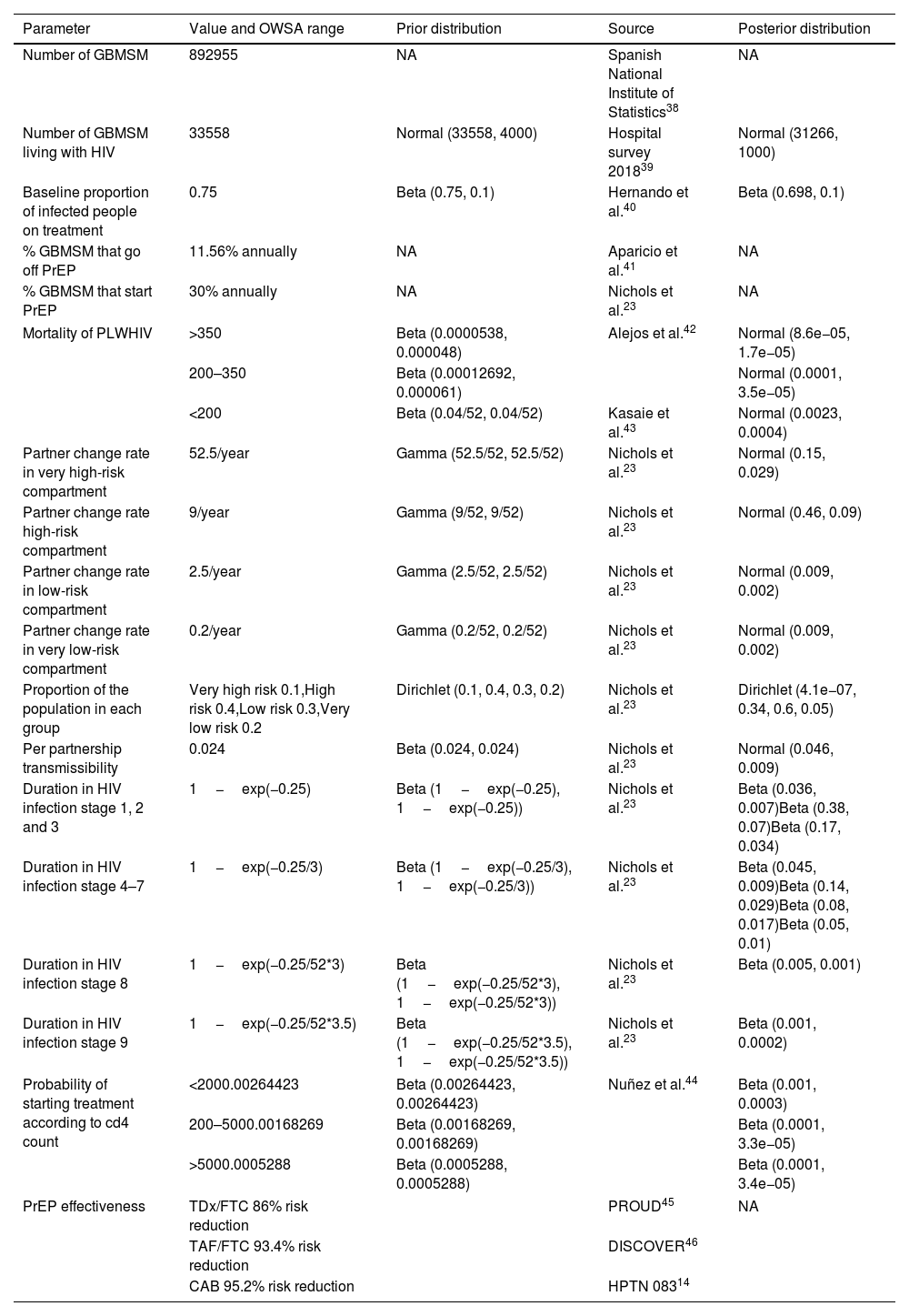
Table 1. Key parameters of the model. These parameters govern the initial population of the different model states and the probabilities of transition between each state.
Tables
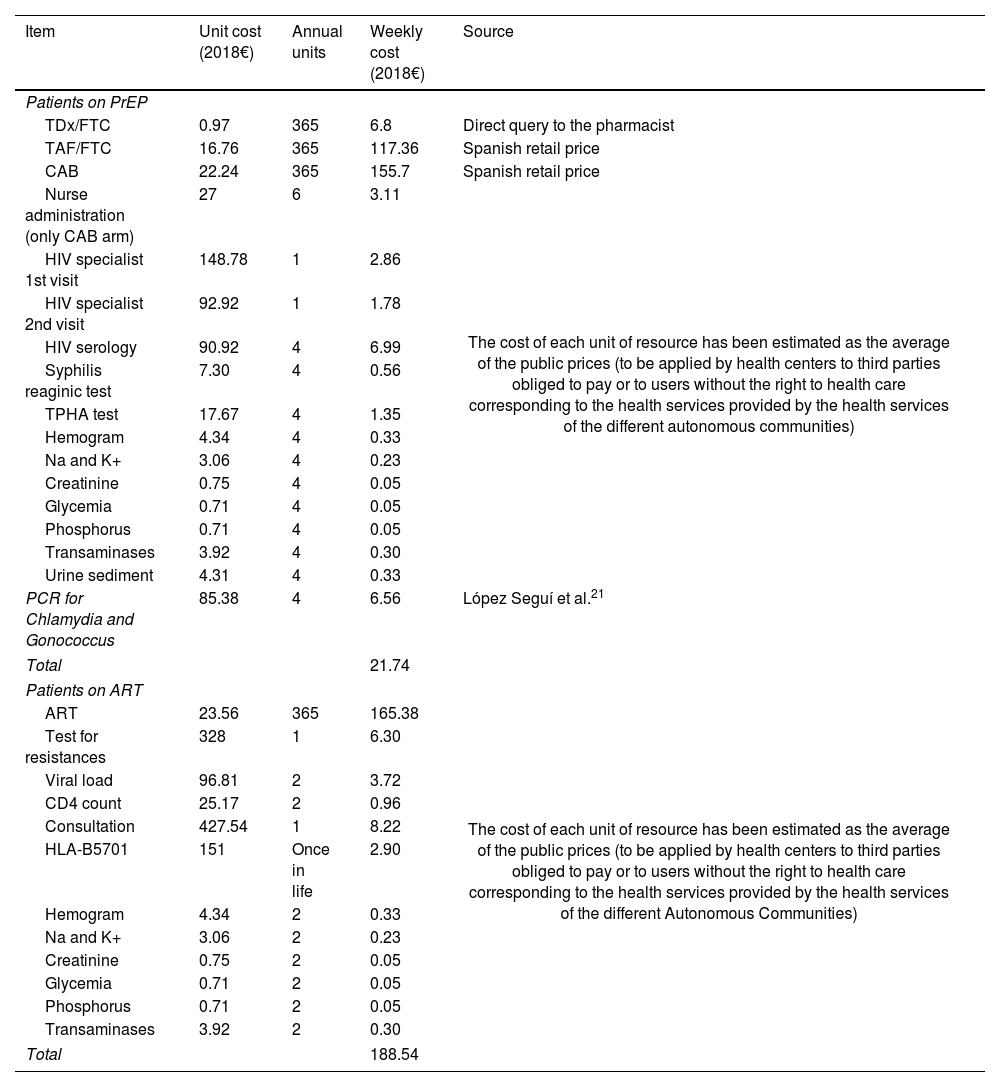
Table 2. Costs of patients on PrEP and costs of patients on ART used for the PrEP cost-effectiveness calculation.
Tables
Table 3. Results of the cost-effectiveness analysis. This quantity is calculated as the difference between the intervention and the less effective alternative.
Tables
Additional material (1)
Abstract
Introduction

This study aims to compare the cost-effectiveness of currently approved daily PrEP in Spain, with tenofovir disoproxil fumarate plus emtricitabine (TDF/FTC), in gay, bisexual and other men who have sex with men (GBMSM) versus newer alternatives like daily tenofovir alafenamide plus emtricitabine (TAF/FTC) or injectable cabotegravir every 2 months (CAB).

Methods

We fitted a dynamic compartmentalized Markov model that represents the dynamics of HIV-1 transmission in GBMSM in Spain. The model was calibrated to replicate the epidemiological data of the HIV epidemic in GBMSM in Spain from 2013 to 2018. We used the perspective of the national health system and applied a 40-year time horizon. Quality-adjusted life years (QALYs) were the health outcome variable, and the cost was accounted for in 2018 Euros (€). Our outcome variable was the incremental cost-effectiveness ratio (ICER) for PrEP. We used the 2018 gross domestic product per capita of Spain (€25,854) as the willingness-to-pay (WTP) threshold.

Results

The 2019 scenario with no PrEP in place would yield 17,424,891 QALYs and a cost of 2018 €17,345,310,254. The present scenario of daily TDF/FTC yields 18,615,325 QALYs, an increase of 1,190,434 QALYs at a cost of 2018 €15,354,878,534 (decrease of −2018 €1,990,431,719), generating an ICER of −2018 €1672 per QALY gained. The introduction of daily TAF/FTC in the present scenario would yield an increase in 449,392 QALYs at an additional cost of 2018 €13,634,260,217. The ICER would thus be 2018 €30,339 per QALY gained. Introducing CAB in the present scenario would yield an increase of 573,007 QALYs at an additional cost of 2018 €16,754,471,790 (average cost-effectiveness ratio=29,239). Compared to TAF, the increase in QALYs would be 123,614 at an additional cost of 2018 €5,707,367,590, yielding an ICER of 2018 €46,170/QALY gained. A one-way sensitivity analysis and a probabilistic sensitivity analysis was carried out.

Conclusion

The present Spanish policy of PrEP is a cost-saving strategy. TAF/FTC and CAB are not cost-effective at current market prices.

Keywords:
HIV
Pre-exposure prophylaxis
Homosexual and gender minorities
Cost-effectiveness
Tenofovir alafenamide
Cabotegravir
Resumen
Introducción

Este estudio tiene como objetivo comparar el coste-efectividad de la profilaxis preexposición (PrEP) diaria actualmente aprobada en España, con tenofovir disoproxil fumarato más emtricitabina (TDF/FTC), en hombres gais, bisexuales y otros hombres que tienen sexo con hombres (GBHSH) frente a alternativas más recientes, como tenofovir alafenamida más emtricitabina (TAF/FTC) de administración diaria o cabotegravir inyectable cada 2 meses (CAB).

Métodos

Se ajustó un modelo de Markov dinámico compartimental que representa la dinámica de transmisión del VIH-1 en GBHSH en España. El modelo fue calibrado para replicar los datos epidemiológicos de la epidemia de VIH en GBHSH en España desde 2013 hasta 2018. Se utilizó la perspectiva del sistema nacional de salud y se aplicó un horizonte temporal de 40 años. Los años de vida ajustados por calidad (AVAC) fueron la variable de resultado de salud, y el coste se contabilizó en euros de 2018 (€). Nuestra variable de resultado fue la razón incremental de coste-efectividad (ICER) para la PrEP. Se empleó el producto interior bruto per cápita de España en 2018 (25.854€) como umbral de disposición a pagar (WTP).

Resultados

El escenario de 2019 sin PrEP generaría 17.424.891 AVAC y un coste de 17.345.310.254€ (2018). El escenario actual de PrEP diaria con TDF/FTC genera 18.615.325 AVAC, un incremento de 1.190.434 AVAC a un coste de 15.354.878.534€ (2018), lo que supone una disminución de −1.990.431.719€ (2018), generando un ICER de −1.672€ (2018) por AVAC ganado. La introducción de TAF/FTC diaria en el escenario actual generaría un aumento de 449.392 AVAC a un coste adicional de 13.634.260.217€ (2018). El ICER sería de 30.339€ (2018) por AVAC ganado. La introducción de CAB en el escenario actual generaría un incremento de 573.007 AVAC a un coste adicional de 16.754.471.790€ (2018) (razón media de coste-efectividad=29.239). En comparación con TAF, el incremento en los AVAC sería de 123.614, con un coste adicional de 5.707.367.590€ (2018), lo que resulta en un ICER de 46.170€ (2018)/AVAC ganado. Se realizó un análisis de sensibilidad univariado y un análisis de sensibilidad probabilístico.

Conclusión

La política actual de PrEP en España es una estrategia que ahorra costes. TAF/FTC y CAB no son rentables a los precios actuales de mercado.

Palabras clave:
VIH
Profilaxis preexposición
Minorías homosexuales y de género
Coste-efectividad
Tenofovir alafenamida
Cabotegravir
Full Text
Introduction

HIV continues be a major public health challenge throughout the world. In 2022, there were an estimated 39 million people living with HIV (PLWHIV), 1.3 million new infections and 630,000 deaths worldwide.1 In Spain, there were 2956 new HIV cases reported, although the consolidated number will probably be higher. Most (85.7%) were in men, and 55% were in gay, bisexual, and other men who have sex with men (GBMSM).2 The burden of new infections among GBMSM has remained unacceptably high in the past decade, despite the availability and promotion of condom use, HIV testing and treatment, and high levels of virologic suppression in people using antiretroviral therapy (ART).

Pre-exposure prophylaxis (PrEP) is a preventive approach used to reduce the risk of new HIV infection in HIV-negative individuals who are at high risk of contracting the virus, including MSM, heterosexual individuals in serodiscordant relationships, people who inject drugs, and sex workers. Daily PrEP with tenofovir disoproxil plus emtricitabine (TDx/FTC) has been shown to prevent new HIV infections among GBMSM and other groups in clinical trials, with an estimated efficacy of up to 86% in the reduction in new infections.3,4 On demand, used only when having sex, PrEP has also been shown to prevent 86% of new HIV infections.5,6 This effect has also been observed in real-world studies,7,8 which moreover show reduced HIV incidence in GBMSM not receiving PrEP but living in a community where PrEP is available.9

UNAIDS, the Joint United Nations Programme on HIV-AIDS, in collaboration with the World Health Organization (WHO), marked a significant step forward in HIV prevention efforts when they recognized the effectiveness of PrEP to reduce new HIV infections and its contribution to the global goal of ending AIDS as a public health threat by 2030.10 Along these lines, Spain first approved PrEP in 2019 for GBMSM, transgender people, and female sex workers at high risk of HIV infections, and in 2021 for anyone at high risk of infection.11,12 The first regimen approved was a daily dose of TDx/FTC, available free of charge to target populations through the national health service. Since then, new options have been explored and proposed as possible alternatives for PrEP, specifically daily tenofovir alafenamide plus emtricitabine (TAF/FTC) and injectable cabotegravir (CAB) every 2 months.13,14 These alternatives may have advantages over existing regimens; TAF/FTC has a better safety profile with less bone and kidney toxicity15 while CAB seems especially attractive as it does not have bone and kidney toxicity and has demonstrated superiority over TDx/FTC in preventing new HIV infections.16 However, some limitations should be considered. These include the need for strict adherence to the injection schedule, potential challenges in transitioning to oral PrEP after discontinuation of injectable CAB, and the possibility of developing resistance if adherence is not maintained. Therefore, while CAB yields better efficacy outcomes, careful monitoring and management strategies are crucial to guaranteeing its real-world effectiveness. Moreover, these newer drugs are more costly, raising the question of whether the potential improvement in health outcomes would justify the increase in costs. Health economics studies in other European countries have shown that PrEP is a cost-effective strategy and can even save costs in the medium term.17–19 But to date, no cost-effectiveness analysis has been carried out in Spain at a national level. The cost-effectiveness of PrEP has been evaluated only in the autonomous region of Catalonia and in its capital, Barcelona.20,21 We therefore aimed to evaluate the cost-effectiveness of these three PrEP regimens in Spain: TDx/FTC, TAF/FTC and CAB.

Methods

A health economic analysis plan was developed and is available through reasonable request to the corresponding author.

Target population, setting and interventions

The target population were GBMSM 16 years or older receiving care in the Spanish National Healthcare System. The baseline scenario was 2019 with no PrEP program in place. We performed three different evaluations for the implementation of three different PrEP regimens: daily TDF/FTC (present scenario), daily TAF/FTC, and CAB injection every 2 months. In each case, we considered that patients underwent a baseline medical visit, screening for HIV and other sexually transmitted infections (STIs), an educational intervention for safe sex practices, and a series of regular follow-ups, as recommended in the Spanish Infectious Diseases Society guidelines.22

Model development

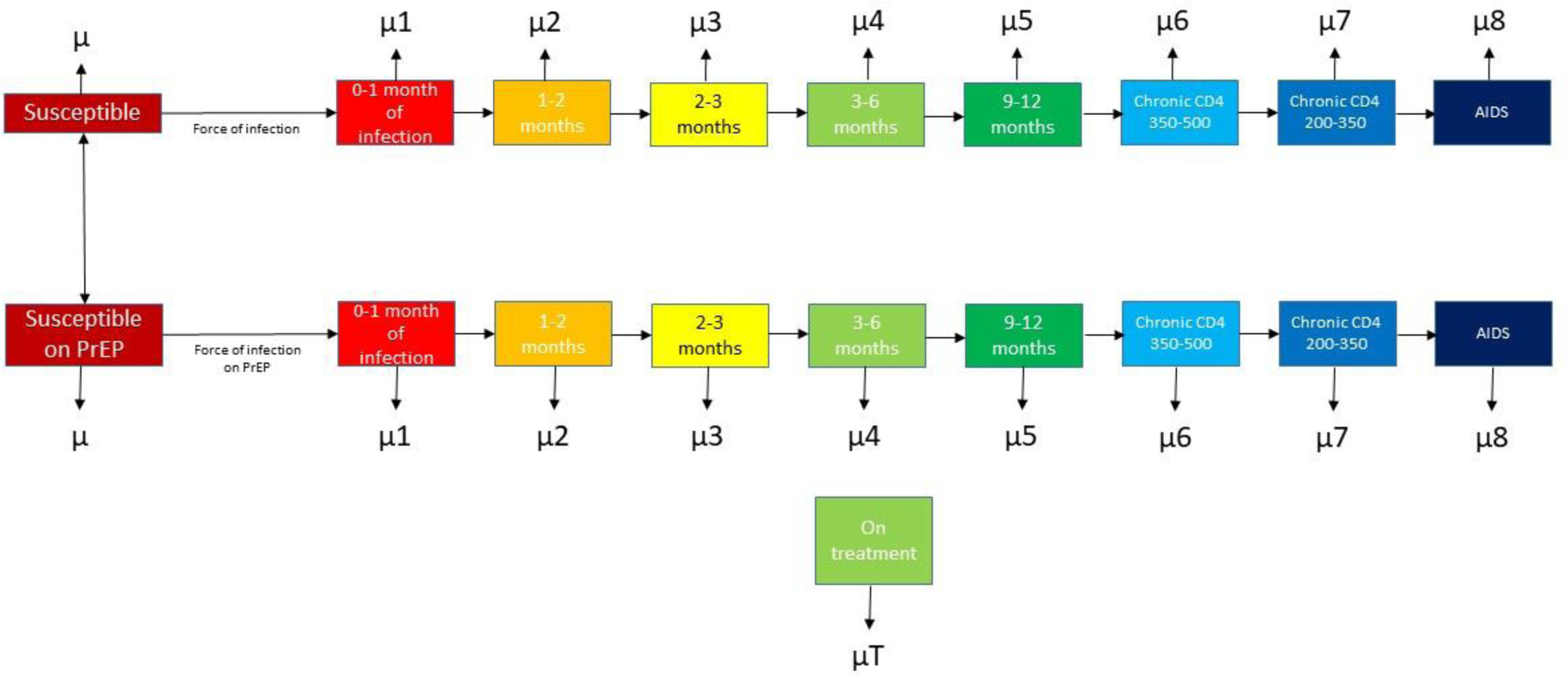
A stochastic, dynamic, transmission Markov chain model was developed and calibrated to replicate the results of the HIV epidemic in Spain. The model (Fig. 1) represents the current estimated population of GBMSM in Spain. Starting at the top left corner, the “susceptible state” represents non-HIV infected GBMSM at risk for HIV acquisition. People in this state may acquire HIV and transition into the first of the 8 states in the natural history of HIV infection, in accordance with previously used models.23 At any point in those 8 states, the patient may be diagnosed and started on ART. The susceptible person may be started on PrEP, where the risk of infection is much lower, but still possible, and transition through the HIV infection stages, and at any stage they may be started on treatment. In each state, the person has a mortality rate μ. Each state had a cost and a health measure attached.

Fig. 1.

A Markov chain model for the transmission of HIV and the influence of pre-exposure prophylaxis (PrEP). μ: mortality. Starting at the upper left corner, the “susceptible state” represents non-HIV infected GBMSM at risk for HIV acquisition. People in this state may acquire HIV and transition into the first of the 8 states that represent the history of HIV natural infection, in accordance with previously used models.23 At any point in those 8 states, the patient may be diagnosed and started on ART. The susceptible persons may be started on PrEP, where the risk of infection is much lower, but still possible, and transition through the HIV infection stages, and at any stage they may be started on treatment. In each state the person has a mortality rate μ.

The model was stratified by age group and by sexual activity risk groups. Only susceptible non-HIV infected GBMSM in the high risk and very high-risk compartments may be started on PrEP and transition into the “susceptible on PrEP” state. In this state they have a drastic reduction in HIV acquisition probability but may still acquire HIV and transition into the 8 states of HIV infection or may go off PrEP and back into the susceptible state.

The probabilities of transitioning from one state to another are governed by the parameters presented in Table 1. The initial population for each state was estimated using published data. Due to the chronic nature of HIV infection, a time horizon of 40 years was chosen, together with a weekly time step.

Table 1.

Key parameters of the model. These parameters govern the initial population of the different model states and the probabilities of transition between each state.

Parameter  Value and OWSA range  Prior distribution  Source  Posterior distribution 
Number of GBMSM  892955  NA  Spanish National Institute of Statistics38  NA 
Number of GBMSM living with HIV  33558  Normal (33558, 4000)  Hospital survey 201839  Normal (31266, 1000) 
Baseline proportion of infected people on treatment  0.75  Beta (0.75, 0.1)  Hernando et al.40  Beta (0.698, 0.1) 
% GBMSM that go off PrEP  11.56% annually  NA  Aparicio et al.41  NA 
% GBMSM that start PrEP  30% annually  NA  Nichols et al.23  NA 
Mortality of PLWHIV>350  Beta (0.0000538, 0.000048)  Alejos et al.42  Normal (8.6e−05, 1.7e−05) 
200–350  Beta (0.00012692, 0.000061)    Normal (0.0001, 3.5e−05) 
<200  Beta (0.04/52, 0.04/52)  Kasaie et al.43  Normal (0.0023, 0.0004) 
Partner change rate in very high-risk compartment  52.5/year  Gamma (52.5/52, 52.5/52)  Nichols et al.23  Normal (0.15, 0.029) 
Partner change rate high-risk compartment  9/year  Gamma (9/52, 9/52)  Nichols et al.23  Normal (0.46, 0.09) 
Partner change rate in low-risk compartment  2.5/year  Gamma (2.5/52, 2.5/52)  Nichols et al.23  Normal (0.009, 0.002) 
Partner change rate in very low-risk compartment  0.2/year  Gamma (0.2/52, 0.2/52)  Nichols et al.23  Normal (0.009, 0.002) 
Proportion of the population in each group  Very high risk 0.1,High risk 0.4,Low risk 0.3,Very low risk 0.2  Dirichlet (0.1, 0.4, 0.3, 0.2)  Nichols et al.23  Dirichlet (4.1e−07, 0.34, 0.6, 0.05) 
Per partnership transmissibility  0.024  Beta (0.024, 0.024)  Nichols et al.23  Normal (0.046, 0.009) 
Duration in HIV infection stage 1, 2 and 3  1exp(−0.25)  Beta (1exp(−0.25), 1exp(−0.25))  Nichols et al.23  Beta (0.036, 0.007)Beta (0.38, 0.07)Beta (0.17, 0.034) 
Duration in HIV infection stage 4–7  1exp(−0.25/3)  Beta (1exp(−0.25/3), 1exp(−0.25/3))  Nichols et al.23  Beta (0.045, 0.009)Beta (0.14, 0.029)Beta (0.08, 0.017)Beta (0.05, 0.01) 
Duration in HIV infection stage 8  1exp(−0.25/52*3)  Beta (1exp(−0.25/52*3), 1exp(−0.25/52*3))  Nichols et al.23  Beta (0.005, 0.001) 
Duration in HIV infection stage 9  1exp(−0.25/52*3.5)  Beta (1exp(−0.25/52*3.5), 1exp(−0.25/52*3.5))  Nichols et al.23  Beta (0.001, 0.0002) 
Probability of starting treatment according to cd4 count<2000.00264423  Beta (0.00264423, 0.00264423)  Nuñez et al.44  Beta (0.001, 0.0003) 
200–5000.00168269  Beta (0.00168269, 0.00168269)    Beta (0.0001, 3.3e−05) 
>5000.0005288  Beta (0.0005288, 0.0005288)    Beta (0.0001, 3.4e−05) 
PrEP effectivenessTDx/FTC 86% risk reduction    PROUD45  NA 
TAF/FTC 93.4% risk reduction    DISCOVER46   
CAB 95.2% risk reduction    HPTN 08314   

Abbreviations: OWSA: one-way sensitivity analysis; NA: not applicable; GBMSM: gay bisexual and other men who have sex with men; PLWHIV: people living with HIV; PrEP: pre-exposure prophylaxis; CAB: cabotegravir; TDx/FTC: tenofovir disoproxil/emtricitabine; TAF/FTC: tenofovir alafenamide/emtricitabine.

Model parameters were obtained from published studies, systematic reviews and meta-analyses, and – when no other source was found – through expert consultation.

For calibration, the model parameters were given a probability distribution, and the model was run 150,000 times. Each time, a random draw from each of the distributions was used as a model parameter. The initial distributions and their hyperparameters were selected by the researchers based on available evidence and expert judgment. Beta distributions were used for transition probabilities, as they are bound between 0 and 1, and Dirichlet distributions were used when there were more than 1 possible and mutually exclusive transition. A Gamma distribution was used for parameters that were not bound between 0 and 1 unless a normal distribution was thought to better represent the uncertainty around the parameter. For the confidence intervals, the best value in the literature was used and, if none was found to be suitable, a standard deviation of 20% was assumed.

The goodness-of-fit of the model to the HIV mortality and new AIDS cases, reported for the 2013–2018 period by the National plan for fighting AIDS,2 was established by measuring the square of the difference between the model output and the mentioned values. The set of parameters with the best fit was the final set of parameters used for the cost-effectiveness analysis. Analyses were undertaken using R language for statistical analysis.24 More detailed information is presented in the supplement.

Cost evaluation

The cost evaluation used a healthcare provider perspective and a micro-costing approach. The costs were estimated using different published insurance reimbursement lists. Costs are presented as 2018 euros (2018€) and were calculated with the model, depending on the population in each state at each time point.

Health outcomes

The model was used to obtain estimates of the number of new HIV infections, deaths and new HIV and AIDS cases averted. The weights of the study by Tengs and Lin25 were employed to calculate quality-adjusted life years (QALYs).

Cost-effectiveness evaluation

We ranked interventions by effectiveness and then calculated incremental cost-effectiveness ratios (ICER) – i.e., the difference in costs divided by the difference in health effects, measured in 2018€/QALY – by comparing each intervention to its immediately less effective strategy. Both effectiveness and costs were subject to an annual discount measure of 3%.26 The willingness-to-pay (WTP) threshold used was the per capita gross domestic product of Spain in 2018 (2018 €25,854).

Sensitivity analysis

A one-way sensitivity analysis was performed, modifying each of the parameters separately through its spectrum of possible values, and it is presented as a tornado plot.

A probabilistic sensitivity analysis (PSA) was also carried out, assigning probability distributions to the model parameters, and subsequently carrying out Monte-Carlo simulations. The specific number of simulations was determined by visual inspection of a graphical representation of the average cumulative net monetary benefits. The ICERs for each strategy are presented with their confidence intervals, along with cost-effectiveness planes and cost-effectiveness probability curves.

Engagement of service recipients and stakeholders in study design

The study was designed and executed by researchers affiliated to several different institutions representing both service recipient associations, as well as service providers organizations.

ResultsModel parameters and costs

Fig. 1 shows the model; Table 1, the model parameters and transition probabilities; and Table 2, the costs. The model was adjusted to fit AIDS mortality and new AIDS cases.

Table 2.

Costs of patients on PrEP and costs of patients on ART used for the PrEP cost-effectiveness calculation.

Item  Unit cost (2018€)  Annual units  Weekly cost (2018€)  Source 
Patients on PrEP
TDx/FTC  0.97  365  6.8  Direct query to the pharmacist 
TAF/FTC  16.76  365  117.36  Spanish retail price 
CAB  22.24  365  155.7  Spanish retail price 
Nurse administration (only CAB arm)  27  3.11  The cost of each unit of resource has been estimated as the average of the public prices (to be applied by health centers to third parties obliged to pay or to users without the right to health care corresponding to the health services provided by the health services of the different autonomous communities)
HIV specialist 1st visit  148.78  2.86 
HIV specialist 2nd visit  92.92  1.78 
HIV serology  90.92  6.99 
Syphilis reaginic test  7.30  0.56 
TPHA test  17.67  1.35 
Hemogram  4.34  0.33 
Na and K+  3.06  0.23 
Creatinine  0.75  0.05 
Glycemia  0.71  0.05 
Phosphorus  0.71  0.05 
Transaminases  3.92  0.30 
Urine sediment  4.31  0.33 
PCR for Chlamydia and Gonococcus  85.38  6.56  López Seguí et al.21 
Total      21.74   
Patients on ART
ART  23.56  365  165.38  The cost of each unit of resource has been estimated as the average of the public prices (to be applied by health centers to third parties obliged to pay or to users without the right to health care corresponding to the health services provided by the health services of the different Autonomous Communities)
Test for resistances  328  6.30 
Viral load  96.81  3.72 
CD4 count  25.17  0.96 
Consultation  427.54  8.22 
HLA-B5701  151  Once in life  2.90 
Hemogram  4.34  0.33 
Na and K+  3.06  0.23 
Creatinine  0.75  0.05 
Glycemia  0.71  0.05 
Phosphorus  0.71  0.05 
Transaminases  3.92  0.30 
Total      188.54   

Abbreviations: TDx/FTC: tenofovir disoproxil/emtricitabine; TAF/FTC: tenofovir alafenamide/emtricitabine; ART: antiretroviral therapy; PCR: polymerase chain reaction.

Baseline scenario

In the 2019 scenario with no PrEP in place, 663,706 new infections would occur during the 40-year simulation period, for an incidence of 19.32 per 1000 patient/years at risk. This would translate to 17,424,891 QALYs and a cost of €17,345,310,254 (Table 3).

Table 3.

Results of the cost-effectiveness analysis. This quantity is calculated as the difference between the intervention and the less effective alternative.

Strategy  QALYs  Costs (2018€)  Incremental QALYs  Incremental costs (2018€)  ICER incremental costs 2018€/incremental QALYs 
No program  17,424,891  17,345,310,254  Baseline  Baseline  Baseline 
TDx/FTC  18,615,325  15,354,878,534  1,190,434  −1,990,431,719  −1,672 
TAF/FTC  19,064,717  28,989,138,751  449,392  13,634,260,217  30,339 
CAB  19,188,342  34,696,506,342  123,614  5,707,367,590  46,170.5 

Abbreviations: QALY: quality-adjusted life year; TDx/FTC: tenofovir disoproxil fumarate/emtricitabine; TAF/FTC: tenofovir alafenamide/emtricitabine; CAB: cabotregavir; ICER: incremental cost-effectiveness ratio.

TDx/FTC

The present scenario generates 18,615,325 QALYs, that is, an increase of 1,190,434 QALYs compared to baseline, at a total cost of 2018 €15,354,878,534 (a decrease of 2018 €1,990,431,719), generating an ICER of −2018 €1672 per QALY gained (Table 3).

TAF/FTC

The introduction of TAF/FTC in the present scenario would yield an increase of 449,392.3 QALYs for an additional cost of 2018 €13,634,260,217. The ICER would thus be 2018 €30,339 per QALY gained. TAF/FTC would have to be marketed at a cost of 2018 €96.8 per week to be deemed cost-effective (Table 3).

CAB

Introducing CAB in the present scenario (with TDF/FTC) would yield an increase of 573,007 QALYs at an additional cost of 2018 €16,754,471,790 (average cost-effectiveness ratio=29,239). When compared to TAF, QALYs would increase by 123,614 and cost by 2018 €5,707,367,590, yielding an ICER of 2018 €46,170/QALY gained. CAB would have to be marketed at a price of 2018 €134.7/week (2018 €1264 per 2-month dose) to achieve an ICER of 2018 €25,241 per QALY gained (Table 3).

Sensitivity analyses

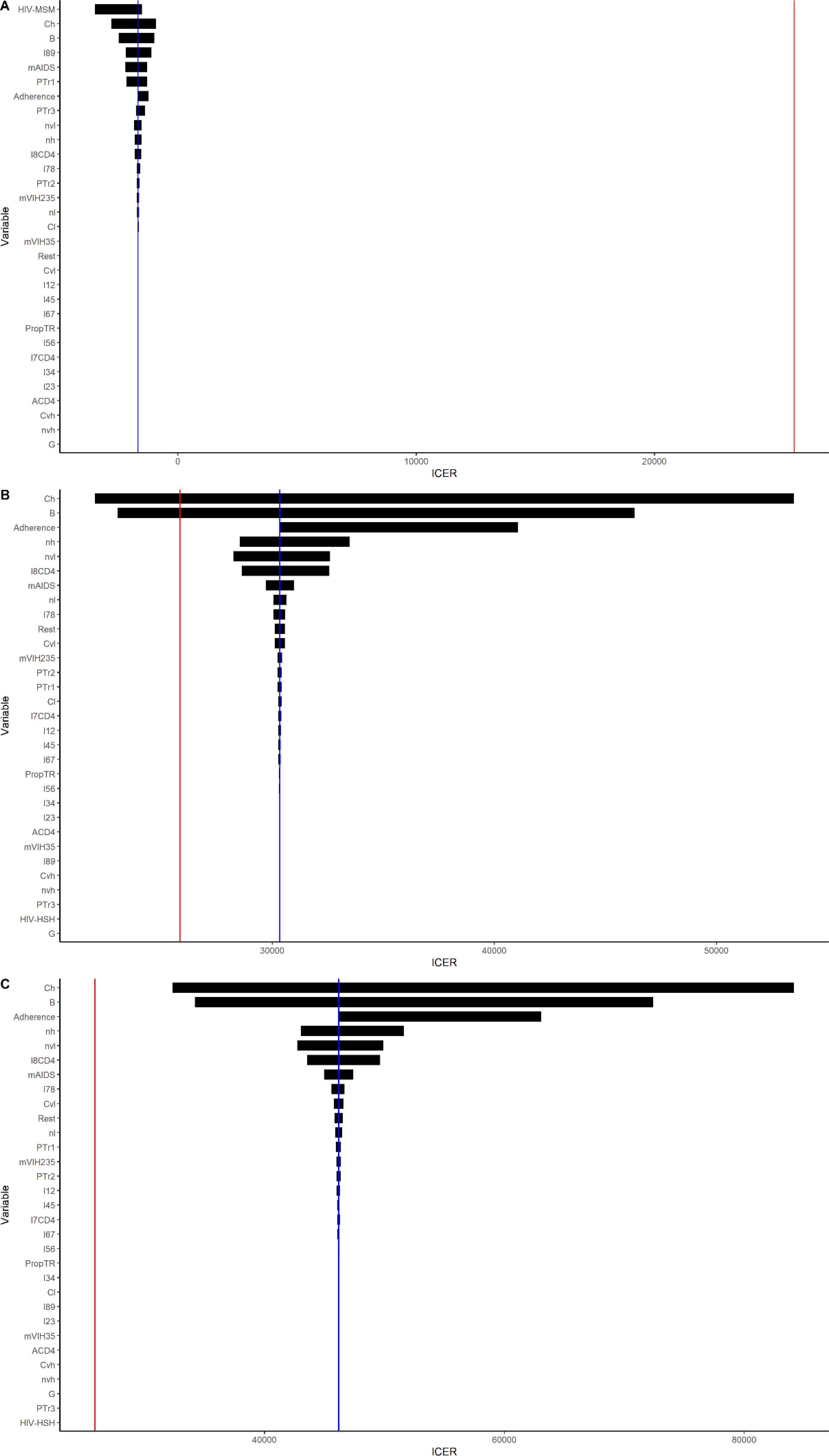
One-way sensitivity analyses are presented in Fig. 2 as tornado plots. The TDx/FTC strategy has an ICER that falls below the WTP at all plausible values of the different parameters evaluated. For the TAF/FTC scenario, some extreme values of the partner exchange rate in the high-risk compartment (28.59 sexual partners/year) and of the per partnership transmissibility ratio (0.056) would render TAF/FTC cost-effective. The variation in the values for the rest of the variables did not have such an impact. For the CAB scenario, none of the variations of the plausible values fell below the WTP.

Fig. 2.

Tornado plot of the one-way sensitivity analysis for the three different PrEP candidate drugs. (A) For TDF/FTC, (B) for TAF/FTC, and (C) for CAB. The vertical red line represents the willingness-to pay-threshold. Rest: proportion of patients with more than 500 CD4; PTr3: probability of starting treatment with less than 200 CD4; PTr2: probability of starting treatment with CD4 between 200 and 500; PTr1: probability of starting treatment with more than 500 CD4; PropTR: proportion of HIV infected patients on treatment; nvl: proportion of the total population of GBMSM in the very low risk group; nvh: proportion of the total population of MSM in the very high risk group, nl: proportion of the total population of MSM in the low risk group; nh: proportion of the total population of MSM in the high risk group; mVIH35: mortality with more than 350 CD4; mVIH235: mortality with CD4 between 200 and 350; mAIDS: mortality with CD4 below 200; I8CD4: proportion of PLWH with CD4 between 200 and 350; I89: probability of transitioning from state 8 to AIDS; I7CD4: proportion of PLWH with CD4 between 350 and 500; I78: probability of transitioning from state 7 to state 8; I67: probability of transitioning from state 6 to 7; I56: probability of transitioning from state 5 to 6; I45: probability of transitioning from state 4 to 5; I34: probability of transitioning from state 3 to 4; I23: probability of transitioning from state 2 to 3; I12; probability of transitioning from state 1 to 2; HIV-MSM: number of HIV infected GBMSM; G: population growth constant; Cvl: partner change rate in the very low group; Cvh: partner change rate in the very high group; Cl: partner change rate in the low group; Ch: partner change rate in the high group; B: per partnership transmissibility; ACD4; proportion of patients with less than 200 CD4.

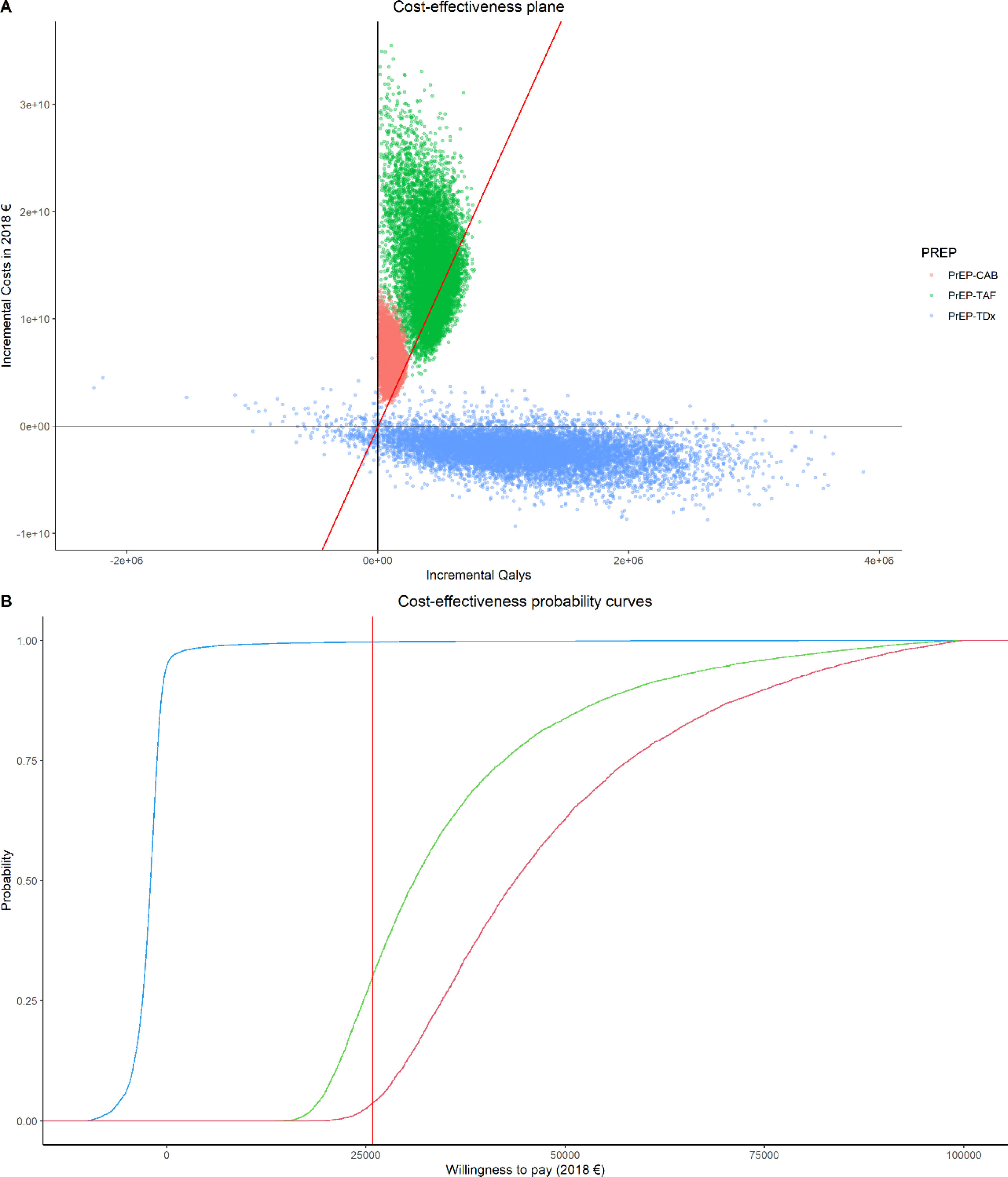
The PSA is presented in Fig. 3. On visual inspection, it becomes apparent that PrEP with oral TDx/FTC is a cost-saving strategy. With the cost-effectiveness probability curves showing the same results, for TDx/FTC the median ICER was −2049 (P25–P75; −3123, −1229) with 99.58% of simulations below the WTP and 94.54% with an ICER below or equal to 0. For the TAF/FTC scenario, the median ICER was 32,147 (P25–P75; 25,604, 47,693), with 25.7% of the simulations rendering TAF/FTC cost-effective, but none cost-saving. For the CAB scenario, the median would be 46,998 (P25–P75; 35,786, 70,841), with 2.4% of the simulations producing an ICER below the WTP.

Fig. 3.

(A) Probabilistic sensitivity analysis presented in the cost-effectiveness plane. (B) Cost-effectiveness probability curves.

Discussion

Our analysis shows that PrEP with oral daily TDx/FTC is a cost-saving strategy.

PrEP with oral generic TDx/FTC seems to be a cost-saving strategy across Europe, as our study adds to previous studies in the UK, Germany, and Ireland that also deemed PrEP with generic oral TDF/FTC to be cost-saving.27–29 These results raise the question of whether an “on demand” strategy could be even more cost-effective. We did not evaluate PrEP on demand because it is not approved for use in Spain. Nevertheless, price is not the main driver of cost in the TDx/FTC group, so the savings in drug costs would be small.

The budgetary impact of a PrEP programme is a barrier to implementation. However, while newer drugs are more expensive, their better safety, efficacy and posology make them attractive alternatives. In our study, the substitution of TDx with TAF (with less toxic effects and similar efficacy to TDx) did not fall within the established WTP except when extreme parameters for the partner exchange rate and the per partnership transmission rate were used, indicating that in high-risk patients, with higher-than-expected transmission rates (perhaps because of an STI) TAF/FTC could be cost-effective.

A study by Walensky et al. evaluated the cost-effectiveness of TAF/FTC for PrEP in the USA, finding it was not cost-effective at the price it was marketed.30 However, they established a maximum price for TAF/FTC, as did we. Of note, cost-effective does not mean affordable, and budget impact should be considered. That said, it would seem reasonable to consider TAF/FTC as an alternative in users who do not tolerate or have had renal toxicity with TDx/FTC, making the budgetary impact minimal.

The use of CAB for PrEP did not fall below the established WTP, meaning that it is not cost-effective in our population. Despite being more effective even if considering higher adherence than the other strategies, its benefits do not currently compensate for the increased cost. A recent evaluation in the USA found similar results,31 although in South Africa, it was found to be cost-effective.32 This difference was mainly driven by the drug price considered in each study. Our evaluation showed that CAB would need to be marketed at a price of 2018 €1264 per 2-month dose to be considered cost-effective. Nevertheless, cabotegravir for PrEP reduces the risk of HIV infection by 66–88% compared to TDx/FTC. Its use should be prioritized in PrEP users with contraindications to the use of TDx/FTC or carry a high risk of toxicity and adherence problems to oral PrEP. A recent communication found results that CAB would be cost-effective in such a scenario.33 Also, a cost neutrality analysis has been reported with favorable results.34

In summary, the most cost-effective strategy with the lowest budget impact would be to use TDx/FTC (cost-saving) as the first-line drug. TAF/FTC and CAB would serve as second-line options, with TAF/FTC recommended for patients with contraindications to TDx/FTC and CAB for those with adherence challenges or contraindications to TAF/FTC.

The main limitations of this analysis reside in the uncertainty of certain parameters. However, we have tried to compensate for this issue with extensive sensitivity analyses. Another limitation is that we did not account for the alleged extra benefit of TAF/FTC or CAB in terms of lower renal toxicity and lower bone toxicity. It is unclear how this would translate into a quality-of-life metric; however, it could impact cost-effectiveness and potentially lead to better outcomes for TAF/FTC. Furthermore, we did not account for changes in risk practices after PrEP initiation and an evaluation of a potential increase in STI. Nevertheless, the potential effect of an STI increase on cost-effectiveness is unclear. The impact was evaluated by Reitsema et al., who found that PrEP was still cost-effective.35 In addition, our analyses used retail prices for calculations. The real prices negotiated by the NHS are frequently lower, but they are not publicly available. However, we have identified the maximum price that would render both drugs cost-effective.

The strengths of the model include the fact that it accounted for the transmission dynamics. Model calibration resulted in an incidence of 19.3/1000 persons at risk, similar to the reported incidence in GBMSM in our setting at the time (2018).36,37 We also evaluated three different PrEP strategies and provided important guidance for the approval of new drugs for this purpose.

The present daily oral TDx/FTC for PrEP is a cost-saving safe sex strategy and a key component of the combined preventive strategy to end the HIV epidemic. Any new PrEP strategy should be compared to this baseline. However, its long-term toxicity remains unknown, the need for daily oral intake complicates adherence, and PrEP discontinuations are an issue. The introduction of TAF/FTC would be more expensive, but it would also achieve more health benefits, and we established the maximum cost for TAF/FTC at €468 per month. The introduction of CAB would not be considered cost-effective in our setting, as it fell above the WTP threshold. CAB would need to be marketed at a cost of €1264 per 2-month dose to be deemed cost-effective.

The findings of this study hold important implications for the ongoing negotiations between the pharmaceutical industry and Spain's public health system. In Spain, as in many countries with universal healthcare systems, the determination of drug prices and reimbursement conditions involves complex negotiations aimed at balancing access to innovative therapies with cost containment.

These results could provide policymakers with evidence-based arguments during negotiations, potentially strengthening their position to secure fair pricing agreements that reflect both the therapeutic value of the intervention and the sustainability of the healthcare system.

Conclusion

From a health policy and decision-making perspective, the presently funded PrEP program provides significant health benefits and is a cost-saving strategy. New drugs should be marketed below their present cost to be considered cost-effective.

Ethical statement

The study does not include patient or personal data, only publicly available information and thus complies with present ethical research standards and applicable regulations.

Funding

The authors declare that this manuscript reflects independent research and has not received funding.

Competing interests

PWJ has received honoraria from ViiV, Jansen and Gilead for educational and commercial lectures. JLLG has received honoraria from ViiV, Jansen and Gilead for educational and commercial lectures. FP has received honoraria for lectures and consultancy from Gilead, Janssen, MSD, and ViiV. MRA and CI declare no conflicts of interest.

Data availability

All relevant data is present throughout the tables and the manuscript.

Appendix B
Supplementary data

The following are the supplementary data to this article:

Icono mmc1.doc

References
[1]
WHO.
Epidemiological fact sheet. HIV statistics, globally and by WHO region.
(2023),
[2]
Unidad de vigilancia de VIH I y hepatitis.
Vigilancia Epidemiológica del VIH y sida en España 2022: Sistema de Información sobre Nuevos Diagnósticos de VIH y Registro Nacional de Casos de Sida [Internet]. Madrid.
(2023),
[3]
S. McCormack, D.T. Dunn, M. Desai, D.I. Dolling, M. Gafos, R. Gilson, et al.
Pre-exposure prophylaxis to prevent the acquisition of HIV-1 infection (PROUD): effectiveness results from the pilot phase of a pragmatic open-label randomised trial.
Lancet, 387 (2016), pp. 53-60
[4]
X. Huang, J. Hou, A. Song, X. Liu, X. Yang, J. Xu, et al.
Efficacy and safety of oral TDF-based pre-exposure prophylaxis for men who have sex with men: a systematic review and meta-analysis.
Front Pharmacol, 9 (2018), pp. 1-11
[5]
J.M. Molina, C. Capitant, B. Spire, G. Pialoux, L. Cotte, I. Charreau, et al.
On-demand preexposure prophylaxis in men at high risk for HIV-1 infection.
N Engl J Med, 373 (2015), pp. 2237-2246
[6]
J.M. Molina, J. Ghosn, L. Assoumou, C. Delaugerre, M. Algarte-Genin, G. Pialoux, et al.
Daily and on-demand HIV pre-exposure prophylaxis with emtricitabine and tenofovir disoproxil (ANRS PREVENIR): a prospective observational cohort study.
Lancet HIV, 9 (2022), pp. e554-e562
[7]
J.E. Volk, J.L. Marcus, T. Phengrasamy, D. Blechinger, D.P. Nguyen, S. Follansbee, et al.
No new HIV infections with increasing use of HIV preexposure prophylaxis in a clinical practice setting.
Clin Infect Dis, 61 (2015), pp. 1601-1603
[8]
A.Y. Liu, S.E. Cohen, E. Vittinghoff, P.L. Anderson, S. Doblecki-Lewis, O. Bacon, et al.
HIV pre-exposure prophylaxis integrated with municipal and community based sexual health services.
JAMA Intern Med, 176 (2016), pp. 75-84
[9]
A.E. Grulich, R. Guy, J. Amin, F. Jin, C. Selvey, J. Holden, et al.
Population-level effectiveness of rapid, targeted, high-coverage roll-out of HIV pre-exposure prophylaxis in men who have sex with men: the EPIC-NSW prospective cohort study.
Lancet HIV, 5 (2018), pp. e629-e637
[10]
WHO.
Guideline on when to start antiretroviral therapy and on pre-exposure prophylaxis for HIV.
World Health Organization, (2015 [accessed 24 Jan 2025]), pp. 78
[11]
O.A. Aguirrebengoa, P. Coll, V. Aguas, R. Cortés, A. Corma, G. Ángel, et al.
Recomendaciones sobre la profilaxis pre-exposición para la prevención de la infección por VIH en España [Internet].
(2023),
[12]
Grupo de Trabajo de PrEP, División de Control de VIH IH virales y Tuberculosis.
Manual para implementación de un programa de profilaxis preexposición al VIH en España [Internet].
(2021),
[13]
K.H. Mayer, J.M. Molina, M.A. Thompson, P.L. Anderson, K.C. Mounzer, J.J. De Wet, et al.
Emtricitabine and tenofovir alafenamide vs emtricitabine and tenofovir disoproxil fumarate for HIV pre-exposure prophylaxis (DISCOVER): primary results from a randomised, double-blind, multicentre, active-controlled, phase 3, non-inferiority trial.
[14]
R.J. Landovitz, D. Donnell, M.E. Clement, B. Hanscom, L. Cottle, L. Coelho, et al.
Cabotegravir for HIV prevention in cisgender men and transgender women.
N Engl J Med, 385 (2021), pp. 595-608
[15]
P.M. Grant, A.G. Cotter.
Tenofovir and bone health.
Curr Opin HIV AIDS, 11 (2016), pp. 326-332
[16]
H.A. Blair.
Cabotegravir extended-release injectable suspension: a review in HIV-1 pre-exposure prophylaxis.
[17]
B.E. Nichols, C.A.B. Boucher, M. van der Valk, B.J.A. Rijnders, D.A.M.C. van de Vijver.
Cost-effectiveness analysis of pre-exposure prophylaxis for HIV-1 prevention in the Netherlands: a mathematical modelling study.
Lancet Infect Dis, 16 (2016), pp. 1423-1429
[18]
V. Cambiano, A. Miners, D. Dunn, S. McCormack, K.J. Ong, O.N. Gill, et al.
Cost-effectiveness of pre-exposure prophylaxis for HIV prevention in men who have sex with men in the UK: a modelling study and health economic evaluation.
Lancet Infect Dis, 18 (2018), pp. 85-94
[19]
D.A.M.C. Van De Vijver, C.A.B. Boucher, B. Gunsenheimer-bartmeyer, C. Kollan, B.E. Nichols, C.D. Spinner, et al.
Cost-effectiveness and budget effect of pre-exposure prophylaxis for HIV-1 prevention in Germany from 2018 to 2058.
Eurosurveillance, 24 (2019), pp. 1-9
[20]
J. Reyes-Urueña, C. Campbell, E. Diez, V. Ortún, J. Casabona.
Can we afford to offer pre-exposure prophylaxis to MSM in Catalonia? Cost-effectiveness analysis and budget impact assessment.
AIDS Care, 30 (2018), pp. 784-792
[21]
F. López Seguí, U. Oyón Lerga, L. Laguna Marmol, P. Coll, A. Andreu, M. Meulbroek, et al.
Cost-effectiveness analysis of the daily HIV pre-exposure prophylaxis in men who have sex with men in Barcelona.
PLoS One, 18 (2023), pp. 1-11
[22]
SEIMCG de E de S de la.
Recomendaciones sobre Profilaxis Pre-Exposición en adultos para la Prevención de la infección por VIH en España [Internet].
(2016 [accessed 24 Jan 2025]),
[23]
B.E. Nichols, C.A.B. Boucher, M. van der Valk, B.J.A. Rijnders, D.A.M.C. van de Vijver.
Cost-effectiveness analysis of pre-exposure prophylaxis for HIV-1 prevention in the Netherlands: a mathematical modelling study.
Lancet Infect Dis, 16 (2016), pp. 1423-1429
[24]
Team RC.
R: a language and environment for statistical computing [Internet].
R Foundation for Statistical Computing, (2020 [accessed 24 Jan 2025]),
[25]
T.O. Tengs, T.H. Lin.
A meta-analysis of utility estimates for HIV/AIDS.
Med Decis Making, 22 (2002), pp. 475-481
[26]
T. Tan-Torres, R. Baltussen, T. Adam, R. Hutubessy, A. Acharya, D. Evans, et al.
Guide to cost-effectiveness analysis. Geneva.
(2003),
[27]
V. Cambiano, A. Miners, D. Dunn, S. McCormack, K.J. Ong, O.N. Gill, et al.
Cost-effectiveness of pre-exposure prophylaxis for HIV prevention in men who have sex with men in the UK: a modelling study and health economic evaluation.
Lancet Infect Dis, 18 (2018), pp. 85-94
[28]
O. Murchu, E. Teljeur, C. Hayes, C. Harrington, P. Moran, P.M. Ryan.
Cost-effectiveness analysis of a national pre-exposure prophylaxis (PrEP) program in Ireland.
Value Health, 24 (2021), pp. 948-956
[29]
D.A.M.C. Van De Vijver, C.A.B. Boucher, B. Gunsenheimer-bartmeyer, C. Kollan, B.E. Nichols, C.D. Spinner, et al.
Cost-effectiveness and budget effect of pre-exposure prophylaxis for HIV-1 prevention in Germany from 2018 to 2058.
Eurosurveillance, 24 (2019), pp. 1-9
[30]
R.P. Walensky, T. Horn, N.C. McCann, K.A. Freedberg, A.D. Paltiel.
Comparative pricing of branded tenofovir alafenamide–emtricitabine relative to generic tenofovir disoproxil fumarate–emtricitabine for HIV preexposure prophylaxis a cost-effectiveness analysis.
Ann Intern Med, 172 (2020), pp. 583-590
[31]
A.M. Neilan, R.J. Landovitz, M.H. Le, B. Grinsztejn, K.A. Freedberg, M. McCauley, et al.
Cost-effectiveness of long-acting injectable HIV preexposure prophylaxis in the United States: a cost-effectiveness analysis.
Ann Intern Med, 175 (2022), pp. 479-489
[32]
J. Smith, L. Bansi-Matharu, V. Cambiano, D. Dimitrov, A. Bershteyn, D. van de Vijver, et al.
Predicted effects of the introduction of long-acting injectable cabotegravir pre-exposure prophylaxis in sub-Saharan Africa: a modelling study.
Lancet HIV, 10 (2023), pp. 254-265
[33]
V. Neches, K. Campbell, P. Coll, S. Moreno, J. Manuel Martínez Sesmero, F.L. Seguí, et al.
EE338 cost-effectiveness of cabotegravir long-acting for pre-exposure prophylaxis versus current use of daily oral tenofovir disoproxil fumarate/emtricitabine or no PrEP to prevent HIV-1 in individuals at high risk in Spain [Internet].
ISPOR conference,
[34]
S.J. Anderson, L.A. Vallejo-Aparicio, V. Neches, M. Schroeder, P. O’brien.
O-26 Análisis de coste-neutralidad de la introducción de un programa de Profilaxis Pre-Exposición (PrEP) con Cabotegravir de acción prolongada (CAB-AP) en poblaciones de alto riesgo en España [Internet]. Zaragoza.
(2024),
[35]
M. Reitsema, A.J. Van Hoek, M.S. Van Der Loeff, E. Hoornenborg, A. Van Sighem, J. Wallinga, et al.
Preexposure prophylaxis for men who have sex with men in the Netherlands: impact on HIV and Neisseria gonorrhoeae transmission and cost-effectiveness.
[36]
L. Ferrer, E. Loureiro, M. Meulbroek, C. Folch, F. Perez, A. Esteve, et al.
High HIV incidence among men who have sex with men attending a community-based voluntary counselling and testing service in Barcelona, Spain: results from the ITACA cohort.
Sex Transm Infect, (2016), pp. 70-75
[37]
M. Meulbroek, A. Dalmau-Bueno, J. Saz, G. Marazzi, F. Pérez, J. Coll, et al.
Falling HIV incidence in a community clinic cohort of men who have sex with men and transgender women in Barcelona, Spain.
Int J STD AIDS, 31 (2020), pp. 841-848
[38]
INEbase/Demografía y población/Cifras de población y Censos demográficos/Estadística continua de población/Últimos datos [Internet].
(2023),
[39]
Centro Nacional de Epidemiología – Instituto de Salud Carlos III.
Encuesta Hospitalaria de pacientes con infección por el VIH. Resultados 2018. Análisis de la evolución 2001-2018 [Internet].
(2018 [accessed 24 Jan 2025]),
[40]
V. Hernando, O. Nuñez, M. Ruiz-Algueró, A. Díaz.
Estimación del continuo de atención del VIH en España, 2016 [Internet]. Madrid.
(2019),
[41]
P. Aparicio, R. Polo, G.F. Cataluña, J. Colom, R. Mansilla, D. Ma, et al.
Estudio de Factibilidad de Implementación de la PrEP [Internet]. Madrid..
(2019),
[42]
B. Alejos, V. Hernando, J. Iribarren, J. Gonzalez-García, A. Hernando, J. Santos, et al.
Overall and cause-specific excess mortality in HIV-positive persons compared with the general population. Role of HCV coinfection.
Medicine (United States), 95 (2016), pp. 1-8
[43]
P. Kasaie, M. Radford, S. Kapoor, Y. Jung, B.H. Novoa, D. Dowdy, et al.
Economic and epidemiologic impact of guidelines for early ART initiation irrespective of CD4 count in Spain.
PLoS One, 13 (2018), pp. 1-15
[44]
O. Nuñez, V. Hernando, A. Díaz.
Estimating the number of people living with HIV and the undiagnosed fraction in Spain in 2013.
[45]
S. McCormack, D.T. Dunn, M. Desai, D.I. Dolling, M. Gafos, R. Gilson, et al.
Pre-exposure prophylaxis to prevent the acquisition of HIV-1 infection (PROUD): effectiveness results from the pilot phase of a pragmatic open-label randomised trial.
[46]
K.H. Mayer, J.M. Molina, M.A. Thompson, P.L. Anderson, K.C. Mounzer, J.J. De Wet, et al.
Emtricitabine and tenofovir alafenamide vs emtricitabine and tenofovir disoproxil fumarate for HIV pre-exposure prophylaxis (DISCOVER): primary results from a randomised, double-blind, multicentre, active-controlled, phase 3, non-inferiority trial [Internet].
Lancet, 396 (2020 [accessed 24 Jan 2025]),
Copyright © 2025. Sociedad Española de Enfermedades Infecciosas y Microbiología Clínica
Article options
Tools
Supplemental materials

