The number of cases of malaria is increasing in Spain due to tourism and migration. Unfamiliarity with this disease may lead doctors to misrecognize its severity and over-/under-treat it. We aimed to analyse the adequacy of treatment according to malaria severity.
MethodsSingle-centre retrospective study at “Hospital 12 de Octubre” (Madrid). We identified all patients over 16-years-old with symptomatic malaria from January 2015 to December 2023. The severity of malaria was defined according to WHO criteria. Parenteral artesunate was the treatment of choice for severe malaria. Oral artemisinin combination or atovaquone/proguanil were used for non-severe malaria.
ResultsWe identified 64 patients (median age 39.5 years (IQR 32,25–47), 75% Visiting Friends and Relatives. Malaria was severe in 15 patients (23.4%). Antimalarial treatment was adequate to severity in 46 patients (71.8%). Three cases classified as severe malaria received oral treatment while 15 cases apparently non-severe received parenteral artesunate. Those who received oral treatment for severe malaria had been misclassified (mild epistaxis, chronic renal insufficiency, and 3.5% parasitaemia in an immigrant). Among those treated parenterally for non-severe malaria, four had oral intolerance and in the remaining eleven, there was an overuse of artesunate. The main reason for artesunate overuse was the presence of thrombocytopenia (median platelet-count: 33,000/mm3, IQR: 28,000–51,000/mm3).
ConclusionsAntimalarial treatments were mostly adequate, especially in severe cases. The most common reason for artesunate overuse was the presence of thrombocytopenia, which is not included in the WHO criteria for severe malaria.
Los casos de malaria han aumentado en España debido al turismo y la inmigración. La falta de familiaridad con esta infección puede suponer malinterpretar su gravedad, con el consecuente infra/sobretratamiento. Analizamos la adecuación del tratamiento a la gravedad de la malaria en nuestro medio.
MétodosEstudio retrospectivo realizado en el Hospital 12 de Octubre (Madrid). Se incluyeron pacientes mayores de 16 años diagnosticados de malaria entre enero de 2015 y diciembre de 2023. La gravedad de la malaria se definió según los criterios de la OMS. La malaria no grave se trató con combinaciones orales de artemisinina, atovacuona/proguanil o cloroquina, según la especie infectante. El artesunato intravenoso fue de elección para malaria grave.
ResultadosIdentificamos 64 pacientes (edad mediana 39,5 años; RIC: 32,25-47), 75% Visiting Friends and Relatives. La malaria se clasificó como grave en 15 (23,4%). El tratamiento fue adecuado a la gravedad en 46 (71,8%). Tres casos clasificados como graves recibieron tratamiento oral y 15 aparentemente no graves artesunato intravenoso. Los tres tratados por vía oral estaban erróneamente etiquetados como graves (epistaxis leve, insuficiencia renal crónica y parasitemia 3,5% en inmigrante). Entre los tratados con artesunato intravenoso, cuatro tenían intolerancia oral, pero en los 11 restantes hubo un sobretratamiento. La razón principal para el sobretratamiento fue la trombocitopenia (mediana de plaquetas 33.000/mm3, RIC: 28.000-51.000/mm3).
ConclusiónEl tratamiento de la malaria fue adecuado en la mayoría de casos, sobre todo en los graves. La razón más habitual para el sobreuso de artesunato fue la trombocitopenia, no incluida entre los criterios de gravedad de la OMS.
Although Spain is not endemic for malaria, numerous cases are diagnosed here every year due to the influx of travellers and immigrants from endemic areas.1 In 2022, 669 cases of malaria were reported in Spain. Of the 6131 cases reported in Europe that year, France notified the most, followed by Germany and then Spain. The notification rate here in Spain was 1.4 cases/100,000 population.2
One of the most vulnerable groups are migrants who, after years of living outside their home countries, travel to visit family and friends living in endemic areas without taking adequate malaria prevention measures. These people are known as "visiting friends and relatives" (VFR) and constitute the majority of imported malaria cases documented in different studies.1,3,4 While this group of patients may maintain some degree of semi-immunity to Plasmodium spp., the duration of their immunity after leaving an endemic area is unclear and they could therefore develop severe forms of the infection. However, most series show that the group with the highest malaria mortality rate is tourists travelling to endemic areas who have never experienced malaria before.5,6
A favourable prognosis is associated with rapid diagnosis of the infection and early initiation of appropriate treatment. Hence the importance of suspecting malaria in any patient who has been in an endemic area, bearing in mind that the signs and symptoms may be nonspecific, with a variety of symptoms other than fever.7 It is also essential to recognise potentially severe cases in order to administer the most appropriate treatment. The World Health Organization (WHO) has established a set of severity criteria to identify patients at increased risk of a fatal outcome. These criteria are based on clinical and laboratory features which have consistently been associated with poor prognosis, and include altered level of consciousness, repeated seizures, prostration, pulmonary oedema, shock, metabolic acidosis, severe anaemia, hypoglycaemia, jaundice and hyperparasitaemia.8,9 These indicators reflect the underlying pathophysiology of malaria, in particular the microvascular sequestration and high parasite load found in Plasmodium falciparum infections, which can rapidly lead to multiple organ dysfunction.10
The aim of these criteria is to maximise sensitivity in detecting life-threatening cases, while maintaining practical clinical applicability in a variety of healthcare settings. The WHO approach ensures rapid, prioritised identification of patients with severe malaria, facilitating timely initiation of parenteral treatment and the necessary supportive measures essential for reducing mortality rates.
The aim of this study was to analyse the accurate identification of severe malaria cases and the adequacy of treatment according to the severity of the infection in our setting.
MethodsWe conducted a single-centre retrospective study in which we analysed a cohort of malaria patients treated at Hospital Universitario 12 de Octubre (Madrid, Spain). It is a third level hospital with 1300 beds, providing healthcare coverage for a population of 462,000 people in the south of Madrid.
We included all patients aged 16 years and older with symptomatic malaria, confirmed by in vitro chromatographic immunoassay (CIA) for the qualitative detection of Plasmodium spp. antigens in blood (BinaxNow® Malaria, Abbott), microscopy (thick blood smear) and/or polymerase chain reaction (PCR) (RealStar® Altona Diagnostics), seen at our centre from January 2015 to December 2023. Cases of re-infection in the same patient after further travel to an endemic area were counted as a new case. The following were excluded from the study: paediatric patients; women in the first trimester of pregnancy, as the safety of ACT at this stage of pregnancy was unclear for much of the study period; and asymptomatic patients with submicroscopic malaria, detected during screening of the asymptomatic immigrant or in the context of a study on the prevalence of submicroscopic malaria in asymptomatic immigrants led by our centre during this period.11 Patients were identified through the registry of malaria tests performed in the Microbiology Department. The medical history and treatments administered were retrospectively reviewed through electronic records (HCIS-Healthcare Information System). The study was approved by the Ethics Committee of Hospital Universitario 12 de Octubre (i+12) (TP24/0179). A waiver of informed consent was granted due to the observational nature of the study design.
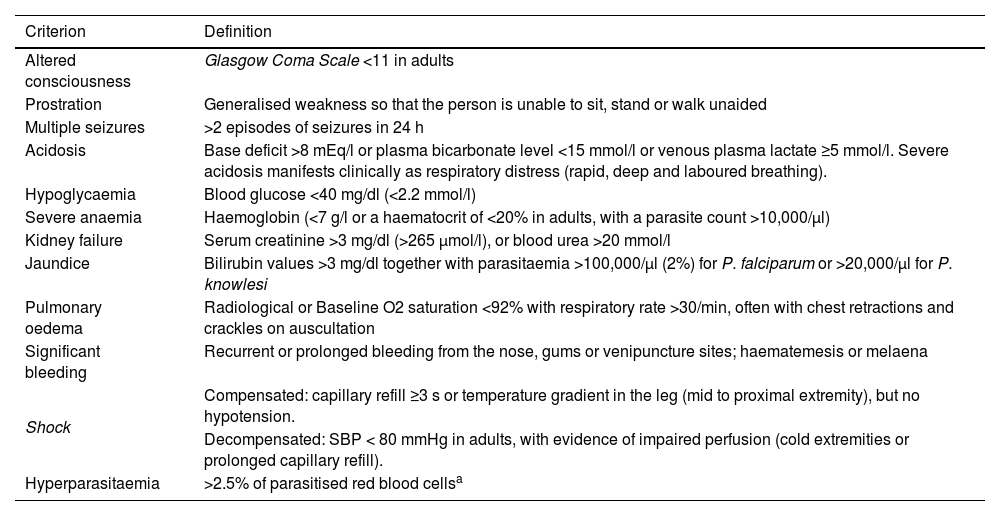
Malaria was classified as severe according to criteria previously defined by WHO, as shown in Table 1.8,9 For parasitaemia, although the WHO defines hyperparasitaemia for P. falciparum as greater than 10%, this is only applicable to areas where malaria is endemic and patients have developed semi-immunity. For non-immune individuals, such as travellers, or those who may have lost immunity after years outside an endemic area, hyperparasitaemia is considered to be ≥2.5%, as non-immune individuals can develop severe malaria with less elevated parasitaemia.12
WHO-defined malaria severity criteria.
| Criterion | Definition |
|---|---|
| Altered consciousness | Glasgow Coma Scale <11 in adults |
| Prostration | Generalised weakness so that the person is unable to sit, stand or walk unaided |
| Multiple seizures | >2 episodes of seizures in 24 h |
| Acidosis | Base deficit >8 mEq/l or plasma bicarbonate level <15 mmol/l or venous plasma lactate ≥5 mmol/l. Severe acidosis manifests clinically as respiratory distress (rapid, deep and laboured breathing). |
| Hypoglycaemia | Blood glucose <40 mg/dl (<2.2 mmol/l) |
| Severe anaemia | Haemoglobin (<7 g/l or a haematocrit of <20% in adults, with a parasite count >10,000/μl) |
| Kidney failure | Serum creatinine >3 mg/dl (>265 μmol/l), or blood urea >20 mmol/l |
| Jaundice | Bilirubin values >3 mg/dl together with parasitaemia >100,000/μl (2%) for P. falciparum or >20,000/μl for P. knowlesi |
| Pulmonary oedema | Radiological or Baseline O2 saturation <92% with respiratory rate >30/min, often with chest retractions and crackles on auscultation |
| Significant bleeding | Recurrent or prolonged bleeding from the nose, gums or venipuncture sites; haematemesis or melaena |
| Shock | Compensated: capillary refill ≥3 s or temperature gradient in the leg (mid to proximal extremity), but no hypotension. |
| Decompensated: SBP < 80 mmHg in adults, with evidence of impaired perfusion (cold extremities or prolonged capillary refill). | |
| Hyperparasitaemia | >2.5% of parasitised red blood cellsa |
The treatment of choice for severe malaria was parenteral artesunate, irrespective of the Plasmodium species. For non-severe P. falciparum malaria, oral artemisinin combination therapies (ACT), namely piperaquine/dihydroartemisinin or atovaquone/proguanil, were considered appropriate according to the local protocol in our centre. The choice of one or the other combination was made by the treating physician. If atovaquone/proguanil prophylaxis had been given previously, the oral drug of choice was piperaquine/dihydroartemisinin. In cases of non-severe malaria due to species other than P. falciparum, both the above-mentioned combinations and oral chloroquine were considered appropriate.
Non-severe malaria cases with risk factors for progression to more severe forms and therefore requiring observation/hospital admission were defined as those with comorbidities, pregnancy, parasitaemia above 1%, bilirubin above 1.3 mg/dl and/or platelet counts below 20,000/mm3, in line with previous studies.13,14
Quantitative variables are expressed as mean and standard deviation (SD) or median and interquartile range (IQR). The qualitative variables are presented as absolute and relative frequencies. Categorical variables were compared using Chi-square or Fisher’s exact test. The Mann-Whitney U test was used to compare the quantitative variables. P-values <0.05 were considered statistically significant. IBM SPSS Statistics version 22.0 (IBM Corporation®, Armonk, NY, USA) was used.
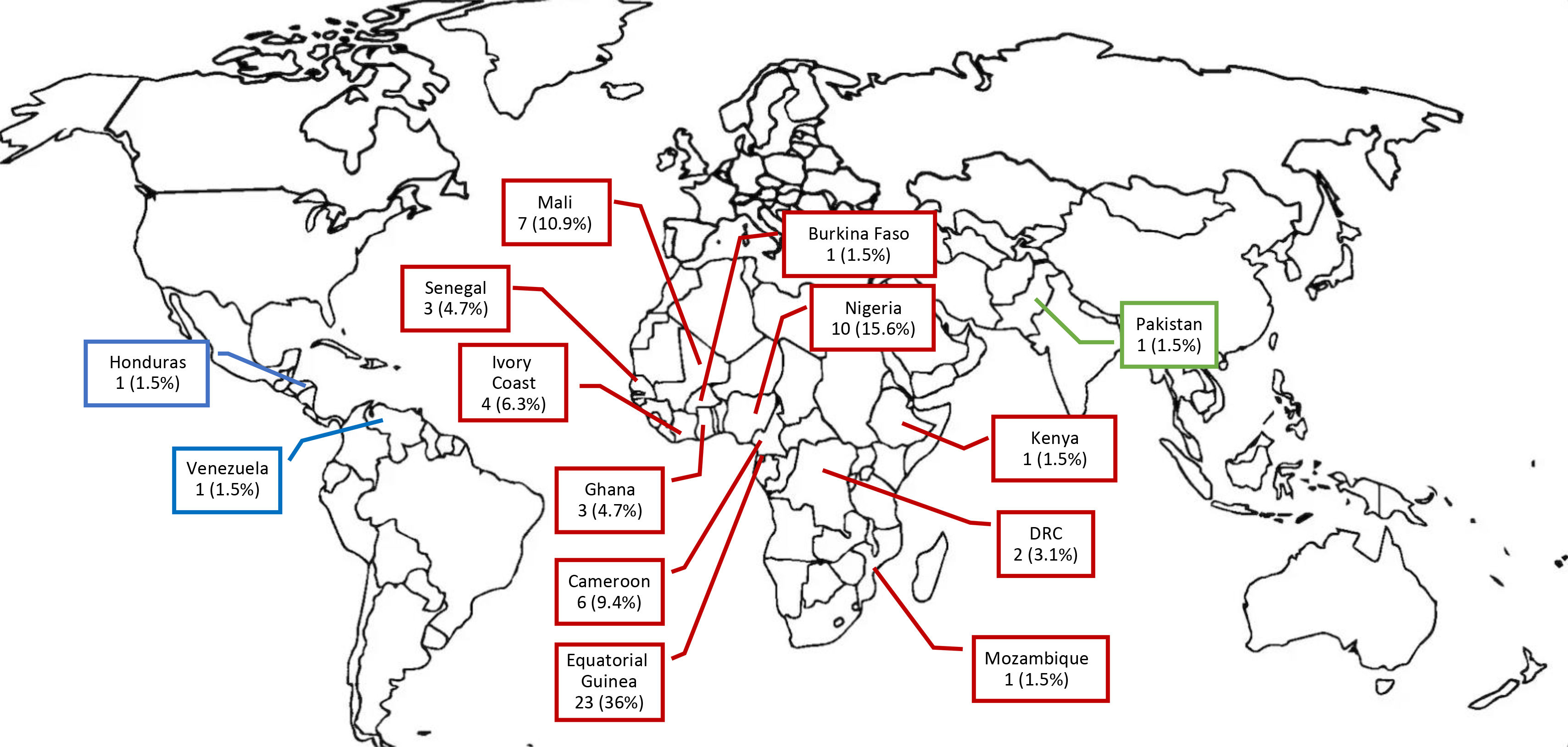
ResultsDuring the study period, 116 malaria cases were identified in our centre. We excluded 52 because they did not meet the inclusion criteria: 26 paediatric cases; 20 asymptomatic cases with submicroscopic malaria (PCR requested as part of asymptomatic immigrant screening or performed as part of a study); five patients sent to their reference hospitals and not treated at our centre; and one patient with positive CIA who had already been treated in his own country immediately before arriving in Spain. In the end, we included 64 patients diagnosed with malaria in our analysis. The median age was 39.5 years (IQR: 32.25–47) and 71.9% were male. Seventy-five percent of patients in our cohort were VFR, 15% were immigrants and 10% were tourists. In most cases the infection was acquired in Africa (95.1%) (Fig. 1). Only two patients (3.1%), both VFR, had taken appropriate prophylaxis during the trip, one with mefloquine and the other with atovaquone/proguanil.
The most common presentation of malaria was fever, present in 56 cases (87.5%). There were eight cases (12.5%) in whom the symptoms at onset did not include fever, with symptoms such as malaise, joint and muscle pain or headache. The median time from arrival from the endemic area to the onset of symptoms was five days (IQR: 0–13.3). The thick smear was positive in 54 (84.4%) patients and in the remaining 10 (15.6%) patients, in whom the thick smear was negative, the diagnosis was made by Plasmodium PCR. The most common infecting species was P. falciparum (85.9%). Six patients had parasitaemia ≥2.5% (four VFR, one immigrant and one tourist). Of these, two had parasitaemia of over 10%.
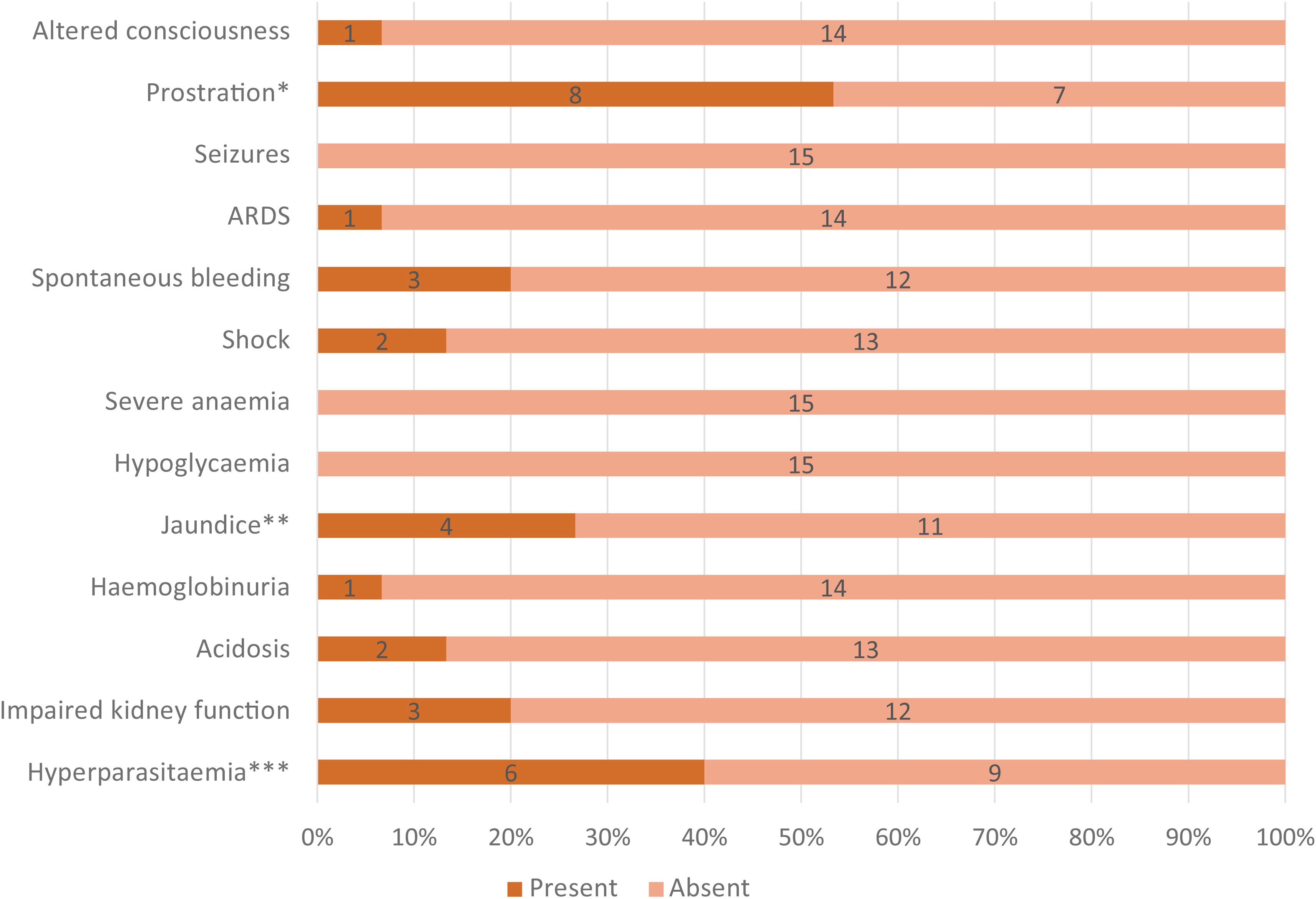
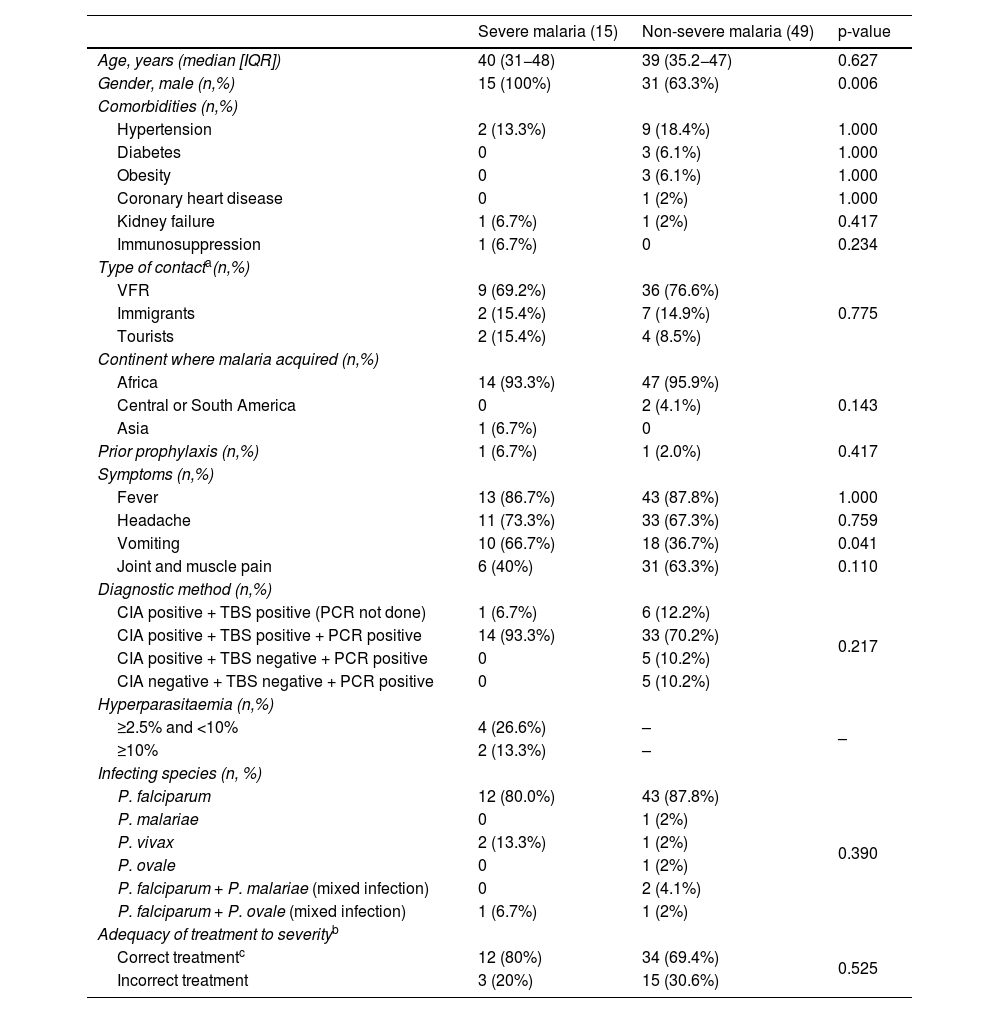
In the cohort there were a total of 15 (23.4%) malaria cases classified as severe according to WHO criteria and 49 (76.6%) classified as non-severe. Table 2 shows a comparison of the characteristics of the two groups of patients. All patients with severe malaria were male, while 63.3% of the non-severe malaria cases were male (p = 0.006). Fig. 2 shows the frequencies of each of the symptoms or signs by which malaria was defined as severe. Most of the malarias labelled as severe were due to P. falciparum (86.6%).
Comparison of characteristics of patients with severe malaria and those with non-severe malaria.
| Severe malaria (15) | Non-severe malaria (49) | p-value | |
|---|---|---|---|
| Age, years (median [IQR]) | 40 (31−48) | 39 (35.2−47) | 0.627 |
| Gender, male (n,%) | 15 (100%) | 31 (63.3%) | 0.006 |
| Comorbidities (n,%) | |||
| Hypertension | 2 (13.3%) | 9 (18.4%) | 1.000 |
| Diabetes | 0 | 3 (6.1%) | 1.000 |
| Obesity | 0 | 3 (6.1%) | 1.000 |
| Coronary heart disease | 0 | 1 (2%) | 1.000 |
| Kidney failure | 1 (6.7%) | 1 (2%) | 0.417 |
| Immunosuppression | 1 (6.7%) | 0 | 0.234 |
| Type of contacta(n,%) | |||
| VFR | 9 (69.2%) | 36 (76.6%) | 0.775 |
| Immigrants | 2 (15.4%) | 7 (14.9%) | |
| Tourists | 2 (15.4%) | 4 (8.5%) | |
| Continent where malaria acquired (n,%) | |||
| Africa | 14 (93.3%) | 47 (95.9%) | 0.143 |
| Central or South America | 0 | 2 (4.1%) | |
| Asia | 1 (6.7%) | 0 | |
| Prior prophylaxis (n,%) | 1 (6.7%) | 1 (2.0%) | 0.417 |
| Symptoms (n,%) | |||
| Fever | 13 (86.7%) | 43 (87.8%) | 1.000 |
| Headache | 11 (73.3%) | 33 (67.3%) | 0.759 |
| Vomiting | 10 (66.7%) | 18 (36.7%) | 0.041 |
| Joint and muscle pain | 6 (40%) | 31 (63.3%) | 0.110 |
| Diagnostic method (n,%) | |||
| CIA positive + TBS positive (PCR not done) | 1 (6.7%) | 6 (12.2%) | 0.217 |
| CIA positive + TBS positive + PCR positive | 14 (93.3%) | 33 (70.2%) | |
| CIA positive + TBS negative + PCR positive | 0 | 5 (10.2%) | |
| CIA negative + TBS negative + PCR positive | 0 | 5 (10.2%) | |
| Hyperparasitaemia (n,%) | |||
| ≥2.5% and <10% | 4 (26.6%) | – | – |
| ≥10% | 2 (13.3%) | – | |
| Infecting species (n, %) | |||
| P. falciparum | 12 (80.0%) | 43 (87.8%) | 0.390 |
| P. malariae | 0 | 1 (2%) | |
| P. vivax | 2 (13.3%) | 1 (2%) | |
| P. ovale | 0 | 1 (2%) | |
| P. falciparum + P. malariae (mixed infection) | 0 | 2 (4.1%) | |
| P. falciparum + P. ovale (mixed infection) | 1 (6.7%) | 1 (2%) | |
| Adequacy of treatment to severityb | |||
| Correct treatmentc | 12 (80%) | 34 (69.4%) | 0.525 |
| Incorrect treatment | 3 (20%) | 15 (30.6%) |
CIA: chromatographic immunoassay; IQR: interquartile range; PCR: polymerase chain reaction; TBS: thick blood smear; VFR: Visiting Friends and Relatives.
Bar chart showing the percentage of the different symptoms and signs of severity in patients with severe malaria.
*Prostration defined as generalised weakness that prevents a person from walking or sitting unaided **Jaundice defined as bilirubin values >3 mg/dl associated with hyperparasitaemia. ***Hyperparasitaemia is defined as values >2.5% for VFR and tourists.
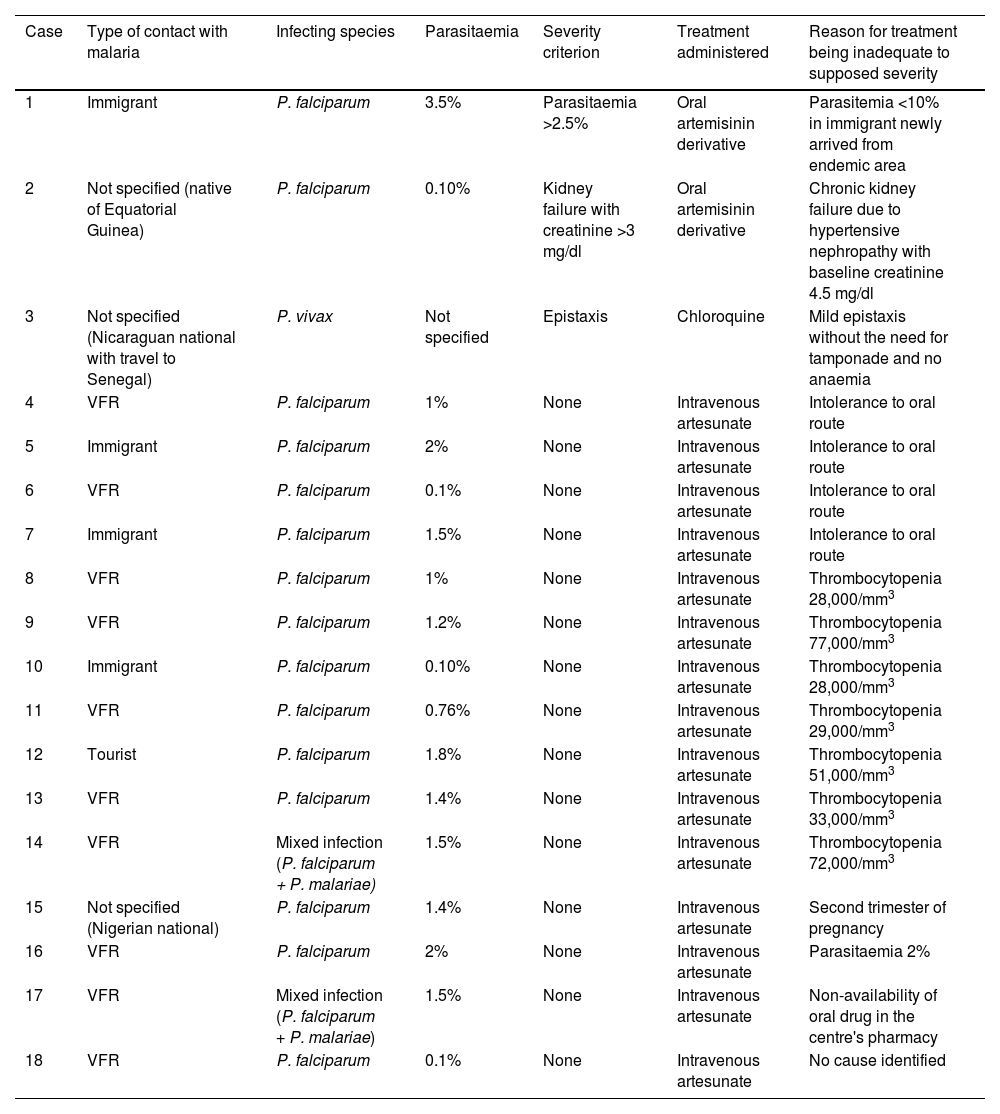
Treatment was appropriate to severity in 46 patients (71.8%). A total of 18 patients (28.2%) received treatment which was not appropriate for the theoretical severity of the malaria. The majority of cases inadequately treated according to severity were non-severe malarias (83.3%). Three of the 15 malaria cases classified as severe were treated orally, while 15 of the 49 malaria cases not meeting severity criteria were treated with parenteral artesunate (20% vs 30.6%, p = 0.525) (Table 2). Table 3 specifies the reasons that led to the administration of a different treatment from the one indicated for the supposed severity. Notably, the main reason for artesunate overuse in non-severe malaria cases was thrombocytopenia in seven cases (63.3%), with a median platelet count of 33,000/mm3 (IQR: 28,000–51,000/mm3). There was also one pregnant patient in the second trimester of pregnancy who, despite not having severity criteria, received intravenous artesunate as treatment for her malaria. All of the patients were cured despite receiving treatment different from that indicated for their severity. None of the patients with non-severe malaria treated with parenteral artesunate had any adverse effects from this treatment.
Description of patients receiving treatment who supposedly did not meet severity criteria.
| Case | Type of contact with malaria | Infecting species | Parasitaemia | Severity criterion | Treatment administered | Reason for treatment being inadequate to supposed severity |
|---|---|---|---|---|---|---|
| 1 | Immigrant | P. falciparum | 3.5% | Parasitaemia >2.5% | Oral artemisinin derivative | Parasitemia <10% in immigrant newly arrived from endemic area |
| 2 | Not specified (native of Equatorial Guinea) | P. falciparum | 0.10% | Kidney failure with creatinine >3 mg/dl | Oral artemisinin derivative | Chronic kidney failure due to hypertensive nephropathy with baseline creatinine 4.5 mg/dl |
| 3 | Not specified (Nicaraguan national with travel to Senegal) | P. vivax | Not specified | Epistaxis | Chloroquine | Mild epistaxis without the need for tamponade and no anaemia |
| 4 | VFR | P. falciparum | 1% | None | Intravenous artesunate | Intolerance to oral route |
| 5 | Immigrant | P. falciparum | 2% | None | Intravenous artesunate | Intolerance to oral route |
| 6 | VFR | P. falciparum | 0.1% | None | Intravenous artesunate | Intolerance to oral route |
| 7 | Immigrant | P. falciparum | 1.5% | None | Intravenous artesunate | Intolerance to oral route |
| 8 | VFR | P. falciparum | 1% | None | Intravenous artesunate | Thrombocytopenia 28,000/mm3 |
| 9 | VFR | P. falciparum | 1.2% | None | Intravenous artesunate | Thrombocytopenia 77,000/mm3 |
| 10 | Immigrant | P. falciparum | 0.10% | None | Intravenous artesunate | Thrombocytopenia 28,000/mm3 |
| 11 | VFR | P. falciparum | 0.76% | None | Intravenous artesunate | Thrombocytopenia 29,000/mm3 |
| 12 | Tourist | P. falciparum | 1.8% | None | Intravenous artesunate | Thrombocytopenia 51,000/mm3 |
| 13 | VFR | P. falciparum | 1.4% | None | Intravenous artesunate | Thrombocytopenia 33,000/mm3 |
| 14 | VFR | Mixed infection (P. falciparum + P. malariae) | 1.5% | None | Intravenous artesunate | Thrombocytopenia 72,000/mm3 |
| 15 | Not specified (Nigerian national) | P. falciparum | 1.4% | None | Intravenous artesunate | Second trimester of pregnancy |
| 16 | VFR | P. falciparum | 2% | None | Intravenous artesunate | Parasitaemia 2% |
| 17 | VFR | Mixed infection (P. falciparum + P. malariae) | 1.5% | None | Intravenous artesunate | Non-availability of oral drug in the centre's pharmacy |
| 18 | VFR | P. falciparum | 0.1% | None | Intravenous artesunate | No cause identified |
Of the 64 patients in the cohort, 44 (68.8%) were admitted to hospital. All 15 severe malaria cases (100%) and 29 of the 49 patients with malaria without severity criteria (59.2%) were admitted to hospital (p = 0.003). Of those without severity criteria, 14 were admitted for treatment with parenteral artesunate, two for decompensation of their underlying disease and the remaining 13 for monitoring of clinical and/or analytical abnormalities. Among these 29 patients, 12 (41.4%) had no risk factors for poor outcome or intolerance to the oral route. The mean length of stay for patients with severe malaria was 10.1 days (SD 13.8) compared to 2.4 days (SD 1.6) for patients with malaria without severity criteria (p = 0.05).
Five patients (7.8%) required admission to the Intensive Care Unit (ICU), three were VFR and two were tourists. All had travelled to Africa and none had taken malaria prophylaxis during the trip. All cases were due to P. falciparum infection. None of the patients in the cohort died of malaria.
In terms of follow-up, 51 patients (79.7%) attended the scheduled outpatient check-up between seven and 30 days after malaria diagnosis. Nine of the 15 patients with severe malaria (64.3%) and 42 of the 49 with non-severe malaria (85.7%) were assessed in the clinic (p = 0.117). None of the patients reported symptoms after the end of treatment. Of the 51 patients followed up in the clinic, 38 (74.5%) had a blood test at some point in the first month after the diagnosis of malaria. One patient with severe P. falciparum malaria who required ICU admission and received ten doses of artesunate IV developed delayed haemolysis at follow-up, with haemoglobin levels of 8.5 g/dl and LDH of 500 IU/l. No cases of delayed haemolysis were found in patients with non-severe malaria who received parenteral artesunate and who had a blood test available within the first month after treatment. No malaria recrudescence was found in the 27 patients in the cohort (42.2%) in whom a follow-up thick blood smear was performed one month after the end of treatment.
DiscussionThis study shows the appropriateness of malaria treatment according to severity, as defined by WHO criteria, in a cohort of 64 patients treated in a tertiary hospital in a non-endemic country for malaria, with a predominance of VFR. About 20% of the cases in the cohort were severe malaria. Notably, in line with previous studies,15,16 the percentage of males was significantly higher among patients with severe malaria. This finding is explained by behavioural patterns characteristic of men, as well as a lower perception of risk associated with the disease, resulting in greater exposure to infection, lower adherence to chemoprophylaxis and delayed care-seeking.
The treatment administered was appropriate to the severity of the infection in 71.3% of cases, with the rate rising to 80% for cases of severe malaria. This is somewhat lower than the 85% found in a recent study in France,17 where they retrospectively analysed the treatment of imported malaria in a cohort of 230 patients seen in the accident and emergency department, with a predominance of VFR (78%) and 30% of cases being severe malaria. However, in contrast to our study, where adequacy was higher in severe malaria cases, in the French cohort adequacy was significantly lower in severe malaria cases than in those with uncomplicated malaria (OR 0.15 [95% CI 0.07−0.31]). In fact, 27.8% of patients correctly identified as severe malaria received oral treatment instead of intravenous artesunate, and the proportion of inadequate treatment increased to 40.5% when patients who were incorrectly labelled as non-severe malaria, when actually severe, were included in the analysis.
After detailed analysis of the cases in our cohort who did not receive the expected treatment for malaria severity, we found that the three cases labelled as severe who received oral treatment did not strictly meet any severity criteria. We can therefore state that in our cohort 100% of the really severe malarias were treated correctly. Adequate treatment of severe malaria is crucial to prevent a poor clinical outcome and the possible development of cerebral malaria, which has high morbidity and mortality rates.18 Early administration of intravenous artesunate and treatment in ICU of the most severe cases, with shock or respiratory distress, were essential to prevent malaria deaths in our cohort.
For non-severe malaria cases, we found that 30.6% of patients received parenteral artesunate. However, it is important to note that this treatment was adequate in a quarter of the cases, as, despite not meeting any severity criteria, these patients had gastrointestinal intolerance and could not be treated orally. Therefore, overuse of parenteral artesunate in patients with non-severe malaria was limited to 22% of cases.
The main reason for the overuse of artesunate was the presence of thrombocytopenia. A drop in platelet counts occurs early in Plasmodium spp. infection, even before fever or anaemia. In early stages of infection, endothelial activation with release of von Willebrand factor results in platelet aggregation. As a consequence, platelet counts decrease due to microvascular sequestration, without an increased risk of bleeding.19–22 Indeed, in response to the sequestration phenomenon, there is an increase in thrombopoietin levels leading to increased megakaryocyte production, such that bleeding is rarely observed even with severe thrombocytopenia.19–22 Therefore, most studies conclude that thrombocytopenia does not seem to mean a worse prognosis.19–22 However, some authors argue that a low platelet count could be a marker of the severity of the infection, as it is generally associated with higher parasite loads. Hanson et al.23 found that platelet counts were significantly lower on admission in patients who died, with a median of 30,000 platelets/mm3 versus 50,000 platelets/mm3 in patients who did not die, although lower platelet counts did not predict poor outcome independently of clinical or analytical criteria established by the WHO as markers of severity. Similar results were reported in the study by Lampah et al.,24 where patients with platelet counts below 50,000 platelets/mm3 had an adjusted odds ratio (OR) for mortality of 2.77 (95%CI 2.20–3.48). The mortality OR rose to 13.76 (95%CI 10.22–18.54) when anaemia was associated with the thrombocytopenia. Therefore, severe thrombocytopenia with counts below 50,000 platelets/mm3 could be a surrogate marker for severe malaria and, although usually accompanied by other severity criteria, if present in isolation, especially figures below 20,000 platelets/mm3, it could support the use of artesunate.
Another situation in which artesunate was used to treat non-severe malaria in our cohort involved a pregnant woman in the second trimester of pregnancy. It should be noted that malaria during pregnancy involves high morbidity and mortality risk, both for the mother and foetus, with a higher incidence of miscarriage and low birth weight,25 so early diagnosis and correct treatment is crucial. In 2016, the multicentre PREGACT trial was published demonstrating the safety of the artemether/lumefantrine combination for the treatment of uncomplicated malaria in the second and third trimester of pregnancy.26 However, it should be noted that the use of artemether/lumefantrine in our setting is limited as it is a foreign drug. An application for authorisation from the Agencia Española del Medicamento [Spanish Medicines Agency] is therefore required, which prevents its immediate availability in many centres. Combined with the fear of treating malaria in pregnancy with a less well-tolerated and less effective regimen, such as the seven-day combination of quinine sulphate and clindamycin, that may explain why this patient was given parenteral artesunate. Saito et al. recently demonstrated in several meta-analyses the efficacy of ACT treatment not only in the second and third trimester of pregnancy, but also during the first trimester.27–29 Although the evidence is strongest for the artemether/lumefantrine combination, other ACT could be considered if artemether/lumefantrine is not available, except for those containing antifolates, which are formally contraindicated in the first trimester. In line with these findings, since 2023 WHO guidelines have positioned ACT as the first-line treatment for non-severe malaria throughout pregnancy.8,9
Another factor to consider as a cause of the overuse of parenteral treatment in non-serious cases could be the excessive caution of clinicians unaccustomed to treating malaria, which is not endemic here in Spain, who are concerned about the potential complications of the disease. Moreover, this factor could also at least partly explain the high rate of admissions for non-severe malaria in our cohort, where almost 70% of patients without severity criteria were admitted. While admission was justified in about 60% of them due to oral intolerance or presence of risk factors for poor clinical outcome, slightly more than 40% of admissions among patients with non-severe malaria could have been avoided. In fact, most had short average lengths of stay and early hospital discharge.
It is true that some patients with malaria, such as immigrants, may have complex socio-economic situations or present a language barrier that causes the clinician to have doubts about adherence to treatment, with the consequent risk of poor progress if they are discharged from the Accident and Emergency Department. Strategies such as providing full ACT treatment from the hospital or facilitating early outpatient follow-up in specialised clinics could avoid unnecessary admissions, thus reducing costs. In fact, analysing adherence to outpatient follow-up in our cohort, we found that 80% of patients attended the outpatient check-up in the first month post-treatment.
A survey of experts from 44 tropical medicine reference centres outside endemic areas, belonging to the TropNet and GeoSentinel networks,30 revealed that 61% of centres treated uncomplicated P. falciparum malaria cases on an outpatient basis. Three groups of factors were identified to support this strategy: firstly, the patient’s clinical status, including laboratory parameters, and tolerance to oral medication; secondly, aspects related to adherence to treatment, such as the patient’s reliability in terms of adherence, the possibility of telephone follow-up and home support; and thirdly, the patient's origin and place of residence, as possible indicators of underlying semi-immunity. The parasitaemia threshold for considering outpatient treatment ranged from 0.1% to 5%, with a median of 2%. However, despite the high rate of outpatient management, the authors stress the need for prospective studies to establish evidence-based criteria and assess the safety of this practice, in order to define appropriate protocols for the outpatient treatment of uncomplicated malaria.
Our study has several limitations. Firstly, as this was a retrospective study, we missed some patients for whom we did not have information on the treatment received. In addition, our single-centre cohort may not be representative of patients seen in other centres where tourists or immigrants, rather than VFR, predominate. Despite the limitations, however, we have been able to extract interesting information on the management of malaria in our setting.
In conclusion, this study demonstrates correct identification of severe malaria, with treatment appropriate to the severity in all cases, which is essential for reducing mortality rates. However, there is an overuse of artesunate in patients with non-severe malaria, especially in those with thrombocytopenia, which is not included among the WHO severity criteria. Implementing updated clinical guidelines for malaria diagnosis and treatment in Accident and Emergency Departments and facilitating access to early outpatient follow-up clinics could help to better adjust treatment of non-severe forms of malaria and avoid unnecessary overtreatment and admissions.
FundingThis study received no specific funding from public, private or non-profit organisations.
The authors have no conflicts of interest to declare.