


metricas
Clínica e Investigación en Arteriosclerosis (English Edition) Planning of lipid-lowering treatment in atherosclerotic vascular disease. Consen...
Journal Information
Vol. 37. Issue 4.
(July - August 2025)
Cite
Cite
Share
Download PDF
More article options
Visits
940
Vol. 37. Issue 4.
(July - August 2025)
Consensus statement
Full text access

Planning of lipid-lowering treatment in atherosclerotic vascular disease. Consensus SEC/SEA/SEEN/SEMFYC/SEMERGEN/SEMG/SEN/SEACV/S.E.N

Planificación del tratamiento hipolipemiante en la enfermedad vascular ateroesclerótica. Consenso SEC/SEA/SEEN/SEMFYC/SEMERGEN/SEMG/SEN/SEACV/S.E.N.
Visits
940
Rosa Fernández-Olmoa,
Corresponding author
, Alberto Corderob, Armando Oterinoc, Agustín Blanco-Echevarríad, David Vivase,f, Carlos Escobarg, Emilio Ortegah, Mónica Torres-Fonsecai, Carmen Sánchez-Peinadorj, Borja Quirogak, Vicente Pascuall, Pedro Martínez-Losasm, Daniel Escribanon, María del Mar Freijoo, Rosa María Sánchez Hernándezp, Ana Vianae, Román Freixa-Pamiasq, Almudena Castrog, Juan José Gómez Doblasr
a Servicio de Cardiología, Hospital Universitario de Jaén, Jaén, Spain
b Servicio de Cardiología, Hospital San Juan de Alicante, Alicante, Spain
c Servicio de Cardiología, Hospital San Pedro de Alcántara, Cáceres, Spain
d Servicio de Medicina Interna, Hospital Universitario 12 de Octubre, Madrid, Spain
e Instituto Cardiovascular, Hospital Clínico San Carlos, Madrid, Spain
f Departamento de Medicina, Facultad de Medicina, Universidad Complutense, Madrid, Spain
g Servicio de Cardiología, Hospital Universitario La Paz, Madrid, Spain
h Servicio de Endocrinología y Nutrición, CIBEROBN, Hospital Clínic, Barcelona, Spain
i Servicio de Cirugía Vascular, Hospital Universitario de Getafe, Getafe, Madrid, Spain
j Medicina de Familia, Centro de Salud Cantalejo, Cantalejo, Segovia, Spain
k Servicio de Nefrología, Hospital Universitario La Princesa, Madrid, Spain
l Medicina de Familia, Centro de Salud Palleter, Castellón, Spain
m Servicio de Cardiología, Hospital Universitario Infanta Leonor, Madrid, Spain
n Medicina de Familia, Centro de Salud Delicias Sur, Zaragoza, Spain
o Servicio de Neurología, Hospital Universitario de Cruces, Barakaldo, Bizkaia, Spain
p Sección de Endocrinología y Nutrición, Complejo Hospitalario Universitario Insular Materno Infantil de Gran Canaria. Instituto Universitario de Investigaciones Biomédicas y Sanitarias de la Universidad de Las Palmas de Gran Canaria, Las Palmas de Gran Canaria, Spain
q Servicio de Cardiología, Complex Hospitalari Moisès Broggi, Sant Joan Despí, Barcelona, Spain
r Servicio de Cardiología, Hospital Universitario Virgen de la Victoria, Málaga, Spain
Ver más
This item has received
Article information
Abstract
Full Text
Bibliography
Download PDF
Statistics
Figures (2)
fig0005
fig0010
Tables (1)
Table 1. Possible follow-up scenarios in the care process of the patient with AVD based on the clinical profile.
Tables
Abstract

In recent years we have been experiencing an advance in lipid-lowering therapies, with the appearance of new drugs that act on the different metabolic pathways, reducing both the levels of cholesterol associated with low-density lipoproteins (LDL-C) containing apoprotein B (ApoB), and vascular risk. However, the results in achieving goals are still scarce, as well as the use of the different therapies that help us to achieve them. Among the reasons that justify this situation are: the inadequate identification of vascular risk, the underuse of therapies, poor adherence to the recommended treatment, the lack of organization in terms of the assignment of roles and algorithms of action in the follow-up of patients and the need for improved education and psychosocial interventions that influence both adherence and consolidation of Healthy lifestyle habits. This consensus document aims to improve the approach and follow-up of dyslipidemia in a comprehensive way, defining the planning of lipid-lowering therapies as a control strategy (SEC/SEA/SEEN/SEMFYC/SEMERGEN/SEMG/SEN/SEACV/S.E.N.).

Keywords:
Care organisation
Atherosclerotic vascular disease
Lipid-lowering treatment
Resumen

En los últimos años estamos viviendo un avance de las terapias hipolipemiantes, apareciendo en escena nuevos fármacos que actúan en las diferentes vías metabólicas, reduciendo tanto los niveles de colesterol asociado a lipoproteínas de baja densidad (cLDL) que contienen apoproteína B (ApoB), como el riesgo vascular. Sin embargo, los resultados en la consecución de objetivos, siguen siendo escasos, así como la utilización de las diferentes terapias que nos ayudan a conseguirlos. Entre los motivos que justifican esta situación destacan: la inadecuada identificación del riesgo vascular, la infrautilización de las terapias, la escasa adherencia al tratamiento recomendado, la falta de organización en cuanto a la adjudicación de roles y algoritmos de actuación en el seguimiento de los pacientes y la necesidad de mejora de la educación e intervenciones psicosociales que influyan tanto en la adherencia como en la consolidación de hábitos de vida saludables. Este documento de consenso tiene como objetivo mejorar el abordaje y seguimiento de las dislipemias de forma integral, definiendo la planificación de las terapias hipolipemiantes como estrategia de control (SEC/SEA/SEEN/SEMFYC/SEMERGEN/SEMG/SEN/SEACV/S.E.N.).

Palabras clave:
Organización asistencial
Enfermedad vascular ateroesclerótica
Tratamiento hipolipemiante
Full Text
Introduction

Reducing low-density lipoprotein cholesterol (LDL-C) containing apoprotein B (ApoB) is one of the interventions with the greatest evidence and scientific support for reducing major vascular events. A reduction of 1  mmol/L (38  mg/dL) is directly related to a 22% reduction in events.1

The current European Society of Cardiology clinical practice guidelines for acute and chronic coronary syndrome, as well as recently published consensus documents from the main scientific societies on the management of dyslipidaemias and vascular prevention, recommend achieving LDL-C targets based on the correct individual assessment of vascular risk, with particular emphasis on the early and sustained achievement of target LDL-C levels in a so-called "direct-to-target" approach.2–7 Across the entire AVD spectrum, this approach is consistent and interrelated across different specialties.

However, despite all the existing guidelines, for various reasons, achieving LDL-C targets remains suboptimal in more than half of patients. In some registries, up to 80% of patients with high and very high vascular risk are beyond appropriate control.8–10

In recent years, new therapeutic targets have emerged in the field of lipid-lowering drugs that can help the therapeutic goals recommended by clinical practice guidelines to be met. Aimed at updating the main therapies, a consensus document on the use of lipid-lowering treatments was recently published.11 We consider that the implementation and planning of these therapies in clinical practice requires structuring, which is the aim of this study.

Identifying the problem

First, we will describe some of the main factors that hinder the achievement of LDL-C targets:

  • Inadequate perception of lipid control based on risk, among both professionals and patients: data from the Dyslipidemia Observatory study12 show that 62% of professionals believe their patients are under control, while only 31% believe their control is adequate based on their vascular risk. This problem could be caused by both professionals' incorrect application of the most recent guidelines and insufficient information provided to patients about medication.

  • Inadequate use of combination therapy: only 1 in 4 patients with atherosclerotic vascular disease (AVD) receives treatment with a combination of lipid-lowering drugs.9

  • Inaccurate optimisation of lipid-lowering medication: inadequate adjustment of non-statin therapies13

  • Sequential optimisations: Clinical practice guidelines2–7 have traditionally recommended a sequential approach to lipid-lowering treatment, with the associated risk of loss to follow-up, lack of treatment adjustment, and delay in achieving goals.

  • Lack of care organization for high- and very-high-risk vascular patients: In more than 60% of Spanish centers, continuity of care after an acute coronary event is not organised or planned.14 The situation is even worse for patients who suffer cerebrovascular ischaemic events or clinical manifestations of peripheral arterial disease. The need for follow-up care is prioritised according to the follow-up required for a particular intervention, without considering whether these time frames coincide with those required for proper adjustment of lipid-lowering medication. Furthermore, if we focus on high- and very-high-risk individuals who have not yet experienced an acute event, this specific care organization is even less organised.

  • Therapeutic adherence and persistence: Lack of adherence and persistence impact vascular disease due to exposure to higher LDL-C levels.15

  • Bureaucratic barriers to the inclusion and prescription of hospital-dispensed drugs.

  • Psychosocial and economic factors that hinder access to and long-term maintenance of chronic treatments.

Global approach: measure, organise and treat

The comprehensive approach to patients with AVD should combine standardised lipid risk measurement and organisational follow-up to implement appropriate treatments based on the patient's profile.

Measure

The consensus document on lipid profiling for Spanish laboratories16 outlines the appropriate guidelines for the various analytical determinations that should be taken into account when evaluating lipid fractions. The basic lipid profile should include information on total cholesterol, high-density lipoprotein cholesterol (HDL-C), LDL-C, triglycerides, non-HDL cholesterol, ApoB, and lipoprotein (a), in addition to atherogenicity indices and inflammatory markers, which can provide additional information on the patient's overall risk.

According to clinical practice guidelines,2–7 vascular risk stratification with laboratory testing should be performed at least annually in healthy subjects over 40 years of age or in younger subjects with a family history of dyslipidaemia or early vascular disease (men <55 years of age and women <65 years of age). In patients with established vascular disease, testing should be performed at the time of diagnosis and reassessed 4–6 weeks after initiating lipid-lowering therapy or adjusting treatment.

Organising

There are various initiatives to improve the care pathway for patients with high/very high vascular risk and AVD. In the case of follow-up after acute coronary syndrome, one example is the Europath project,17 a pioneering European programme that proposes different patient care pathway scenarios, depending on the resources of each healthcare area, from cardiac rehabilitation programmes as the ideal scenario to follow-up in primary care. There are other models, at the local or regional level, that highlight the importance and need to organise and describe the patient care pathway in a uniform manner to ensure adequate risk identification, treatment, and corresponding preventive measures, as well as their adaptation to the healthcare environment, in the follow-up of patients with both acute and chronic events.18

Similarly, for patients without established vascular disease, flexible bidirectional pathways should be organised with primary care and between specialists. Telemedicine, such as e-consultation,19 is proposed as an additional tool, which has proven to be useful with good results.20 Comprehensive multiprofessional and multidisciplinary care units or clinics can be a desirable organisational model, more efficient and focused on the patient and the transversal prevention process, which aims to improve the identification of patients at risk and the achievement of prevention objectives in a more holistic manner.

Treat: treatment planning

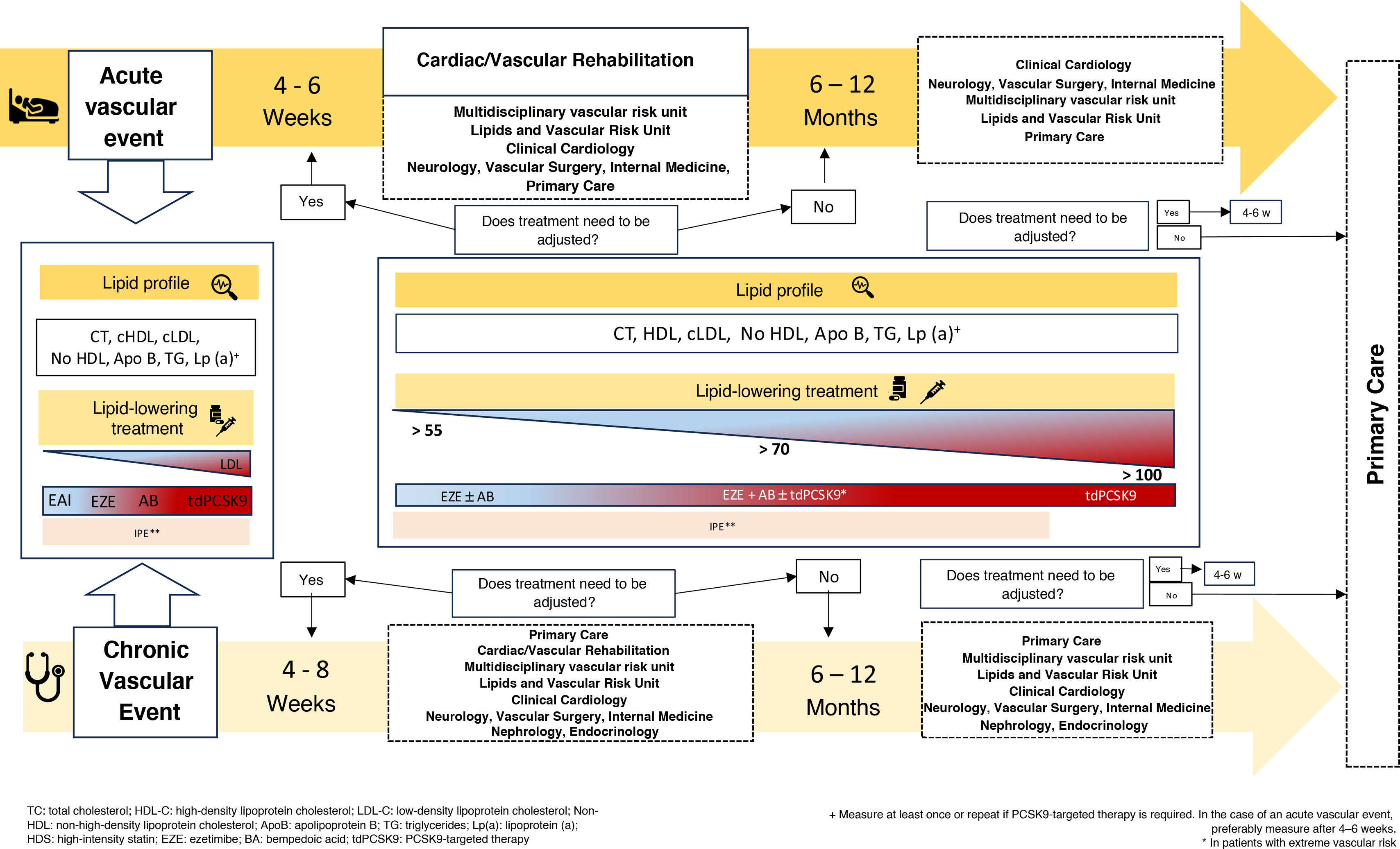
The consensus document on the use of lipid-lowering treatments11 advocates a strategy of vascular risk assessment and, depending on the objective associated with each level, the use of the appropriate strategy to precisely achieve it. However, several factors influence the application of these therapeutic strategies, such as the acute or chronic context, variability in response to treatments, financial conditions, and patient preferences. Therefore, it is important not only to choose the most appropriate strategy but also to establish appropriate treatment planning, timing, and patient follow-up (Fig. 1).

Figure 1.

Planning lipid-lowering therapy based on the patient's clinical profile, percentage reduction, and LDL-C levels. (Based on the Use of Lipid-Lowering Therapies in Clinical Practice document. SEC/SEA/SEEN/SEMFYC/SEMERGEN/SEMG/SEN/SEACV/S.E.N.10) Consensus).

ADV: atherosclerotic vascular disease; BA: bempedoic acid; LDL-C: low-density lipoprotein cholesterol; EZE: ezetimibe; HIS: high-intensity statin; IPE: icosapent ethyl; MTDS: minimum tolerated dose statin; tdPCSK9: PCSK9-targeted therapy; TG: triglycerides.

* In extreme risk patients: ≥AVD, ADV + familial hypercholesterolaemia, AVD + ≥ACS in young patients, previous revascularisation, diabetes mellitus, CKD (GFR < 44 ml/min/1.73 m2 or albumin/creatinine 30−300 mg/g, polyvascular disease, Lp (a) >50 mg/dl.

Care process of the patient with AVD

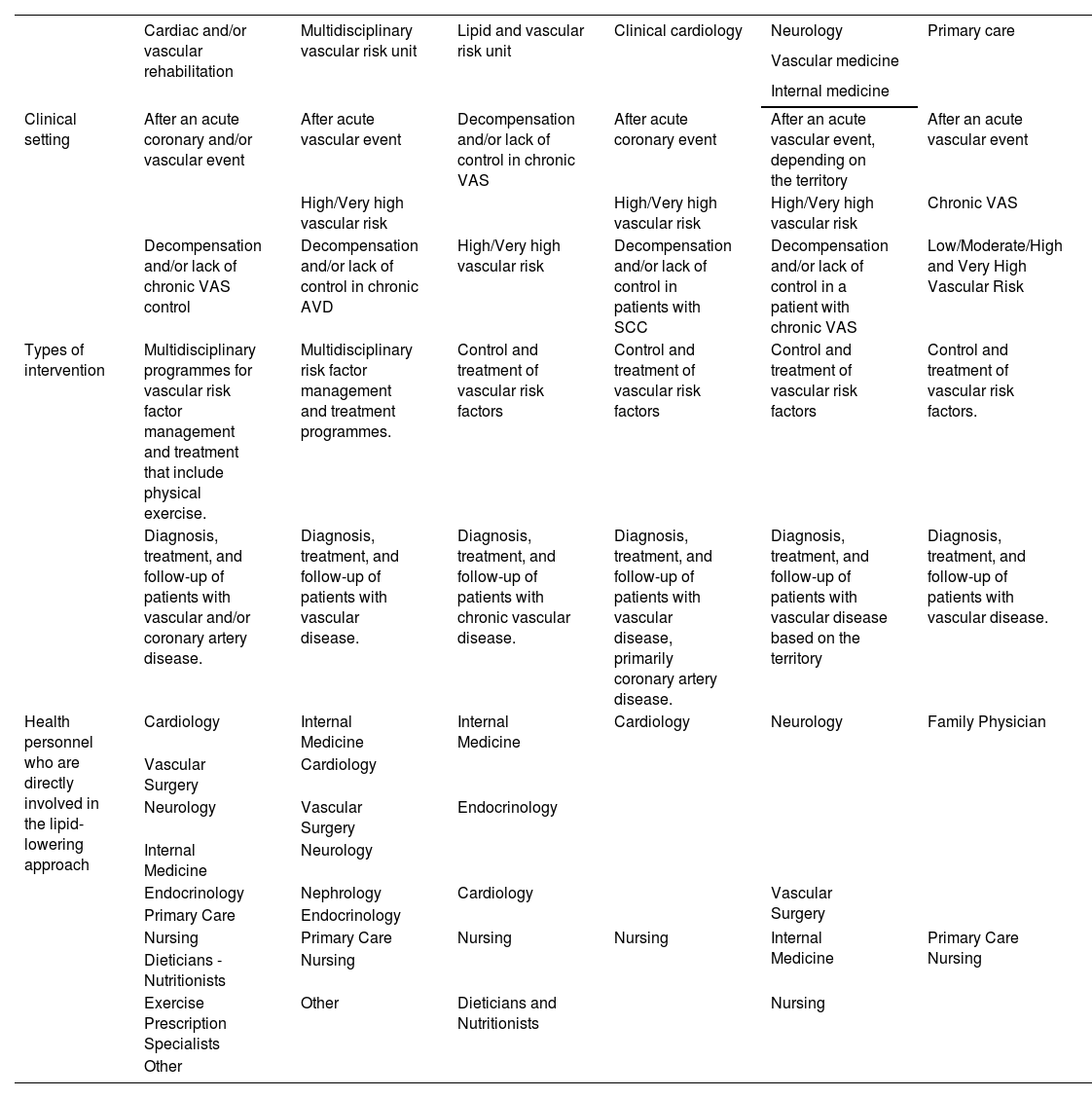
Adequate follow-up of patients with AVD is one of the most important care processes for all professionals who care for and intervene in this disease. Its proper structure, with a definition of the role and necessary actions for each participant in the AVD patient's journey, will allow for reduced treatment times and the selection of the best possible therapy (Table 1).

Table 1.

Possible follow-up scenarios in the care process of the patient with AVD based on the clinical profile.

Cardiac and/or vascular rehabilitationMultidisciplinary vascular risk unitLipid and vascular risk unitClinical cardiologyNeurology  Primary care
Vascular medicine 
Internal medicine 
Clinical settingAfter an acute coronary and/or vascular eventAfter acute vascular event  Decompensation and/or lack of control in chronic VASAfter acute coronary event  After an acute vascular event, depending on the territory  After an acute vascular event 
High/Very high vascular risk  High/Very high vascular risk  High/Very high vascular risk  Chronic VAS 
Decompensation and/or lack of chronic VAS control  Decompensation and/or lack of control in chronic AVD  High/Very high vascular risk  Decompensation and/or lack of control in patients with SCC  Decompensation and/or lack of control in a patient with chronic VAS  Low/Moderate/High and Very High Vascular Risk 
Types of interventionMultidisciplinary programmes for vascular risk factor management and treatment that include physical exercise.  Multidisciplinary risk factor management and treatment programmes.  Control and treatment of vascular risk factors  Control and treatment of vascular risk factors  Control and treatment of vascular risk factors  Control and treatment of vascular risk factors. 
Diagnosis, treatment, and follow-up of patients with vascular and/or coronary artery disease.  Diagnosis, treatment, and follow-up of patients with vascular disease.  Diagnosis, treatment, and follow-up of patients with chronic vascular disease.  Diagnosis, treatment, and follow-up of patients with vascular disease, primarily coronary artery disease.  Diagnosis, treatment, and follow-up of patients with vascular disease based on the territory  Diagnosis, treatment, and follow-up of patients with vascular disease. 
Health personnel who are directly involved in the lipid-lowering approachCardiology  Internal Medicine  Internal MedicineCardiologyNeurologyFamily Physician
Vascular Surgery  Cardiology 
Neurology  Vascular Surgery  Endocrinology
Internal Medicine  Neurology 
Endocrinology  Nephrology  CardiologyVascular Surgery
Primary Care  Endocrinology 
Nursing  Primary Care  NursingNursingInternal MedicinePrimary Care Nursing
Dieticians - Nutritionists  Nursing 
Exercise Prescription Specialists  OtherDieticians and NutritionistsNursing
Other 

AVD: atherosclerotic vascular disease; CCS: chronic coronary syndrome.

In patients with an acute vascular event, a baseline blood test should be performed during hospitalisation to identify the LDL-C level and the rest of the lipid profile, as discussed in the previous point. Treatment should be initiated based on the appropriate lipid-lowering strategy based on the baseline LDL-C level and the estimated percentage reduction desired (Fig. 1). In patients with a chronic vascular event, the strategy should be very similar at the time of diagnosis to ensure proper treatment and achievement of goals (Fig. 1). Screening for familial hypercholesterolaemia and other genetic dyslipidaemias with familial aggregation should be included in all scenarios. Diagnosis of these conditions can benefit patients and their families. This process should be organised by the different units based on available resources.

Follow-up scenarios

Patient follow-up should be planned and protocolised, with cardiac and/or vascular rehabilitation programmes and units in any region being the ideal setting after an acute vascular event,17 and with similar follow-up in the case of patients with chronic AVD, ensuring an initial re-evaluation in 4–6 weeks. There are other follow-up alternatives from which follow-up for these patients can be planned, as in the rest of the clinical scenarios. These alternatives include clinical cardiology, clinical neurology, internal medicine, endocrinology, vascular surgery, nephrology, lipid and vascular risk units, multidisciplinary vascular risk units, and primary care. All of them manage patient care, whether in person or virtually, depending on the clinical profile and organisational resources of each centre, facility, and healthcare area. It is important to emphasize that the best model, given the variability of healthcare in our country, will depend on the reality and the care pathways closest to the patient. Although there are various follow-up options depending on the clinical scenario, the key lies in a multidisciplinary approach to patient care (Table 1).

Types of follow-up

The different follow-up modalities must ensure that assessment and treatment timelines are met in order to implement a strategy that enables early and sustained goal achievement. To achieve this, it is necessary to adapt the care process to available resources and design effective, efficient, and safe strategies for addressing lipid-lowering treatment.

Different resources can be used, which, when incorporated into the conventional care process for patients with VAS, could improve their management:

  • Virtual nursing consultations: There is evidence21 that a well-structured virtual or in-person nursing consultation can ensure patient assessment within the predetermined timeframe. Early detection of out-of-target LDL-C; assessment of medication adherence; educational interventions, and coordination with the treating physician for treatment adjustment will also allow for effective monitoring in most cases. Virtual or in-person nursing consultations also represent an opportunity for effective interventions in prevention and health promotion.

  • Alert systems: The incorporation of alert systems from the clinical analysis laboratory can allow for the identification22 of patients with altered or uncontrolled lipid metabolism (Fig. 2).

    Figure 2
  • Artificial intelligence: There are some initiatives under development in our region based on machine learning algorithms, which can help identify patients who are candidates for optimisation in lipid-lowering treatment.

  • Actions aimed at improving adherence: Regardless of the type of follow-up and resources used in patients with AVD, strategies to improve adherence to lipid-lowering treatment should be incorporated. It is known that the intensification of long-term interventions based on reminders, health education, and the active participation of various healthcare professionals can improve treatment adherence and LDL-C control,23 as well as the most convenient dosages for the patient.15 It is necessary to involve the patient in decision-making so that they are aware of their control goals and the different treatment options.

Coordination between the different follow-up scenarios

To ensure adequate coordination between the different professionals who care for patients with high or very high vascular risk and AVD, it is essential to establish a holistic and multidisciplinary protocol for the different stages of the primary care process. The resources to be used for bidirectional patient referrals, shared health interventions, and individualised treatment goals must be agreed upon.

Conclusions

Planning a lipid-lowering strategy must include an accurate identification of vascular risk, which can help us establish a realistic treatment objective. It is essential to choose the lipid-lowering strategy based on the goal to be achieved and the therapeutic options available, as well as to organise patient follow-up care in accordance with the organisational situation, allowing for ongoing assessment and treatment adjustment.

CRediT authorship contribution statement

D r. Fernández-Olmo, Dr. Cordero, and Dr. Oterino contributed equally to the manuscript. All authors meet the following requirements: a) contributed substantially to the conception and design of the article; b) wrote the article or revised it critically for intellectual content; c) gave final approval of the version to be published; and d) agreed to be accountable for all aspects of the article and to investigate and resolve any questions related to the accuracy and veracity of any part of the work. Dr. Castro and Dr. Gómez Doblas critically reviewed the manuscript.

Declaration of Generative AI and AI-assisted technologies in the writing process

No artificial intelligence was used.

Funding

No funding was received.

Declaration of competing interest

This document was prepared without any conflict of interest. The individual authors report the following conflicts of interest. Rosa Fernández-Olmo: payment of fees for presentations and/or consultancies from Amarin, Novartis, Sanofi, Amgen, AstraZeneca, Novo Nordisk, Amgen, Servier, Daiichi Sankyo, Organon. Alberto Cordero: payment of fees for presentations and/or consultancies from AstraZeneca, Amgen, Bristol-Myers Squibb, Ferrer, Boehringer Ingelheim, MSD, Daiichi Sankyo, Novartis, Novo Nordisk, Sanofi, and Amarin. Armando Oterino: no conflict of interest. Agustín Blanco-Echevarría: no conflict of interest. David Vivas: payment of fees for presentations and/or consultancies from Amgen, Novartis, Daiichi Sankyo, Sanofi. Carlos Escobar: no conflict of interest. Emilio Ortega: payment of fees for presentations and/or consultancies Sobi, Amgen, AstraZeneca, Daiichi Sankyo, GlaxoSmithKline, Lilly/Boehringer-Lilly, MSD, Novo Nordisk, Sanofi. Mónica Torres-Fonseca: no conflict of interest. Carmen Sánchez-Peinador: no conflict of interest. Borja Quiroga: payment of fees for presentations and/or consultancies Vifor-Pharma, Astellas, Amgen, Bial, Ferrer, Novartis, AstraZeneca, Sandoz, Laboratorios Bial, Esteve, Sanofi-Genzyme, Otsuka. Vicente Pascual: payment of fees for presentations and/or consultancies Amarin, Daiichi Sankyo, Esteve, Ferrer, Servier, Viatris. Pedro Martínez-Losas: no conflict of interest. Daniel Escribano: no conflict of interest. María del Mar Freijo: payment of fees for presentations and/or Novartis consultancies. Rosa María Sánchez Hernández: payment of fees for presentations and/or consultancies Daiichi Sankyo, Novartis, Ferrer, Sanofi, Amgen, Servier. Ana Viana: no conflict of interest. Roman Freixa-Pamías: payment of fees for presentations and/or consultancies Daiichi Sankyo, Novartis, Sanofi, Amgen and Organon.

References
[1]
C. Baigent, L. Blackwell, J. Emberson, et al.
Efficacy and safety of more intensive lowering of LDL cholesterol: a meta-analysis of data from 170000 participants in 26 randomised trials.
Lancet, 376 (2010), pp. 1670-1681
[2]
F. Mach, C. Baigent, A.L. Catapano, et al.
2019 ESC/EAS guidelines for the management of dyslipidaemias: lipid modification to reduce cardiovascular risk: The Task Force for the management of dyslipidaemias of the European Society of Cardiology (ESC) and European Atherosclerosis Society (EAS).
Eur Heart J, 41 (2020), pp. 111-188
[3]
F.L.J. Visseren, F. Mach, Y.M. Smulders, et al.
2021 ESC guidelines on cardiovascular disease prevention in clinical practice.
Eur Heart J, 42 (2021), pp. 3227-3337
[4]
R.A. Byrne, X. Rossello, J.J. Coughlan, et al.
2023 ESC guidelines for the management of acute coronary syndromes.
Eur Heart J, 44 (2023), pp. 3720-3826
[5]
C. Vrints, F. Andreotti, K.C. Koskinas, et al.
2024 ESC Guidelines for the management of chronic coronary syndromes: developed by the task force for the management of chronic coronary syndromes of the European Society of Cardiology (ESC) Endorsed by the European Association for Cardio-Thoracic Surgery (EACTS).
[6]
K. Kotseva, G. De Backer, D. De Bacquer, et al.
Lifestyle and impact on cardiovascular risk factor control in coronary patients across 27 countries: Results from the European Society of Cardiology ESC-EORP EUROASPIRE V registry.
Eur J Prev Cardiol, 26 (2019), pp. 824-835
[7]
J. Nordanstig, C.-A. Behrendt, I. Baumgartner, et al.
Editor’s Choice European Society for Vascular Surgery (ESVS) 2024 clinical practice guidelines on the management of asymptomatic lower limb peripheral arterial disease and intermittent claudication.
Eur J Vasc Endovasc Surg, 67 (2024), pp. 9-96
[8]
J. Cosín-Sales, R. Campuzano Ruiz, J.L. Díaz Díaz, et al.
Dyslipidemia observatory: treatment of hypercholesterolemia in Spain, context and levers for improvement in clinical practice.
Clin Investig Arterioscler, 34 (2022), pp. 253-260
[9]
K.K. Ray, B. Molemans, W.M. Schoonen, et al.
EU-wide cross-sectional observational study of lipid-modifying therapy use in secondary and primary care: the DAVINCI study.
Eur J Prev Cardiol, 28 (2020), pp. 1279-1289
[10]
K.K. Ray, I. Haq, A. Bilitou, et al.
Treatment gaps in the implementation of LDL cholesterol control among high- and very high-risk patients in Europe between 2020 and 2021: The multinational observational SANTORINI study.
Lancet Reg Health Eur, 29 (2023),
[11]
D. Vivas, C. Escobar, A. Cordero, et al.
Uso de nuevas terapias hipolipemiantes en la práctica clínica. Consenso SEC/SEA/SEEN/SEMFYC/SEMERGEN/SEMG/SEN/SEACV/S.E.N.
REC CardioClinics, 59 (2024), pp. 310-321
[12]
J. Cosín-Sales, R. Campuzano Ruiz, J.L. Díaz Díaz, et al.
Impact of physician’s perception about LDL cholesterol control in clinical practice when treating patients in Spain.
Atherosclerosis, 375 (2023), pp. 38-44
[13]
C.P. Cannon, et al.
Use of lipid-lowering therapies over 2 years in GOULD, a registry of patients with atherosclerotic cardiovascular disease in the US.
JAMA Cardiol, 6 (2021), pp. 1-9
[14]
M. Anguita Sánchez, J.J. Gómez Doblas, V. Barrios Alonso.
Rev Esp Cardiol (Engl Ed), 74 (2021), pp. 194-196
[15]
J. Brandts, K.R. Kausik.
Low density lipoprotein cholesterol-lowering strategies and population health: time to move to a cumulative exposure model.
Circulation, 141 (2020), pp. 873-876
[16]
T. Arrobas, C. Guijarro, R. Campuzano, et al.
Documento de consenso para la determinación e informe del perfil lipídico en laboratorios clínicos españoles ¿Qué parámetros debe incluir un perfil lipídico básico?.
RECCardioClinics, 58 (2023), pp. 119-128
[17]
M. Alings, et al.
Implementation of clinical practices and pathways optimizing ACS patients lipid management: focus on eight European initiatives.
Atheroscler Suppl, 42 (2020), pp. e59-e64
[18]
P. Armario, et al.
Integrated management area of vascular risk: a new organisational model for global control of risk factors.
Hipertens Riesgo Vasc, 34 (2017), pp. 72-77
[19]
J. Torres, F. Bermudez, G. Isasti, et al.
Uso de la e-consulta entre cardiología y atención primaria: documento de consenso SAC/SAMFYC/SEMERGEN Andalucía/SEMG Andalucía.
REC: CardioClinics, 59 (2024), pp. 53-60
[20]
D. Rey-Aldana, S. Cinza-Sanjurjo, M. Portela-Romero, et al.
Programa de consulta electrónica universal (e-consulta) de un servicio de cardiologı ́a. Resultados a largo plazo.
Rev Esp Cardiol, 75 (2022), pp. 159-165
[21]
R. Vázquez García, et al.
Virtual lipid clinic after acute coronary syndrome.
Rev Esp Cardiol (Engl Ed), 75 (2022), pp. 91-93
[22]
T. Arrobas Velilla, E. Bonet Estruch, J. Roa Garrido, et al.
Incorporación de parámetros bioquímicos y algoritmos diagnósticos en el sistema informático de laboratorio para la detección precoz de alteraciones lipídicas desde las unidades de lípidos.
Clin Investig Arterioscler, 33 (2021), pp. 273-281
[23]
M.L. Van Driel, M.D. Morledge, R. Ulep, J.P. Shaffer, et al.
Interventions to improve adherence to lipid‐lowering medication.
Cochrane Database Syst Rev, (2016),
Copyright © 2025. Sociedad Española de Arteriosclerosis
asdasdasd
Article options
Tools