

Primary biliary cholangitis (PBC) is a chronic autoimmune cholestatic liver disease characterized by T-cell-mediated destruction of intra-lobular bile ducts, leading to progressive cholestasis and chronic liver disease [1]. There is increasing recognition that the impact of PBC extends beyond disease progression, with quality of life frequently impaired by symptoms and other disease-related factors [2]. Patients commonly experience debilitating symptoms such as pruritus, fatigue, daytime dysfunction, and poor sleep patterns that significantly affect daily functioning and well-being [3,4].
Patient-reported outcomes (PRO) have become an important part of assessing symptom burden and quality of life in patients with PBC [5]. Disease-specific tools such as the PBC-40 and findings from the UK-PBC study have shown that symptoms remain a major contributor to impaired quality of life in this population [6,7]. Sleep disturbances are frequently reported by patients with PBC and have been associated with fatigue, daytime dysfunction, and poorer quality of life [8–11].
Sleep-related symptoms have received less attention than fatigue and pruritus in PBC. Previous studies have shown that patients with more severe pruritus experience greater sleep disruption, while fatigue has been associated with excessive daytime sleepiness and altered sleep-wake patterns [8–10]. Despite the impact these symptoms can have on daily life, sleep disturbances have not been studied as extensively as other symptoms in PBC.
Recent systematic reviews have confirmed the high prevalence of fatigue, pruritus, sleep impairment, and other reported symptoms in PBC [12]. However, the clinical significance of sleep disturbances remains unclear. Their relationship with disease severity, treatment response, and overall health status has not been well defined. This study aimed to evaluate the prevalence of sleep disturbances in patients with PBC and examine their association with symptom burden and clinical outcomes.
2Methods2.1Study populationParticipants for this study were drawn from a prospective registry for autoimmune liver disease maintained at Beth Israel Deaconess Medical Center (BIDMC) in Boston, Massachusetts. The enrollment period for the registry extended from January 2018 to November 2024. Adult patients with PBC were eligible if they met internationally accepted diagnostic criteria according to the American Association for the Study of Liver Diseases (AASLD) and European Association for the Study of the Liver (EASL) guidelines.
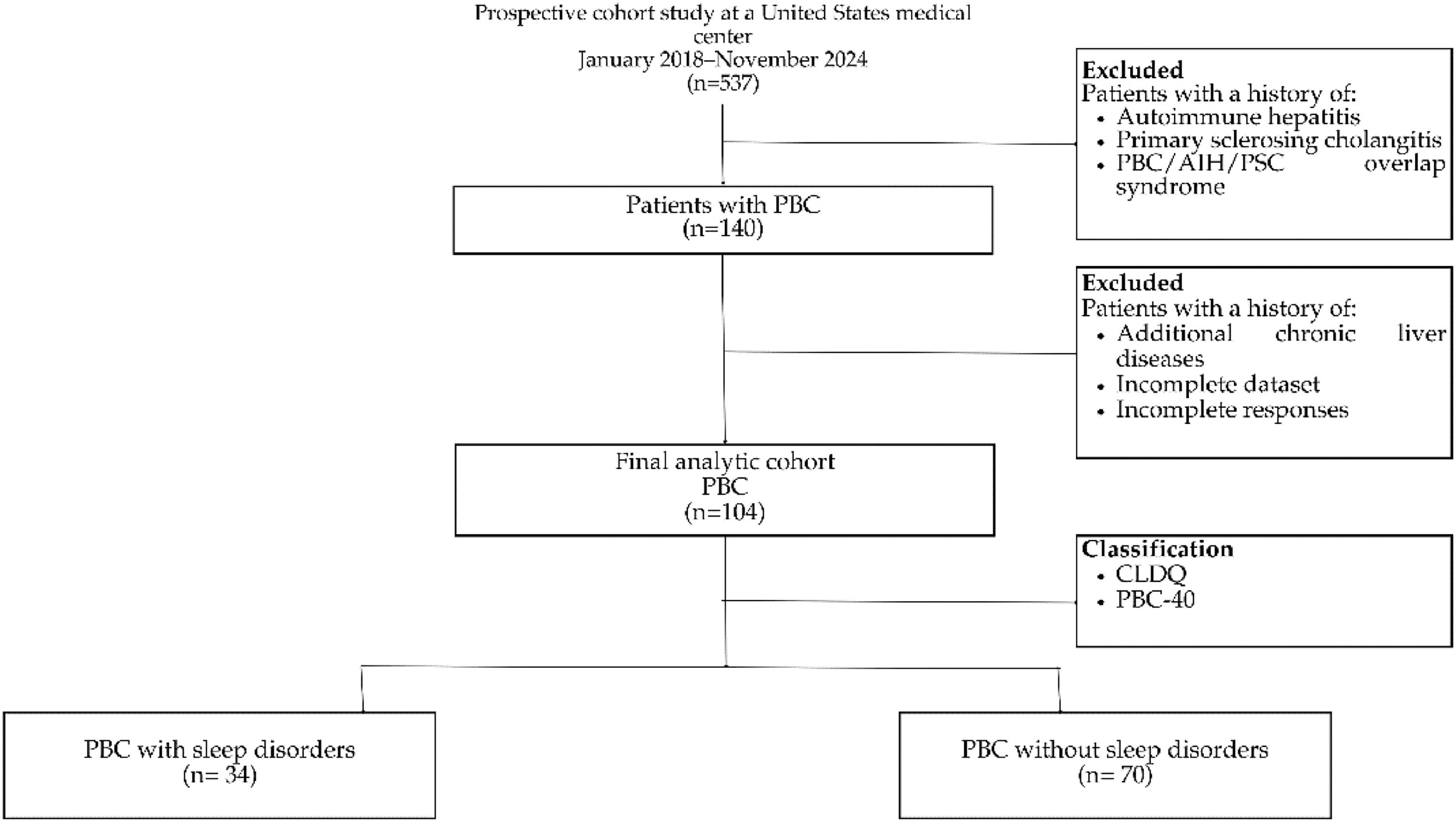
Exclusion criteria included autoimmune overlap syndromes, drug-induced liver injury, viral hepatitis, alcohol-related liver disease, treatment with second-line PBC therapies, and incomplete datasets or questionnaire responses. A total of 104 adult patients with PBC who met the defined cohort criteria were included in the analysis (Fig. 1).
2.2Study outcome, variables, and definitions
The primary outcome of this study was to evaluate the prevalence of sleep disorders among patients with PBC and to examine their association with disease severity. PRO questionnaires were administered at the patients' first registry visit. PROs were evaluated to measure sleep disturbances, pruritus severity, fatigue, and overall health. Pruritus was assessed using the Visual Analog Scale (VAS) and the 5-D Itch Scale, while fatigue and sleep disturbances were evaluated using the Chronic Liver Disease Questionnaire (CLDQ) and the PBC-40 questionnaire. Overall health ratings were also assessed using the PBC-40 questionnaire.
Patients were categorized into groups based on the presence or absence of sleep disturbances, as determined by their responses to specific sleep-related items in the questionnaires. For the CLDQ, patients were classified as having sleep disorders if they reported difficulty sleeping or daytime sleepiness with any of the following responses: (1) all of the time, (2) most of the time, (3) a good bit of the time, (4) some of the time, or (5) a little of the time. Similarly, for the PBC-40, patients were categorized as having sleep disturbances if they selected one of the following responses to items assessing daytime sleep: (1) sometimes, (2) most of the time, or (3) always. Both the CLDQ and the PBC-40 were used to assess sleep disturbances, as some patients completed only one questionnaire. This approach ensured the inclusion of as many responses as possible.
Fatigue was further categorized based on frequency, ranging from “all of the time” to “none of the time,” while overall health was rated as excellent, very good, good, fair, or poor. This comprehensive assessment allowed for a detailed analysis of the relationship between sleep disturbances, fatigue, and disease severity in patients with PBC.
Demographic and clinical characteristics were obtained from an electronic medical database for patients with PBC. The data included age, sex, and race, along with clinical parameters such as body mass index (BMI) and laboratory values. Laboratory measures included ALP, aspartate aminotransferase (AST), alanine aminotransferase (ALT), total bilirubin (TBIL), albumin (ALB), international normalized ratio (INR), platelet count, and white blood cell (WBC) count. Information on psychiatric comorbidities and medications potentially affecting sleep quality was obtained from clinical records at the first registry visit.
Disease-specific assessments included liver elastography, ursodeoxycholic acid (UDCA) dose (mg/kg/day), and treatment response, which was evaluated using the Paris II criteria. According to the Paris II criteria, response to UDCA was defined as ALP levels ≤ 1.5 times the upper normal limit (ULN), AST levels ≤ 1.5 times the ULN, and normal bilirubin after one year of treatment. Radiologic findings obtained from available ultrasound, computed tomography (CT) scan, and magnetic resonance imaging (MRI) studies were documented, including normal liver appearance, findings suggestive of cirrhosis, splenomegaly, and steatosis.
2.3Statistical analysisContinuous variables were evaluated for normality using the Shapiro-Wilk test. Normally distributed variables were expressed as means ± standard deviations (SD) and compared using the independent-samples t-test. Non-normally distributed variables were presented as medians with interquartile ranges (IQR) and analyzed using the Mann-Whitney U test. Categorical variables were expressed as counts and percentages, with differences between groups assessed using the chi-square test or Fisher’s exact test, as appropriate.
Logistic regression models were used to identify factors associated with sleep disorders. The initial univariate model included potential covariates collected at patients' first registry visits, including age, sex, BMI, ALP, AST, ALT, ALB, TBIL, INR, platelet count, UDCA dose, treatment response, liver elastography results, overall health rating, fatigue, and pruritus. Variables with a P-value <0.05 in the univariate analyses were included in the multivariate model. The results are presented as odds ratios (ORs) with 95% confidence intervals (CIs). The relationship between PRO in individuals with PBC, with and without sleep disorders, was visualized using box plots. Additionally, the distribution of sleep-related symptoms was examined among patients classified as UDCA responders and non-responders.
All statistical analyses were conducted using Stata version 19.0 (StataCorp LLC, College Station, TX). Statistical significance was defined as a two-tailed P-value of <0.05.
2.4Ethical considerationsThis study was approved by the Beth Israel Deaconess Medical Center Institutional Review Board (IRB; Protocol #2018P00019). The registry was initially approved in 2018 and remained under active IRB approval throughout the study period, with current approval valid through December 8, 2026. All participants provided written informed consent.
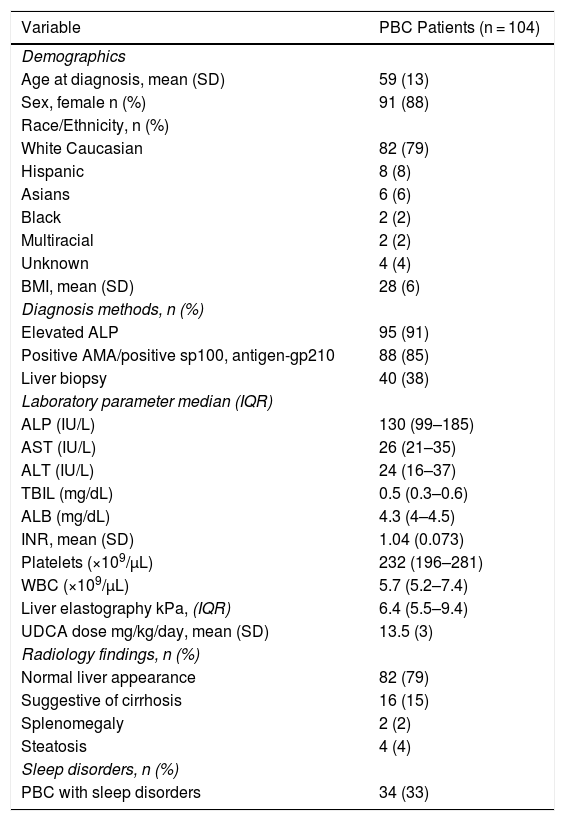
3Results3.1Characteristics of participantsIn the present study, we enrolled 104 patients with PBC. Most patients were female (88%), with a mean age at diagnosis of 59 years (SD = 13). The cohort was predominantly White Caucasian (79%), and the mean BMI was 28 (SD = 6). Laboratory analysis revealed a median ALP of 130 IU/L (IQR = 99–185), AST of 26 IU/L (IQR = 21–35), and TBIL of 0.5 mg/dL (IQR = 0.3–0.6). Radiologic evaluation demonstrated a normal liver appearance in 79% of patients, while cirrhosis was observed in 15%. The mean UDCA dose was 13.5 mg/kg/day (SD = 3). The mean UDCA dose was 13.5 mg/kg/day (SD = 3). Psychiatric comorbidities and medications known to affect sleep were uncommon in the cohort. Two patients had a documented prior history of depression; no patients were receiving antidepressants or opioids at enrollment, and three patients reported a prior history of antihistamine use.
Refer to Table 1 for additional general characteristics, demographics, and laboratory parameters of patients with PBC.
General characteristics, demographics, and laboratory parameters of PBC patients.
ALB, albumin; ALP, alkaline phosphatase; ALT, alanine aminotransferase; AMA, antimitochondrial antibody; anti-gp210, anti-glycoprotein 210; AST, aspartate aminotransferase; BMI, body mass index; IQR, interquartile range; IU/L, international units per liter; kPa, kilopascals; μl, microliter; PBC, primary biliary cholangitis; TBIL, total bilirubin; SD, standard deviation; UDCA, Ursodeoxycholic acid; WBC, white blood cells. Radiologic findings were obtained from available ultrasound, CT, and MRI studies.
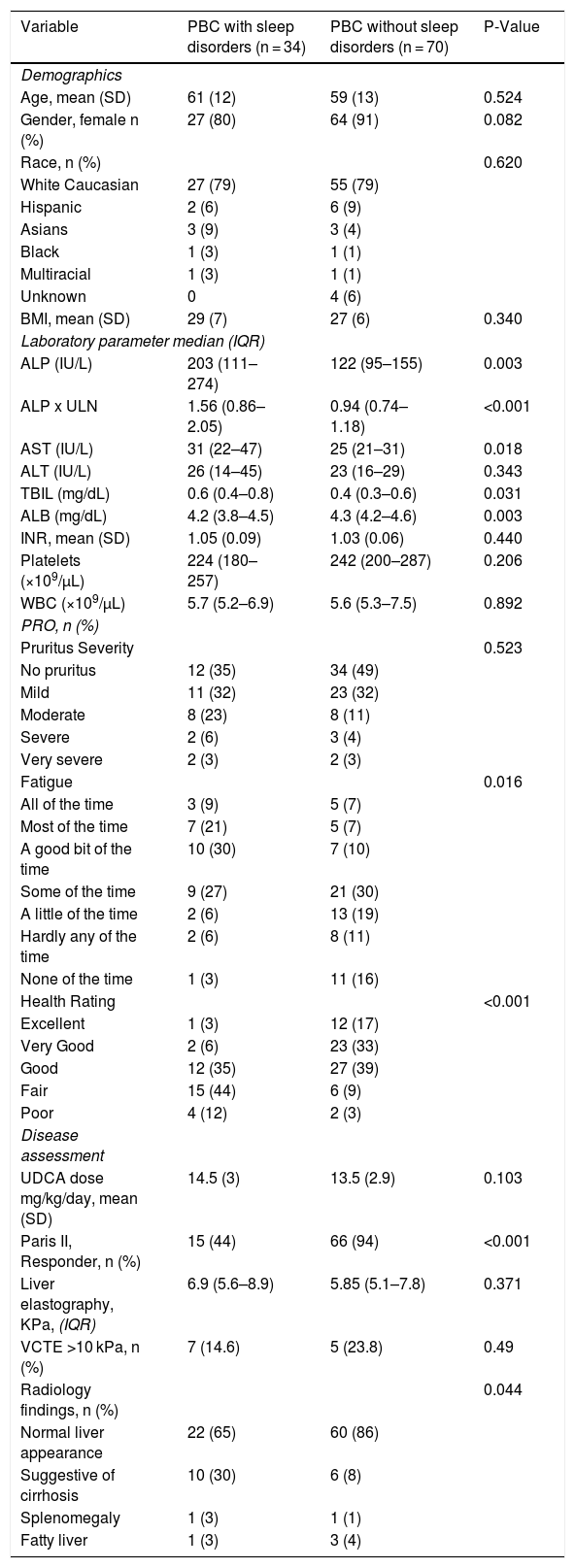
Our cohort of patients with PBC (n = 104) was divided into two groups based on their health-related quality of life (HRQoL) responses: those with sleep disorders and those without. Patients with sleep disorders accounted for 33% of the overall cohort. Table 2 summarizes the demographic, clinical, and biochemical characteristics of PBC patients with and without sleep disorders.
Characteristics of patients with primary biliary cholangitis with and without sleep disorders.
ALB, albumin; ALP, alkaline phosphatase; ALP × ULN: alkaline phosphatase expressed as multiples of the upper limit of normal (ULN = 130 IU/L); ALT, alanine aminotransferase; AST, aspartate aminotransferase; BMI, body mass index; IQR, interquartile range; IU/L, international units per liter; kPa, kilopascals; μl, microliter; PBC, primary biliary cholangitis; PROs, patient-related outcomes; TBIL, total bilirubin; SD, standard deviation; UDCA, Ursodeoxycholic acid; VCTE, vibration-controlled transient elastography; WBC, white blood cells. Radiologic findings were obtained from available ultrasound, CT, and MRI studies.
No significant differences were observed between the two groups with respect to age (p = 0.524), sex (p = 0.082), or race (p = 0.620). Patients with sleep disorders had significantly higher ALP (p = 0.003), AST (p = 0.018), and TBIL levels (p = 0.031) than those without sleep disorders. Despite this difference, median TBIL values remained within the normal range in both groups (0.6 mg/dL vs. 0.4 mg/dL). When ALP was expressed as a multiple of the upper limit of normal (ULN = 130 IU/L), patients with sleep disorders continued to have higher levels than those without sleep disorders (1.56 × ULN [IQR 0.86–2.05] vs. 0.94 × ULN [IQR 0.74–1.18], p < 0 .001).
Patients with sleep disorders reported fatigue more frequently (p = 0.016) and had significantly poorer self-rated health ratings (p < 0.001). They were also less likely to meet Paris II response criteria, with a treatment response rate of 44% compared with 94% among patients without sleep disorders (p < 0.001).
Additionally, imaging findings suggestive of cirrhosis were more common among patients with sleep disorders (30%vs. 8%, p = 0.044). However, the proportion of patients with liver stiffness measurements greater than 10 kPa was similar between groups (23.8%vs. 14.6%, p = 0.49).
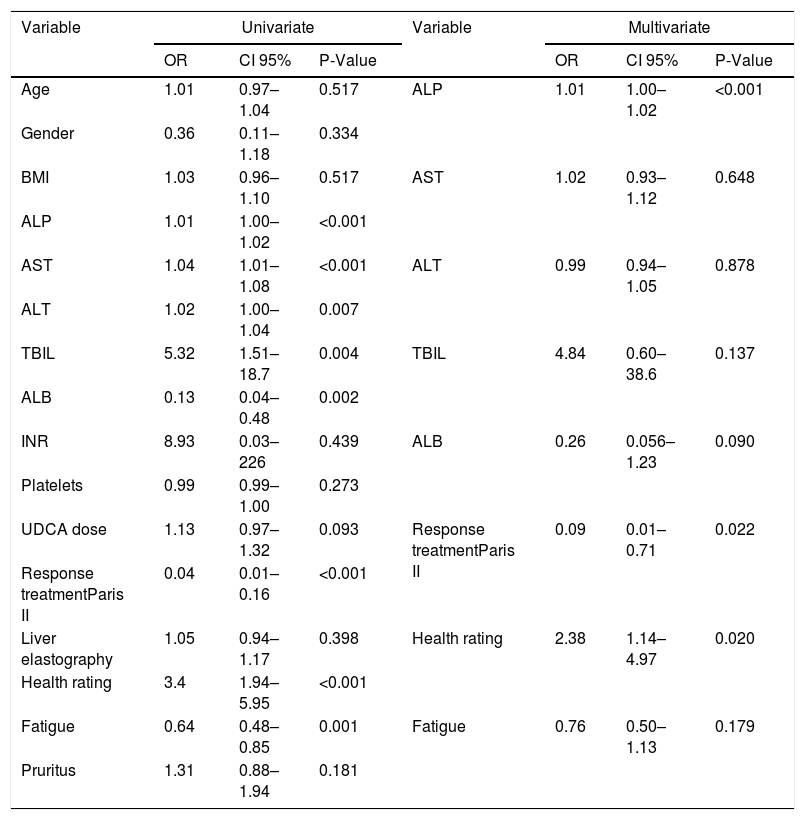
The univariate logistic regression analysis revealed several factors significantly associated with sleep disorders in PBC (see Table 3). Higher levels of ALP (OR: 1.01, 95% CI: 1.00–1.02, p < 0.001), AST (OR: 1.04, 95% CI: 1.01–1.08, p < 0.001), ALT (OR: 1.02, 95% CI: 1.00–1.04, p = 0.007), and TBIL (OR: 5.32, 95% CI: 1.51–18.7, p = 0.004) were associated with an increased likelihood of experiencing sleep disorders. Conversely, lower levels of ALB (OR: 0.13, 95% CI: 0.04–0.48, p = 0.002) and non-response to UDCA treatment (OR: 0.04, 95% CI: 0.01–0.16, p < 0.001) were linked to higher odds of sleep disturbances.
Univariate and multivariable logistic regression analysis of patients with primary biliary cholangitis and sleep disorders.
ALB, albumin; ALP, alkaline phosphatase; ALT, alanine aminotransferase; AST, aspartate aminotransferase; BMI, body mass index; PBC, primary biliary cholangitis; TBIL, total bilirubin; UDCA, Ursodeoxycholic acid.
In the multivariable model, ALP remained a significant predictor (p < 0.001). In addition, non-response to UDCA treatment (OR: 0.09, 95% CI: 0.01–0.71, p = 0.022) and lower self-reported health ratings (OR: 2.38, 95% CI: 1.14–4.97, p = 0.020) were also independently associated with sleep disorders. These findings indicate that laboratory indicators of liver disease severity, treatment responses, and perceived health status contribute to sleep disturbances in patients with PBC.
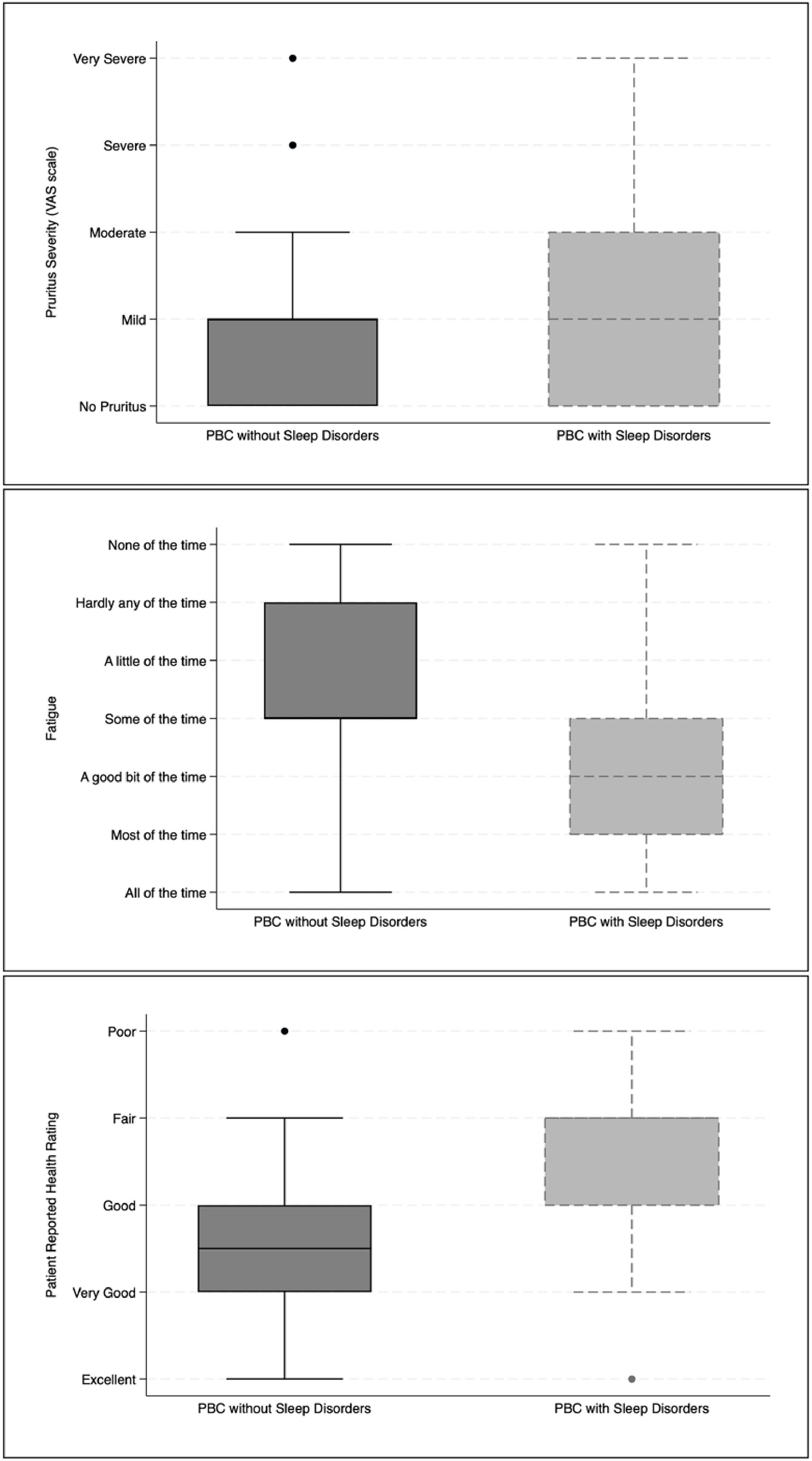
In the comparative analysis of PROs related to sleep disorders, patients with PBC who experienced sleep disturbances reported significantly higher pruritus severity, increased fatigue, and poorer self-rated health than those without sleep disorders (Fig. 2). Specifically, the sleep disorder group demonstrated a wider range of higher VAS scores for pruritus, more frequent and intense fatigue, and a more significant proportion of individuals rating their health as “fair” or “poor.”
3.3Sleep disorders correlation with treatment response in PBC patients
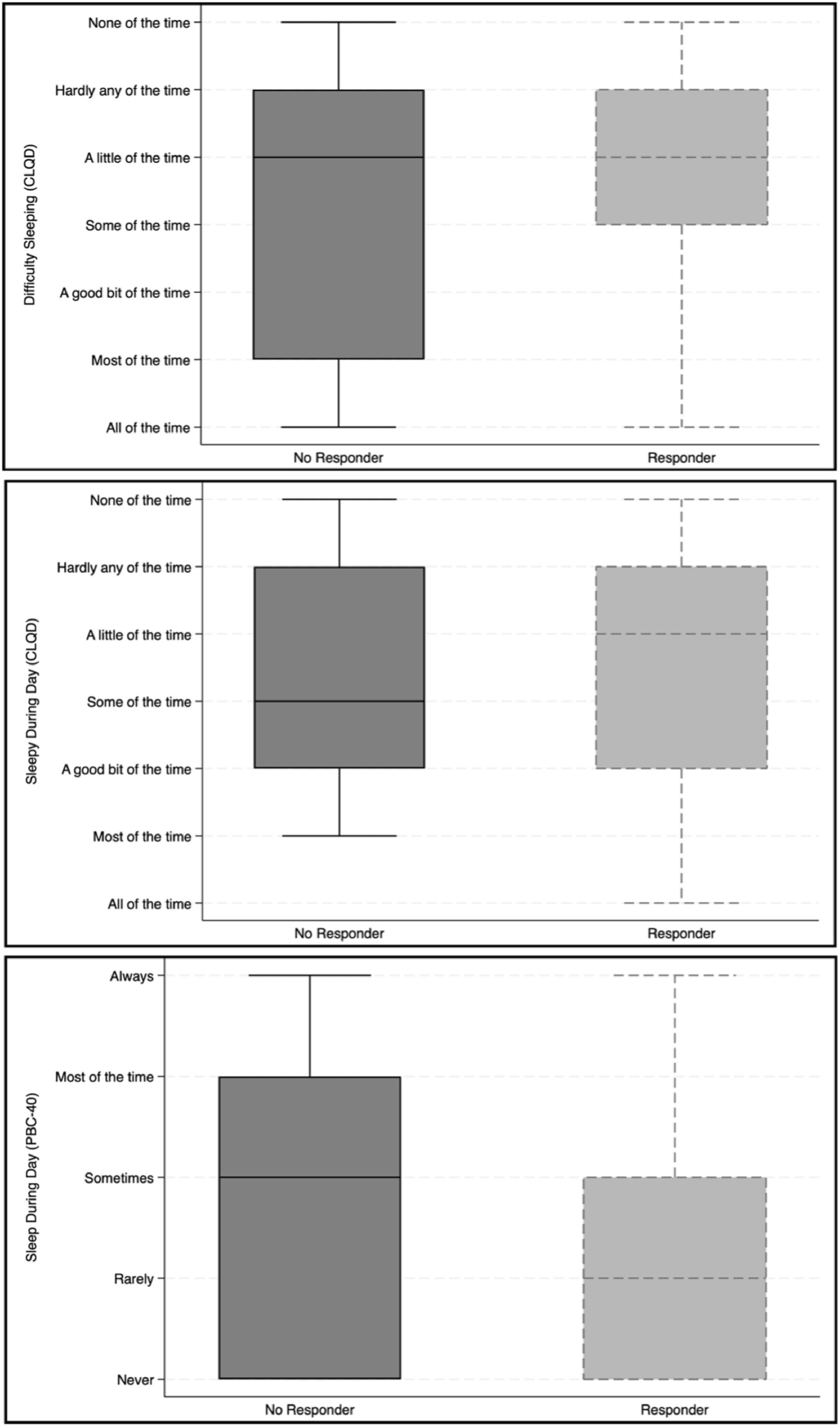
Fig. 3 illustrates the distribution of sleep-related symptoms among patients with PBC classified as UDCA responders and non-responders. The boxplots show the frequency of difficulty sleeping and daytime sleepiness, based on responses to the CLQD questionnaire, and of daytime sleepiness, based on responses to the PBC-40. Non-responders generally reported a greater symptom burden, with higher frequencies on all three measures than responders.
4Discussion
In this study, we found that sleep disorders were common among patients with PBC and were associated with higher ALP and AST levels, lower rates of response to UDCA, greater fatigue, and poorer self-reported health. Patients with sleep disorders also more frequently had imaging findings suggestive of cirrhosis, although liver stiffness measurements were similar between groups. Overall, sleep disturbances were associated with greater symptom burden, higher cholestatic markers, and lower rates of treatment response.
In patients with PBC, this study found that the overall prevalence of sleep disorders was 33%. Similarly, a retrospective study conducted in China by Dong et al. enrolled 177 patients with PBC and 165 healthy controls to examine the relationships among sleep disorders, disease severity, therapeutic response, and liver cirrhosis [3]. Their findings indicated that both sleep disorders and impaired sleep patterns were observed in 50.8% of patients with PBC, a rate that was significantly higher than that in healthy controls (18.2%) [3]. Similarly, a prospective study in China assessed HRQoL in 107 patients with PBC using the Pittsburgh Sleep Quality Index (PSQI) and found that 57.9% had poor sleep quality, defined as a PSQI score>5 [11]. Nonetheless, there is limited data regarding U.S. studies concerning the prevalence of sleep disorders in patients with PBC.
Sleep disturbances are common in patients with chronic liver disease and cirrhosis. Reported rates of poor sleep quality in patients with cirrhosis range from 50% to 80%, compared with 20% to 40% in the general population [12]. In our cohort, imaging findings suggestive of cirrhosis were more frequent among patients with sleep disorders, consistent with prior studies reporting a high prevalence of sleep disturbances in cirrhosis [13–15]. However, liver stiffness measurements were similar between groups. Higher ALP levels and lower rates of treatment response showed more consistent associations with sleep disturbances than fibrosis-related measures.
Patients with sleep disorders had significantly higher ALP and AST levels than those without sleep disorders. Similar findings were reported by Dong et al., who also observed higher liver enzyme levels, lower treatment response rates, and a higher prevalence of cirrhosis among patients with sleep disorders [3]. Higher ALP levels persisted when values were expressed as multiples of the upper limit of normal, suggesting that the association between sleep disturbances and cholestatic disease activity was not driven by differences in laboratory reference ranges. These findings are further supported by previous studies showing that patients with active or progressive PBC and a greater symptom burden, including fatigue and pruritus, frequently report impaired sleep [16]. In our cohort, sleep disturbances were more often seen in patients with greater symptom burden and lower rates of treatment response.
Non-response to UDCA was independently associated with sleep disorders in the multivariable analysis. Patients with sleep disturbances were substantially less likely to meet Paris II response criteria than those without sleep disturbances. Similar observations have been reported in the UK-PBC cohort, where treatment response was identified as an important determinant of quality of life [17]. In our cohort, sleep disturbances were also associated with greater symptom burden and poorer self-rated health. These findings suggest that sleep complaints may capture aspects of disease burden that are not fully reflected by treatment response alone.
Our analysis of PRO showed that patients with sleep disorders reported more severe pruritus, although pruritus was not independently associated with sleep disturbances in the multivariable model. This suggests that the relationship between pruritus and sleep disturbance may be more complex than previously recognized. Previous studies have also reported a close relationship between pruritus and sleep quality. In the GLIMMER trial, improvements in itch severity were accompanied by improvements in sleep outcomes [18,19].
The association between sleep disturbances and fatigue was evident in our cohort. Patients with sleep disorders were more likely to report fatigue and poorer overall self-rated health, suggesting that the impact of sleep symptoms extends beyond nighttime sleep. Similar observations have been reported by Newton et al., who found that patients with PBC experienced greater daytime sleepiness than matched healthy controls and that daytime sleepiness correlated with fatigue severity [20]. The Phase 3 RESPONSE trial also showed that improvements in pruritus were accompanied by reductions in itch-related sleep disturbance and fatigue scores [21]. Previous studies have further shown that poor sleep quality is associated with lower quality of life and worse PRO in PBC, including lower physical and mental health scores [11]. In our cohort, sleep disturbances were accompanied by greater fatigue, poorer self-rated health, and a higher overall symptom burden. These findings emphasize that sleep complaints are an important component of the symptom burden associated with PBC and should not be overlooked in routine care.
The prospective design of this study has several limitations. First, the relatively small cohort size reflects the low prevalence of PBC and the challenges of conducting single-center studies in this population. Second, although the use of validated PRO strengthens the study, the observational design does not allow conclusions regarding causality. Third, some patients had only a single study visit available at the time of analysis, limiting our ability to evaluate changes in sleep symptoms over time. Finally, sleep disturbances were assessed using self-reported questionnaires, which are subject to recall bias, and objective sleep measures such as polysomnography were not available.
5ConclusionsSleep disorders are prevalent among patients with PBC and are associated with greater symptom burden, greater biochemical disease activity, lower rates of response to UDCA, and poorer self-rated health. Sleep disturbances were also associated with fatigue and pruritus. Recognition of sleep complaints may help identify patients with a greater disease burden. Further studies are needed to clarify the relationship between sleep disturbances, disease activity, and clinical outcomes in PBC.
CRediT authorship contribution statementA.M.F.: Conceptualization, project administration, data curation, formal analysis, software, validation, visualization, writing original draft, review, and editing. N.R.A.: Conceptualization, data curation, writing original draft, review, and editing. V.A.R.: Data curation, writing original draft, review, and editing. E.G.: Writing original draft, review, and editing. J.P.I.: Writing original draft, review, and editing. F.M.: Writing original draft, review, and editing. R.B.: Data curation, writing original draft, review, and editing. D.G.: Writing, review, and editing. E.M.M.: Writing, review, and editing. L.S.: Data curation. S.B: Conceptualization, data curation, methodology, supervision, validation, visualization. V.P.: Conceptualization, data curation, methodology, supervision, validation, visualization. A.B.: Conceptualization, data curation, formal analysis, methodology, project administration, supervision, validation, visualization, writing- original draft, review, and editing.
FundingThis research did not receive any specific grant from funding agencies in the public, commercial, or not-for-profit sectors.
Alan Bonder consults for Intercept Pharmaceuticals, Ipsen, ChemomAb Ltd., GSK, and Guidepoint. He has received a grant from Gilead Sciences. He has also been the primary investigator for trials sponsored by Gilead Sciences, Cara Therapeutics, Mirum Pharmaceuticals Inc., CymaBay Therapeutics Inc., Genfit, ChemomAb Ltd., and Intercept Pharmaceuticals. He has received royalties or holds licenses from UpToDate and DynaMed. He serves on the editorial committee of DynaMed and the Clinical Liver Disease Journal for the American Association for the Study of Liver Diseases (AASLD) and has given expert testimony for Expert Review, Inc. He has also served as a medical reviewer for Pfizer. The other authors do not have conflicts of interest relevant to this work.