Abstracts of the 2026 Annual Meeting of the ALEH
More infoRifaximin could favor selection of clinically relevant antimicrobial resistance phenotypes, particularly in enterococci. To evaluate, in patients with cirrhosis and bacterial infection, the association between rifaximin use at infection diagnosis and vancomycin-resistant enterococci (VRE) and multidrug resistance (MDR).
Materials and MethodsCross-sectional study using the Latin American Registry of Bacterial Infections in Patients with Cirrhosis (ClinicalTrials.gov: NCT03919032). Bacterial isolates from culture-positive infections in adults with cirrhosis were included. VRE was assessed using two complementary approaches: within the enterococcal subgroup and across all isolates.
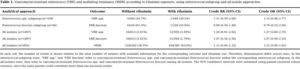
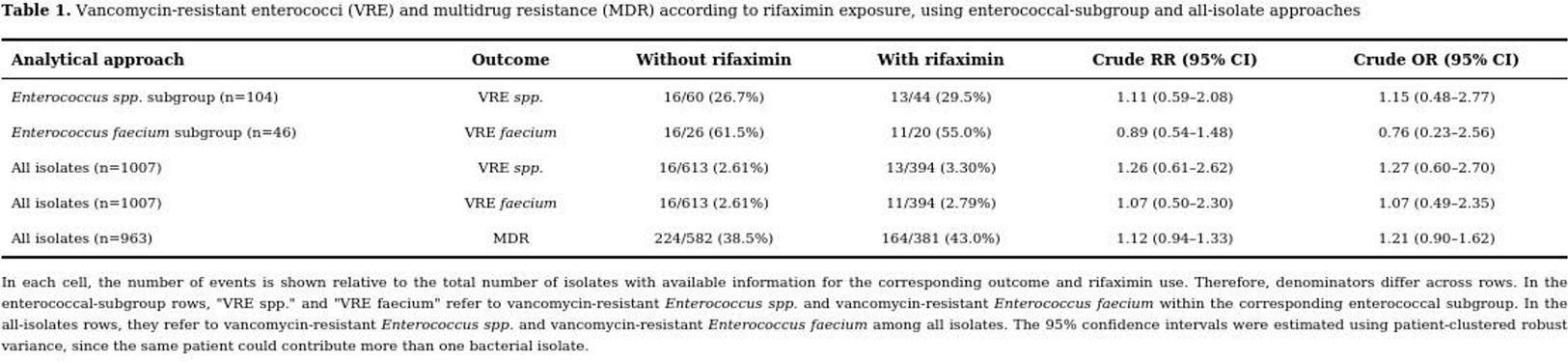
ResultsWe included 1061 bacterial isolates from 758 patients; 394 (37.1%) were from patients receiving rifaximin. There were 113 Enterococcus spp. isolates and 48 Enterococcus faecium isolates. Within enterococcal isolates, VRE frequency was similar in Enterococcus spp. (26.7% vs 29.5%; RR 1.11, 95% CI 0.59–2.08) and Enterococcus faecium (61.5% vs 55.0%; RR 0.89, 95% CI 0.54–1.48). Across all isolates, VRE frequencies were 2.6% vs 3.3% for Enterococcus spp. (RR 1.26, 95% CI 0.61–2.62) and 2.6% vs 2.8% for Enterococcus faecium (RR 1.07, 95% CI 0.50–2.30). MDR frequencies were 38.5% vs 43.0% (RR 1.12, 95% CI 0.94–1.33). No daptomycin- or linezolid-resistant enterococci were observed (Table 1).
ConclusionsNo clear association was observed between rifaximin use and vancomycin resistance or multidrug resistance. These findings provide some reassurance regarding the enterococcal phenotypes of greatest relevance, although rifaximin should continue to be used prudently.