



Suture renorrhaphy remains as time-consuming in partial nephrectomy (PN) and carries the risk of renal arterial damage and renal functional loss. This study aims to compare the functional and oncological outcomes of the clampless and sutureless robotic PN (sRPN) with clampless conventional suture renorrhaphy RPN (cRPN).
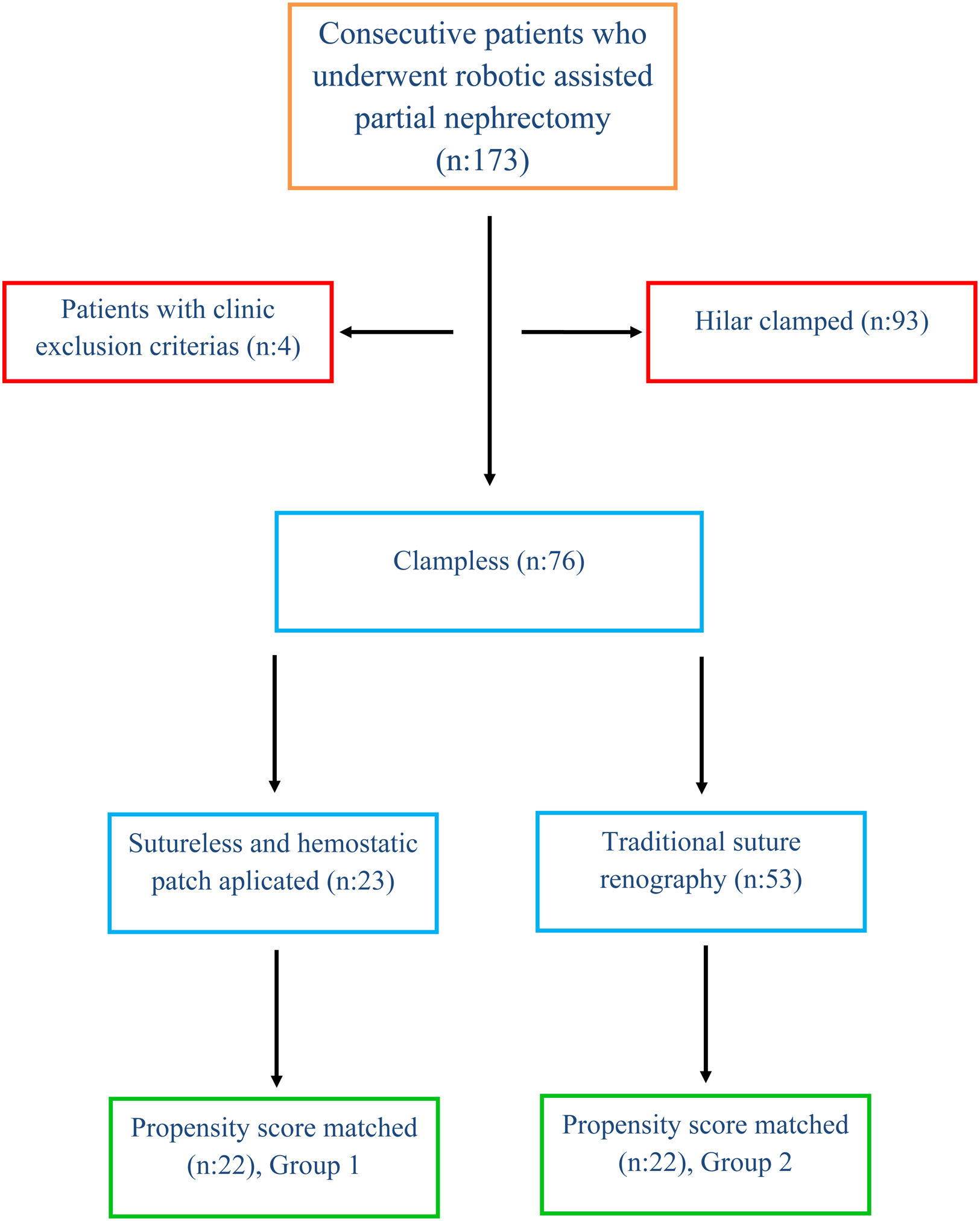
PatientsA total of 173 consecutive patients who underwent RPN between January 2019 and December 2023 were identified from our center’s database and reviewed. Seventy-six clampless (sutureless: 23, conventional suture renorrhaphy: 53) RPN were identified. A propensity score-matchedpair analysis (PSM) was performed to homogenize the characteristics of the groups. Comprehensive evaluations of perioperative variables, functional and oncological results were performed before and after the PSM between the sRPN and cRPN.
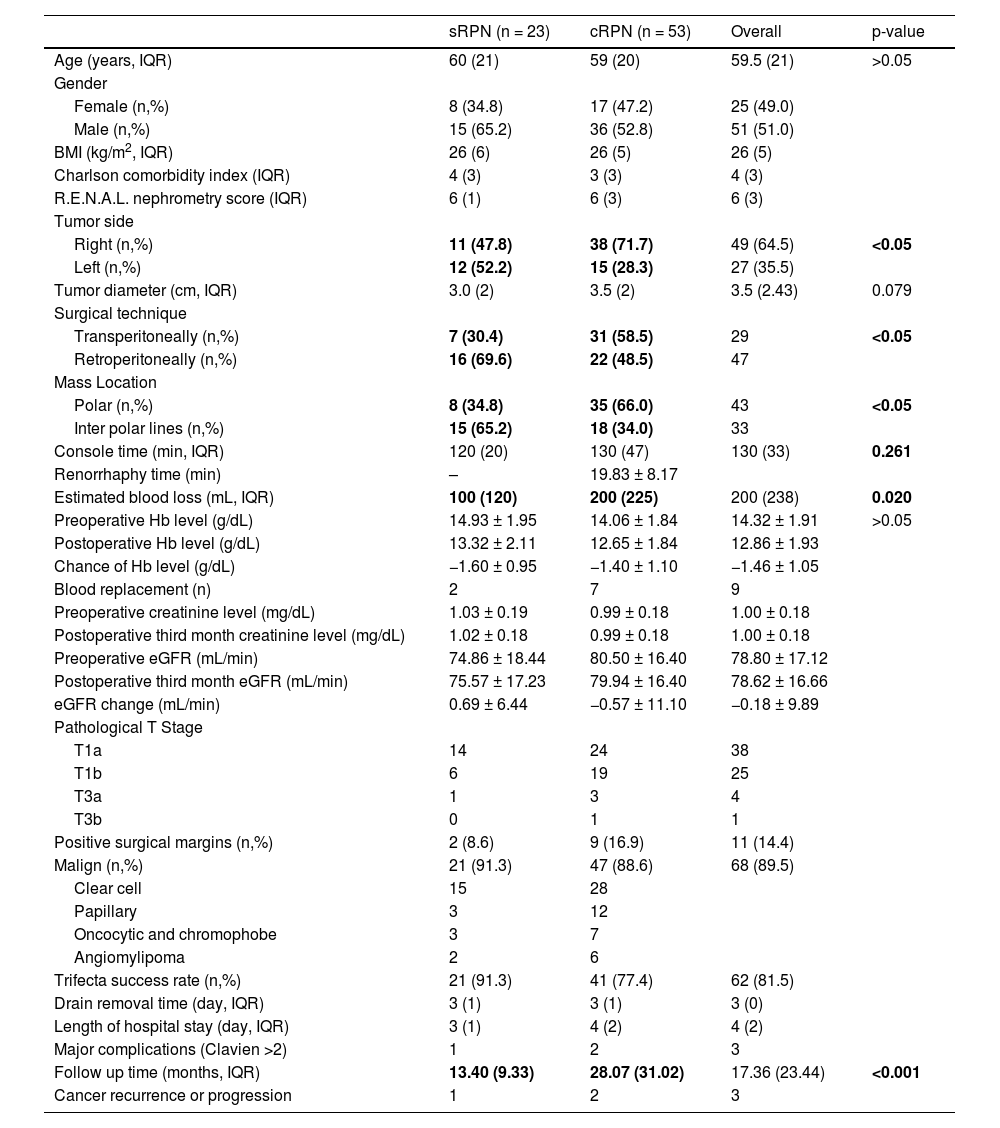
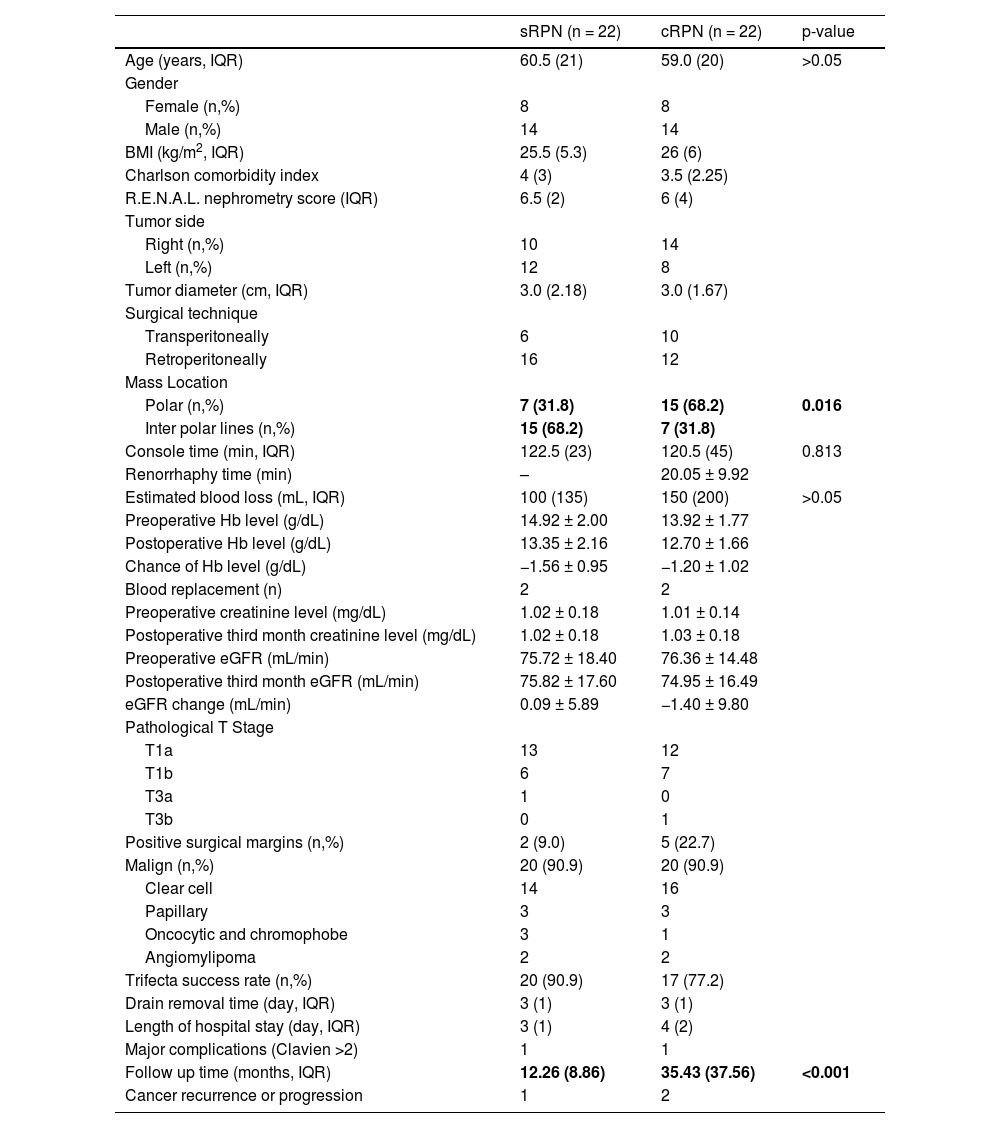
ResultsBefore the PSM, median console time was 10 min shorter in the sRPN group but was not statistically significant. Estimated median blood loss was significantly lower in the sRPN group (p < 0.05). After PSM, 22 patients were matched in each group and all of the preoperative baseline characteristics were similar. Ratio of interpolar lines located tumors was higher in sRPN group (68.2% vs. 31.2%) (p < 0.05). Median tumor diameter was 3 (1.5–7) cm in each group. The trifecta achievement rates were 90.9% and 77.2% for the sRPN and cRPN groups, respectively (p > 0.05). There were no differences in terms of median console times, estimated blood loss, drain removal times or eGFR changes.
ConclusionsIn the treatment of small renal masses with clampless RPN, the sutureless technique can be applied with similar complication rates and functional, oncological outcomes as conventional sutured renorrhaphy.
La renorrafia con sutura es un procedimiento que consume mucho tiempo durante la nefrectomía parcial (NP). Además, se asocia a riesgos como el daño a la arteria renal y la perdida de la función renal. El objetivo de este estudio es comparar los resultados funcionales y oncológicos de la nefrectomía parcial robótica sin sutura y sin clampaje (NPRs) con la renorrafia convencional con sutura y sin clampaje (NPRc).
PacientesLos datos de 173 pacientes consecutivos sometidos a NPR entre enero de 2019 y diciembre de 2023 se revisaron a partir de la base de datos de nuestro centro. Se identificaron 76 NPR sin clampaje (sin sutura: 23, renorrafia convencional con sutura: 53). Se realizó un análisis de emparejamiento por puntuación de propensión (EPP) para homogeneizar las características de los grupos. Se evaluaron exhaustivamente las variables perioperatorias y los resultados funcionales y oncológicos antes y después del EPP para la NPRs y la NPRc.
ResultadosAntes del EPP, la mediana del tiempo de consola fue 10 minutos menor en el grupo NPRs, pero no fue estadísticamente significativa. La mediana de pérdida de sangre estimada fue significativamente inferior en el grupo NPRs (p < 0,05). Tras el EPP, se emparejaron 22 pacientes en cada grupo y todas las características basales preoperatorias fueron similares. La proporción de tumores localizados en las líneas interpolares fue mayor en el grupo NPRs (68,2% vs. 31,2%) (p < 0,05). La mediana del diámetro tumoral fue de 3 (1,5–7) cm en cada grupo. Los porcentajes de consecución de la trifecta fueron del 90,9% y del 77,2% para los grupos NPRs y NPRc, respectivamente (p > 0,05). No hubo diferencias en cuanto a la mediana del tiempo de consola, la pérdida de sangre estimada, el tiempo hasta la retirada del drenaje o los cambios en la TFGe.
ConclusionesEn el tratamiento de masas renales pequeñas con NPR sin clampaje, la renorrafia sin sutura presenta tasas de complicaciones y resultados funcionales y oncológicos similares a la renorrafia convencional con sutura.

